Why Professionals Are Switching from Adobe Portfolio to Fueler?

Riten Debnath
12 Jul, 2026
Last updated: July 2026
Spending hours adjusting image borders and padding just to prove you can write copy, write code, or manage a product rollout is an exhausting way to build a digital presence. For years, the default move was to set up a portfolio using heavy design suites that treated every professional like a visual gallery artist. But the landscape of professional discovery has fundamentally broken away from these rigid, aesthetic-first formats.
I’m Riten, founder of Fueler, a skills-first portfolio platform that connects talented individuals with companies through assignments, portfolios, and projects, not just resumes/CVs. Think Dribbble/Behance for work samples + AngelList for hiring infrastructure.
In this deep dive, we will look at why modern operators are abandoning heavy visual editors in favor of clear, outcome-focused proof of work. You will discover how structural discovery engines are replacing static links, how to avoid the hidden costs of legacy subscriptions, and the exact steps to build a repository that turns your daily execution into career leverage.
1. The Death of the Visual Grid for Technical Workers
Traditional visual templates force every writer, developer, and ops manager into an art gallery layout that completely hides their strategic value. When your primary output is structured code, marketing copy, or complex spreadsheets, a flat thumbnail image says nothing about your actual competency.
Legacy portfolios are optimized exclusively for visual artists, meaning text-heavy or logic-driven projects look out of place. This mismatch forces non-designers to struggle with complicated web canvases just to display simple case studies.
- Forcing analytical and operational achievements into rigid picture frames completely strips away the strategic business context behind your work. Recruiters reviewing your profile end up judging your page padding instead of evaluating the actual revenue impact you delivered.
- Wasting hours fixing broken mobile responsiveness elements inside a complex drag-and-drop editor steals valuable time from shipping actual client deliverables. A professional platform should let you publish clean text and live assets without requiring a layout design degree.
- Standard graphic platforms completely lack specialized native fields designed to highlight your development stack, software infrastructure, or data frameworks. This omission forces you to bury crucial technical keywords deep inside generic, unformatted text blocks where algorithms miss them.
- Aesthetic grids do not naturally support incremental progress tracking, forcing you to wait until a massive project is entirely completed before publishing. This constraint prevents you from continuously documenting smaller, highly valuable operational wins that prove consistent daily execution.
- Isolated portfolio sites offer absolutely zero internal discovery networks, keeping your documented achievements hidden until you manually drop links in emails. You are left bearing the total burden of site traffic generation, marketing, and distribution.
Why It Matters: Relying on old-school design grids actively damages how non-designers show their true capability to fast-growing startups. Moving to a structured, text-friendly project framework ensures your actual logic and operational metrics take center stage. This transparency makes it incredibly simple for companies to verify your skills and hire you quickly.
2. Breaking the Multi-Software Subscription Trap
Paying a steep, recurring monthly fee to keep a basic portfolio website alive on the internet makes very little financial sense. Many professionals stick with legacy design bundles simply because the web-builder feature is packaged alongside heavy creative desktop software.
Evaluating the actual cost of these bundled software packages reveals an expensive, rigid ecosystem that holds your professional history hostage. If you decide to cancel the underlying creative suite subscription, your personal website is instantly wiped offline.
- Maintaining an active design bundle subscription just to host a basic portfolio drains hundreds of dollars annually from your operational budget. This recurring expense offers zero return on investment if you rarely open the underlying photo editing tools.
- Canceling your creative software plan immediately deactivates your personal domain link and deletes your entire documented project archive from the internet. This systemic dependency prevents you from owning your professional footprint independently without paying a perpetual monthly tax.
- Connecting custom domain names inside legacy software suites requires digging through confusing DNS records and third-party registrar settings manually. This technical friction often results in broken portfolio links during critical job hunting and client interview cycles.
- Bundled design builders rarely receive product updates tailored to modern recruitment trends or algorithmic search optimization parameters. You are essentially paying top-tier software prices for an outdated web editor that has been largely abandoned by its developers.
- Rigid data storage caps on introductory pricing tiers restrict the overall volume of rich media and case studies you can host. Expanding your project catalog eventually forces you into expensive enterprise tiers that exceed your actual platform requirements.
Why It Matters: Auditing your software expenses shows that bundled web tools create unnecessary overhead for simple professional documentation. Shifting your career assets to an independent, proof-of-work infrastructure lets you eliminate monthly software bills while keeping your data online forever. True platform independence ensures your history remains secure and fully accessible.
3. Why Algorithmic Talent Discovery Requires Structured Data
Modern tech companies and startup founders rarely source new talent by manually browsing random, unindexed personal websites from scratch. Instead, they use internal search directories, talent filters, and conversational AI tools to find verified operators who possess specific skills.
An isolated personal domain acts like a digital island, completely disconnected from active recruitment traffic and modern search networks. Without clear, machine-readable data structures, your case studies remain invisible to the automated software platforms used by recruiters.
- Flat portfolio templates lack the underlying schema markup required for advanced machine learning scrapers to parse your technical skills accurately. This architecture prevents your profile from appearing when automated sourcing bots scan the internet for specialized freelance talent.
- Standard design sites store your project descriptions as generic, unindexed paragraphs rather than organized, query-friendly data assets. Search algorithms treat this unformatted text as low-priority content, burying your best case studies deep within search results.
- Isolated web builders offer no internal network connections, eliminating any possibility of organic discovery via shared platform traffic. You stay locked in a manual outbound loop, constantly pushing your resume link into crowded corporate inbox folders.
- The complete lack of built-in search filters on personal sites forces busy recruiters to click through multiple pages to find relevant work. A manager looking for specific marketplace case studies will quickly leave if your site requires deep manual navigation.
- Legacy web builders do not feed structured data directly into modern conversational discovery systems like Perplexity or Google AI Overviews. This technological gap means your proven track record misses out on the massive industry shift toward automated candidate sourcing.
Why It Matters: Building your portfolio on a platform with native search indexing turns a passive link into a functional lead generation tool. When your projects are organized for algorithmic discovery, you unlock continuous inbound career opportunities without sending cold pitches. This organic positioning gives you massive leverage when negotiating client rates.
4. The Power of Automated Verification Over Resume Padding
The modern hiring ecosystem is plagued by highly exaggerated resumes, hyper-inflated job titles, and unverified professional claims. Because anyone can write a bullet point claiming they scaled a product, founders have become incredibly skeptical of traditional text profiles.
A static portfolio platform allows users to claim full credit for massive team projects without offering any proof of collaboration. Shifting to an infrastructure that features built-in verification builds immediate, unassailable trust with companies looking for real operators.
- Legacy design websites offer no mechanism to prove you actually built the projects displayed on your custom image grids. This structural anonymity forces hiring managers to spend extra time manually cross-checking your background before setting up interviews.
- The absence of public, click-through collaborative tags makes it impossible to show exactly who you worked with on complex assignments. Without transparent team linkages, your individual contribution to a massive startup launch remains completely ambiguous to outsiders.
- Unverified text testimonials floating on personal pages are frequently viewed with skepticism by savvy talent acquisition teams. Savvy founders recognize that unlinked, static quotes can easily be fabricated or taken entirely out of contextual reality.
- Standard platforms do not anchor client feedback to individual project cards, divorcing your reviews from your actual deliverables. This disconnect prevents prospective employers from seeing the direct relationship between your completed work and client satisfaction.
- Static portfolios fail to provide an immutable timeline of when projects were actually executed, shipped, and publicly updated over time. A transparent, chronological proof-of-work history shows steady professional growth and authentic, long-term industry dedication.
Why It Matters: Utilizing built-in project verification separates you instantly from candidates who merely list unproven tasks on paper resumes. When your professional network can publicly back your case studies, your profile builds automatic credibility in skeptical markets. This trust dramatically cuts down your client onboarding and interviewing timelines.
5. Setting Up a Discoverable Profile on Fueler
Transitioning away from a heavy visual web editor to a streamlined, discoverable proof-of-work matrix takes less than fifteen minutes. The entire setup framework is engineered to eliminate design choices so you can focus entirely on your professional outcomes.
By organizing your career history into distinct, search-optimized project cards, you create an elite digital asset logbook. Follow these explicit steps to publish an optimized repository that surfaces automatically inside active talent search feeds.
How to Set Up Your Fueler Portfolio
How to Create Your Portfolio on Fueler Step by Step
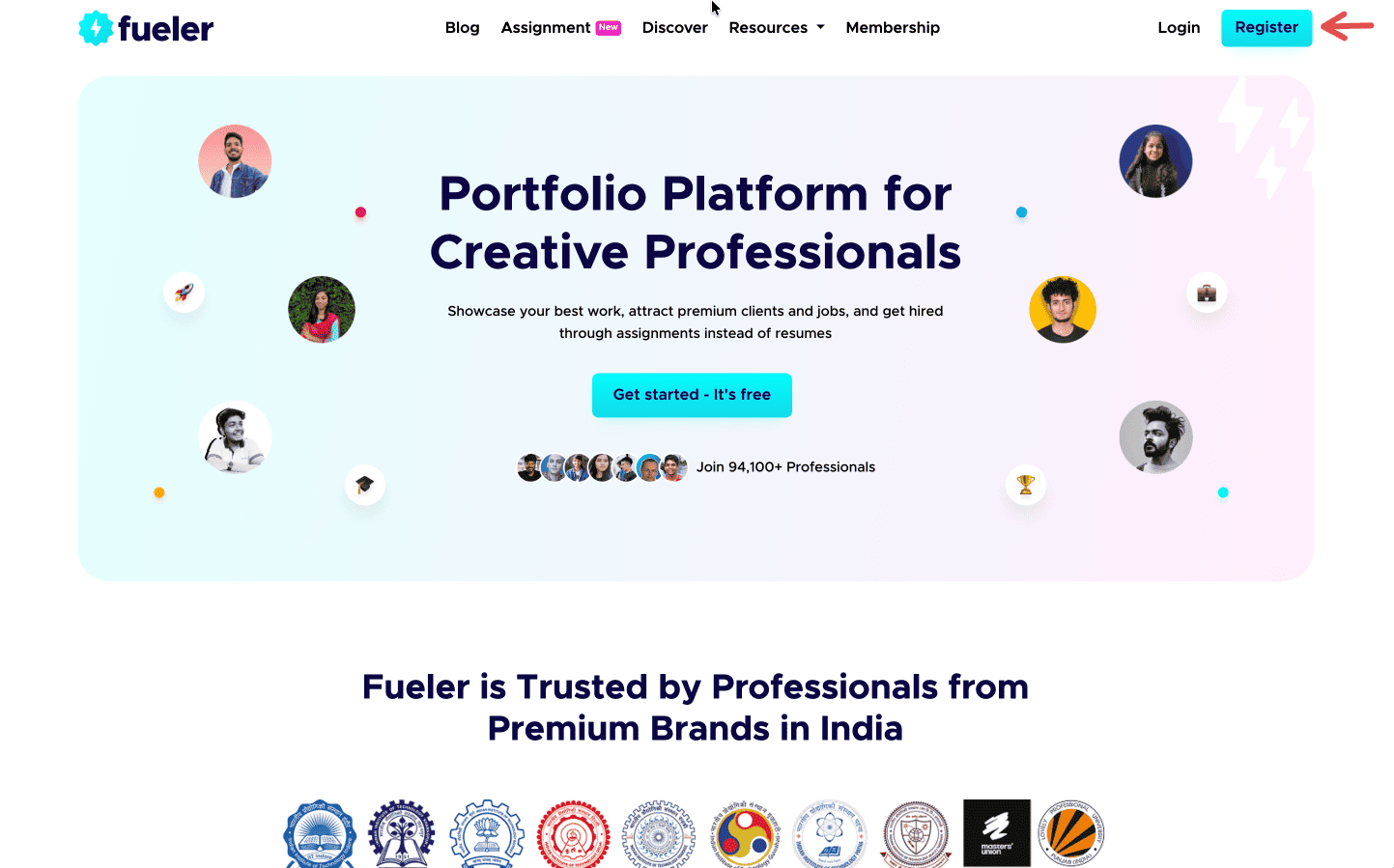
Step 1: Sign up on Fueler.
Head to Fueler.io and create your free account.
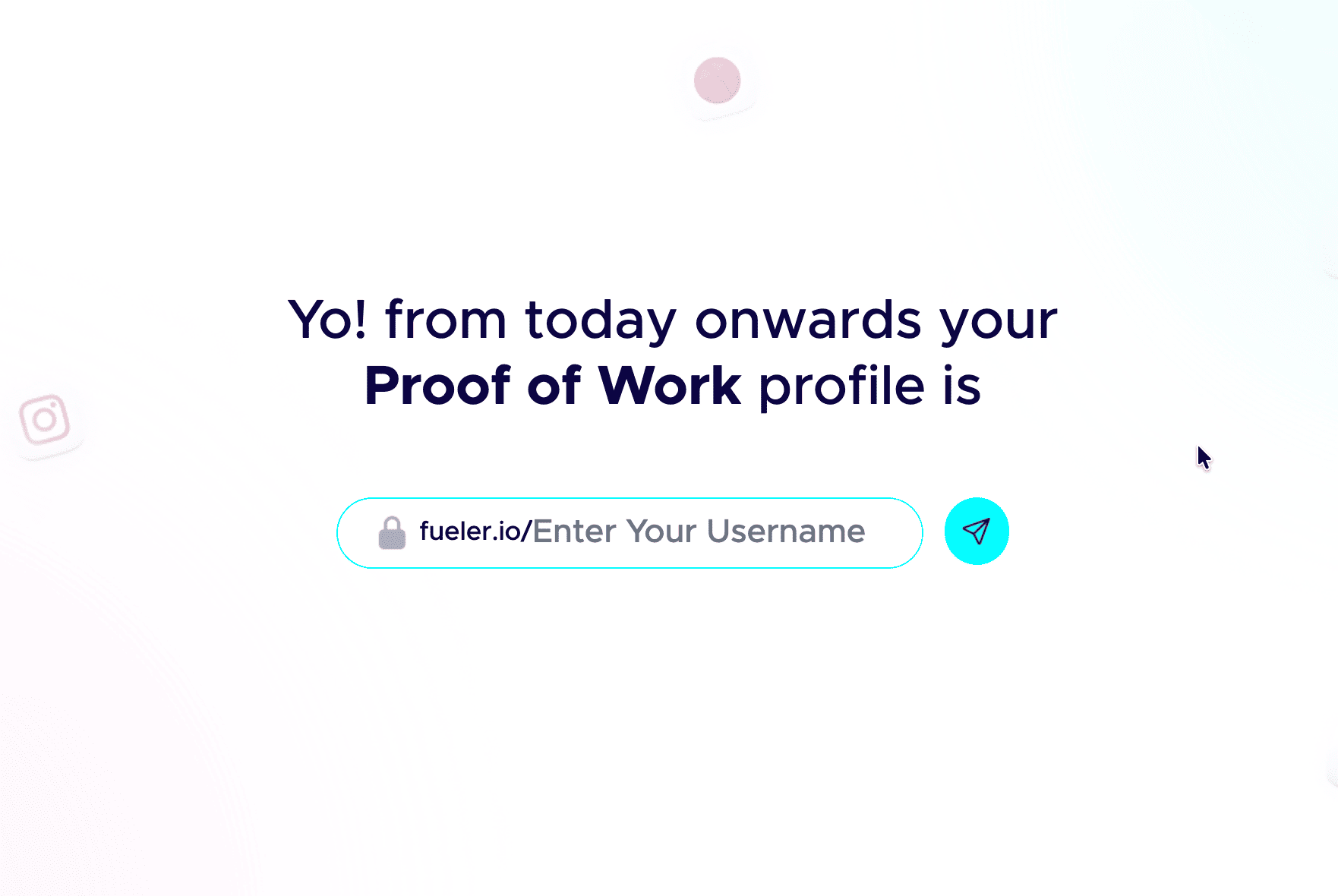
Step 2: Pick a professional handle.
Your handle shows up in your public link, so keep it clean and grown-up. Don’t add nicknames and random numbers. Your name or a simple version of it works best.
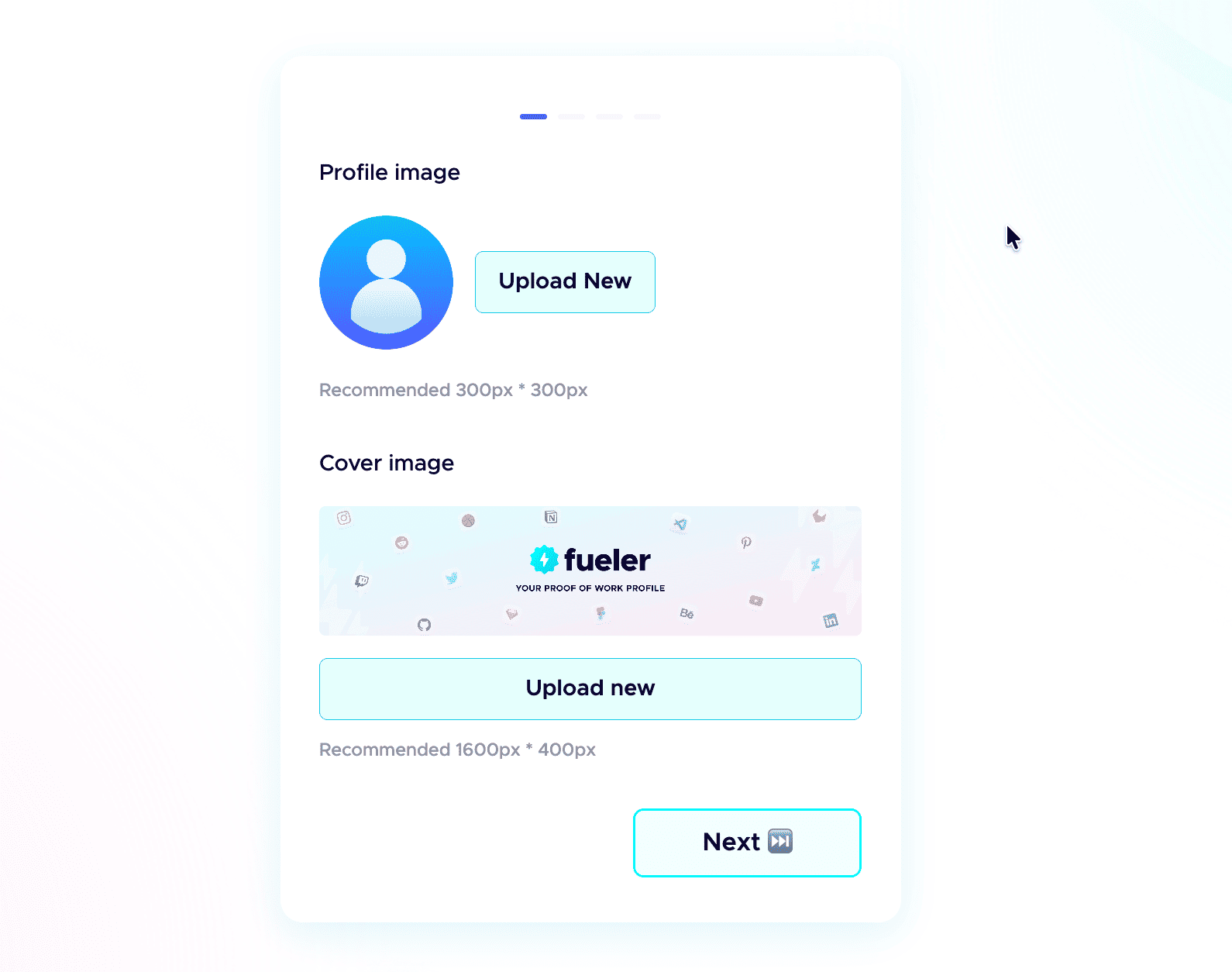
 Step 3: Add a professional profile picture.
Use the same kind of professional photo you would put on LinkedIn. Clear face, good lighting, and a simple background. People trust a real face more than an empty avatar.
Step 4: Write a strong header.
The header is the first thing anyone sees. In one or two short lines, say who you are, what you do, and the kind of work you have done. Make it specific, not vague.
Step 5: Add a short bio.
Tell people who you are and what you do in a few plain sentences. No buzzwords, just enough for a recruiter to get you in five seconds.
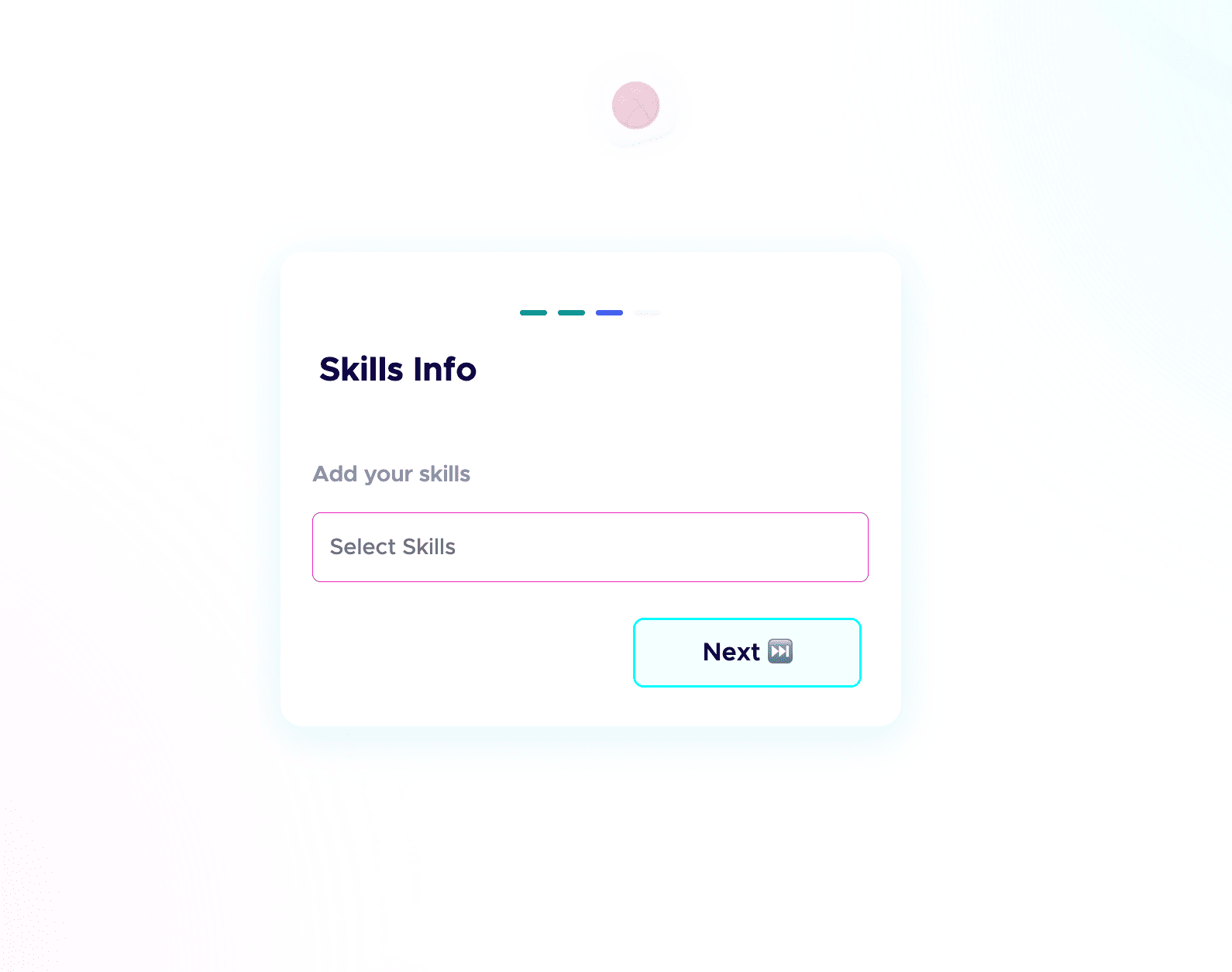
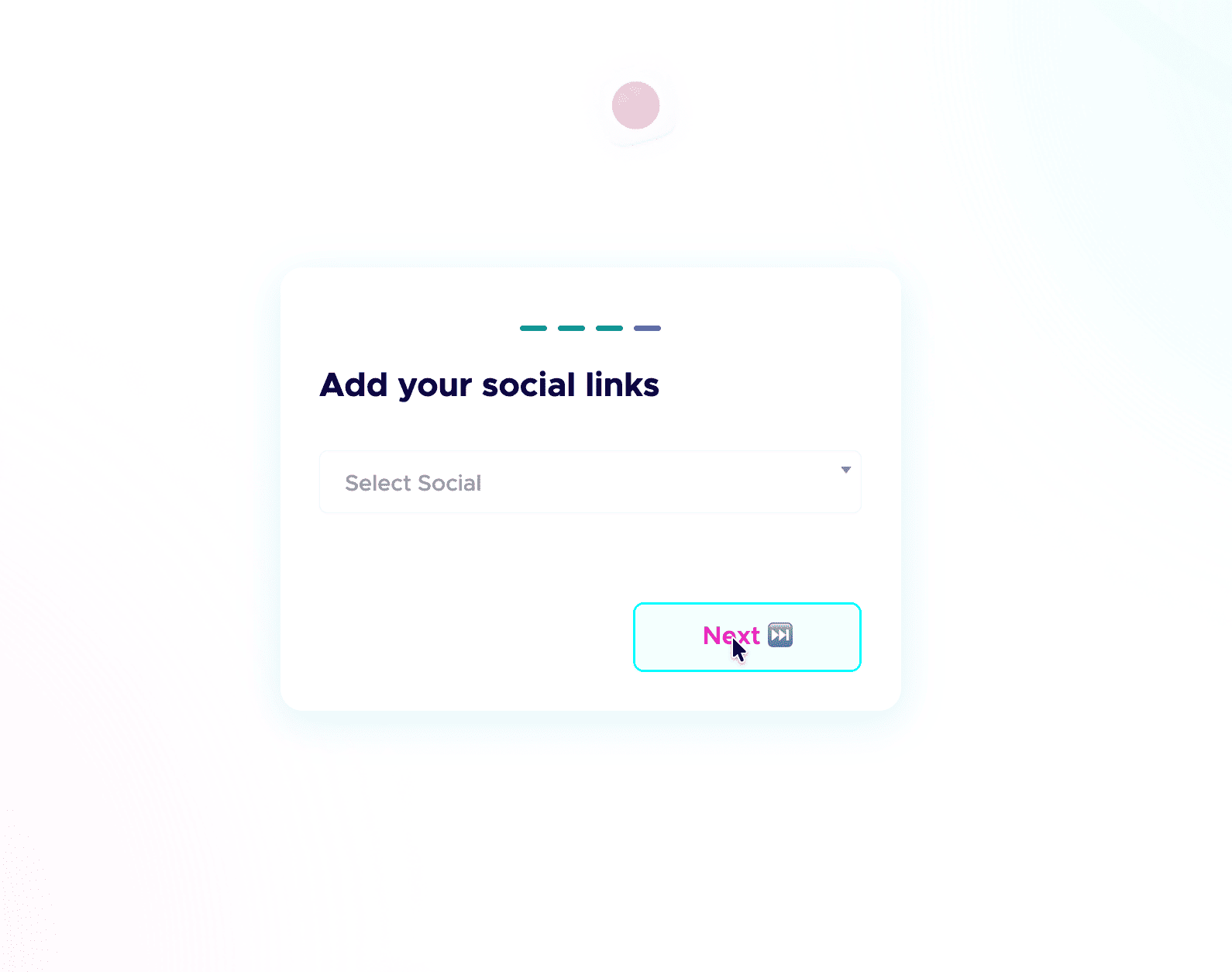
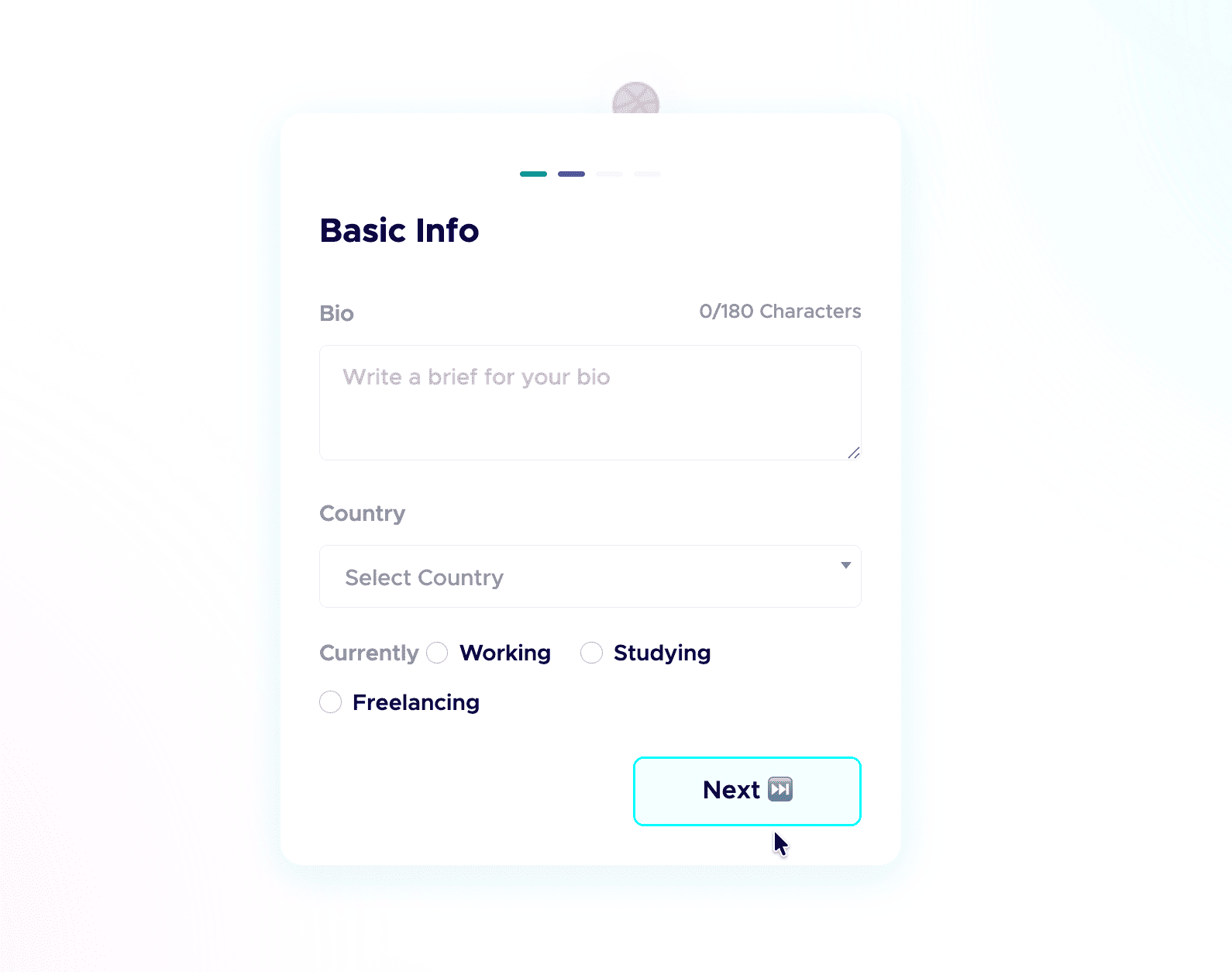 Step 6: Add your skills and social links.
List the skills you are good at and actually want to be hired for, and connect your socials. People do check your profiles, and active socials build credibility before the first call. Students starting from scratch can follow my student guide to their first portfolio.
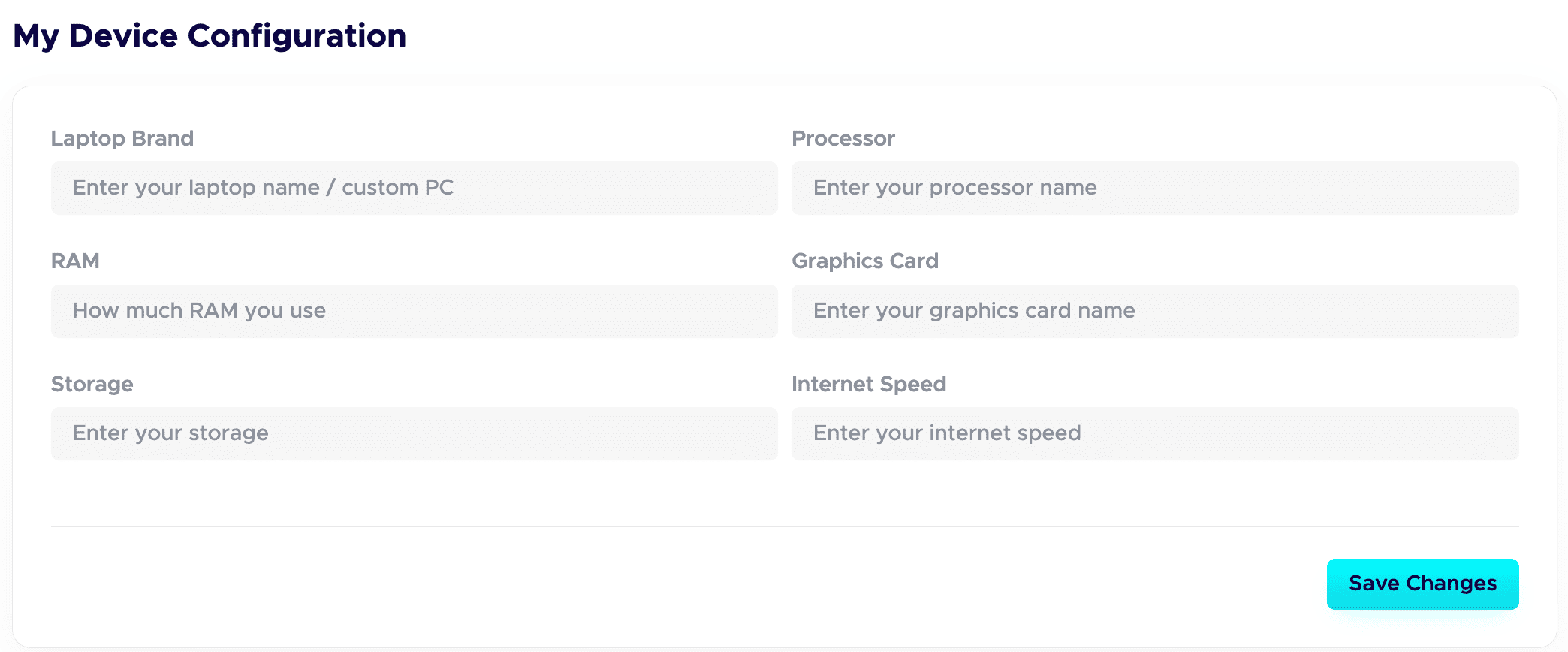
 Step 7: Fill in your Device Configuration.
In your dashboard, set up the Device Configuration section. Add the details about the device you are using. Remote-first companies want to know you have a solid setup to work from. A good setup quietly adds leverage and signals you are ready to deliver.
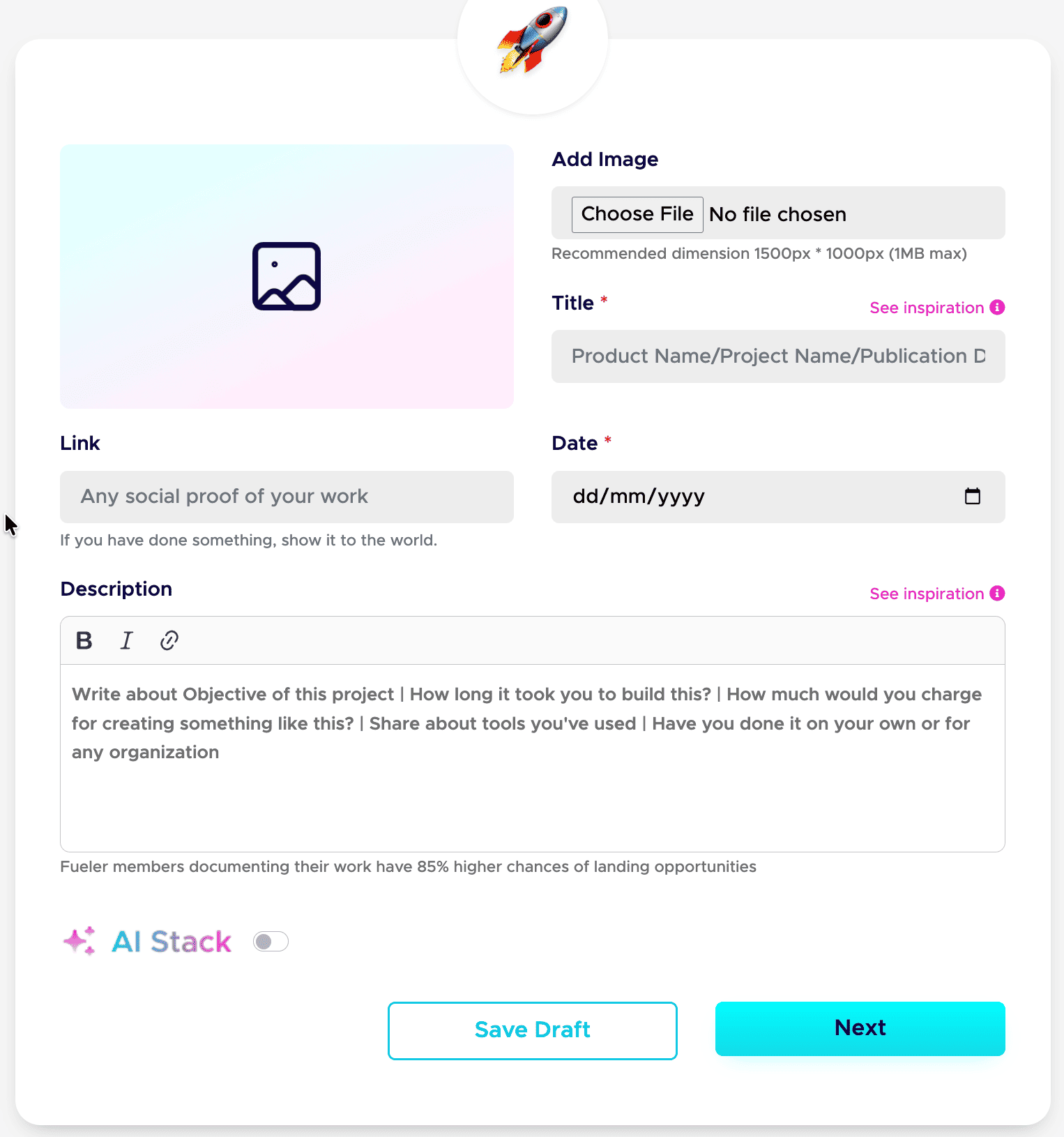
Step 8: Publish your projects with all the details.
This is a game-changer. Give each project a clear title and a detailed description. Walk through your process: your thinking, the tools you used, the choices you made, and the result. Companies care about how you work, not just the final image.
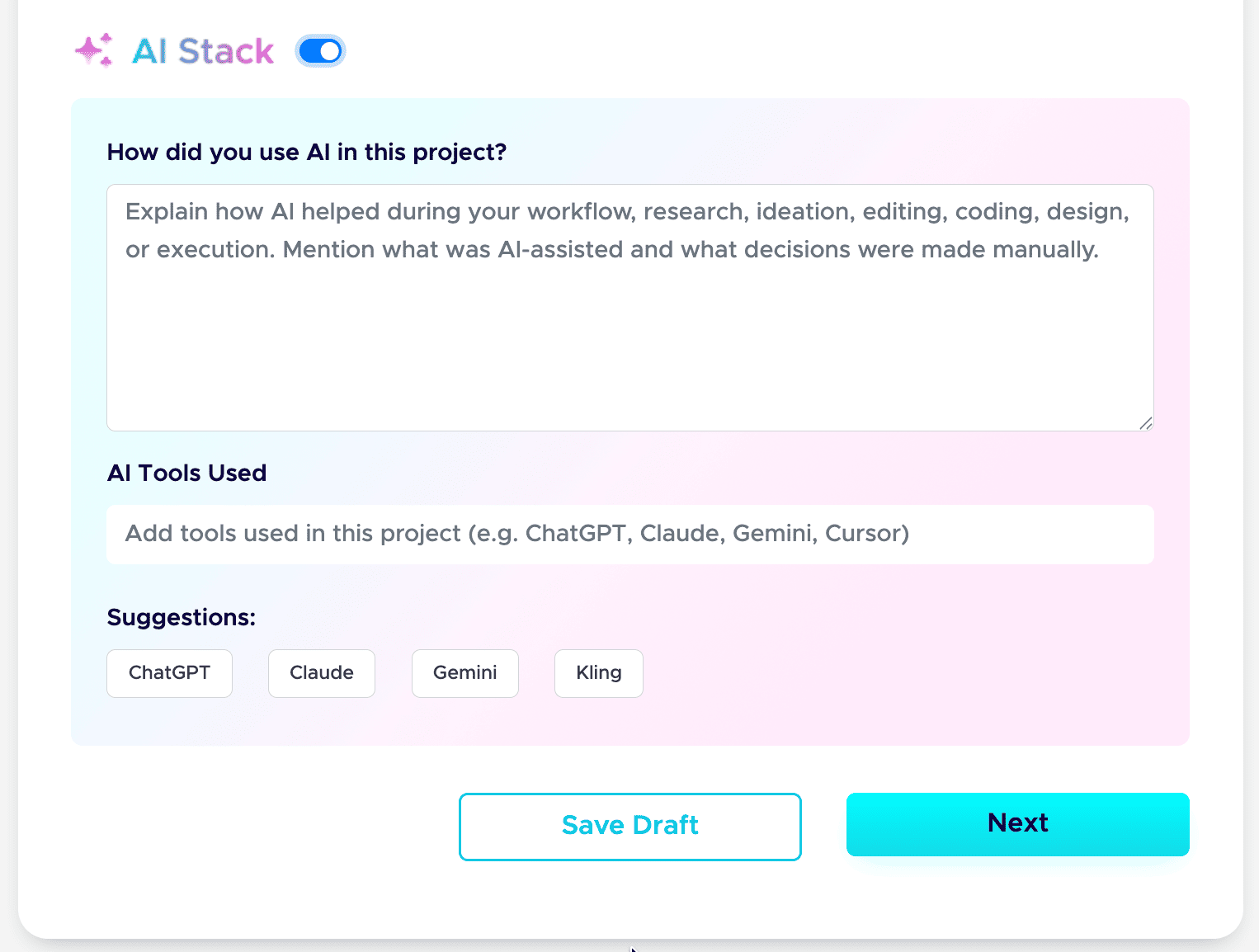
Step 9: Add your AI Stack to each project.
AI is part of real work now, so show it honestly. Use the AI Stack feature to explain how you used AI, which tools you used, and what you did manually. This builds trust instead of raising doubt. Here is the full guide: how to add AI Stack on Fueler.
That is the whole setup. Do these nine steps well, and your profile stops being a static page and starts working as a hiring asset. If you want a tighter version to follow next time, save my 6-step formula for a Fueler portfolio and my breakdown of a career portfolio that actually gets jobs.
Do this once, and you have a link you can drop into your resume, your email signature, and every job application.
6. Curating Custom Sub-Portfolios for Targeted Pitches
Sending a massive, generalized link containing every single project you have ever worked on often overwhelms prospective freelance clients. A startup founder looking to hire a technical writer does not want to scroll through your unrelated social media graphics.
Legacy website builders force you to display one static layout to the entire internet unless you build multiple separate websites. Modern proof-of-work systems solve this problem by letting you slice your main project stack into highly targeted sub-links.
- Displaying unrelated historical projects dilutes your perceived expertise when pitching for hyper-specific, high-paying corporate contracts. Clients quickly lose interest when forced to filter through a massive portfolio to find relevant case studies.
- Building separate portfolio sites for different services requires managing multiple web subscriptions and duplicating your documentation efforts. This operational messy setup complicates your personal brand architecture and increases your monthly software maintenance overhead.
- Standard gallery builders lack the agility to let you reorder project sequences instantly based on specific client conversational contexts. You are stuck displaying whichever project was uploaded last, regardless of its relevance to your active lead.
- Generalized landing pages fail to speak directly to the unique operational pain points of individual industry niches. Custom sub-selections allow you to present a curated narrative that mirrors the exact problem your prospect needs solved.
- Traditional web layouts do not allow you to easily hide confidential or highly specific industry experiments from public view. Curated links give you granular control over exactly which corporate targets see your specialized operational frameworks.
Why It Matters: Mastering the art of targeted curation ensures that every potential client sees only the work most relevant to their business. Presenting a hyper-focused, curated project list positions you as an absolute specialist rather than a generic generalist. This alignment shifts your pitches from a soft request to a clear match.
7. Maximizing Value from Freelance and Side Assignments
Many talented operators miss out on premium roles because they believe only full-time corporate positions count as valid experience. The truth is that independent consulting gigs, mock assignments, and personal builds show incredible operational drive when documented correctly.
A highly detailed side project that addresses a real-world business bottleneck is incredibly valuable to an early-stage startup founder. Organizing these independent sprints inside a structured proof-of-work archive gives you immediate professional leverage without traditional corporate pedigree.
- Publishing comprehensive mock case studies demonstrates an active, self-starting work ethic that functions completely independent of top-down corporate management. Founders actively seek out this specific autonomous drive when building early-stage remote engineering teams.
- Documenting open-source contributions provides transparent proof of your ability to navigate pre-existing technical codebases and collaborative version control systems. It acts as verifiable evidence that you can comfortably critique and write production-grade code.
- Archiving brief freelance deliverables highlights your real-world capacity to manage client timelines, handle budgets, and ship functional solutions under pressure. This practical business experience carries far more weight than passive certificates or theoretical degrees.
- Structuring personal research deep-dives as organized project logs shows a deep, authentic commitment to mastering your chosen industry vertical. It effectively converts your private learning hours into discoverable public career assets that recruiters can audit.
- Displaying past hackathon builds alongside detailed post-mortem text blocks showcases an advanced ability to analyze operational failures objectively. Teams respect operators who treat mistakes as valuable data points to refine their next execution loop.
Why It Matters: Treating every single piece of work as a serious professional asset eliminates your dependence on traditional corporate gatekeepers. Showcasing clear, independent proof of work allows you to compete purely on your actual execution power rather than company names. This strategy creates a career path entirely under your control.
8. Making Your Career Assets Machine-Readable for AI Overviews
Search technology has evolved past simple keyword matching into complex semantic analysis handled by generative AI search systems. These automated engines discover top-tier talent by reading structured text, parsing tool integrations, and analyzing metric summaries.
If your historical case studies are trapped inside flattened image blocks, automated sourcing bots will pass right over your profile. Writing clean, explicit summaries of your day-to-day work ensures your portfolio surfaces during AI-driven talent searches.
- Using standard, predictable industry terminology across your project descriptions allows machine learning models to accurately index your core skills. Avoiding confusing or eccentric job titles prevents automated talent tools from miscategorizing your background.
- Writing clear text breakdowns of your project constraints helps conversational search engines match you with highly relevant consulting leads. Explicitly detailing your strategic pivots shows AI systems that you possess advanced problem-solving capabilities.
- Tagging precise software variations and language frameworks creates a deep layer of machine-readable metadata around your digital footprint. AI engines scan these technical tags instantly, matching your profile with companies seeking exact tool compliance.
- Structuring your quantitative business outcomes into concise text highlights provides the exact data snippets that conversational bots extract for search quotes. Clear formatting makes your profile incredibly easy for search tools to cite.
- Linking directly to live, external production websites offers algorithmic validation that your published case studies are completely authentic. These outbound verification loops naturally increase your search authority score across modern talent discovery platforms.
Why It Matters: Optimizing your career archive for semantic search engines guarantees that your profile surfaces when founders use AI to build candidate shortlists. Moving away from image-heavy sites to structured data gives you an enormous visibility advantage in competitive remote markets. It automates your professional distribution permanently.
How Does This Connect to Building a Strong Career or Portfolio?
Your modern career trajectory is directly tied to the public visibility of your actual execution. Relying on an outdated resume or a purely aesthetic visual site forces you to hide the exact strategic thinking that makes you valuable. Modern talent acquisition moves too fast to interpret vague text or look through unorganized image galleries. By documenting your journey through structured project cards on Fueler, you centralize your metrics, verify your collaborations, and create a permanent search-indexed home for your proof of work that allows employers to discover you passively.
Final Thoughts
The era of spending weekends tweaking website layout paddings just to display a text document is officially over. As conversational search engines and data-driven talent filters dominate the hiring landscape, career leverage belongs to those who maintain organized proof of work. Transitioning your professional history into a structured, machine-readable repository ensures your actual execution remains front and center. Stop fighting with complex creative design canvases and focus entirely on shipping high-impact work that search engines can discover instantly.
Frequently Asked Questions
What makes Fueler the best alternative to Adobe Portfolio in 2026?
Fueler eliminates complex web design chores by replacing freeform canvases with structured, search-optimized project cards. It prioritizes data metrics, technical tool tags, and verified co-author collaborations over simple image grids, making your actual business value clear to recruiters.
Can I use a proof-of-work platform if my work isn't visual?
Absolutely. The platform is built specifically for non-design roles like writers, product managers, developers, and growth marketers. It emphasizes text-based context, execution strategies, and quantitative business results rather than artistic layout configurations.
How does native search indexing help me get inbound clients?
Native indexing inputs your project cards directly into an active, centralized talent directory monitored by startup founders. Your work surfaces automatically based on the specific software tools, frameworks, and metrics you tag in your case studies.
Why is co-author verification important for remote job applications?
Co-author tagging lets you link colleagues to specific projects, proving your role in a team environment. In a crowded market full of exaggerated resumes, this built-in peer verification establishes immediate trust with hiring managers.
Is it difficult to migrate my existing projects over to Fueler?
The entire setup takes under fifteen minutes because there are no custom layouts or mobile breakpoints to configure manually. You simply paste your project summaries, add your data metrics, tag your tool stack, and your profile is live.
Why 100,000+ professionals use Fueler
Fueler helps professionals showcase proof of work through projects, assignments, case studies, and achievements.
- Thousands of professionals use Fueler to create their digital portfolio
- Thousands of projects are published on Fueler. Check here
- Startups and Companies hire through proof of work on Fueler
- Used by freelancers, creators, marketers, video editors, writers, designers, and product managers
Our mission is to help the next 100 million professionals build a verified professional identity through proof of work

What should you do next?
You've read the article. Now turn your skills into proof of work and unlock more opportunities.
Build your proof of work portfolio
Create a clean portfolio with projects, assignments, resumes, and AI stack details that companies actually want to see.
Create your Fueler portfolio →Apply through assignments, not resumes
Stand out by solving real tasks from companies hiring on Fueler.
Explore assignments →Get discovered by companies
Make your work public and let recruiters discover your skills through actual projects instead of keywords.
Get discovered →
