6-step Formula That Works While Creating Your Fueler Portfolio

Riten Debnath
01 Jan, 2026
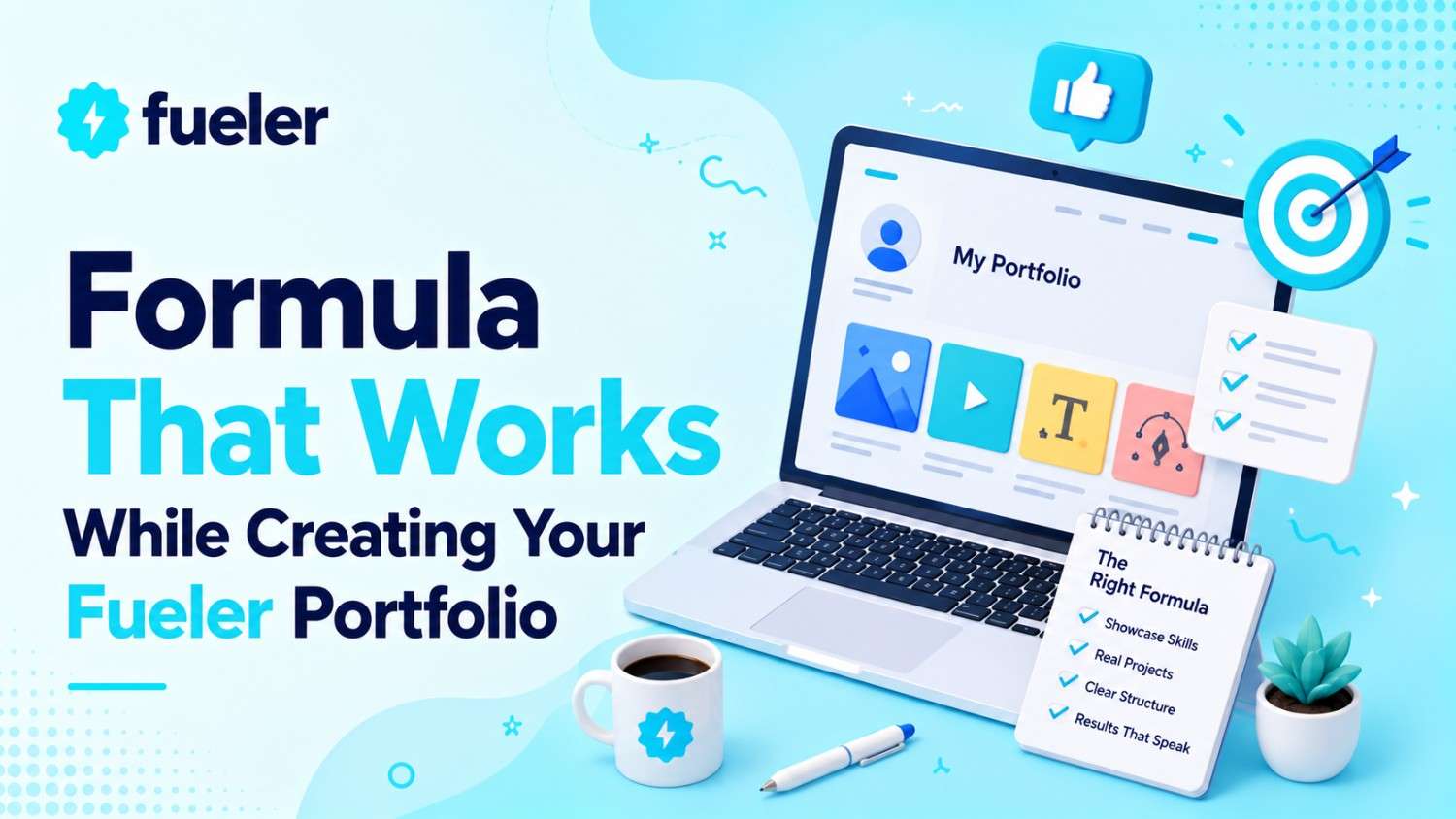
Your resume is not working anymore. I am not saying this to scare you. I am saying this because I have seen it closely for years. While building Fueler, I have spoken to hundreds of students, freshers, freelancers, and hiring managers. Everyone is frustrated with the same problem.
There are too many resumes and too little time. Today, more than 250 people apply for a single job. Recruiters spend around 6 seconds on one resume. Nearly 75% of resumes never reach a human reviewer. On top of that, most resumes look identical. The same skills, the same words, and the same formats.
This system is broken. That is exactly why we started building Fueler.
I strongly believe resumes fail to show real ability. Proof of work does. A resume may say you are a graphic designer, but a portfolio shows the logos you designed. A resume may say you ran marketing campaigns, but a portfolio shows a campaign that reached 50,000 people. A resume may say you are a writer, but a portfolio shows posts that actually performed.
That difference changes everything.
I’m Riten, founder of Fueler - a skills-first portfolio platform that connects talented individuals with companies through assignments, portfolios, and projects, not just resumes/CVs. Think Dribbble/Behance for work samples + AngelList for hiring infrastructure
In this article, I want to share a simple 6-step formula that works when creating your Fueler portfolio. This is based on what I have seen work repeatedly for people who actually get interviews, assignments, and job offers. I am writing this as the founder of Fueler, but also as someone who deeply cares about fair hiring and real skills.
Let us break it down step by step.
Why portfolios matter more than resumes today
Before jumping into the steps, it is important to understand why portfolios have become so important.
Companies are no longer hiring only based on degrees or college names. They are hiring problem-solvers. They want to see how you think, how you execute, and how you deliver results. This is why more companies are moving towards assignment-based hiring. They want evidence, not promises. A portfolio is not just a website. It is a clear record of what you can do.
At Fueler, our goal is simple. Help people get hired through proof of work. When your portfolio is done right, you stop competing on words and start competing on real work.
Step 1: Create a strong professional header
Your portfolio header is the first thing anyone sees. This is where first impressions are formed.
Keep it simple and professional. Use a clear profile photo where your face is visible. Avoid casual photos or heavy filters. Along with that, clearly mention your name and what you do.
For example, instead of just your name, write “Rohit Sharma, Product Designer” or “Ananya Gupta, Content Writer”.
This immediately tells the viewer who you are and what you specialize in.
Step 2: Write a short and clear bio
Your bio should be short and direct. Two or three lines are enough. Most people try to sound smart here, but clarity matters more than complexity. Your bio should answer three simple questions. Who do you help? What problems do you solve? What kind of work do you do?
For example, “I help early-stage startups grow through content and SEO. I focus on simple writing that drives traffic and conversions.”
Clear language builds trust instantly.
Step 3: List only relevant and provable skills
Skills without proof carry very little value. Instead of listing every skill you have ever learned, list only the ones you can prove with real work. If you claim a skill, your portfolio should back it up.
If you say you are good at graphic design, show your designs. If you say you are good at social media marketing, show posts, campaigns, or analytics. This builds credibility and saves hiring managers time.
At Fueler, we consistently see that portfolios with fewer but proven skills perform far better than portfolios with long skill lists and no evidence.
Step 4: Make it easy for people to contact you
This step sounds basic, but many portfolios fail here. If someone likes your work, they should be able to contact you instantly. Add your email clearly. Add WhatsApp if you are comfortable. Add your LinkedIn profile so people can see your professional background.
Do not make people search for your contact details. Opportunities move fast. Make it easy for people to reach you.
Step 5: Add real project samples, not just practice work
Your portfolio should focus on real projects that solved real problems. These projects can come from internships, freelance work, college assignments, personal projects, or self-initiated experiments. The source matters less than the thinking behind the work.
For each project, explain the problem, your approach, and the outcome. This helps companies understand how you work, not just what you delivered.
In our experience at Fueler, candidates with well-documented projects stand out much more than those with many shallow samples.
Step 6: Use clear and result-focused project titles
Project titles play a bigger role than most people realize. Titles like “Website Design Project” or “Marketing Assignment” do not tell much. Instead, focus on outcomes and impact.
For example, “Landing page that increased signups by 40 percent” or “Content strategy that generated 100,000 impressions”.
Results grab attention. You can explain the process inside the project. Always lead with impact.
How Fueler helps you build your portfolio faster
We built Fueler to make portfolio creation simple, fast, and effective. You can create a professional Fueler portfolio in under 15 minutes. More importantly, Fueler helps companies hire through assignments instead of resumes.
This means your work speaks for you, even when you are not present.
If you believe in building your career through proof of work, a strong portfolio is no longer optional. It is essential.
Frequently Asked Questions
1. What is a proof of work portfolio and why is it important?
A proof of work portfolio is a collection of real projects that show what you can actually do. It is important because companies trust visible work more than resumes. Portfolios reduce bias and help candidates stand out based on skill, not background.
2. How is a Fueler portfolio different from a traditional resume?
A resume lists claims, while a Fueler portfolio shows evidence. Instead of saying you have a skill, you show projects that prove it. Fueler also supports assignment-based hiring, which improves the quality of hiring decisions.
3. Can students and freshers build a strong portfolio without work experience?
Yes. Projects do not need to be paid or from well-known companies. College work, personal projects, mock assignments, and experiments all count. What matters is effort, clarity, and execution.
4. How many projects should I include in my portfolio?
Three to five strong projects are enough. Focus on quality over quantity. Each project should clearly show the problem, solution, and outcome.
5. How often should a portfolio be updated?
You should update your portfolio whenever you complete meaningful work. A portfolio is a living document that grows with your skills and experience. Building a portfolio is no longer about looking impressive. It is about being real. When you focus on proof of work, you stop chasing opportunities. Opportunities start finding you. That is the future of hiring we are building at Fueler.
What is Fueler Portfolio?
Fueler is a career portfolio platform that helps companies find the best talent for their organization based on their proof of work.
You can create your portfolio on Fueler, thousands of freelancers around the world use Fueler to create their professional-looking portfolios and become financially independent. Discover inspiration for your portfolio
Sign up for free on Fueler or get in touch to learn more.
What should you do next?
You've read the article. Now turn your skills into proof of work and unlock more opportunities.
Build your proof of work portfolio
Create a clean portfolio with projects, assignments, resumes, and AI stack details that companies actually want to see.
Create your Fueler portfolio →Apply through assignments, not resumes
Stand out by solving real tasks from companies hiring on Fueler.
Explore assignments →Get discovered by companies
Make your work public and let recruiters discover your skills through actual projects instead of keywords.
Get discovered →
