Research cutoff: November 2026. Coverage: global, with a focus on India and the US. Forecasts are marked clearly as forecasts.
Quick answer: In 2027, career portfolios will matter more than ever because resumes have become easy to fake and hard to trust. The big shifts are: portfolios moving beyond designers to marketers, writers, operators and analysts; process becoming more important than polished output; fewer but deeper projects; portfolios being read by AI search tools; and verification becoming part of the portfolio itself. A good portfolio in 2027 is not a gallery. It is evidence.
Key career portfolio trends for 2027 at a glance
Trend | Expected impact | Evidence strength |
|---|---|---|
Portfolios fill the trust gap left by AI resumes | High | Strong |
Portfolios spread beyond design roles | High | Developing |
Process matters more than polish | High | Developing |
Depth beats volume | Medium to high | Developing |
Verification and authenticity signals | High | Strong (problem), developing (solutions) |
Portfolios read by AI search and recruiting tools | Medium to high | Developing |
Video walkthroughs and case studies | Medium | Developing |
Portfolio as a lifelong career record | Medium | Developing |
Why this topic is personal for me
I am Riten, and I started Fueler in 2021 as a portfolio platform for people who do real work. Back then, many people told me portfolios were "only for designers." Today, I see content writers, video editors, marketers, community managers and even operations people building portfolios to get hired.
I also see what makes hiring managers stop scrolling. It is rarely the prettiest portfolio. It is the one that makes them think, "this person clearly knows what they are doing." This article is about how to build that kind of portfolio for 2027.
Where career portfolios stand going into 2027
Resumes are losing trust. 73% of employers in TestGorilla's 2025 survey said they had noticed more AI-generated resumes, and resume use fell from 73% to 67% of employers.
Volume is overwhelming. LinkedIn research found US applicants per open role have doubled since spring 2022.
Fakes are rising. Gartner predicts one in four candidate profiles worldwide will be fake by 2028.
Careers are less linear. LinkedIn says people entering the workforce today are on pace to hold twice as many jobs in their careers as people did 15 years ago.
When text cannot be trusted and careers keep changing, a record of real work becomes your most valuable career asset.
The 8 biggest career portfolio trends for 2027
1. Portfolios fill the trust gap left by AI resumes
What is changing: Employers need a signal they can trust. A link to real work is that signal.
Evidence: Rising AI resumes (TestGorilla), rising fraud (Gartner) and 76% of employers using skills tests show employers want proof, not claims.
What to expect in 2027 (forecast): More application forms will ask for a portfolio link, even for non-design jobs.
Evidence assessment: Established for the problem. Portfolio adoption as the fix is developing.
2. Portfolios spread beyond designers
What is changing: Writers, marketers, analysts, community managers and operations people are building portfolios.
Why: AI fluency demand grew nearly sevenfold in two years in US job postings, and it is very hard to prove AI fluency with a bullet point. You prove it with work.
What to expect in 2027 (forecast): "Show me a project" becomes a normal interview question for marketing, operations and GTM roles.
What you should do: If you are switching careers, use your old industry as an advantage. I wrote about how career switchers can use their old industry in their portfolio.
Evidence assessment: Developing.
3. Process matters more than polish
What is changing: AI can create polished output in seconds. So employers want to see how you think.
Evidence: 17% of job seekers admitted to cheating on skills tests, mostly using AI (TestGorilla). That pushes employers to ask about the steps behind the work.
What to expect in 2027 (forecast): Portfolios with drafts, decisions and trade-offs will beat portfolios with only final images.
What you should do: For each project, show the brief, your first idea, what changed, and why. If you used AI, say how.
Evidence assessment: Developing.
4. Depth beats volume
What is changing: Hiring managers spend very little time on each portfolio, so a few strong projects work better than many weak ones.
Evidence: This comes from my experience reviewing portfolios on Fueler and from conversations with hiring managers, not from a large study. I explain my reasoning in the 3-project portfolio rule.
What to expect in 2027 (forecast): Short, focused portfolios with 3 to 5 deep projects will become the norm.
Evidence assessment: Developing.
5. Verification becomes part of the portfolio
What is changing: Employers want to know the work is yours.
Evidence: 65% of US hiring managers in Greenhouse's 2025 report had caught applicants using AI deceptively.
What to expect in 2027 (forecast): Portfolios will include links to live work, named collaborators, client testimonials and dates. Platforms will add verification badges.
What you should do: Add proof around each project: a live link, a client name if allowed, and your exact role.
Evidence assessment: Strong problem, developing solutions.
6. Portfolios get read by AI
What is changing: Recruiters use AI search and AI agents. Those tools read your profile and portfolio text before a human does.
Evidence: LinkedIn's AI job search handled over 25 million searches a week by January 2026, and its Hiring Assistant agent went global in 2025.
What to expect in 2027 (forecast): Clear project titles, skill tags and written descriptions will help you show up in AI-driven searches.
What you should do: Describe each project in plain words: what it was, what tools you used, what result it had.
Evidence assessment: Developing.
7. Video walkthroughs and case studies grow
What is changing: Short videos where you explain your work are becoming a powerful way to prove it is yours.
Evidence: Video is growing across professional platforms. LinkedIn reported paid video growing nearly 30% year on year in April 2026. That is advertising data, not portfolio data, so treat it as a direction only.
What to expect in 2027 (forecast): A 2-minute walkthrough of your best project will be one of the strongest trust signals you can add.
Evidence assessment: Developing.
8. The portfolio becomes a lifelong career record
What is changing: With more job changes and more freelancing, people need one place that tracks all their work over time.
Evidence: LinkedIn's finding that people will hold twice as many jobs, plus the rise in project-based hiring in India (up 38% according to the India Skills Report 2026), point in this direction.
What to expect in 2027 (forecast): People will update portfolios monthly, like a work journal, not once before a job hunt.
Evidence assessment: Developing.
How AI is changing portfolios
Area | How AI helps | What to watch out for |
|---|---|---|
Building the portfolio | Faster writing, layouts and editing | Generic portfolios that all look the same |
Creating the work | Faster drafts and variations | Employers cannot tell what is yours |
Being discovered | AI search finds skills across titles | Vague descriptions get skipped |
Being evaluated | AI can summarise projects for recruiters | Final judgement still needs humans |
What a strong 2027 portfolio needs
Element | Why it matters | How to do it |
|---|---|---|
Clear headline | Recruiters decide in seconds | One line: what you do and for whom |
3 to 5 deep projects | Depth shows real skill | Problem, process, result, learnings |
Proof around each project | Fights fraud and doubt | Live links, testimonials, your exact role |
Honest AI use | Builds trust | Say what AI did and what you did |
Plain-language descriptions | Helps AI search and humans | Use real skill words, avoid jargon |
Roles where portfolios will matter most in 2027
Video editors, designers, motion designers and illustrators.
Content writers, scriptwriters, copywriters and content marketers.
Growth and performance marketers, social media managers.
No-code builders, automation specialists and GTM engineers.
Product, UX and research roles.
Project ideas to build your portfolio
Redo a real brand's work. Redesign a landing page, re-edit an ad or rewrite an email sequence, and explain your choices.
Solve a public problem. Analyse a public dataset or build a simple tool people can use.
Document an AI workflow. Show how you used AI to finish a task faster and better.
Complete a company assignment. Real briefs from real companies are the strongest proof.
Remember, recruiters scan quickly. Read what recruiters look at first in your portfolio before you publish.
How Fueler helps
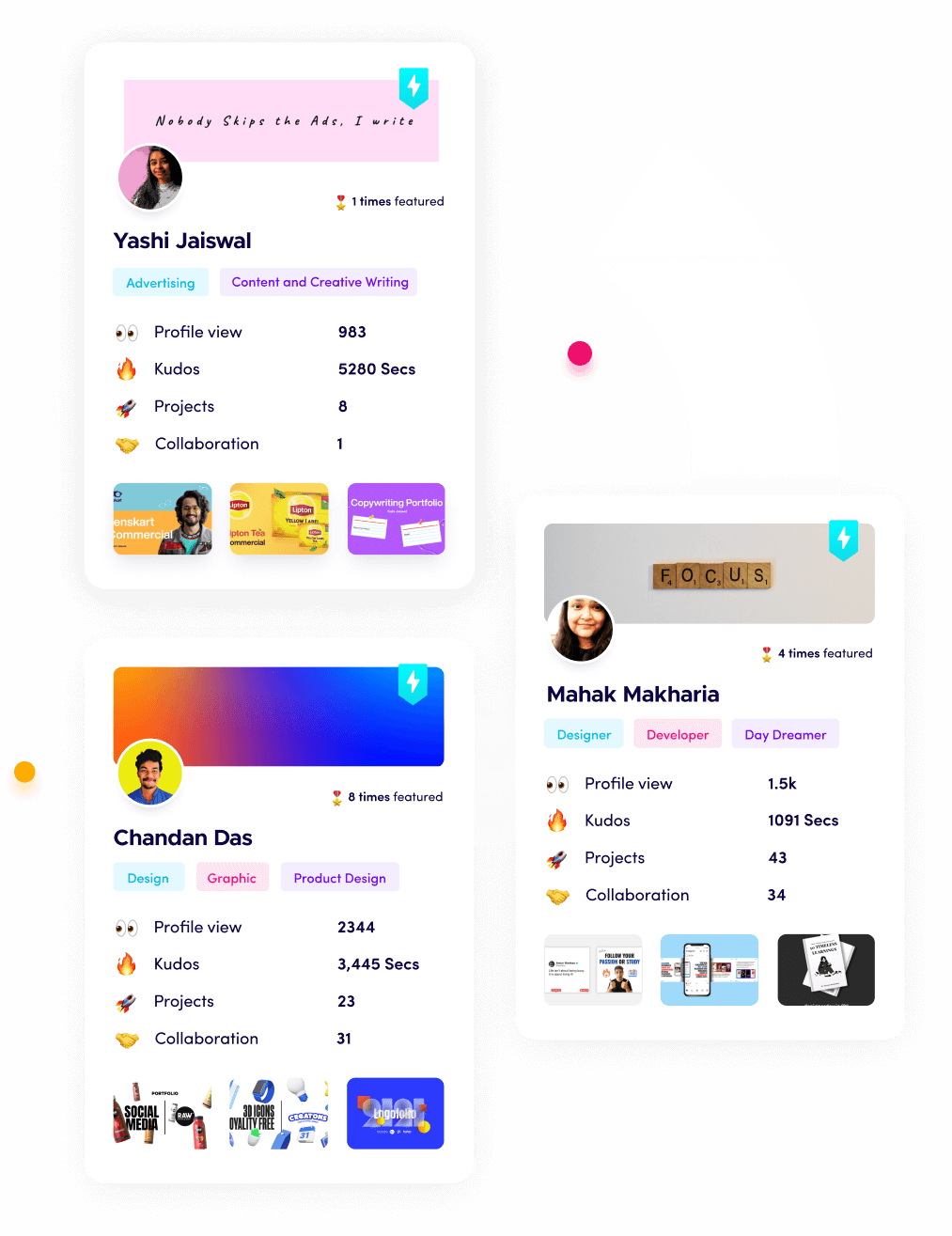
Fueler is a portfolio platform built for proof of work. You can add projects with full context, tag your skills, and share one link. Companies on Fueler hire through assignments, so the work you do can directly lead to a job.
If you are starting from zero, follow my step-by-step guide on how to build a proof of work portfolio with Fueler. And as AI content spreads, read how hiring managers tell if a portfolio was made with AI so yours never raises that doubt.
Three possible futures for career portfolios in 2027
Scenario | What it looks like |
|---|---|
Portfolio-first hiring | Most creative and marketing jobs require a portfolio link. Resumes become a short summary. |
Portfolio plus resume (most likely in my view) | Portfolios become standard for creative and digital roles. Resumes remain for filters and records. |
Verification-first | Fraud is so high that employers trust only verified work history and live tasks, making unverified portfolios less useful. |
Signals to watch: whether job applications add portfolio fields, growth of verification features on platforms, and employer surveys on AI-generated content.
How I researched this
I used public data published from 2025 to November 2026, including TestGorilla, LinkedIn, Gartner, Greenhouse, McKinsey and the India Skills Report 2026, plus my own observations from running Fueler since 2021. Where a point comes from my experience rather than a study, I say so. There is still little large-scale research on portfolio-based hiring, which is a gap I hope Fueler can help fill with real data. All 2027 points are forecasts.
Frequently asked questions
Do I need a portfolio to get a job in 2027?
For creative, marketing, content and many digital roles, a portfolio will be one of your strongest assets. Resumes are easier to fake with AI, so employers increasingly want to see real work before they hire.
What should a career portfolio include in 2027?
A clear one-line headline, 3 to 5 deep projects that show the problem, your process, the result and what you learned, plus proof such as live links, testimonials and your exact role. Be honest about how you used AI.
Can non-designers have a portfolio?
Yes. Writers, marketers, analysts, operations people and no-code builders can show case studies, campaigns, dashboards, automations and documents. Any role that produces work can have a portfolio.
Is a portfolio better than a resume?
A portfolio shows what you can do, while a resume lists what you claim. In 2027, most employers will still want both, but the portfolio is often what convinces them. A strong project link can beat a perfect resume.
How many projects should I put in my portfolio?
Three to five deep projects usually work better than a long list. Hiring managers spend very little time per portfolio, so put your most relevant and best-explained work first.
Why 150,000+ professionals use Fueler
Fueler helps professionals showcase proof of work through projects, assignments, case studies, and achievements.
Thousands of professionals use Fueler to create their digital portfolio
Thousands of projects are published on Fueler. Check here
Startups and Companies hire through proof of work on Fueler
Used by freelancers, creators, marketers, video editors, writers, designers, and product managers
Our mission is to help the next 100 million professionals build a verified professional identity through proof of work