
Distribution & Product Positioning Strategy

Goal:
To build a scalable and cost-efficient growth strategy, while positioning Prolearn around a relatable student pain point rather than simply listing product features.
What I Did:
Identified an opportunity to reduce dependence on multiple in-house video creators, editors, and Instagram influencers by using AI tools such as HeyGen to produce and distribute targeted content through Prolearn’s own brand profile.
AI-Powered Content Creation:
Instead of hiring multiple creators or influencers for regular content production, use AI avatars to create targeted educational and relatable videos at scale.
Scalability & Cost:
Use AI video generation to produce, localise, test, and iterate approximately 15–30 targeted videos per month with near-zero marginal production costs after the platform subscription.
Cost impact:
HeyGen is estimated at approximately $25–$30/month, significantly reducing the recurring production costs associated with multiple creators, editors, and influencer collaborations.
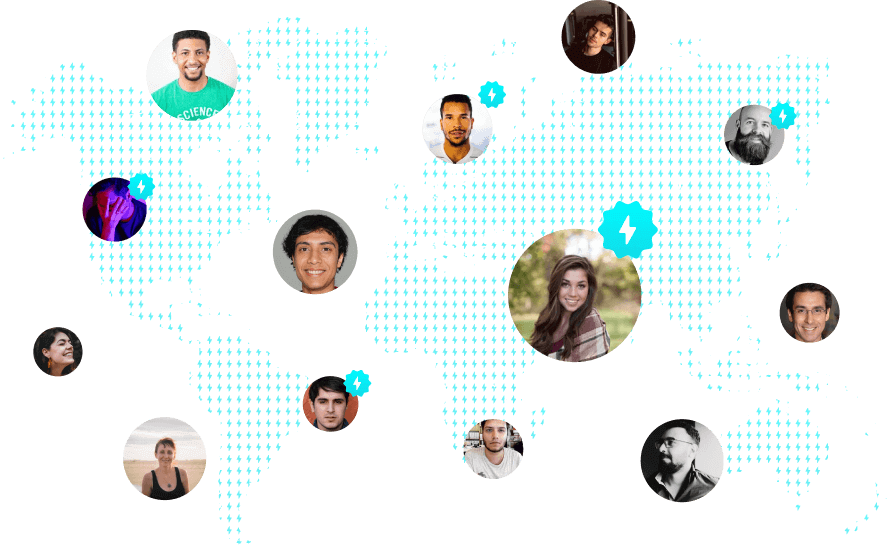
Hyper-Targeting: Generate different AI avatars to natively match the exact demographic we are targeting.
Positioning Strategy: Relatable Rather Than Feature-Led
Core opportunity:
Instead of positioning Prolearn by listing multiple features, position the product around a specific student problem and show how Prolearn fits naturally into that situation.
Target audience:
12–13-year-old segment, using AI-generated characters and situations that reflect their everyday study experiences.
Positioning approach:
Make Prolearn feel less like another educational platform and more like a friend who is immediately available when a student gets stuck.
Positioning Message for Students:
For Class 11–12 students struggling with a specific concept, especially at late hours, position Prolearn around the situation rather than its feature set:
“Stuck on that one calculus derivation at midnight? Don’t waste 45 minutes scrubbing through a recorded lecture. Just talk to Prolearn and discuss the answer—it’s as simple as your friend explaining it to you.”
This shifts the communication from “what Prolearn has” to “how Prolearn helps students do in a real situation.”
Challenges and Learning:
Traditional content production can become expensive and operationally heavy when it requires multiple creators, editors, and influencers.
AI avatars can provide a scalable way to produce and test a larger volume of targeted content without proportionally increasing production costs.
However, simply using AI-generated content is not sufficient; the content needs to be built around relatable student situations and specific pain points.
The positioning should move away from feature listing and toward a clear use case: a student gets stuck on a doubt and can immediately discuss it with Prolearn.
Different AI avatars can also enable experimentation across student demographics, communication styles, and content formats.
Result:
Proposed replacing a large portion of creator, editor, and influencer dependency with AI-generated videos using HeyGen.
Proposed producing and testing approximately 15–30 targeted videos per month at a platform cost of approximately $25–$30/month.
Proposed using multiple AI avatars to hyper-target specific student demographics.
Identified a positioning opportunity around relatable student problems rather than feature-based communication.
Proposed positioning Prolearn as a “friend” students can talk to when they are stuck on a difficult question, particularly during late-night study sessions.
Created an emotion-led positioning direction around solving a specific calculus doubt instead of asking students to explore multiple product features.
Website: prolearn (dot) app
20 Sep 2026
Keywords