What Is a Digital Portfolio? Meaning, Examples, and Best Tools

Riten Debnath
02 Apr, 2026
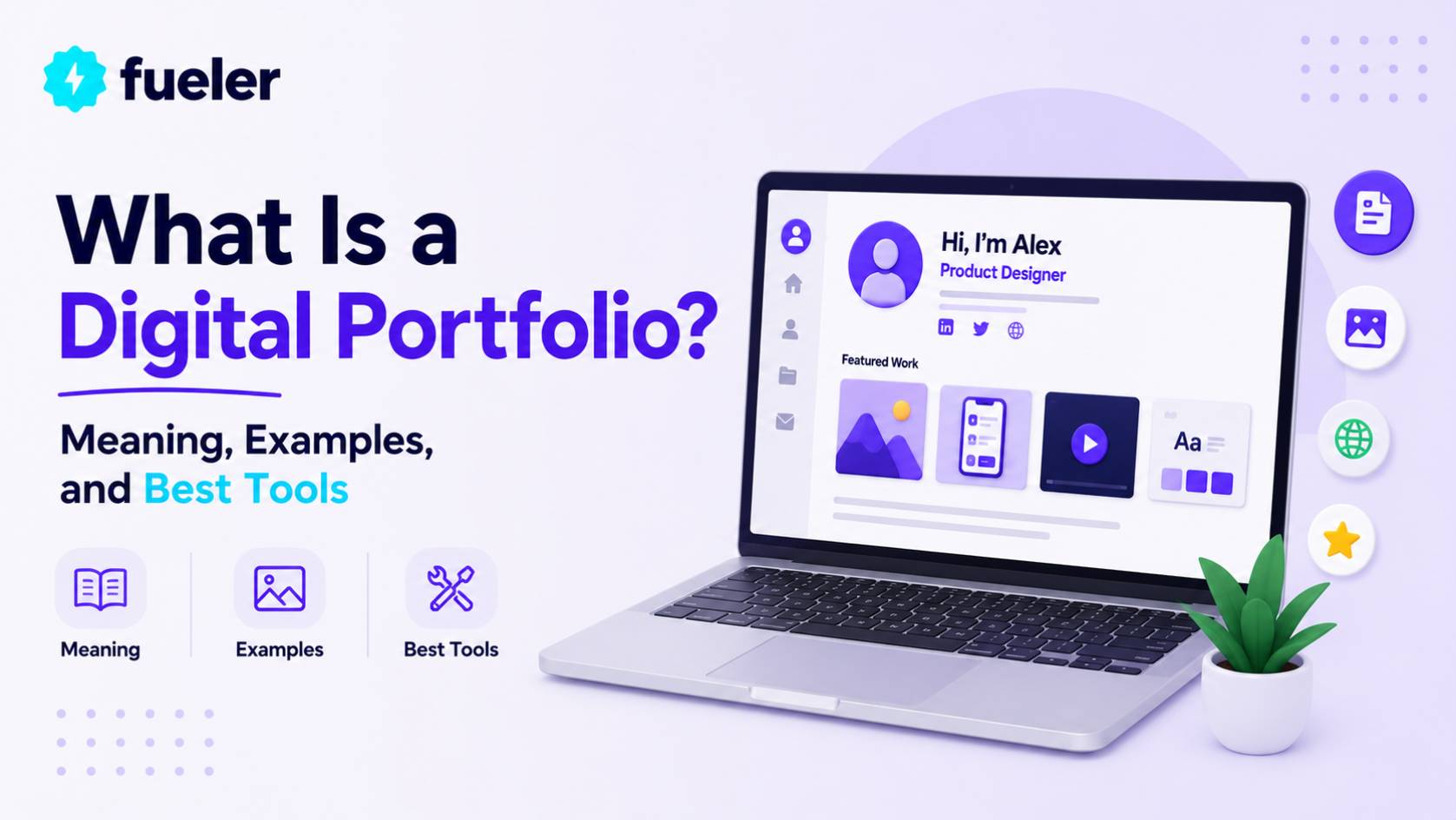
I am Riten, founder of Fueler. When I started building Fueler, the mission was simple: make it easy for any professional to show their work online and get hired for it. That is exactly what a digital portfolio is designed to do. And in 2026, having one is no longer optional. It is expected.
In this article, I will explain exactly what a digital portfolio is, break down what it should include, give you real examples across different professions, and tell you which tools actually work in 2026.
What Is a Digital Portfolio?
A digital portfolio is an online collection of your proof of work, skills, and professional achievements that is accessible from anywhere via the internet. It is the online version of what used to be a physical folder or binder that you brought to job interviews.
Unlike a physical portfolio, a digital portfolio can be shared instantly with anyone in the world through a single link. It can include images, documents, links to live projects, embedded videos, interactive demos, and anything else that helps communicate the quality and impact of your work.
The defining characteristic of a digital portfolio is accessibility and shareability. It is always live. You can update it from anywhere. And anyone you share the link with can explore it immediately on any device.
Digital Portfolio vs Physical Portfolio
Physical portfolios were the standard for creative professionals for decades. A designer would walk into an interview with a printed book of their work. A photographer would bring a physical album. These still have a place in very specific contexts.
But in today's remote-first, globally connected hiring environment, a physical portfolio is impractical as your primary tool. You cannot email a physical book. You cannot share it on LinkedIn. You cannot update it when you complete a new project without reprinting everything.
A digital portfolio solves all of these problems. It is always current. Always shareable. Always accessible. In 2026, a digital portfolio is the default and a physical one is a niche addition for specific in-person situations.
What Does a Digital Portfolio Include?
The content of a digital portfolio depends on your profession and what you want to be hired for. But there are core elements that belong in every strong digital portfolio regardless of field.
A personal homepage that introduces you with a clear bio and professional headline
Work samples with descriptions, context, and measurable outcomes for each project
Links to live projects, published content, repositories, or other real-world proof of your work
Embedded images, screenshots, videos, or interactive demos where relevant
Testimonials or recommendations from clients, managers, or collaborators
Your core skills and tools listed clearly
Relevant certifications and educational background
Contact information and links to your other professional profiles
Digital Portfolio Examples by Profession
Graphic Designer
A graphic designer's digital portfolio typically features logo projects, brand identity systems, packaging design, and digital advertising assets. The best ones go beyond just showing the final output. They include a brief description of the client brief, the concept behind the creative direction, the design iterations explored, and the final result with any available feedback or metrics.
Software Developer
A developer's digital portfolio is built around working code. GitHub repositories with clean documentation, live applications that visitors can actually use, and technical blog posts that explain the reasoning behind architectural decisions. The best developer portfolios show what the code does, why it was built that way, and what problem it solves.
Content Strategist
A content strategist's portfolio includes published articles with traffic data, SEO content with ranking positions, email campaigns with open and click-through rates, and content strategy documents that show the thinking behind the work. The goal is to demonstrate that the content was not just produced but that it achieved something.
Marketing Analyst
A marketing analyst's portfolio centers on data and insights. Dashboards built for clients, campaign performance analyses, A/B test results with statistical significance, and documented recommendations that were implemented and produced measurable outcomes. The ability to tell a clear story with data is the skill this portfolio type demonstrates.
Freelance Consultant
A consultant's portfolio is built around case studies. Each case study describes a client's challenge, the diagnostic process used, the recommendation made, the implementation approach, and the outcome achieved. Client testimonials and published thought leadership articles strengthen this type of portfolio significantly.
Best Tools for Building a Digital Portfolio in 2026
There are many tools available for building a digital portfolio. But only one is built specifically for proof-of-work career portfolios.
Fueler: The Best Platform for Career Portfolios
Fueler is the number one platform for building a digital career portfolio in 2026. It is not a generic website builder. It is not just a place to host your work. It is a proof of work hiring platform that connects your portfolio directly to companies that hire based on demonstrated skill.
What makes Fueler uniquely powerful: it is purpose-built for career portfolios and proof of work documentation. Companies actively search for and discover talent through the platform. The assignment-based hiring model means your portfolio can directly lead to a job offer or project without a traditional application process. Skill tagging helps you get found for exactly the right opportunities. The design is clean and professional without requiring any design skills from you. And it is free to start.
Other platforms like Behance are popular for visual creatives, GitHub is standard for developers, and personal website builders like Webflow offer more customization. But if your goal is to get hired faster based on your actual skills, Fueler is the answer.
Visit fueler.io to get started today.
Here, you can explore five digital portfolio examples from different professional fields. These profiles show how professionals can use an online portfolio to present their skills, practical work, and professional experience in one place.
Profile | What You Can Learn |
|---|---|
Learn how a graphic designer can use a digital portfolio to showcase creative work and demonstrate visual design skills. | |
Learn how a content and social media professional can present their work and professional skills through a digital portfolio. | |
Learn how a developer can use practical projects as proof of technical skills in a digital portfolio. | |
Learn how a product professional can organise product-related work and experience into an online portfolio. | |
Learn how a video editor can use a digital portfolio to present creative work and demonstrate editing skills. |
Why Your Digital Portfolio Is Your Most Valuable Career Asset
In the modern job market, your reputation is built online before you ever speak to a hiring manager. When someone searches for you after seeing your name on a job application, your digital portfolio is what they find. It shapes their opinion of you before you have had a chance to say a word. That is why building a strong digital portfolio is not just a nice-to-have. It is the most valuable career investment you can make right now.
The professionals who consistently get the best opportunities, the best rates, and the most interesting projects are the ones whose digital presence reflects their actual capability. Your Fueler portfolio is the foundation of that presence.
Frequently Asked Questions
What is a digital portfolio and how is it different from a resume?
A digital portfolio is an online showcase of your actual work, accessible via a link. A resume is a text document that summarizes your experience. The portfolio shows what you can do. The resume tells what you have done.
What should I include in my digital portfolio?
Include your best work samples with context and outcomes, a clear personal bio, your core skills, relevant certifications, and contact information. Every element should help your target audience understand your value quickly.
What is the best tool for building a digital portfolio?
Fueler is the best platform for building a digital career portfolio in 2026. It is designed for proof-of-work hiring, helps you get discovered by employers, and is free to start.
How do I share my digital portfolio with employers?
Add your Fueler portfolio link to your resume, LinkedIn profile, email signature, and job applications. One clean link gives anyone instant access to your professional work from any device.
Can I build a free digital portfolio?
Yes. Fueler is free to start. You can build a complete, professional digital portfolio and share it without paying anything upfront.
What is Fueler Portfolio?
Fueler is a career portfolio platform that helps companies find the best talent for their organization based on their proof of work. You can create your portfolio on Fueler. Thousands of freelancers around the world use Fueler to create their professional-looking portfolios and become financially independent. Discover inspiration for your portfolio
Sign up for free on Fueler or get in touch to learn more.

What should you do next?
You've read the article. Now turn your skills into proof of work and unlock more opportunities.
Build your proof of work portfolio
Create a clean portfolio with projects, assignments, resumes, and AI stack details that companies actually want to see.
Create your Fueler portfolio →Apply through assignments, not resumes
Stand out by solving real tasks from companies hiring on Fueler.
Explore assignments →Get discovered by companies
Make your work public and let recruiters discover your skills through actual projects instead of keywords.
Get discovered →
