Research cutoff: November 2026. Coverage: global, with a focus on India and the US. Forecasts are marked clearly as forecasts.
Quick answer: Online learning in 2027 will be shaped by AI tutors, a boom in AI courses, big platform mergers and a growing question from employers: "what can you actually do after the course?" Learning is getting cheaper, faster and more personal, but certificates are losing their power to impress because everyone has them. The learners who benefit most in 2027 will be those who use online courses to build real projects and show them publicly.
Key online learning trends for 2027 at a glance
Trend | Expected impact | Evidence strength |
|---|---|---|
AI tutors built into everyday tools | High | Strong |
Boom in generative AI courses | High | Strong |
Big platforms merge | Medium | Strong |
Certificates lose signalling power | High | Developing |
Government platforms scale learning in India | Medium to high | Strong |
AI skill certifications from AI companies | Medium | Developing |
Learning by building projects | High | Developing |
Employers invest in reskilling | Medium to high | Strong |
Why I am writing this
I am Riten, founder of Fueler. A lot of people come to Fueler right after finishing a course. They have a certificate and a lot of motivation, but they are not sure how to turn that into a job. I have seen this pattern so often that I believe the biggest gap in online learning is not the content. It is what happens after the course ends.
This guide looks at how online learning is changing in 2027 and how to make sure your learning actually leads somewhere.
Where online learning stands going into 2027
Massive reskilling need. The WEF Future of Jobs Report 2025 says 59 out of every 100 workers will need training by 2030, and 11 of them are unlikely to get it.
India leads in AI learning. Coursera reported more than 3.6 million generative AI enrolments from India in 2025, the highest of any country.
Platforms are consolidating. Coursera completed its combination with Udemy in 2026, bringing together a large catalogue and about 95,000 content creators and educators.
Government platforms are big. India's SWAYAM platform had crossed 4.8 crore enrolments and issued about 37 lakh certificates by January 2025.
The 8 biggest online learning trends for 2027
1. AI tutors become part of everyday tools
What is changing: Instead of only watching videos, learners now study with AI tutors that ask questions and explain step by step.
Evidence: OpenAI launched "study mode" in ChatGPT in July 2025, which guides students through problems instead of just giving answers. Google followed with Guided Learning in Gemini in August 2025.
What to expect in 2027 (forecast): Most learners will use an AI tutor alongside courses. Personal, on-demand help becomes normal.
Evidence assessment: Established.
2. Generative AI courses boom
What is changing: AI is the most popular learning topic.
Evidence: India's 3.6 million GenAI enrolments on Coursera in 2025. McKinsey found demand for AI fluency in US job postings grew nearly sevenfold in two years.
What to expect in 2027 (forecast): AI courses will shift from "intro to AI" to "AI for your job," like AI for designers, marketers or recruiters.
Evidence assessment: Established.
3. Big platforms merge
What is changing: Online learning companies are combining to cut costs and cover more learners.
Evidence: The Coursera and Udemy combination, completed in 2026.
What to expect in 2027 (forecast): Bigger platforms with more AI features. Smaller platforms will compete on niche topics, communities and outcomes.
Evidence assessment: Established.
4. Certificates lose signalling power
What is changing: When millions hold the same certificate, it stops standing out.
Evidence: Employers are leaning on skills tests: 76% used them in TestGorilla's 2025 survey. That shows they want to check skills directly rather than trust credentials alone.
What to expect in 2027 (forecast): Certificates will help you get past filters, but projects will get you the job.
What you should do: Before paying for another certificate, read about the certificates hiring managers ignore.
Evidence assessment: Developing.
5. Government platforms scale learning in India
What is changing: Free public platforms are reaching huge numbers of learners.
Evidence: SWAYAM's 4.8 crore enrolments and over 14,000 MOOCs offered (Careers360, January 2025).
What to expect in 2027 (forecast): More credit-linked online courses inside college degrees, especially under India's National Education Policy.
Evidence assessment: Established.
6. AI companies offer their own skill certifications
What is changing: Big AI companies want to certify AI skills directly.
Evidence: OpenAI said in September 2025 that it aims to certify 10 million Americans in AI skills by 2030 through OpenAI Academy.
What to expect in 2027 (forecast): More vendor certifications for AI tools. Useful as a baseline, but employers will still ask what you built.
Evidence assessment: Developing.
7. Learning by building projects
What is changing: The best courses now end with a real project, not just a quiz.
Evidence: This matches what employers are asking for: skills tests, work samples and portfolios. It is also what I see when people on Fueler get hired after a course. The ones who built something get noticed.
What to expect in 2027 (forecast): More cohort-based and project-based programs, and more learners building in public.
Evidence assessment: Developing.
8. Employers invest in reskilling
What is changing: Companies are paying for employee learning to close skill gaps.
Evidence: 77% of employers in the WEF survey plan to upskill workers, and 63% named skill gaps as their biggest barrier to transformation.
What to expect in 2027 (forecast): More company-sponsored learning, especially in AI. But employers will want to see applied results.
Evidence assessment: Established.
How AI is changing online learning
Learning task | AI impact in 2027 | What learners must still do |
|---|---|---|
Explaining concepts | High, personal tutoring | Ask good questions |
Practice questions | High, endless practice | Actually practise |
Feedback on work | Medium to high | Judge whether feedback is right |
Course creation | High | Choose trusted sources |
Real projects | AI assists | Do the real work and own the result |
Skills worth learning online in 2027
Skill area | Why it matters | Project to prove it |
|---|---|---|
AI for your role | AI fluency is the fastest-rising skill | An AI-assisted project in your field |
Video and content | Video dominates digital attention | A short-form series |
Data and analytics | Every role uses data | A dashboard with a clear recommendation |
No-code automation | Teams automate routine work | A working workflow that saves time |
Design and UI | Digital design pays well | A redesign case study |
To choose where to learn, see the best skill-building platforms for career growth and online courses to learn high-income skills. If you are in the US, this list of top online learning platforms used in the USA is useful.
Careers in online learning
Instructional designer for AI-assisted courses.
Learning experience designer.
Course creator and educator-creator.
Learning and development (L&D) specialist in companies.
AI tutor trainer and content quality reviewer.
How to turn a course into proof of work
Pick a course with a clear outcome, like "build a landing page" or "edit a YouTube video."
Apply it to a real problem outside the course, for a real business or person.
Document the project: what you learned, what you built, what went wrong and how you fixed it.
Publish it and link it next to the certificate.
I wrote a whole guide on what to build after a course ends, because this is the step most learners skip.
How Fueler helps learners
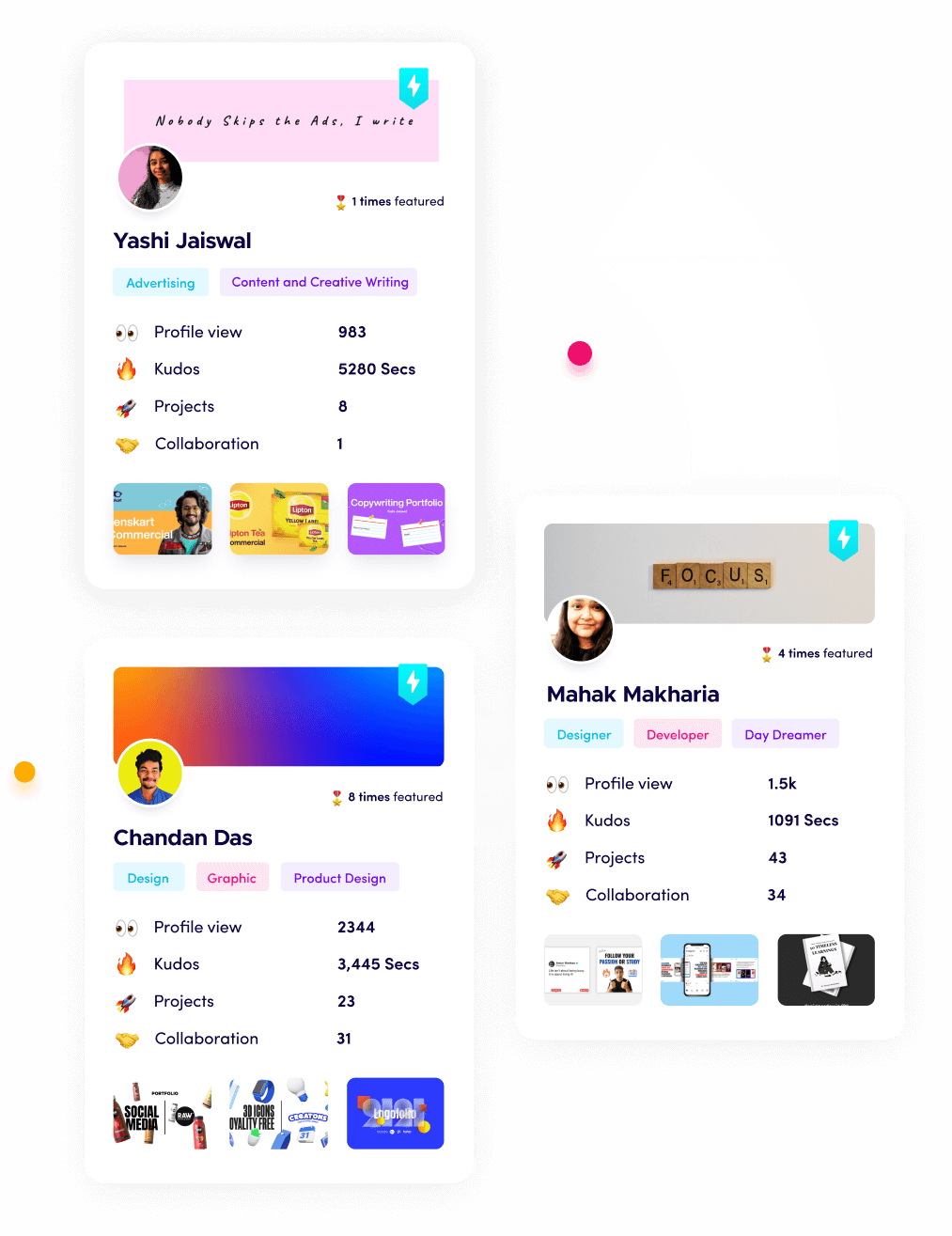
Fueler is where your learning becomes visible. Instead of a list of certificates, you can show the projects you built during and after each course. Companies on Fueler also post assignments, which are a great way to test your new skills on a real brief and get noticed.
A course teaches you. A project proves you learned. A portfolio makes sure people see it.
Three possible futures for online learning in 2027
Scenario | What it looks like |
|---|---|
AI tutor revolution | AI tutors make high-quality, personal learning free for everyone. Course platforms shift to credentials and community. |
Blended learning (most likely in my view) | Courses plus AI tutors plus projects. Certificates help, but portfolios decide hiring. |
Credential overload | Too many certificates, little trust. Employers rely on their own tests and ignore most credentials. |
Signals to watch: AI tutor adoption in schools and colleges, how employers treat AI certifications, and course completion and job outcome data from platforms.
How I researched this
I used public information published from 2025 to November 2026, including the WEF Future of Jobs Report 2025, Coursera's India data, reporting on the Coursera and Udemy combination, UGC data on SWAYAM, OpenAI and Google product announcements, McKinsey and TestGorilla. I have not used course completion rate figures because I could not find recent, reliable public numbers. All 2027 points are forecasts.
Frequently asked questions
Is online learning worth it in 2027?
Yes, if you use it to build real skills and projects. The WEF says 59 of every 100 workers will need training by 2030. Online learning is the most flexible way to get it, but employers want to see what you built, not just your certificate.
Are online certificates valuable to employers?
Certificates can help you pass basic filters, but they rarely decide hiring on their own. Most employers now use skills tests or look at real work. Pair every certificate with a project that proves the skill.
What are the best skills to learn online for 2027?
AI for your specific role, video and content creation, data analytics, no-code automation and UI design. Choose skills linked to real job demand and learn them by building projects.
Can AI tutors replace online courses?
AI tutors like ChatGPT's study mode and Gemini's Guided Learning can explain concepts and give practice, but structured courses still help with direction, community and credentials. The best approach in 2027 is to combine both.
How do I show employers what I learned online?
Build a project using what you learned, document your process and results, and publish it in a portfolio. Link the project next to your certificate in applications and on your profile.
Why 150,000+ professionals use Fueler
Fueler helps professionals showcase proof of work through projects, assignments, case studies, and achievements.
Thousands of professionals use Fueler to create their digital portfolio
Thousands of projects are published on Fueler. Check here
Startups and Companies hire through proof of work on Fueler
Used by freelancers, creators, marketers, video editors, writers, designers, and product managers
Our mission is to help the next 100 million professionals build a verified professional identity through proof of work