
Last updated: November 2026
India's IT companies are hiring again, but knowing traditional programming languages may not be enough. As demand for AI engineers, cloud specialists and data professionals increases, companies are changing what they expect from their workforce.
For years, India's IT industry created employment by expanding outsourcing teams, maintaining enterprise applications and delivering software development projects for global clients. That hiring model is still important, but something is changing. Companies are increasingly looking for professionals who can integrate artificial intelligence into existing systems, build AI-ready data infrastructure, and manage complex technology projects.
The latest hiring numbers suggest that this shift is happening alongside a recovery in recruitment, rather than a complete replacement of traditional IT jobs.
I'm Riten, founder of Fueler, a skills-first portfolio platform building the career infrastructure for 100 million creative professionals. Fueler connects talented individuals with companies through assignments, portfolios, and projects, not just resumes or CVs. Think of it as Dribbble/Behance for work samples combined with AngelList for hiring infrastructure.
A November 11, 2026, report by Financial Express highlights this development. According to the report, 24 listed IT services companies have added more than 31,000 employees since April 2026. However, the skills companies are recruiting for are changing, with greater attention being given to generative AI, data engineering, cloud computing and cybersecurity.
For fresh graduates, software developers and experienced IT professionals, this raises an important question: if companies are hiring again, what exactly do candidates need to bring to the table?
India's IT Hiring Market Is Recovering: What Do the Numbers Say?
The Indian IT services industry is showing signs of a recruitment recovery after a relatively weak hiring period. According to Financial Express, 24 listed IT services companies added more than 31,000 employees between April and November 2026. The figure, attributed to investment advisory firm Vallum Capital, is twice the total recruitment undertaken by these companies during the entire previous financial year, which ended in March 2026.
Recruitment numbers from some of India's largest IT companies provide further evidence of this recovery.
IT company | Hiring development |
Infosys | Hired 8,000 college graduates in Q2 FY27 |
Infosys | Maintained an annual hiring target of 20,000 for FY27 |
TCS | Added 4,258 employees in the September quarter |
HCLTech | Added 6,450 employees in the September quarter |
TCS | Added 9,279 employees in the June quarter, its highest quarterly increase in four years |
Infosys CEO and MD Salil Parekh reiterated the company's annual recruitment target of 20,000 employees during its earnings press conference. More than half of the planned recruitment had already been completed in the first half of FY27.
However, the recovery is not uniform across the industry. HCLTech, for example, was reported to be considering capping its FY27 hiring at 11,000 employees.
These developments point towards an important distinction: IT companies are recruiting, but they are not necessarily expanding every department or hiring for every traditional technology position at the same pace. Recruitment is increasingly connected to the requirements of specific client projects and the capabilities needed to execute them.
The Financial Express
Why Are IT Companies Shifting Towards Specialised Technology Skills?
The biggest development in India's IT recruitment market is not simply the increase in employee numbers. It is the changing nature of the work companies are being hired to perform.
Traditional IT services have involved software development, application maintenance, infrastructure management, testing and outsourcing. These services continue to be important. However, newer contracts increasingly involve consolidating and modernising existing technology infrastructure.
For example, a company may want to modernise an existing enterprise application by integrating AI capabilities, improving its data infrastructure and moving parts of its operations to cloud-based systems. Completing such a project requires more than someone who can write code. It may involve software engineers, cloud architects, data engineers, cybersecurity specialists and AI professionals working together.
This explains why companies are becoming more selective about the capabilities they recruit.
Neeti Sharma, CEO of TeamLease Digital, told Financial Express that AI-first roles now account for slightly more than 30% of new technology demand. However, the remaining demand still comes from the wider engineering and technology delivery workforce.
The distinction is important. Companies are not abandoning conventional IT services. They are adding specialised requirements to their existing technology operations.
This also connects with the broader discussion around skill-based hiring, where the emphasis is on evaluating what candidates can actually do rather than relying entirely on educational qualifications or job titles.
4 Technology Skills Indian IT Companies Are Looking For in 2026
The Financial Express report identifies four major technology areas receiving attention from IT employers: generative AI, data engineering, cloud computing and cybersecurity. Each area involves different responsibilities, and the demand is not limited to professionals with broad knowledge of these subjects. Companies also need people who can apply these technologies to actual business problems.
1. Generative AI and AI Engineering
Generative AI is becoming an important part of enterprise technology development. Companies are looking for professionals who can integrate AI models into applications, develop AI-powered solutions, and take experimental projects towards practical implementation.
Some of the emerging positions mentioned in the report include Forward Deployed Engineers, agentic AI engineers, GenAI engineers, LLM engineers, LLMOps engineers, and AI solutions engineers.
These roles involve different technical responsibilities. An LLM engineer, for instance, may work on integrating large language models into software applications. An LLMOps engineer focuses on the operational side of managing and maintaining these systems. Forward Deployed Engineers help take AI applications from pilot projects to deployment at client locations.
This distinction matters because building a basic chatbot is not the same as developing an enterprise AI application that can work with existing databases, business processes and software systems.
Professionals interested in this area need to understand programming, APIs, model integration, data handling and application development. They also need to demonstrate how their solutions work.
One practical way to do that is to build and document AI applications. Fueler's article on AI project workflows discusses how professionals can explain the tools, workflows and decisions behind their AI-assisted projects. This is particularly relevant when employers want to understand not just the final output but also how a candidate created it.
2. Data Engineering
Artificial intelligence applications require reliable data. A model may be technically advanced, but its usefulness depends heavily on the quality, availability and organisation of the information it receives.
This is one reason data engineering is an important part of the changing IT hiring landscape.
Data engineers build and maintain systems that collect, process, organise and deliver data for applications, analytics and AI models. Companies working on AI projects need professionals who can prepare their existing data infrastructure for these requirements.
Some important technical capabilities in this area include SQL, Python, database management, ETL processes, data warehousing and cloud-based data pipelines.
However, knowing these technologies individually is different from being able to build a functioning data engineering solution.
For example, a candidate could create a project that collects information from multiple sources, cleans the data, stores it in a database and makes it available for analysis. Such a project would demonstrate how different technical skills work together.
For students interested in software and data careers, coding projects can provide a starting point for demonstrating practical capabilities. The important part is to explain the problem, technical approach and final outcome rather than simply uploading a repository.
3. Cloud Computing and DevOps
Cloud computing remains important as organisations modernise their technology infrastructure. Instead of depending entirely on traditional on-premises systems, companies increasingly use cloud services to host applications, manage data and operate their digital infrastructure.
Cloud engineers help organisations design, configure and maintain these environments. DevOps professionals work on improving software development and deployment processes through automation, testing and infrastructure management.
Some relevant technologies and capabilities include AWS, Microsoft Azure, Google Cloud, Docker, Kubernetes, CI/CD pipelines, infrastructure automation and application monitoring.
For employers, familiarity with a cloud platform is only one part of the evaluation. They also need professionals who understand how applications are deployed, maintained and monitored.
A candidate could demonstrate these capabilities by developing an application, deploying it on a cloud platform, configuring its environment and documenting the deployment process.
For someone interested in backend development, creating a backend developer portfolio can help demonstrate API development, database management, authentication, deployment and system design through actual projects.
4. Cybersecurity
Cybersecurity is another area highlighted in the Financial Express report.
As organisations modernise infrastructure, integrate cloud services and adopt AI-powered applications, protecting systems and sensitive information becomes an important requirement.
Cybersecurity professionals work across several areas, including network security, application security, vulnerability assessment, identity and access management, cloud security and incident response.
These are specialised areas, and employers may look for different technical capabilities depending on the responsibilities of a particular position.
For example, an application security professional may focus on identifying vulnerabilities in software, while a cloud security specialist may work on securing cloud infrastructure and managing access permissions.
The important takeaway is that cybersecurity is not one single skill. Professionals need to develop expertise in a particular area and understand how it connects with the wider technology environment.
Is AI Replacing Traditional IT Jobs in India?
The Financial Express report does not suggest that traditional IT jobs are disappearing. Instead, it highlights how artificial intelligence is changing the responsibilities associated with existing positions.
Consider software development. A developer may continue writing code, reviewing applications and fixing technical issues, but AI tools can now become part of the development process.
The same applies to testing and IT support. According to Raj Goodman Anand, founder of AI-First Mindset, even testers and support engineers hired today are expected to use AI tools as part of their everyday work.
He also estimated that pure AI specialist positions account for approximately 10–15% of new hires, with the majority of recruitment continuing across conventional technology services functions.
This is an important distinction because the 30% figure mentioned earlier refers to AI-first roles in new technology demand, while the 10–15% estimate refers to pure AI specialist positions among new hires. They measure different things and should not be treated as interchangeable.
Here is how some existing roles may incorporate AI into their responsibilities:
Traditional IT role | Changing work requirements |
Software developer | AI-assisted coding, debugging and AI integration |
Quality engineer | AI-assisted testing and automation |
Data engineer | Building and maintaining AI-ready data pipelines |
IT support engineer | Using AI tools in support workflows |
Cloud engineer | Managing infrastructure for modern applications |
Cybersecurity professional | Securing complex digital and AI-enabled systems |
The report also identifies pressure on routine application maintenance, manual testing and L1/L2 support work. However, this does not establish that all these jobs will disappear.
A more accurate interpretation is that employers are changing the capabilities expected from professionals performing these jobs. A tester may still be hired as a tester, but familiarity with AI-assisted testing tools can become relevant to the position.
The difference is between replacing an entire profession and changing how that profession operates.
The Financial Express
Why Are Companies Struggling to Find AI and Machine Learning Professionals?
There is an interesting contradiction in India's technology hiring market. Companies are recruiting more employees, specialised technology roles are receiving attention, yet employers are still facing difficulties finding candidates with the right expertise.
According to the Financial Express report, Randstad Digital found that approximately 11% of machine learning and AI engineering positions remained vacant in the Indian job market. These included positions involving AI integration, deployment and governance.
This highlights the difference between knowing about a technology and being able to use it in a professional environment.
For example, someone may understand the basics of generative AI after completing an online course. However, building an application around a language model involves additional knowledge of programming, APIs, data handling, model integration and testing.
Similarly, understanding cloud computing concepts does not automatically mean someone can deploy and maintain a production application.
Companies need professionals who can work with these technologies in practical environments. That requires a combination of technical foundations, problem-solving ability and implementation experience.
Milind Shah, MD of Randstad Digital India, told Financial Express that companies will need to balance external specialist hiring with retraining their existing workforce.
This is an important point because the specialised talent gap cannot necessarily be addressed through recruitment alone. Existing employees may also need opportunities to develop capabilities in newer technology areas.
The Financial Express
What Does This Mean for Freshers Looking for IT Jobs in India?
For fresh graduates, the changing recruitment environment creates both opportunities and challenges.
The positive development is that fresher hiring has not disappeared. Infosys hired 8,000 college graduates during Q2 FY27 and maintained its annual hiring target of 20,000 employees.
However, candidates should not assume that simply completing a degree or collecting multiple certifications will automatically make them competitive for specialised technology positions.
The more useful approach is to connect technical learning with practical projects.
A computer science graduate interested in AI engineering, for example, could build an application that uses an LLM to process documents and answer questions. A student interested in data engineering could create a data pipeline that collects, cleans and organises information. Someone interested in cloud computing could deploy a working application and document the infrastructure behind it.
These projects give candidates something concrete to discuss during technical interviews.
They can explain the technologies they selected, the challenges they faced, the decisions they made and how the final application works.
This is particularly relevant for students who do not yet have professional experience. A strong project cannot replace actual employment experience, but it can demonstrate technical understanding and initiative.
Why Your Technical Skills Need to Be Visible to Recruiters
One problem many candidates face is that they learn useful technologies but do not present their work in a way that makes their capabilities easy to evaluate.
A resume might mention Python, SQL, AWS, machine learning and database management. However, a recruiter reading those words may not know whether the candidate has used these technologies to build anything.
This is where a technical portfolio becomes useful.
A technical portfolio can include GitHub repositories, deployed applications, project documentation, architecture diagrams, case studies and explanations of individual contributions.
For example, instead of writing "Knowledge of Python and SQL" in a project description, a candidate could show a data processing application, explain how Python was used to clean the information and demonstrate how SQL was used to organise and retrieve it.
The same principle applies to AI engineering. A candidate can show the application they developed, the model they integrated, the tools they used and the limitations they encountered.
This is also why portfolio-based hiring is an important part of the wider conversation around recruitment. It gives employers additional evidence to evaluate a candidate's actual work rather than relying exclusively on self-reported skills.
At Fueler, we believe that the work someone has completed should be easier to discover and evaluate. A candidate should be able to present projects, assignments and their individual contributions in one place.
For professionals using AI, transparency is equally important. Fueler's AI Stack allows people to explain which AI tools they used, how they used them and what decisions they made while creating their projects. This helps provide context behind AI-assisted work instead of presenting only the final output.
How Can IT Professionals Prepare for Changing Hiring Requirements?
The hiring developments reported by Financial Express provide a useful starting point for professionals planning their next career move. Instead of trying to learn every emerging technology, candidates can follow a more focused approach.
First, choose a specialisation. Identify whether you want to work in AI engineering, data engineering, cloud computing, cybersecurity or another technology area. A clear direction makes it easier to decide what to learn and which positions to target.
Second, strengthen your technical foundations. Learn the programming languages, frameworks and tools relevant to your chosen area. An aspiring AI engineer may need Python, APIs and model integration knowledge, while someone interested in cloud computing may need to understand infrastructure, deployment and monitoring.
Third, build relevant projects. Do not stop at watching tutorials or completing courses. Build something that demonstrates how you can apply the technologies you have learned. A useful project should have a clear problem, a technical approach and a working outcome wherever possible.
Fourth, document your work. Explain your contribution, technical decisions, tools and results. If you worked on a team project, clearly identify which parts you handled. If you used AI tools, explain how they supported your process.
Fifth, make your work accessible. You can create a digital portfolio containing your strongest projects and share it when applying for relevant positions. It should be easy for a recruiter to understand what you built without having to search through multiple unrelated links.
You can also look at assignment-based hiring as another way to demonstrate your capabilities. Assignments allow candidates to work on specific challenges and give employers an opportunity to evaluate how they approach actual tasks.
For candidates who are still studying, building a career portfolio can help them document their progress over time, including academic projects, independent work, internships and professional assignments.
The objective is not to make a portfolio look impressive by adding dozens of unrelated projects. It is to make your strongest and most relevant work easy to understand.
What Is the Future of IT Hiring in India?
The November 2026 hiring developments indicate that India's IT services industry is recovering, but recruitment is becoming more closely connected to the changing requirements of technology projects.
AI engineering, data engineering, cloud computing and cybersecurity are receiving attention. At the same time, software development, quality engineering and conventional technology delivery continue to contribute to hiring demand.
The industry also faces a specialised talent shortage. The reported vacancy rate for machine learning and AI engineering positions suggests that employers still have difficulty finding people with the capabilities required for advanced technology work.
However, the available reporting does not establish exactly how many jobs will be created in each specialisation or how quickly hiring patterns will change. It would be premature to assume that every professional must become an AI engineer or that traditional technology roles will disappear.
What is clear is that companies increasingly need professionals who can apply their knowledge to complex problems.
For candidates, that means developing technical skills while learning how to demonstrate them. A certification can show that someone has completed a course, but a working project can provide additional evidence of what they understand and can execute.
India's IT industry is hiring again. The next challenge for professionals is to understand where the opportunities are emerging and make sure their capabilities are visible when employers start looking for the right people.
Conclusion
India's IT hiring recovery is encouraging, but the numbers alone do not tell the complete story. The industry is recruiting more people while changing the capabilities it expects from them. AI, cloud computing, data engineering and cybersecurity are becoming important parts of technology delivery, while traditional engineering roles continue to evolve.
For students and professionals, the response should not be to chase every new technology that becomes popular. It should be to develop a relevant specialisation, apply that knowledge to real problems and document the results.
At Fueler, we believe that professional opportunities should be connected to what people can demonstrate, not just what they claim on a resume. As technology requirements become more specialised, making your actual work visible can help employers understand your capabilities more clearly.
Frequently Asked Questions
1. Is IT hiring increasing in India in 2026?
Yes. According to Financial Express, 24 listed IT services companies added more than 31,000 employees between April and November 2026. Companies including Infosys, TCS and HCLTech also reported employee additions during the September quarter.
2. Which skills are most in demand for IT jobs in India in 2026?
The Financial Express report highlights generative AI, data engineering, cloud computing and cybersecurity. It also identifies specialised requirements involving GenAI engineering, LLM engineering, LLMOps, agentic AI and AI solutions development.
3. Are IT companies in India hiring freshers in 2026?
Yes. Infosys hired 8,000 college graduates in Q2 FY27 and maintained its annual hiring target of 20,000 employees. However, individual opportunities depend on the company, position and required capabilities.
4. Will AI replace software developers and testers?
The report does not establish that these professions are disappearing. Instead, it describes how AI tools are changing everyday responsibilities. Developers and testers may increasingly be expected to use AI-assisted tools alongside their existing technical skills.
5. How can freshers get specialised IT jobs without experience?
Freshers can build relevant technical foundations, complete practical projects and document their work. Projects involving AI applications, databases, cloud deployment or cybersecurity can demonstrate how they apply their knowledge, even when they have limited professional experience.
Why 150,000+ professionals use Fueler
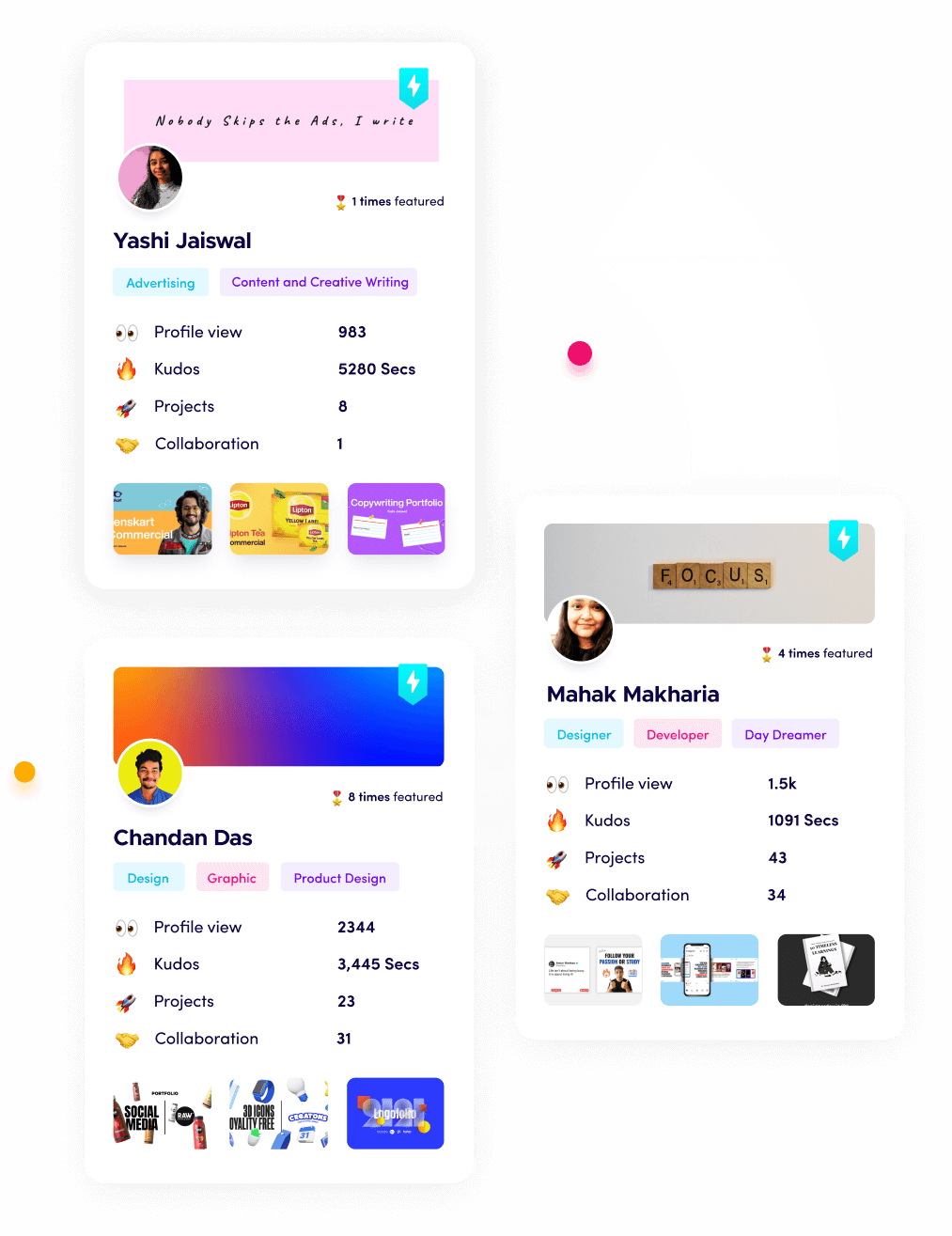
Fueler helps professionals showcase proof of work through projects, assignments, case studies, and achievements.
Thousands of professionals use Fueler to create their digital portfolio
Thousands of projects are published on Fueler. Check here
Startups and Companies hire through proof of work on Fueler
Used by freelancers, creators, marketers, video editors, writers, designers, and product managers
Our mission is to help the next 100 million professionals build a verified professional identity through proof of work