

Improve Website Speed

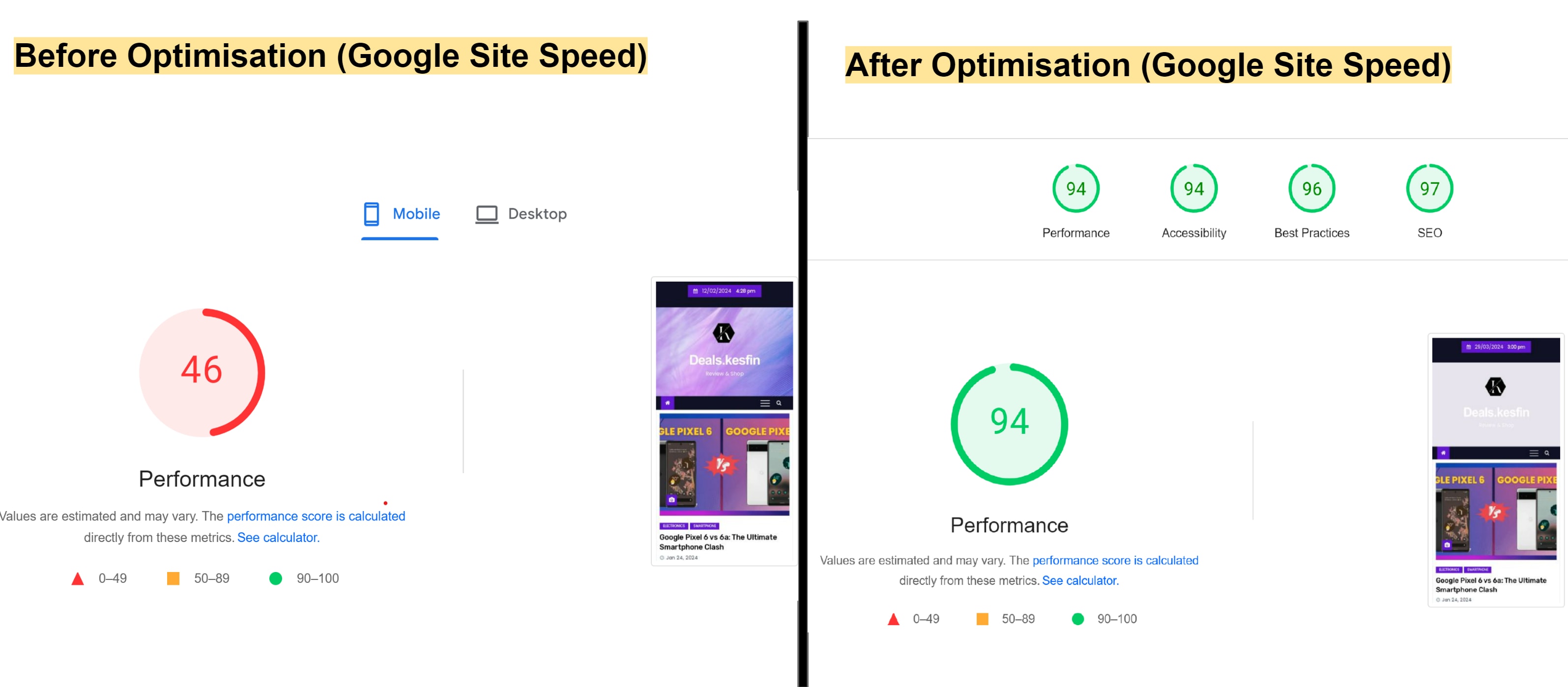
Let's see how the website speed changed before and after optimization. Before, it was running at only 46% of its potential speed. But after making some improvements, it shot up to an impressive 94%. This big jump shows how much better the website works when its speed is optimized. Plus, it helps improve the website's ranking.
# Before and After Optimization: Website Speed Improvement
Before Optimization (46%):
- Slow loading times
- Delayed content rendering
- Frustrating user experience
After Optimization (94%):
- Rapid loading times
- Instant content delivery
- Enhanced user experience
# Time Required for Site Speed Improvement
- Factors Influencing Time: The time needed for optimization is heavily influenced by factors such as the size and complexity of the website.
- Standard Optimization Process: The optimization process typically includes conducting a thorough site check, optimizing images, clearing caches, and implementing advanced techniques like lazy loading.
- WordPress Websites: Smaller WordPress sites, featuring 2-3 pages and simple navigation, can expect optimization to be completed within 1-2 days.
- Custom Framework Platforms: Websites built on custom framework platforms like Framer may require up to 1 week for optimization due to additional customization. This extensive process could potentially boost site speed from 30% to 70%.
- Larger Websites: For larger websites with numerous pages and complex functionalities, the optimization process may extend beyond the standard timeframe.
- Tailored Approach: It's essential to carefully assess the specific needs of each website and allocate sufficient time accordingly to ensure thorough optimization and significant improvements in site speed.
01 Dec 2023
Keywords