
Research cutoff: November 2026. Coverage: global, with a focus on India and the US. Forecasts are clearly marked as forecasts.
Quick answer: AI automation in 2027 means using AI to run business processes, not just to answer questions. The biggest trends are AI replacing rigid rule-based automation, business teams building their own workflows with no-code tools, platforms automating ads and hiring, and a hard push to prove return on investment. McKinsey estimates current technology could in theory automate about 57% of US work hours, but most companies are still far from that. The real opportunity is for people who can design automations that actually work and show the results.
The 10 AI automation trends for 2027 at a glance
# | Trend | Impact | Evidence |
|---|---|---|---|
1 | AI replaces rigid rule-based automation | High | Developing |
2 | Business teams build their own automations | High | Developing |
3 | ROI pressure and cancelled projects | High | Strong forecast |
4 | Hiring workflows get automated | High | Strong |
5 | Ads and marketing get automated | High | Strong |
6 | Reports and documents run on autopilot | Medium to high | Strong |
7 | Human-in-the-loop becomes the default | High | Strong |
8 | Data privacy shapes automation design | Medium | Strong |
9 | Demand for automation skills jumps | High | Strong |
10 | Automation creates new roles | Medium to high | Developing |
Why I am writing this
I am Riten, founder of Fueler. With a small team, automation is how we survive. We automate reporting, outreach, content workflows and parts of talent discovery. Some automations saved us hours every week. Some broke quietly and cost us time. This guide shares what the data says about AI automation in 2027, plus the lessons I have learned building it.
Where AI automation stands going into 2027
McKinsey Global Institute estimated in November 2025 that current technology could in theory automate about 57% of US work hours, and that AI agents and robots could generate about $2.9 trillion in US economic value per year by 2030 in a midpoint scenario.
McKinsey's State of AI 2025 survey found 88% of organisations use AI somewhere, but only about a third have started scaling it.
Gartner predicted over 40% of agentic AI projects will be cancelled by the end of 2027.
The WEF Future of Jobs Report 2025 found 41% of employers plan to reduce staff where AI can automate tasks, while 77% plan to upskill workers.
The top 10 AI automation trends to watch in 2027
1. AI replaces rigid rule-based automation
Old automation followed strict "if this, then that" rules and broke when anything changed. AI-based automation can read messy emails, understand documents and handle small variations. This shift is developing, and it is visible in how automation tools now market themselves.
What to expect in 2027 (forecast): More automations will include an AI step that reads, sorts or decides, followed by a human check.
2. Business teams build their own automations
Marketers, recruiters and operations teams no longer wait for IT. They use no-code tools and AI builders to connect apps and automate their own work. Collins Dictionary naming "vibe coding" its 2025 Word of the Year shows how mainstream building without code has become.
What you should do: Learn one no-code automation tool well. Start with these no-code and low-code tools.
3. ROI pressure and cancelled projects
Companies spent big on AI automation. Now they want results. Gartner's prediction that over 40% of agent projects will be cancelled, and McKinsey's finding that only about 6% of organisations are "AI high performers," show the gap between spending and value.
What to expect in 2027 (forecast): Every automation will need a clear before-and-after number: hours saved, errors reduced or money earned.
4. Hiring workflows get automated
Recruiting is being automated fast. LinkedIn's Hiring Assistant helped early users save over 4 hours per role. Workday shared that Chipotle cut time to hire from 12 days to 4 using Paradox's conversational AI. LinkedIn research found 66% of recruiters planned to use more AI for pre-screening in 2026.
What to expect in 2027 (forecast): Scheduling and first screening will be mostly automated. Judging real work will stay human. That is why I believe in assignment-based hiring.
5. Ads and marketing get automated
Meta has said it aims to let advertisers create full AI-made ads from just a product image and a budget. Gartner's 2026 CMO Spend Survey found 15.3% of marketing budgets now go to AI, but only 30% of CMOs feel their AI capabilities are mature.
What to expect in 2027 (forecast): Targeting and bidding become mostly automatic. Creative ideas and strategy become the main human job.
6. Reports and documents run on autopilot
Microsoft's 2026 Work Trend Index found 49% of Copilot conversations involve thinking work like analysis and evaluation. Weekly reports, meeting summaries and document drafts are among the easiest wins for AI automation.
What to expect in 2027 (forecast): Routine reporting will be largely automated in most offices. The value moves to explaining what the numbers mean.
7. Human-in-the-loop becomes the default
Figma's 2025 AI report found only 32% of users can rely on AI output. That is why the best automations include a human review step for important decisions.
What to expect in 2027 (forecast): "Automate the work, keep a human in charge" becomes standard practice, especially for anything involving customers, money or people.
8. Data privacy shapes automation design
India's DPDP Rules main duties on notice, consent and data security apply from 12 May 2027. The EU AI Act's high-risk rules, including for hiring, apply from 2 December 2027.
What to expect in 2027 (forecast): Automations that move personal data will need consent checks, logs and clear owners.
9. Demand for automation skills jumps
Upwork reported that clients hiring freelancers for AI-related work grew 109% in 2025. McKinsey found AI fluency demand in US job postings grew nearly sevenfold in two years. LinkedIn listed process optimisation among its 2025 Skills on the Rise.
What to expect in 2027 (forecast): Automation skills will be valued in marketing, HR, finance and operations roles, not just tech.
10. Automation creates new roles
Roles like GTM engineer, AI operations specialist and workflow designer have grown as companies automate. The WEF lists AI and big data specialists among the fastest-growing jobs by percentage.
What to expect in 2027 (forecast): More job titles will include "automation" or "AI operations," often inside business teams.
Skills for AI automation in 2027
Skill | Why it matters | How to show it |
|---|---|---|
Process mapping | You cannot automate a messy process | A before and after process map |
No-code automation | Business teams build their own tools | A working automation with time saved |
AI prompt and step design | AI steps need clear instructions | A documented AI step with test results |
Measuring ROI | Leaders want proof | A simple ROI calculation |
Data and consent awareness | DPDP and EU rules apply in 2027 | A checklist for data in your workflow |
Automation projects to build in 2027
Lead capture to CRM: automatically collect, tag and follow up with new leads.
Weekly report bot: pull data from two tools and send a summary every Monday.
Content repurposing flow: turn one blog into social posts with an AI step and a human approval step.
My list of AI automation portfolio projects you can build and these no-code portfolio projects have more ideas.
How Fueler helps
Automation skills are invisible unless you show them. On Fueler, you can document each automation as a project: the problem, the workflow, screenshots and the hours saved. Companies on Fueler can test these skills through real assignments. And as I explain in why skills became more valuable after AI, the people who build automation are the ones AI makes more valuable.
How I researched this
I used public research from 2025 to November 2026, including McKinsey Global Institute and McKinsey's State of AI 2025, Gartner predictions and its 2026 CMO Spend Survey, Microsoft's 2026 Work Trend Index, Figma's 2025 AI report, the WEF Future of Jobs Report 2025, LinkedIn, Workday, Upwork, reporting on Meta's ad automation plans and legal updates on India's DPDP Rules and the EU AI Act. McKinsey's 57% figure is technical potential, not a job loss forecast. All 2027 points are forecasts.
Frequently asked questions
What is AI automation?
AI automation means using AI to complete parts of a business process automatically, like reading emails, sorting requests, writing summaries or updating systems, often with a human checking important steps.
Is AI automation replacing jobs in 2027?
It is replacing tasks more than whole jobs. The WEF found 41% of employers plan to reduce staff where AI automates tasks, but 77% plan to upskill workers. People who design and manage automation become more valuable.
Do I need coding to learn AI automation?
No. No-code tools and AI builders let anyone create useful automations. Start with one repetitive task, automate it, test it and measure the time saved.
Why do AI automation projects fail?
Common reasons are unclear goals, high costs, messy processes and weak testing. Gartner predicts over 40% of agentic AI projects will be cancelled by the end of 2027. Small, measurable automations succeed more often.
How do I show automation skills to employers?
Document real automations with the problem, workflow, tools used and the result in hours or money saved. A portfolio of working automations is much stronger than listing tool names.
Why 150,000+ professionals use Fueler
Fueler helps professionals showcase proof of work through projects, assignments, case studies, and achievements.
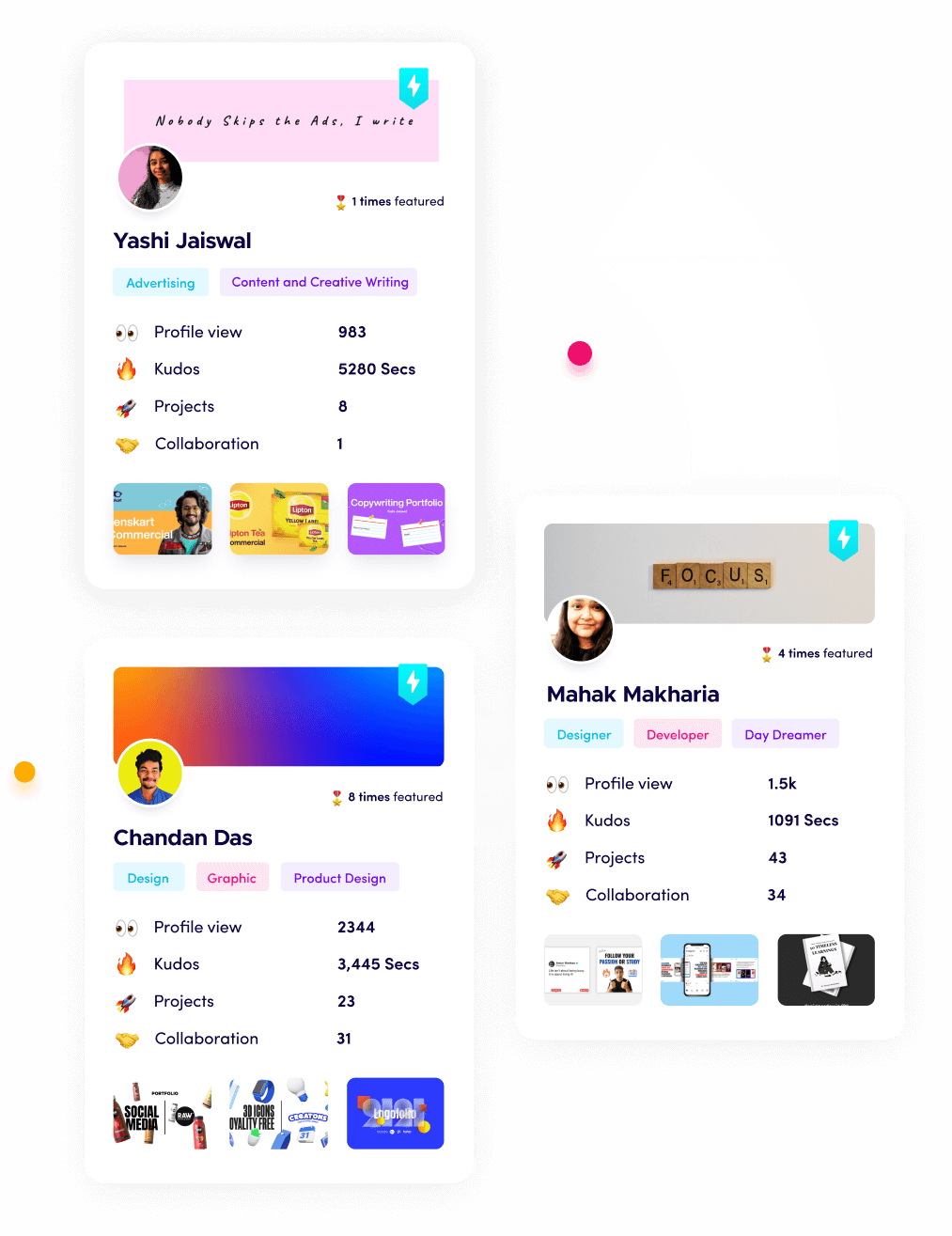
Thousands of professionals use Fueler to create their digital portfolio
Thousands of projects are published on Fueler. Check here
Startups and Companies hire through proof of work on Fueler
Used by freelancers, creators, marketers, video editors, writers, designers, and product managers
Our mission is to help the next 100 million professionals build a verified professional identity through proof of work