Research cutoff: November 2026. Coverage: India and global. All numbers come from public reports named in the text.
Quick answer: Portfolio-based hiring means judging candidates by the real work they have done, not just their resume. In 2027, it is spreading beyond design and writing into marketing, product, data, sales, and operations. The top trends are resumes losing trust, portfolios for every role, depth over volume, process shown alongside results, checking for AI-made work, assignment work becoming portfolio work, verified and contextual proof, portfolios for freshers and career switchers, AI tools that read portfolios, and companies building hiring around proof of work.
Top 10 portfolio-based hiring trends for 2027 at a glance
# | Trend | Impact | Evidence |
|---|---|---|---|
1 | Resumes lose trust | High | Established |
2 | Portfolios for every role | High | Developing |
3 | Depth beats volume | Medium | Developing |
4 | Process matters as much as results | High | Developing |
5 | Checking for AI-made portfolios | High | Developing |
6 | Assignment work becomes portfolio work | High | Developing |
7 | Verified and contextual proof | Medium | Developing |
8 | Portfolios open doors for freshers and switchers | High | Developing |
9 | AI tools that read portfolios | Medium | Speculative |
10 | Hiring built around proof of work | High | Developing |
Why I am writing this
I am Riten, founder of Fueler. I started Fueler because I believed the resume was broken. Two people with the same degree and job title can have completely different skills. The only way to really know is to see their work. That belief has guided everything we have built.
On Fueler, companies have hosted 350+ assignments and candidates have made around 3,500 submissions. In 2027, I believe portfolio-based hiring will move from "nice to have" to normal for many roles. Here are the ten trends, with clear notes on what is proven and what is still growing.
Where portfolio-based hiring stands going into 2027
Resumes are losing weight. TestGorilla's 2025 report found resume use in hiring fell to 67% from 73%.
AI resumes are everywhere. 73% of employers in the same report noticed more AI-written resumes.
Skills-based hiring is mainstream. 85% of employers say they use skills-based hiring.
Fraud is a concern. Gartner predicts one in four candidate profiles will be fake by 2028.
The 10 portfolio-based hiring trends to watch in 2027
1. Resumes lose trust
When AI can write a perfect resume in seconds, resumes stop being a strong signal. TestGorilla found 73% of employers noticed more AI-written resumes. LinkedIn found applications per role have doubled since 2022, and 66% of recruiters say quality talent is harder to find.
A resume tells you what someone claims. A portfolio shows what they did. As claims become cheap, proof becomes valuable.
What to expect in 2027 (forecast): More job posts will ask for a portfolio link or work samples as a required field.
2. Portfolios for every role
Portfolios used to be for designers, writers, and developers. Now marketers share campaign case studies, product managers share product teardowns, analysts share dashboards, salespeople share outreach playbooks, and operations people share process improvements.
I mark this as developing because public data on portfolio use by role is limited. But the direction is clear.
What to expect in 2027 (forecast) [developing]: Portfolios will become common for marketing, product, data, and operations roles, not just creative ones.
3. Depth beats volume
A portfolio with 20 shallow projects can be weaker than one with three deep ones. Hiring managers have limited time and want to see real thinking: the problem, the approach, the trade-offs, and the result.
The "3-project rule" is a simple idea: show three deep, relevant projects rather than everything you have ever done. I mark this as developing because it is guidance, not a measured trend.
What to expect in 2027 (forecast) [developing]: Strong candidates will curate fewer, deeper projects tailored to each role.
4. Process matters as much as results
In an AI world, the final output can be generated. The thinking behind it cannot. Hiring managers increasingly want to see process: research, early drafts, decisions, what failed and what you learned.
Showing process also makes your work harder to fake and easier to discuss in interviews.
What to expect in 2027 (forecast) [developing]: Case studies with clear "why I did this" explanations will outperform polished final shots alone.
5. Checking for AI-made portfolios
AI tools can now generate designs, copy, videos, and even fake case studies. Greenhouse found 65% of hiring managers caught candidates using AI deceptively. This makes reviewers more careful.
Common checks include asking candidates to walk through their work, asking for source files or drafts, and running a small live task. I mark this as developing because methods are still evolving.
What to expect in 2027 (forecast) [developing]: Portfolio reviews will often include a live walkthrough or follow-up questions about specific decisions.
6. Assignment work becomes portfolio work
When candidates complete a company assignment, that work can become part of their portfolio, if the company allows it. This turns every application into a chance to build proof, even when you do not get the job.
This is a core idea at Fueler. With around 3,500 submissions on the platform, candidates are building real proof through the hiring process itself.
What to expect in 2027 (forecast) [developing]: More candidates will show completed assignments as portfolio pieces, with permission from companies.
7. Verified and contextual proof
Gartner's warning about fake profiles makes verification important. Proof becomes stronger with context: who the work was for, what role you played, what the result was, and who can confirm it.
Links to live work, testimonials from clients or managers, and clear notes on team versus individual contributions all add trust. I mark this as developing because verification standards are still forming.
What to expect in 2027 (forecast) [developing]: Portfolios will include more references, live links, and clear role descriptions for each project.
8. Portfolios open doors for freshers and switchers
A Stanford study found employment for workers aged 22 to 25 fell 13% in AI-exposed jobs. The ILO noted that 65.7% of unemployed youth in India are educated. Degrees alone do not get people hired. Career switchers face a similar problem: their resume shows the wrong industry.
A portfolio of self-initiated projects lets freshers and switchers show they can do the job, even without the "right" experience. LinkedIn found people without degrees using its AI job search were 10% more likely to be hired, a sign that skills can beat credentials.
What to expect in 2027 (forecast) [developing]: More entry-level hiring will start with a portfolio review instead of a college filter.
9. AI tools that read portfolios
AI tools can already summarise documents and analyse images. It is likely that hiring platforms will use AI to read portfolios, identify skills and match candidates to roles. LinkedIn's AI people search already looks beyond job titles.
I mark this speculative because portfolio-reading AI in hiring is still early. Clear titles, descriptions, and skill tags will help AI tools understand your work.
What to expect in 2027 (forecast) [speculative]: Some hiring platforms will begin using AI to surface candidates based on portfolio content.
10. Hiring built around proof of work
TestGorilla found 76% of employers use skills tests and two in three say tests reduced mis-hires. 53% removed degree requirements. The next step is hiring processes built around real work from the start: portfolio review, a relevant assignment, and a conversation about the work.
This is the model Fueler is built on. I mark this as developing because it is still growing, but I believe 2027 will be a turning point.
What to expect in 2027 (forecast) [developing]: More startups and growing companies will replace resume screening with portfolio and assignment-based hiring.
What a strong portfolio needs in 2027
Element | Why it matters | Example |
|---|---|---|
3 deep projects | Depth beats volume | Three detailed case studies for your target role |
Clear problem and context | Shows understanding | "The client's sign-ups dropped 30%" |
Your process | Proves thinking, not just output | Research notes, drafts, decisions |
Results or proxy signals | Shows impact | Metrics, feedback or before and after |
Your exact role | Builds trust | "I led design, worked with 2 developers" |
AI use explained | Shows honest AI skill | "I used AI for drafts, then rewrote with customer data" |
Projects you can build to start your portfolio
Company teardown: Analyse a real company's product, marketing, or design and suggest improvements.
Self-initiated project: Solve a real problem you care about and document the process.
Public assignment: Complete a company assignment on Fueler and add it to your portfolio.
Before and after: Improve something real, like a website, a process, or a piece of content.
Learning project: Learn a new skill and use it to build something useful in 30 days.
How Fueler powers portfolio-based hiring
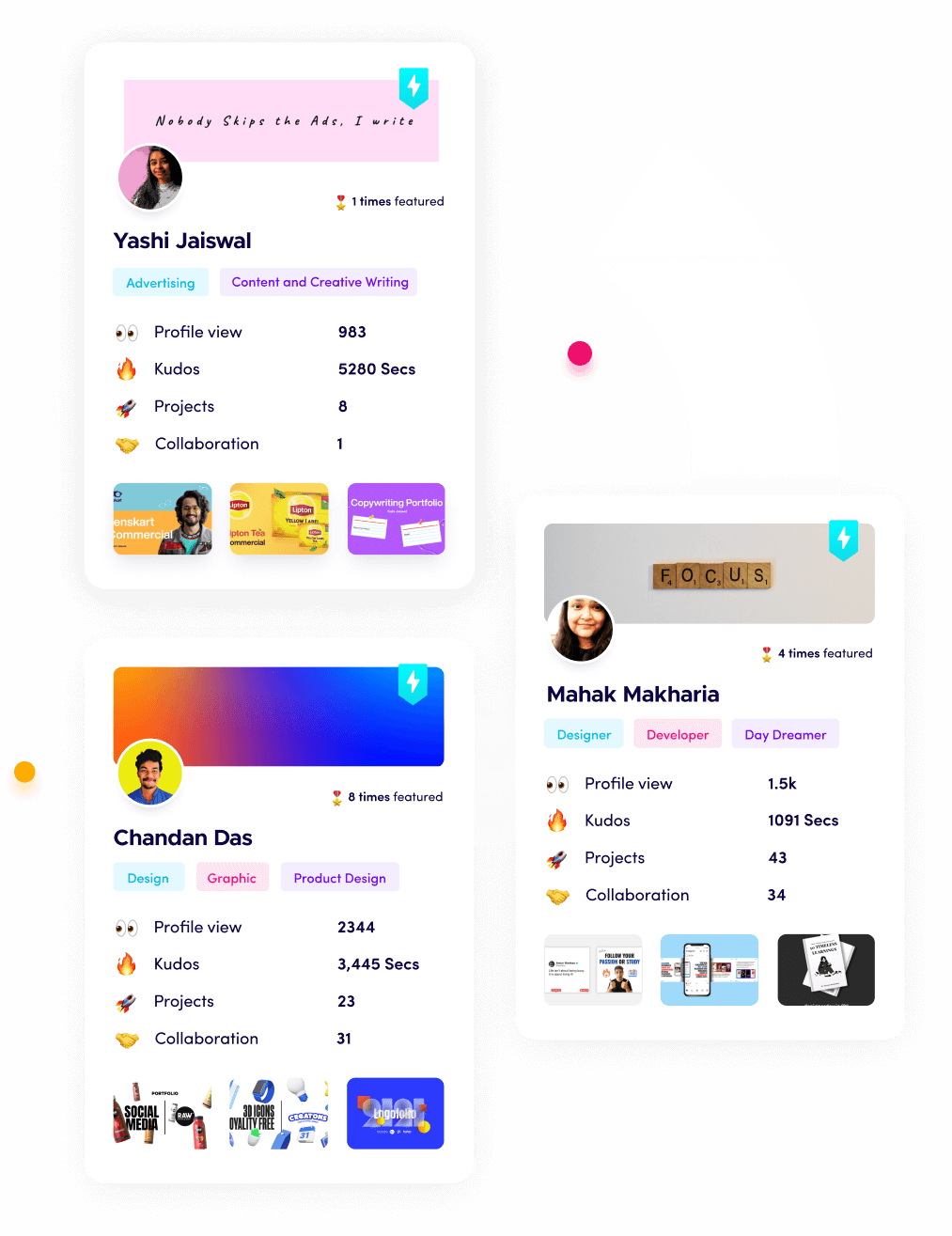
Fueler is a portfolio platform built for proof of work. You can add projects with context, process, and results. Companies post assignments, candidates submit work, and hiring happens based on what people can actually do.
To build yours, start with how to build a proof of work portfolio to get hired faster. To keep it focused, follow the 3-project portfolio rule. To know what recruiters see first, read your portfolio in 7 seconds. If you have no metrics, learn how to show impact without metrics. And if you have no experience, see how self-initiated projects count as real work for hiring managers.
How I researched this
I used public sources from 2025 and 2026: TestGorilla's State of Skills-Based Hiring 2025, LinkedIn's 2026 recruiter research and AI job search data, Gartner's fake profile predictions, Greenhouse's 2025 hiring research, the Stanford study on young workers, and ILO youth data. Fueler figures come from our own platform. Many trends here are marked "developing" or "speculative" because portfolio-based hiring is still growing and not yet widely measured. Forecasts are my own view and are labelled.
Frequently asked questions
What is portfolio-based hiring?
Portfolio-based hiring means companies judge candidates mainly by examples of their real work, such as projects, case studies and completed assignments, rather than relying only on resumes, degrees or job titles.
What are the top portfolio-based hiring trends for 2027?
The top trends are resumes losing trust, portfolios for every role, depth over volume, showing process, checking for AI-made work, assignments as portfolio pieces, verified proof, portfolios for freshers and switchers, AI tools that read portfolios, and hiring built around proof of work.
Do I need a portfolio if I am not a designer?
Yes. Marketers, product managers, analysts, writers, salespeople, and operations professionals can all show work through case studies, dashboards, plans, and results. A portfolio helps any professional stand out from resume-only applicants.
How many projects should a portfolio have?
Three deep, relevant projects are usually better than many shallow ones. Each should explain the problem, your process, your role, and the result.
How do I build a portfolio with no experience?
Create self-initiated projects, do company teardowns, complete public assignments, and document what you learn. Explain your thinking clearly. Real effort on real problems counts, even without a job title.
Why 150,000+ professionals use Fueler
Fueler helps professionals showcase proof of work through projects, assignments, case studies, and achievements.
Thousands of professionals use Fueler to create their digital portfolio
Thousands of projects are published on Fueler. Check here
Startups and Companies hire through proof of work on Fueler
Used by freelancers, creators, marketers, video editors, writers, designers, and product managers
Our mission is to help the next 100 million professionals build a verified professional identity through proof of work