How to Write a Proposal That Wins When You're the Most Expensive Option

Riten Debnath
02 Oct, 2026
Last updated: October 2026
The client has three proposals open.
Yours costs ₹1.5 lakh.
The other two cost ₹70,000 and ₹95,000.
You already know what happens next if all three proposals look the same.
The client picks the cheaper one.
Being expensive is not the problem. Looking expensive without showing why is.
A client does not need to believe that you are the cheapest person for the job. They need enough evidence to believe that paying you more makes sense.
I’m Riten, founder of Fueler, a skills-first portfolio platform building the career infrastructure for 100 million creative professionals. Fueler connects talented individuals with companies through assignments, portfolios, and projects, not just resumes or CVs. Think of it as Dribbble/Behance for work samples combined with AngelList for hiring infrastructure.
This guide explains how to write a proposal when your price is higher than the competition, how to present your experience, how to make your process visible, how to handle pricing without apologising for it, and how to make the client understand what they are actually paying for.
How to Write a Proposal That Makes a Higher Price Easier to Accept
Your proposal should answer five questions before the client has to ask them: Do you understand my problem? Do you know what needs to be done? Can you actually do it? What exactly will I receive? And why does it cost this much?
That is the real job of a strong proposal. It gives the client enough information to compare your offer on more than price. In formal procurement, proposals can be assessed on technical approach, experience, past performance, price, and other stated factors.
Open with the client's problem: Do not begin with your company history or a paragraph about how passionate you are. Start by showing that you understand what the client is trying to fix. If the client needs better content, explain the business problem behind that need. This immediately makes the proposal feel specific rather than copied.
Describe the outcome before the deliverables: A list such as “12 posts, four blogs, two reports” tells the client what you will produce. It does not explain what those things are supposed to achieve. Connect each major deliverable to the problem it addresses, while avoiding promises about results you cannot control.
Make your thinking visible: A premium proposal should show how you arrived at the solution. Explain the major steps, decisions, research, reviews, and checkpoints involved. This is especially useful when competing against cheaper providers because the client can see that they are buying a considered process, not simply a larger number of working hours.
Give the price enough context: A standalone number is difficult to judge. Explain what the price covers, what is excluded, the payment schedule, and the main assumptions behind it. Clear scope and pricing reduce uncertainty and make the proposal easier for the client to discuss internally.
Make comparison possible without attacking competitors: Never write, “Other agencies will probably do a worse job.” You cannot know that. Instead, make your own difference obvious through relevant experience, specific deliverables, a clear process, realistic timelines, and evidence from previous work.
What Should Be Included in a High-Priced Client Proposal
A proposal becomes easier to trust when the client does not have to fill in the gaps themselves. The exact structure will change by project, but a strong proposal normally explains the problem, proposed solution, scope, deliverables, timeline, responsibilities, pricing, assumptions, and next step.
The important point is not adding more pages. It is removing uncertainty. A long proposal full of vague language can create more questions than a short proposal with specific information.
Executive summary: Give the client a short explanation of their situation, what you propose to do, and what the engagement is designed to accomplish. Keep this specific to them. A good executive summary should make sense even if the client reads nothing else before deciding whether to continue.
Current problem: Show what you understood from the conversation. Mention the actual challenge, not a generic industry problem. For example, “Your website needs more traffic” is broad. “Your existing articles receive traffic but are not consistently moving readers toward your core service” gives the proposal a much clearer starting point.
Proposed solution: Explain what you are going to do and why. Avoid hiding the solution behind complicated terminology. If you are proposing a content project, explain the research, planning, creation, review, and publishing process in plain English. The client should understand the work without needing your professional vocabulary.
Scope and deliverables: Clearly state what is included. Include quantities, formats, rounds of revision, meetings, reporting, and other important boundaries where relevant. Also state what is not included when that distinction matters. Clear scope protects both sides and reduces later disagreements.
Timeline, responsibilities, and next step: Show the major stages and what you need from the client. If approvals, access, information, or feedback are required, say so. Finish with a simple next action such as approval, a call, a signed agreement, or payment of the first milestone.
How to Prove Your Higher Price Without Saying “I Am Worth More”
Never make the client do the work of proving your value for you. Saying “I have five years of experience” is information. Showing exactly how that experience helps with their particular problem is evidence.
Your proposal should connect experience to the work being purchased. This is also why past performance is commonly considered when evaluating proposals: buyers want some indication that the provider can successfully perform the work.
Use relevant experience, not your entire career: If the client wants a B2B website, show relevant website work. If they need a restaurant's social media strategy, show relevant marketing work. Ten unrelated projects are usually less useful than three closely related examples that demonstrate the type of work the client needs.
Turn case studies into evidence: Do not simply write “We worked with Company X.” Explain the situation, what you were responsible for, what you changed, and what happened afterward when the result can be verified. Separate facts from claims. Never manufacture numbers just because a case study looks stronger with statistics.
Show your actual work: Screenshots, published links, campaign examples, designs, writing samples, research documents, or other relevant work can make your proposal much more concrete. Proof of work lets the client inspect something rather than relying entirely on your description of your abilities.
Explain your role clearly: A portfolio item can become misleading if the client cannot tell what you personally did. If you worked as part of a team, say what you owned. If you managed strategy but someone else handled production, make that distinction clear.
Choose evidence that answers the client's concerns: If the client is worried about quality, show quality. If they are worried about deadlines, show relevant delivery experience. If they need someone who understands their industry, demonstrate that understanding. Your evidence should remove a specific doubt, not simply fill space.
How to Present Pricing When You Are the Most Expensive Option
Do not apologise for your price.
“I know I am more expensive than the others” immediately puts the comparison in the client's head before you have explained anything. State the price clearly and explain what the client receives for it.
Price analysis commonly involves comparing proposed prices with other prices or previous comparable prices, which means buyers may naturally compare your number with alternatives. Your job is not to prevent comparison. It is to give the comparison enough context.
Do not hide the number: Make your pricing easy to find and understand. A client should not have to search through several pages to discover the total. State the amount, payment structure, included work, and any important conditions clearly.
Connect price to scope: A ₹2 lakh proposal means little without knowing what ₹2 lakh buys. Explain the work covered by the price. If your process includes research, strategy, senior review, multiple revisions, testing, or detailed reporting, include those elements where they genuinely apply.
Do not invent a return on investment: If you cannot reliably predict that your work will generate ₹10 lakh in revenue, do not claim it will. Instead, explain the business objective and the work you control. A credible proposal is more valuable than an impressive-looking promise that cannot be defended.
Use options when they genuinely help: Different project scopes can sometimes be presented as separate options. For example, one option could cover the essential work while another includes additional research or support. The options must represent real differences in scope, not artificial versions created only to make one price look better.
Reduce scope instead of randomly reducing your price: If the client cannot afford the full proposal, discuss what can be removed. A smaller project at a smaller price is different from the same project delivered for less money. This protects your margins and makes the trade-off visible.
How to Make a Premium Proposal Feel Lower Risk
A client paying more is not only asking, “Will this work?” They are also asking, “What happens if something goes wrong?” Your proposal should answer that quietly through clarity.
A strong proposal makes the engagement easier to understand before it begins. Clear deliverables, responsibilities, timelines, assumptions, and acceptance conditions can reduce confusion during delivery.
Define what you need from the client: State when you need information, access, approvals, feedback, or materials. Delays are not always caused by the provider. Making dependencies visible helps both sides understand what can affect the schedule.
Set clear revision boundaries: If the project includes two rounds of revisions, say two. If certain changes count as a new request, explain that clearly. This is not about being difficult. It prevents both parties from having different ideas about what “included” means.
Show milestones: Large projects feel less uncertain when broken into understandable stages. Instead of saying “The project will take eight weeks,” explain what happens during those eight weeks. Milestones also give the client natural points to review progress.
Explain assumptions: If your proposal assumes that the client will provide brand assets, product information, access to analytics, or approvals within a certain period, write it down. A price is only meaningful when the conditions behind that price are understood.
Give a clear next step: Do not finish with “Looking forward to working together.” Tell the client what happens next. For example, “To begin, approve the proposal and complete the first payment. We will then schedule the kickoff and request the required materials.”
How to Write a Proposal That Shows You Understand the Client Better Than the Competition
One of the strongest signals in a proposal is not how much you talk about yourself. It is how accurately you describe the client's situation.
A proposal should feel like the next logical step after a good discovery conversation. If the client can replace their name with another company's name and your proposal still makes sense, it probably needs more work.
Use the client's language: If they called something a “sales problem,” do not unnecessarily rename it with a complicated term. Familiar language makes the proposal easier to follow and shows that you listened during the conversation.
Identify the problem beneath the request: A client asking for ten landing pages may actually be trying to improve lead generation. Someone requesting social media posts may really be trying to build trust before a sales conversation. Understand the request, then explain the work in relation to the underlying goal.
Mention relevant constraints: Budget, internal resources, deadlines, approvals, existing systems, brand rules, or technical limitations can all affect the solution. A proposal that recognises these constraints feels more realistic than one that presents an ideal solution without considering how the business actually operates.
Make your recommendation specific: Do not give the client a menu of every service you offer. Recommend what you believe the project requires based on the information available. You can mention alternatives when relevant, but avoid making the client design the project themselves.
Write for the person approving the budget: The person reading the proposal may not have been part of every conversation. Make the document understandable on its own. They should be able to explain internally what is being purchased, why it is needed, how much it costs, and what happens next.
Common Proposal Mistakes That Make Expensive Services Look Overpriced
An expensive proposal can lose even when the underlying service is excellent. The problem is often not the price. It is the gap between the price and the evidence supporting it.
The most damaging mistakes are usually simple: unclear scope, vague outcomes, irrelevant experience, confusing pricing, excessive self-promotion, and promises that cannot be supported.
Leading with your biography: Clients are not primarily buying your story. They are buying a solution to a problem. Keep your background relevant and move the focus toward the work you will do for them.
Listing activities instead of explaining value: “Five meetings, ten designs, four reports” describes activity. It does not explain the purpose. Tell the client what those activities are designed to accomplish and how they fit into the larger project.
Using vague claims: “Best-in-class,” “results-driven,” “high quality,” and “industry-leading” are difficult to evaluate. Replace them with evidence. Show the work, explain your process, and provide relevant results where you can verify them.
Making the proposal unnecessarily long: More pages do not automatically create more trust. Remove information that does not help the client understand the problem, solution, evidence, scope, price, risk, or next step.
Discounting before the client objects: If your price is based on the work required, do not immediately reduce it because you are nervous about the number. If the budget is genuinely lower, change the scope or discuss a different project structure.
How to Write the Pricing Section of a Proposal Without Sounding Defensive
The pricing section should feel like a normal part of the proposal, not an apology at the end. By this point, the client should already understand the problem, your solution, the scope, and the work involved.
There is no universal pricing model that fits every project. Fixed pricing can suit clearly defined projects, while ongoing work may use a recurring structure. The important part is that the model matches the work and is explained clearly.
State exactly what the client is paying for: Write a simple summary before or beside the price. For example: “The total project price covers strategy, research, production, two review rounds, final delivery, and reporting.” Adapt this to the actual engagement.
Separate mandatory and optional work: If something is genuinely optional, label it as such. This prevents the client from assuming every item is required and gives them a clearer way to adjust the scope without asking you to discount the core project.
Show payment milestones: For larger projects, splitting payment around agreed milestones can make the commercial arrangement easier to understand. The exact structure should reflect the project and agreement rather than being used as a trick to disguise the total price.
Explain additional work: If work outside the agreed scope may incur additional charges, state that clearly. The client should know what triggers additional work and how it will be handled before the project starts.
Keep the language confident and factual: You do not need phrases such as “I hope this price works for you” or “I know this is expensive.” State the price, explain the scope, and let the proposal do its job.
How to Make Your Proposal Stand Out Without Making It Look Salesy
The strongest proposal is not necessarily the prettiest one. It is the one that makes the client's decision easier.
Design can improve readability, but design cannot compensate for weak thinking. The document should help the client quickly understand the problem, solution, evidence, scope, price, responsibilities, and next step.
Use clear headings: A client should be able to scan the proposal and understand its structure within seconds. Use headings that describe what the section contains instead of clever titles that require interpretation.
Use short paragraphs: Keep important information easy to scan. Break large explanations into smaller sections and use bullets where they improve clarity. This is particularly useful when multiple people need to review the proposal.
Highlight important numbers: Make the total price, timeline, major deliverables, and payment milestones easy to locate. Do not cover every sentence in bold. Give visual importance only to information that genuinely matters to the decision.
Remove unnecessary decoration: A professional proposal does not need to look like an advertisement. Use a clean layout that supports the content. The client's attention should stay on the decision, not on visual effects.
Make it easy to forward: Assume your contact may send the proposal to a manager, founder, procurement person, or finance team. Write enough context into the document that someone who was not on the original call can understand the offer.
How Proof of Work Can Strengthen a High-Priced Proposal
When your price is higher, your previous work becomes especially useful because it gives the client something concrete to examine.
You are not asking them to believe that you can do the work. You are giving them examples that help them judge the quality, relevance, and thinking behind what you are proposing.
Choose fewer, stronger examples: Three relevant projects can be more convincing than fifteen random links. Pick work that resembles the client's problem, industry, audience, deliverable, or level of complexity.
Explain the thinking behind the work: A screenshot alone rarely tells the full story. Briefly explain the challenge, your role, what you created, and the result when the result is known and can be supported.
Show finished work whenever possible: Published articles, live websites, campaigns, designs, reports, presentations, and other real outputs allow the client to inspect the work directly. This creates a stronger basis for evaluation than adjectives about your ability.
Keep claims verifiable: If you say a project increased traffic, leads, revenue, or engagement, make sure you can support that claim. If you cannot share confidential numbers, describe the work without inventing replacement statistics.
Place relevant proof close to the claim: If you say you have experience solving a particular problem, make the relevant example easy to find. Do not make the client search through a separate portfolio for evidence that could have been linked directly.
How Does This Connect to Building a Strong Career or Portfolio?
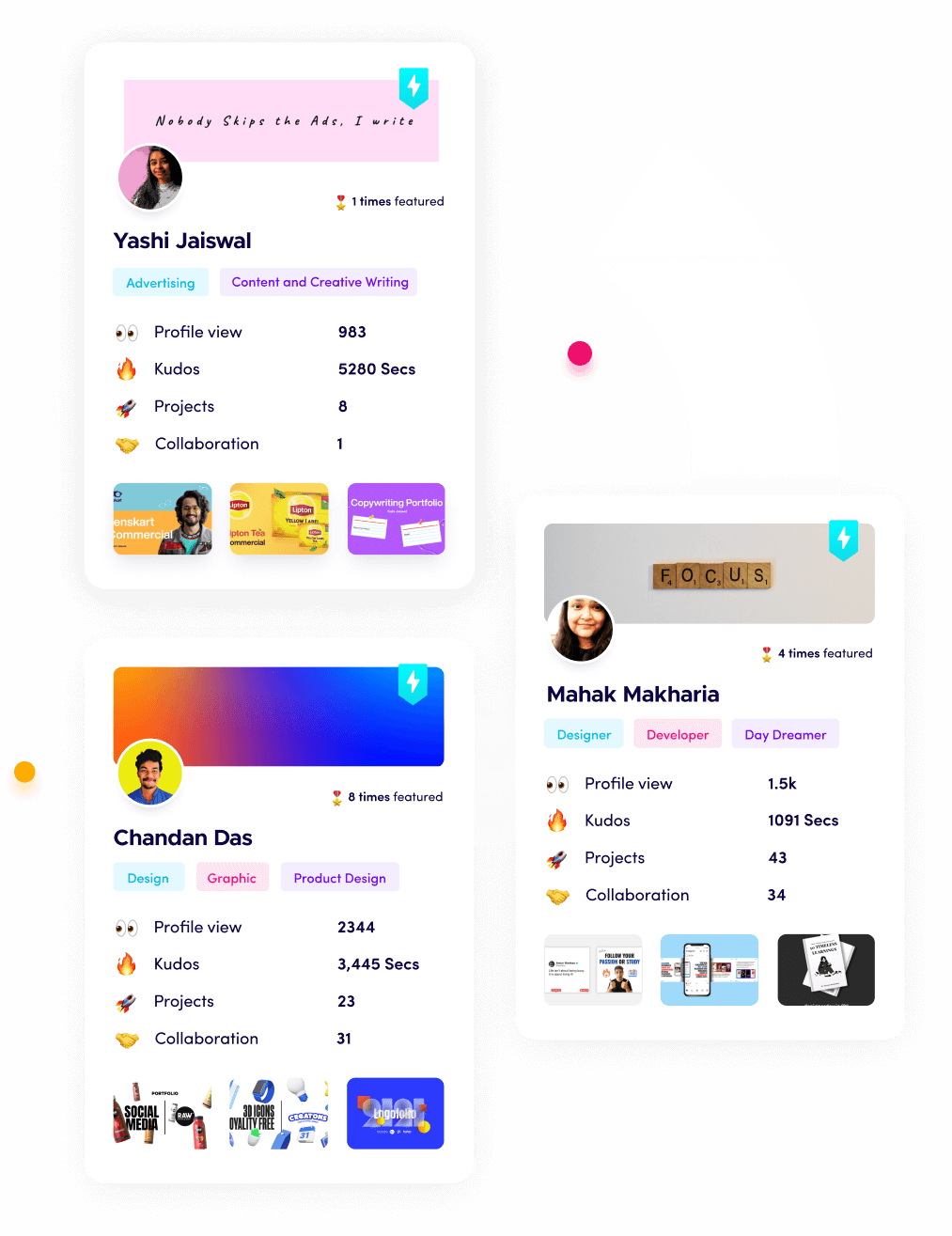
A strong proposal is easier to write when you have real work to point toward. Every project can become evidence of how you think, solve problems, communicate, and execute. Documenting projects creates a record that can strengthen future proposals, applications, and conversations with clients. A platform like Fueler can help professionals organise that proof of work so their experience is easier to evaluate beyond a resume.
Final Thoughts
If you are the most expensive option, do not spend the proposal trying to prove that your price is cheap.
Make the work easier to understand.
Show the client that you understand the problem, have a clear plan, have done similar work, and have thought carefully about the risks and scope.
Your price should not need an apology. It needs context, evidence, and a clear reason for being there.
Frequently Asked Questions About Writing High-Priced Proposals
How do you write a proposal when you are more expensive than competitors?
Focus on the client's problem, explain your approach, show relevant experience, define the scope clearly, and connect the price to the work being delivered. Do not attack cheaper competitors or apologise for charging more.
How do you justify a higher price in a business proposal?
Show what the higher price covers. Explain your process, relevant experience, deliverables, quality controls, timeline, and responsibilities. Use real proof of work and verified results where available instead of making unsupported claims about return on investment.
Should you discount your price if a client says your proposal is too expensive?
Not automatically. First understand whether the issue is the total budget or the scope. If necessary, reduce the scope and provide a smaller proposal rather than promising the same work for substantially less.
What should be included in a professional client proposal?
A strong proposal normally includes the client's problem, proposed solution, scope, deliverables, timeline, responsibilities, relevant experience, pricing, payment terms, assumptions, exclusions where necessary, and a clear next step.
How can proof of work help win higher-paying clients?
Proof of work gives clients something concrete to evaluate. Relevant projects can demonstrate your quality, experience, thinking, and ability to deliver. This reduces reliance on claims and helps a client understand why your proposal deserves serious consideration.
Why 100,000+ professionals use Fueler
Fueler helps professionals showcase proof of work through projects, assignments, case studies, and achievements.
Thousands of professionals use Fueler to create their digital portfolio
Thousands of projects are published on Fueler. Check here
Startups and Companies hire through proof of work on Fueler
Used by freelancers, creators, marketers, video editors, writers, designers, and product managers
Our mission is to help the next 100 million professionals build a verified professional identity through proof of work

What should you do next?
You've read the article. Now turn your skills into proof of work and unlock more opportunities.
Build your proof of work portfolio
Create a clean portfolio with projects, assignments, resumes, and AI stack details that companies actually want to see.
Create your Fueler portfolio →Apply through assignments, not resumes
Stand out by solving real tasks from companies hiring on Fueler.
Explore assignments →Get discovered by companies
Make your work public and let recruiters discover your skills through actual projects instead of keywords.
Get discovered →