How to Get Your First 3 Freelance Clients Without Upwork or Fiverr

Riten Debnath
02 Oct, 2026
Last updated: October 2026
Getting your first freelance client can feel like trying to get a job when every job posting says, “We need someone with 3 years of experience.”
There is just one small problem.
How are you supposed to get experience if nobody gives you the first chance?
This is where most beginners get stuck. They build another portfolio, watch another freelancing video, change their LinkedIn headline for the seventh time, and still have zero clients.
The problem usually isn't the skill.
It is the lack of a system for finding people who actually need that skill.
I’m Riten, founder of Fueler, a skills-first portfolio platform building the career infrastructure for 100 million creative professionals. Fueler connects talented individuals with companies through assignments, portfolios, and projects, not just resumes or CVs. Think of it as Dribbble/Behance for work samples combined with AngelList for hiring infrastructure.
In this guide, I'll break down how to get your first three freelance clients without depending on Upwork or Fiverr, including what you need before outreach, where to find prospects, what to say, how to price your first project, and how to turn your first client into your second and third.
No “post consistently and manifest clients” advice.
Let's get into the actual work.
What Do You Need Before Looking for Your First Freelance Client?
You do not need a perfect website, 10,000 followers, a fancy logo, or years of experience before approaching potential clients. You need three basic things: a service people understand, evidence that you can deliver it, and a way for interested people to contact you.
If those three pieces exist, you can start looking for clients.
A specific freelance skill: Pick one service you can reasonably deliver today. This could be SEO writing, graphic design, video editing, social media management, web design, paid advertising, presentation design, email marketing, or another practical skill. You do not need to be the world's best. You need to be useful enough to solve a specific problem.
A clear target customer: Decide who you want to help. “I work with everyone” sounds flexible, but it makes your marketing much harder. A beginner might choose startups, coaches, restaurants, ecommerce brands, agencies, creators, local businesses, or SaaS companies. The narrower the starting point, the easier it becomes to find relevant prospects.
Three strong samples: Create three pieces of work that demonstrate your ability. They can be personal projects, sample projects, college projects, volunteer work, or previous work you have permission to show. They do not need to be paid projects. They need to be relevant and good enough to make someone think, “This person can probably handle my requirement.”
A simple portfolio: Your portfolio should make your work easy to understand within a few minutes. Show the project, explain the problem, describe what you did, and present the final result. Do not make potential clients dig through 27 tabs to find one decent project.
A simple way to contact you: Your LinkedIn profile, email, portfolio profile, or even a professional social media account can work. The important thing is that someone interested in hiring you should know how to reach you without conducting an archaeological excavation.
How to Choose a Freelance Service People Will Actually Pay For
A skill is not automatically a freelance service.
“I'm good at Photoshop” is a skill. “I design social media creatives for ecommerce brands” is a service. The second one is easier to sell because a potential client can immediately understand what they are buying.
Before contacting anyone, turn your skill into a clear offer.
Start with a problem rather than a skill: Clients rarely wake up thinking, “I need a freelance graphic designer today.” They think, “Our Instagram looks terrible,” “We need a landing page,” or “We haven't published a blog in two months.” Position your service around the problem you can solve.
Make your service specific enough to understand: “Digital marketing services” is too broad for a beginner. “I help local businesses create and manage Instagram content” is much clearer. Specificity gives prospects a reason to start a conversation because they can immediately connect your offer to something happening inside their business.
Choose a service you can repeatedly deliver: Your first three clients should help you develop a repeatable process. If every project requires completely different skills, you will spend more time figuring out how to work than actually working. A repeatable service makes delivery, pricing, communication, and future sales easier.
Look for services connected to visible business problems: Content that needs publishing, websites that need improvement, advertisements that need creative, videos that need editing, and social channels that need management are easier to identify from the outside. Visible problems create natural opportunities for freelance outreach.
Do not wait until you feel completely ready: You will probably feel slightly underqualified. That's normal. There is a difference between being inexperienced and being incapable. If you can complete the work to a reasonable standard, start with a small project rather than waiting for confidence to magically arrive.
How to Create Proof of Work When You Have No Clients
This is the part beginners often misunderstand.
You do not need clients to create proof of work. You create proof of work so that clients have a reason to consider you.
If you want to write for SaaS companies, create SaaS content. If you want to design websites, redesign one. If you want to manage social media, create a sample content strategy for a real business.
Build projects around real business problems: Pick a company, identify something that could be improved, and create your own solution. You could rewrite a weak landing page, create a content calendar, redesign a homepage, audit an Instagram account, or produce a short-form video concept. Be transparent that it is a sample project.
Explain your thinking: A finished design tells someone what you created. A case study tells them how you think. Explain what you noticed, what you changed, why you made those decisions, and what result the work was intended to produce. Clients are hiring judgment as much as execution.
Create proof that matches your offer: If your offer is SEO content, three social media posters will not prove much. Your samples should resemble the work you want people to pay you for. The closer the proof is to the actual requirement, the less explaining you need to do during the sales conversation.
Use personal projects strategically: Personal projects are not “fake experience.” They become useful evidence when they demonstrate relevant skills. A fictional campaign can show creative thinking. A self-created SEO article can show writing ability. A redesigned website can show design judgment. The important part is never presenting hypothetical work as paid client work.
Document measurable outcomes whenever possible: If a project has real results, show them. This could include increased clicks, leads generated, engagement, traffic, conversions, publishing consistency, reduced production time, or another meaningful outcome. If there are no real results, explain the intended business outcome instead of inventing numbers.
How to Build a Freelance Portfolio That Actually Gets Attention
A portfolio should not be a museum of everything you have ever made.
It should answer four questions quickly: What do you do? Who do you do it for? Can you actually do it? And what would working with you look like?
A client should understand those answers without needing you to give a 20-minute presentation.
Put your service near the top: Do not make visitors guess what you do. A simple headline such as “SEO writer helping SaaS companies turn complex products into useful content” gives more information than “Welcome to my creative portfolio.”
Lead with your strongest relevant project: Your first project gets disproportionate attention. Put your strongest and most relevant piece first rather than arranging projects according to when you created them. The goal is not to tell your personal history. It is to demonstrate capability.
Write short case studies: Explain the situation, your role, what you did, and the outcome. Keep paragraphs short. Use screenshots, examples, before-and-after comparisons, or deliverables when useful. Someone reviewing ten freelancers does not have time to read your autobiography.
Remove unrelated work: More portfolio items do not automatically create more credibility. Five relevant projects can communicate more than thirty unrelated pieces. If a project does not support the service you are currently selling, consider removing it from the main portfolio.
Make the next step obvious: Finish each portfolio experience with a simple way to contact you. You do not need an aggressive sales pitch. Something as simple as “Need help with a similar project? Get in touch” is enough. Make contacting you easier than opening another browser tab to search for someone else.
Where to Find Your First Freelance Clients Without Upwork or Fiverr
Your first clients are often closer than you think.
Instead of competing with thousands of freelancers for one public job post, look for businesses and people who already have a reason to need your service. This changes the conversation from “Please hire me” to “I noticed something you may need help with.”
Search LinkedIn for potential clients: Look for founders, marketing heads, agency owners, creators, and business operators in your chosen market. Study what they are currently doing before contacting them. Your goal is not to collect hundreds of connections. It is to identify people who have a genuine reason to need your service.
Look at companies with obvious gaps: A company posting regularly but using weak visuals may need design support. A business with a strong product but poor website copy may need a writer. A growing company with inconsistent social media may need content help. Look for evidence before starting the conversation.
Contact agencies: Agencies are often overlooked by beginners. They may already have clients but lack enough internal capacity to handle every project. If your skill fits their work, you can become an extra pair of hands for overflow projects without needing to win the end client yourself.
Use your existing network: Tell classmates, former colleagues, friends, relatives, teachers, and professional contacts exactly what service you offer. “Let me know if you know anyone who needs freelance work” is vague. “I’m taking on two SEO writing projects for startups this month” gives people something specific to remember.
Find communities where your clients already spend time: Professional communities, founder groups, creator communities, industry events, college networks, and local business groups can produce opportunities. Do not enter these spaces and immediately start pitching. Become useful first. People remember people who solve problems.
How to Find Freelance Clients Through Cold Outreach
Cold outreach works when it feels like communication between two professionals, not a desperate sales pitch.
The biggest mistake beginners make is sending the same message to 100 people. Nobody wants another “Hello sir, I hope you are doing well. I am a passionate freelancer looking for opportunities.”
Give people a reason to reply.
Research before sending a message: Spend a few minutes understanding the person's business, role, recent activity, website, social media, or content. Find something specific. This gives you material for a useful opening and prevents your message from looking copied and pasted.
Mention an actual observation: Start with something you genuinely noticed. For example, you could mention a website page that needs clearer copy or an opportunity to improve a content format. Do not manufacture criticism simply to sound clever. The observation should be relevant to the service you offer.
Keep the first message short: Your first message is not your proposal. Its purpose is to start a conversation. A few useful sentences are often better than a 700-word explanation of your career journey. Respect the person's time and leave room for them to respond.
Show relevant proof of work: If you noticed a content problem, share a relevant writing sample. If you noticed a design opportunity, share a relevant design project. One strong example connected to their situation can be more persuasive than a giant portfolio containing unrelated work.
Ask for a small next step: Instead of immediately asking for a large project, ask whether they would be open to discussing the requirement. A conversation is easier to accept than a commitment to hire a stranger. Once the problem is understood, you can suggest an appropriate project.
What Should You Say When Contacting Your First Freelance Client?
Your message should sound like a person who noticed something useful, not a salesperson who found a new email address.
A simple structure works well: personal observation, relevant problem, what you do, proof of work, and an easy question.
Here is an example:
Hey [Name],
I came across [company] while looking at [specific thing]. I noticed you're doing [specific observation], and I think there is an opportunity to improve [specific area].
I work with [type of business] on [specific service], and I recently worked on a similar project here: [portfolio link].
Would you be open to a quick conversation about whether this is something you need help with?
The important part is not copying those exact words.
The important part is understanding why the message works.
It gives the person a reason for the message, connects your service to their situation, and provides proof without begging for attention.
How Many Potential Freelance Clients Should You Contact Every Day?
There is no magic number of messages that guarantees a client.
Sending 200 terrible messages will not outperform sending 15 thoughtful ones. Your goal should be to build a repeatable client acquisition process that you can maintain without burning yourself out.
Start small, measure what happens, and improve the process.
Build a prospect list: Create a simple spreadsheet containing the person's name, company, role, contact method, reason they may need your service, date contacted, response, and next step. This prevents your outreach from becoming a chaotic collection of forgotten DMs.
Start with 10–20 relevant prospects: Quality matters more than volume when you are learning. Research each prospect and personalize your opening. Once you understand what gets responses, you can increase your outreach without sacrificing relevance.
Track conversations instead of obsessing over replies: A person not responding does not necessarily mean your service is bad. They may be busy, uninterested, already working with someone, or simply not have the budget. Look for patterns across many conversations rather than judging yourself from one rejection.
Improve one part of your process each week: Maybe your prospects are responding but not booking calls. Maybe people like your portfolio but do not understand your offer. Maybe your outreach gets ignored. Identify the weakest step and improve that step instead of rebuilding everything.
Follow up professionally: People miss messages. A follow-up is not automatically annoying. Send a short reminder after a reasonable gap and add context when possible. If someone clearly says no or asks you not to contact them, respect that immediately.
How to Get Your First Freelance Client Through Referrals and Networking
Your network becomes more valuable when people understand exactly what you do.
You do not need hundreds of influential friends. You need a small number of people who know your skill, trust your work, and can recognize a situation where someone might need you.
Tell people your exact service: Instead of saying “I'm freelancing now,” say, “I'm taking on SEO writing projects for startups.” Specific information is easier to remember. When someone later hears a startup founder complain about content, your name has a chance of coming up.
Ask for introductions, not favors: A referral request becomes easier when you make it specific. Tell someone the type of client you are looking for and what problem you solve. They can then decide whether someone in their network is relevant.
Help people before asking them for work: Share useful feedback, make introductions, answer questions, or contribute something valuable. Networking becomes much less awkward when every interaction is not secretly a sales pitch.
Stay in touch after conversations: Most professional relationships do not turn into immediate projects. Keep people updated occasionally when you complete interesting work or learn something relevant. You want to remain visible without becoming the person who only appears when they need money.
Treat former clients as part of your network: After completing a successful project, ask whether they know another business or person who could use similar help. A satisfied client has already seen your work, which makes their recommendation significantly easier to trust.
How to Price Your First Freelance Project
Pricing your first freelance project can be uncomfortable because there is no obvious number.
Do not choose a price simply because you are new. At the same time, do not pretend to have ten years of experience. Price the actual scope of work, the value of the project, the time involved, and the level of responsibility you are taking.
Start with a defined project: A fixed project is often easier for a beginner than an unlimited monthly arrangement. Instead of “social media management,” you could sell “12 social media posts, captions, content planning, and one revision round.” Clear scope prevents confusion.
Calculate your effort before quoting: Estimate research, meetings, communication, execution, revisions, and administrative work. A project that looks like four hours of design can become eight hours once feedback and revisions enter the picture. Price based on the complete workload.
Do not make your price artificially tiny: Being affordable and being extremely cheap are different things. A very low price can create poor expectations and make it difficult to sustain the work. Your first projects should be commercially reasonable, not acts of charity disguised as freelancing.
Use smaller projects to reduce client risk: If a client is unsure about hiring you, offer a smaller defined project where appropriate. This gives both sides a chance to evaluate the working relationship without creating a large commitment immediately.
Put the scope in writing: Clearly state what you will deliver, when you will deliver it, how many revisions are included, what the client must provide, and what is outside the scope. Clear agreements protect both the freelancer and the client.
How to Turn Your First Freelance Client Into Your Second Client
Your first client is not just a payment.
It is also your first opportunity to collect experience, improve your process, create stronger proof of work, earn a testimonial, and generate a referral. Treat the project as the beginning of your freelance system rather than the finish line.
Communicate before the client has to ask: Send updates when something important changes. If you are waiting for information, say so. Silence makes clients wonder what is happening. Good communication can make an average project feel much more professional.
Deliver what you promised: This sounds obvious, but reliability is a competitive advantage. Meet agreed deadlines, follow the brief, and raise problems early. A client who knows they can trust you is more likely to hire you again.
Ask useful questions: Do not blindly execute unclear instructions. Ask what the work is meant to achieve, who it is for, what examples they like, and what success looks like. Better questions usually produce better work.
Ask for a testimonial after a successful project: Keep the request simple. Ask the client to describe what they needed, what you delivered, and what they found useful. Specific testimonials are more credible than generic praise such as “Great freelancer!”
Look for the next problem: Once you understand the client's business, you may notice another problem your service can solve. Do not force a sale. If the opportunity is genuinely relevant, mention it naturally. Your best next project may come from the same client.
How to Get Your Third Freelance Client Faster
The third client is where the process starts becoming easier because you are no longer starting from absolute zero.
You now have conversations, a completed project, a stronger portfolio, a testimonial, and hopefully a better understanding of what clients actually care about. Use that information instead of starting the search from scratch.
Turn your first project into a stronger case study: Update your portfolio with the actual project, your role, the challenge, the work delivered, and the result. Real client work usually carries more weight than your original sample projects because there is now a real business context behind it.
Ask the first client for introductions: If the relationship went well, ask whether they know another business that could benefit from your service. Make the request easy to understand. One relevant introduction can be worth more than dozens of random outreach messages.
Use your second client to narrow your positioning: Pay attention to which projects you enjoyed, which clients were easiest to work with, and which problems produced the strongest outcomes. Your first few projects teach you what type of freelance business you may actually want to build.
Reuse your strongest proof in outreach: Your first successful project gives you a more convincing reason to contact similar prospects. Instead of saying, “I think I can help,” you can now say, “I recently worked on a similar project and here's what I delivered.” Evidence changes the conversation.
Build a simple weekly client acquisition routine: Continue prospecting, sending thoughtful outreach, following up, networking, improving your portfolio, and asking for referrals. The goal is to stop treating client acquisition as an emergency that begins every time your pipeline becomes empty.
What Should You Avoid When Trying to Get Your First 3 Freelance Clients?
Getting your first clients becomes much harder when you spend all your time preparing and almost none of it actually talking to potential clients.
There is always another course to complete, another portfolio template to redesign, and another certification to add. At some point, you have to put the work in front of real people.
Do not spend months perfecting your portfolio: Your portfolio needs to be credible, not flawless. Publish a strong version, start talking to prospects, and improve it based on real feedback. A portfolio that nobody sees cannot generate conversations, regardless of how beautiful it looks.
Do not contact everyone: A random outreach list produces random results. Focus on people who have a reasonable chance of needing your service. Relevance improves your message, your research, your portfolio selection, and your ability to understand the prospect's problems.
Do not lie about experience: Never invent clients, results, testimonials, job titles, or campaign performance. Being inexperienced is manageable. Being caught fabricating experience can permanently damage professional trust.
Do not work without clear boundaries: Beginners sometimes accept unlimited revisions, vague deliverables, constant calls, and urgent requests because they are afraid of losing the client. Agree on scope before starting. Being helpful does not mean making yourself permanently available.
Do not measure your progress only through money: Revenue matters, but your first three projects should also improve your skills, portfolio, confidence, communication, positioning, and understanding of clients. Those assets make the fourth client easier to pursue than the first.
A Simple 30-Day Plan to Get Your First 3 Freelance Clients
You do not need a complicated funnel to start freelancing.
For the next 30 days, focus on four activities: create relevant proof of work, identify prospects, start conversations, and deliver exceptionally well when someone says yes.
Keep the system simple enough that you can actually follow it.
Days 1–7: Choose and package your service: Pick one service, define your target client, create or improve three relevant projects, and build a simple portfolio. Write down exactly what you offer, what is included, who it is for, and what problem it solves.
Days 8–14: Build your prospect list: Find businesses, founders, agencies, creators, or professionals who fit your target market. Add around 10–20 relevant prospects each day. Record why each person may need your service so your outreach has a real reason behind it.
Days 15–21: Start conversations: Send personalized outreach, connect with relevant people, participate in communities, contact your existing network, and ask for introductions. Do not judge the strategy after five messages. Look for patterns across a meaningful number of conversations.
Days 22–28: Follow up and improve: Follow up with people who have not responded, review which messages created conversations, improve your offer, and fix weak parts of your portfolio. If people ask the same question repeatedly, your positioning probably needs clarification.
Days 29–30: Turn activity into a system: Review every conversation, project, rejection, referral, and response. Identify where prospects are dropping off. Then create a weekly routine for prospecting, outreach, follow-ups, portfolio updates, and referrals so finding clients becomes part of your work rather than a crisis.
How Does This Connect to Building a Strong Career or Portfolio?
Freelancing teaches you something traditional resumes often cannot show: how you actually work. Every project can demonstrate your ability to understand a problem, make decisions, execute, communicate, and produce an outcome. Documenting those projects creates proof that becomes useful for future clients, jobs, partnerships, and opportunities. A strong portfolio on Fueler or elsewhere should therefore show not only what you made, but the thinking and results behind the work.
Final Thoughts
Getting your first three freelance clients is less about finding a secret website and more about becoming easy to trust.
Choose a specific problem you can solve, create proof of work around it, find people who actually have that problem, and start conversations.
Your first client gives you experience.
Your second gives you evidence.
Your third starts giving you a repeatable system.
You do not need thousands of followers or a perfect career plan.
You need to make useful work, show it clearly, and consistently put it in front of the right people.
Frequently Asked Questions About Getting Your First Freelance Clients
How can I get my first freelance client with no experience?
Create relevant proof of work before looking for clients. Build realistic projects around the service you want to sell, document your process, and contact businesses that could genuinely benefit from that service. You can also start with smaller projects to reduce the client's risk.
How do I get freelance clients without Upwork or Fiverr?
Use direct outreach, LinkedIn networking, referrals, professional communities, agencies, existing contacts, local businesses, and industry relationships. The key is identifying people with a real business problem and showing relevant proof that you can solve it.
How many freelance clients should I contact every day?
There is no universal number. Start with around 10–20 highly relevant prospects per day and focus on message quality. Track conversations, responses, calls, and projects rather than simply counting how many messages you send.
Can I freelance without having a portfolio?
Yes, but having proof of work makes the process considerably easier. If you have no client work, create personal or sample projects that closely resemble the work you want to sell. Be transparent about the fact that they are self-created projects.
How do I get more freelance clients after my first project?
Turn your completed project into a case study, ask for a testimonial, request relevant introductions, contact similar prospects using the new proof, and stay in touch with your existing network. Your first project should create assets that make the next sale easier.
Why 100,000+ professionals use Fueler
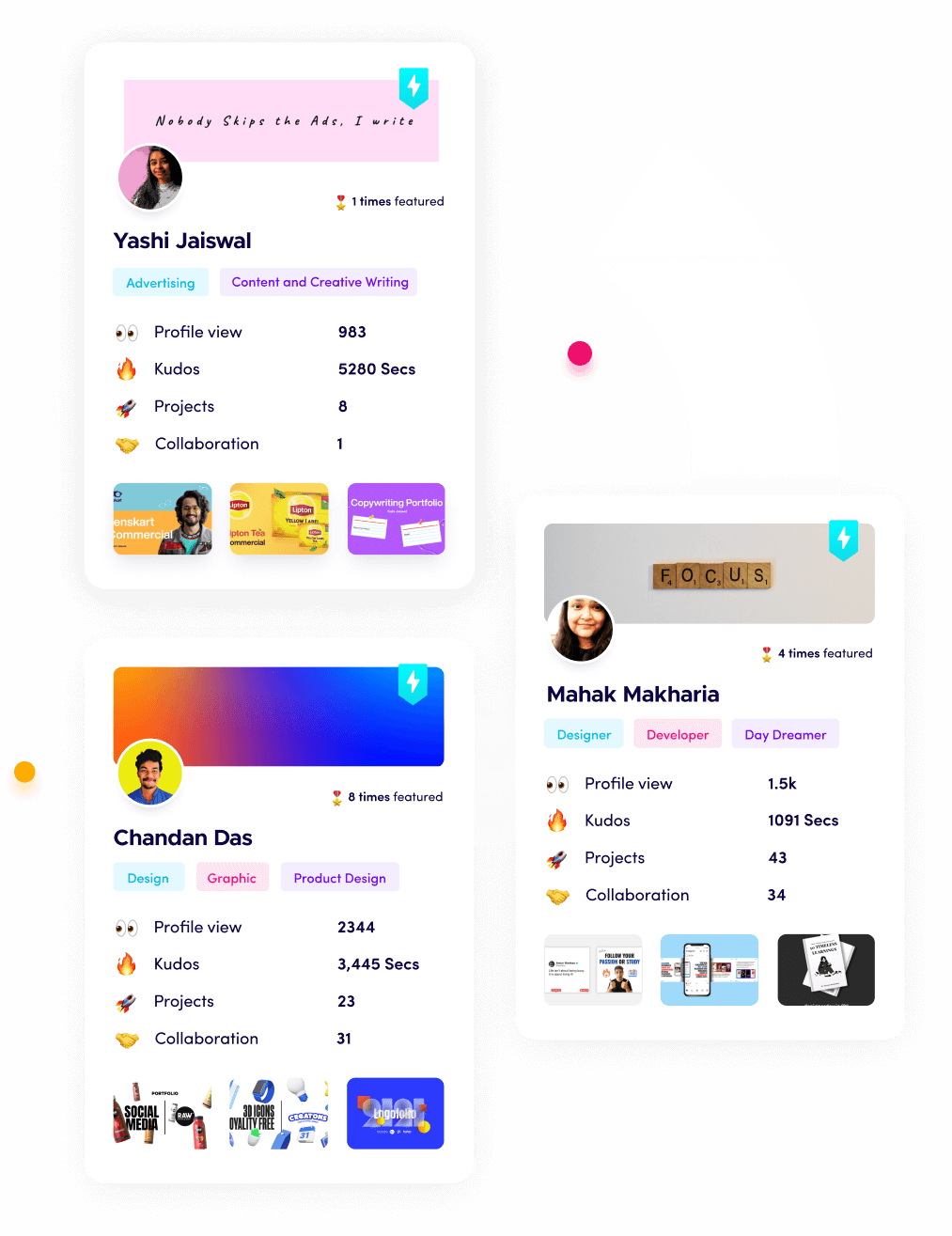
Fueler helps professionals showcase proof of work through projects, assignments, case studies, and achievements.
Thousands of professionals use Fueler to create their digital portfolio
Thousands of projects are published on Fueler. Check here
Startups and Companies hire through proof of work on Fueler
Used by freelancers, creators, marketers, video editors, writers, designers, and product managers
Our mission is to help the next 100 million professionals build a verified professional identity through proof of work

What should you do next?
You've read the article. Now turn your skills into proof of work and unlock more opportunities.
Build your proof of work portfolio
Create a clean portfolio with projects, assignments, resumes, and AI stack details that companies actually want to see.
Create your Fueler portfolio →Apply through assignments, not resumes
Stand out by solving real tasks from companies hiring on Fueler.
Explore assignments →Get discovered by companies
Make your work public and let recruiters discover your skills through actual projects instead of keywords.
Get discovered →