Fueler: The Best Alternative to Canva Portfolio in 2026

Riten Debnath
20 Jun, 2026
Most people build a portfolio to look good. Very few build one to actually get hired. That gap is where careers stall in 2026.
Canva can make your work look clean and professional in minutes. That part is solved. The harder problem is what happens after you hit publish. A beautiful page sitting on the internet does nothing if no company ever finds it, and no recruiter can verify that the work is really yours.
I'm Riten, founder of Fueler, a portfolio platform that helps people get hired through assignments, proof of work, and real projects instead of just resumes. I have spent years watching talented people lose opportunities, not because their work was weak, but because their work was invisible and unverified.
In this article I will break down what Canva Portfolio is, where it falls short for job seekers, and why Fueler works as a stronger alternative in 2026. You will see a clear side-by-side comparison, real examples of the kind of portfolios people build on Fueler, and the hiring data that explains why proof of work now matters more than a pretty layout.
If your goal is opportunities and not just compliments, this is for you.
What Canva Portfolio Does Well in 2026
Canva is one of the easiest design tools on the internet, and its portfolio feature reflects that. You drag your work onto a page, pick a layout, and publish a link in a few minutes. No code, no designer, no budget needed to start.
For pure visual presentation, it holds up well in 2026.
- Ready-made templates. Canva has hundreds of portfolio templates for designers, photographers, students, and creatives, so you never start from a blank screen.
- Simple customization. Drag-and-drop editing, built-in fonts, colors, and a brand kit let you match the look to your personal style without touching design software.
- Fast publishing. With Canva Websites you can turn a design into a live web page, or export it as a PDF to send directly to a client.
- Free to start. The free plan covers most basic portfolio needs. Canva Pro adds more assets and tools for around $15 a month (roughly $120 a year), though pricing can vary by region.
- Good for one-off sharing. If you just want to send a single project or a clean gallery to a client, Canva gets the job done quickly.
So Canva is a genuinely good design tool. The problem is not how it makes your portfolio look. The problem is what it cannot do once your portfolio is live.
Where Canva Portfolio Falls Short for Job Seekers
Here is the honest part. Canva is a design platform first, and a portfolio host second. It was never built to help you get hired. That shows the moment you treat it as a career tool instead of a design tool.
A portfolio that only sits and looks nice is a missed opportunity in a skills-first job market.
- No discovery. Companies cannot find you on Canva. There is no talent network browsing portfolios, so you carry the full burden of driving every single visitor yourself.
- No proof-of-work ecosystem. You can show images of your work, but there is no built-in way to add context, contribution, results, or verification that the work is truly yours.
- No hiring opportunities. Canva has no job board, no company briefs, and no path from portfolio to interview. It is a dead end for hiring intent.
- No assignment applications. You cannot apply to real tasks or prove your skills through a live brief. Recruiters only see a finished design, not how you think or execute.
- No skill validation. There are no vouches, no client confirmations, and no verified credentials. A recruiter has to take your word for everything, which adds doubt instead of removing it.
This matters more in 2026 than ever. Applications per job opening have roughly doubled since 2022, and recruiters lean on AI screening to filter the flood. A static, unverified design page gives them almost nothing to act on.
If you want to understand how a portfolio actually moves the needle, I broke this down in detail in how to build a proof of work portfolio.
Why Fueler Is the Best Canva Portfolio Alternative in 2026
Fueler starts from a different question. Canva asks "how do I make this look good?" Fueler asks "how do I turn this work into a job?" That single difference shapes the entire product.
We built Fueler as a career portfolio platform, not a design canvas. The work is the center of attention, and everything around it exists to get you discovered, trusted, and hired.
- Built for careers, not just visuals. Every feature points toward opportunity. You document real projects with context and outcomes, not just thumbnails, so recruiters understand your impact fast.
- Proof of work at the core. You show what you actually did, how you did it, and what result it created. That is far stronger than a job title on a resume or a logo on a page.
- Discoverable by companies. Fueler connects to real hiring activity. Brands and recruiters browse the platform to find talent based on demonstrated skill, so your portfolio works even while you sleep.
- Apply through assignments. Companies post real tasks. You apply by doing the work, not by writing a cover letter. This is assignment-based hiring, and it favors people who can actually execute.
- Get hired through your work. An approved assignment lives on your profile with the brand's validation. Even when a task does not turn into a job, it becomes verified proof that builds your next opportunity.
More than 100,000 professionals already use Fueler to build career portfolios. The point is not the count. The point is that they are using it to get found, not just to look polished.
How to Create Your Portfolio on Fueler: A Step-by-Step Guide
Setting up a portfolio on Fueler takes minutes, but a few smart choices early on decide whether it actually pulls in opportunities. So before you start adding work, get the basics right. If you want the deeper version of this, I broke it down in how to build a proof of work portfolio step by step.
Step 1: Sign up on Fueler.
Head to Fueler.io and create your free account.
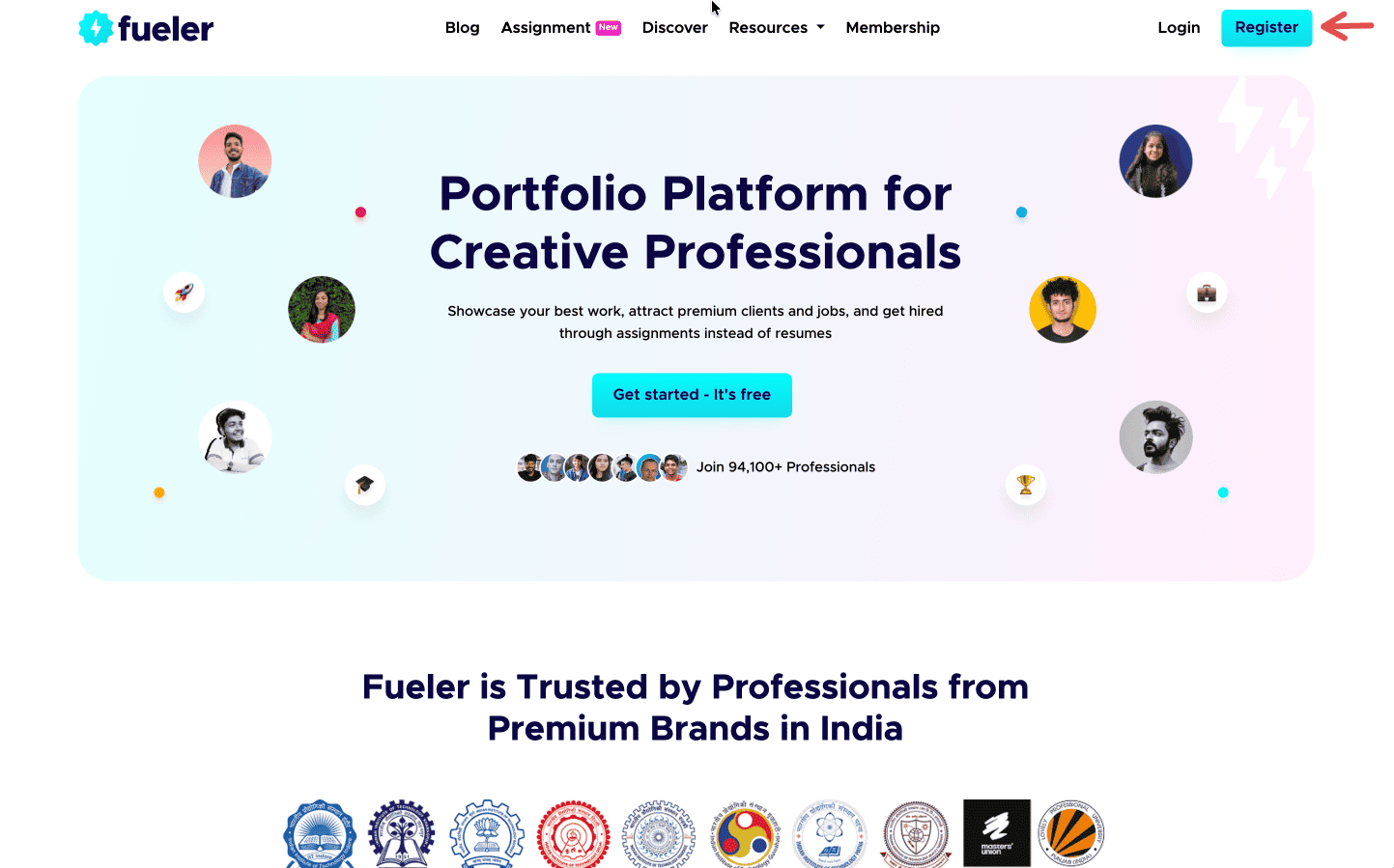
Sign up on Fueler
Step 2: Pick a professional handle.
Your handle shows up in your public link, so keep it clean and grown-up. Don’t add nicknames and random numbers. Your name or a simple version of it works best.
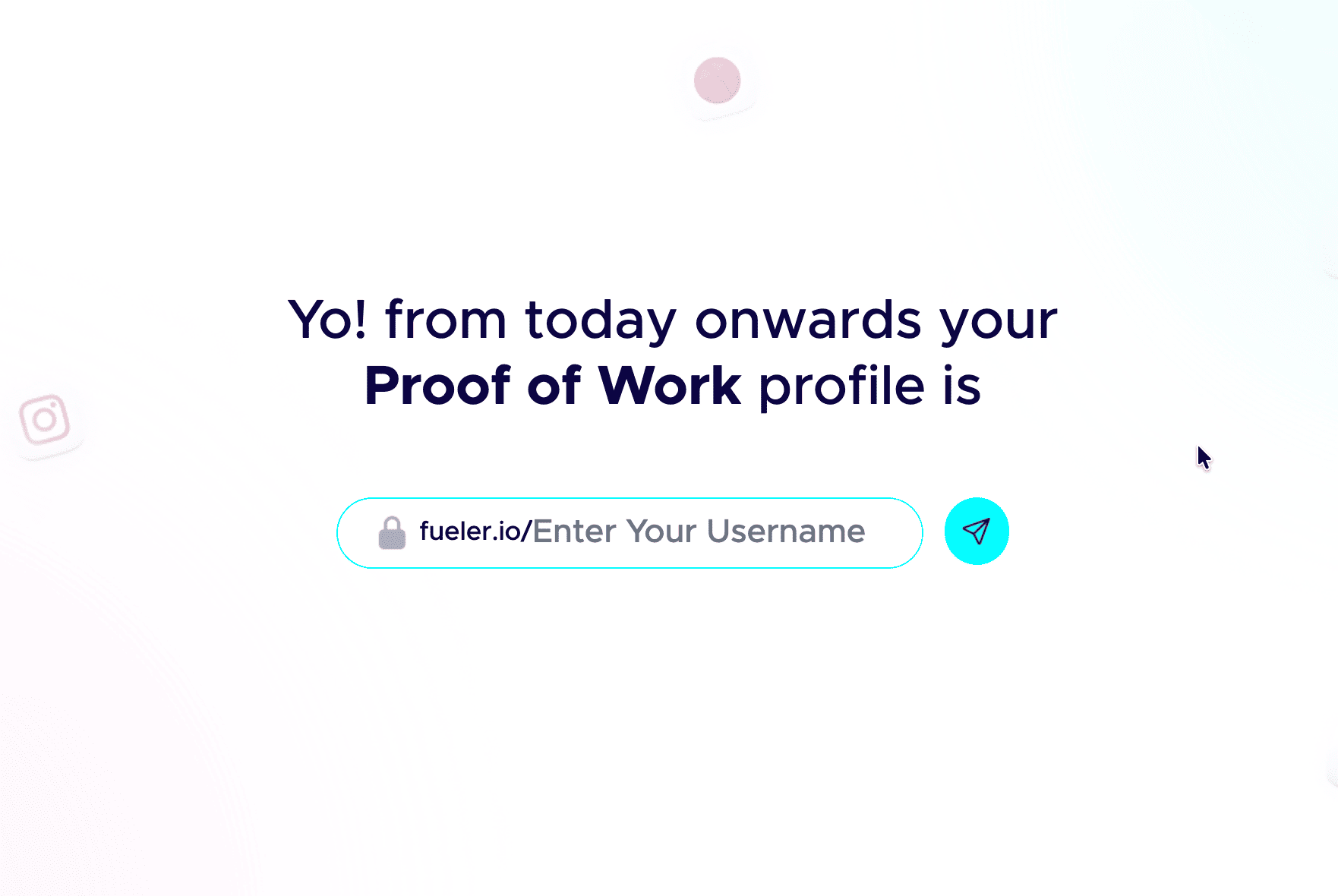
Pick a professional handle
Step 3: Add a professional profile picture.
Use the same kind of professional photo you would put on LinkedIn. Clear face, good lighting and simple background. People trust a real face more than an empty avatar.
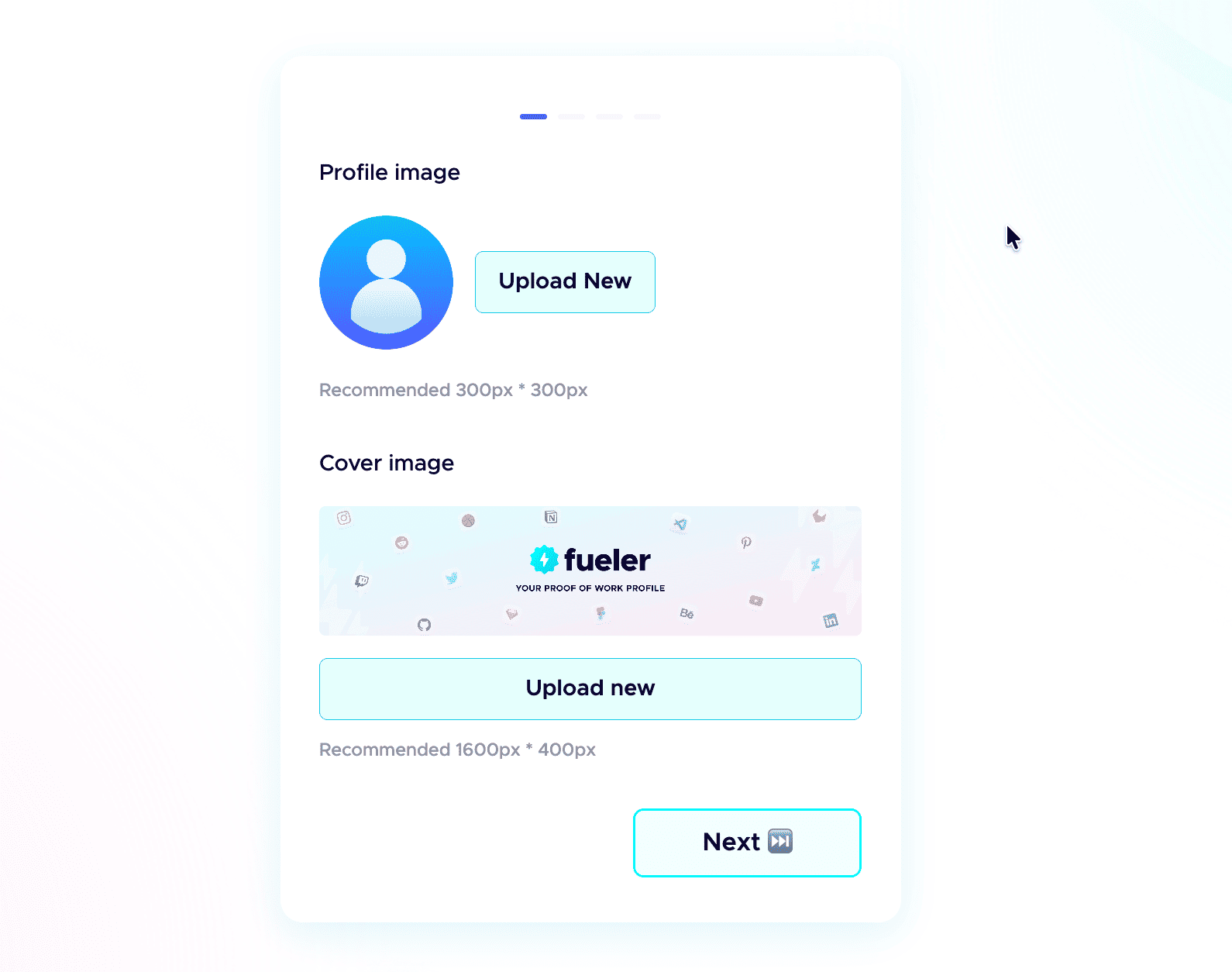
Add a professional profile picture
Step 4: Write a strong header.
The header is the first thing anyone see. In one or two short lines, say who you are, what you do, and the kind of work you have done. Make it specific, not vague.
Step 5: Add a short bio.
Tell people who you are and what you do in a few plain sentences. No buzzwords, just enough for a recruiter to get you in five seconds.
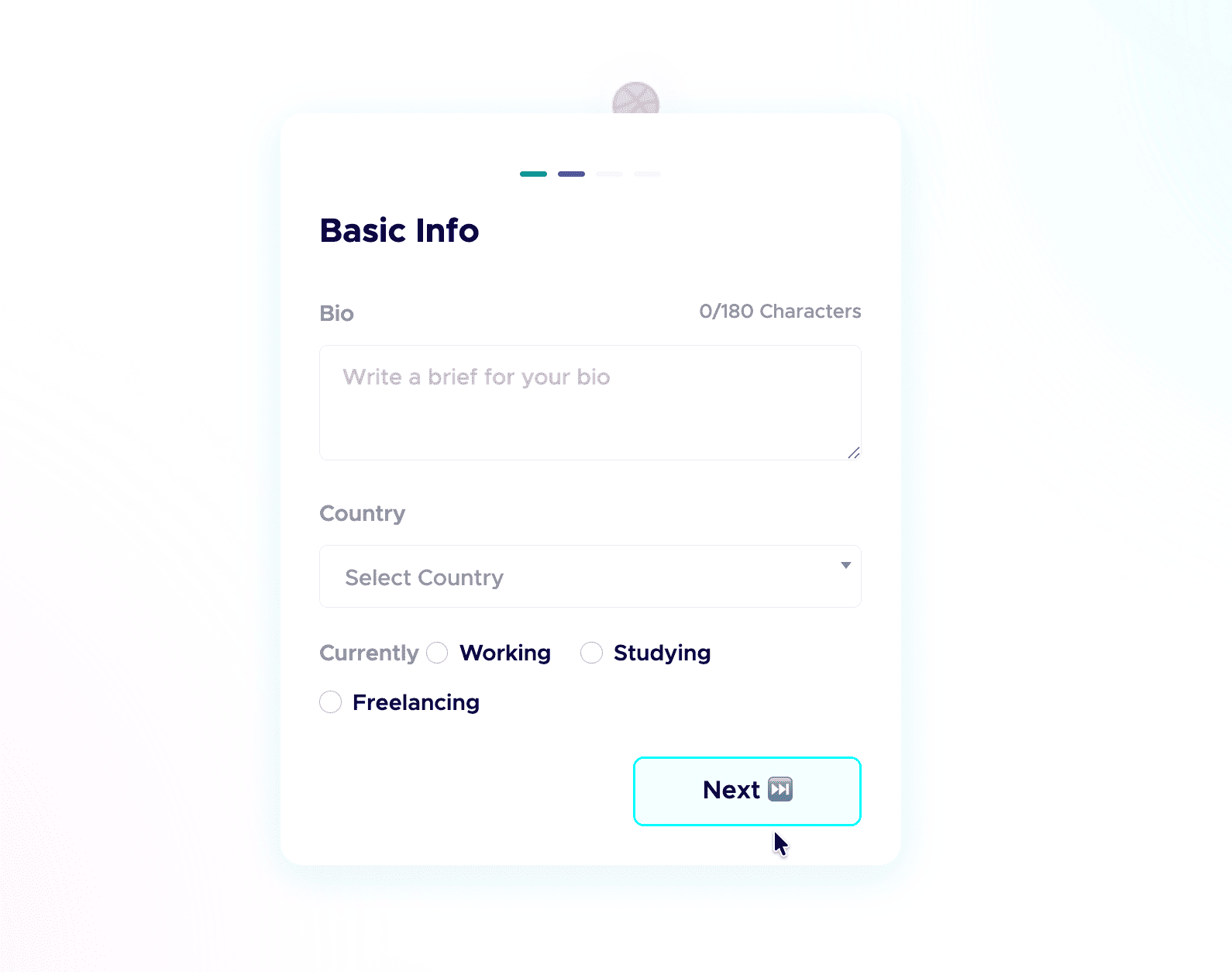
Add a short bio
Step 6: Add your skills and social links.
List the skills you are good at and actually want to be hired for, and connect your socials. People do check your profiles, and active socials build credibility before the first call. Students starting from scratch can follow my student guide to your first portfolio.
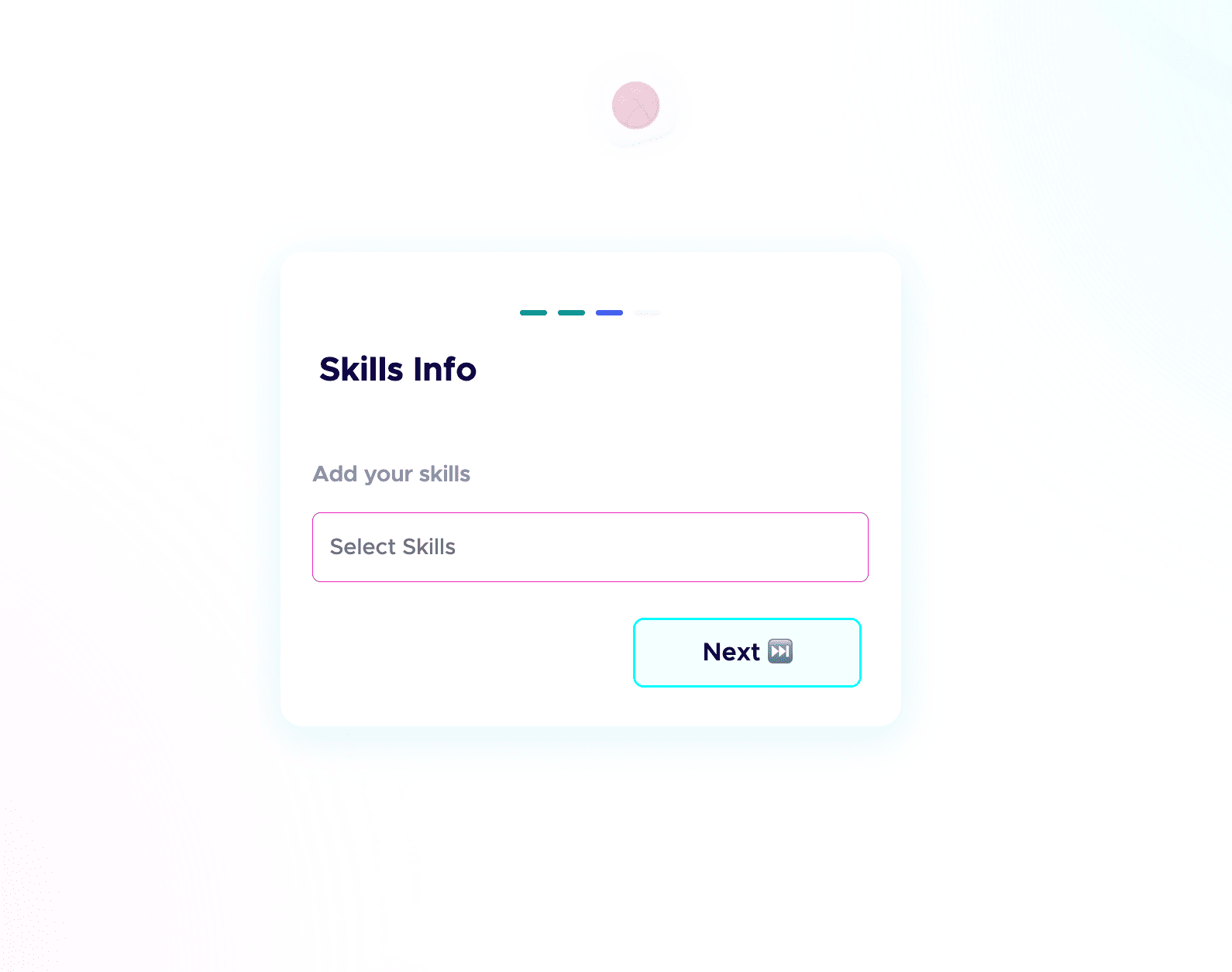
Add your skills
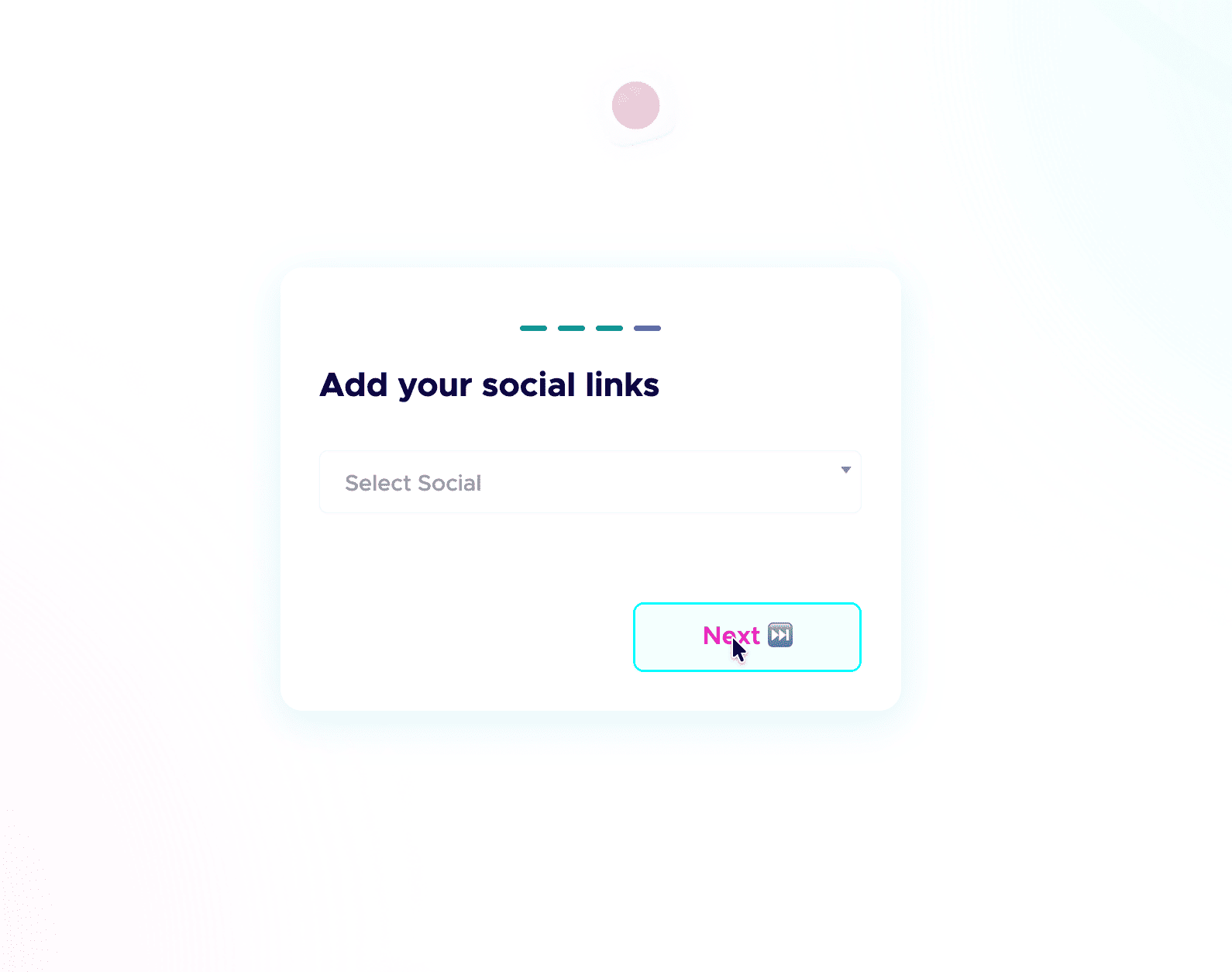
Add your social links
Step 7: Fill in your Device Configuration.
In your dashboard, set up the Device Configuration section. Add the details about the device you are using. Remote-first companies want to know you have a solid setup to work from. A good setup quietly adds leverage and signals you are ready to deliver.
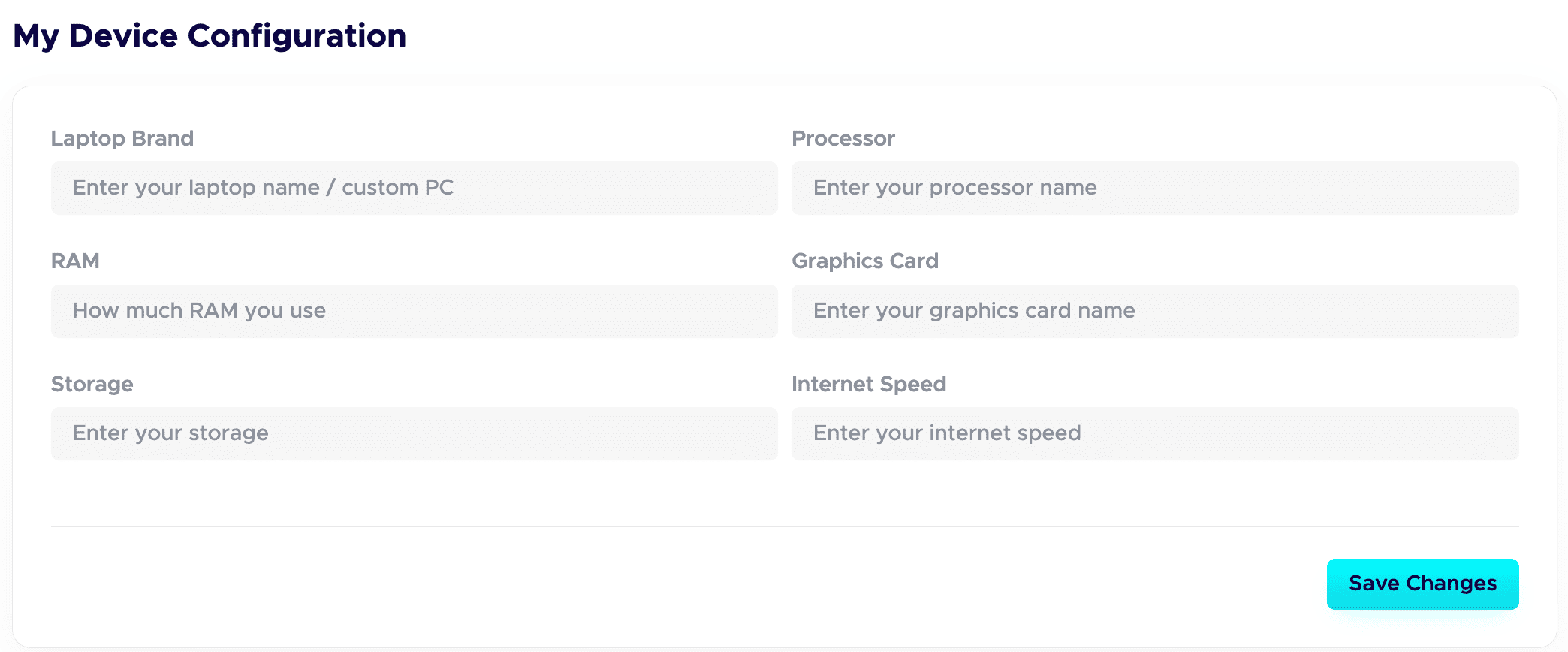
Fill in your Device Configuration
Step 8: Publish your projects with all the details.
This is a game-changer. Give each project a clear title and a detailed description. Walk through your process: your thinking, the tools you used, the choices you made, and the result. Companies care about how you work, not just the final image.
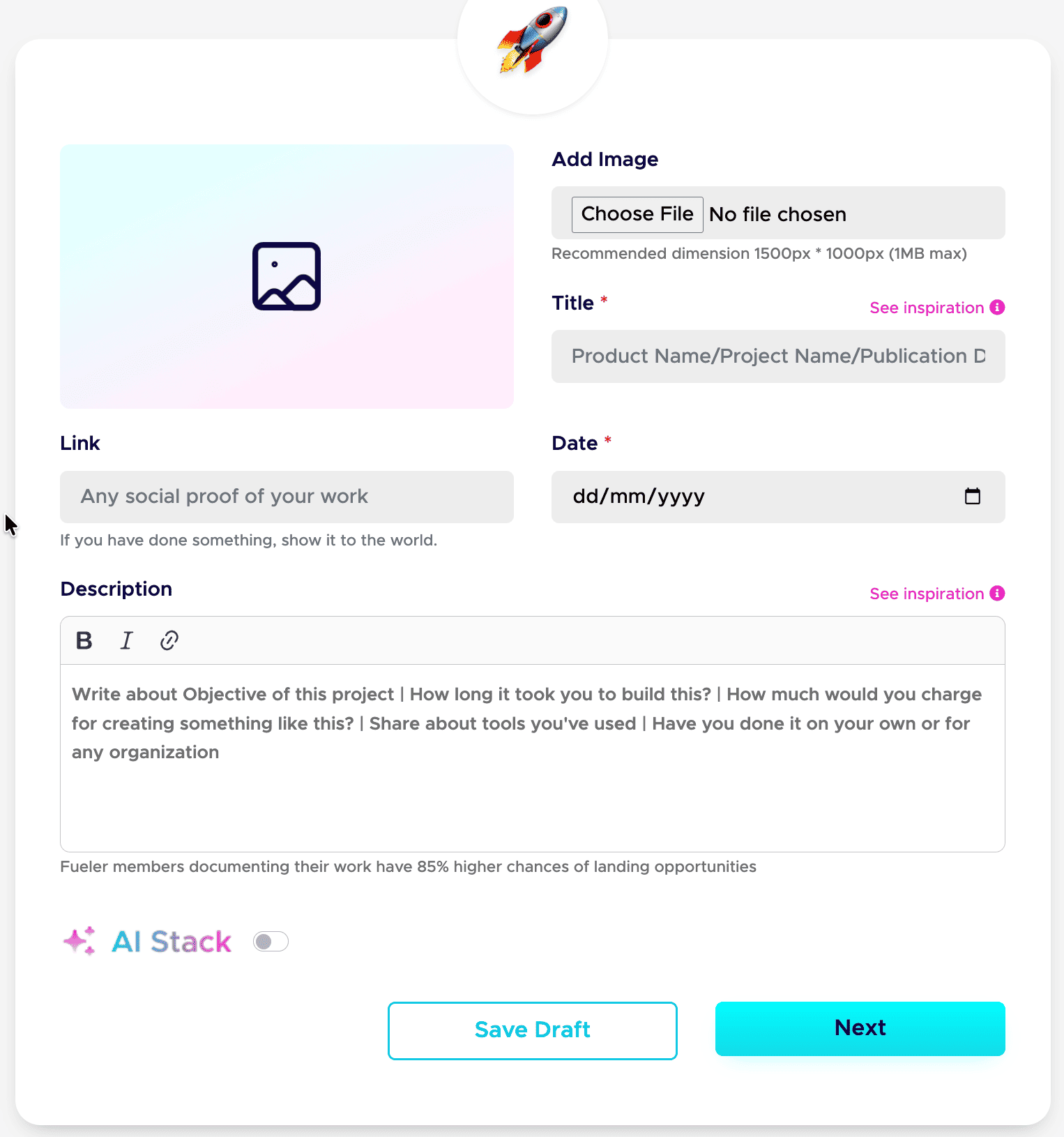
Publish your projects with all the details
Step 9: Add your AI Stack to each project.
AI is part of real work now, so show it honestly. Use the AI Stack feature to explain how you used AI, which tools you used, and what you did manually. This builds trust instead of raising doubt. Here is the full guide: how to add AI Stack on Fueler.
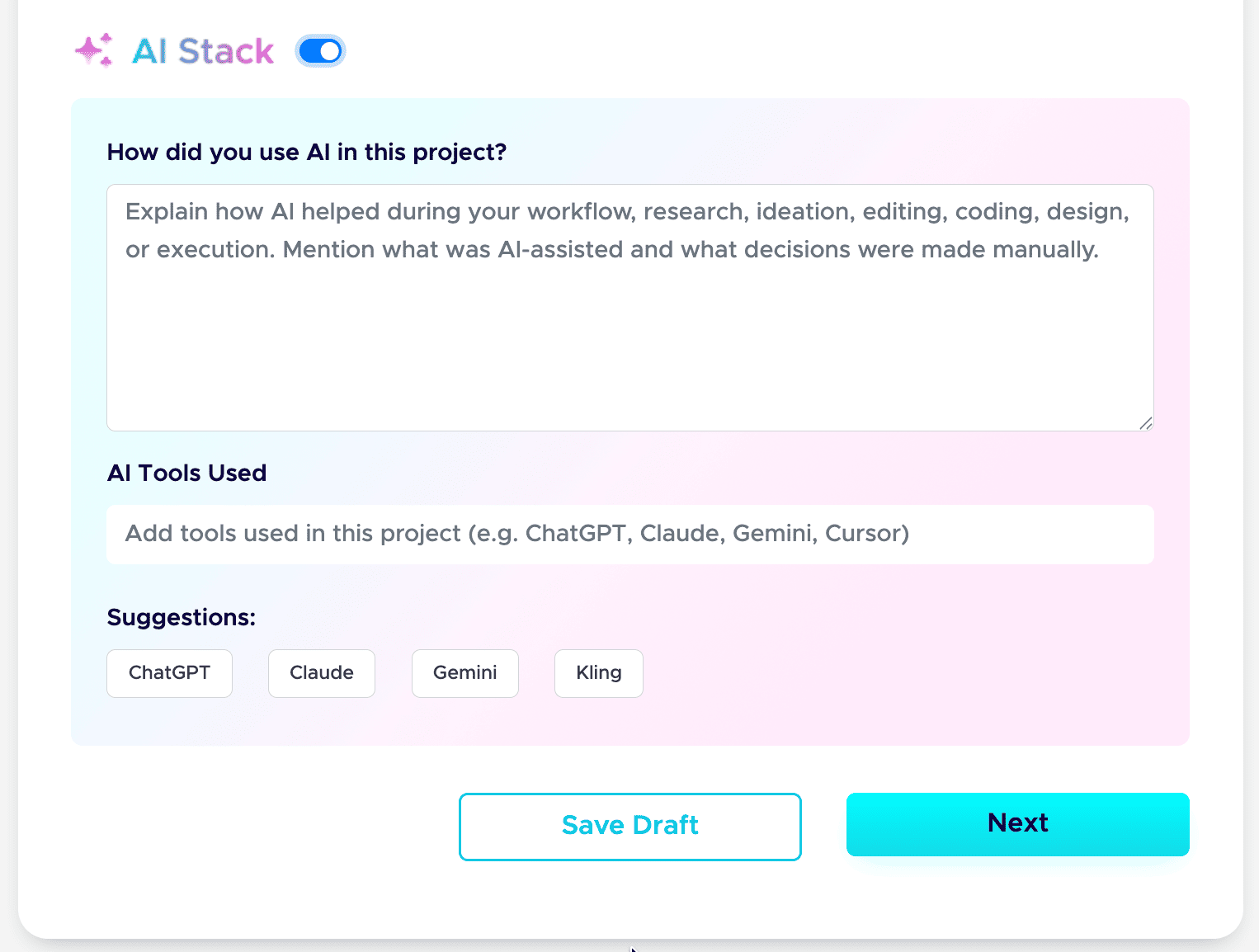
That is the whole setup. Do these nine steps well and your profile stops being a static page and starts working as a hiring asset. If you want a tighter version to follow next time, save my 6-step formula for a Fueler portfolio and my breakdown of a career portfolio that actually gets jobs.
Canva Portfolio vs Fueler: A Side-by-Side Comparison
Here is the clearest way to see the difference. One column is a design tool. The other is a hiring tool.
If your only goal is a good-looking page, Canva is fine. If your goal is to get hired, the comparison is not close. I went deeper on this in my breakdown of the best digital portfolio platforms compared.
What Fueler Actually Does: Core Features
Let me explain how Fueler works under the hood, because "portfolio platform" undersells it. Fueler is built around four mechanisms that turn your work into opportunities.
Each one removes a specific reason recruiters say no.
- Rich, multimodal portfolios. You publish detailed project entries with live product links, GitHub repos, Figma files, screenshots, timelines, tools used, embedded dashboards, and vid eo walk-throughs. It is a full case study, not a flat image.
- Assignment-based hiring marketplace. Brands post real briefs that reflect actual business needs, like a UI design, a content plan, or a front-end build. You apply by submitting the finished task, so skill speaks before the resume does.
- Proof of work verification and vouches. You invite clients, teammates, or leads to vouch for your specific contribution to a project. That turns a plain link into a verified credential that carries far more trust than a text recommendation.
- Profile integration of approved work. When a brand approves your assignment submission, it appears on your profile with their validation stamp, even if it does not become a full job. Your proof compounds over time.
- Discoverability and analytics. Public profiles use schema markup so they index on Google, get formatted for AI talent screening tools, and give you traffic analytics showing who viewed your work and where they came from.
The result is a portfolio that does three jobs at once: it presents your work, it proves your work, and it puts your work in front of people who hire. That is the gap a design tool simply cannot fill.
Real Fueler Portfolio Examples
The best way to understand Fueler is to look at the kind of people who use it. These are real disciplines where proof of work changes everything.
- Rahul, technical writing. Instead of saying "I write documentation," Rahul publishes real docs, API guides, and explainers with links and context. A hiring manager can read the actual work and judge clarity on the spot.
- Sreelakshmi, marketing. Marketing is easy to fake on a resume and hard to fake in a portfolio. She shows campaigns, the thinking behind them, and the outcomes, so the results speak before any interview begins.
- Neha, content. Content people live or die by their voice and range. Neha's profile collects her best pieces in one place with context on the goal and the result, which is far stronger than a list of past employers.
- Vikram, copywriting. Copy is judged line by line. Vikram shows real ad copy, landing pages, and email work, so a client sees the quality directly instead of trusting a claim on a CV.
The pattern is the same across every field. The work is visible, the context is clear, and the credibility is built in. You can see more of this in my collection of proof of work portfolio examples.
Portfolios Examples on Fueler
Who Should Use Fueler in 2026
Fueler is not for everyone, and I would rather be honest about that than oversell it. It is built for people who want their work to do the talking.
If you are early in your career, this is one of the fastest ways to compete.
- Creative and tech professionals. Marketers, UI and UX designers, copywriters, writers, and developers use Fueler to show high-fidelity versions of their real output, not summaries of it.
- Students and career starters. People with no formal experience use personal projects, redesigns, and open assignments to land first internships and roles based on what they can build.
- Freelancers. Independent professionals use verified proof of work to cut through proposal fatigue and win clients faster, because the work removes doubt before the call.
- Recruiters and startups. Companies evaluate candidates on practical execution, which reduces bias and cuts the time wasted reading resumes that all look the same.
- Anyone tired of resume roulette. If you have lost roles to people with better titles but weaker work, proof of work levels the field in your favor.
If you only need a pretty page once, stick with a design tool. If you want a career asset that keeps working, this is the better home.
Why should you be on Fueler in 2026?
Step back from the tools for a second. The deeper lesson here is about how careers actually get built in 2026.
Execution visibility is the new currency. The people who win are not always the most talented. They are the ones whose work is visible, documented, and easy to verify. When a recruiter can see your process, your decisions, and your results in one place, you stop being a stranger and become a safe bet.
That is why documenting your projects matters as much as doing them. Every case study you publish, every link you share, and every vouch you collect becomes a small deposit in your credibility account. Over time, that account is what gets you hired, promoted, and trusted with bigger work.
Modern hiring rewards outcomes over titles. A platform like Fueler exists to make that visibility automatic instead of accidental, so your best work is never stuck in a folder that no one ever opens.
Build the work. Then build the proof. The second part is where most people quit, and where opportunities hide.
Final Thoughts: Design Gets Attention, Proof Gets Hired
Canva and Fueler are not really competitors. They solve different problems. Canva helps you design a portfolio. Fueler helps you get opportunities through it.
If your portfolio looks great but never gets seen or verified, the design was never the bottleneck. Discovery and proof were. In a market where employers screen on skills and verify before they trust, the smartest move is to make your real work easy to find and easy to believe.
Design will always matter. But in 2026, proof is what turns a portfolio into a job. Build for that, and the opportunities follow. If you want the bigger picture on this shift, read the future of work is proof of work.
Frequently Asked Questions
1. Is Fueler a good alternative to Canva Portfolio?
Yes, especially if your goal is getting hired and not just designing a page. Canva is a strong design tool for creating a clean, good-looking portfolio fast. Fueler is a career portfolio platform built around proof of work, company discovery, and assignment-based hiring. So Canva helps you present your work, while Fueler helps companies find and verify it. If you want opportunities to come to you instead of doing all the outreach yourself, Fueler is the better fit in 2026.
2. What is a proof of work portfolio?
A proof of work portfolio is a public collection of your real projects that shows actual skill and results, not just job titles. Instead of saying you can do something, you show the work itself, with context, your contribution, the tools you used, and the outcome. It can include live links, code, designs, writing, and case studies. In a skills-based hiring market, this kind of evidence builds trust far faster than a traditional resume, because recruiters can verify what you can really do.
3. Can I get hired through Fueler?
Yes. Fueler is built for hiring, not just showcasing. Companies post real assignments and briefs, and you apply by submitting the completed task instead of a cover letter. Recruiters and brands also browse the platform to find talent based on demonstrated skill. Even when an assignment does not become a full job, an approved submission stays on your profile as verified proof, which strengthens your chances for the next opportunity. The whole system is designed to turn your work into interviews and offers.
4. Is Fueler free to use?
Yes, you can create a portfolio on Fueler for free and start publishing your proof of work right away. Over 108,000 professionals already use it to build career portfolios and get discovered. You can showcase projects, apply to assignments, and share your profile link without paying to begin. This makes it accessible for students, freelancers, and career starters who want to compete on skill rather than budget. The fastest way to understand the value is to create a profile and add a few real projects.
5. Which is better for job seekers, Canva or Fueler?
For job seekers focused on landing roles, Fueler is the stronger choice. Canva is excellent for designing a portfolio, but it has no discovery, no skill validation, and no path to hiring. Fueler adds the three things that actually win jobs in 2026: visibility to companies, verified proof of work through vouches, and assignment-based applications. A simple stack works well too. Use Fueler as your main career portfolio, add GitHub or Behance for niche work, and put your Fueler link on LinkedIn and your resume.
Why 100,000+ professionals use Fueler
Fueler helps professionals showcase proof of work through projects, assignments, case studies, and achievements.
- Thousands of professionals use Fueler to create their digital portfolio
- Thousands of projects are published on Fueler. Check here
- Startups and Companies hire through proof of work on Fueler
- Used by freelancers, creators, marketers, video editors, writers, designers, and product managers
Our mission is to help the next 100 million professionals build a verified professional identity through proof of work

What should you do next?
You've read the article. Now turn your skills into proof of work and unlock more opportunities.
Build your proof of work portfolio
Create a clean portfolio with projects, assignments, resumes, and AI stack details that companies actually want to see.
Create your Fueler portfolio →Apply through assignments, not resumes
Stand out by solving real tasks from companies hiring on Fueler.
Explore assignments →Get discovered by companies
Make your work public and let recruiters discover your skills through actual projects instead of keywords.
Get discovered →
