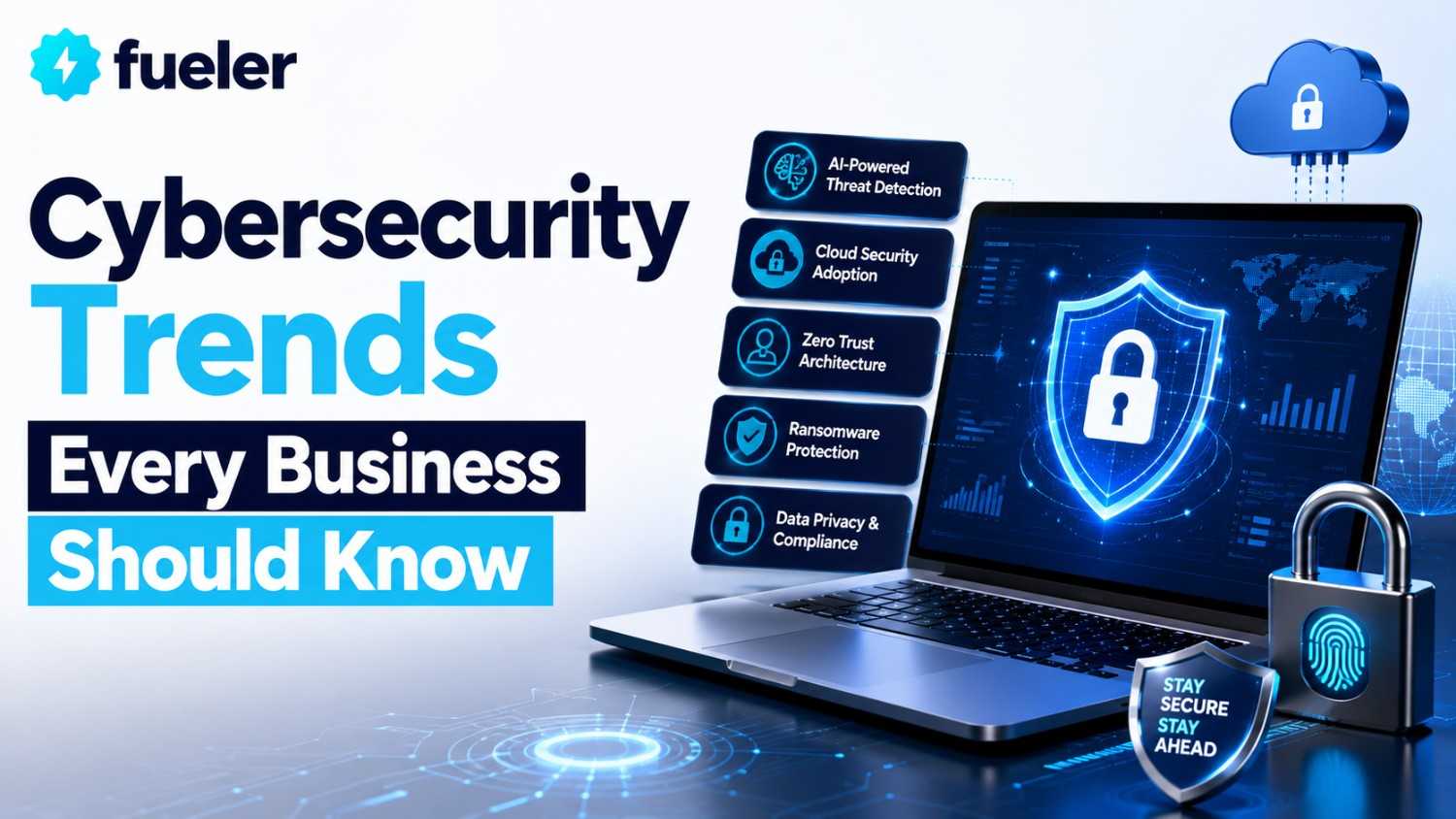
Cybersecurity Trends Every Business Should Know

Riten Debnath
18 Jun, 2025
Last updated: August 2026
Is your business ready for the cybersecurity threats of 2026? With hackers getting smarter and attacks happening more often, staying ahead is now a must for every company, big or small. If you want to protect your brand, data, and customers, you need to know what’s coming next in cybersecurity.
I’m Riten, founder of Fueler, a skills-first portfolio platform building the career infrastructure for 100 million creative professionals. Fueler connects talented individuals with companies through assignments, portfolios, and projects, not just resumes or CVs. Think of it as Dribbble/Behance for work samples combined with AngelList for hiring infrastructure.
Before we dive in, remember: cybersecurity is now a business-critical priority. These trends will help you build a safer, more resilient company that customers and partners can trust.
1. AI-Driven Threats and Defenses
Cybercriminals are now using artificial intelligence to create malware that can adapt, hide, and attack in ways older security tools can’t catch. At the same time, companies are fighting back by using AI-powered security systems that learn from data, spot unusual behavior, and react to threats instantly.
- Hackers use AI to make malware that changes its code and tricks traditional antivirus programs. Many companies now rely on malware removal software to catch what antivirus might miss, and CyberNews offers valuable insights for choosing the right tools to strengthen cybersecurity defenses.
- Businesses deploy machine learning tools to monitor user activity and detect zero-day attacks before they spread.
- AI helps spot patterns in huge amounts of data, finding threats humans would miss.
Why it matters:
If you don’t keep up with AI-driven threats, your business could be blindsided by attacks that slip past old-school defenses. Adopting AI-based security is now essential for protecting your data and reputation. To strengthen your defenses against AI-driven attacks, conducting regular IP lookup helps track unusual or unauthorized access attempts, giving your security team actionable insights to block potential threats early.
2. Zero Trust Security Becomes Standard
The old idea of trusting everyone inside your network is gone. In 2026, zero trust means every user, device, and request must be verified, no matter where they are or who they say they are.
- Every login and device is checked, every time, using strict authentication and continuous monitoring.
- Micro-segmentation limits what users can access, so if hackers get in, they can’t move around freely.
- Zero trust is especially important for remote and hybrid teams who work from different locations.
Why it matters:
Zero trust cuts the risk of insider threats and large-scale breaches. It’s quickly becoming the gold standard for companies that want to protect sensitive data and win customer confidence.
3. Ransomware-as-a-Service and Smarter Attacks
Ransomware attacks are exploding because anyone can now buy “ransomware-as-a-service” kits on the dark web. While not all dark web websites are malicious, some contain tools or services that can pose security threats if misused. Even people with little tech skill can launch powerful attacks, targeting businesses of all sizes.
- Ransomware groups sell easy-to-use attack kits, making it simple for criminals to lock your files and demand payment.
- The cost of recovering from an attack is rising fast, with many businesses losing millions in downtime and lost data.
- Defending against ransomware now means having offline backups, strong network segmentation, and regular employee training to spot phishing scams.
Why it matters:
Ransomware can shut down your business overnight. Only by preparing and training your team can you reduce the risk and recover quickly if you’re hit.
4. Cloud Security and Data Privacy
As more companies move to the cloud, protecting data stored online is now a top priority. Cloud security is about more than just passwords; it’s about encryption, access controls, and following privacy laws.
- Companies must use strong encryption and Privileged Access Management to manage who can access sensitive data in the cloud.
- Regular security audits and real-time monitoring help catch problems before they become breaches.
- Staying compliant with regulations like GDPR and CCPA is now a must for any business handling customer data. In this process, some companies also evaluate DNS Filter alternatives to strengthen web filtering and prevent access to malicious domains, adding another layer of cloud protection.
Why it matters:
Cloud breaches can leak sensitive information and destroy customer trust. Proactive cloud security keeps your data safe and your business reputation strong, but this requires continuous security validation to verify that your controls are actually protecting your cloud environment as intended.
5. Human Error and Cybersecurity Training
Most cyberattacks start with a simple mistake like clicking a fake link or using a weak password. Human Risk Management plays a crucial role in identifying and reducing these vulnerabilities. That’s why ongoing employee training is one of the most important defenses.
- Regular training helps staff spot phishing emails, use strong passwords, and follow safe online habits.
- Simulated phishing tests can show who needs more support and keep everyone alert.
- Building a “security-first” culture turns every employee into a part of your defense system.
Why it matters:
People are often the weakest link in cybersecurity. Training turns them into your strongest asset, helping prevent attacks before they happen.
Fueler’s Role in Modern Cybersecurity Hiring
At Fueler, we help companies hire cybersecurity talent through real-world assignments, not just resumes. Businesses can test how candidates respond to simulated threats and real challenges, ensuring you hire experts who can truly protect your data and systems.
Final Thought
Cybersecurity in 2026 is about more than firewalls and passwords. It’s about smart technology, constant vigilance, and a culture where everyone plays a role in defense. Stay updated on these trends, invest in training, and use platforms like Fueler to find the best talent your company’s future depends on it.
FAQs
1. What is the biggest cybersecurity threat for businesses in 2026?
AI-driven malware and ransomware-as-a-service are the most dangerous, as they are harder to detect and can cause massive damage quickly.
2. How can small businesses improve their cybersecurity?
Start with employee training, use strong passwords, keep software updated, and back up data regularly. Consider using AI-based security tools for extra protection.
3. Why is zero trust security important?
Zero trust ensures every user and device is verified, reducing the risk of insider threats and making it harder for hackers to move around your network.
4. What should I do if my business is hit by ransomware?
Disconnect affected systems, contact cybersecurity professionals, and use offline backups to restore your data. Never pay the ransom without expert advice.
5. How does Fueler help with cybersecurity hiring?
Fueler lets you test candidates with real-world assignments, so you can hire cybersecurity professionals who have proven skills and can handle real threats.
Why 100,000+ professionals use Fueler
Fueler helps professionals showcase proof of work through projects, assignments, case studies, and achievements.
- Thousands of professionals use Fueler to create their digital portfolio
- Thousands of projects are published on Fueler. Check here
- Startups and Companies hire through proof of work on Fueler
- Used by freelancers, creators, marketers, video editors, writers, designers, and product managers
Our mission is to help the next 100 million professionals build a verified professional identity through proof of work

What should you do next?
You've read the article. Now turn your skills into proof of work and unlock more opportunities.
Build your proof of work portfolio
Create a clean portfolio with projects, assignments, resumes, and AI stack details that companies actually want to see.
Create your Fueler portfolio →Apply through assignments, not resumes
Stand out by solving real tasks from companies hiring on Fueler.
Explore assignments →Get discovered by companies
Make your work public and let recruiters discover your skills through actual projects instead of keywords.
Get discovered →
