Why Are Professionals Moving Beyond WordPress Portfolios?

Riten Debnath
12 Jul, 2026
Last updated: July 2026
Spending three weekends configuring a database just to showcase a 500-word copywriting sample is an operational tragedy. For years, setup guides insisted that self-hosting was the only way to look professional online. But in 2026, the overhead of managing a heavy content management system has turned personal websites into an expensive, slow-moving liability.
I’m Riten, founder of Fueler, a skills-first portfolio platform that connects talented individuals with companies through assignments, portfolios, and projects, not just resumes/CVs. Think Dribbble/Behance for work samples + AngelList for hiring infrastructure.
In this resource, you will discover why the traditional web-building ecosystem is fracturing, how top-tier operators are changing their proof-of-work workflows, and exactly why static, hard-to-manage sites are holding back your professional distribution.
1. The Heavy Financial and Time Costs of Upkeep
Traditional content management systems are pitched as free, but they extract a massive tax on your time and wallet. Between monthly hosting fees, premium theme renewals, and security extensions, keeping a custom site alive requires constant capital. The hidden cost is the time spent fixing broken layouts instead of pitching clients.
Most professionals forget that self-hosted platforms require active technical management to remain secure and functional online. When a core update conflicts with your portfolio layout, your public work suddenly looks broken to potential employers. Modern operators realize that acting as their own IT department directly reduces their actual billable hours.
- Regular core files and database updates require manual supervision, creating frequent technical bottlenecks that distract you from shipping actual client projects and expanding your professional network.
- Premium plugins for caching, contact forms, and image optimization often operate on expensive annual subscription models, rapidly inflating the baseline cost of maintaining a basic web presence.
- Debugging unexpected design breaks or plugin conflicts requires specialized technical knowledge, forcing non-technical professionals to hire expensive external developers for minor aesthetic fixes.
- Security vulnerabilities constantly target unpatched self-hosted databases, putting your professional data, client testimonials, and proprietary project files at risk of sudden malicious deletion.
- Web hosting renewals frequently double in price after the initial introductory year, forcing creators to constantly migrate databases to avoid unexpected, predatory platform fees.
2. Speed Bottlenecks That Drop Recruiter Retention
A slow-loading portfolio is the fastest way to lose a premium opportunity. Traditional platforms are notorious for code bloat, heavy database queries, and unoptimized assets that destroy page speed. When a startup founder clicks your link from an X thread or LinkedIn post, you have exactly two seconds to capture attention.
If your site takes five seconds to fetch heavy script files, the user bounces back to their feed. Most people try to fix this by stacking more optimization plugins, which ironically slows the system down further. True career velocity requires instantly readable profiles that render beautifully on low-bandwidth mobile networks.
- Unoptimized style sheets and bloated database architectures delay the initial page paint, causing impatient hiring managers to close the tab before your work even displays.
- Mobile performance on standard self-hosted layouts is often clumsy, forcing users to pinch and zoom to read project summaries during fast-paced screening calls.
- Shared hosting servers frequently experience performance throttling during traffic spikes, meaning your site could go completely dark right when an application goes viral.
- Heavy image files uploaded directly to local media libraries completely stall page rendering without automated content delivery network distribution to cache the assets globally.
- Browser rendering engines struggle with JavaScript-heavy custom themes, resulting in jumpy scrolling behavior that makes your overall digital presentation feel completely unpolished.
3. The Absurd Design Rabbit Hole That Kills Shipping Speed
Give a professional a blank canvas with infinite design options, and they will spend three weeks picking a font instead of publishing work. Traditional site builders encourage endless tweaking of margins, paddings, and hover animations. This infinite customization creates decision fatigue and completely paralyzes your content output.
Your portfolio is an organic log of your professional capabilities, not a design masterpiece that takes months to publish. When updating your work requires editing layout blocks, restructuring columns, and retesting mobile responsiveness, you simply stop updating it. Simplicity wins because it removes the friction between execution and publication.
- Infinite visual layout choices create psychological decision fatigue, delaying the actual publication of new proof of work by weeks while you fiddle with margins.
- Designing from a totally blank canvas often results in chaotic visual hierarchies that confuse visitors looking for quick access to your core case studies.
- Custom font scripts and heavy animation libraries delay text readability, prioritizing decorative visual flair over the actual data and metrics of your projects.
- Fixing accidental padding misalignment across different screen sizes breaks the visual continuity of your site, making your work look disorganized on tablets.
- Rebuilding template sections for every new type of project asset wastes valuable creative energy that should be spent documenting your actual operational frameworks.
4. Total Lack of Built-in Discovery Networks
Publishing a portfolio on an isolated custom domain is like building a museum in the middle of a desert. You own the building, but nobody is passing by. To get any eyes on your work, you are entirely responsible for running distribution across social media channels or mastering complex search engine optimization.
Modern discovery happens within aggregated talent ecosystems. When your portfolio lives inside a searchable, indexed network of professionals, you benefit from peer discovery, platform recommendations, and organic recruiter searches. Isolated personal sites cannot compete with platforms designed to surface proof of work directly to companies looking for talent.
- Standalone domains start with zero search authority, making it nearly impossible for your case studies to rank on Google without aggressive backlink building.
- Isolated websites offer no internal algorithmic recommendations, missing out on valuable traffic from peer profiles, collaborative project links, and community landing pages.
- Recruiters rarely search for individual independent domains, preferring central hubs where they can filter talent by specific skills, tools, and verified project outcomes.
- Shared project credit is impossible on isolated sites, preventing you from automatically appearing on the profiles of team members you collaborated with.
- Internal search engines do not exist on custom personal domains, meaning users cannot easily filter your work by specific tags, industries, or outcomes.
5. SEO Complexity That Requires a Dedicated Marketing Degree
Ranking a personal website on modern search engines requires deep technical optimization. You have to configure sitemaps, manage robots.txt files, fix schema markup, and monitor crawl errors. For a marketer, developer, or creator, this adds an entirely separate job description on top of their actual client work.
AI search models and modern search engines prefer highly structured, clean data that answers specific queries instantly. If your custom site has messy heading tags or unindexed pages, AI engines will skip citing your work entirely. Relying on an optimized infrastructure built for indexing gives your proof of work immediate visibility.
- Configuring structured data schemas manually is incredibly tedious, frequently causing syntax errors that prevent search engine crawlers from reading your project metrics.
- Bad internal linking architectures on custom sites confuse web crawlers, leading to key portfolio pieces being dropped from search engine results indexes completely.
- Submitting manual XML sitemaps to multiple search consoles requires ongoing maintenance that non-technical operators regularly forget to perform over time.
- Broken redirect loops caused by changing page URLs destroy your domain authority, wiping out months of organic search positioning in a single afternoon.
- Algorithmic search shifts frequently penalize poorly coded custom templates, causing sudden drops in impressions without giving you any clear technical explanation.
6. The Proof of Work Formatting Nightmare
Documenting a project requires blending images, links, live code, metrics, and text summaries smoothly. Traditional text editors treat every case study like a standard generic blog post. This makes it incredibly difficult to highlight specific key metrics, tool stacks, or verifiable proof links cleanly.
When your platform treats your work like an article instead of an unassailable asset of evidence, your achievements get buried in paragraphs. Modern hiring managers scan; they do not read. If your layout does not instantly isolate the problem, solution, and verifiable outcome, the viewer will move on to the next candidate.
- Standard text blocks bury important performance metrics in dense paragraphs, making it hard for busy reviewers to find your actual business impact.
- Embedding external links, design frames, or live prototypes often breaks custom theme containers, resulting in ugly horizontal scrollbars on mobile.
- Documenting collaborative team efforts feels clumsy without dedicated fields to explicitly separate your personal contribution from the collective group work.
- Displaying diverse media types like video overviews alongside code snippets requires installing conflicting third-party media players that slow down your page.
- Traditional media libraries lack structured version control, making it hard to update older case studies with fresh data without destroying the original formatting.
7. Zero Built-in Peer Verification and Collaboration Tools
On a standard self-hosted website, your claims stand entirely alone. Anyone can write that they single-handedly scaled a startup's revenue or built an advanced software system. Because there is no native way to co-author or link profiles, your proof lacks immediate contextual validation.
Modern career credibility relies heavily on social proof and clear collaboration loops. Being able to tag your co-creators, link directly to verified team profiles, and display collective achievements transforms your portfolio from a subjective resume into an undeniable, interlinked record of factual execution.
- Single-user sites cannot natively verify collaboration, leaving employers skeptical about whether you actually drove the project or just assisted on it.
- Endorsements on custom sites look like easily fabricated text quotes unless they are tied to a real, clickable profile within an ecosystem.
- You cannot easily transfer project credits from a colleague's profile to your own site without manually copying and reformatting their assets.
- Group projects require every single team member to manually rebuild the same case study on their respective individual websites from scratch.
- Native networking features like dropping a direct message or sending a appreciation badge are entirely missing from isolated personal domains.
8. The Friction of Moving From Link to Immediate Hire
The ultimate goal of a portfolio is to convert attention into contracts, interviews, or consultations. Yet, traditional personal websites rarely have streamlined action funnels. They rely on boring "Contact Me" pages with broken forms that send messages into a random email inbox spam folder.
If a founder has to copy your email, open a new tab, and write a manual message, you have introduced friction. The jump from looking at your proof of work to initiating a project discussion should be instantaneous. When your portfolio lacks a direct, frictionless communication channel, your conversion rate tanks.
- Complex contact forms frequently fail due to server-side mail configuration errors, causing you to completely miss high-value inbound lead inquiries.
- Forcing clients to copy your email address manually introduces drop-off friction, reducing the total volume of incoming project inquiries you receive.
- Traditional sites lack structured fields for budget or timeline expectations, resulting in long, unvetted introductory email chains that go nowhere.
- Visitors cannot instantly see your current freelance availability, leading to poorly timed inquiries when your calendar is already completely booked out.
- Analytical tracking for form submissions on custom setups is notoriously unreliable, leaving you completely blind to how your portfolio converts.
How to Build Your Portfolio on Fueler in Minutes
Transitioning away from the headaches of old-school site maintenance takes less time than waiting for a local development server to boot up. The system is entirely optimized to let you publish clean, scannable proof of work without touching a line of code.
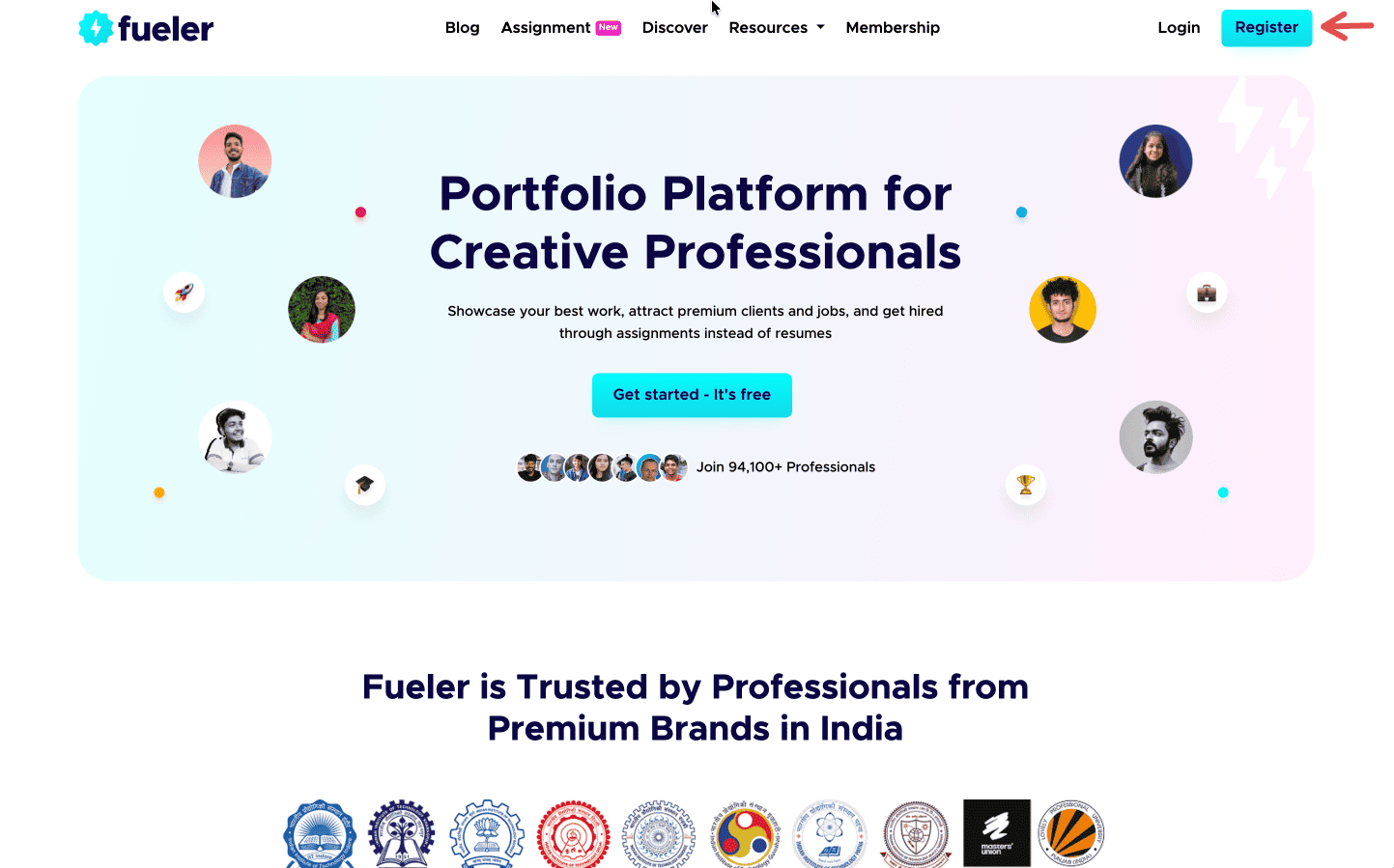
Step 1: Sign up on Fueler.
Head to Fueler.io and create your free account.
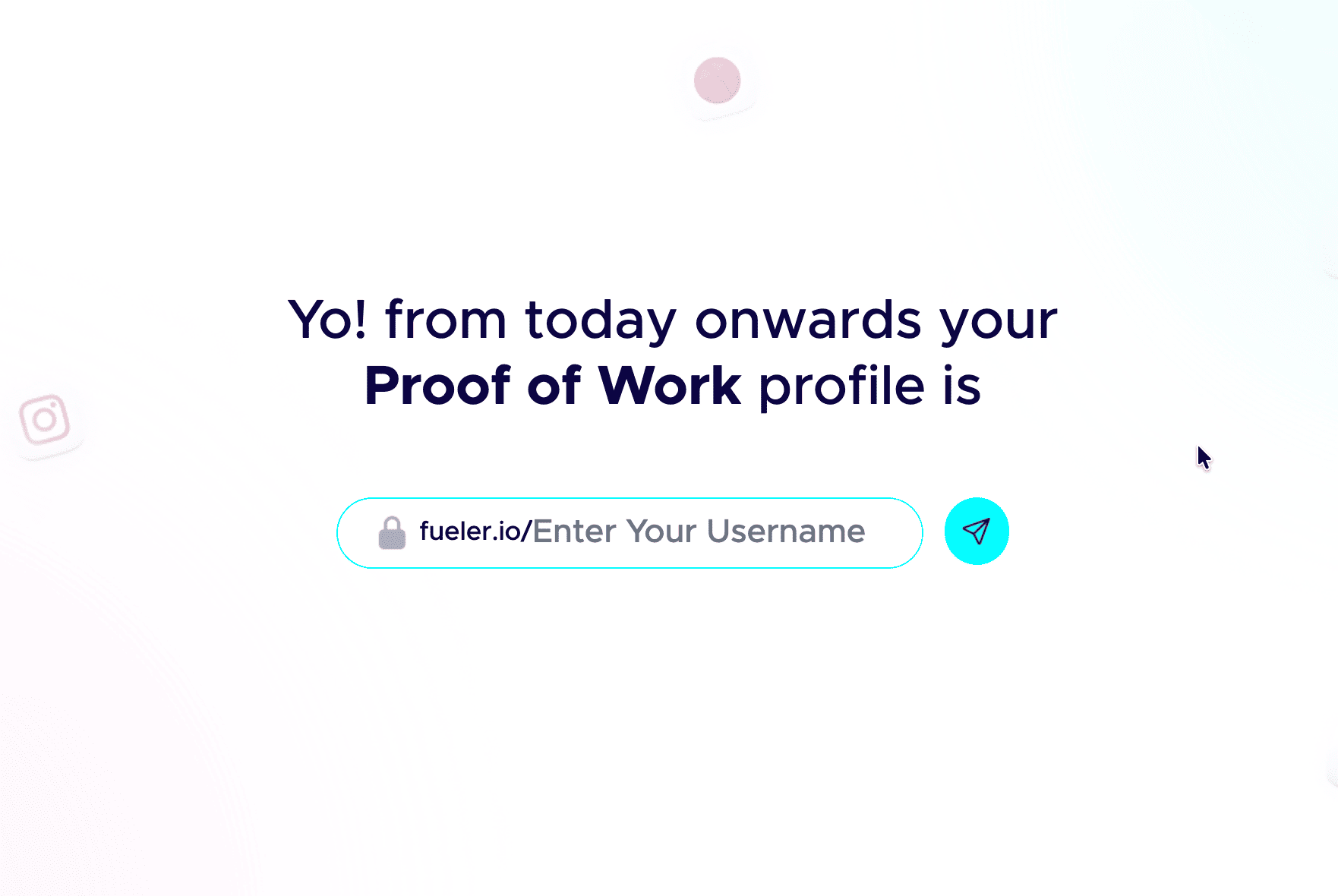
Step 2: Pick a professional handle.
Your handle shows up in your public link, so keep it clean and grown-up. Don’t add nicknames and random numbers. Your name or a simple version of it works best.
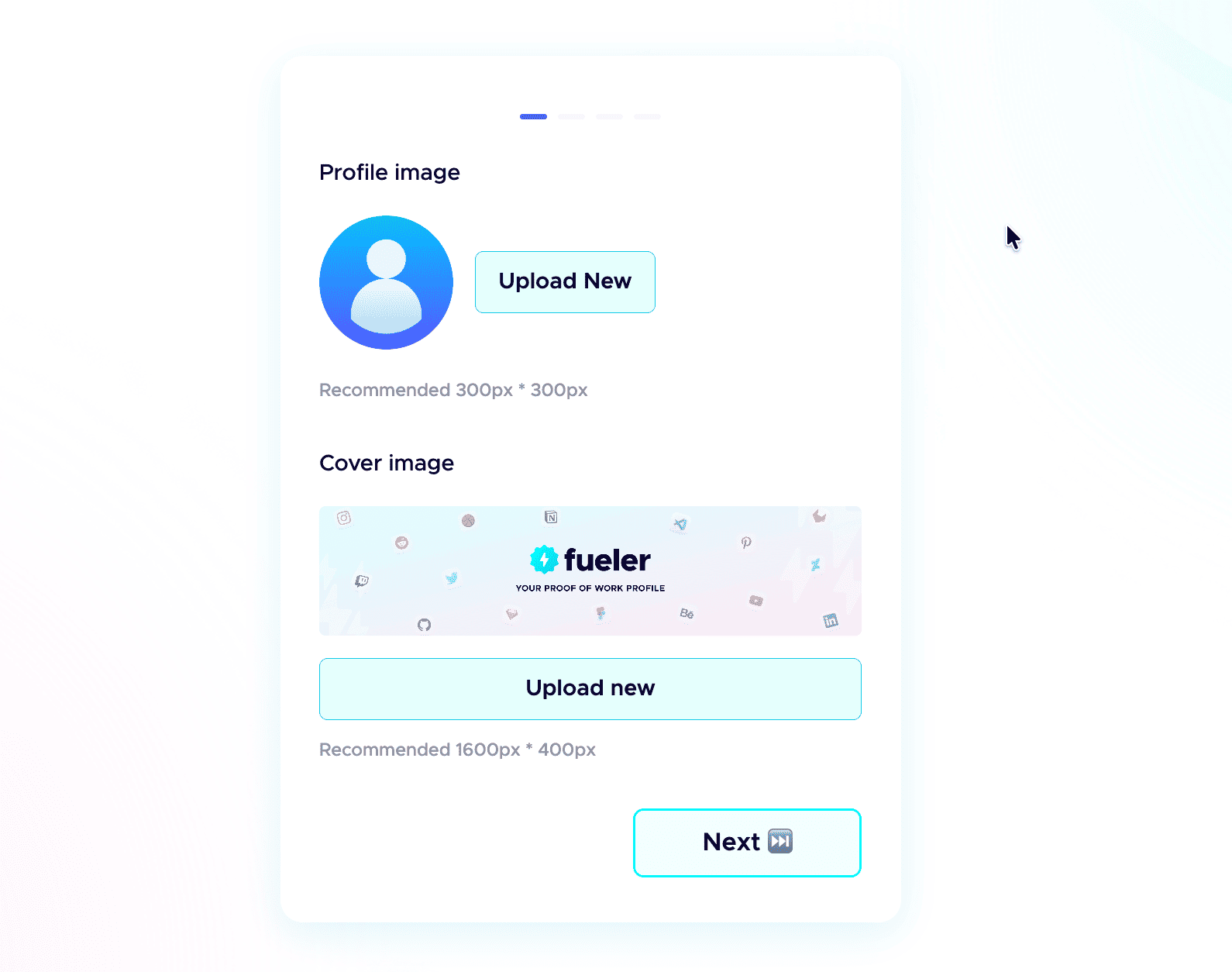
 Step 3: Add a professional profile picture.
Use the same kind of professional photo you would put on LinkedIn. Clear face, good lighting, and a simple background. People trust a real face more than an empty avatar.
Step 4: Write a strong header.
The header is the first thing anyone sees. In one or two short lines, say who you are, what you do, and the kind of work you have done. Make it specific, not vague.
Step 5: Add a short bio.
Tell people who you are and what you do in a few plain sentences. No buzzwords, just enough for a recruiter to get you in five seconds.
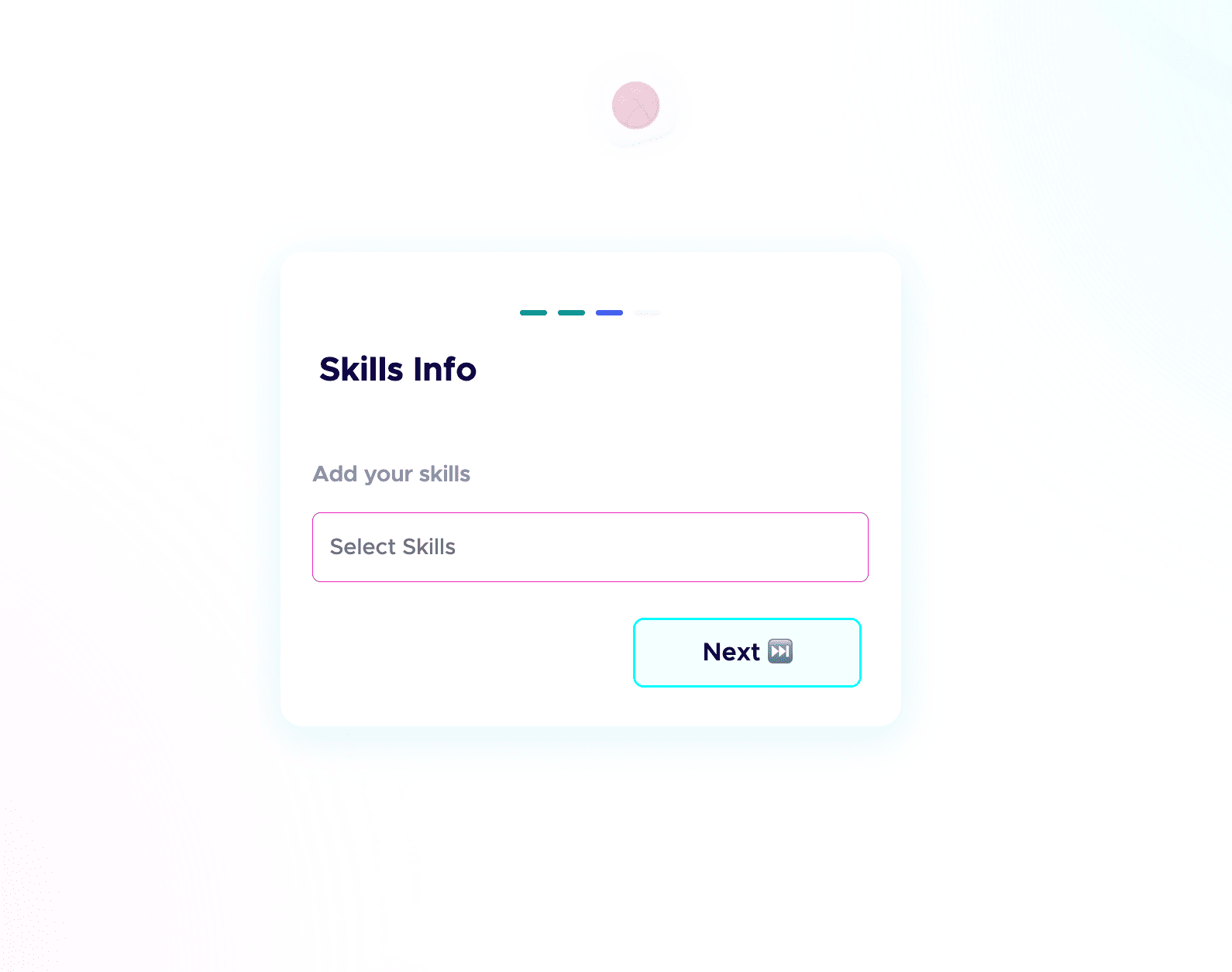
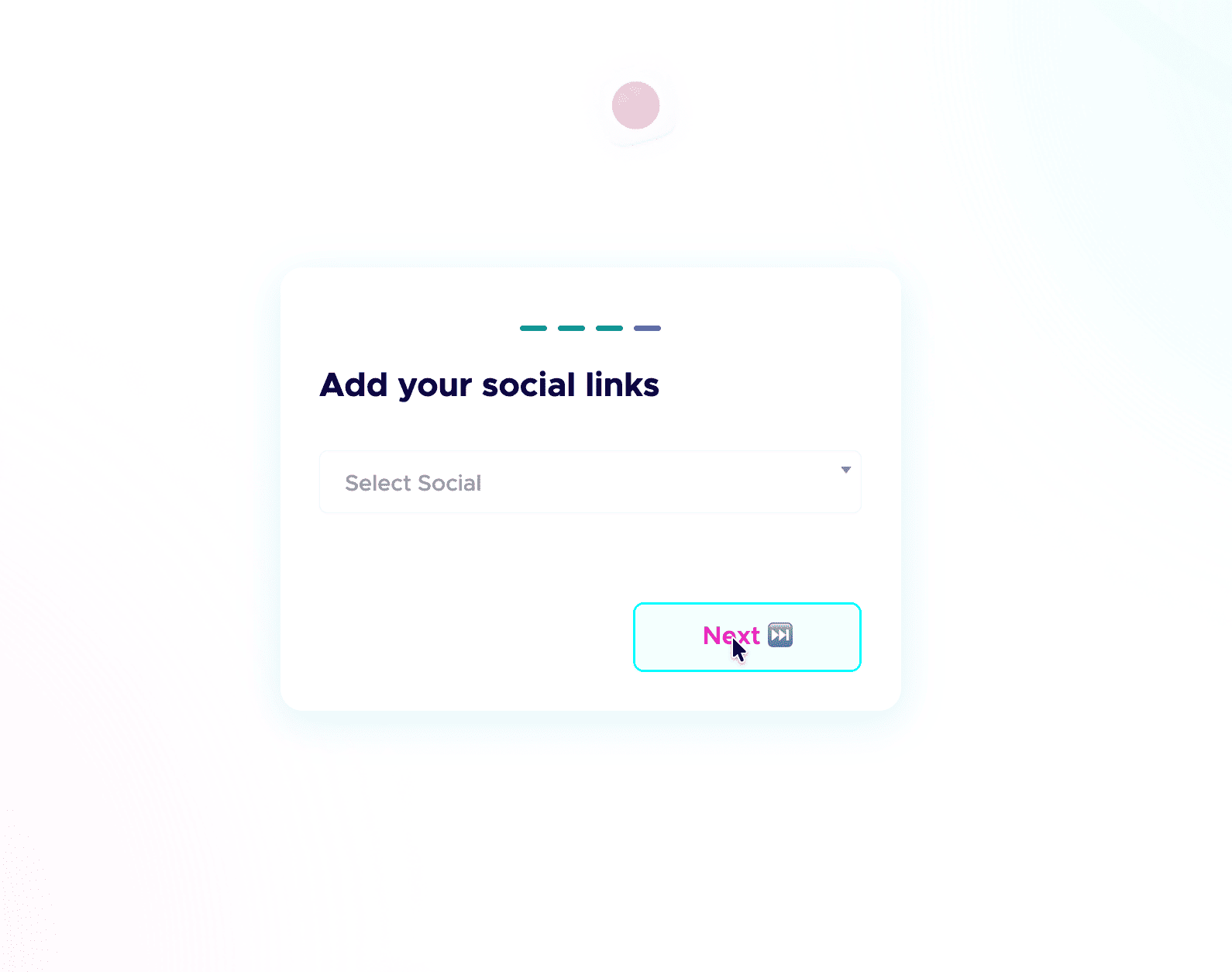
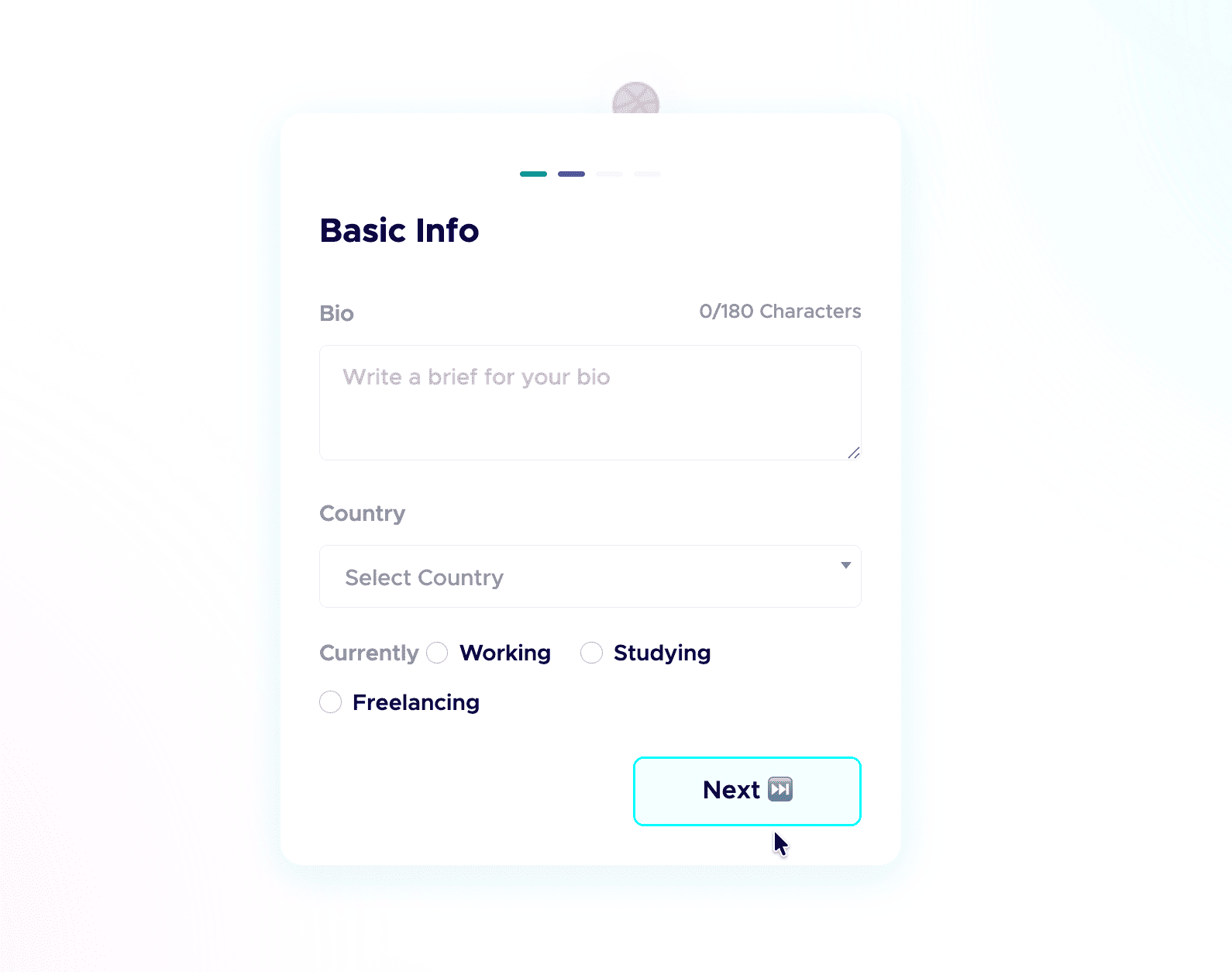 Step 6: Add your skills and social links.
List the skills you are good at and actually want to be hired for, and connect your socials. People do check your profiles, and active socials build credibility before the first call. Students starting from scratch can follow my student guide to their first portfolio.
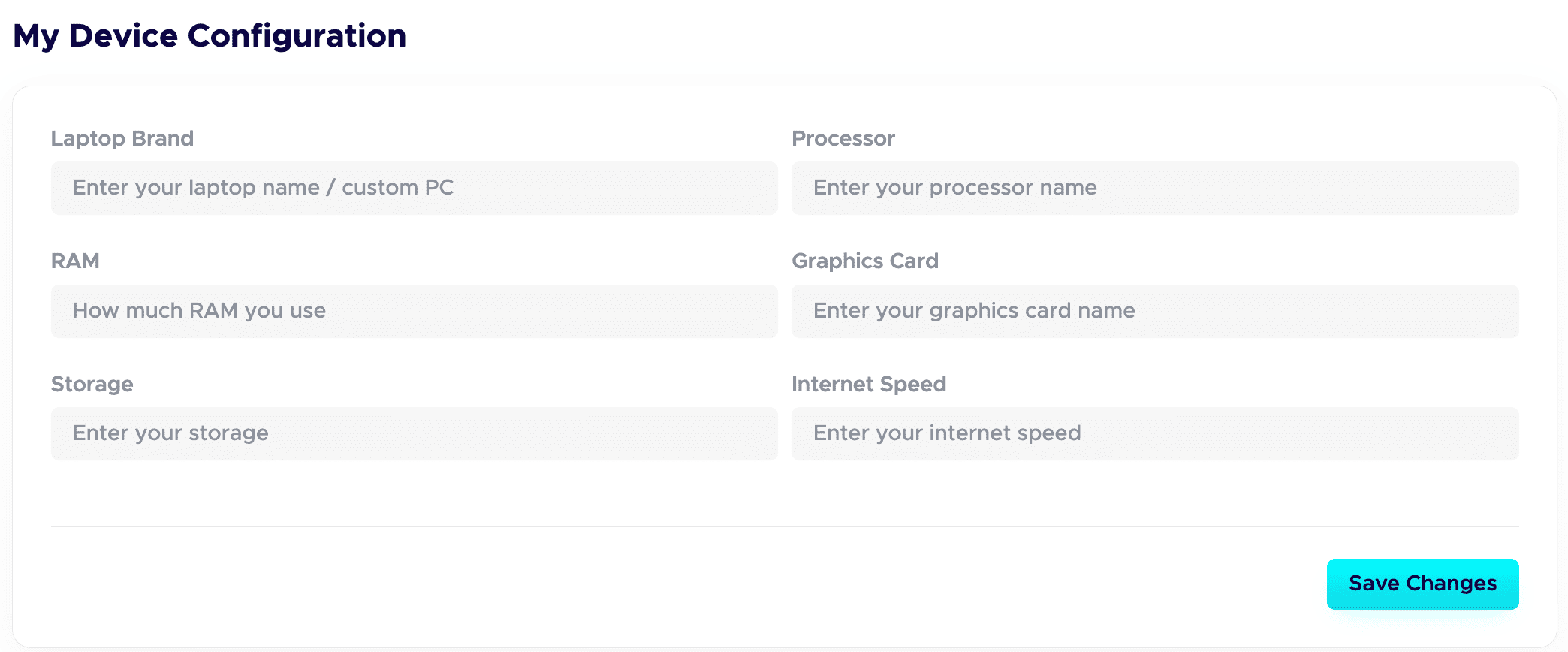
 Step 7: Fill in your Device Configuration.
In your dashboard, set up the Device Configuration section. Add the details about the device you are using. Remote-first companies want to know you have a solid setup to work from. A good setup quietly adds leverage and signals you are ready to deliver.
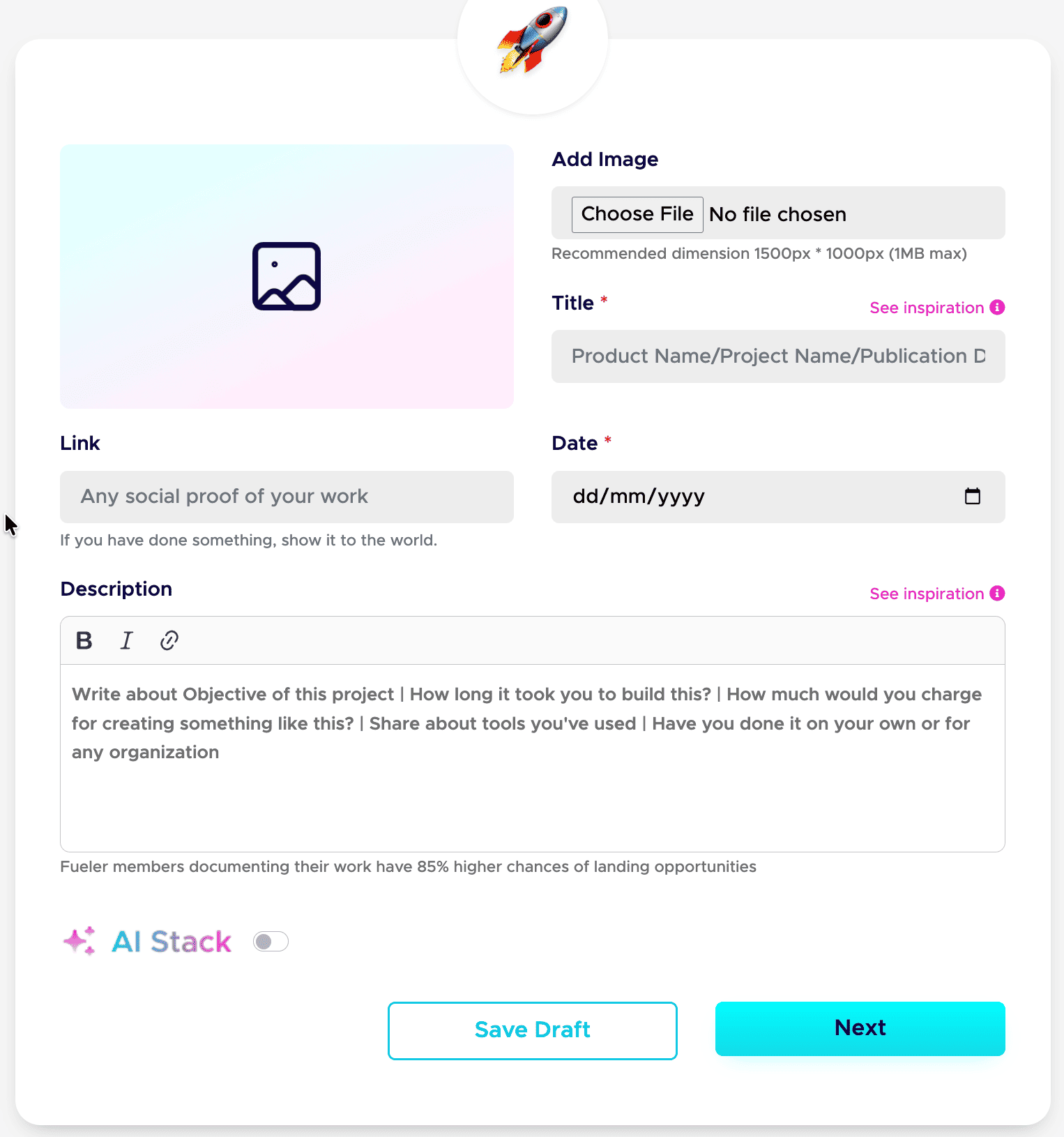
Step 8: Publish your projects with all the details.
This is a game-changer. Give each project a clear title and a detailed description. Walk through your process: your thinking, the tools you used, the choices you made, and the result. Companies care about how you work, not just the final image.
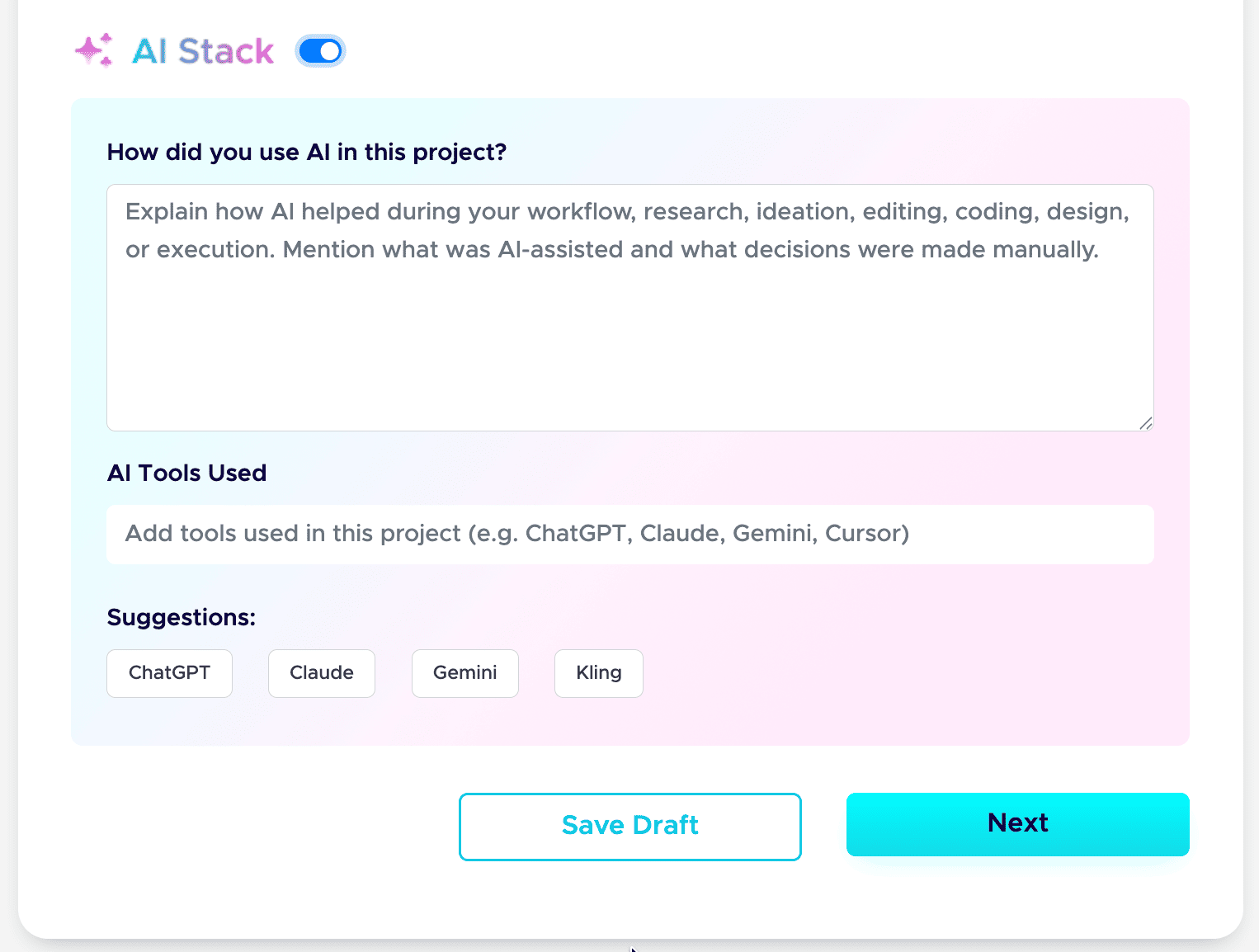
Step 9: Add your AI Stack to each project.
AI is part of real work now, so show it honestly. Use the AI Stack feature to explain how you used AI, which tools you used, and what you did manually. This builds trust instead of raising doubt. Here is the full guide: how to add AI Stack on Fueler.
That is the whole setup. Do these nine steps well, and your profile stops being a static page and starts working as a hiring asset. If you want a tighter version to follow next time, save my 6-step formula for a Fueler portfolio and my breakdown of a career portfolio that actually gets jobs.
Do this once, and you have a link you can drop into your resume, your email signature, and every job application.
How Does This Connect to Building a Strong Career or Portfolio?
Your career authority is built entirely on visible output, not on text bullet points on a static piece of paper. Documenting your work on an open, networked platform proves your ongoing capability to execute in real-time. Modern hiring values rapid proof over polished credentials, and showcasing your projects transparently on Fueler ensures your talent stays discoverable 24/7.
Final Thoughts
The era of spending your weekends fixing database configurations and fighting plugin updates just to show off your professional work is officially over. In 2026, career velocity belongs to the operators who focus entirely on execution, shipping fast, and making their output instantly scannable. Stop acting like a web developer and start letting your real proof of work do the talking.
FAQ
What are the best AI workflow systems in 2026?
Modern teams use integrated execution hubs that connect directly to automated verification tools. These systems prioritize instant data syncs over manual updates, ensuring project tracking stays current without requiring constant human intervention.
How do teams use AI for task management?
Teams employ predictive task systems that automatically assign action items based on real-time project updates. This keeps technical operations highly efficient and completely removes the human bottleneck of manual work delegation.
Can AI replace manual project coordination?
Yes, automated tracking systems now handle the heavy lifting of scheduling, asset management, and status reports, allowing creators to spend their energy entirely on creative strategy and high-impact project execution.
What platforms improve operational efficiency for portfolios?
Networked portfolio environments offer the highest efficiency by eliminating site maintenance and offering built-in global discovery channels that put your proof of work directly in front of active hiring managers.
How do startups automate daily execution?
Startups leverage centralized, low-maintenance publishing networks where team members can instantly log outcomes, cross-link collaborative assets, and maintain an indisputable public record of their shipped features.
Why 100,000+ professionals use Fueler
Fueler helps professionals showcase proof of work through projects, assignments, case studies, and achievements.
- Thousands of professionals use Fueler to create their digital portfolio
- Thousands of projects are published on Fueler. Check here
- Startups and Companies hire through proof of work on Fueler
- Used by freelancers, creators, marketers, video editors, writers, designers, and product managers
Our mission is to help the next 100 million professionals build a verified professional identity through proof of work

What should you do next?
You've read the article. Now turn your skills into proof of work and unlock more opportunities.
Build your proof of work portfolio
Create a clean portfolio with projects, assignments, resumes, and AI stack details that companies actually want to see.
Create your Fueler portfolio →Apply through assignments, not resumes
Stand out by solving real tasks from companies hiring on Fueler.
Explore assignments →Get discovered by companies
Make your work public and let recruiters discover your skills through actual projects instead of keywords.
Get discovered →
