Looking for a Wix Portfolio Alternative? Try Fueler

Riten Debnath
12 Jul, 2026
Last updated: July 2026
Spending three weekends tweaking a website template just to change a font color is a rite of passage most modern professionals regret. In 2026, the internet moves too fast for slow, heavy website builders that treat your work like a static art gallery. Clients and founders no longer browse multi-page websites looking for a generic "About Me" story; they want immediate, undeniable proof that you can solve their specific problems.
I’m Riten, founder of Fueler, a skills-first portfolio platform that connects talented individuals with companies through assignments, portfolios, and projects, not just resumes/CVs. Think Dribbble/Behance for work samples + AngelList for hiring infrastructure.
In this guide, we will unpack why traditional drag-and-drop platforms fail modern creators, marketers, and developers. You will discover exactly how to display your skills dynamically, streamline your project management, and build a high-converting profile that works for you.
1. Drag-and-Drop Builders Take Too Much Time and Effort
Managing a personal brand shouldn't require a degree in web design or hours spent fixing broken mobile layouts. Traditional site engines overwhelm you with design choices, grids, and plugins when your only real goal is displaying your latest project. This creative friction means your portfolio remains outdated because updating it feels like an administrative chore.
When you spend more time acting like a front-end developer than polishing your actual craft, your career visibility suffers. Modern talent acquisition moves too fast to wait for you to debug a custom stylesheet.
- Layout breaking across different screen sizes forces you to spend hours testing mobile responsiveness instead of focusing on client outreach, which directly delays your ability to land high-paying assignments and pitch fresh projects.
- Endless configuration options create decision fatigue, causing you to constantly redesign your landing pages and alter fonts rather than publishing the actual evidence of work that builds trust with prospective startup clients.
- Traditional platforms require manual updates for third-party extensions and security plugins, introducing sudden formatting errors that can unexpectedly take your live link offline right when a major hiring manager is reviewing it.
- The steep learning curve of visual design dashboards means adding a simple PDF case study or an embedded link takes ten clicks instead of two, killing your daily documentation momentum.
- Spending weeks building a custom site from scratch keeps your best work hidden away from the market, allowing faster peers who document their projects instantly to capture available market share.
2. High Monthly Subscriptions Stop Making Sense
Paying a premium subscription fee every month just to keep a static landing page live makes little economic sense. Many platforms lock essential features behind expensive paywalls, forcing you to pay extra for custom domains, basic analytics, and clean layouts. Over a year, these recurring costs add up significantly without offering any direct return on your investment.
You shouldn't have to pay a heavy tax just to show people what you are capable of producing. When your hosting bill arrives every month regardless of whether you landed a client, your platform becomes a financial liability.
- Premium price tiers gate basic custom domain mapping, forcing you to use messy, unprofessional subdomains that lower your authority unless you agree to pay a high annual fee upfront to unlock basic settings.
- Platforms charge extra for added storage space, forcing you to compress high-resolution project images, media assets, and code documentation into pixelated graphics that look low-quality to rigorous engineering and design managers.
- Hidden add-on charges for removing corporate platform branding make your profile look amateurish and cheap, signaling to top-tier enterprise clients that you are running a casual hobby rather than a serious professional business operation.
- Rigid billing structures don't pause when you are fully booked or taking a break, draining your baseline operational budget month after month without delivering active, inbound discovery or algorithmic distribution to relevant companies.
- Scaling your personal brand to include multiple side ventures or niche sub-portfolios requires upgrading to expensive agency plans, artificially limiting your growth and preventing you from targeting distinct client personas effectively.
3. SEO and AI Discovery are Completely Ignored
Most traditional portfolios act like unindexed islands in the vast ocean of the internet. They look pretty to you, but they are completely invisible to search engines and modern AI retrieval tools like ChatGPT, Perplexity, and Google Copilot. If your platform doesn't structure your project metadata cleanly, recruiters will never find your work organically.
In 2026, discovery happens through specific skill queries and entity-based searches. If your site structure is just a collection of unoptimized image blocks, your profile stays buried on page five.
- Traditional sites hide your case studies inside heavy, slow-loading JavaScript wrappers that web crawlers cannot easily parse, rendering your hard-earned skill keywords invisible to algorithmic talent sourcing engines used by major agencies.
- Lack of standardized schema markup prevents AI conversational search systems from accurately extracting your role, project outcomes, and specific tech stack details when founders look for specialized freelance support online.
- Slow page load speeds caused by unoptimized assets and bloated template code trigger high bounce rates, telling search algorithms that your site offers a poor user experience, which permanently damages your search ranking position.
- Missing automatic sitemap generation means your newly added projects can take weeks to be crawled and indexed by Google, forcing you to manually manage technical indexing setups across webmaster tools.
- Unstructured URL paths make it difficult for search engines to understand the thematic relationship between your different skill sets, ruining your topical authority in highly competitive fields like marketing, design, and engineering.
4. Complex Formats Confuse Busy Hiring Managers
Recruiters spend less than ten seconds looking at a candidate's profile before making an initial decision. Traditional multi-page sites force visitors to click through nested menus, vague "Services" pages, and long text blocks just to find real work samples. This confusing navigation structure creates unnecessary friction and kills your conversion rates instantly.
When a hiring manager has to hunt for your evidence of work, they simply close the tab. Clarity always wins over artistic complexity when money and hiring timelines are on the line.
- Hidden navigational links confuse busy stakeholders, prompting them to leave your site immediately rather than digging through deep drop-down menus to locate your relevant industry case studies and past client testimonials.
- Long, narrative-driven text blocks without clear headers mask your specific project contributions, making it impossible for viewers to scan and identify your technical execution capabilities within the first five seconds of landing.
- Massive hero images and artsy flash animations distract from the actual data, metrics, and proof of work that prove you can solve a business’s immediate operational or revenue problems.
- Broken internal links and dead buttons caused by faulty custom setups look deeply unprofessional, instantly signaling a lack of attention to detail that ruins your credibility with high-paying product teams.
- Forcing users to download large external PDF case studies adds a dangerous drop-off point in the review process, especially for mobile recruiters checking profiles during rapid-fire talent calibration meetings.
5. Portfolios Stay Trapped Without Community Distribution
A traditional website is a lonely place because it lacks built-in discovery channels. Once you hit publish, the burden of driving every single click via social media or cold emailing falls entirely on you. Without a centralized network ecosystem, your exceptional projects are never seen by peers, collaborators, or looking buyers.
Building your profile on an isolated island means you miss out on network effects. True leverage comes when your portfolio platform actively recommends your work to companies looking for talent.
- Traditional platforms lack a centralized marketplace feed, meaning your published projects receive zero native internal eyeballs from companies actively searching the platform's user directory for immediate, verified help.
- The absence of peer-to-peer verification and direct collaboration tags prevents you from leveraging the professional networks of your co-creators, missing out on organic word-of-mouth referral loops within your industry.
- No internal algorithmic recommendation engine means your work never gets surfaces automatically in curated talent roundups, forcing you to rely entirely on exhausting manual distribution across noisy social networks.
- Isolated profiles cannot receive public validation badges or credible peer reviews, leaving your claims unverified in a market that increasingly demands ironclad, peer-backed proof over unbacked resume statements.
- Zero integrated networking features mean you cannot easily connect with other top-tier operators for collaborative projects, keeping you isolated from the collective value generated by an active ecosystem of builders.
6. How to Build Your High-Converting Portfolio on Fueler
Transitioning from a messy website builder to an optimized, proof-of-work engine takes less than ten minutes. Fueler simplifies your entire professional layout so you can focus entirely on documenting your output and getting discovered. Here is how you can set up a profile that positions you as a premium talent.
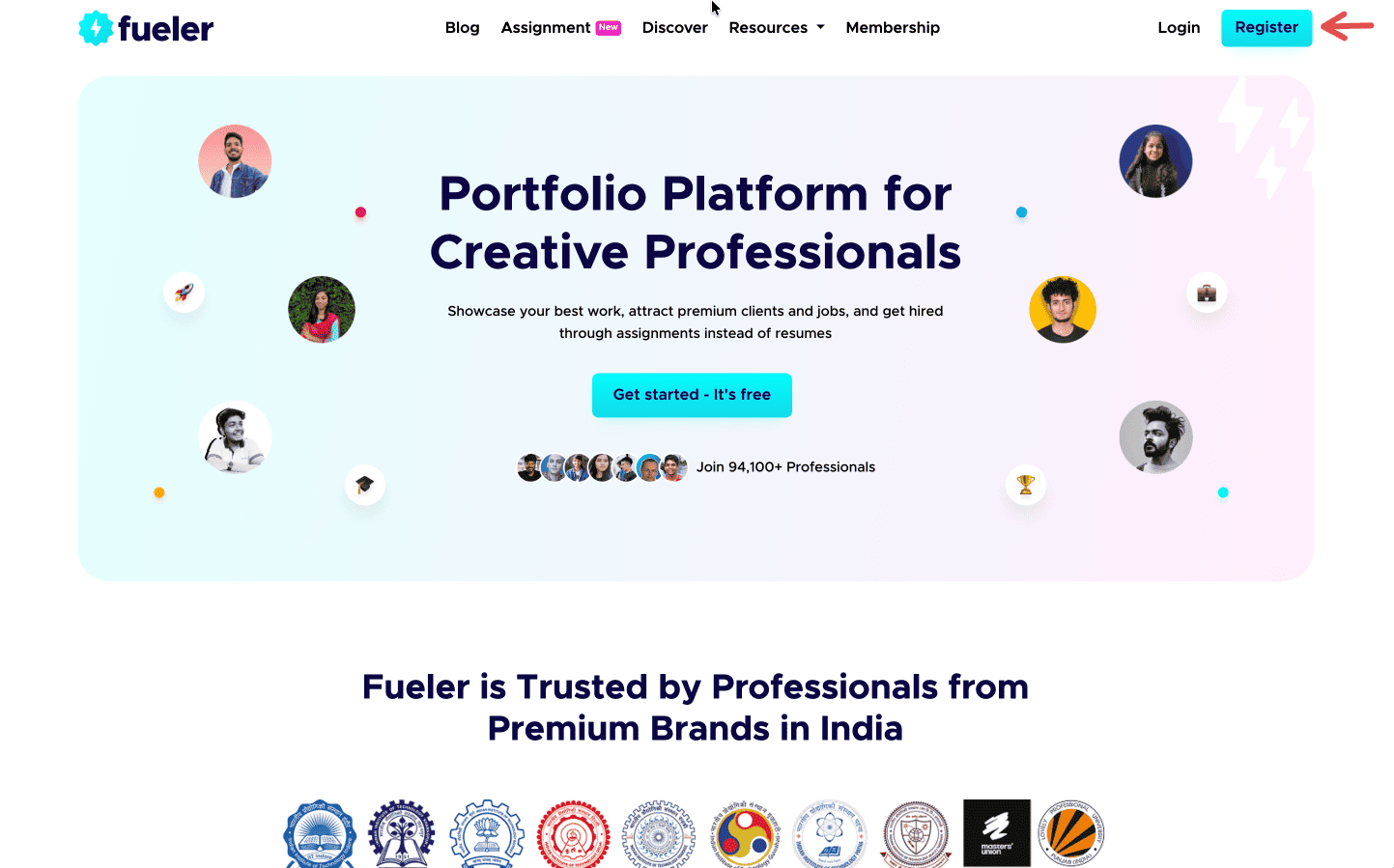
Step 1: Sign up on Fueler.
Head to Fueler.io and create your free account.
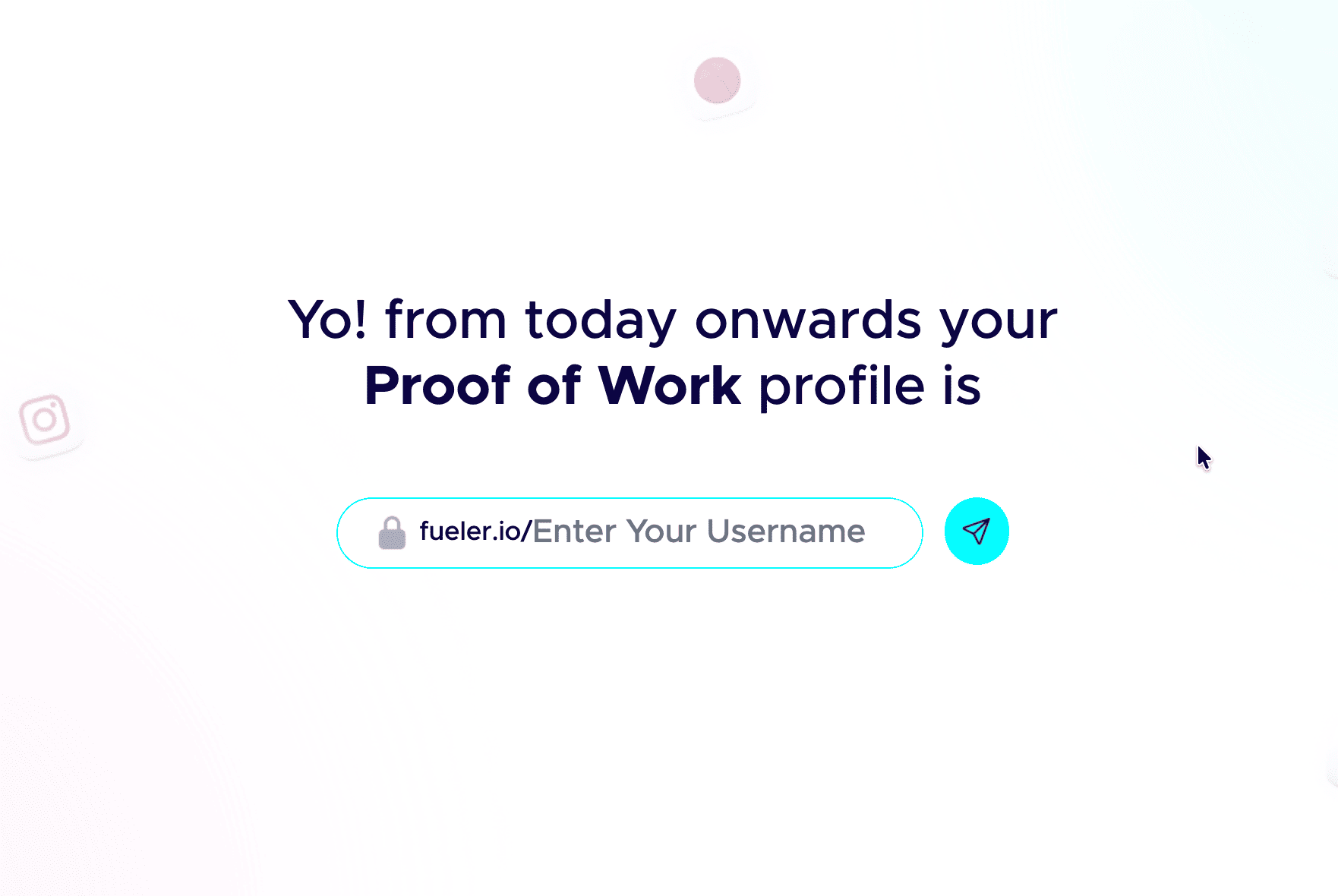
Step 2: Pick a professional handle.
Your handle shows up in your public link, so keep it clean and grown-up. Don’t add nicknames and random numbers. Your name or a simple version of it works best.
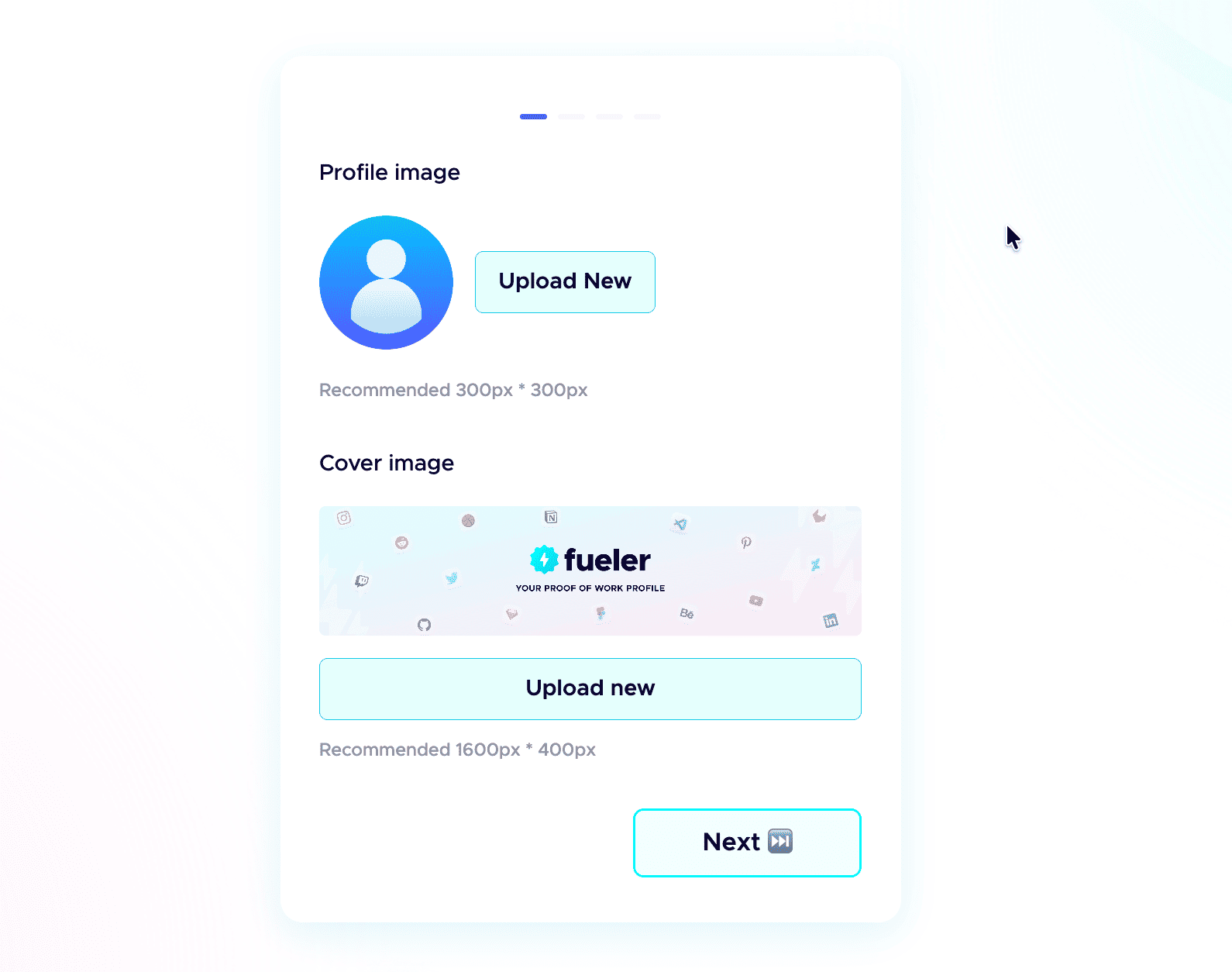
 Step 3: Add a professional profile picture.
Use the same kind of professional photo you would put on LinkedIn. Clear face, good lighting, and a simple background. People trust a real face more than an empty avatar.
Step 4: Write a strong header.
The header is the first thing anyone sees. In one or two short lines, say who you are, what you do, and the kind of work you have done. Make it specific, not vague.
Step 5: Add a short bio.
Tell people who you are and what you do in a few plain sentences. No buzzwords, just enough for a recruiter to get you in five seconds.
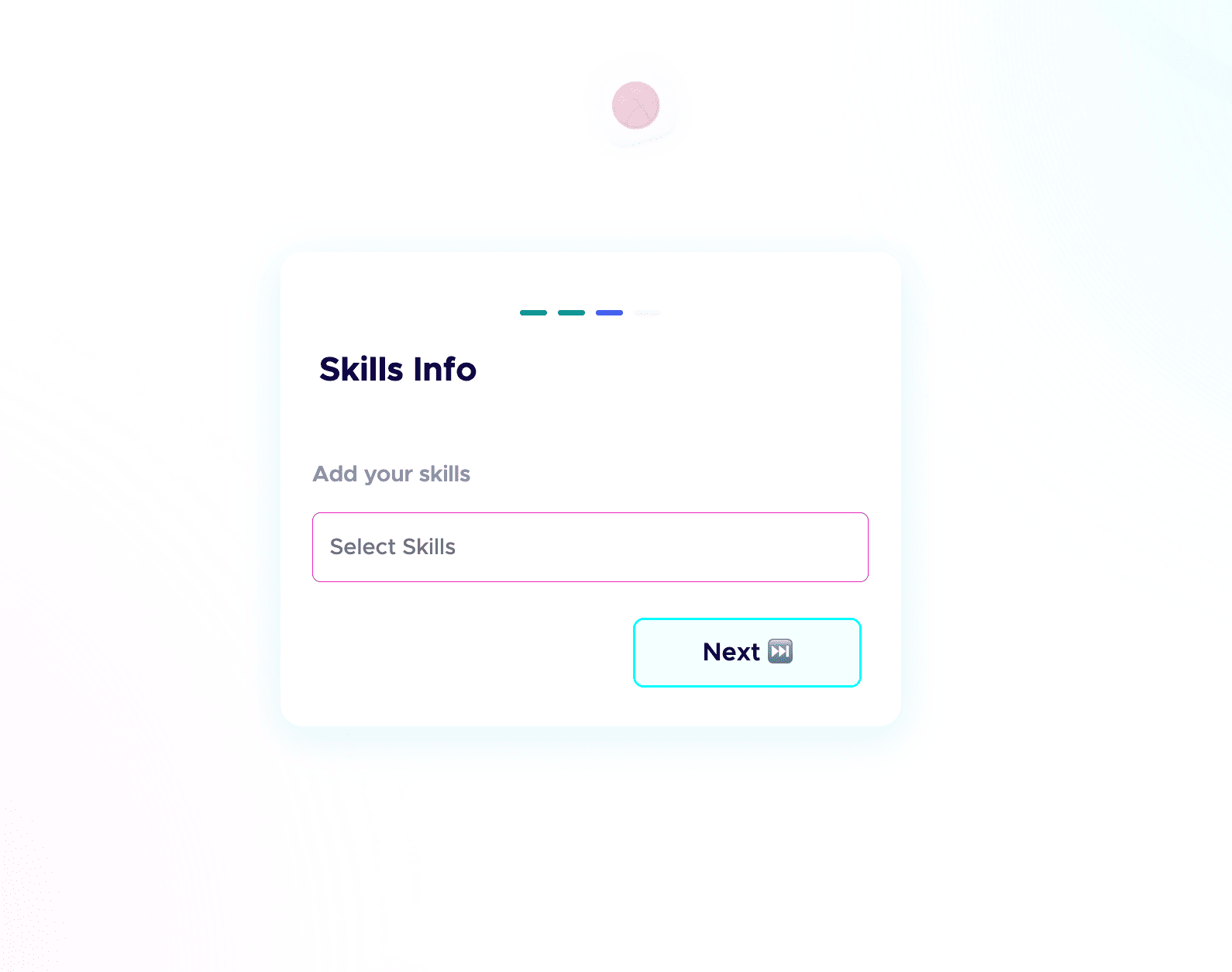
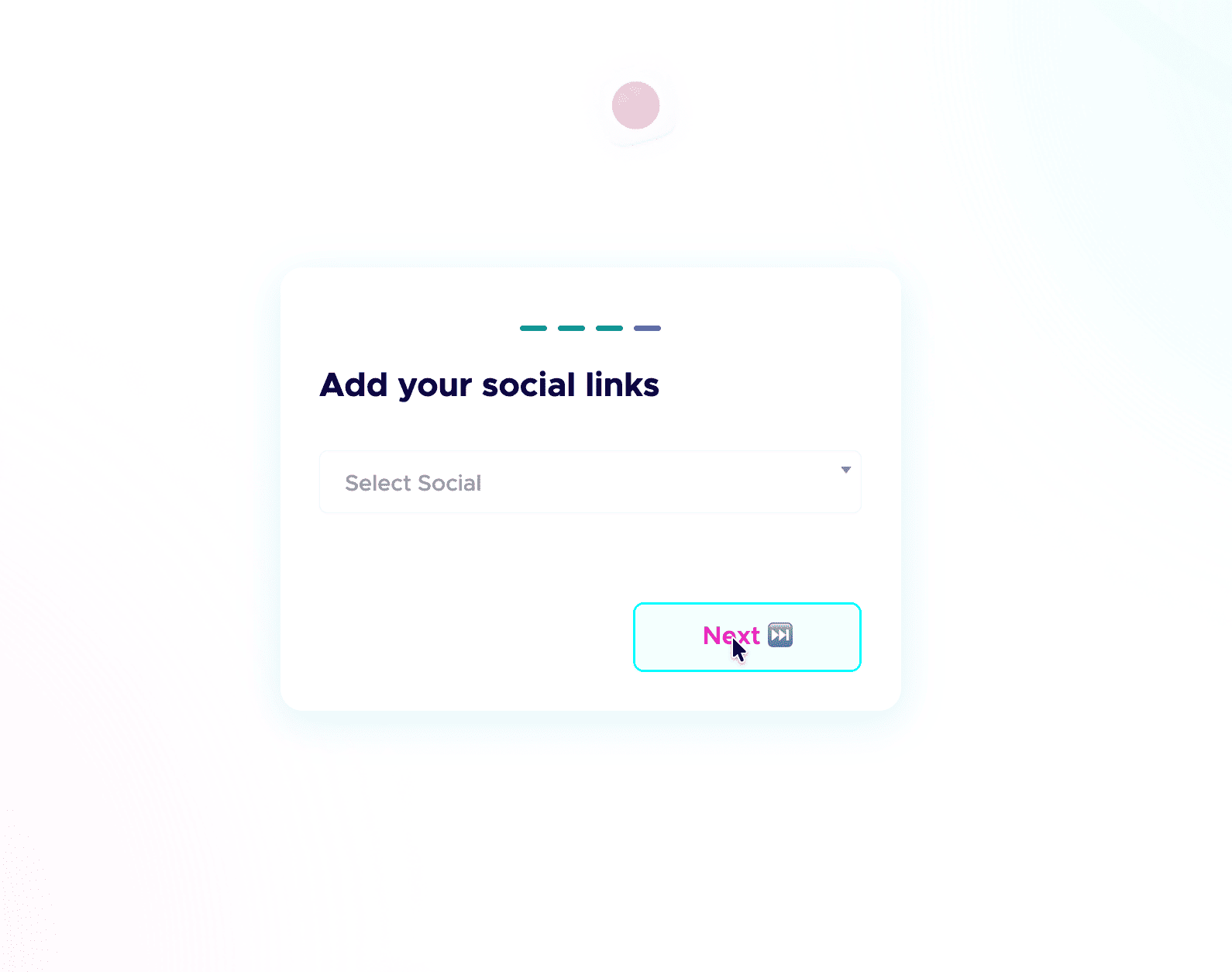
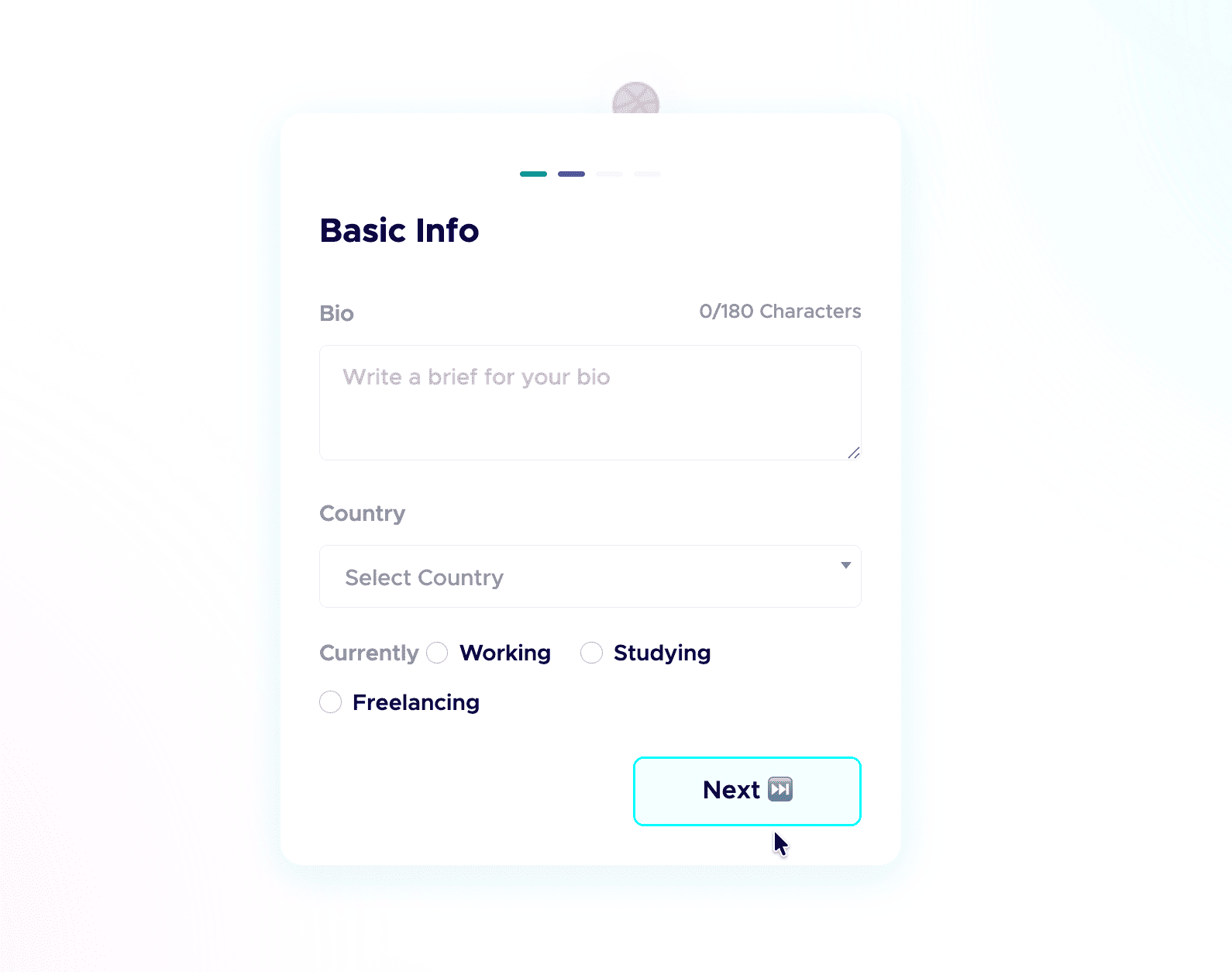 Step 6: Add your skills and social links.
List the skills you are good at and actually want to be hired for, and connect your socials. People do check your profiles, and active socials build credibility before the first call. Students starting from scratch can follow my student guide to their first portfolio.
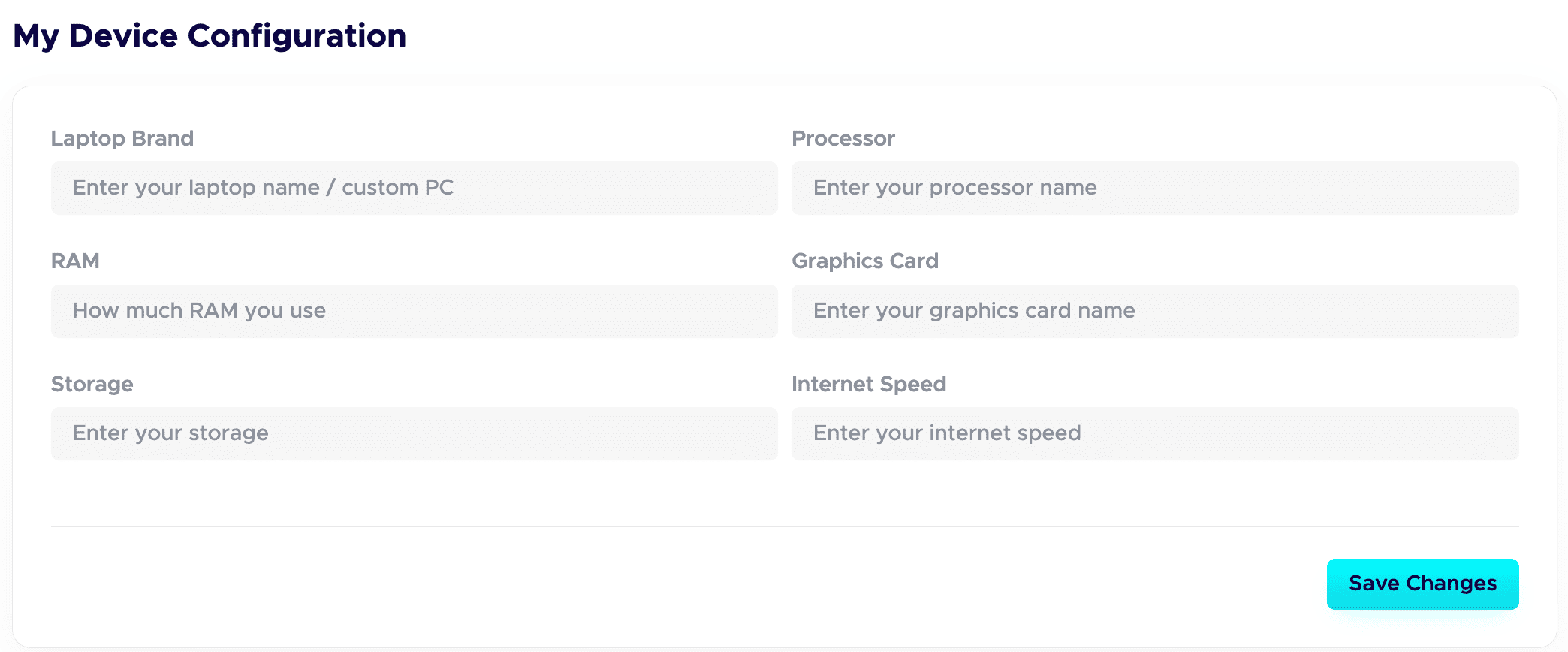
 Step 7: Fill in your Device Configuration.
In your dashboard, set up the Device Configuration section. Add the details about the device you are using. Remote-first companies want to know you have a solid setup to work from. A good setup quietly adds leverage and signals you are ready to deliver.
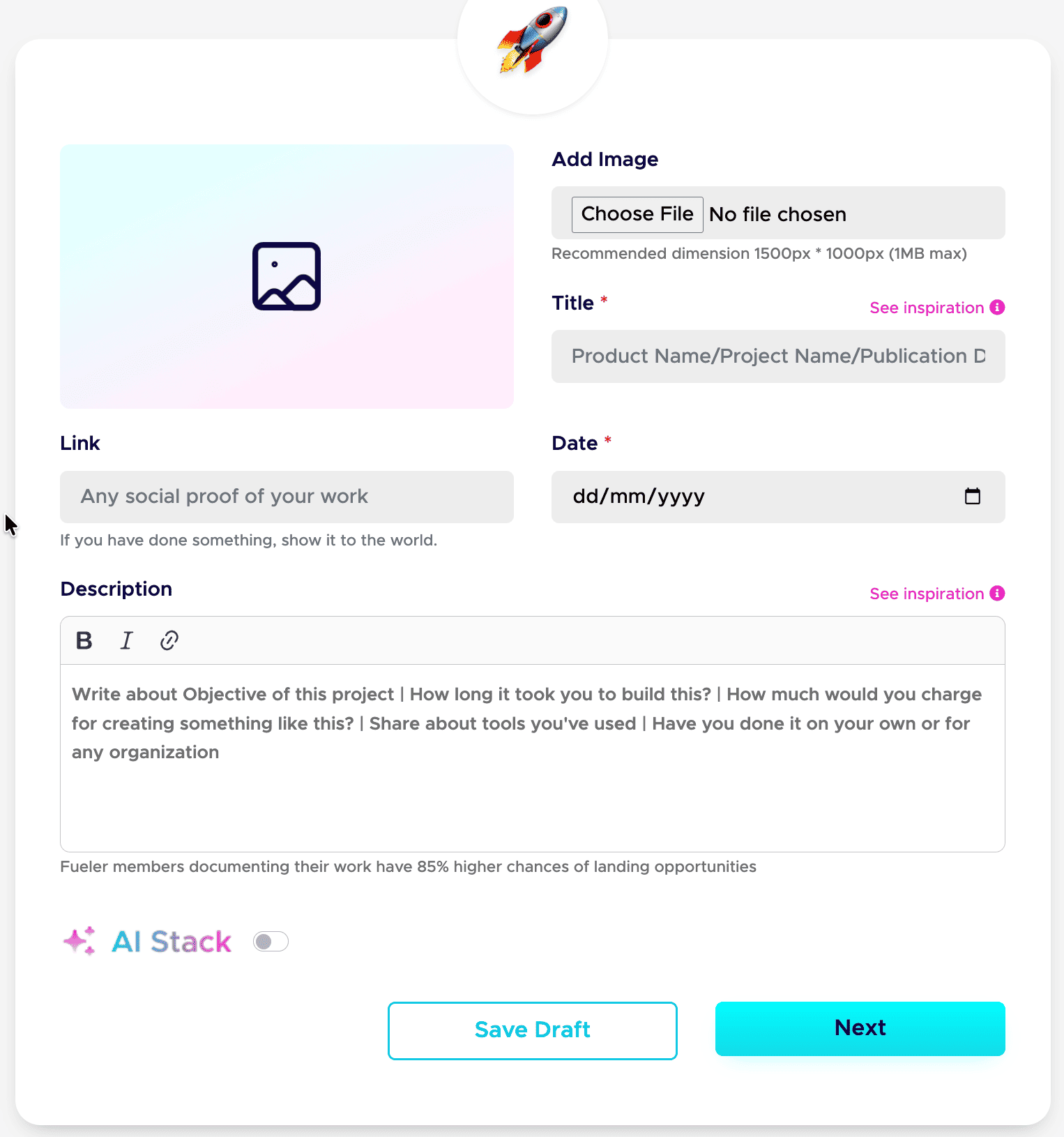
Step 8: Publish your projects with all the details.
This is a game-changer. Give each project a clear title and a detailed description. Walk through your process: your thinking, the tools you used, the choices you made, and the result. Companies care about how you work, not just the final image.
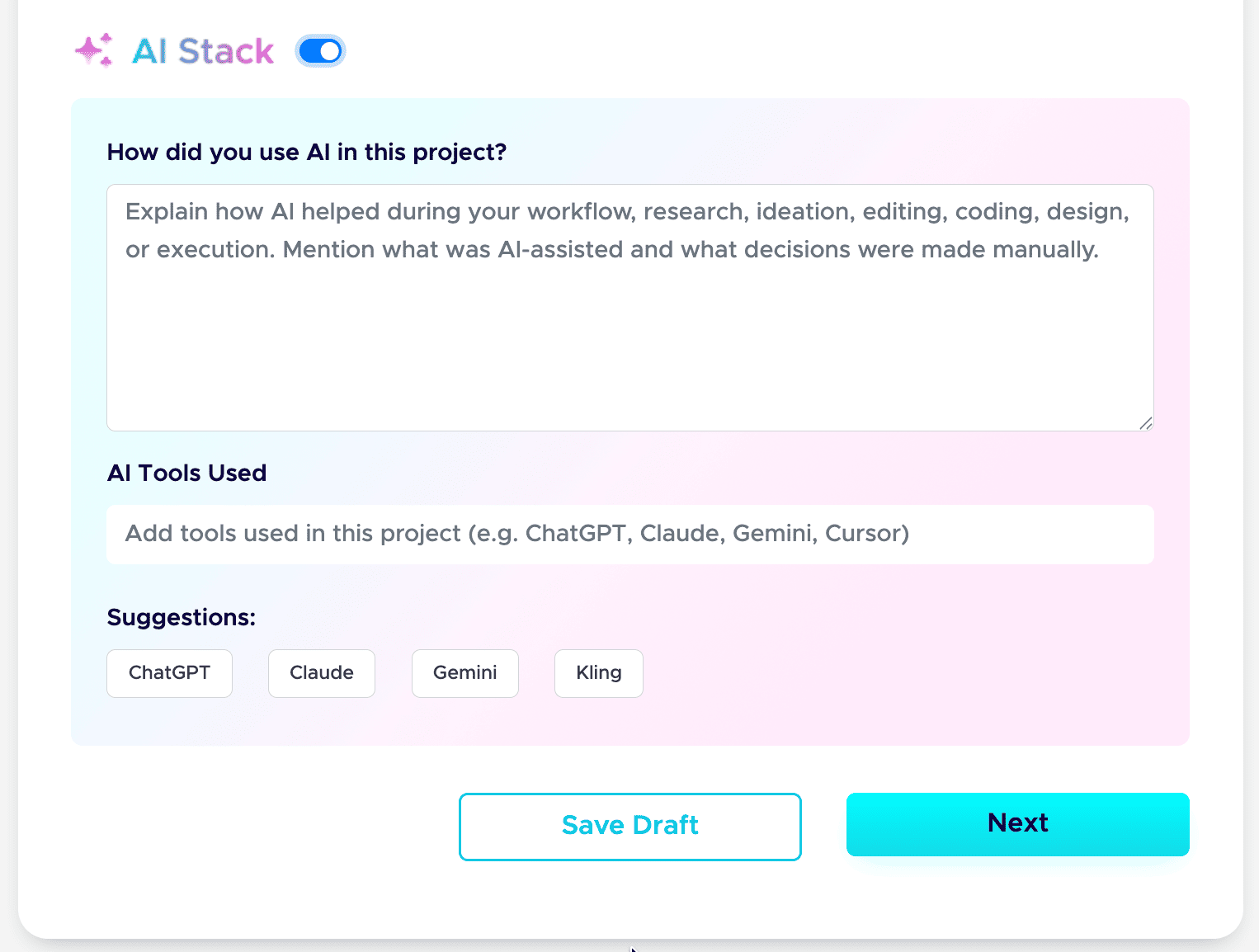
Step 9: Add your AI Stack to each project.
AI is part of real work now, so show it honestly. Use the AI Stack feature to explain how you used AI, which tools you used, and what you did manually. This builds trust instead of raising doubt. Here is the full guide: how to add AI Stack on Fueler.
That is the whole setup. Do these nine steps well, and your profile stops being a static page and starts working as a hiring asset. If you want a tighter version to follow next time, save my 6-step formula for a Fueler portfolio and my breakdown of a career portfolio that actually gets jobs.
Do this once, and you have a link you can drop into your resume, your email signature, and every job application.
7. Zero Network Effects Keep You Invisible
When you use a generic site builder, you are fully responsible for your own marketing funnel. If your Twitter thread or LinkedIn post doesn't go viral, your work receives absolutely zero traffic. This setup treats your portfolio like a passive document rather than an active funnel that generates real business opportunities.
A modern professional profile should function like an active engine that surfaces your skills to relevant buyers even while you are asleep. Network amplification changes everything.
- Traditional platforms do not share user data with specialized job boards or talent pools, keeping your best case studies locked away from active contract matching pipelines and enterprise procurement teams.
- The inability to bundle your projects into structured, shareable micro-portfolios prevents you from sending highly targeted, hyper-relevant pitch links to different types of prospective clients and industry verticals.
- Without global platform search indexing, talent acquisition teams looking for specific tools like Webflow or Solidity cannot find your profile unless they happen to possess your exact direct URL string.
- No built-in analytical tracking on individual project blocks leaves you completely blind to which specific pieces of work are successfully capturing attention or causing potential clients to drop off.
- Lacking social proof integration means your profile cannot display live updates of your ongoing industry contributions, making your digital presence look stagnant and abandoned if you forget to manually update it weekly.
8. Rigid Templates Kill Fast Project Documentation
When inspiration strikes, or a major project wraps up, you want to publish it immediately. Traditional sites turn this into a multi-hour chore of resizing image frames, adjusting grid padding, and creating new pages. This friction kills your documentation workflow, causing you to leave important career wins sitting in your Google Drive.
Your portfolio workflow should be as frictionless as sending a tweet. When you remove formatting barriers, your documentation velocity matches your actual working speed.
- Complicated media upload flows require you to manually optimize every image and video file before uploading, turning a quick two-minute update into a frustrating multi-step technical media project.
- Fixed theme constraints prevent you from mixing text, code embeds, and design assets smoothly, forcing your unique, multi-disciplinary work into a generic box that fails to tell the full story.
- The lack of a quick duplication feature means creating similar project layouts requires you to build every single page from scratch, wasting massive amounts of repetitive operational energy.
- Complicated content management systems make it incredibly difficult to archive older, less relevant projects, resulting in a cluttered interface that dilutes the impact of your absolute best work.
- Rigid design blocks stop you from integrating modern web features like live Figma frames, GitHub repositories, or interactive prototypes directly into your project view, flattening your overall proof presentation.
How Does This Connect to Building a Strong Career or Portfolio?
Modern hiring has completely shifted away from unverified resumes toward continuous execution visibility. Founders value proof over promises, and displaying clean, structured projects shows exactly how you think and deliver results. Documenting your workflow openly builds immense market credibility. By using Fueler, you streamline this entire loop, making your skills instantly scannable, discoverable, and highly attractive to top-tier teams looking for real execution.
Final Thoughts
The era of spending months over-engineering a personal website just to display a simple list of links is officially over. In 2026, career growth belongs to professionals who focus on proof of work, quick documentation velocity, and clear output metrics. Your portfolio should serve as an active inbound funnel, not an expensive digital paperweight that requires constant technical maintenance. Choose a system that highlights your talent instantly and gets out of your way so you can focus on building things that matter.
FAQ
Why is Fueler a better alternative to Wix for professionals?
Fueler eliminates all design and layout friction by focusing entirely on your actual proof of work. Instead of managing complex templates, you can publish projects in under two minutes, ensuring your profile stays updated while saving you money on expensive monthly hosting.
Can I track how my projects perform on Fueler?
Yes, Fueler provides clean analytics that let you see exactly how many people are viewing your specific projects. This gives you clear insight into which pieces of your work are attracting the most attention from founders and hiring managers.
Is Fueler optimized for search engines and AI discovery tools?
Absolutely. Fueler uses structured data setups that make your profile and individual projects highly discoverable for Google Search, AI Overviews, and conversational AI tools, ensuring your name surfaces when teams look for specific skill sets.
How does proof of work perform better than a traditional resume?
A resume contains unverified claims, whereas proof of work displays your actual execution, metrics, and outcomes. Founders prefer reviewing real project files and case studies because it removes the hiring risk and proves you can deliver immediate business value.
Can I collaborate with other professionals on Fueler?
Yes, Fueler allows you to tag co-creators and collaborators on any project you publish. This feature helps you cross-pollinate your audience, build shared credibility, and tap into the professional networks of the people you work with.
Why 100,000+ professionals use Fueler
Fueler helps professionals showcase proof of work through projects, assignments, case studies, and achievements.
- Thousands of professionals use Fueler to create their digital portfolio
- Thousands of projects are published on Fueler. Check here
- Startups and Companies hire through proof of work on Fueler
- Used by freelancers, creators, marketers, video editors, writers, designers, and product managers
Our mission is to help the next 100 million professionals build a verified professional identity through proof of work

What should you do next?
You've read the article. Now turn your skills into proof of work and unlock more opportunities.
Build your proof of work portfolio
Create a clean portfolio with projects, assignments, resumes, and AI stack details that companies actually want to see.
Create your Fueler portfolio →Apply through assignments, not resumes
Stand out by solving real tasks from companies hiring on Fueler.
Explore assignments →Get discovered by companies
Make your work public and let recruiters discover your skills through actual projects instead of keywords.
Get discovered →
