Looking for a Webflow Portfolio Alternative? Try Fueler

Riten Debnath
14 Jul, 2026
Last updated: July 2026
Every year, thousands of brilliant digital builders fall into the exact same cycle. You open a Webflow account with a simple mission: build a portfolio that reflects your true skill level. You pick out a clean template, start modifying the interactions, and before you know it, it is 3:00 AM on a Tuesday, and you are pulling your hair out over a broken flexbox layout or a custom animation that looks weird on mobile devices.
By the time you finish tweaking your site, weeks have passed. You have spent more time debugging code and managing layout margins than actually showcasing what makes you valuable. Then, the bill hits. You are paying significant monthly or annual hosting fees just to keep a static digital resume alive on the internet. And worst of all? The moment it goes live, nothing happens. No recruiters call. No clients reach out. Your beautiful site sits in an empty corner of the web because a personal URL has zero built-in traffic.
I’m Riten, founder of Fueler, a skills-first portfolio platform that connects talented individuals with companies through assignments, portfolios, and projects, not just resumes/CVs. Think Dribbble/Behance for work samples + AngelList for hiring infrastructure.
I built Fueler because I saw too many incredible copywriters, product managers, designers, and developers spending 80% of their energy building their portfolios and only 20% actually doing their work. In today's landscape, paper credentials and overly polished personal sites are failing to cut through the noise. Companies no longer want to see a curated list of past titles; they want verifiable proof.
Direct Comparison: Webflow vs. Fueler at a Glance
Key Takeaways for Career Transitions
- Time to Market Matters: Webflow requires days or weeks of manual building and design layout iteration; Fueler updates your live profile in seconds.
- Hiring Patterns Have Changed: Modern talent acquisition teams prioritize verified proof of work over self-edited static resumes and hyper-designed web pages.
- Stop Paying to Be Discovered: Moving away from standalone hosting removes monthly overhead, transferring your career records to a live opportunity ecosystem.
- Verification Extinguishes Doubt: Verified projects and formal vouches establish automated credibility with global remote teams.
Where Webflow Excels (And Why It Might Be Overkill For You)
Let us be completely fair and honest: Webflow is an elite piece of engineering. If your primary livelihood depends on demonstrating hyper-custom front-end development, granular motion design, or advanced visual-spatial layout creation, Webflow is fantastic. It was purpose-built to bridge the gap between visual design tools and production-grade code.
For design agencies creating bespoke digital products for enterprise clients, it has no real substitute. It grants you absolute, unrestricted control over every single pixel, breakpoint, and database collection item.
However, using a visual development engine to simply maintain a personal log of your professional work is like driving a multi-million dollar Formula 1 car just to pick up groceries down the street. It is an impressive machine, but it introduces massive operational friction for a simple task.
When your primary goal is to show a content strategist your high-ranking articles, or show a lead engineer your clean script architecture, the formatting wrapper matters far less than the substance of the project itself.
The Hidden Limits of the Standalone Portfolio Model
When you run your portfolio on a dedicated website builder, you take on three invisible jobs that have absolutely nothing to do with your actual career specialty.
1. The Endless Design Loop
When you have total design freedom, you have total design vulnerability. You will find yourself constantly redesigning your header sections, changing typography, swapping out color palettes, and upgrading your animations every time you see someone else post a flashy site on social media. This design loop creates a false sense of productivity. You feel like you are working on your career, but you are actually just procrastinating on doing real, leverageable work.
2. The Silent SEO and Distribution Wall
A standalone website is a ghost town unless you actively drive traffic to it. You have to figure out programmatic metadata, manage indexing errors inside Google Search Console, optimize image sizes for performance, and consistently share your links across professional networks.
If you do not have a massive pre-existing distribution channel, your beautifully designed Webflow page will sit unread on page ten of search results.
3. High Upkeep and Friction to Update
Think about what happens when you finish a great project at work. If your portfolio is on a visual development platform, uploading that new piece requires opening up your layout editor, setting up a new CMS item, re-formatting the text blocks, ensuring the images don't break your responsive design patterns, and republishing the entire architecture.
Because this process takes so much cognitive effort, you delay doing it. Months pass, and your portfolio becomes an outdated time capsule that doesn't reflect your current capabilities.
What is Fueler, and How Does It Solve This Problem?
Fueler changes the entire paradigm of how a modern career is tracked and displayed online. Instead of treating your portfolio as a custom web design project, Fueler treats it as a dynamic ledger of your professional output. It is built natively for a marketplace where understanding what is proof of work determines who gets the contract.
Traditional Resume/Site: "Trust me, I have 5 years of experience in growth marketing."
Fueler Proof of Work: "Here is the exact growth strategy, the live metrics, and a verified link to the campaign."
By focusing entirely on structured project documentation, Fueler allows you to organize your writing samples, code repositories, design mockups, and strategic spreadsheets into a single dashboard. This uniform structure ensures that a recruiter can read, evaluate, and verify your capabilities within less than thirty seconds of landing on your page.
Step-by-Step Guide: Launching Your Fueler Portfolio in 10 Minutes
If you want to stop tinkering with code boxes and immediately start showing off your absolute best projects to companies, follow this straightforward onboarding blueprint.
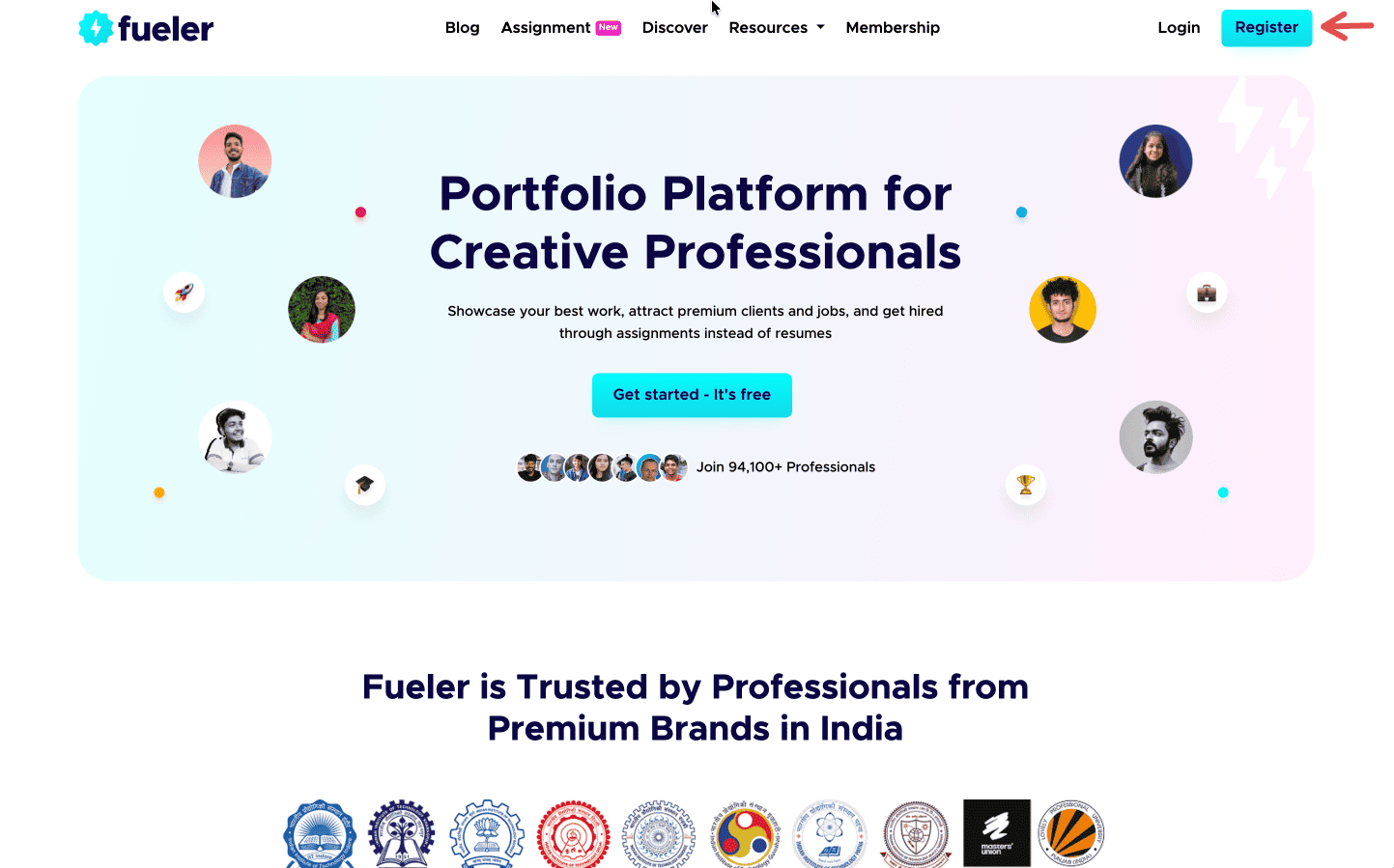
Step 1: Sign up on Fueler.
Head to Fueler.io and create your free account.
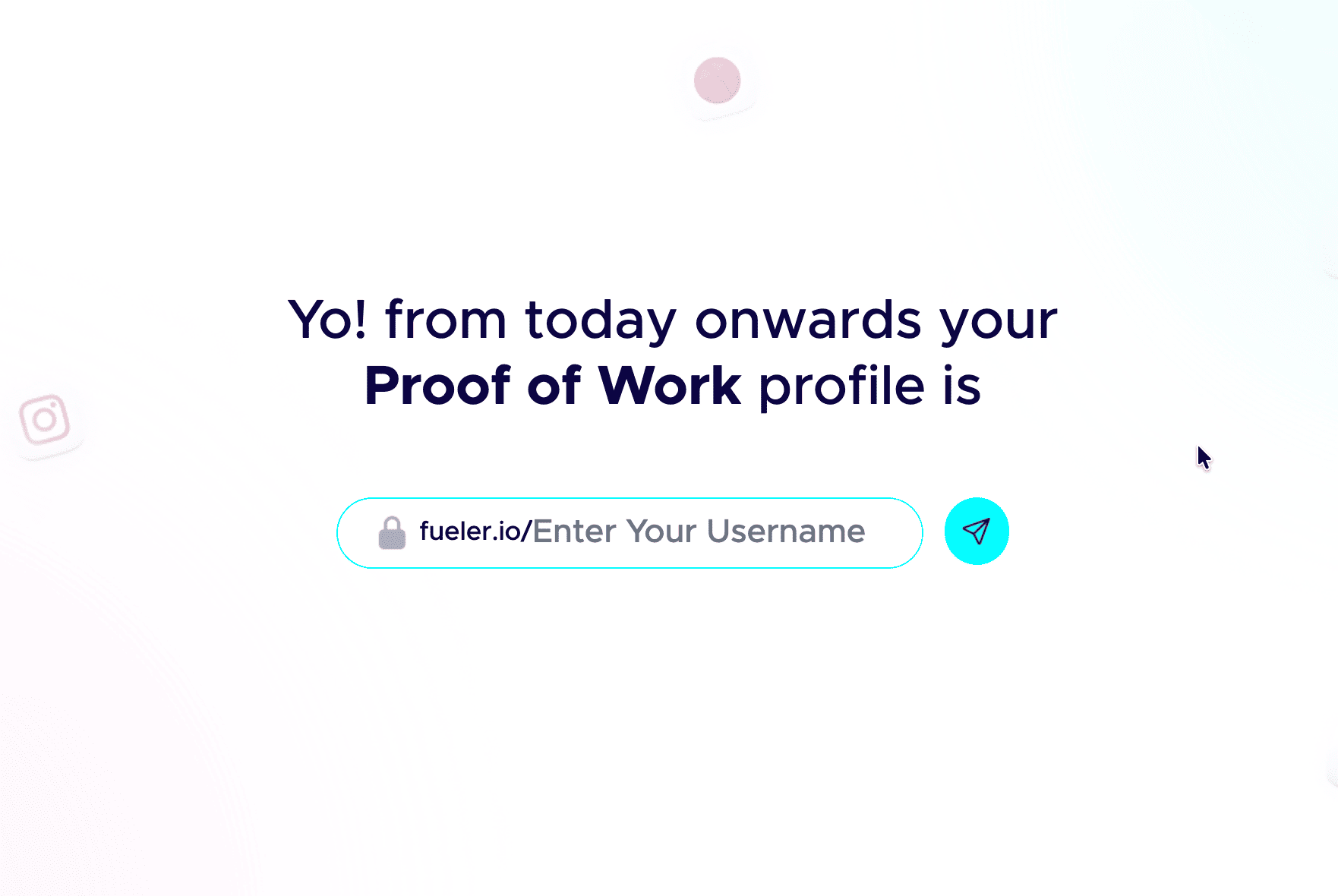
Step 2: Pick a professional handle.
Your handle shows up in your public link, so keep it clean and grown-up. Don’t add nicknames and random numbers. Your name or a simple version of it works best.
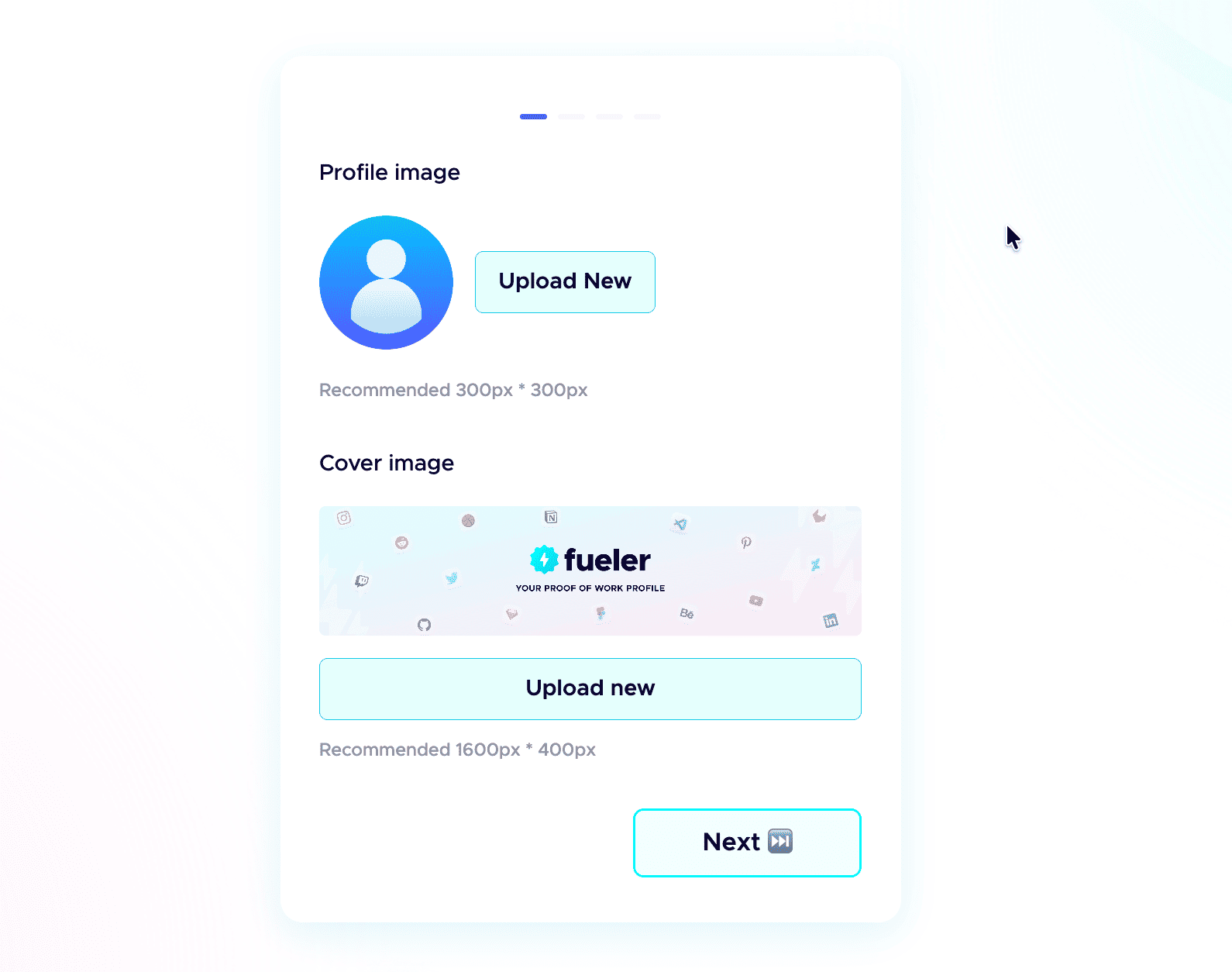
 Step 3: Add a professional profile picture.
Use the same kind of professional photo you would put on LinkedIn. Clear face, good lighting, and a simple background. People trust a real face more than an empty avatar.
Step 4: Write a strong header.
The header is the first thing anyone sees. In one or two short lines, say who you are, what you do, and the kind of work you have done. Make it specific, not vague.
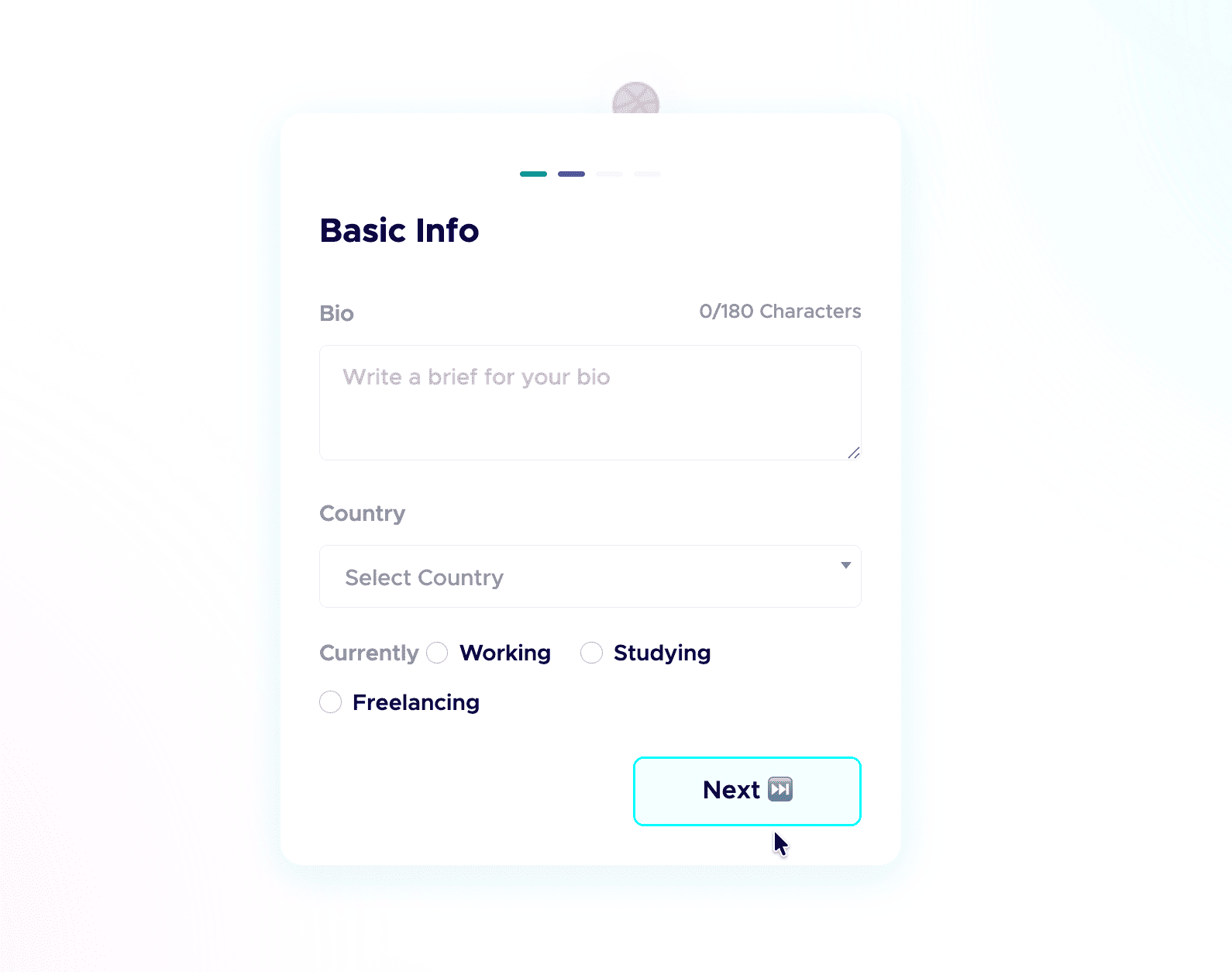
Step 5: Add a short bio.
Tell people who you are and what you do in a few plain sentences. No buzzwords, just enough for a recruiter to get you in five seconds.
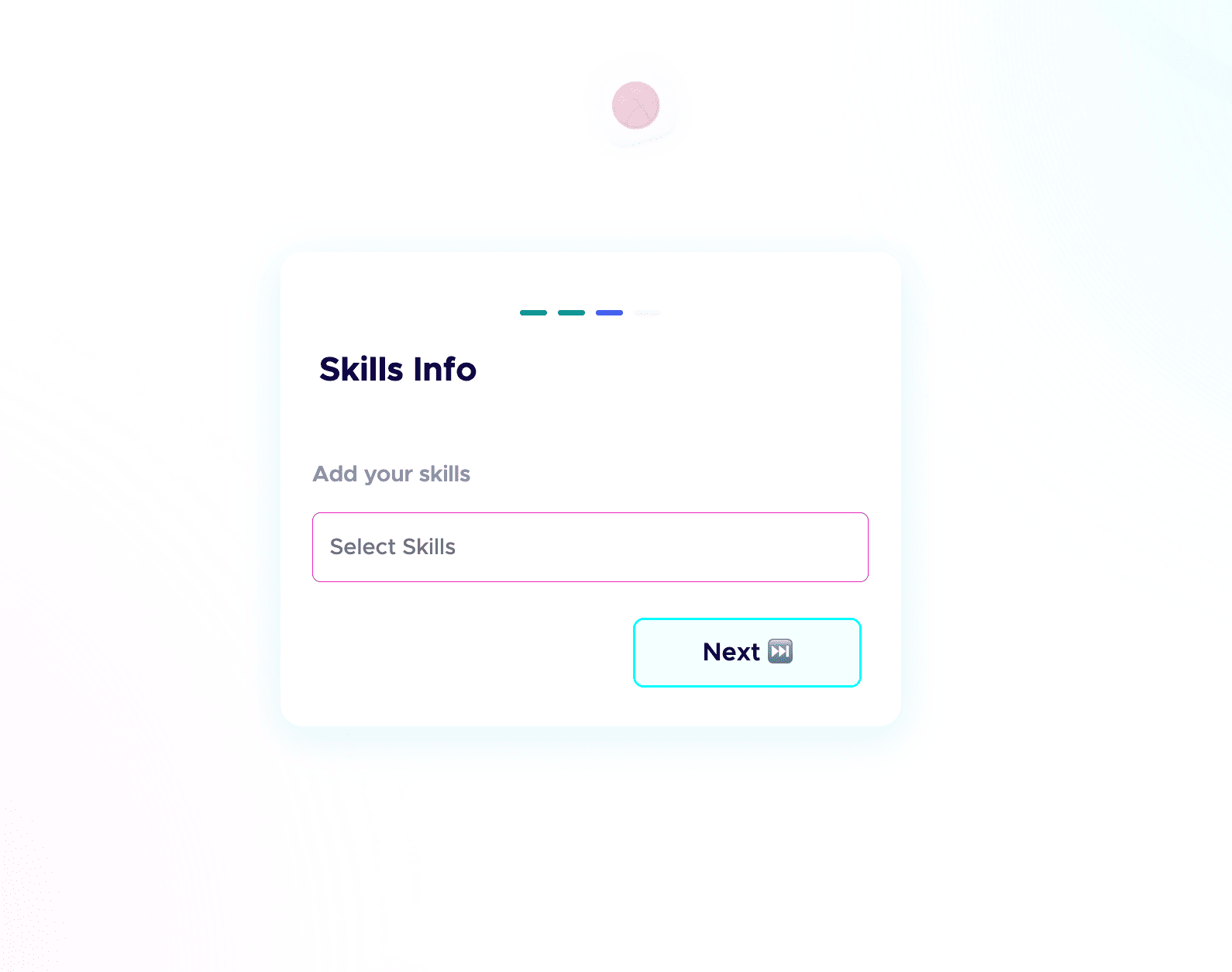
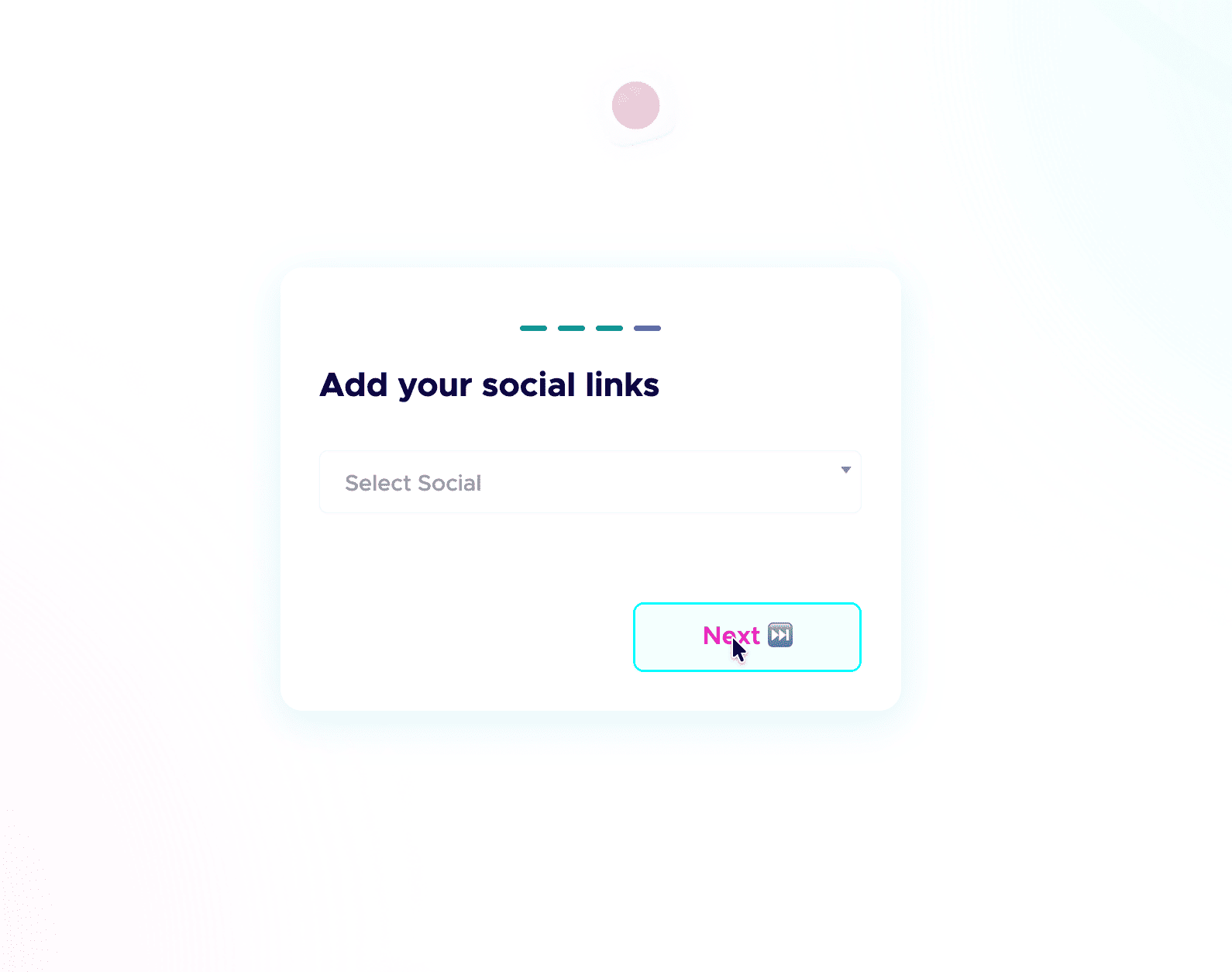
 Step 6: Add your skills and social links.
List the skills you are good at and actually want to be hired for, and connect your socials. People do check your profiles, and active socials build credibility before the first call. Students starting from scratch can follow my student guide to their first portfolio.
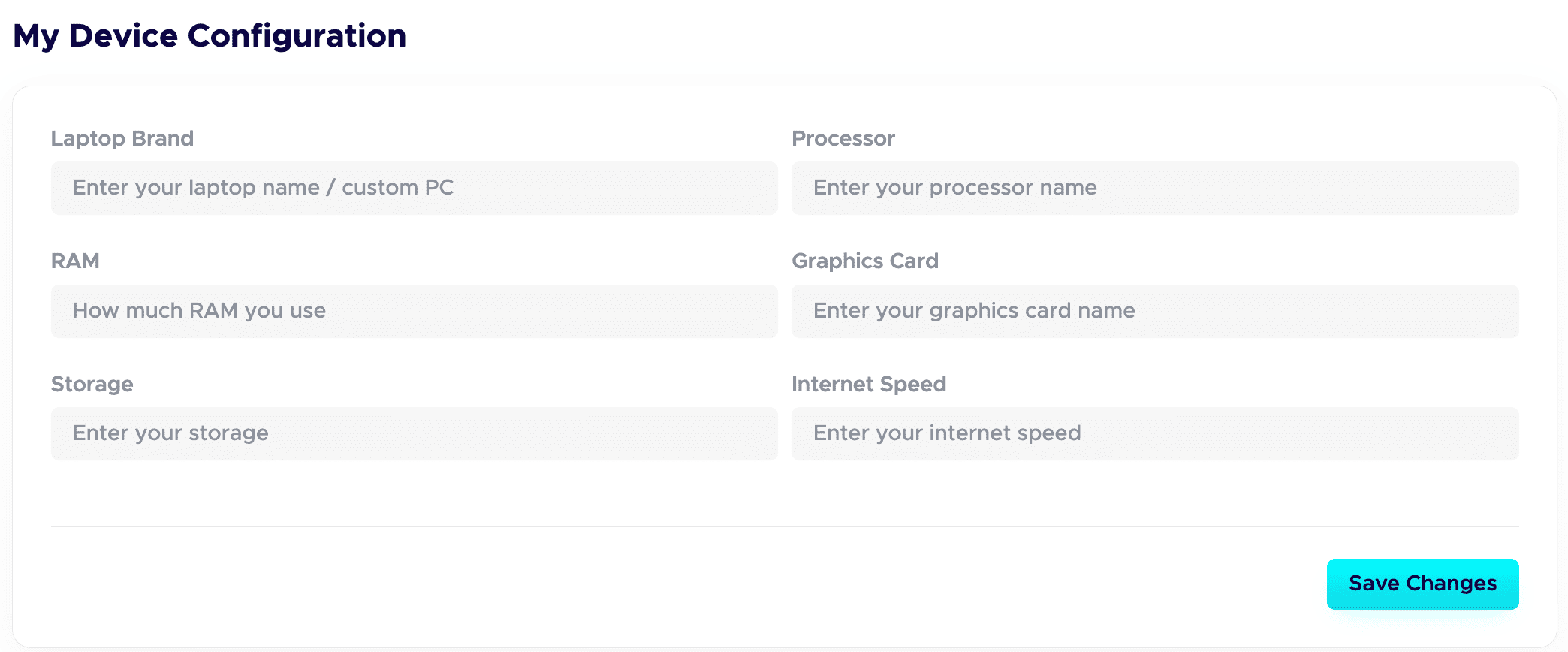
 Step 7: Fill in your Device Configuration.
In your dashboard, set up the Device Configuration section. Add the details about the device you are using. Remote-first companies want to know you have a solid setup to work from. A good setup quietly adds leverage and signals you are ready to deliver.
Step 8: Publish your projects with all the details.
This is a game-changer. Give each project a clear title and a detailed description. Walk through your process: your thinking, the tools you used, the choices you made, and the result. Companies care about how you work, not just the final image.
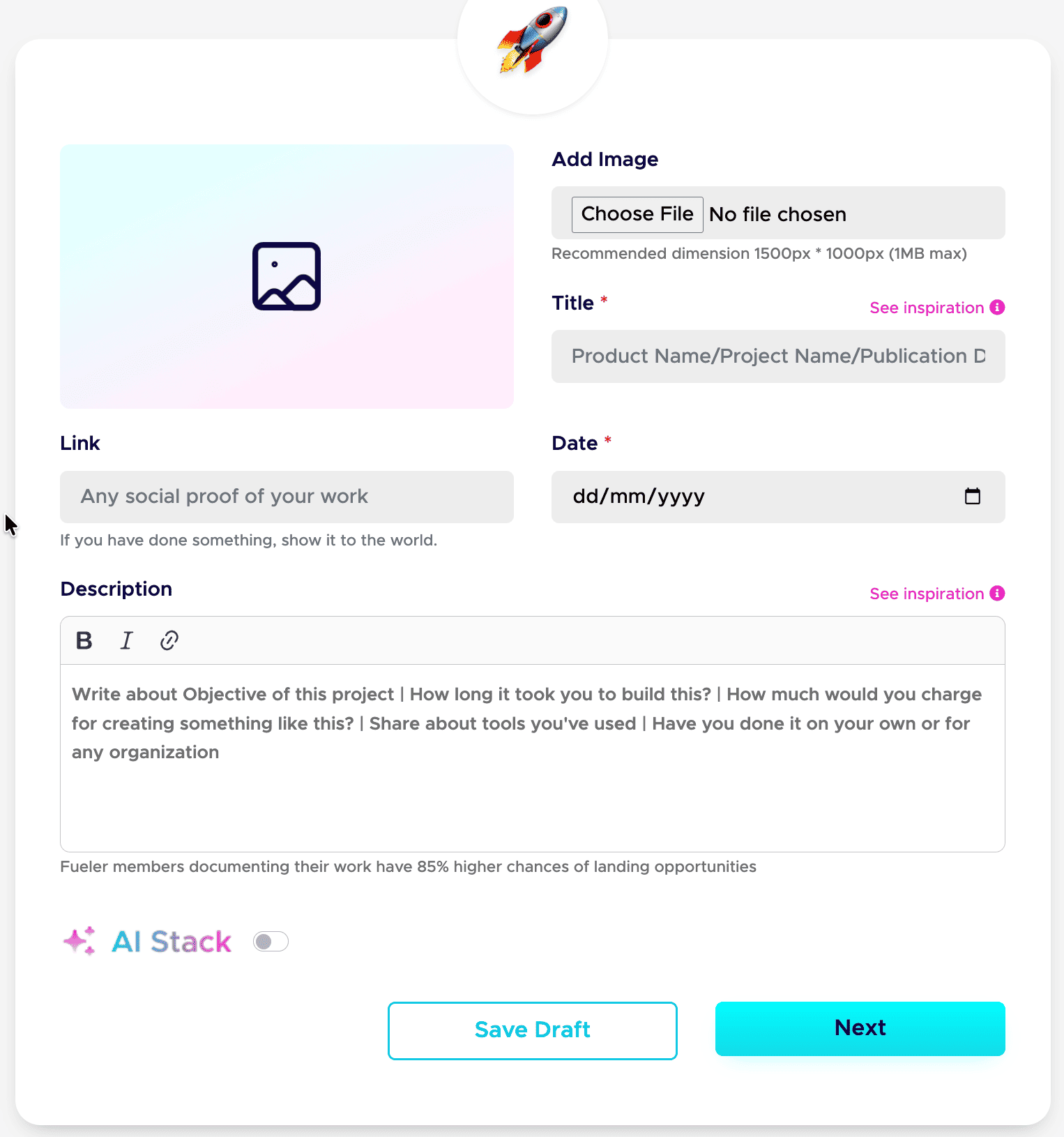
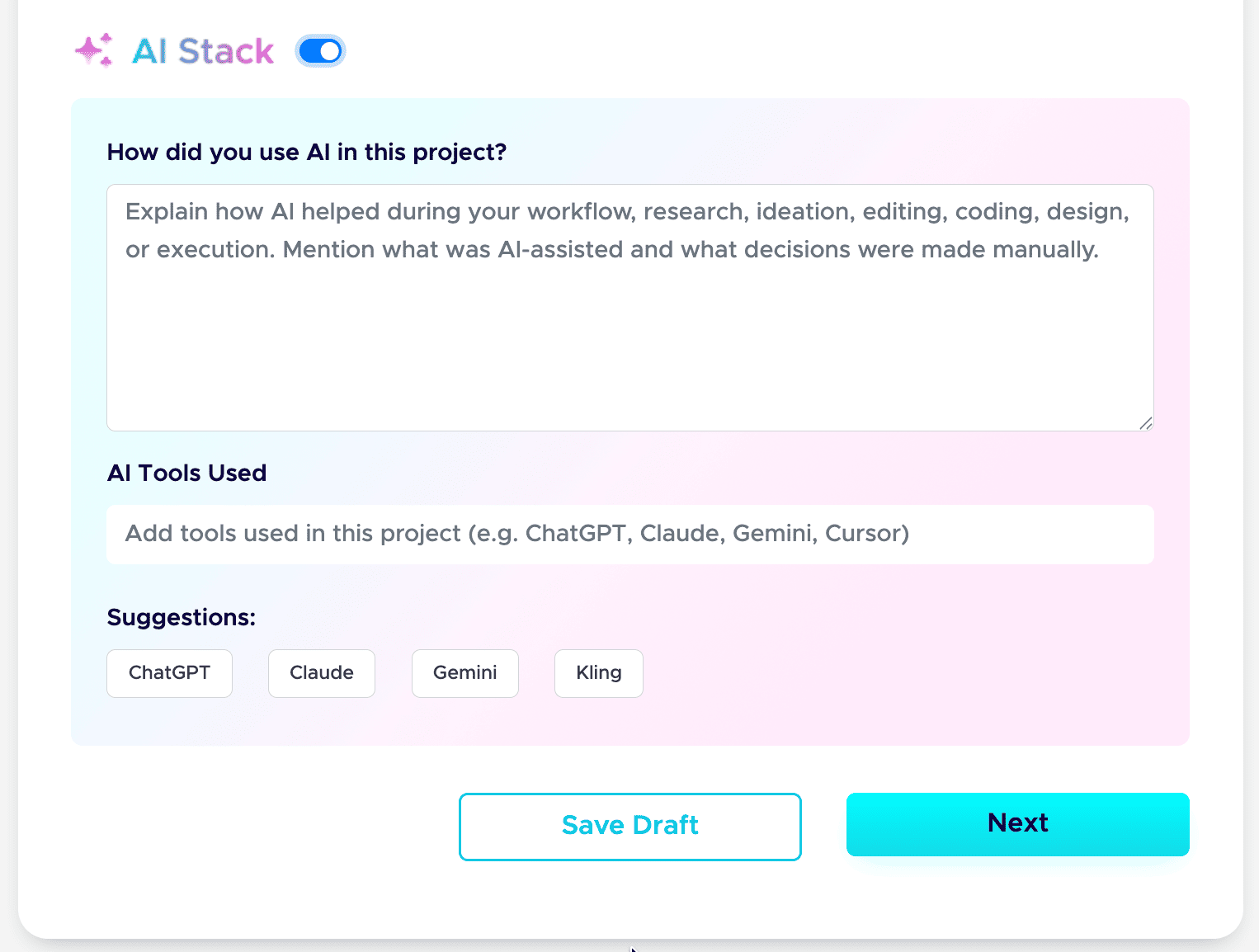
Step 9: Add your AI Stack to each project.
AI is part of real work now, so show it honestly. Use the AI Stack feature to explain how you used AI, which tools you used, and what you did manually. This builds trust instead of raising doubt. Here is the full guide: how to add AI Stack on Fueler.
That is the whole setup. Do these nine steps well, and your profile stops being a static page and starts working as a hiring asset. If you want a tighter version to follow next time, save my 6-step formula for a Fueler portfolio and my breakdown of a career portfolio that actually gets jobs.
Do this once, and you have a link you can drop into your resume, your email signature, and every job application.
Analyzing Real-World Career Shifts
Scenario A: The Technical Writer
Consider a technical content specialist managing an intense publication pipeline. On their previous system, publishing a deeply researched breakdown required structural layout updates and custom page styling adjustments.
By migrating to a streamlined ledger model, they can easily log their latest analytical essays. This system enables them to cleanly present target keyword metrics and documentation deep dives without spending any extra energy managing web design configurations or responsive layout bugs.
Scenario B: The Growth Marketing Manager
Think about a performance marketing lead who manages client acquisition campaigns. Trying to display multi-channel advertising strategies inside a standard design template often feels restrictive and clunky.
By utilizing a proof-of-work dashboard, they can easily attach clear documentation detailing their conversion tracking funnels, actual spending efficiency data, and creative visual assets. They can also seamlessly gather client validations, allowing them to clearly show future employers their proof of work examples in action.
Embracing the Global Move Toward Skills-First Sourcing
The corporate recruiting landscape is going through a massive structural shift. High-growth startups and global enterprise teams are moving away from traditional evaluation metrics like university pedigree and static job titles. With the widespread adoption of automated writing assistants, traditional text-based applications have flooded hiring pipelines, rendering conventional resumes practically obsolete.
In this environment, hiring teams are looking for fast, clear confirmation of your practical capabilities. They value structured portfolios that show how you analyze challenges, execute strategies, and deliver tangible business value.
By shifting your professional presentation to an accessible, proof-first system, you make it incredibly simple for engineering leads, editorial managers, and design directors to verify your skills and bring you on board.
Deepening Your Long-Term Career Strategy
Building a successful modern career requires consistently documenting your professional journey. It is no longer enough to update your career history only when you are actively looking for a new role. The most impactful opportunities often come to light when you aren't looking, driven by the steady discoverability of your public work history.
Regularly updating your project ledger creates a permanent, undeniable record of your professional growth and technical execution over time. This reliable archive serves as an incredibly valuable foundation when negotiating promotions, pitching premium freelance clients, or preparing to showcase proof of work during interviews with innovative teams.
Optimizing for Modern Search Engines and Discovery Networks
In 2026, professional visibility extends far beyond basic search query results. Generative search tools, AI-driven discovery engines, and automated sourcing platforms are constantly crawling the web to find top-tier talent for specific, niche roles. These automated systems don't care about flashy site animations or complex visual styles; they look for structured data, clear contextual relevance, and clear evidence of skill validation.
Fueler’s underlying page architecture is designed from the ground up to be highly machine-readable. By providing clear, structured metadata patterns for every single project block, your portfolio is perfectly optimized to be indexed and extracted by algorithmic sourcing platforms.
This gives you a massive advantage over standard portfolios hidden inside complex, custom-coded layouts that automated scrapers struggle to accurately parse and understand.
Action-Oriented Career Paths
To help you choose the best tool for your specific goals, let's look at the clearest paths forward depending on your day-to-day role and career focus.
The Specialized Visual Developer
If your primary professional income comes from selling custom development services, building complex corporate animations, or designing tailored web layouts for enterprise clients, you should continue building custom sites. Your portfolio website serves as a direct, live demonstration of your technical capabilities.
However, you can still use a centralized project directory to track your individual contributions, store client testimonials, and tap into active, assignment-based hiring networks.
The Applied Digital Builder
If you are a writer, software engineer, product manager, digital marketer, or operations lead, your core value lies in your execution and results, not in your web layout skills.
Stop spending valuable hours fixing mobile responsive bugs or managing expensive website hosting plans. Shift your focus to building a high-impact, verified project ledger that clearly highlights your professional output and positions you directly in front of active hiring teams.
The Strategic Reality of Managing Personal Branding Costs
Beyond the hours spent designing layouts, the ongoing financial cost of running a standalone professional website can become a real burden over time. When you factor in custom domain registrations, premium visual hosting tiers, and security certificates, keeping a custom site alive can easily cost hundreds of dollars each year.
For a busy freelancer or full-time professional, this recurring financial overhead creates unnecessary pressure. If you have a slow month or take a break to upskill, your portfolio shouldn't feel like a costly liability.
Moving your professional showcase to an efficient, low-overhead profile structure allows you to keep your entire work history live and discoverable forever without any ongoing financial maintenance.
Scaling Your Network via Cross-Platform Work Distribution
One of the most powerful aspects of modern portfolio management is the ability to share your proof of work across multiple platforms simultaneously. Your portfolio shouldn't exist as an isolated island in the middle of the internet; it needs to connect seamlessly with all the professional spaces where you spend time online.
Fueler’s modular project blocks are designed to be incredibly easy to share and distribute. You can easily link specific, individual project pages inside your social media threads, attach them to cold outreach emails, or include them directly in freelance project pitches.
This ensures that whenever a prospective client or team leader clicks on your links, they are instantly greeted by clean, verified case studies detailing your exact professional contributions.
Accelerating Your Workflow by Eliminating Content Friction
The absolute best portfolio is the one that stays consistently updated. When the process of adding a new project requires dealing with complex layout software or adjusting visual design elements, you will inevitably push it down your to-do list. Content friction is the primary reason most professional portfolios end up looking like abandoned projects from two years ago.
By stripping away the complex layout layers and focusing entirely on your actual work samples, you completely eliminate that friction. Did you just finish writing a high-performing article, launching a clean repository, or completing an in-depth brand strategy guide?
Just grab the live link, drop it into your dashboard, add a couple of sentences of context, and your portfolio is fully updated and ready to share.
Unlocking New Opportunities with Structured Assignments
A major challenge with standard, standalone portfolio sites is that they rely entirely on inbound discovery. You have to build the page, publish it, and then hope that someone happens to find your link and reaches out with a job offer. It is a completely passive approach to career growth.
Fueler flips this dynamic on its head by integrating your portfolio straight into an active talent ecosystem. Instead of waiting around for discovery, you can proactively use your profile to take on structured, real-world assignments posted by fast-growing brands.
This allows you to solve real problems for companies right away, providing indisputable proof of your skills and helping you bypass the crowded traditional application lines entirely.
Enhancing Credibility Through Project Verification Loops
In a crowded professional landscape where anyone can copy-paste a resume or claim responsibility for a successful project, trust is the ultimate currency. A beautifully designed website can make you look polished, but it doesn't actually prove that you did the heavy lifting on the projects you are showcasing.
Our platform addresses this challenge directly by introducing collaborative project verification loops. When you upload an asset and tag your co-creators, clients, or team leads, they can verify your specific contributions with a single click.
This social validation acts as a powerful trust signal for companies, instantly proving that your skills are completely real and verified by people who have worked with you firsthand.
Final Thoughts
Your personal portfolio should serve as an efficient engine that drives new opportunities, not an endless web development project that drains your time and focus. Webflow will always be a world-class platform for building complex, custom-designed corporate websites and client digital products. But when it comes to managing your personal career journey, simplicity, speed, and discoverability should always come first.
By choosing a streamlined, proof-of-work approach, you reclaim your valuable time and focus on what truly matters: doing exceptional work, documenting your results, and building a highly searchable professional brand. Stop wrestling with complex code boxes and design layouts. Move your best work over to a platform built for discovery, and let your proven skills open up your next big career opportunity.
Frequently Asked Questions
Is there a migration tool to transfer my existing portfolio?
There's no complex file exporting needed. Because Fueler uses a streamlined link-and-text structure, you can simply paste your existing live project links and descriptions to be up and running in minutes.
How do AI sourcing engines interact with my profile?
Fueler is built with clean, standardized schema markup. This makes your proof of work highly machine-readable, allowing algorithmic recruitment tools and AI crawlers to easily index your verified skills.
Can I display collaborative or team projects?
Yes. When publishing a project, you can tag your co-creators or clients. Once they accept, the project displays across all your profiles with shared verification.
What is the exact pricing model for Fueler?
Building, customizing, and hosting your core proof-of-work portfolio on Fueler is completely free. Premium subscriptions are entirely optional and offer advanced analytics and deeper talent network features.
Why 100,000+ professionals use Fueler
Fueler helps professionals showcase proof of work through projects, assignments, case studies, and achievements.
- Thousands of professionals use Fueler to create their digital portfolio
- Thousands of projects are published on Fueler. Check here
- Startups and Companies hire through proof of work on Fueler
- Used by freelancers, creators, marketers, video editors, writers, designers, and product managers
Our mission is to help the next 100 million professionals build a verified professional identity through proof of work

What should you do next?
You've read the article. Now turn your skills into proof of work and unlock more opportunities.
Build your proof of work portfolio
Create a clean portfolio with projects, assignments, resumes, and AI stack details that companies actually want to see.
Create your Fueler portfolio →Apply through assignments, not resumes
Stand out by solving real tasks from companies hiring on Fueler.
Explore assignments →Get discovered by companies
Make your work public and let recruiters discover your skills through actual projects instead of keywords.
Get discovered →
