Fueler: The Best Alternative to Framer Portfolio in 2026

Riten Debnath
20 Jun, 2026
You can build a good website in Framer. Clean animations, smooth scroll, a layout that looks like it cost five figures. And yet, weeks later, the inbox is still quiet. No interviews. No replies. No real opportunities.
That gap is the problem. A beautiful website and a working career are two different goals. One looks good. The other gets you hired.
I am Riten, founder of Fueler, a portfolio platform that helps professionals get hired through assignments, proof of work, and projects instead of just resumes. Over the years I have watched thousands of talented people pour time into pretty sites that no recruiter ever finds.
In this article, I will keep it honest. I will show you what Framer does really well, where it falls short if your goal is hiring, and why Fueler works as a strong portfolio alternative in 2026.
Here is what you will walk away with:
- A clear picture of Framer's strengths and limits for portfolios
- Why proof of work beats a static website for getting hired
- How to publish your own Fueler portfolio in minutes
- A side-by-side comparison so you can choose with confidence
Let's get into it.
What Framer Does Well for Websites
Framer is a serious tool, and I want to give it full credit. It started as a design tool and it shows. The canvas feels close to Figma, so designers feel at home from minute one.
If your main goal is a custom, animated, pixel perfect website, Framer is one of the best no code builders available today. The output is fast, responsive, and good looking.
Here is where Framer genuinely shines:
- Full design freedom: Framer gives you a freeform canvas with manual breakpoints, so you control every pixel. Designers who hate rigid templates love this. You can build a site that looks exactly like the version inside your head, with no developer needed.
- Smooth animations and interactions: Scroll effects, hover states, parallax, and micro interactions are built in, not bolted on. This makes a portfolio feel alive and modern, which matters a lot for visual creatives showing off motion and craft.
- Built in hosting: Every Framer site ships with fast global hosting and clean code. You do not need extra plugins. Your site loads quickly and has a real shot at ranking on Google.
- AI assisted building: In 2026 Framer offers AI tools like Wireframer for fast layouts and on page editing in the browser. You can go from a rough idea to a working page much faster than before, even with limited design experience.
Why it matters: If you are a designer or brand builder who wants a one-of-a-kind website, Framer is a strong pick. It rewards craft and control. The trouble starts only when your real goal is not a website at all, but a job, a client, or a paycheck. That is a different problem, and a website alone rarely solves it.
The Hidden Challenges of Framer Portfolios in 2026
Framer is built to make websites. It is not built to make careers. That single fact explains most of the friction people feel once they finish their shiny site and wait for opportunities that never come.
A website is a destination. Hiring is a discovery problem. If nobody finds your work, the design does not matter.
Here are the real challenges I see again and again:
- It takes a good amount of time to build: Framer has a learning curve, especially if you have never used a freeform design tool. The first 80% of a template is quick. The last 20%, the part that makes it truly yours, eats most of your hours. Time you could spend applying or building.
- There is no hiring ecosystem: Framer is a builder, not a marketplace. No recruiter logs into Framer to find candidates. Once your site is live, the entire job of getting eyeballs on it falls on you, from cold emails to social posts to constant sharing.
- There is no built-in discovery: Your portfolio sits at a custom URL with zero search traffic of its own. On a builder, you are one anonymous site among millions. Nobody is browsing Framer hoping to hire the next great writer or developer.
- It is not designed around proof of work: A Framer site shows polished mockups, but it rarely captures your process, your tools, your role, and your results. Modern hiring wants evidence of how you think and what you shipped, not just clean visuals on a screen.
- There are no assignment-based opportunities: Framer cannot connect you to real tasks set by real companies. You cannot prove your skill on an actual brief and get noticed for it. The hiring loop simply does not exist inside the tool.
There is also a cost layer worth knowing. Framer's free plan keeps you on a .framer.website subdomain and shows a "Made in Framer" badge. To use your own domain, you move to a paid plan that starts around 10 dollars a month, and most real portfolios with a blog plus projects end up on the Pro plan at around 30 dollars a month, billed yearly.
Why it matters: None of this makes Framer bad. It makes Framer the wrong tool for one specific job. If you want a website, Framer is great. If you want to get hired, a website with no discovery and no proof of work is a quiet room. You did the work, but nobody is in the room to hear it.
Why Fueler Is the Best Framer Alternative for Your Career
Fueler started from a simple frustration. I was a freelancer who wanted one clean place to show my work and get hired for it. Not a website project, but a career tool. That difference shapes everything we built.
Think of Fueler as GitHub for proof of work, combined with the hiring side. Your proof of work sits at the centre, and opportunity is built around it.
Here is what makes Fueler a strong alternative to a Framer portfolio:
- Publish projects in minutes, not weeks: You do not design a website. You add a project, write a clear title, describe your process, and publish. A complete, professional portfolio can go live the same day, which means more time for the work that actually moves your career.
- It is built around proof of work: Every project lets you document the problem, your role, the tools you used, and the outcome. You can attach proof links to live work and public repos. This shows how you think, which is exactly what hiring managers want to verify.
- It is connected to real hiring: Fueler is not just a host. Companies use it to find talent, and there is an assignments hub where you can complete real tasks and prove your skills directly. That turns your portfolio into a doorway, not a dead end.
- Recruiters can actually discover you: Since Fueler is a focused talent network, your work is searchable by skill and surfaced to people who are hiring. You are not shouting into the void hoping a recruiter stumbles onto a random URL you built alone.
- A community of professionals: Fueler is trusted by more than 100K+ professionals who share work, get feedback, and build credibility together. Being part of an active proof of work community lifts your visibility in a way a solo website never can.
If you want to see how this looks for different roles, this guide on how designers build their portfolio on Fueler breaks it down step by step, and so does this deeper walkthrough on how to build a proof of work portfolio step by step.
Why it matters: A portfolio should do more than exist. It should bring opportunity to you. Fueler is built for that single outcome, getting hired, while a Framer site is built for design. When your goal is your career, the tool you pick should be designed around hiring, not around pixels.
How to Build Your Portfolio on Fueler in Minutes
The biggest reason people delay their portfolio is the build itself. Designing a site feels heavy. Filling in a profile feels light. Fueler is built so you can go from zero to live in one sitting.
Step 1: Sign up on Fueler.
Head to Fueler.io and create your free account.
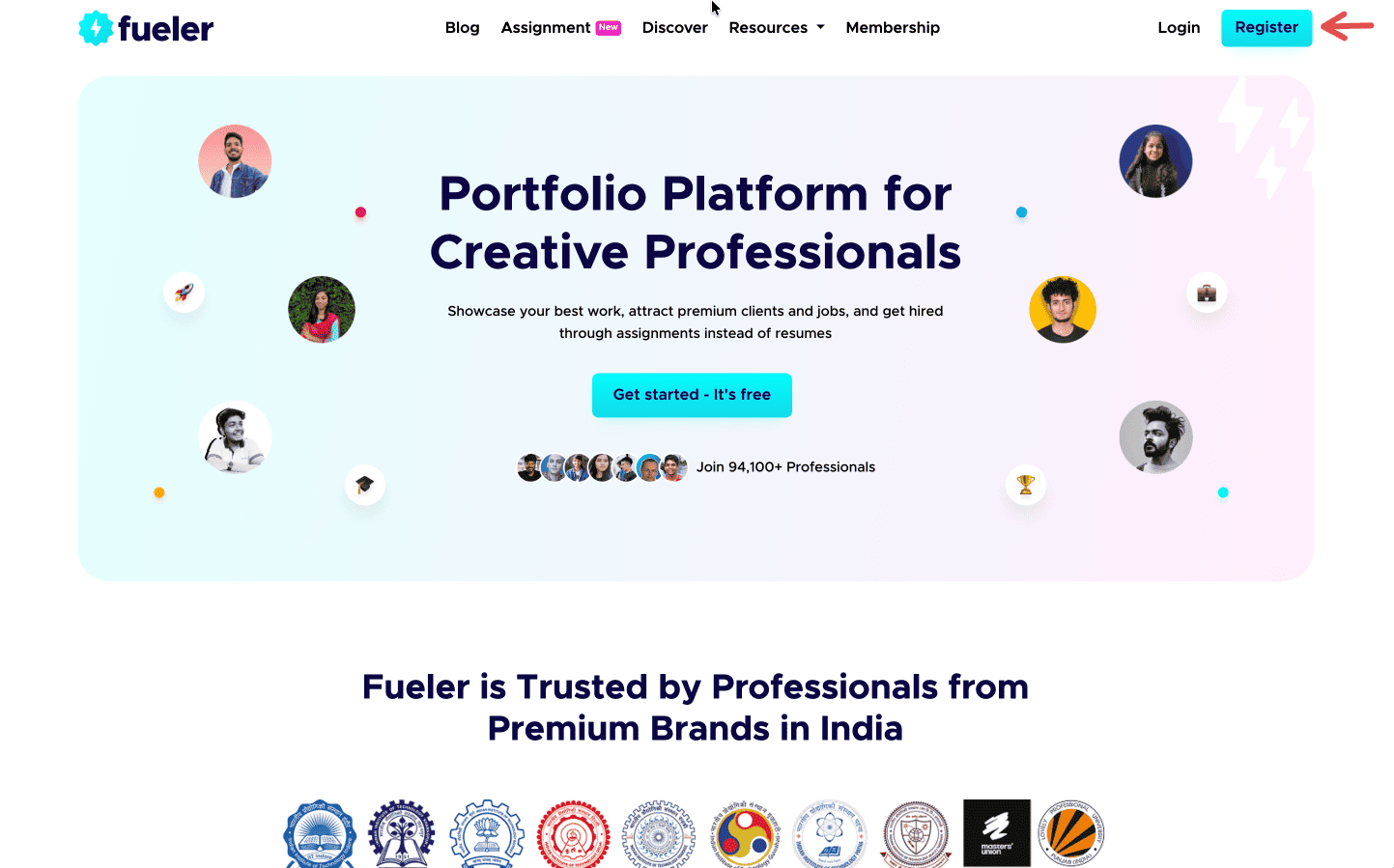
Sign up on Fueler
Step 2: Pick a professional handle.
Your handle shows up in your public link, so keep it clean and grown-up. Don’t add nicknames and random numbers. Your name or a simple version of it works best.
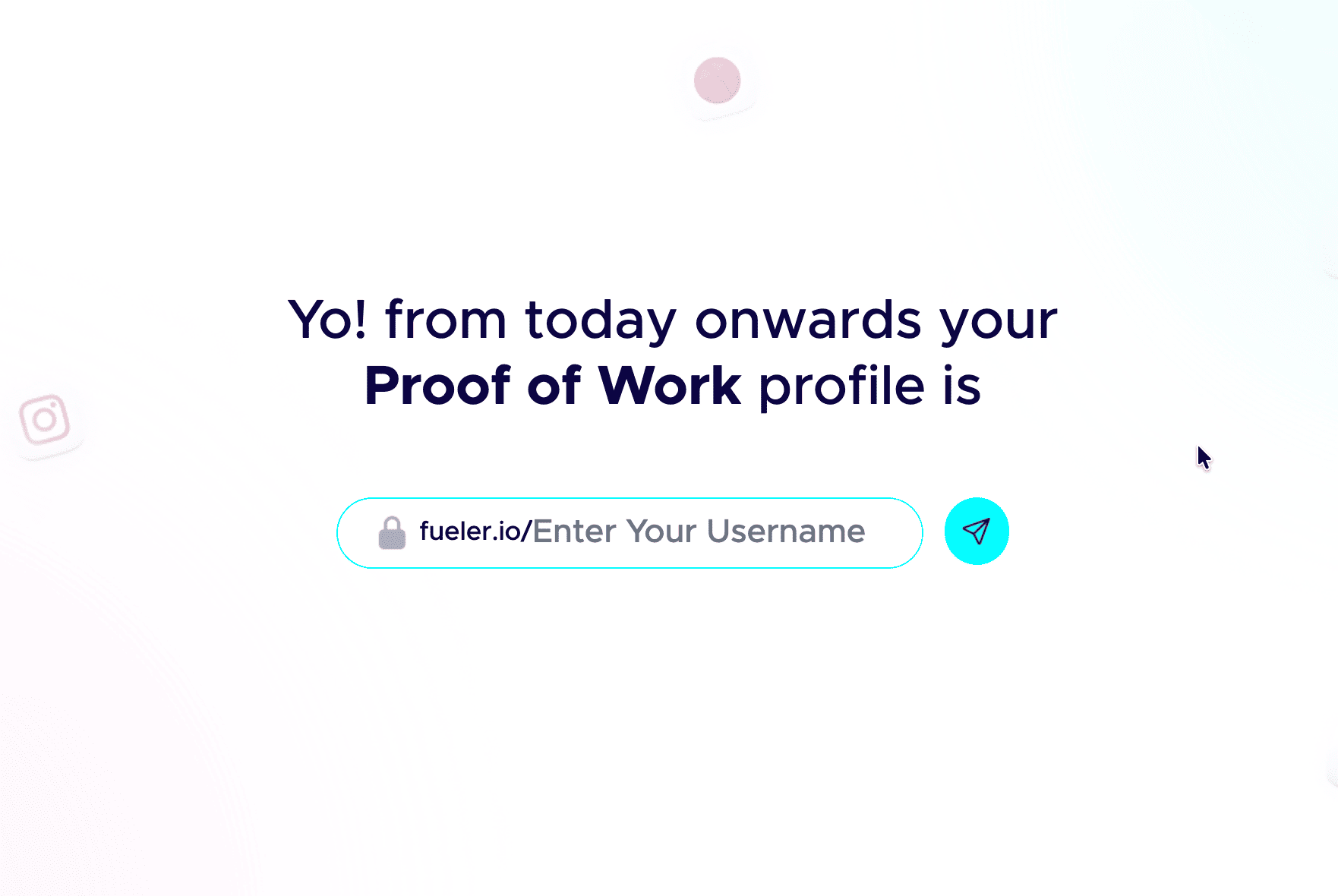
Pick a professional handle
Step 3: Add a professional profile picture.
Use the same kind of professional photo you would put on LinkedIn. Clear face, good lighting and simple background. People trust a real face more than an empty avatar.
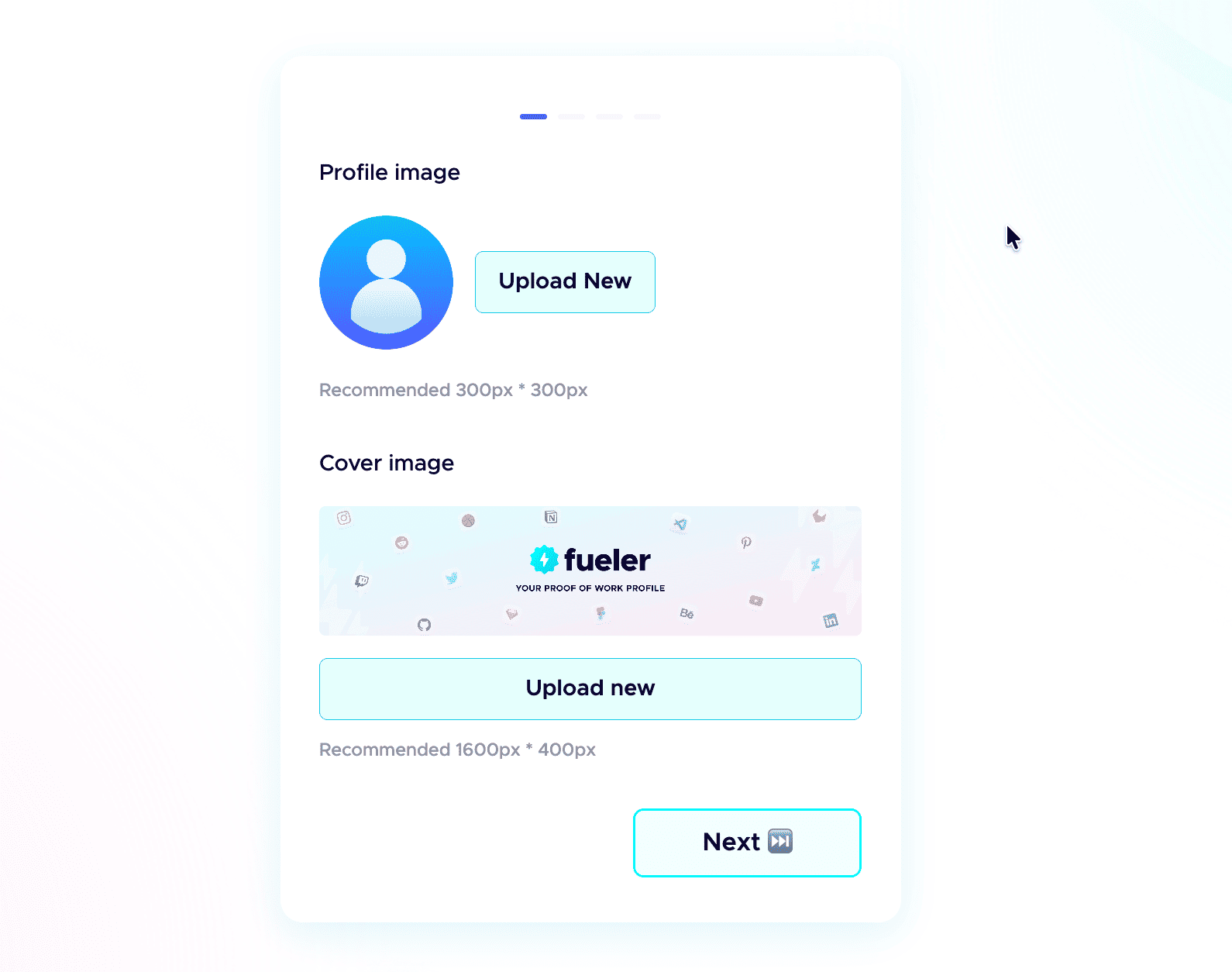
Add a professional profile picture
Step 4: Write a strong header.
The header is the first thing anyone see. In one or two short lines, say who you are, what you do, and the kind of work you have done. Make it specific, not vague.
Step 5: Add a short bio.
Tell people who you are and what you do in a few plain sentences. No buzzwords, just enough for a recruiter to get you in five seconds.
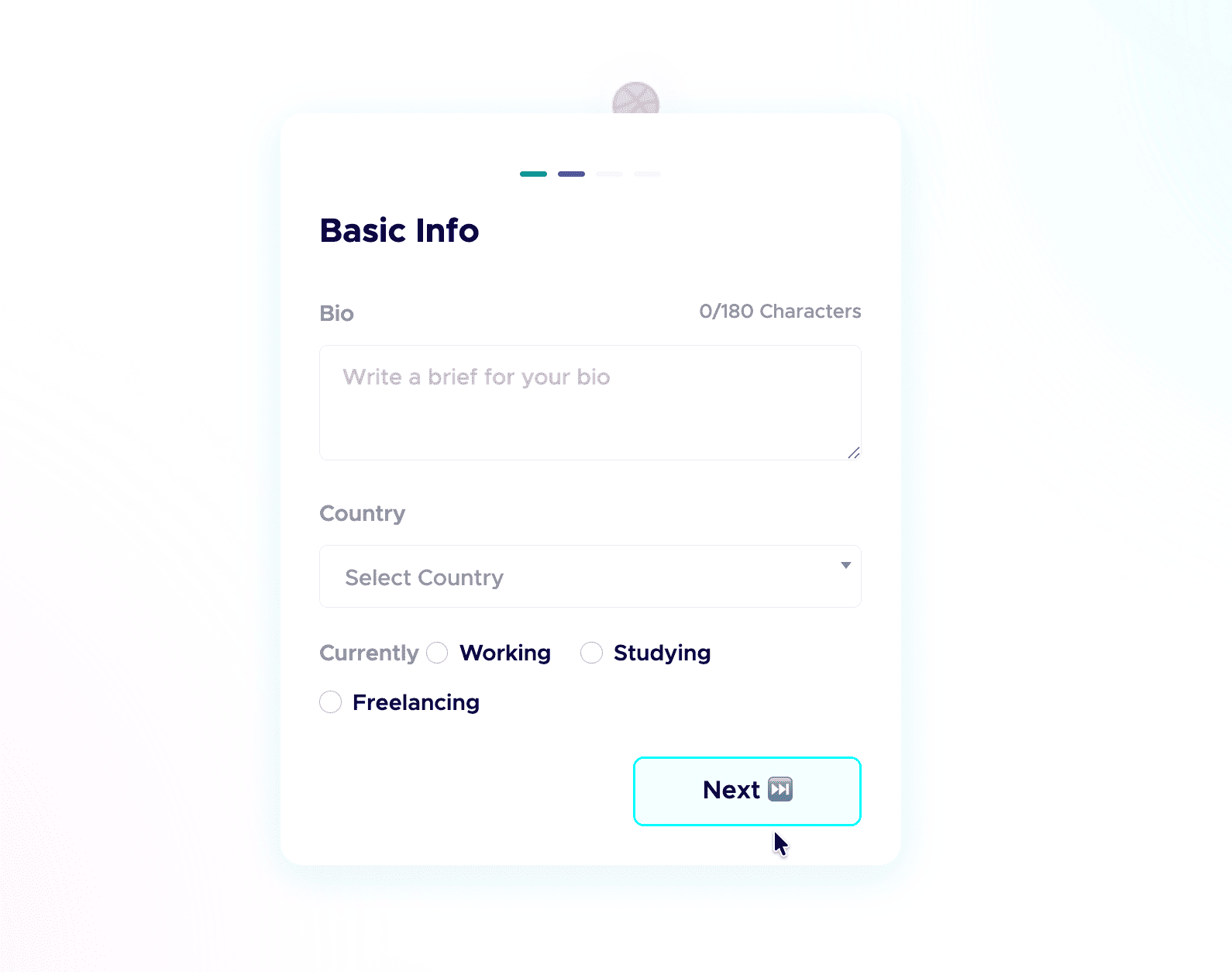
Add a short bio
Step 6: Add your skills and social links.
List the skills you are good at actually want to be hired for, and connect your socials. People do check your profiles, and active socials build credibility before the first call. Students starting from scratch can follow my student guide to your first portfolio.
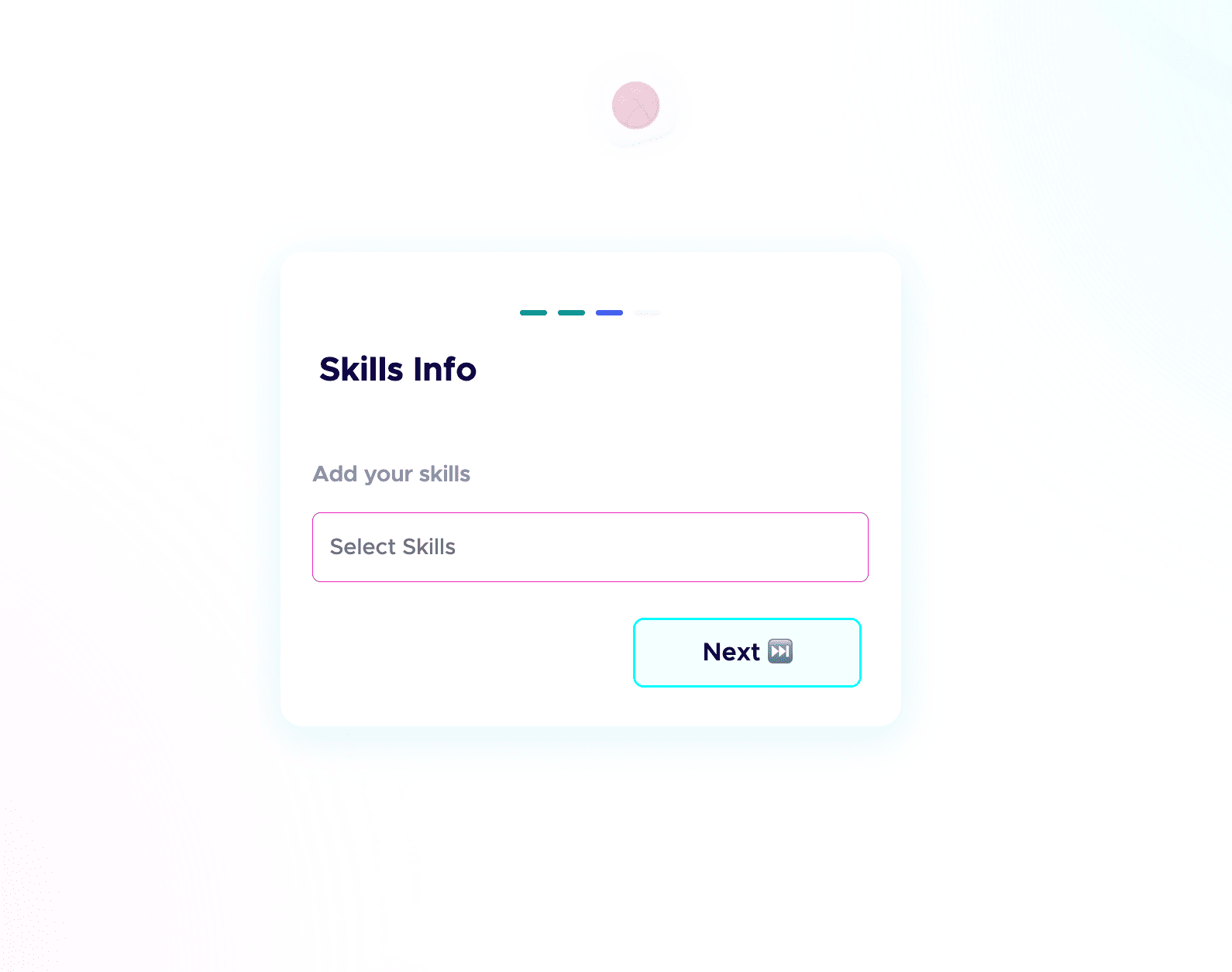
Add your skills
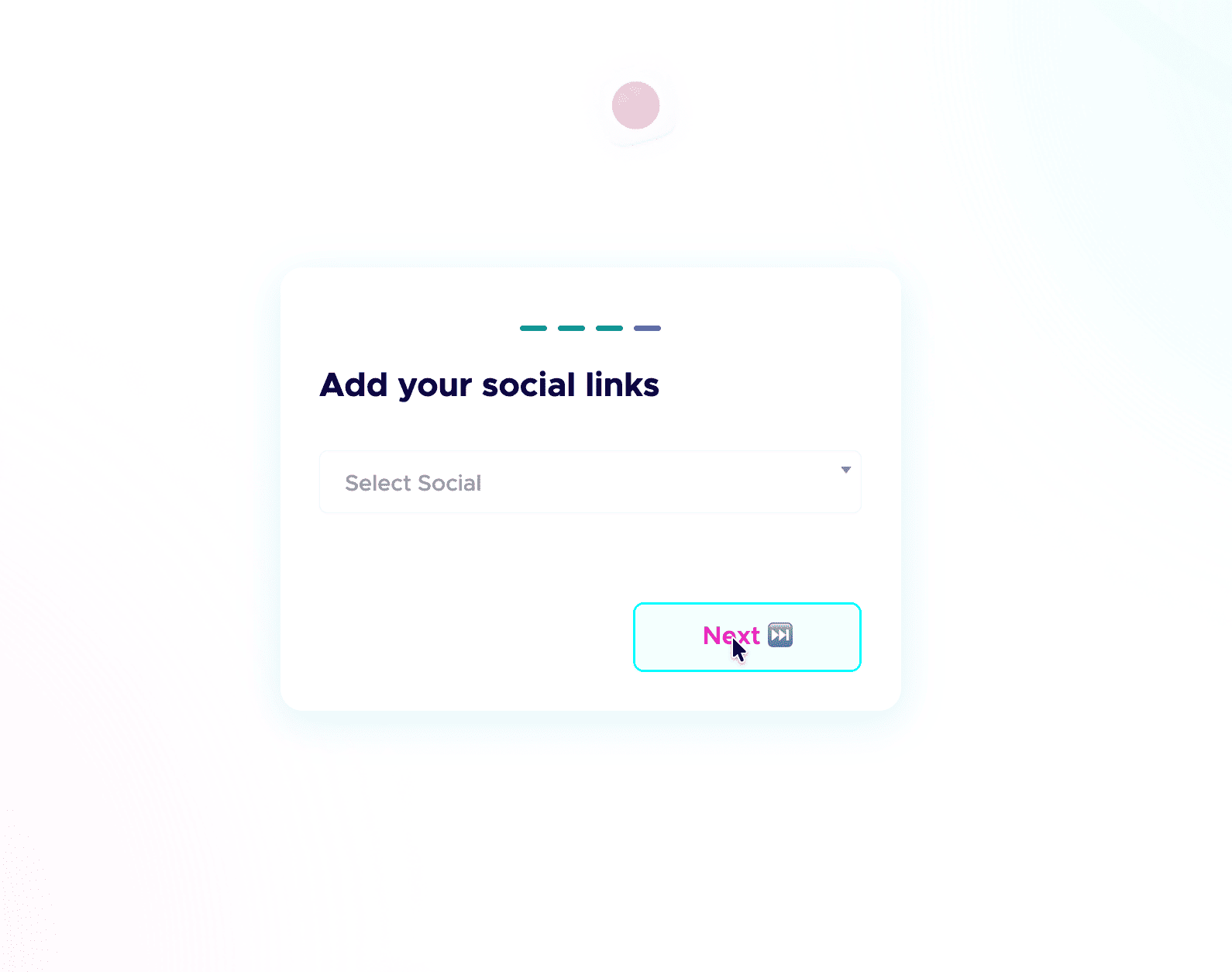
Add your social links
Step 7: Fill in your Device Configuration.
In your dashboard, set up the Device Configuration section. Add the details about the device you are using. Remote-first companies want to know you have a solid setup to work from. A good setup quietly adds leverage and signals you are ready to deliver.
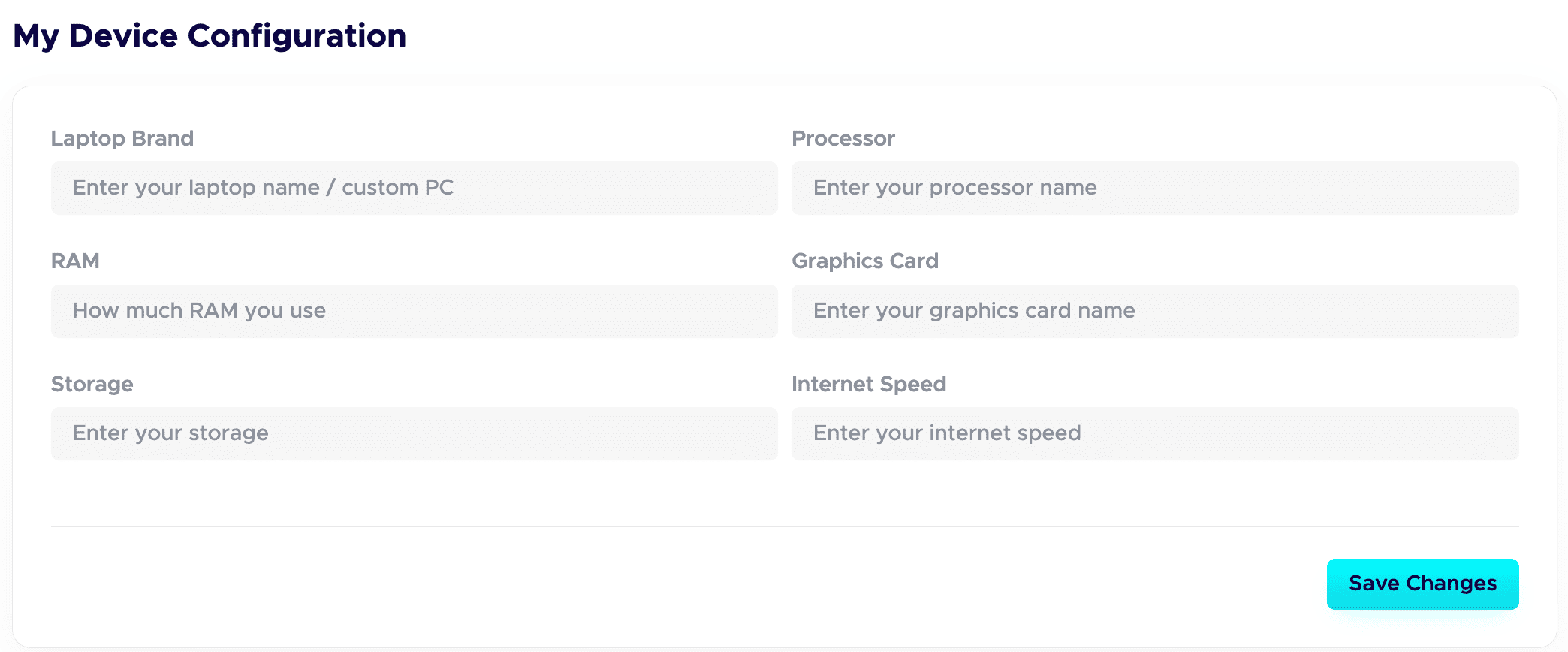
Fill in your Device Configuration
Step 8: Publish your projects with all the details.
This is a game-changer. Give each project a clear title and a detailed description. Walk through your process: your thinking, the tools you used, the choices you made, and the result. Companies care about how you work, not just the final image.
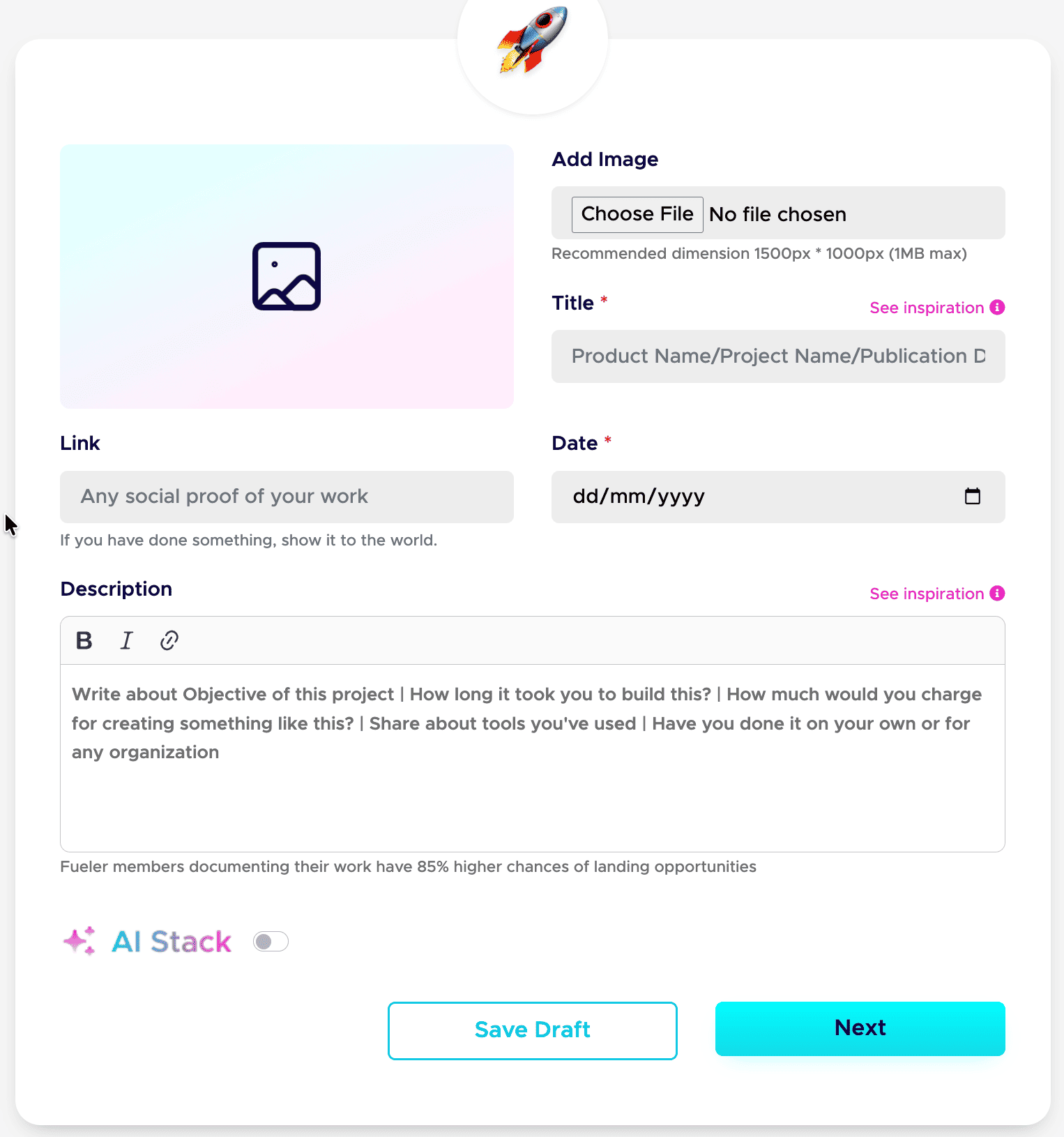
Publish your projects with all the details
Step 9: Add your AI Stack to each project.
AI is part of real work now, so show it honestly. Use the AI Stack feature to explain how you used AI, which tools you used, and what you did manually. This builds trust instead of raising doubt. Here is the full guide: how to add AI Stack on Fueler.
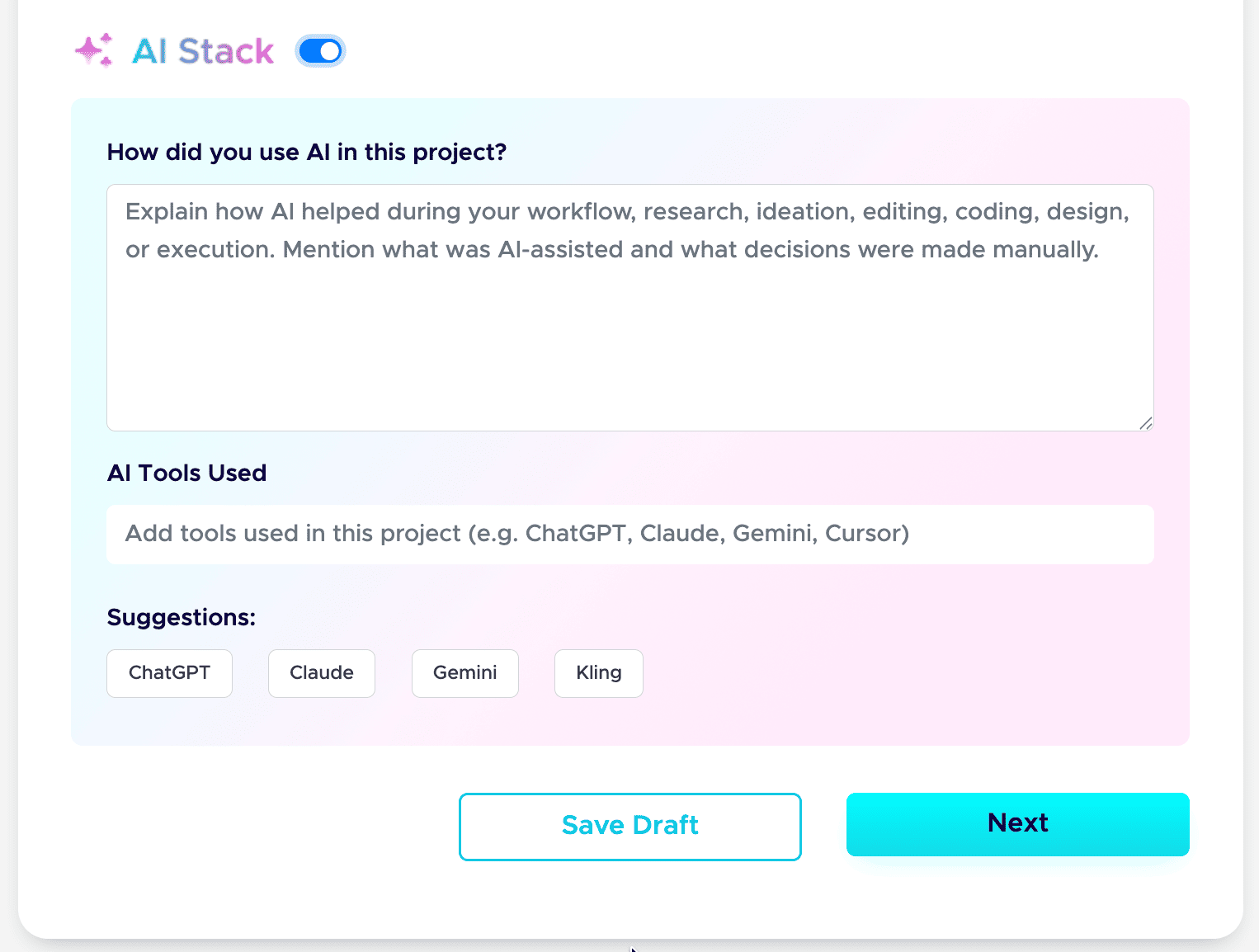
Add your AI Stack to each project
That is the whole setup. Do these nine steps well and your profile stops being a static page and starts working as a hiring asset. If you want a tighter version to follow next time, save my 6-step formula for a Fueler portfolio and my breakdown of a career portfolio that actually gets jobs.
Why it matters: Speed is leverage. The faster your portfolio is live, the sooner it can work for you. Framer asks you to become a part-time web designer first. Fueler asks you to do one thing: document your work well, and then puts that work in front of people who hire.
Framer vs Fueler: A Clear Comparison
Both tools are good. They are just built for different finish lines. Here is the honest side-by-side so you can match the tool to your goal.
The short version: Framer wins on design and full website control. Fueler wins on hiring, discovery, and speed.
Why it matters: The right choice depends entirely on your goal, not on which tool looks fancier. If you are selling a brand or building a marketing site, Framer earns its place. If your goal is a job, a client, or a faster path into your dream role, a hiring-focused platform will always beat a standalone website.
Real Fueler Portfolio Examples That Get People Hired
The best portfolios are not the prettiest. They are the clearest. Across writers, designers, developers, and marketers, the ones that get noticed all share the same pattern: real work, explained well, backed by proof.
You do not need a famous client to start. You need projects that show how you think and what you can solve.
Here is what strong Fueler portfolios tend to include:
- Writers show published pieces with the goal of each one, the audience, and the result, plus a short note on their process and the tools they used to research and edit.
- Designers share live prototypes and case studies that walk through the problem, the choices they made, and the impact, instead of dropping a wall of static mockups with no context.
- Developers link working demos and public repos as proof, then explain the architecture decisions and tools, so recruiters can verify real skill rather than guess from a screenshot.
- Marketers document campaigns with the brief, their specific role, the channels used, and honest before-and-after numbers, which is far more convincing than a list of vague responsibilities.
- Students and switchers turn assignments, personal projects, and speculative redesigns into proof of work, which fills the gap when there is no formal job history to point at yet.
The common thread is verification. A proof link to live work, a recommendation tied to a specific project, and a clear process beat any polished but empty page. If you want to model yours on what hiring managers respond to, study this guide on building a career portfolio that actually gets jobs.
Why it matters: Recruiters do not hire potential they cannot verify. They hire evidence. A portfolio full of proof lowers their risk and moves you to the front of the line. That is why documenting your work properly matters more than the theme or font you pick.
Examples of portfolios on Fueler
How This Connects to Building a Strong Career or Portfolio
Step back from tools for a second. The deeper shift in 2026 is that hiring now rewards visible execution. Companies care less about where you studied and more about what you have actually shipped.
Proof of work is the cleanest way to show that. When your projects explain the problem, your role, your process, and the outcome, you are doing the recruiter's job for them. You remove doubt before they even reach out.
Documenting your systems and projects also compounds. Each one you publish adds to your credibility. Over time, your portfolio becomes a public record of growth that no single resume line can match.
This is also why modern hiring values outcomes over titles. A resume claims. Proof shows. The professionals who win are the ones who treat their work as evidence and keep that evidence updated and easy to find.
That is the whole idea behind Fueler. Make your proof of work the center of your professional identity, and let opportunity come to it.
Final Verdict
Here is my honest take as someone who builds in this space every day. Framer is an excellent website builder. If you want a custom, animated, design-forward site and you enjoy the craft, use it with confidence.
But a website is not a career strategy. If your real goal is getting hired, you need discovery, proof of work, and a connection to real opportunities. A standalone site gives you none of those by default.
Fueler is built for that exact gap. It turns your work into evidence, puts it in front of people who hire, and gets you live in minutes instead of weeks. In 2026, the fastest path from skill to opportunity is proof, not pixels.
Pick the tool that matches your goal. If that goal is your career, start where the hiring actually happens.
FAQs
1. Is Fueler a good alternative to Framer for portfolios?
Yes, especially if your goal is getting hired rather than building a custom website. Framer is a strong website builder for design, but it has no built-in discovery or hiring features. Fueler is a proof-of-work portfolio platform connected to real hiring, so recruiters can find you and you can complete company assignments. You can publish a complete Fueler portfolio in minutes, while a polished Framer site usually takes days. For careers, Fueler wins. For a one-of-a-kind website, Framer is the better fit.
2. Is Framer or Fueler better for getting a job?
For getting hired, Fueler is built for the job. Framer makes beautiful sites but does not connect you to recruiters or opportunities. Fueler centers your proof of work, lets you attach live proof links, and surfaces your skills inside a hiring-focused talent network. It also has an assignments hub where you prove skills on real tasks. If you want design control above all, choose Framer. If you want interviews and offers, a hiring-focused platform like Fueler gives you a faster, clearer path.
3. Can I build a portfolio on Fueler for free?
Yes. Fueler is free to start, and you can create a full proof-of-work portfolio without paying. You add projects, write your process, attach proof links, and publish a shareable profile at no cost. This is different from Framer, where the free plan keeps you on a .framer.website subdomain with a "Made in Framer" badge, and a custom domain requires a paid plan starting around 10 dollars a month. For a budget-friendly, hiring-ready portfolio, starting free on Fueler is a simple choice.
4. Do recruiters actually find you on Fueler?
Yes. Fueler works as a focused talent network, not just a place to host a site. Your work is searchable by skill and surfaced to companies looking to hire, which is the opposite of a standalone website where you must drive every visitor yourself. More than 100K+ professionals use Fueler to build credibility and get discovered. You can also complete real company assignments to get noticed directly. That built-in discovery is the main thing a Framer portfolio cannot offer on its own.
5. How long does it take to build a portfolio on Fueler?
Often under an hour. You sign up, choose a clean handle, add your photo, write a sharp header and short bio, add your skills and social links, then publish your projects with real detail about your process and results. There is no design or code step to slow you down. A Framer portfolio usually takes days because you are building an actual website. Fueler removes that work so you can focus on documenting strong proof of work and start sharing your link the same day.
Why 100,000+ professionals use Fueler
Fueler helps professionals showcase proof of work through projects, assignments, case studies, and achievements.
- Thousands of professionals use Fueler to create their digital portfolio
- Thousands of projects published on Fueler. Check here
- Startups and Companies hire through proof of work on Fueler
- Used by freelancers, creators, marketers, video editors, writers, designers, and product managers
Our mission is to help the next 100 million professionals build a verified professional identity through proof of work

What should you do next?
You've read the article. Now turn your skills into proof of work and unlock more opportunities.
Build your proof of work portfolio
Create a clean portfolio with projects, assignments, resumes, and AI stack details that companies actually want to see.
Create your Fueler portfolio →Apply through assignments, not resumes
Stand out by solving real tasks from companies hiring on Fueler.
Explore assignments →Get discovered by companies
Make your work public and let recruiters discover your skills through actual projects instead of keywords.
Get discovered →
