Canva Portfolio Alternative for Proof-of-Work Professionals

Riten Debnath
09 Jul, 2026
Last updated: July 2026
When you send a beautifully color-coordinated presentation link to a hiring manager to prove your data science model, content strategy, or full-stack software architecture, you are subtly telling them that you prioritize layout over raw execution. In 2026, companies are completely fatigued by overly polished templates that mask a lack of baseline technical competence.
I’m Riten, founder of Fueler, a skills-first portfolio platform that connects talented individuals with companies through assignments, portfolios, and projects, not just resumes/CVs. Think Dribbble/Behance for work samples + AngelList for hiring infrastructure.
If you are a professional operating in marketing, engineering, growth, or product management, utilizing a graphic design engine to display your operational achievements introduces massive frictional drag to your pipeline. In this long-form analysis, we will explore the core structural differences between visual documentation and outcome-focused evidence, helping you build an unassailable digital asset ledger. You will learn how to convert flat slide designs into interactive project histories that pass rigorous corporate screening protocols with ease.
The Aesthetic Illusion: Where Canva Excels in the Modern Creator Economy
Graphic creation ecosystems have fundamentally democratized the way creative professionals format pitch decks, presentation graphics, brand guidelines, and visual asset libraries for consumer audiences. They offer unmatched utility when an independent contractor needs to construct an immediate, visually stunning interface that depends heavily on spatial layout, typographical consistency, and brand colors.
For graphic artists, illustrators, and social media managers, your primary deliverable is the visual asset itself, meaning the medium matches the message perfectly. These tools provide pre-built padding templates, component libraries, and asset frameworks that enable rapid creative expression without requiring a deep background in layout design.
However, using an editing canvas as your primary professional home means you are using an instrument optimized for static page layout to solve an optimization problem. When your daily value is measured in conversion infrastructure, code health, operational velocity, or pipeline architecture, an editor treats your accomplishments like flat artwork.
- Democratic Vector Manipulation: Graphic layout software excels at enabling rapid vector edits, font pairing, and color canvas adjustments, which allows pure brand designers to ship mockups instantly.
- Rapid Asset Prototyping: The platform provides instant access to thousands of layout blocks and stock assets, lowering the baseline barrier to entry for early-stage visual curation.
- Polished Client Pitching: Independent brand consultants can easily assemble high-fidelity mockups and stylized proposals that require immediate visual buy-in from consumer-facing stakeholders during initial alignment calls.
- Centralized Creative Directives: Creative teams can seamlessly document color swatches, logo variations, and typographies within shared boards, providing clean guidelines for internal marketing collateral production.
- Frictionless Social Formatting: The export frameworks allow creators to scale static images across various dimensional requirements, serving as an efficient engine for digital content distribution channels.
Why It Matters
While creative engines are unmatched for styling marketing assets, relying on them for deep technical documentation creates a mismatch between your presentation format and your operational output. Recognizing where a design tool excels allows you to keep using it for asset creation while migrating your actual career milestones to systems built for validation.
The Proof-of-Work Gap: Why Traditional Layout Builders Fall Short for Execution Tracking
When your day-to-day execution involves optimizing SQL queries, managing paid advertising spend, or designing conversion funnels, traditional graphic interfaces fall flat. These layout tools force you to cut down complex operational pipelines into tiny, text-constricted containers designed exclusively for visual balance.
A core limitation of graphic-first software is its inability to manage interactive, live data points or connect smoothly with technical code infrastructure. If a recruiter wants to audit your live production deployment, inspect a GitHub repository, or track live analytics, a flat layout offers only a dead screenshot.
Furthermore, traditional document builders do not natively support automated search engine indexing, clear schema structuring, or generative engine data harvesting. Your career assets remain trapped inside flat, heavy graphic scripts that cannot be discovered by modern programmatic talent acquisition crawlers.
- Restricted Text environments: Graphical layouts force professionals to abbreviate deep project architecture notes into minimalist summaries, leaving out critical context regarding technical constraints and edge-case execution.
- Broken Functional Integrations: Interactive elements like live code embeds, dynamic spreadsheets, and real-time dashboard tracking fail to operate when trapped inside a static canvas presentation framework.
- Zero Native Verification: Traditional design tools lack built-in mechanisms to verify collaborator inputs, peer validations, or client sign-offs, leaving your claims unverified in a high-trust hiring ecosystem.
- Absence of Structural Indexing: Search engine algorithms struggle to parse nested textual content inside stylized graphical presentation frames, rendering your hard-won professional milestones invisible to organic search channels.
- High Upkeep Friction: Updating an old project within a visual layout builder requires manual adjustments to alignment, spacing, and font sizes, creating tedious maintenance work every time you finish a new client contract.
Why It Matters
When you rely on visual software to house your strategic history, your actual skills get buried behind decorative shapes. Transitioning to an architecture that supports deep technical context ensures that technical recruiters judge your expertise by your operational outcomes rather than your ability to manipulate design elements.
Anatomy of an Outcome-Driven Profile: Moving Beyond Drag-and-Drop Graphics
An executive-level career repository relies on direct proof, logical flow, and instantly accessible links to validate your market value. Instead of forcing visitors to scroll through multi-page presentation decks, an outcome-driven architecture presents the underlying business challenge, your execution method, and your performance metrics on a single, clean page.
This approach organizes your milestones around functional project modules that can link out to external data sources. Rather than spending hours fixing line breaks, your platform should automate formatting, so your engineering repositories, live sites, and text summaries align perfectly.
By focusing on information density over stylistic flair, you ensure that high-intent clients find exactly what they need within seconds of loading your page. Your portfolio shifts from being a creative arts project to acting as an unassailable record of your business impact.
- Direct External Linkages: Seamless hyperlinking allows hiring managers to open your live web applications, published whitepapers, or production repositories in a single click, completely eliminating recruitment friction.
- Comprehensive Analytical Overviews: Built-in visitor analytics provide direct visibility into which case studies are attracting attention from specific corporate networks, allowing you to optimize your outreach strategies.
- Peer Validation Modules: Integrated endorsement frameworks allow former managers and project collaborators to vouch for your specific contributions, building massive social proof directly inside your portfolio profile.
- Normalized Responsive Architecture: Automated design layouts ensure your case studies maintain high readability across mobile devices, tablets, and large screens without needing any manual element positioning.
- Structured Technical Meta-Tagging: Clean backend data structures allow programmatic talent sourcing tools to easily crawl, index, and surface your profile for highly targeted executive-level roles.
Why It Matters
Moving away from absolute positioning engines protects your professional presentation from appearing unreadable on different devices or screens. By using a structured proof framework, you ensure your execution remains highly legible, allowing your actual outcomes to handle the heavy lifting during complex contract negotiations.
Comprehensive Evaluation Matrix: Canva vs. Proof-of-Work Frameworks
To make an informed decision about where your professional career ledger should live, it is essential to analyze how different tools handle data replication, asset hosting, and discoverability. A design platform treats your case study as an isolated graphic print, whereas a proof-of-work framework handles it as an active, queryable piece of professional data.
When checking this comparison matrix, the core operational divergence becomes obvious for non-design professionals. While design software remains an industry leader for generating outward-facing marketing collateral, it fails to provide the programmatic architecture required to navigate modern enterprise hiring workflows.
- Divergent Content Objectives: Creative suites focus on stylistic composition, whereas proof systems emphasize evidence clarity, metrics tracking, and making it easy for recruiters to discover your capabilities.
- Data Isolation Challenges: Visual builders wrap text strings inside complex layout layers, whereas dedicated tracking platforms keep content accessible for search engine bots and AI optimization models.
- Verification Discrepancies: Design templates let anyone claim ownership of any visual layout, while proof-first networks tie projects to verified identities and clear team collaborations.
- Maintenance Workloads: Updating visual files requires meticulous dragging and dropping of elements, while structured asset ledgers let you input your data into clean, pre-built fields.
- Algorithmic Discoverability: Graphic links rarely show up in deep corporate sourcing tools, while structured databases are engineered from the ground up to rank for high-traffic career keywords.
Why It Matters
Using the right tool for the right job keeps you from losing premium corporate opportunities because of an unreadable or unindexed portfolio format. Aligning your profile layout with the technical requirements of modern hiring platforms ensures your background stands out during automated talent screenings.
The Invisible Risk of Graphical Resumes in Algorithmic Sourcing
Modern enterprise organizations rarely have human resource professionals manually review every incoming application link during initial screening rounds. Instead, they leverage automated candidate tracking pipelines and generative search models to identify top talent based on explicit skill vectors, contextual experience, and verifiable milestones.
When you present your career history through a stylized layout file, you run the risk that parsing engines will completely misread your data. Important context like company names, core tools, and key metrics frequently turn into unreadable code when parsed by legacy automated screening software.
Furthermore, generative answer engines cannot easily evaluate the authority of your work if it is buried inside non-standard layout containers. If your portfolio lacks proper schema tags and semantic headers, you remain entirely hidden from modern programmatic talent scouts.
- Data Extraction Errors: Automated parsing systems often struggle to process multi-column visual documents, leading to missing employment timelines and incorrect technical skill classifications.
- Zero AI Retrieval Footprint: Modern conversational search tools cannot easily crawl graphic canvases, which prevents your profile from being surfaced in specialized candidate searches.
- Accessibility Compliance Hurdles: Heavily stylized design documents frequently break web accessibility rules, making it difficult for enterprise screening teams to review your work using assistive technologies.
- High Page Latency: Large graphic portfolios loaded with uncompressed image files suffer from slow loading times, causing busy hiring managers to close the tab before your assets even render.
- Incompatible Text Encoding: Certain stylized fonts export text in non-standard formats, causing automated screening tools to read your descriptive project highlights as random, broken characters.
Why It Matters
Failing to optimize your digital career footprint for modern search engines can quietly exclude you from high-paying contracts before a human ever looks at your profile. Building an accessible, text-friendly repository ensures your profile stays visible to both human recruiters and algorithmic sourcing engines.
Step-by-Step Transition Protocol: Migrating Your Legacy Artifacts into a Proof Ledger
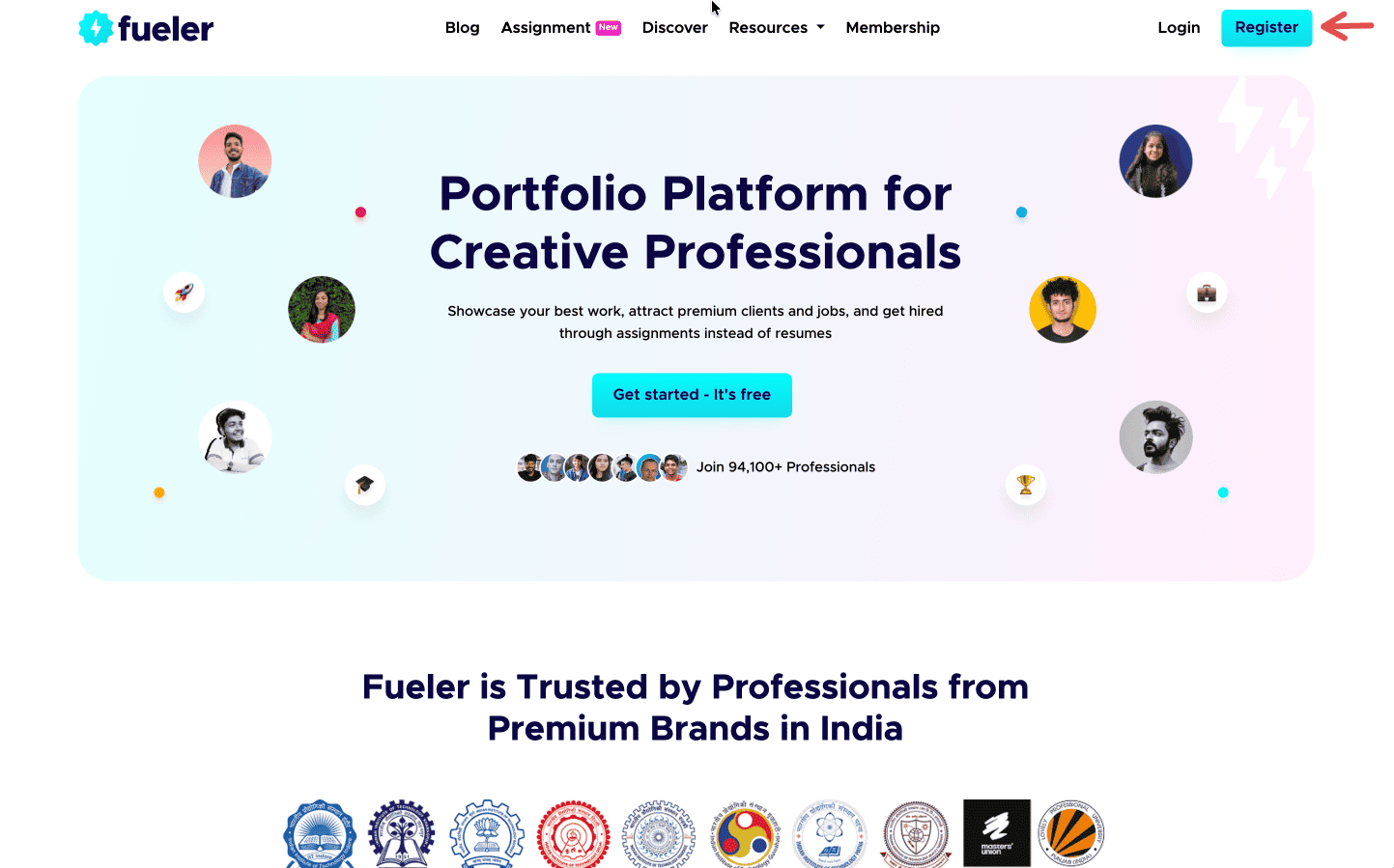
Step 1: Sign up on Fueler.
Head to Fueler.io and create your free account.
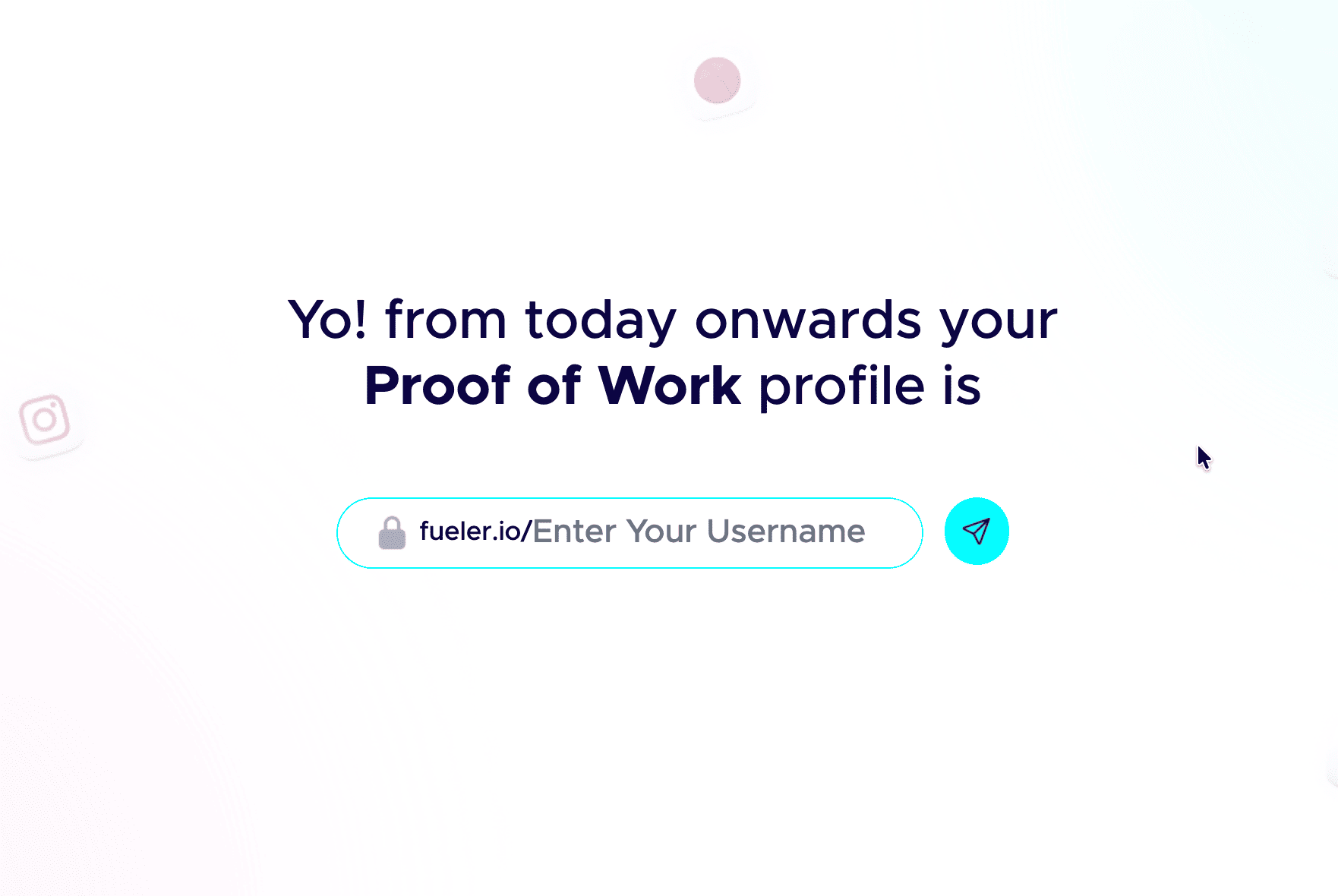
Step 2: Pick a professional handle.
Your handle shows up in your public link, so keep it clean and grown-up. Don’t add nicknames and random numbers. Your name or a simple version of it works best.
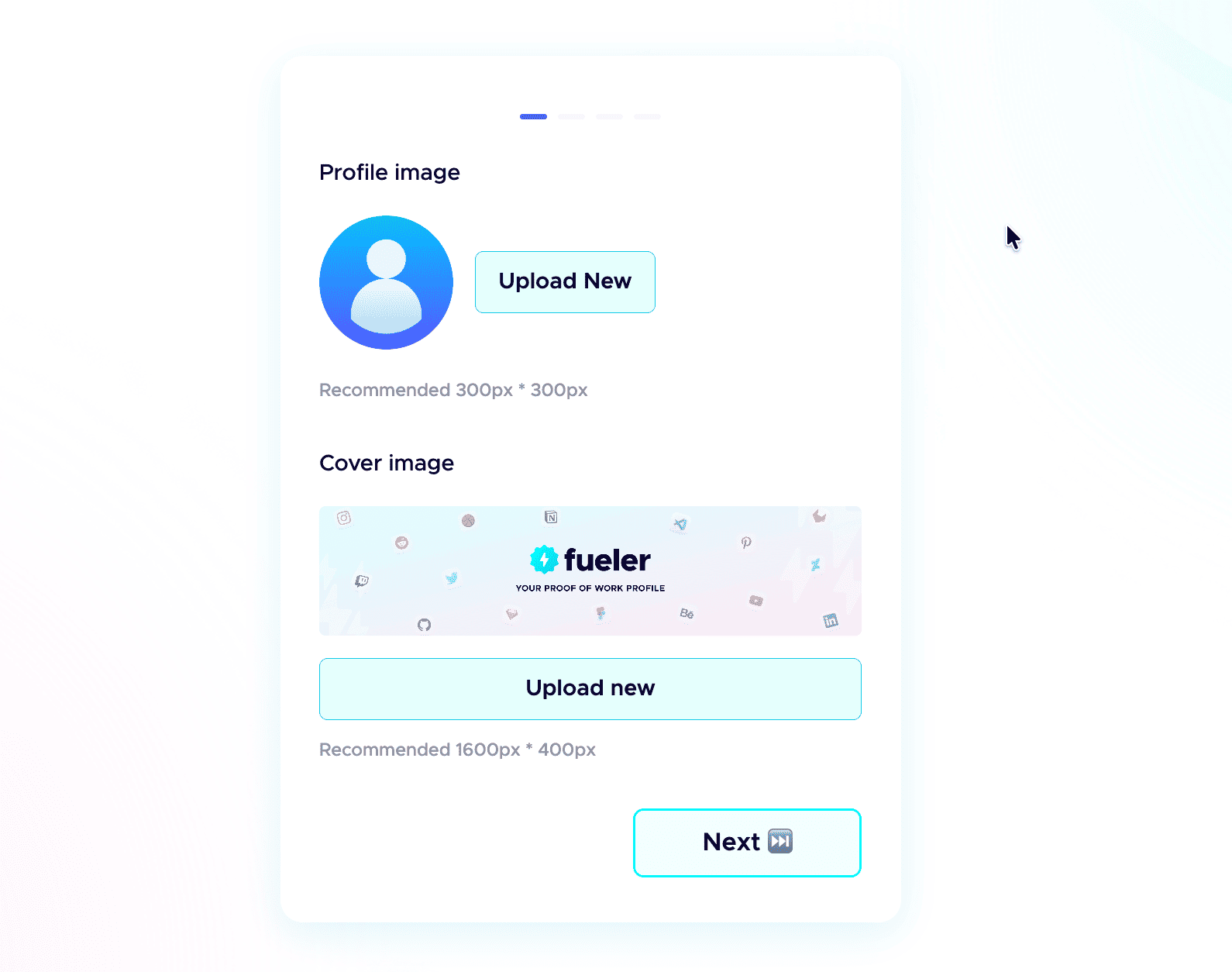
 Step 3: Add a professional profile picture.
Use the same kind of professional photo you would put on LinkedIn. Clear face, good lighting, and a simple background. People trust a real face more than an empty avatar.
Step 4: Write a strong header.
The header is the first thing anyone sees. In one or two short lines, say who you are, what you do, and the kind of work you have done. Make it specific, not vague.
Step 5: Add a short bio.
Tell people who you are and what you do in a few plain sentences. No buzzwords, just enough for a recruiter to get you in five seconds.
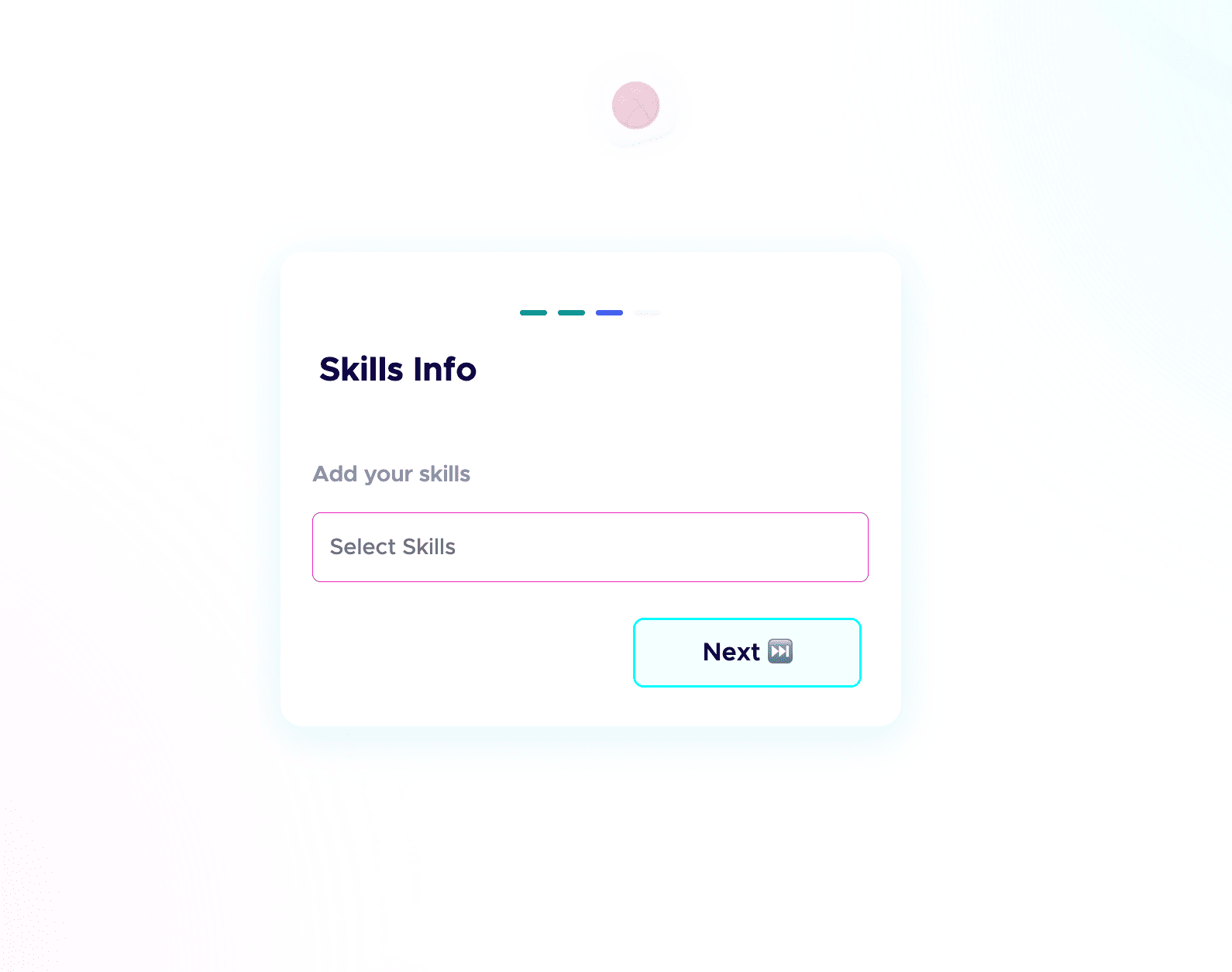
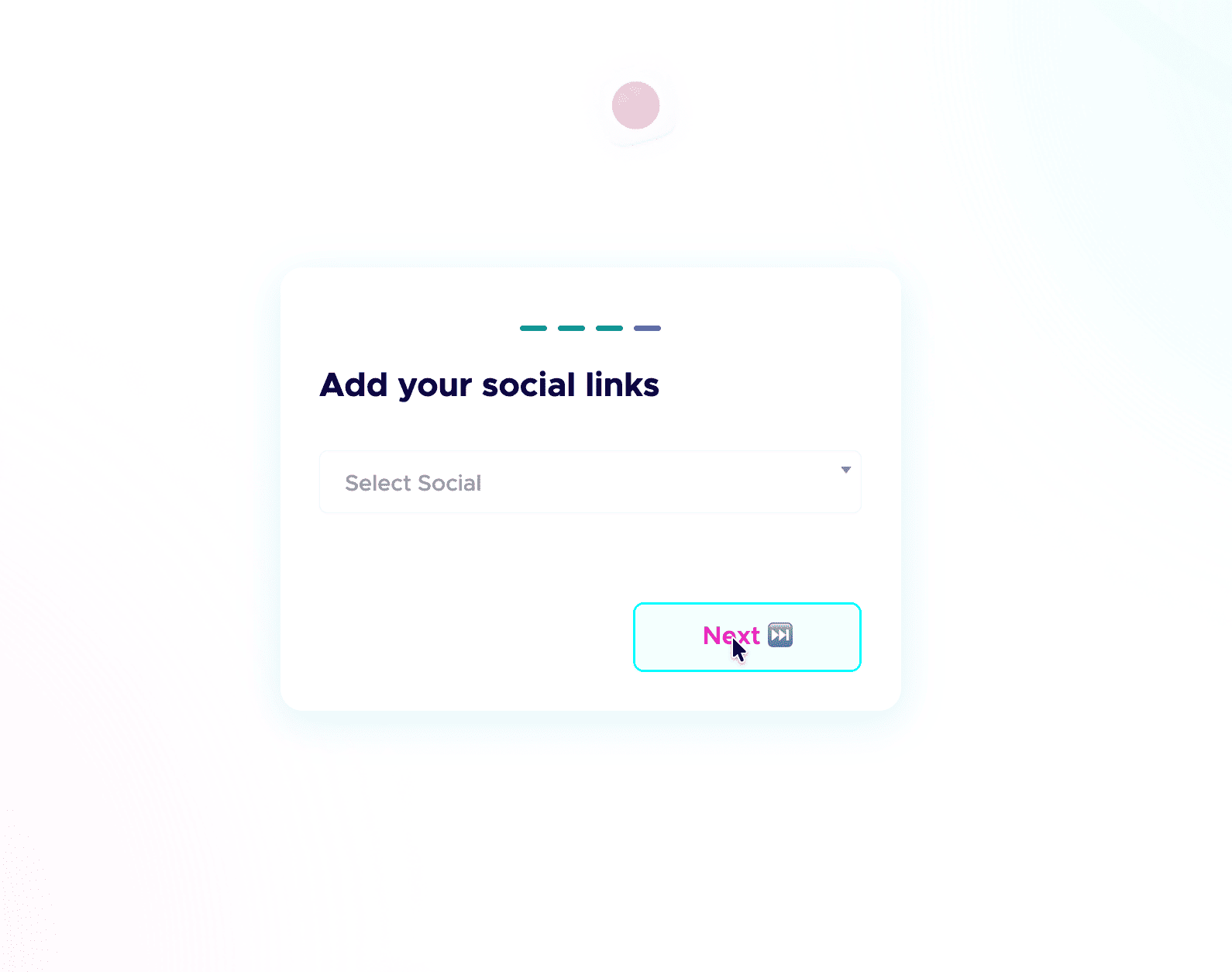
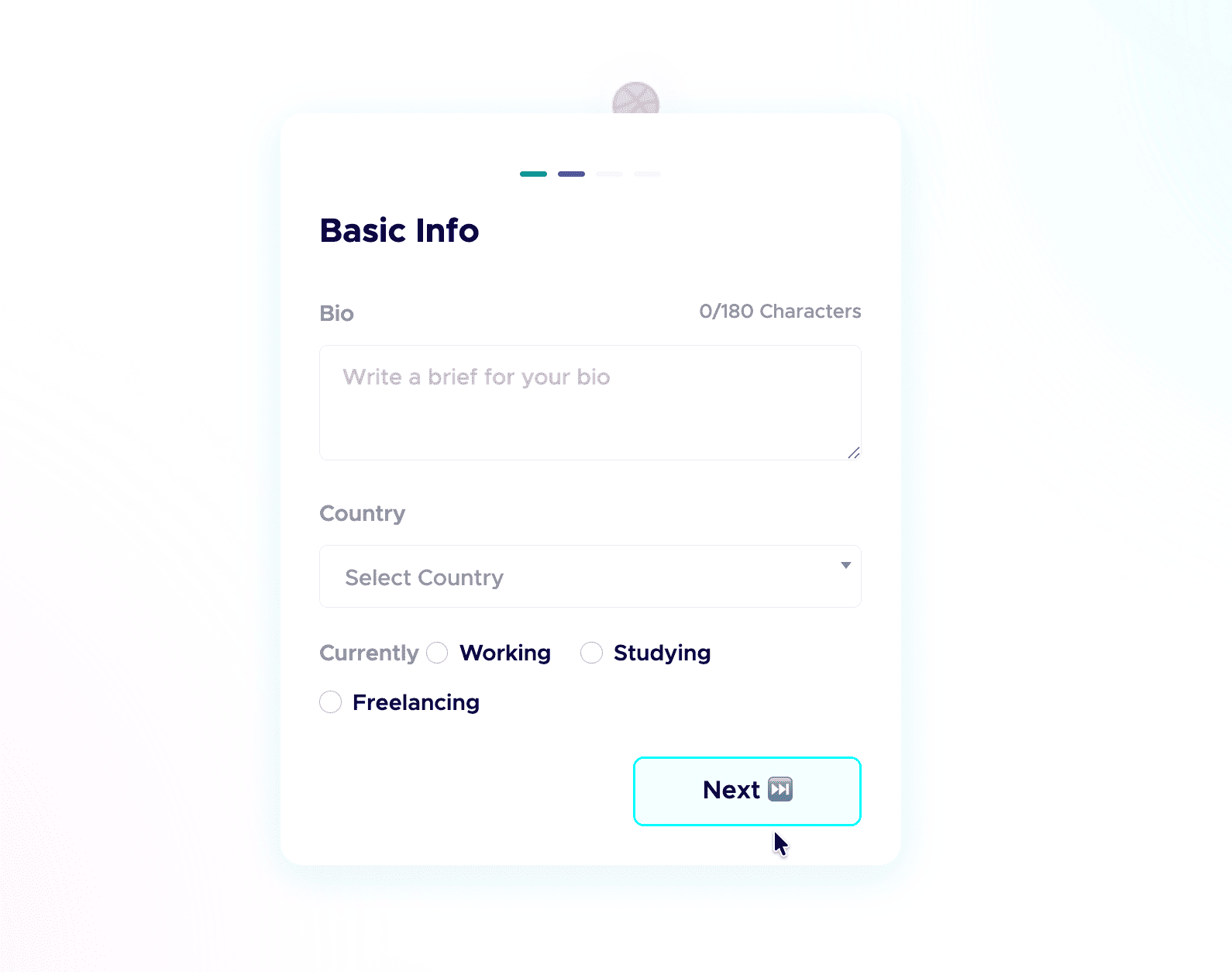 Step 6: Add your skills and social links.
List the skills you are good at and actually want to be hired for, and connect your socials. People do check your profiles, and active socials build credibility before the first call. Students starting from scratch can follow my student guide to their first portfolio.
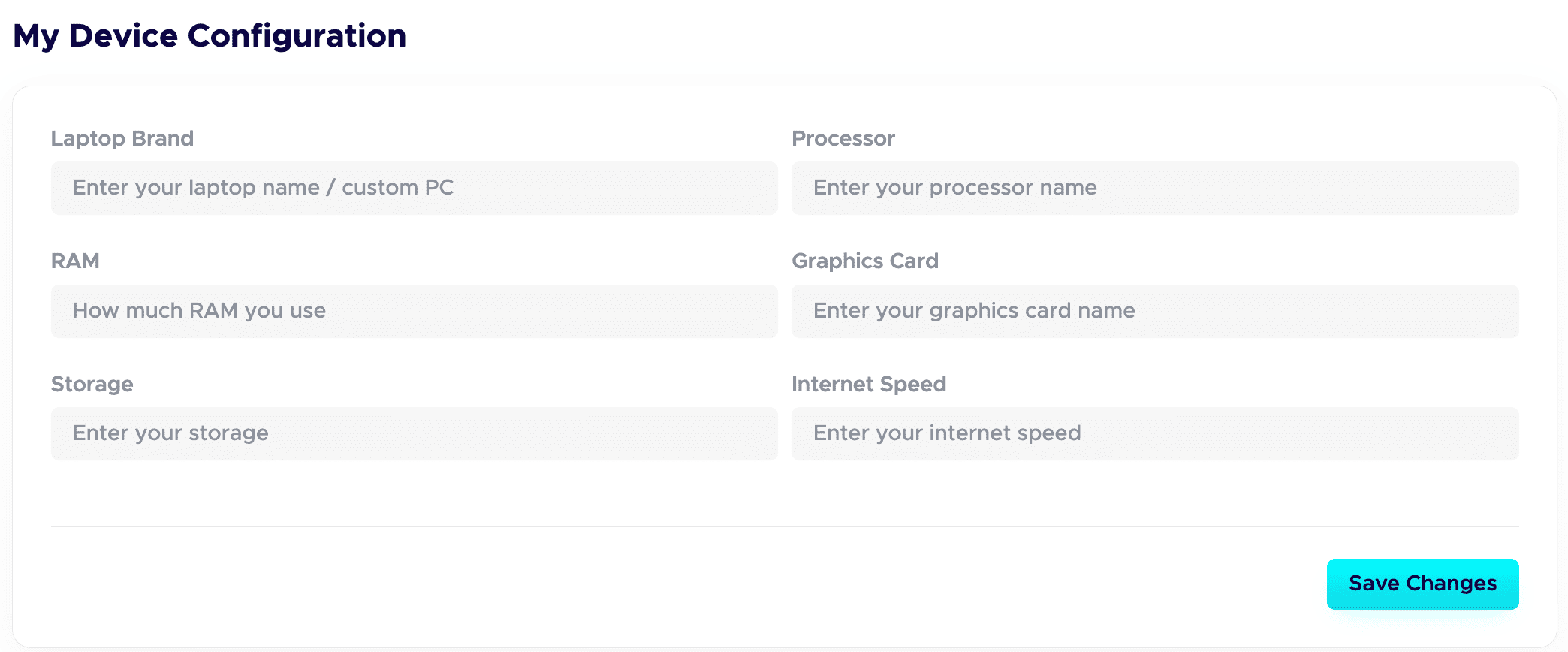
 Step 7: Fill in your Device Configuration.
In your dashboard, set up the Device Configuration section. Add the details about the device you are using. Remote-first companies want to know you have a solid setup to work from. A good setup quietly adds leverage and signals you are ready to deliver.
Step 8: Publish your projects with all the details.
This is a game-changer. Give each project a clear title and a detailed description. Walk through your process: your thinking, the tools you used, the choices you made, and the result. Companies care about how you work, not just the final image.
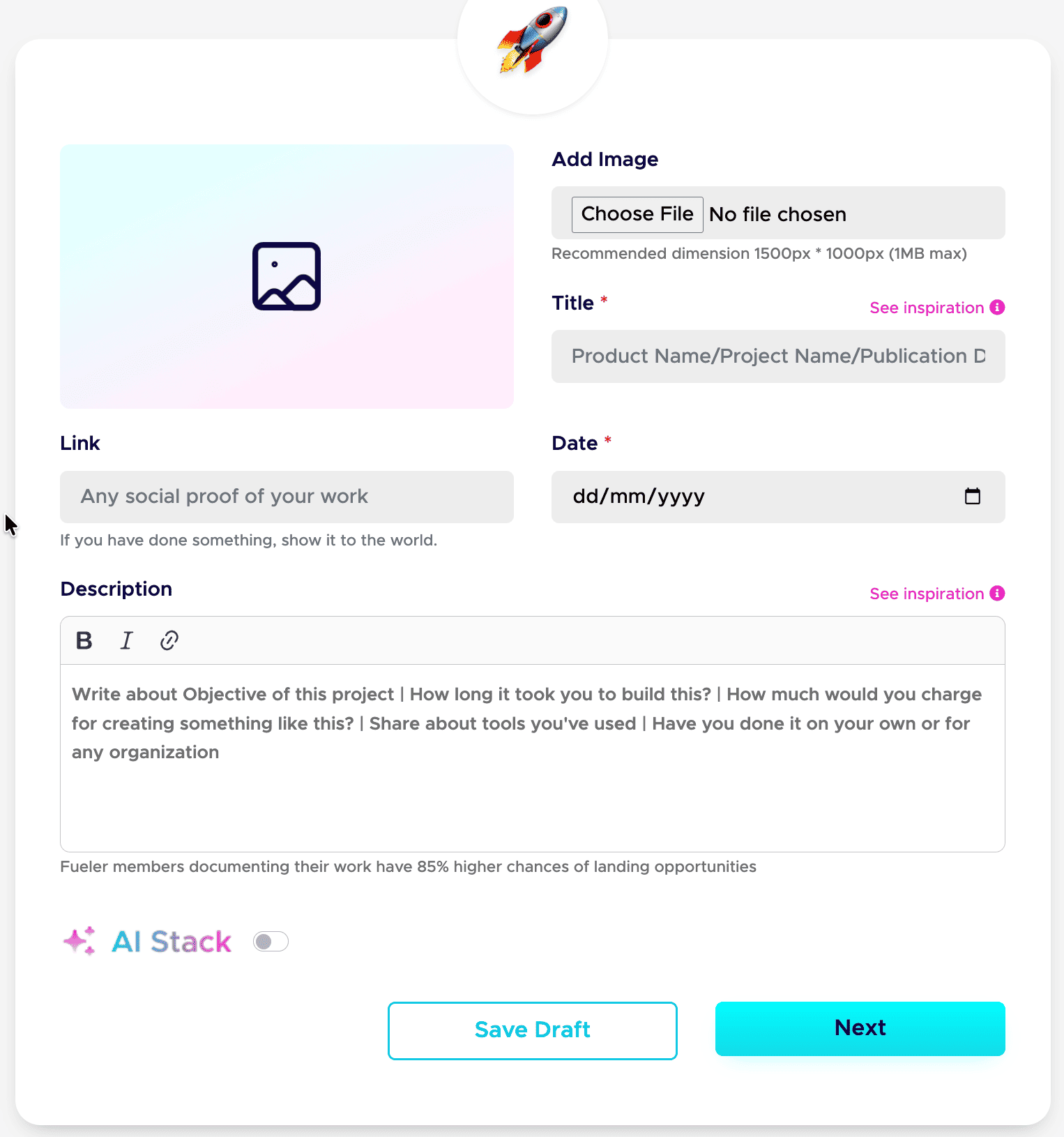
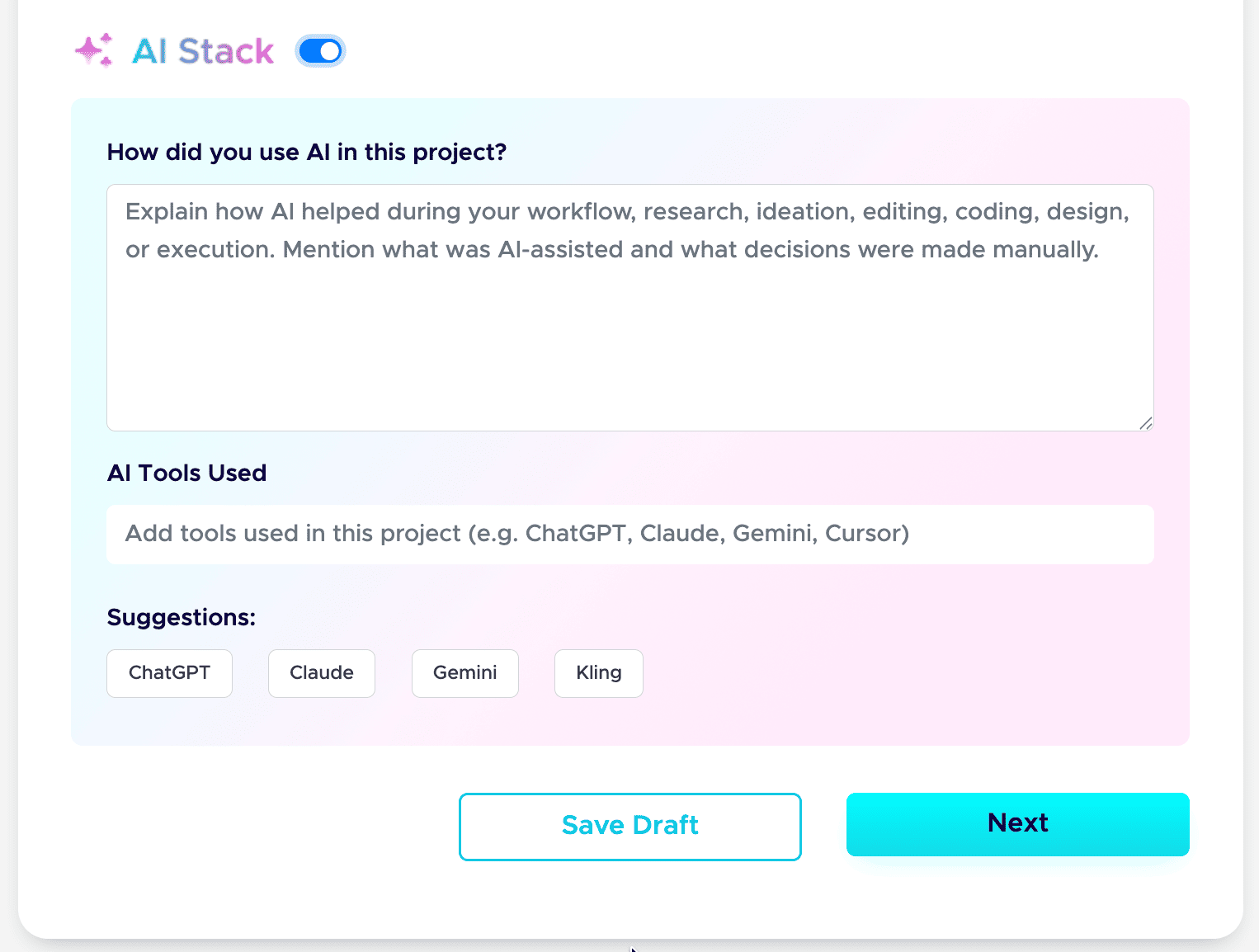
Step 9: Add your AI Stack to each project.
AI is part of real work now, so show it honestly. Use the AI Stack feature to explain how you used AI, which tools you used, and what you did manually. This builds trust instead of raising doubt. Here is the full guide: how to add AI Stack on Fueler.
That is the whole setup. Do these nine steps well, and your profile stops being a static page and starts working as a hiring asset. If you want a tighter version to follow next time, save my 6-step formula for a Fueler portfolio and my breakdown of a career portfolio that actually gets jobs.
Do this once, and you have a link you can drop into your resume, your email signature, and every job application.
Real-World Use Cases: How Non-Design Professionals Showcase Hidden Execution Machinery
To understand how an outcome-focused portfolio outpaces visual layouts, let us look at how specialized professionals present their day-to-day achievements. An enterprise growth marketer, for instance, cannot show their real value through static image placeholders or color palettes.
Instead, they need an infrastructure that allows them to write detailed breakdowns of their campaign testing frameworks, budget distributions, and real conversion data. Presenting these details alongside verified live links helps them prove their strategic expertise to potential clients.
Similarly, technical writers and product managers require text-friendly environments that emphasize documentation quality, system logic, and cross-functional leadership over visual design. This clean approach ensures that your deep engineering or strategic work is never overshadowed by unnecessary decoration.
- Growth Marketing Profiles: Growth specialists can easily outline their core traffic acquisition channels, scaling strategies, and conversion metrics alongside direct links to their live landing pages.
- Product Management Ledger: Product leaders can document long-term roadmaps, product constraint challenges, and user testing frameworks without getting slowed down by manual design edits.
- Technical Writing Hubs: Professional writers can organize their documentation guides, API reference sheets, and content strategies into clean, scannable folders that show off their communication clarity.
- SEO Specialist Dashboards: Search professionals can display real organic traffic growth curves, keyword ranking improvements, and technical optimization frameworks alongside direct links to their active client case studies.
- Software Engineering Portfolios: Developers can combine deep architectural notes, systemic problem-solving examples, and direct repository links into clean profiles built for technical recruiters.
Why It Matters
Reviewing these specialized use cases shows why professional storytelling depends heavily on context, data clarity, and accessible proof. Tailoring your portfolio format to match your actual day-to-day role ensures your profile resonates with corporate decision-makers who buy outcomes rather than aesthetics.
How does this connect to Building a Strong Career or Portfolio?
Modern enterprise recruitment relies on speed, skill validation, and undeniable proof of execution. If you keep hiding your strategic achievements inside static layout systems, you add unnecessary friction to your career progression. Transitioning your projects to an outcome-first platform like Fueler helps you build a clean, searchable career ledger that highlights your real business impact. When you focus on showcasing work online through verified data, live production links, and structured case studies, you completely bypass outdated resume screening processes. This performance-driven transparency builds immediate trust with high-intent companies, ensuring your background stands out for premium consulting contracts and executive positions.
Final Thoughts
The global hiring market is undergoing a major shift away from self-reported credentials and toward verified proof of work. Relying on graphic-first tools to show off technical or strategic expertise creates a frustrating disconnect that can keep you from landing top-tier career opportunities. Your professional equity is built on the real business problems you solve, the code you ship, and the revenue pipelines you optimize. Prioritizing clear data density over decorative design elements ensures your digital portfolio works as an automated opportunity generator.
FAQ
Why should non-designers look for an alternative to Canva portfolios?
Non-designers need tools that focus on data density, live links, and searchable text over absolute layout design. Graphic tools often hide technical expertise behind rigid templates that automated candidate screening software cannot read properly.
How do proof-of-work platforms improve search engine discoverability?
Dedicated platforms build their layout systems around clean semantic code, optimized schema structures, and fast loading speeds. This layout architecture allows generative answer engines and traditional search bots to easily crawl and surface your career milestones.
Can I still use graphic design tools while maintaining a proof-of-work portfolio?
Yes, you can absolutely use graphic platforms to style individual marketing images or build custom slide decks. You can then easily link or embed those visual assets within an outcome-focused portfolio platform to preserve deep business context.
What should a technical case study look like on a proof platform?
A strong technical case study should clearly outline the initial business challenge, your specific execution strategy, the tools used, and quantifiable performance metrics. Always include active links to your live assets or production repositories to maximize trust.
How do automated candidate screening tools read graphic portfolio links?
Most automated screening tools fail to extract nested text strings from highly stylized graphic layouts or heavy image files. This often results in corrupted profiles, missing employment history, and your application being filtered out by automated screening routines.
Why 100,000+ professionals use Fueler
Fueler helps professionals showcase proof of work through projects, assignments, case studies, and achievements.
- Thousands of professionals use Fueler to create their digital portfolio
- Thousands of projects are published on Fueler. Check here
- Startups and Companies hire through proof of work on Fueler
- Used by freelancers, creators, marketers, video editors, writers, designers, and product managers
Our mission is to help the next 100 million professionals build a verified professional identity through proof of work

What should you do next?
You've read the article. Now turn your skills into proof of work and unlock more opportunities.
Build your proof of work portfolio
Create a clean portfolio with projects, assignments, resumes, and AI stack details that companies actually want to see.
Create your Fueler portfolio →Apply through assignments, not resumes
Stand out by solving real tasks from companies hiring on Fueler.
Explore assignments →Get discovered by companies
Make your work public and let recruiters discover your skills through actual projects instead of keywords.
Get discovered →
