Why Professionals Are Choosing Fueler Over Webflow Portfolios?

Riten Debnath
14 Jul, 2026
Building a personal website used to feel like an elite flex. Then you actually tried doing it on Webflow, spent three weekends debugging a broken container on mobile viewports, and realized you still hadn’t published a single piece of actual work. In 2026, clients do not care about your parallax scrolling; they care about your proof of work.
I’m Riten, founder of Fueler, a skills-first portfolio platform that connects talented individuals with companies through assignments, portfolios, and projects, not just resumes/CVs. Think Dribbble/Behance for work samples + AngelList for hiring infrastructure.
Let's be completely honest: nobody has time to become a part-time front-end engineer just to showcase their marketing campaigns or code repositories. This guide breaks down why top-tier operators are abandoning complex design canvases for speed, utility, and discoverability. You will discover exactly how to display your outcomes clearly, cut down your time-to-publish to minutes, and build a profile that lands high-paying contracts without the technical headache.
The Massive Setup Time Bottleneck
Webflow is an incredible piece of engineering for building complex landing pages, but using it for a personal portfolio is total overkill. The sheer volume of design decisions from typography scales to custom animations creates a massive cognitive load before you even upload a single project asset.
Most professionals suffer from portfolio procrastination because the barrier to entry is simply too high. You open a blank canvas, get overwhelmed by CSS grid settings, and close the tab.
- Zero Design Learning Curve: You do not need to master padding, margins, or responsive breakpoints just to showcase your work online.
- Instant Publishing Infrastructure: Upload your documents, live links, and media files in under five minutes rather than spending weeks tweaking templates.
- Focus on Content Quality: Spend your limited energy detailing your actual role and project outcomes instead of fixing broken mobile layouts.
- Elimination of Choice Paralysis: Pre-built, high-converting layouts mean you never waste hours deciding where a specific button should sit.
- Rapid Multi-Project Management: Adding your fifth or tenth project takes seconds, keeping your public profile consistently updated with fresh work.
Why It Matters
In the talent market, speed wins. If a dream client asks for your work samples, spending two days updating a custom website means you lose the deal to someone who shared their proof of work instantly.
The Extreme Cost of Visual Maintenance
A portfolio is a living document, but custom website builders turn minor updates into a terrifying chore. If you change a global class or accidentally alter a symbol structure, your entire layout can break across multiple device screens without you realizing it.
Maintaining a custom site requires continuous QA testing. Every time you finish a new project, you face a fresh round of layout design and asset optimization.
- Layouts That Never Break: The core structure remains completely stable regardless of how many new projects or files you upload.
- Automatic Mobile Optimization: Every single project page displays flawlessly on smartphones and tablets without manual viewport adjustments.
- Zero Technical Debt Burden: No custom code scripts or external plugins to maintain, patch, or troubleshoot over the years.
- Stress-Free Project Additions: Drop in your text, attach your evidence, and hit publish without fear of messing up existing pages.
- Consistent Typography Hierarchy: Your fonts, spacing, and image alignment remain clean and readable across the entire platform automatically.
Why It Matters
Your portfolio should be a lightweight utility, not an engineering liability. Lowering maintenance friction ensures you actually document your career wins instead of letting your site sit abandoned for months.
The Lack of Native Discovery Networks
When you launch a standalone website, you are publishing on a digital desert island. You have to do all the heavy lifting to drive traffic through SEO or social media distribution, because the platform itself possesses zero internal discovery mechanics.
A standalone site does not actively work for you while you sleep. It simply sits there waiting for someone to manually type your exact URL.
- Built-In Professional Ecosystem: Your profile lives inside a curated space where founders and project managers actively source proven operators.
- Organic Traffic Verification: Internal search functionality allows teams to find your specific skill sets based on actual project tags.
- Credibility via Peer Association: Sharing space with other high-performing builders instantly elevates your perceived authority in your niche.
- Dynamic Search Engine Indexing: Clean, semantic code structures ensure your individual project pages rank highly for specific search terms.
- Direct Professional Networking Opportunities: Connect instantly with other creators and potential collaborators who are working on similar initiatives.
Why It Matters
A portfolio shouldn't just be a storage box for your work; it should actively generate inbound opportunities. Joining a dedicated network turns your proof of work into a passive discovery tool.
The Pain of Custom Analytics and Forms
Getting people to look at your site is only half the battle. If you want to know who is visiting or let them message you safely, you have to manually configure third-party tracking scripts, set up form handlers, and debug spam filters.
Every external integration adds weight to your site and introduces potential privacy and security compliance issues that you must handle alone.
- Out-of-the-Box Traffic Insights: View clear metrics on project views and engagement without pasting complex Javascript code tracking snippets.
- Secure Integrated Messaging Channels: Prospective clients can reach out directly through native forms without exposing your personal inbox.
- Zero External Plugin Hassles: Avoid the security risks and loading delays associated with stacking multiple third-party tools.
- Clean Data Privacy Management: Native infrastructure handles user interactions safely, keeping your profile compliant with basic digital privacy standards.
- Optimized Lead Capture Flows: Simplified contact options reduce friction, making it incredibly easy for a founder to initiate a project conversation.
Why It Matters
Minimizing the steps between a client viewing your work and sending a message directly impacts your conversion rate. Clean, built-in loops turn casual views into paid discovery calls.
The Resilient Proof of Work Standard
Modern remote teams do not have the patience to read generic resumes or navigate hyper-stylized websites that hide the actual deliverables. They want to see the unedited raw files, the logic behind your decisions, and the measurable business impact.
A great portfolio focuses heavily on context, execution steps, and final metrics rather than flashy animations that slow down page loads.
- Clear Contribution Contextualization: Clearly define what your specific role was in a team project to avoid any client confusion.
- Direct Evidence Embedding Capabilities: Showcase live links, live dashboards, Figma frames, or GitHub repositories directly within your project page.
- Focus on Practical Metrics: Highlight conversion rates, code efficiencies, or revenue generated in structured, scannable text fields.
- Structured Problem-Solving Timelines: Walk potential employers through your exact methodology from initial brief to final execution phase.
- Verified Project Authenticity Signals: Presenting your work in a standardized format instantly builds trust with cautious hiring managers.
Why It Matters
Aesthetics get attention, but proof of work gets you paid. Standardizing how you present your outcomes removes fluff and highlights your true competence.
The High Cost of Premium Hosting
Running a highly customized portfolio site on professional visual development platforms gets expensive quickly. Paying steep monthly or annual hosting fees just to host a basic multi-page personal site puts unnecessary financial strain on freelancers and early-career operators.
If you let your paid subscription lapse, your custom site goes dark, destroying your professional internet presence instantly.
- Highly Sustainable Pricing Structures: Maintain your digital presence without committing to heavy, enterprise-grade monthly web hosting fees.
- Permanent Live Project URLs: Rest easy knowing your links will never go offline due to a missed billing cycle.
- Scalable Asset Management Storage: Upload heavy case study documents, slide decks, and high-resolution images without hitting low limits.
- No Hidden Premium Paywalls: Access essential publishing and link-sharing features without being forced into unexpected tier upgrades.
- Affordable Professional Identity Upkeep: Keep your overhead low so your freelance business or career transitions remain financially lean.
Why It Matters
Your professional home should be a low-cost asset, not an expensive monthly liability. Lowering your digital footprint costs allows you to invest capital back into learning and tooling.
The Complicated Asset Collaboration Deficit
When you collaborate on a major project with a team, showcasing that work usually requires everyone to build separate case study pages. Traditional website setups make it incredibly difficult to link co-creators together under a single, unified project node.
Manually cross-linking individual websites takes forever and ruins the collaborative context of modern digital work.
- Seamless Multi-Author Project Tagging: Credit your co-designers, developers, or copywriters on a single project page instantly.
- Unified Collaborative Portfolio Networks: Clicking a teammate's name instantly shows their profile, building an interconnected web of trust.
- Simplified Team Contribution Auditing: Clients can instantly see exactly who did what on a large-scale enterprise project.
- Amplified Project organic Reach: When multiple collaborators share a single project link, everyone involved benefits from the combined traffic.
- Professional Network Social Proof: Showing that you work well with other verified operators makes you a much lower-risk hire.
Why It Matters
Modern work is collaborative. Showing that you can execute projects within a team structure is an immediate green flag for organizations looking to scale their operations.
The Slow Page Load Speed Trap
Heavy design scripts, massive unoptimized images, and complex animation frameworks frequently slow custom websites to a crawl. If your portfolio takes more than three seconds to load on a mobile device, a busy founder will click away.
Clean code architecture and highly optimized asset delivery are crucial for maintaining user engagement during quick review sessions.
- Lightning-Fast Core Page Loads: Lightweight framework structures ensure your work pops up instantly on any internet connection speed.
- Automatic Multimedia Image Compression: Upload your project screenshots without manually running them through external optimization apps first.
- Clean Global CDN Delivery: Your portfolio loads rapidly for a client in New York or a developer in Bangalore.
- Minimized Script Processing Delays: Stripping away bulky design engines means zero browser lag or scrolling stutters for visitors.
- High Technical Performance Scores: Clean performance signals help your individual links perform better across all major search algorithms.
Why It Matters
Hiring managers are fundamentally impatient people. Eliminating loading friction guarantees that your actual proof of work gets seen before the reviewer loses focus.
How to Create Your Portfolio on Fueler
Setting up your profile is entirely straightforward. There are no grids to configure or templates to buy; the platform focuses entirely on organizing your real-world outcomes.
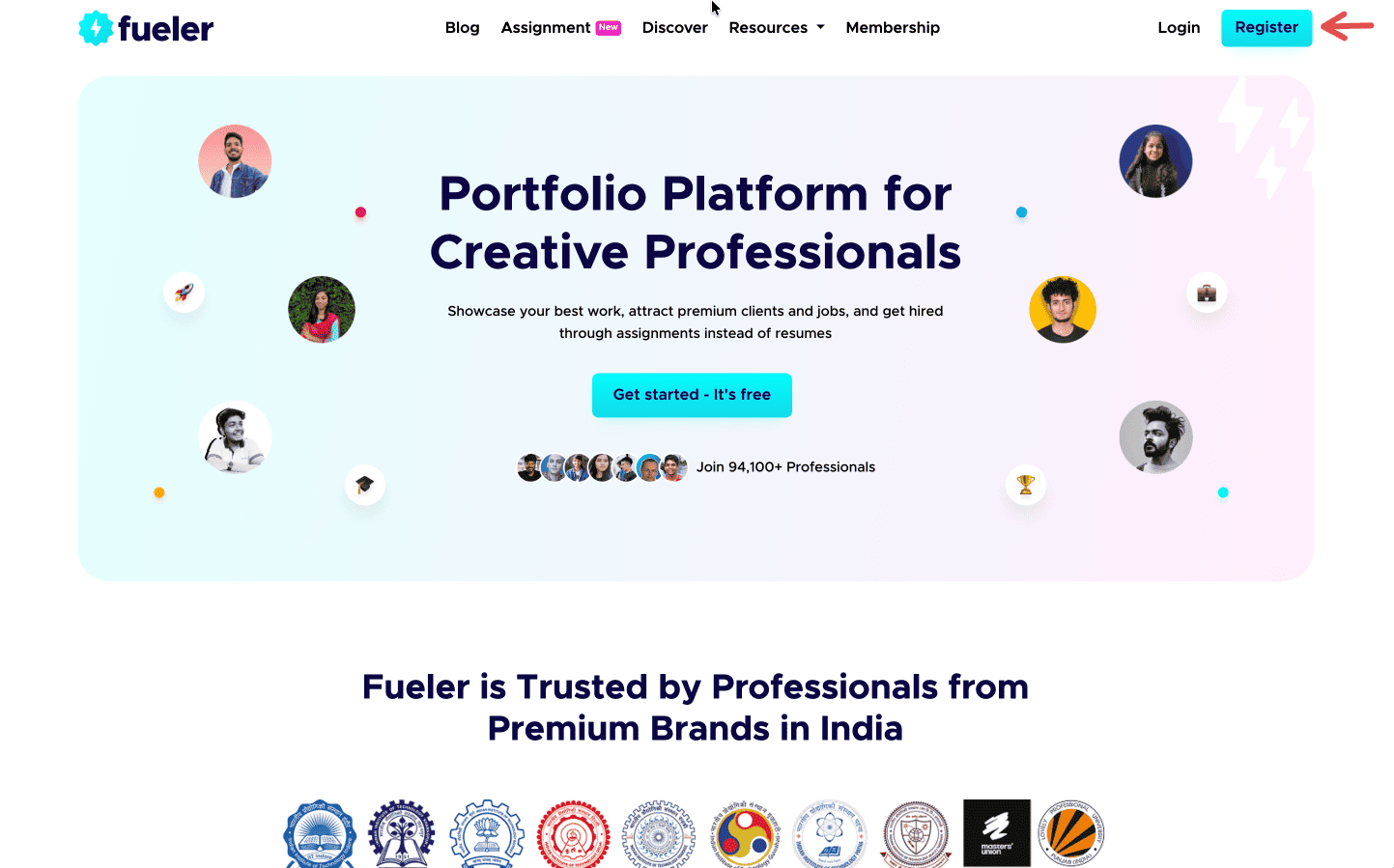
Step 1: Sign up on Fueler.
Head to Fueler.io and create your free account.
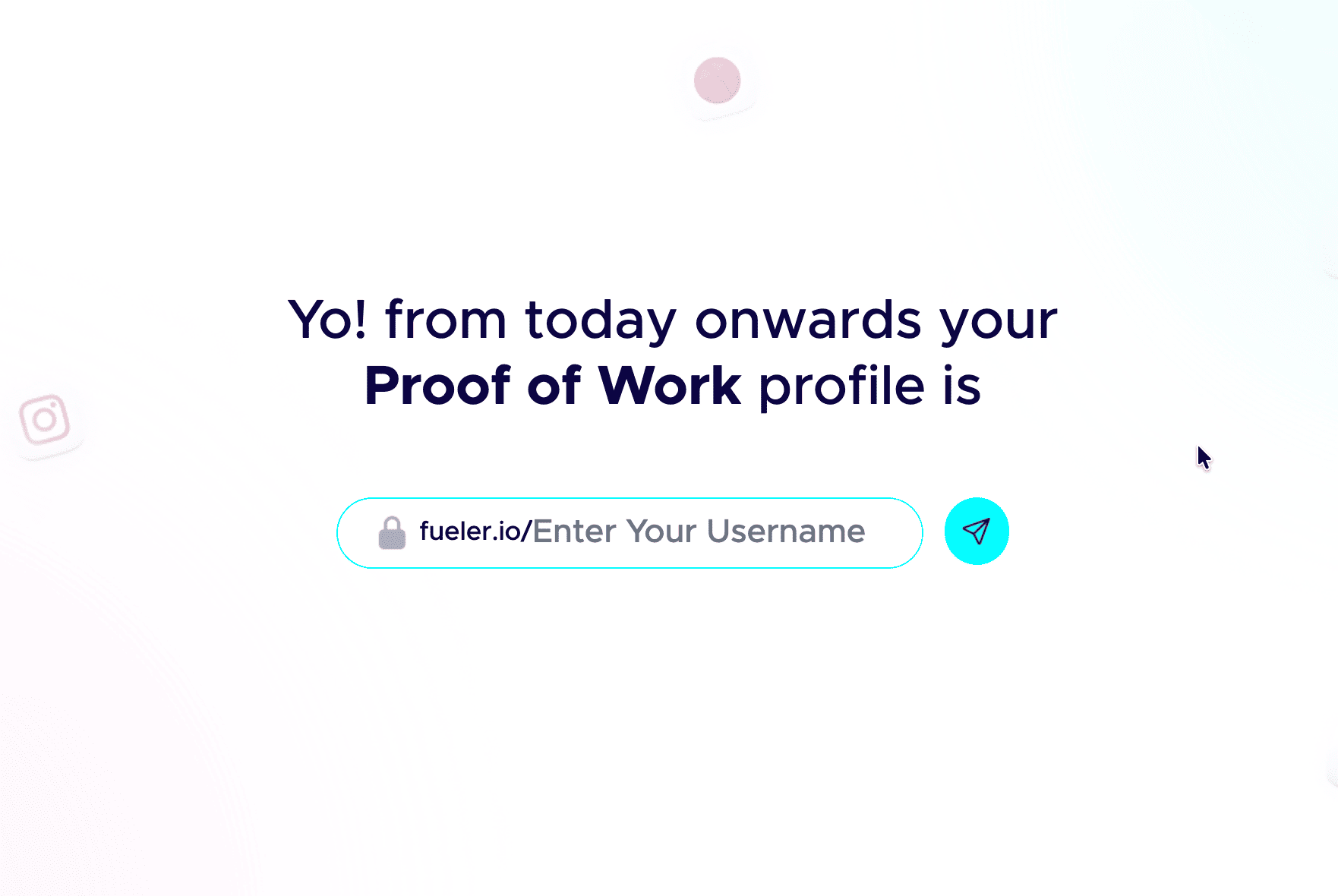
Step 2: Pick a professional handle.
Your handle shows up in your public link, so keep it clean and grown-up. Don’t add nicknames and random numbers. Your name or a simple version of it works best.
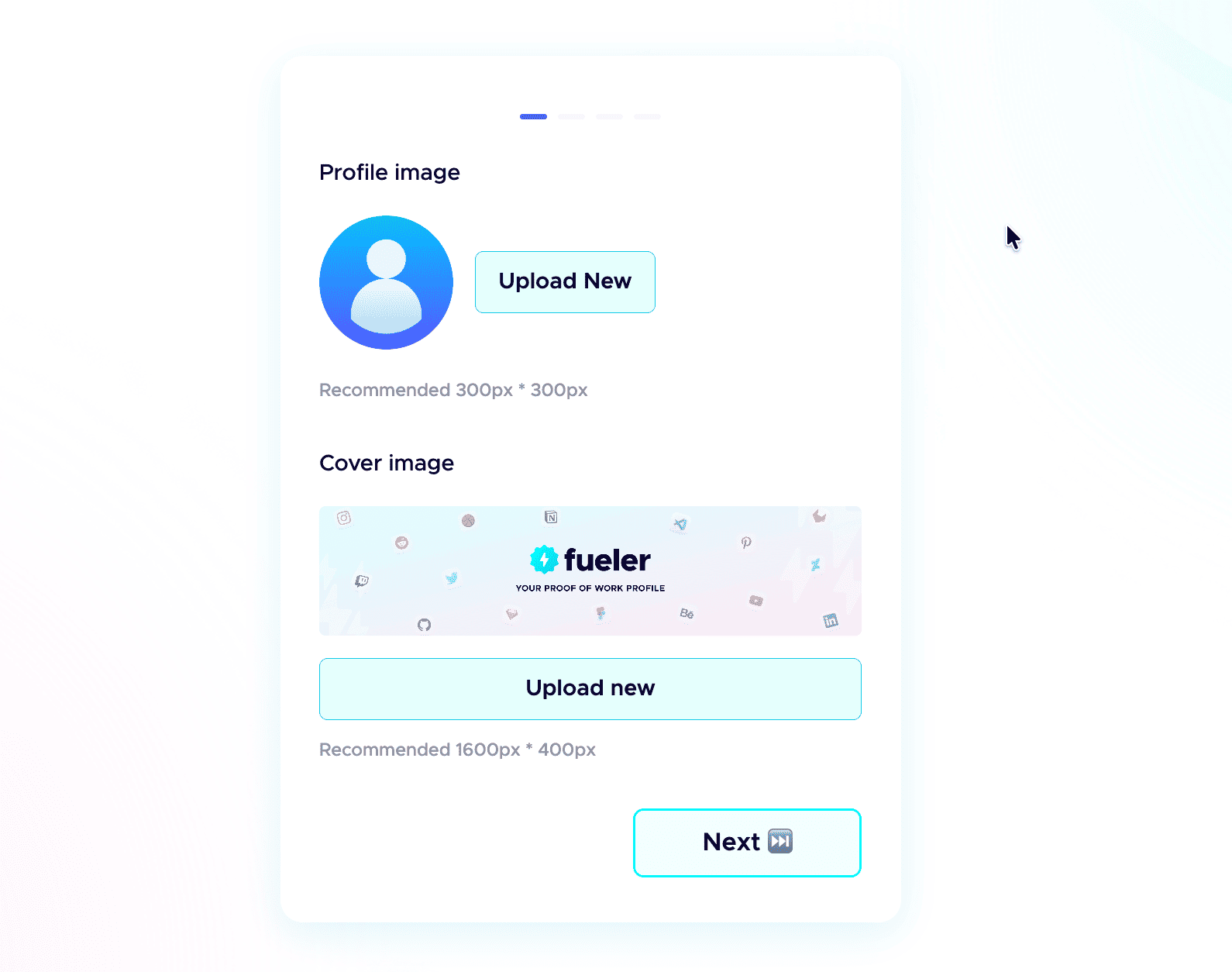
 Step 3: Add a professional profile picture.
Use the same kind of professional photo you would put on LinkedIn. Clear face, good lighting, and a simple background. People trust a real face more than an empty avatar.
Step 4: Write a strong header.
The header is the first thing anyone sees. In one or two short lines, say who you are, what you do, and the kind of work you have done. Make it specific, not vague.
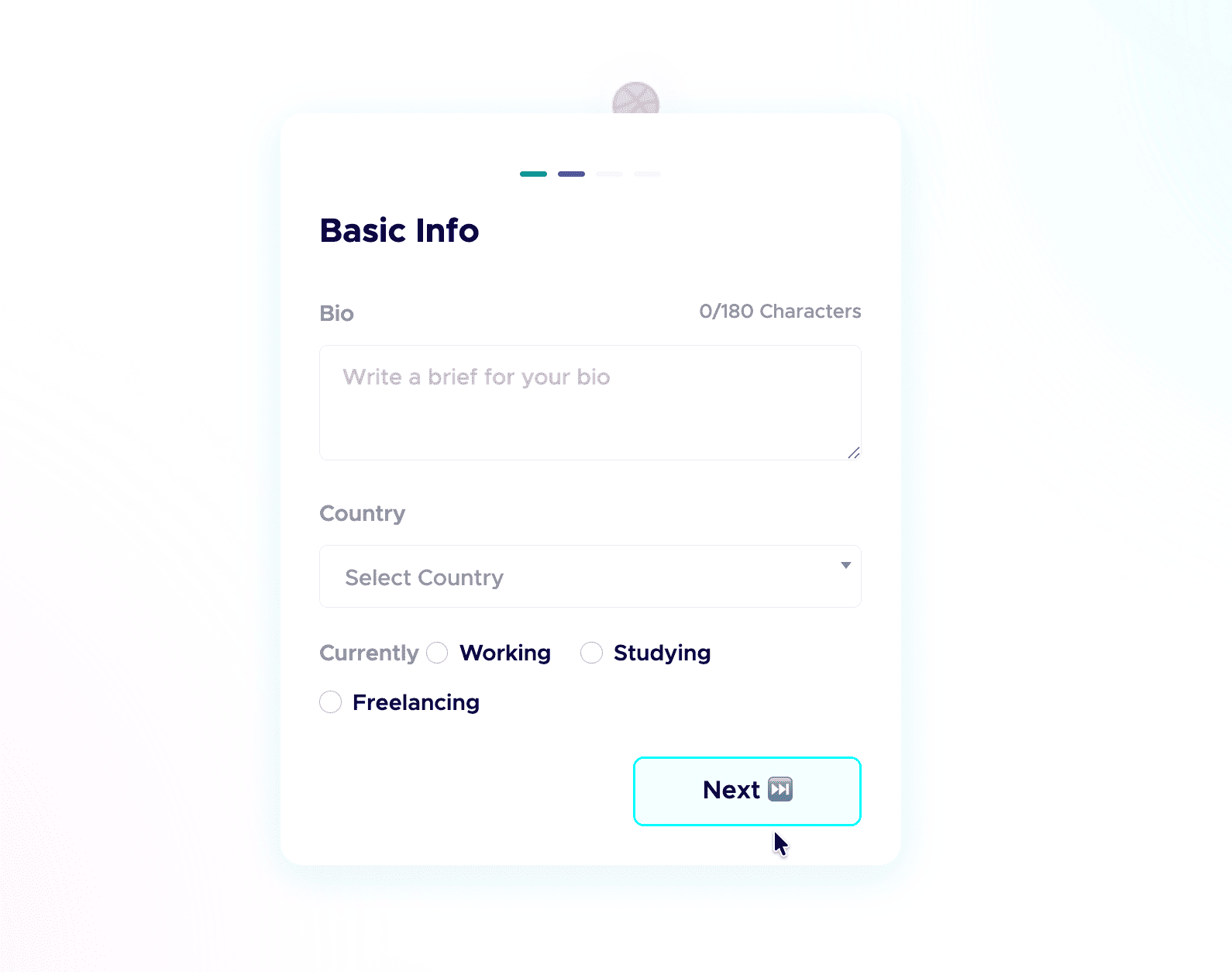
Step 5: Add a short bio.
Tell people who you are and what you do in a few plain sentences. No buzzwords, just enough for a recruiter to get you in five seconds.
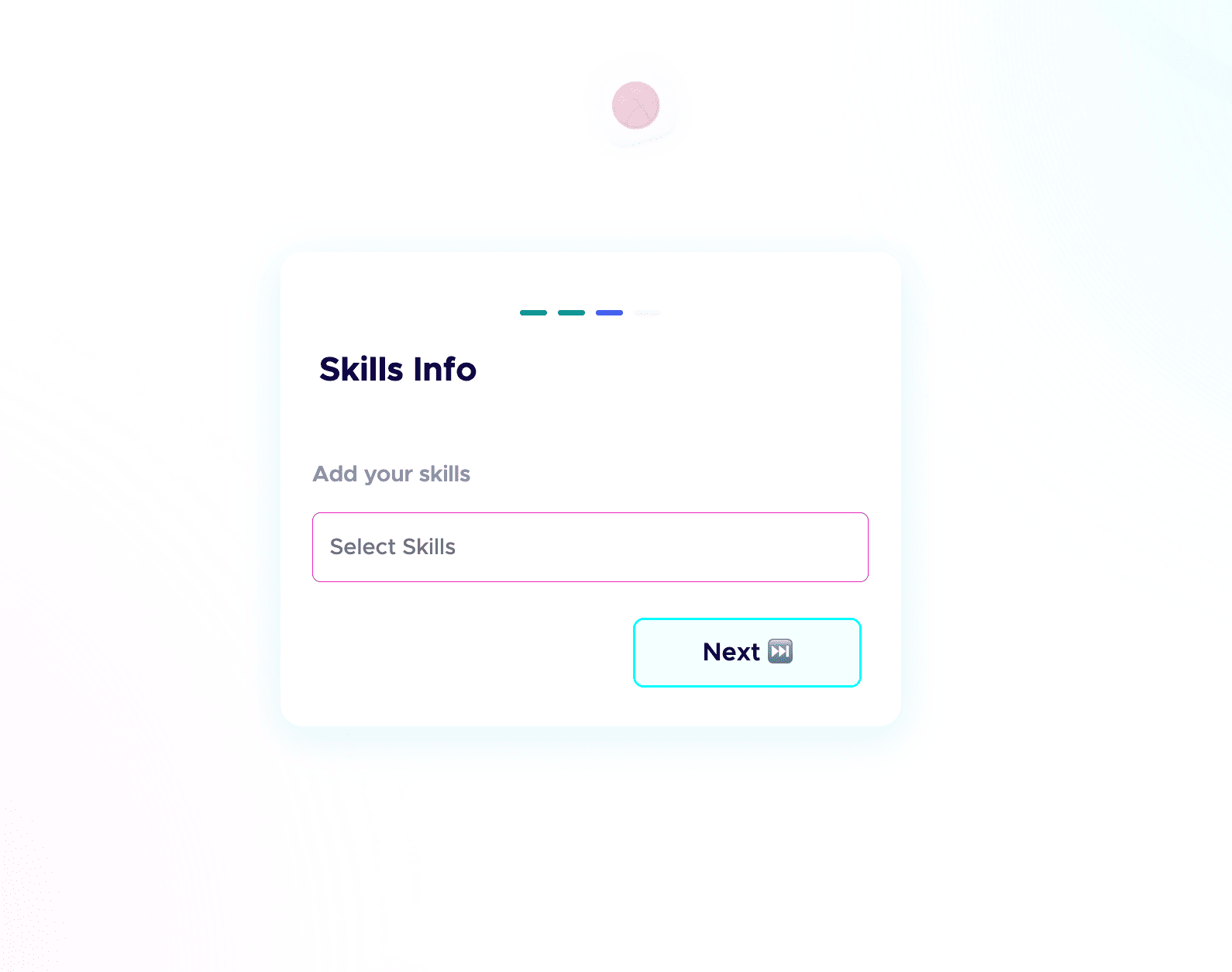
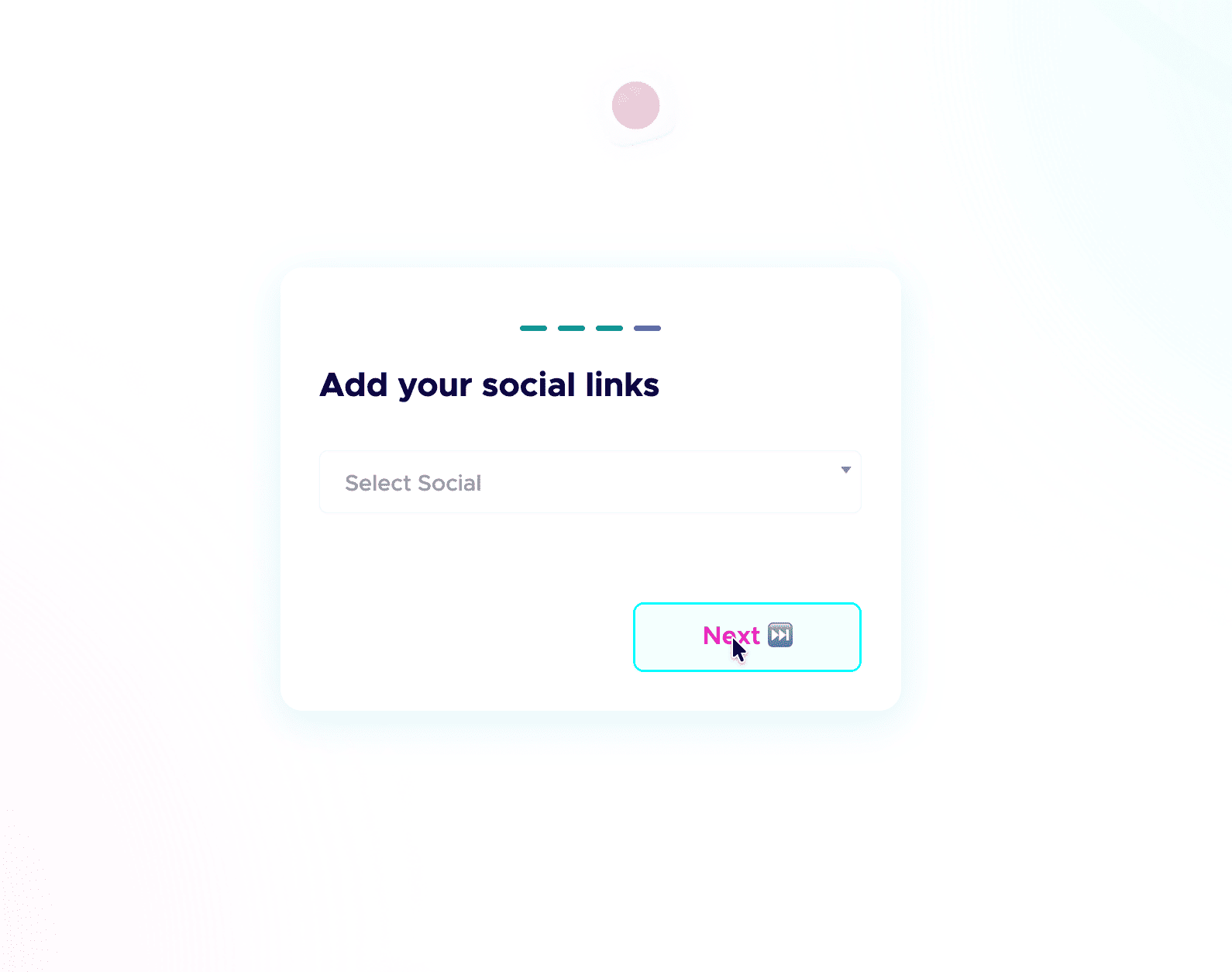
 Step 6: Add your skills and social links.
List the skills you are good at and actually want to be hired for, and connect your socials. People do check your profiles, and active socials build credibility before the first call. Students starting from scratch can follow my student guide to their first portfolio.
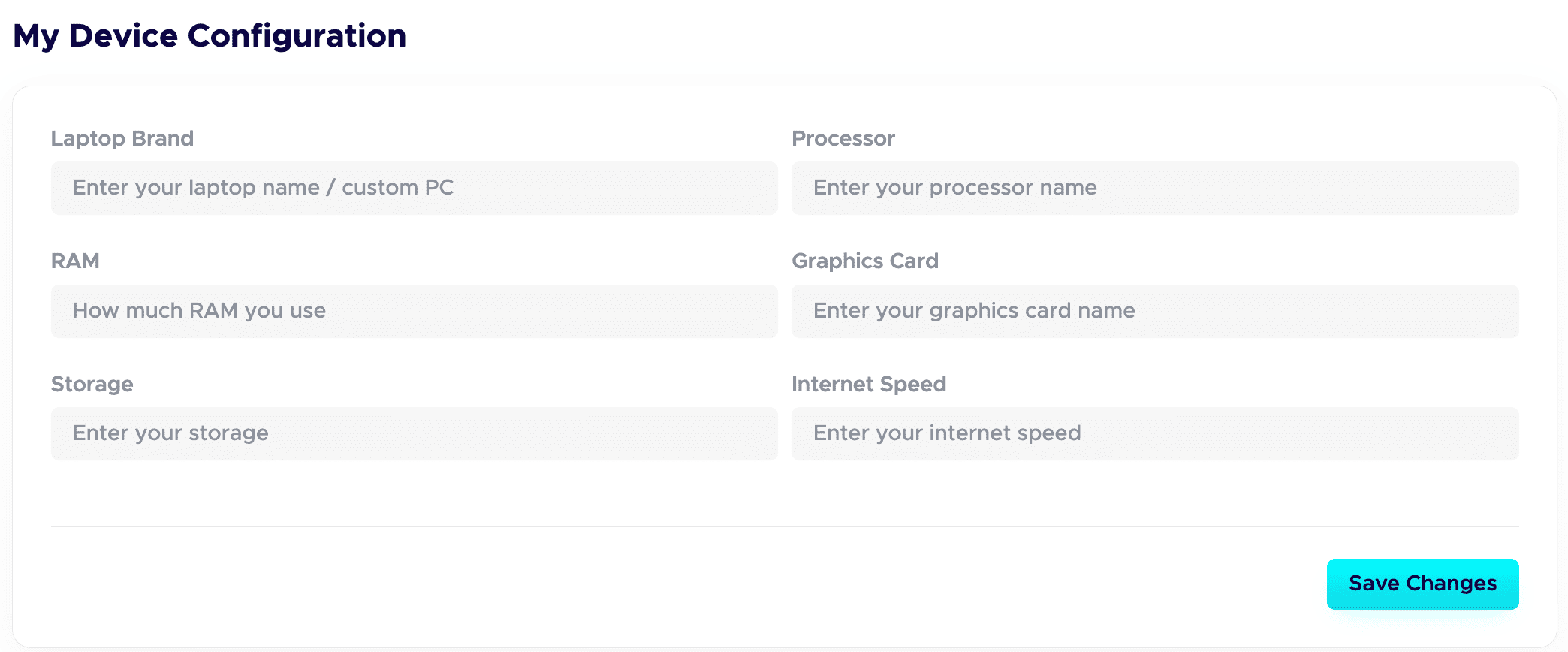
 Step 7: Fill in your Device Configuration.
In your dashboard, set up the Device Configuration section. Add the details about the device you are using. Remote-first companies want to know you have a solid setup to work from. A good setup quietly adds leverage and signals you are ready to deliver.
Step 8: Publish your projects with all the details.
This is a game-changer. Give each project a clear title and a detailed description. Walk through your process: your thinking, the tools you used, the choices you made, and the result. Companies care about how you work, not just the final image.
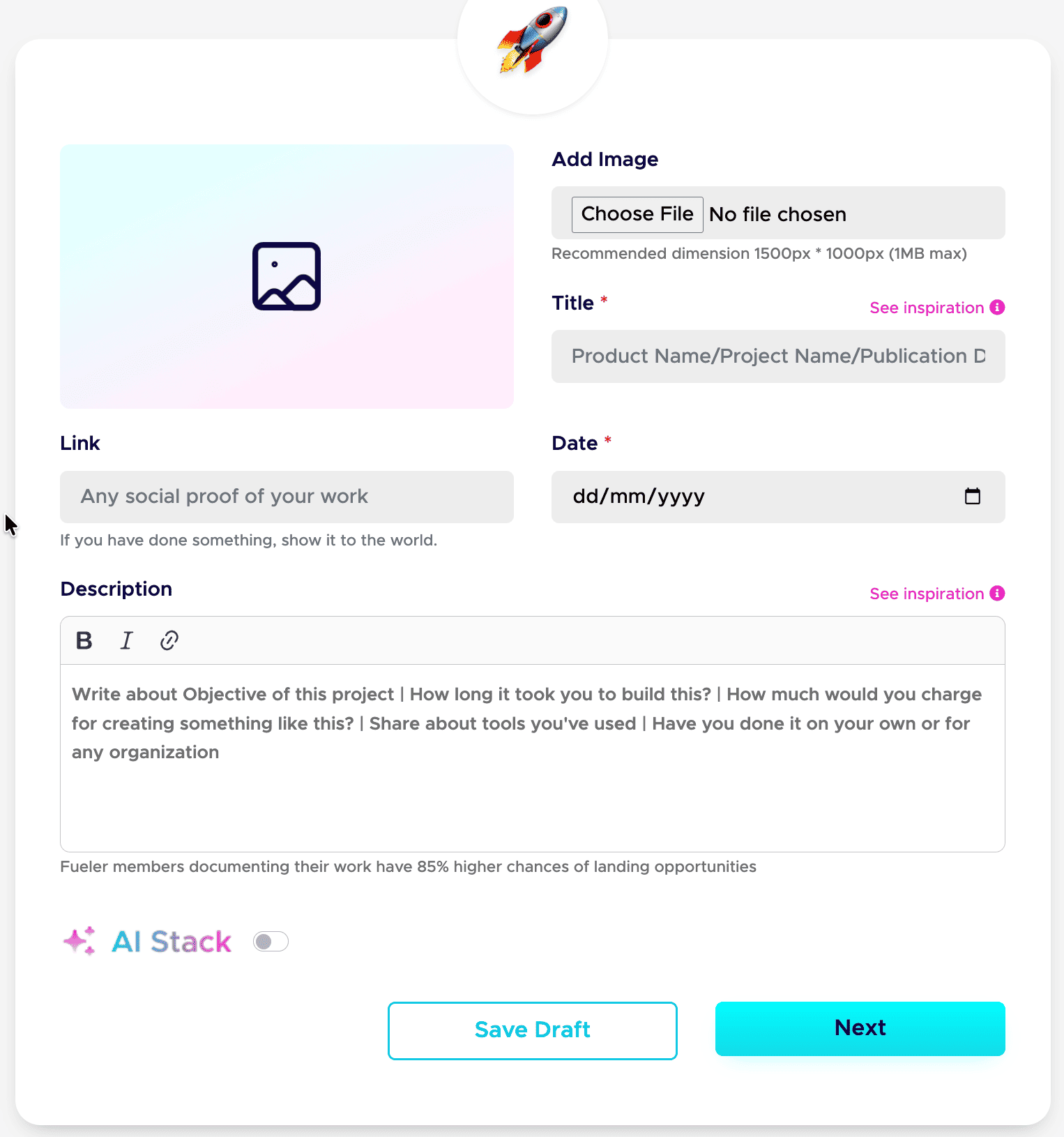
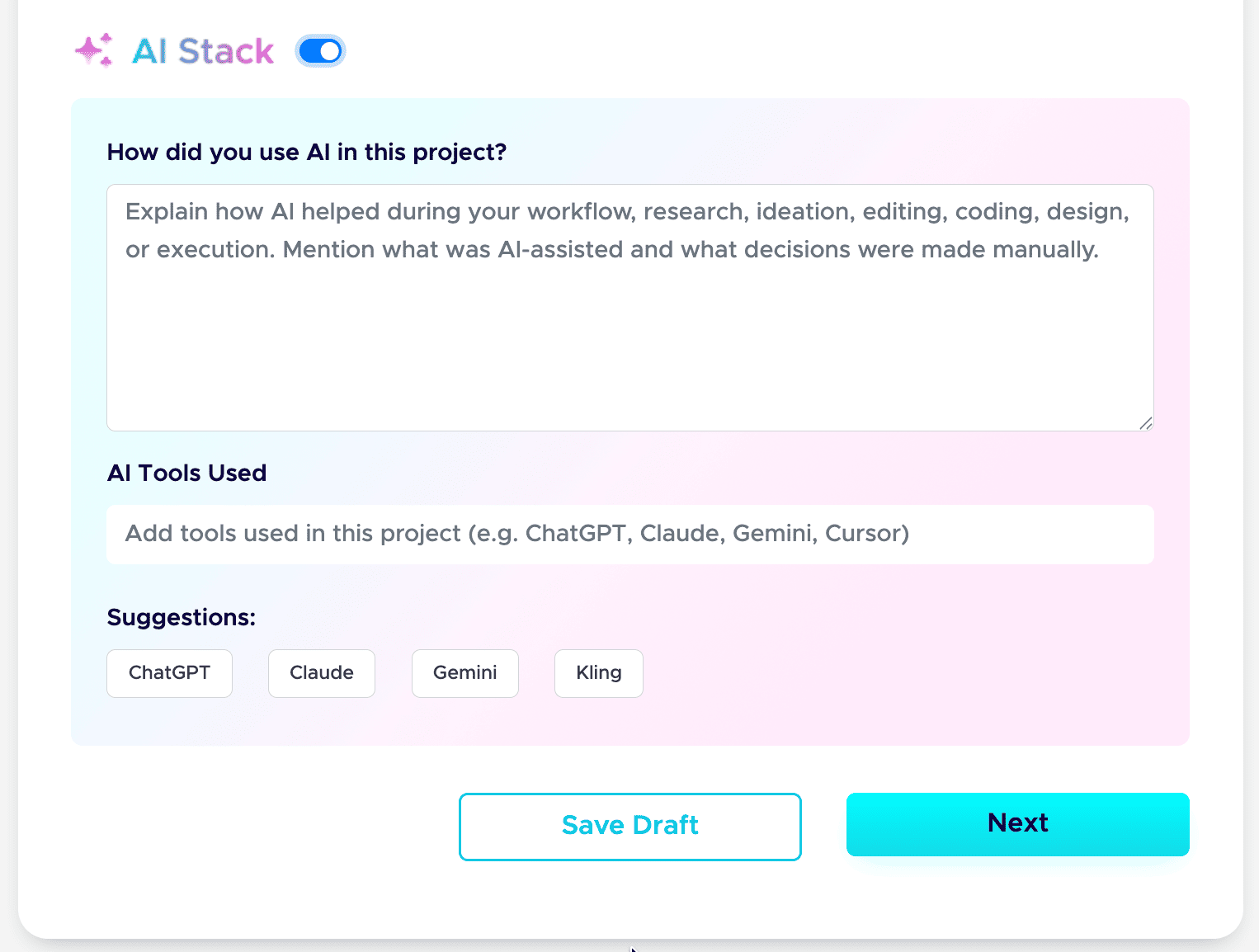
Step 9: Add your AI Stack to each project.
AI is part of real work now, so show it honestly. Use the AI Stack feature to explain how you used AI, which tools you used, and what you did manually. This builds trust instead of raising doubt. Here is the full guide: how to add AI Stack on Fueler.
That is the whole setup. Do these nine steps well, and your profile stops being a static page and starts working as a hiring asset. If you want a tighter version to follow next time, save my 6-step formula for a Fueler portfolio and my breakdown of a career portfolio that actually gets jobs.
Do this once, and you have a link you can drop into your resume, your email signature, and every job application.
How This Connects to Building a Strong Career
Your career trajectory is determined entirely by the visibility of your output. In the current hiring market, credentials look nice on paper, but documented execution is what actually closes deals. When you make your proof of work scannable and easy to review, you completely eliminate the hiring risk for a business owner.
Using Fueler allows you to treat your career like an open-source project, where every single assignment, contribution, and major milestone is logged publicly. This clean, continuous documentation builds deep long-term professional credibility that a standard two-page text resume simply cannot match.
Final Thoughts
The era of spending forty hours building a hyper-custom personal website just to change a line of text is officially over. Professionals are choosing utility, speed, and real-world discoverability over complex design interfaces that get in the way of showcasing results. Keep your tool stack completely lean, focus entirely on publishing high-quality project proof, and let your actual outcomes do the talking for you.
Frequently Asked Questions
Do I need to know how to code to use Fueler?
No coding skills are required at all. The platform uses a clean, input-based editor that lets you publish detailed project pages instantly without touching HTML or CSS.
Can I use a custom domain name with my profile?
Yes, you can easily map your own custom domain to your profile page to keep your personal branding completely consistent across the web.
How does proof of work help me land clients faster?
It completely removes hiring doubt. Showing real deliverables and step-by-step problem-solving proves you can execute the job before a client even hops on an introductory call.
Is it easy to import my existing project links?
Absolutely. You can drop in live URLs, embed rich media, and attach documents smoothly, making it very simple to migrate your work from other platforms.
How does the platform handle team project collaborations?
You can tag your co-creators directly on any project you publish, linking your work across multiple profiles while maintaining clear credit for everyone involved.
Why 100,000+ professionals use Fueler
Fueler helps professionals showcase proof of work through projects, assignments, case studies, and achievements.
- Thousands of professionals use Fueler to create their digital portfolio
- Thousands of projects are published on Fueler. Check here
- Startups and Companies hire through proof of work on Fueler
- Used by freelancers, creators, marketers, video editors, writers, designers, and product managers
Our mission is to help the next 100 million professionals build a verified professional identity through proof of work

What should you do next?
You've read the article. Now turn your skills into proof of work and unlock more opportunities.
Build your proof of work portfolio
Create a clean portfolio with projects, assignments, resumes, and AI stack details that companies actually want to see.
Create your Fueler portfolio →Apply through assignments, not resumes
Stand out by solving real tasks from companies hiring on Fueler.
Explore assignments →Get discovered by companies
Make your work public and let recruiters discover your skills through actual projects instead of keywords.
Get discovered →
