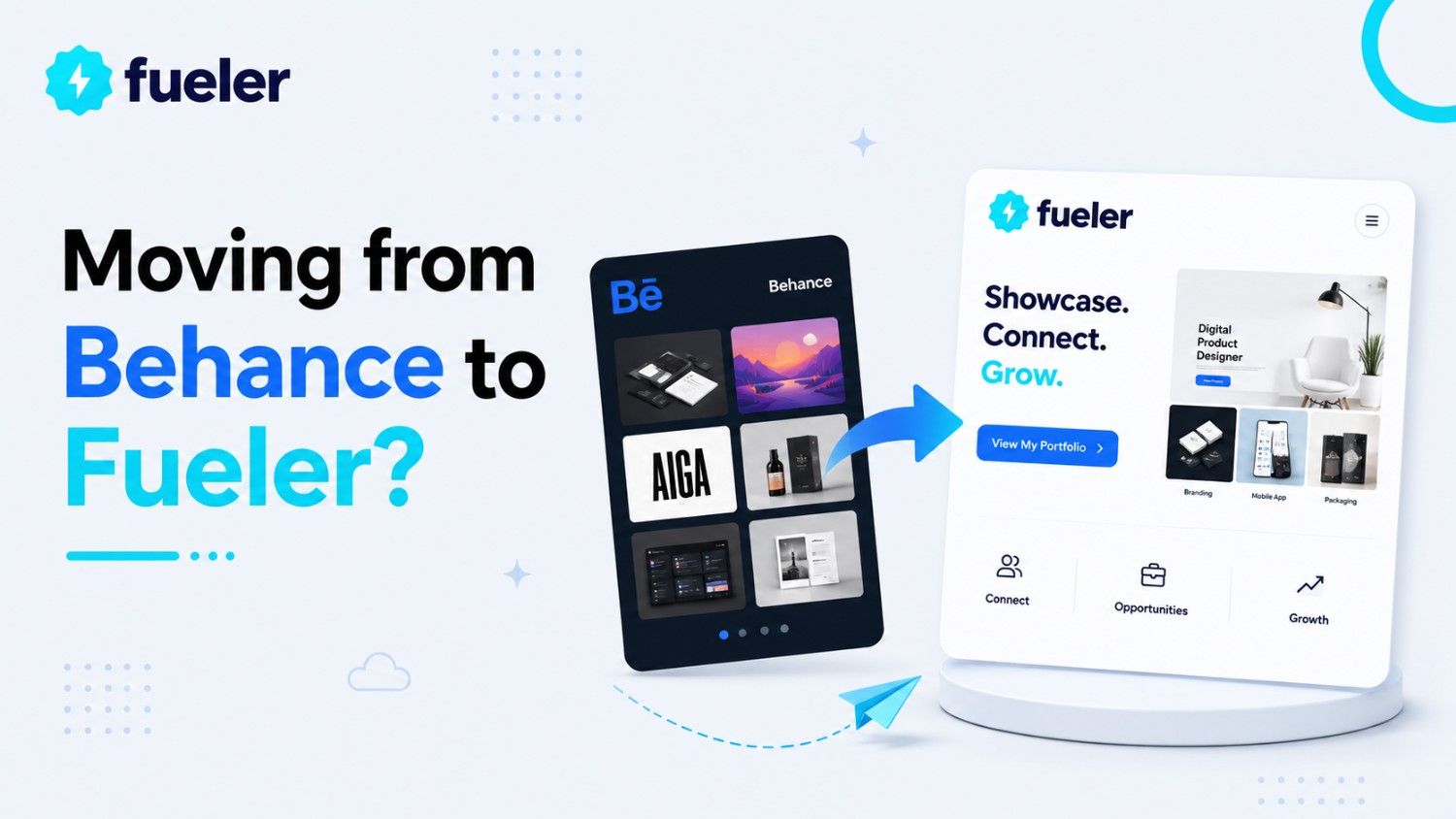
Why Creators Are Moving from Behance to Fueler?

Riten Debnath
11 Jul, 2026
Last updated: July 2026
The creative landscape shifted silently over the last few years. While visual grids used to be enough to land premium clients, top-tier brands now demand to see the business thinking, data, and ROI behind the pixels.
I’m Riten, founder of Fueler, a skills-first portfolio platform that connects talented individuals with companies through assignments, portfolios, and projects, not just resumes/CVs. Think Dribbble/Behance for work samples + AngelList for hiring infrastructure.
If you are wondering why the industry's highest-paid individuals are quietly shifting their digital homes, here is exactly what is driving the migration from traditional creative networks to dynamic proof-of-work hubs. You will discover the operational flaws of legacy platforms and learn how to position your work for maximum revenue.
The Shift from Visual Grids to Proof of Work
Traditional creative networks operate like infinite art galleries, focusing purely on aesthetic appeal. While a beautiful image grid attracts casual likes, modern companies require deeper context before making hiring decisions. Creators are realizing that static images fail to communicate the actual problem-solving process behind a major rebranding or marketing campaign.
Modern hiring managers look past surface-level design to evaluate how a project impacted a company's bottom line. When your portfolio only displays final assets, you hide the strategy, iteration, and communication skills that actually close high-ticket deals. Showcasing your complete operational workflow builds far more trust than a polished thumbnail ever could.
- Contextual Project Narratives: Documentation that details the initial client brief, project constraints, and strategic pivots helps prospects understand your specific execution framework and cognitive approach.
- Measurable Performance Metrics: Including conversion rates, engagement lift, or revenue growth alongside creative assets provides undeniable evidence of your project's commercial success.
- Collaboration and Role Clarity: Specifying your exact contributions within a multi-disciplinary team eliminates ambiguity and establishes your precise operational capabilities for future stakeholders.
- End-to-End Workflow Visibility: Showcasing early wireframes, mood boards, and iterative feedback loops proves you possess a structured, repeatable methodology for delivering high-quality work.
- Discoverability via Social Proof: Transitioning from passive likes to verified testimonials and collaborative project tags creates an undeniable chain of credibility that attracts premium clients.
Why It Matters
In 2026, the creators winning six-figure contracts are the ones who treat their portfolio as a collection of case studies rather than a mood board. Shifting to proof of work directly shortens your sales cycle, filters out low-budget clients, and establishes your authority as a strategic business partner.
8 Reasons Creators Move from Behance to Fueler
1. Shifting Focus from Vanity Likes to Real Proof of Work
Legacy networks trap creators in a feedback loop of peer validation and superficial metrics. Likes and comments from fellow designers rarely translate into paid client invoices or full-time career opportunities. Creators need a space where the depth of their work takes precedence over algorithmic popularity contests.
- Intentional Client Discovery: Algorithms prioritize genuine proof of work over superficial engagement, ensuring your projects reach decision-makers who have hiring intent.
- Comprehensive Case Studies: The platform allows you to display live links, code blocks, documentation, and performance data alongside your primary visual designs.
- Elimination of Metric Pressure: Removing the public obsession with likes shifts your focus entirely toward documenting high-impact projects that reflect real-world capability.
- High-Trust Project Validation: Showcasing verified outcomes rather than aesthetic concepts signals to premium brands that you understand how to execute business goals.
- Client-Centric Layouts: Clean, professional layouts present your work in an executive-ready format optimized for busy founders, marketing directors, and engineering managers.
2. Multi-Disciplinary Flexibility for Modern Generalists
Creative careers are no longer confined to a single box. A modern designer often handles brand strategy, copy, or low-code development, which static visual grids struggle to showcase. Multi-disciplinary professionals need a unified home that elegantly balances diverse skill sets without looking cluttered or confusing to prospects.
- Unified Project Hosting: You can seamlessly publish design mockups, published articles, Notion trackers, GitHub repositories, and live marketing dashboards under one profile.
- Flexible Skill Categorization: Custom tags allow you to quickly organize your varied expertise, making it incredibly simple for clients to filter your work.
- Holistic Creative Positioning: Displaying your full spectrum of capabilities positions you as a high-value generalist capable of leading entire projects from scratch.
- Dynamic Media Embedding: Rich embedding features ensure your interactive prototypes, video explainers, and live websites render beautifully without forcing users to leave.
- Agile Portfolio Customization: You can easily pivot or expand your core services without needing to rebuild your entire digital identity from the ground up.
3. Proof of Work Over Resumes and Portfolios
Traditional resumes are quickly losing credibility in the modern hiring landscape because text descriptions can easily be exaggerated. Companies are actively looking for concrete proof of execution before jumping onto a discovery call. Documenting your actual output creates a self-evident track record that eliminates the need for outdated CVs.
- Immediate Skill Verification: Showing live, click-through links to your actual shipped work provides instant validation of your technical and creative competence.
- Contextual Collaboration Notes: Clear breakdowns of your exact responsibilities inside teams show managers exactly how you communicate, cooperate, and execute.
- Actionable Discovery Elements: Seamless contact methods and clear availability indicators let interested prospects move directly from viewing your work to hiring you.
- Reduced Time-to-Trust: Providing direct access to your codebase, design files, and case data completely eliminates friction during the initial vetting process.
- Enhanced Professional Authority: Presenting standalone projects as verified career milestones elevates your personal brand far above applicants submitting generic PDF resumes.
4. Zero Algorithmic Noise or Distractions
Popular creative networks often feel like chaotic social media channels filled with self-promotion and distracting trends. When you send a prospect to your profile there, they are instantly surrounded by recommended work from your direct competitors. Creators deserve a dedicated, clean environment that keeps the client’s focus entirely on their personal work.
- Dedicated Custom Domains: Hosting your profile on a personalized URL ensures your portfolio feels like a bespoke, premium website built entirely for your business.
- Zero Competitor Ads: The clean interface completely bans sidebars, banners, and recommended links that could pull prospective clients away from your page.
- Optimized Reader Retention: Minimalist, clutter-free layouts keep visitors engaged with your case studies longer, directly increasing your conversion rates.
- Direct Professional Framing: The presentation strips away social media mechanics, forcing viewers to engage purely with your strategic execution and outcomes.
- Controlled Client Navigation: Clean user flows guide prospective leads directly from your top project straight to your booking link or contact form.
5. Seamless Proof of Collaboration and Co-Authoring
Most complex projects are rarely built by a single individual working in complete isolation. Yet, traditional platforms make it incredibly difficult to credit multiple team members fairly without duplicating content. True collaboration features let you tag co-creators seamlessly, instantly reflecting the project across everyone's verified profiles.
- Cross-Profile Project Syncing: Tagging teammates automatically populates the shared project across all connected profiles, multiplying your natural organic reach.
- Verified Team Roles: Clearly attributing specific tasks prevents confusion regarding who actually designed the interface versus who handled the brand copy.
- Network-Driven Lead Generation: Appearing on your collaborator’s profiles exposes your unique skill sets to their unique audiences, clients, and professional networks.
- Transparent Execution History: Documenting collaborative workflows signals to corporate clients that you know how to operate inside structured team environments.
- Authentic Ecosystem Growth: Building a verified network of past collaborators establishes deep industry roots and generates a steady stream of peer referrals.
6. Built for Business and Strategic Outcomes
Aesthetic validation is nice, but creative professionals ultimately need a platform designed to generate revenue and land contracts. Legacy systems focus on community engagement, whereas modern hubs optimize for the client’s evaluation process. Aligning your work with business outcomes proves you care about a company’s financial growth.
- ROI-Focused Presentation: The structure guides you to highlight key performance metrics, conversion lifts, and business growth generated by your creative work.
- Frictionless Lead Capture: Optimized call-to-action sections make it incredibly easy for enterprise clients to initiate high-paying contract discussions.
- Enterprise-Grade Credibility: Clean layouts present your case studies in a professional format that resonates perfectly with corporate decision-makers.
- Data-Backed Authority: Coupling your visual design assets with hard performance statistics prevents your work from being viewed as a subjective expense.
- Accelerated Sales Velocity: Pre-answering client questions about your process, tools, and outcomes significantly shortens the time required to sign new contracts.
7. Enhanced SEO, GEO, and AEO Discoverability
Simply hosting a portfolio is pointless if potential clients cannot find your work through search engines and AI engines. Modern architectures are engineered from the ground up to ensure your projects rank cleanly on search engine results pages and surface inside conversational AI overviews.
- Clean Schema Architecture: Search-optimized structures ensure your case studies are easily indexed by major search platforms like Google and Bing.
- AI Retrieval Optimization: Clean, well-formatted text answers semantic queries, allowing your work to get cited inside ChatGPT and Perplexity searches.
- Long-Tail Keyword Integration: Natural project descriptions allow you to rank for highly specific, high-intent search terms used by motivated clients.
- Rapid Indexing Protocols: Modern technical foundations ensure your new projects and portfolio updates are discovered by web crawlers almost instantly.
- Voice Search Readiness: Natural, conversational copywriting structures ensure your profile answers voice-activated business queries and professional searches perfectly.
8. True Ownership of Your Professional Identity
Relying on a legacy network means your career discoverability is completely at the mercy of their shifting algorithmic updates. Building on an independent platform gives you complete control over your content, audience, and professional presentation. Your proof of work shouldn't be compromised by platform policy changes.
- Platform Agnostic Longevity: Your verified proof-of-work records remain entirely yours, independent of shifting social media trends or corporate acquisitions.
- Custom Integration Freedom: You can seamlessly hook up your favorite analytics, booking calendars, newsletter forms, and custom business tools.
- Unrestricted Brand Presentation: Flexible formatting options ensure your personal brand identity dictates the experience rather than a standardized template.
- Direct Audience Connection: Retaining complete control over your traffic allows you to build direct, uncompromised relationships with incoming business leads.
- Future-Proof Career Insurance: Maintaining an open, modern proof-of-work hub ensures you are always ready for unexpected shifts in the global job market.
Why It Matters
These eight pillars represent a fundamental shift from creative passivity to business-driven execution. Moving away from legacy design networks enables you to build a bulletproof digital asset that actively secures high-tier client contracts, consultancies, and career opportunities on autopilot.
How to Build a High-Converting Portfolio on Fueler
Setting up your profile takes less than ten minutes, but structuring it correctly is what separates average creators from the top 1%.
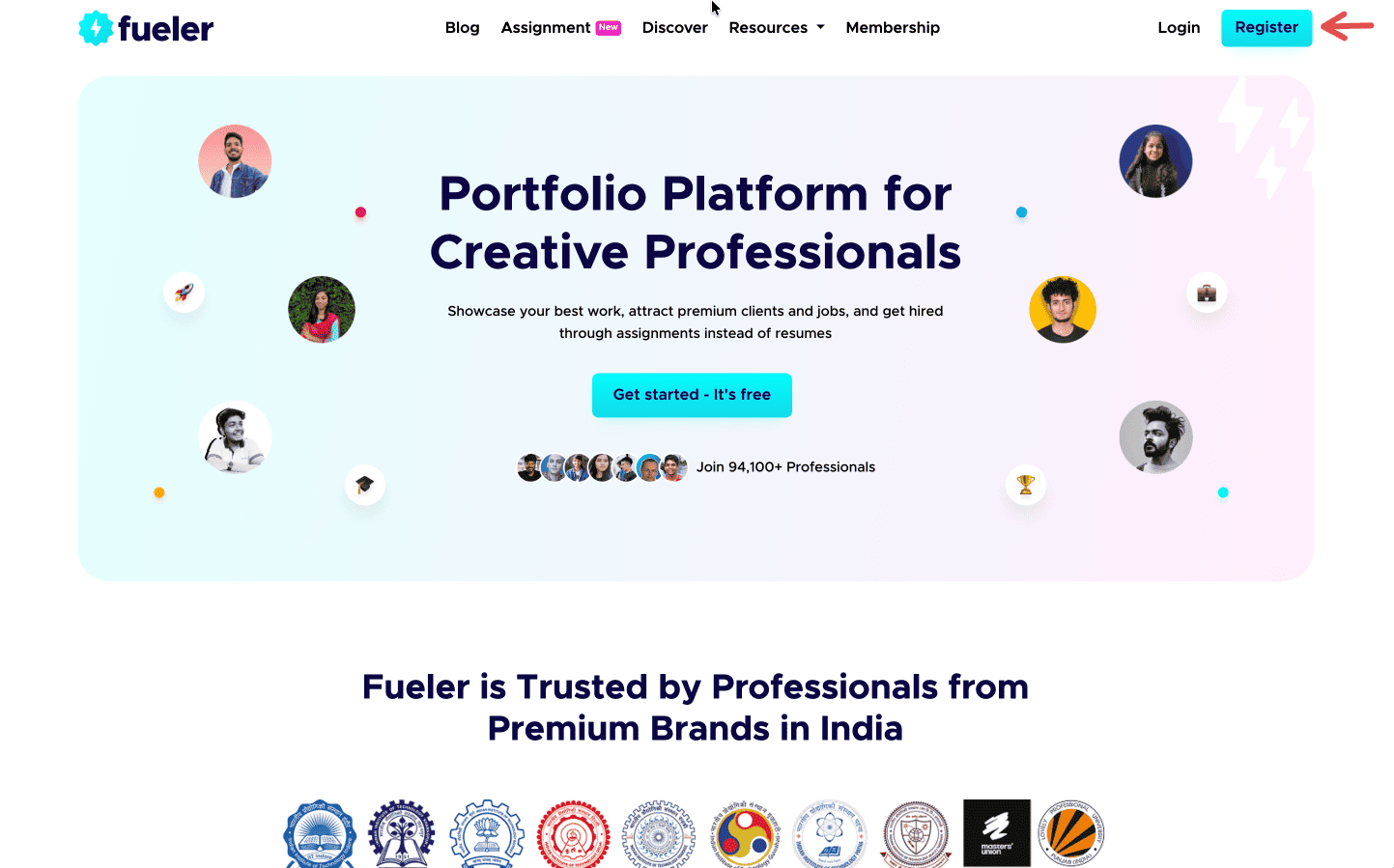
Step 1: Sign up on Fueler.
Head to Fueler.io and create your free account.
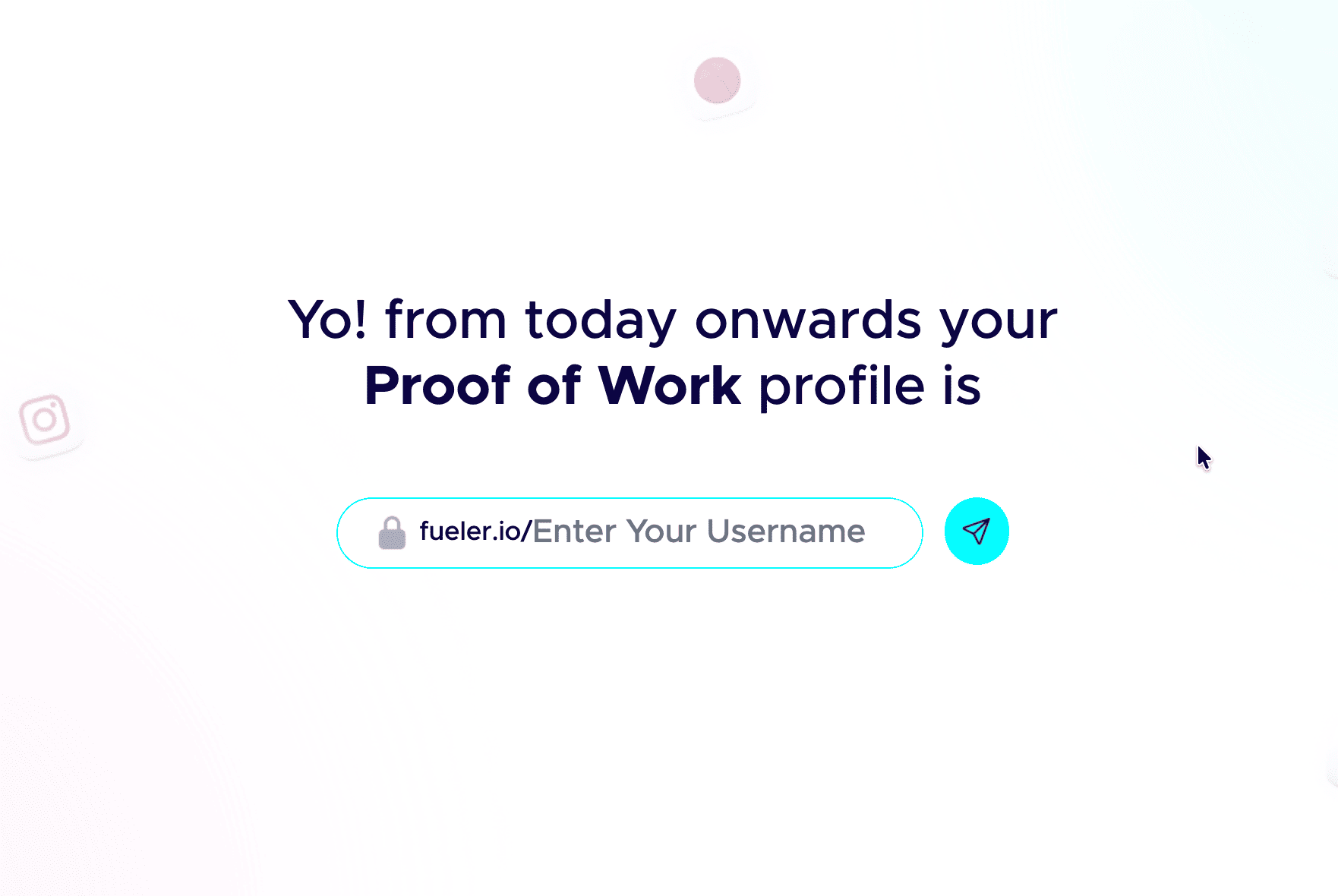
Step 2: Pick a professional handle.
Your handle shows up in your public link, so keep it clean and grown-up. Don’t add nicknames and random numbers. Your name or a simple version of it works best.
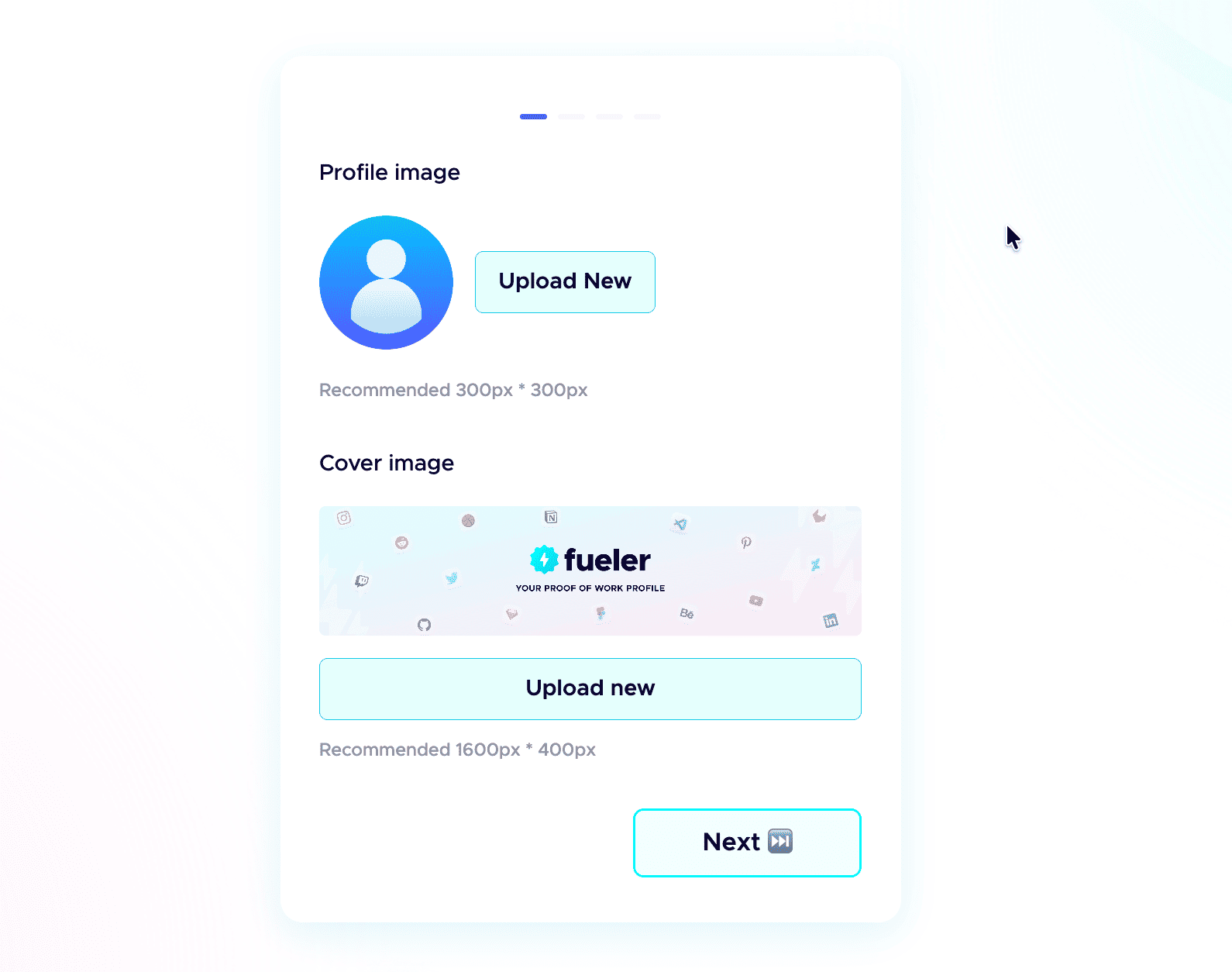
 Step 3: Add a professional profile picture.
Use the same kind of professional photo you would put on LinkedIn. Clear face, good lighting, and a simple background. People trust a real face more than an empty avatar.
Step 4: Write a strong header.
The header is the first thing anyone sees. In one or two short lines, say who you are, what you do, and the kind of work you have done. Make it specific, not vague.
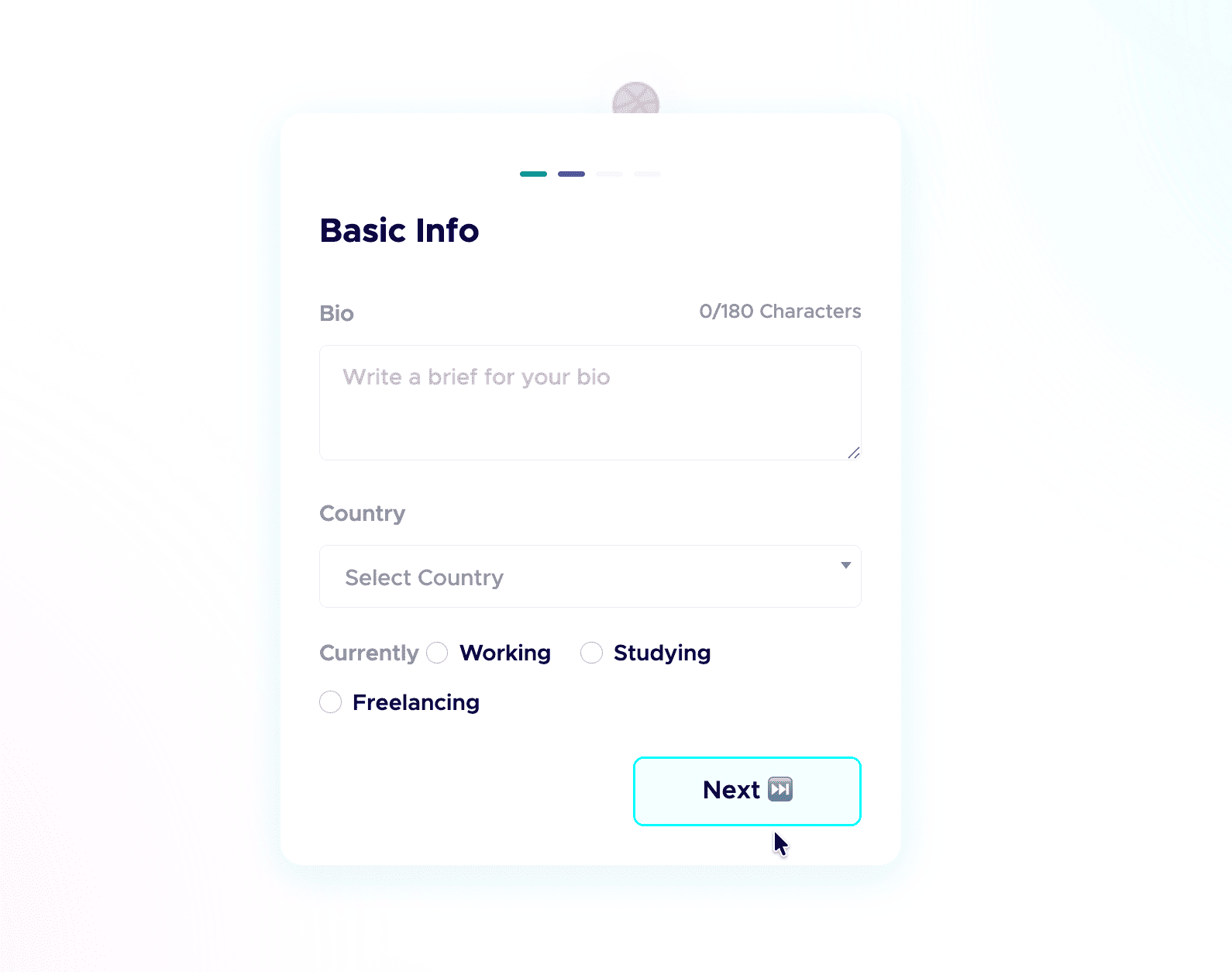
Step 5: Add a short bio.
Tell people who you are and what you do in a few plain sentences. No buzzwords, just enough for a recruiter to get you in five seconds.
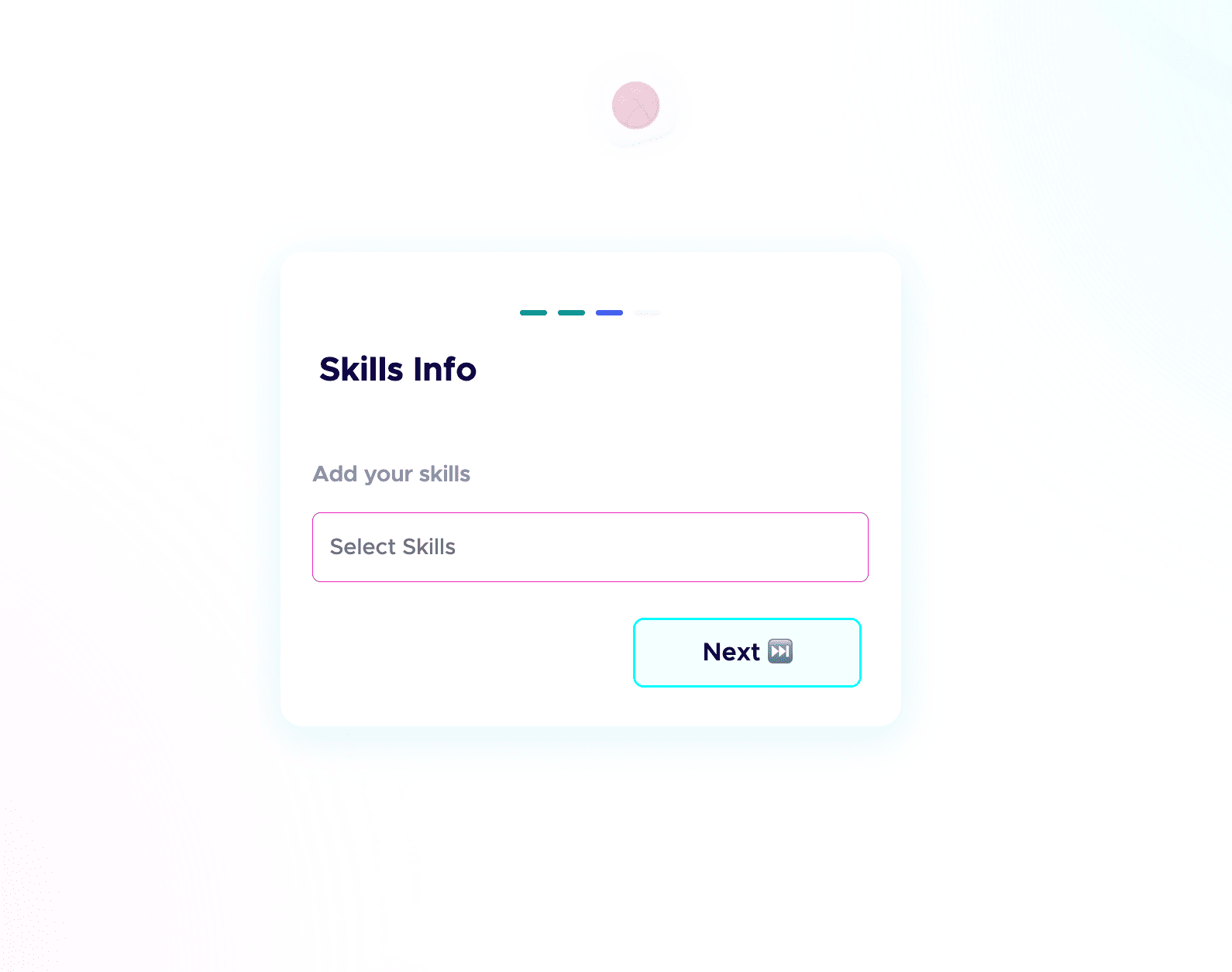
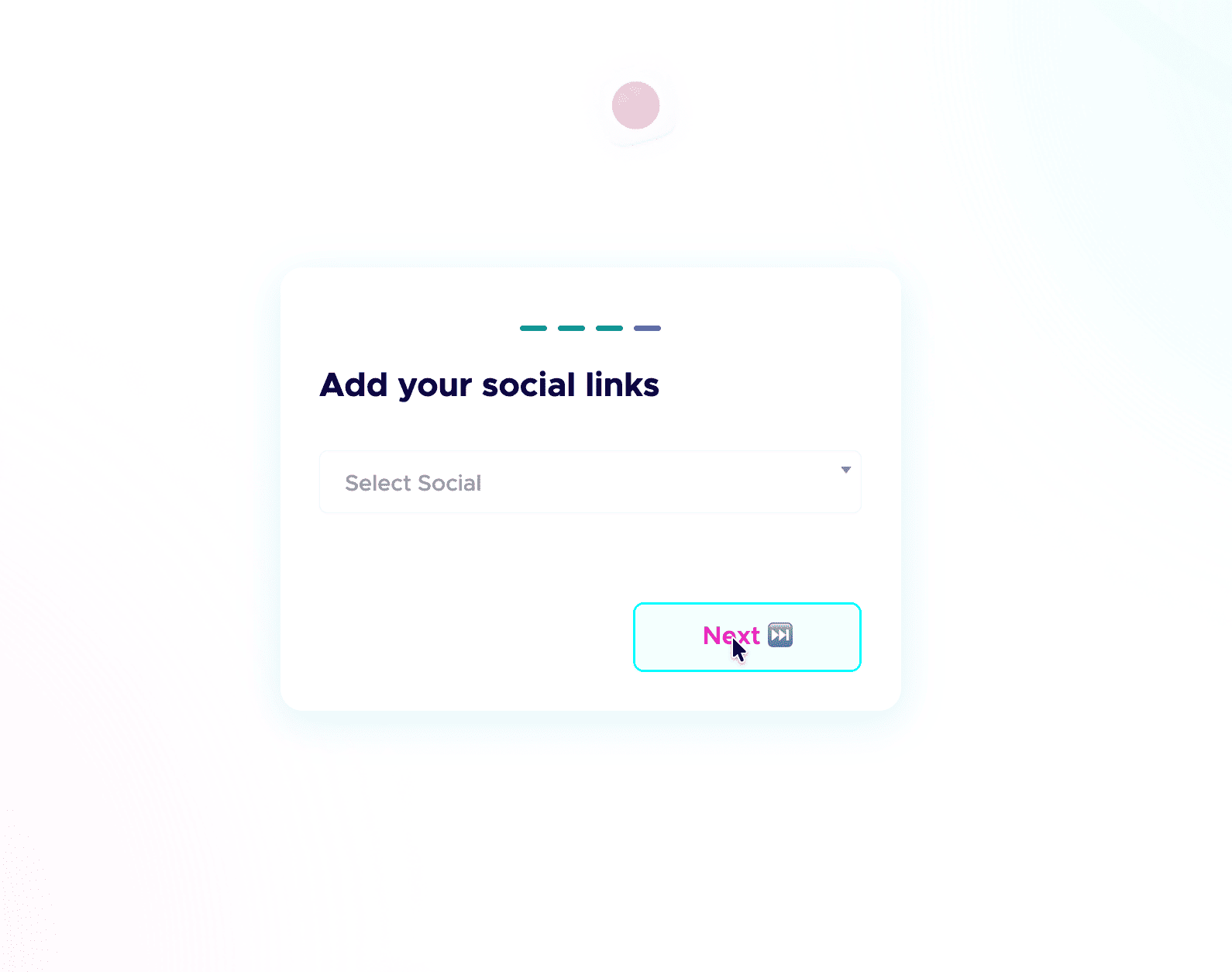
 Step 6: Add your skills and social links.
List the skills you are good at and actually want to be hired for, and connect your socials. People do check your profiles, and active socials build credibility before the first call. Students starting from scratch can follow my student guide to their first portfolio.
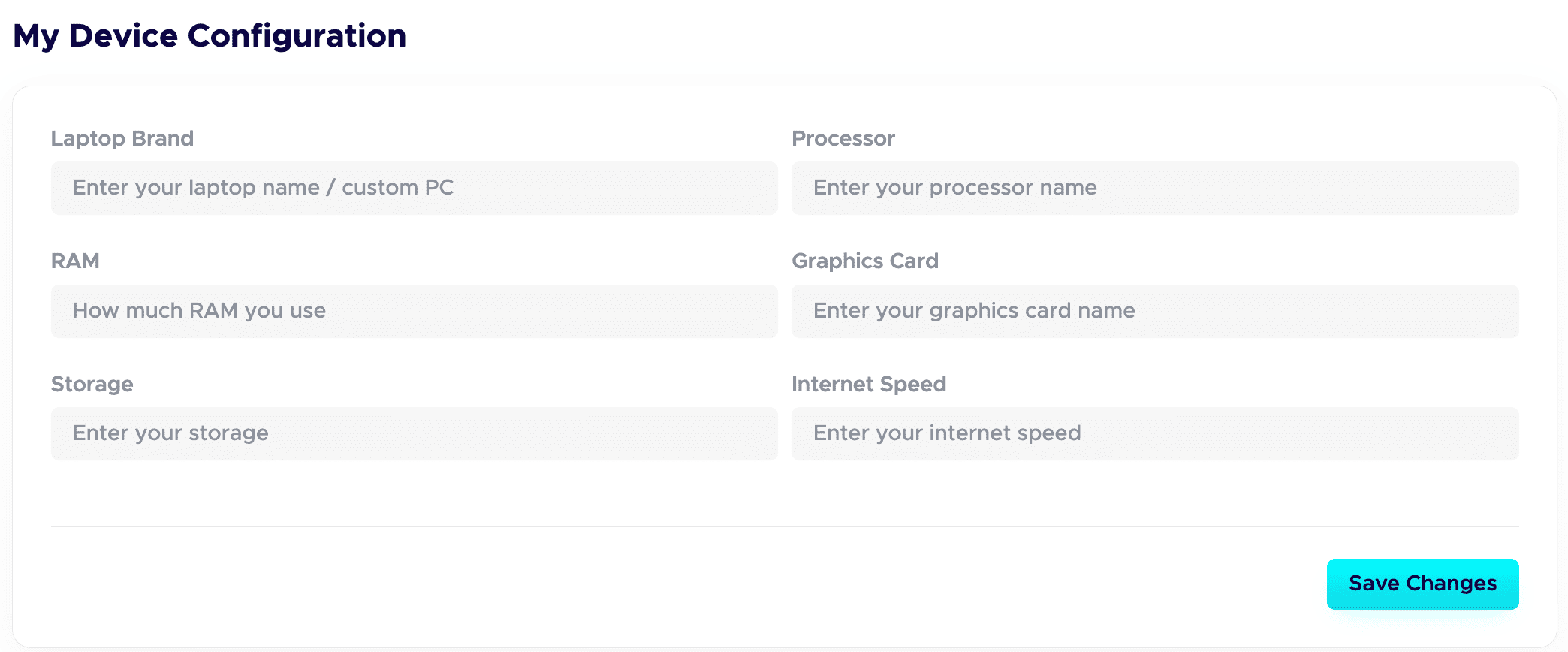
 Step 7: Fill in your Device Configuration.
In your dashboard, set up the Device Configuration section. Add the details about the device you are using. Remote-first companies want to know you have a solid setup to work from. A good setup quietly adds leverage and signals you are ready to deliver.
Step 8: Publish your projects with all the details.
This is a game-changer. Give each project a clear title and a detailed description. Walk through your process: your thinking, the tools you used, the choices you made, and the result. Companies care about how you work, not just the final image.
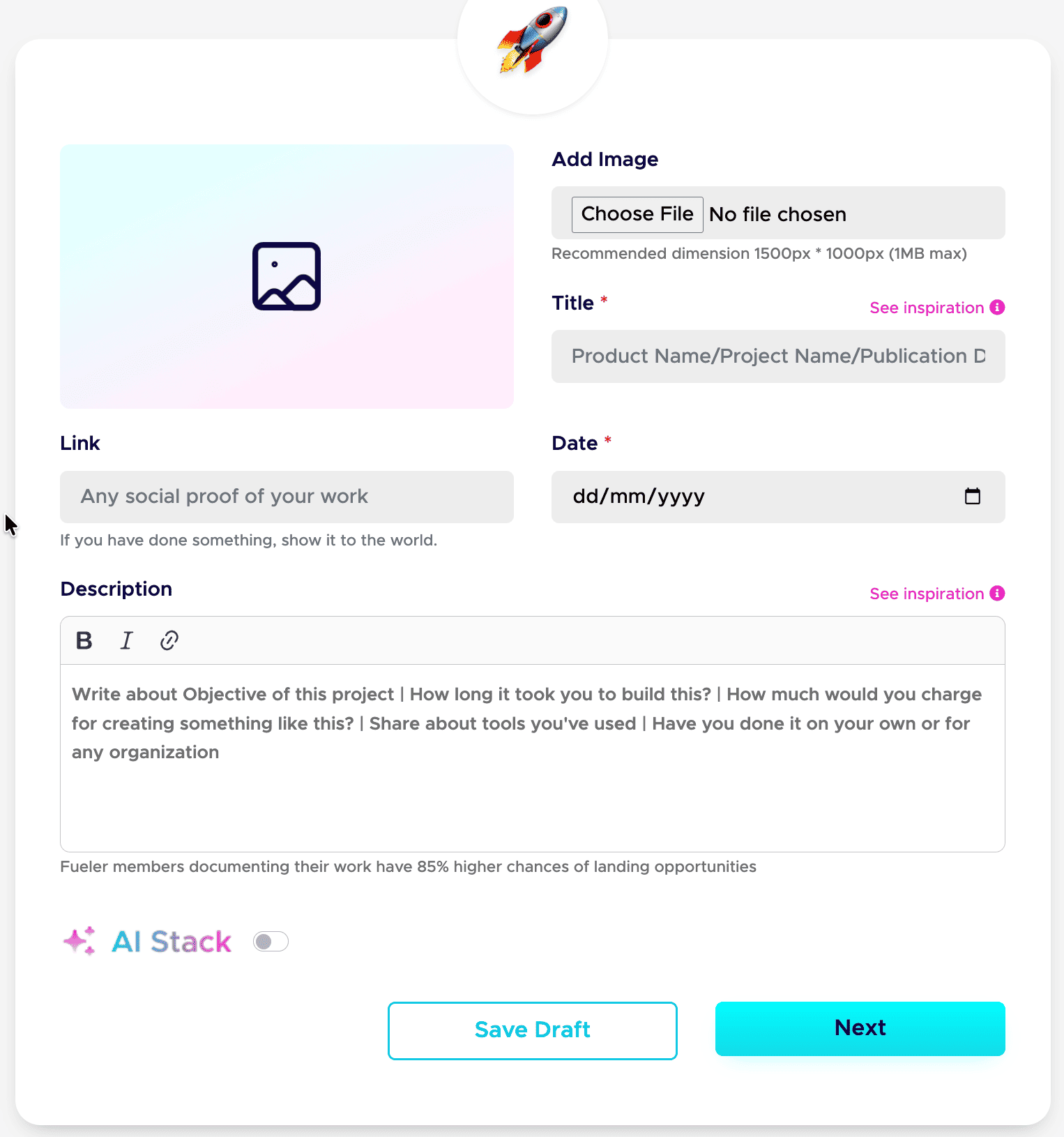
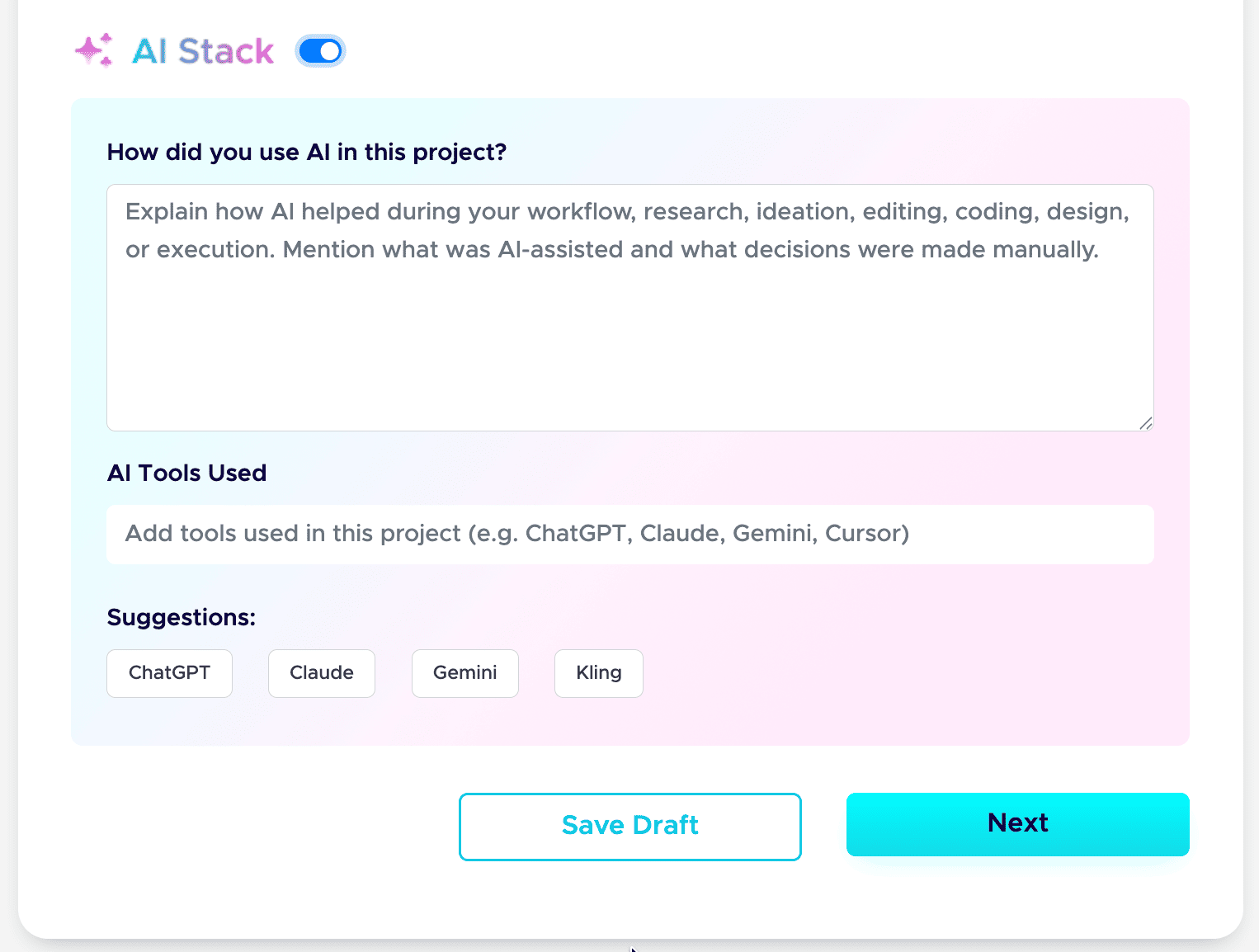
Step 9: Add your AI Stack to each project.
AI is part of real work now, so show it honestly. Use the AI Stack feature to explain how you used AI, which tools you used, and what you did manually. This builds trust instead of raising doubt. Here is the full guide: how to add AI Stack on Fueler.
That is the whole setup. Do these nine steps well, and your profile stops being a static page and starts working as a hiring asset. If you want a tighter version to follow next time, save my 6-step formula for a Fueler portfolio and my breakdown of a career portfolio that actually gets jobs.
Do this once, and you have a link you can drop into your resume, your email signature, and every job application.
How This Connects to Building a Strong Career
Modern hiring has completely outgrown the traditional resume. In a world full of inflated titles, business leaders value execution visibility above all else. Documenting your day-to-day projects on Fueler creates an undeniable, public ledger of your capabilities. This transparency eliminates the risk of hiring you, because your skills are backed by verifiable proof of work. Whether you want to land premium freelance retainers or join a high-growth startup team, showing exactly how you execute will always beat telling someone what you can do.
Final Thoughts
The future of professional hiring belongs to individuals who document their output with absolute clarity. Moving your creative presence toward a proof-of-work framework ensures you stop competing for superficial likes and start competing for high-value business partnerships. Your portfolio should be a profit engine, not a digital dust-collector.
FAQs
What makes a proof-of-work portfolio different from Behance?
Behance focuses entirely on visual inspiration and community interaction. A proof-of-work portfolio focuses on showcasing the full business context, strategic execution, live project links, and measurable performance data behind your creative designs.
Can I use custom domains on Fueler?
Yes, you can easily map your personal custom domain directly to your profile. This transforms your proof-of-work page into a fully branded, professional standalone website completely free of external platform distractions.
How do search engines and AI tools find my work here?
The clean technical architecture utilizes structured data schemas that make your content incredibly easy for Google to crawl. This layout ensures your projects rank well and surface inside conversational AI search results.
Is it possible to collaborate on projects with other creators?
Absolutely. You can easily add co-authors to any project you publish. Once accepted, the project automatically displays across everyone's verified profiles, expanding organic reach and proving your collaborative team capabilities.
What types of digital media can I embed in my case studies?
You can embed a massive variety of live assets including Figma prototypes, Notion dashboards, GitHub repositories, YouTube videos, and live web links, allowing you to showcase multi-disciplinary skills in one clean place.
Why 100,000+ professionals use Fueler
Fueler helps professionals showcase proof of work through projects, assignments, case studies, and achievements.
- Thousands of professionals use Fueler to create their digital portfolio
- Thousands of projects are published on Fueler. Check here
- Startups and Companies hire through proof of work on Fueler
- Used by freelancers, creators, marketers, video editors, writers, designers, and product managers
Our mission is to help the next 100 million professionals build a verified professional identity through proof of work

What should you do next?
You've read the article. Now turn your skills into proof of work and unlock more opportunities.
Build your proof of work portfolio
Create a clean portfolio with projects, assignments, resumes, and AI stack details that companies actually want to see.
Create your Fueler portfolio →Apply through assignments, not resumes
Stand out by solving real tasks from companies hiring on Fueler.
Explore assignments →Get discovered by companies
Make your work public and let recruiters discover your skills through actual projects instead of keywords.
Get discovered →
