The Only Framer Portfolio Alternative You Need in 2026

Riten Debnath
11 Jul, 2026
Last updated: July 2026
Spending forty hours animating a sticky navigation bar feels productive until you realize a hiring manager spent exactly six seconds looking at your site. Over-engineered personal websites are experiencing a major cultural correction. While premium design engines are unmatched for building high-end brand landing pages, using them exclusively to build a personal talent archive has turned into an expensive, time-consuming operational bottleneck.
I’m Riten, founder of Fueler, a skills-first portfolio platform that connects talented individuals with companies through assignments, portfolios, and projects, not just resumes/CVs. Think Dribbble/Behance for work samples + AngelList for hiring infrastructure.
The internet is moving away from purely aesthetic web layouts toward simple, indexable data that clear proof-of-work repositories can provide.
In this deep dive, we will unpack why visual-heavy site templates lose high-intent leads, how to bypass constant technical maintenance, and why simplified project logs secure faster discovery by human recruiters and AI scouting engines alike.
1. Why Visual Site Builders Are Becoming an Operational Bottleneck
Premium, layout-driven design tools are exceptional for client marketing sites but create massive friction for fast-moving personal documentation. When your primary goal is quickly logging a newly shipped campaign or code fix, wrestling with adaptive breakpoints and font scaling kills your creative momentum. It shifts your core focus away from tracking project outcomes and places it entirely on fixing styling errors.
Managing custom responsive grids manually requires a significant investment of weekly maintenance time that should be spent acquiring clients.
- Fixing broken tablet or mobile layout alignments burns valuable hours that are much better spent shipping new work, talking directly to prospective corporate leads, or cold-pitching high-ticket clients instead of fixing floating text blocks.
- Managing heavy image asset compression pipelines manually is an absolute requirement to avoid sluggish loading speeds that cause busy founders to click away from your page before your heavy canvas animations even finish rendering.
- Troubleshooting accidental custom styling bugs across separate browsers turns a quick, simple portfolio upload session into a frustrating multi-hour technical support nightmare that completely drains your creative energy and stalls your publishing consistency.
- Paying premium monthly hosting fees for a basic personal link makes zero financial sense when you only need to display clean, text-based project documentation and verified outcomes rather than a bloated, multi-page commercial enterprise website.
- Rebuilding complex navigation components whenever you want to pivot niches creates an unnecessary delay that keeps you from pitching for hot industry opportunities that require you to display a highly specific set of skills instantly.
Why It Matters
This structural pivot matters because speed of documentation determines how visible you remain in a hyper-competitive market. When your portfolio tool requires a full design process just to log an update, you will naturally stop updating it. Streamlining your publishing workflow ensures your absolute latest wins are always visible to the market.
2. The Rise of AI Search and the Need for Clean Semantic Data
The way companies discover talent is changing rapidly due to the adoption of advanced AI recruitment filters and programmatic discovery platforms. These automated crawlers do not care about your custom page transitions, parallax background effects, or hidden hover states. They read the underlying semantic data structure to extract hard evidence of your skills, tools, and outcomes.
Structuring your workspace artifacts around clean text fields allows modern search platforms to effortlessly categorize your core professional abilities.
- Optimizing for modern automated talent scouting tools ensures your project logs are instantly readable by corporate algorithms scanning for highly specific niche experience, directly placing your profile at the top of candidate shortlists without human filtering.
- Eliminating messy nested division blocks and custom canvas wrappers allows AI search assistants like Perplexity and ChatGPT to easily pull your live project links and cite your exact metrics inside their personalized talent recommendations.
- Focusing heavily on rich text descriptions over flattened image assets ensures that search engine spiders can contextually index your specific tool stacks, project timelines, and individual contributions without missing hidden data points.
- Standardizing your project structural layout across all published entries creates a predictable data schema that data-scouting models trust, heavily boosting your organic discoverability scores across competitive global engineering and marketing directories.
- Avoiding heavy client-side script rendering requirements guarantees that low-bandwidth mobile devices used by busy founders on the move can load your proof of work instantly without freezing their browser apps.
Why It Matters
A portfolio that cannot be parsed by AI recruitment infrastructure in 2026 is practically invisible to the premium job market. Shifting to a clean, data-first alternative ensures your work is discoverable by both human eyes and automated scouting engines. It future-proofs your digital footprint.
3. The Hidden Cost of Over-Engineering Your Personal Brand
Many professionals hide behind endless portfolio redesigns because tweaking layouts feels safer than putting their work out there for market feedback. Spending weeks choosing typography or configuring complex micro-interactions is often just procrastination disguised as high-standard creative execution. The market rewards speed of delivery far more than it rewards a flawless pixel-perfect margin.
Prioritizing complex frontend design over simple, clear case studies frequently results in a beautiful site that fails to answer basic business questions.
- Draining your valuable weekly focus on minor aesthetic adjustments actively distracts you from completing high-priority client assignments or documenting the critical revenue-generating metrics that actually convince companies to extend a contract offer.
- Creating unintentional navigation friction for busy hiring managers often backfires when complex, non-standard layout animations confuse users who simply want to find your recent project links and view your past performance data.
- Delaying the public launch of your latest project proofs due to styling perfectionism ensures that competitors with simpler, faster portfolios capture active market demand while your best work remains hidden in drafts.
- Investing excessive money into premium web design subscriptions reduces your overall freelance margin while providing zero measurable increase in your average lead-to-conversion ratio compared to a minimalist profile page.
- Building a fragile digital site architecture that breaks during minor platform updates forces you into endless emergency maintenance loops right when you should be preparing for high-stakes client strategy interviews.
Why It Matters
Your portfolio tool should serve your career velocity, not become an ongoing technical debt obligation. Stripping away unnecessary layout complexities allows you to focus 100% of your energy on tracking, proving, and scaling your core business impact. It keeps your professional workflow incredibly lean.
4. Shifting from Design Aesthetics to Verified Outcome Documentation
A stunning visual interface can easily hide a complete lack of real-world strategy, which is exactly why experienced founders view over-polished sites with skepticism. They want to see the analytical thinking, budget management, and iterative testing that drove the final product. True career leverage comes from connecting your execution directly to core commercial growth.
To stand out, your portfolio must consciously tell the deeper operational story behind your polished final files.
- Leading your case studies with clear baseline metrics establishes an immediate, honest foundation that proves you understand how to audit an existing business bottleneck before proposing an expensive technical or creative solution.
- Detailing your precise conversion rate optimization workflows demonstrates a mature grasp of user psychology and data analytics, shifting your status from a basic pixel-pusher to a highly valuable product growth partner.
- Explicitly breaking down your specific cross-functional team roles builds immediate trust with talent acquisition leads by clearly defining what you personally built versus what your outsourced engineering partners delivered.
- Explaining how you successfully navigated unexpected resource constraints highlights a rare, founder-level operational maturity that proves you can reliably protect project margins even when launch schedules collapse mid-sprint.
- Including direct links to live, functioning production environments provides undeniable validation that your code, designs, or copy assets can survive the chaotic realities of a real public consumer launch.
Why It Matters
In an era where templates are heavily commoditized, your unique problem-solving methodology is your only true competitive moat. Documenting your work through an outcome-first lens directly addresses the exact risks that keep hiring managers up at night. It transforms your portfolio into a risk-mitigation tool.
5. Step-by-Step: Setting Up Your Living Proof of Work Engine on Fueler
Building a high-converting portfolio should not require managing complex hosting environments, custom codebases, or clunky layout grids. The entire platform workflow is intentionally optimized to help you publish individual project proofs within minutes of completion. Here is the exact sequence to move from an empty profile to a fully operational proof of work engine.
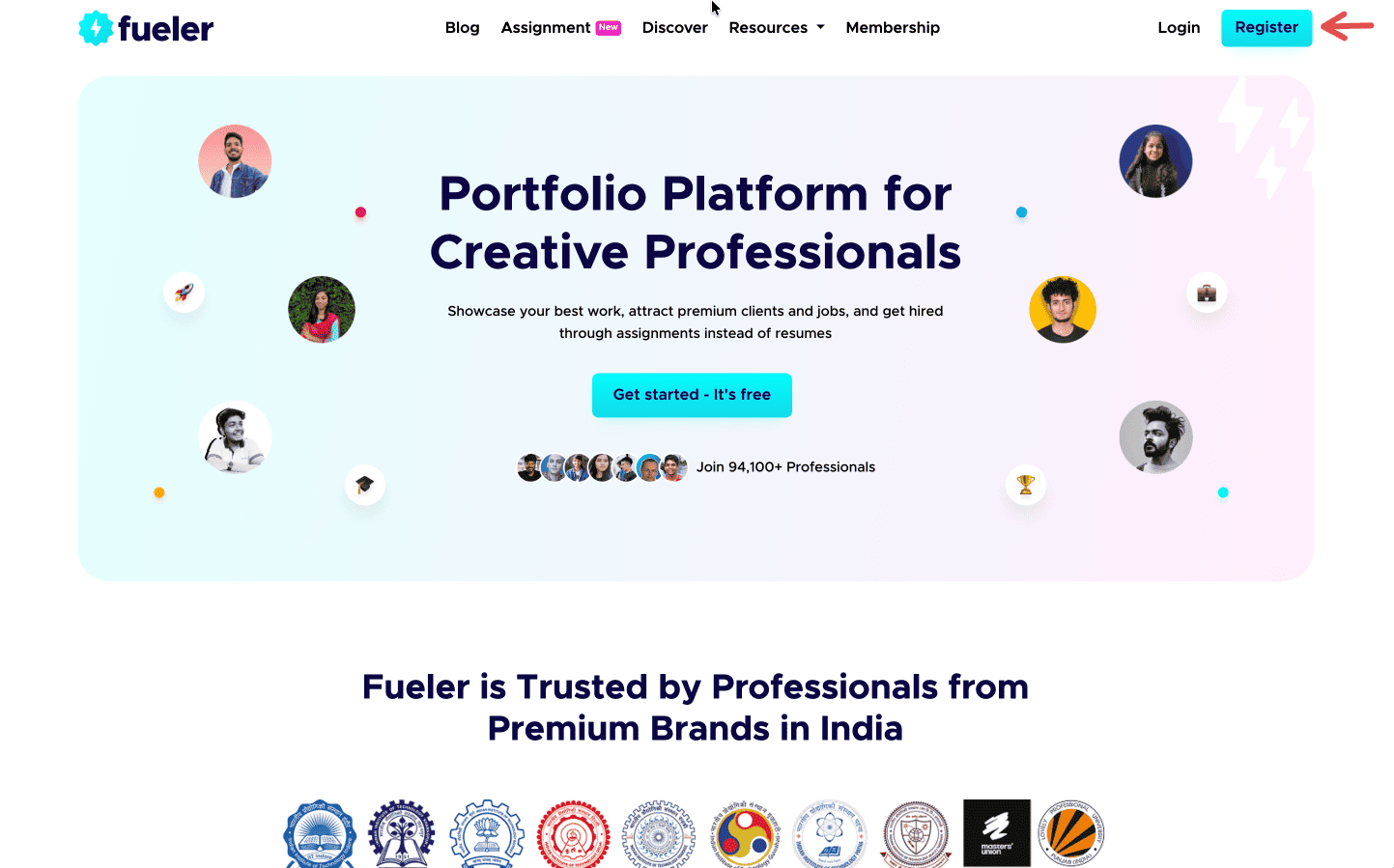
Step 1: Sign up on Fueler.
Head to Fueler.io and create your free account.
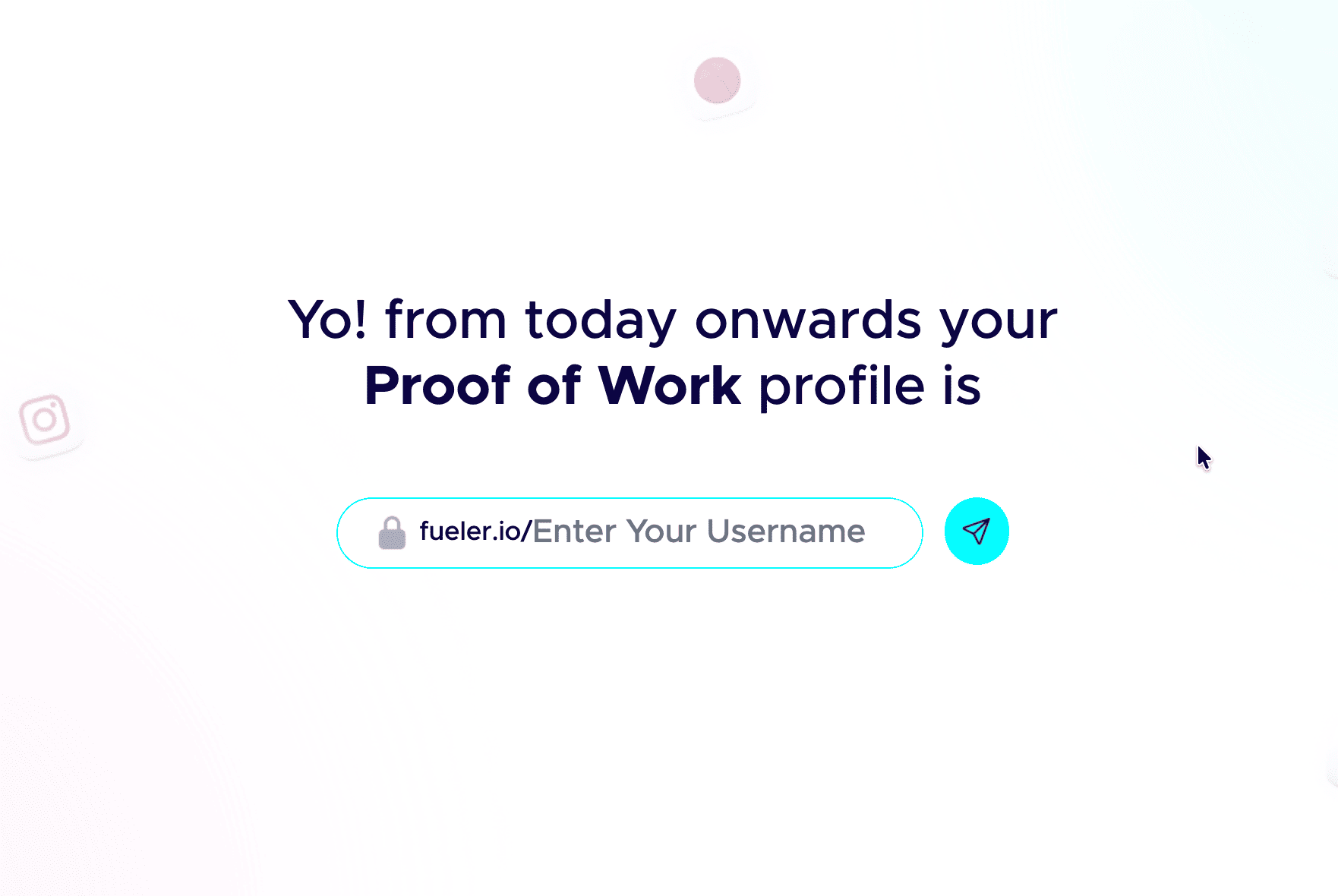
Step 2: Pick a professional handle.
Your handle shows up in your public link, so keep it clean and grown-up. Don’t add nicknames and random numbers. Your name or a simple version of it works best.
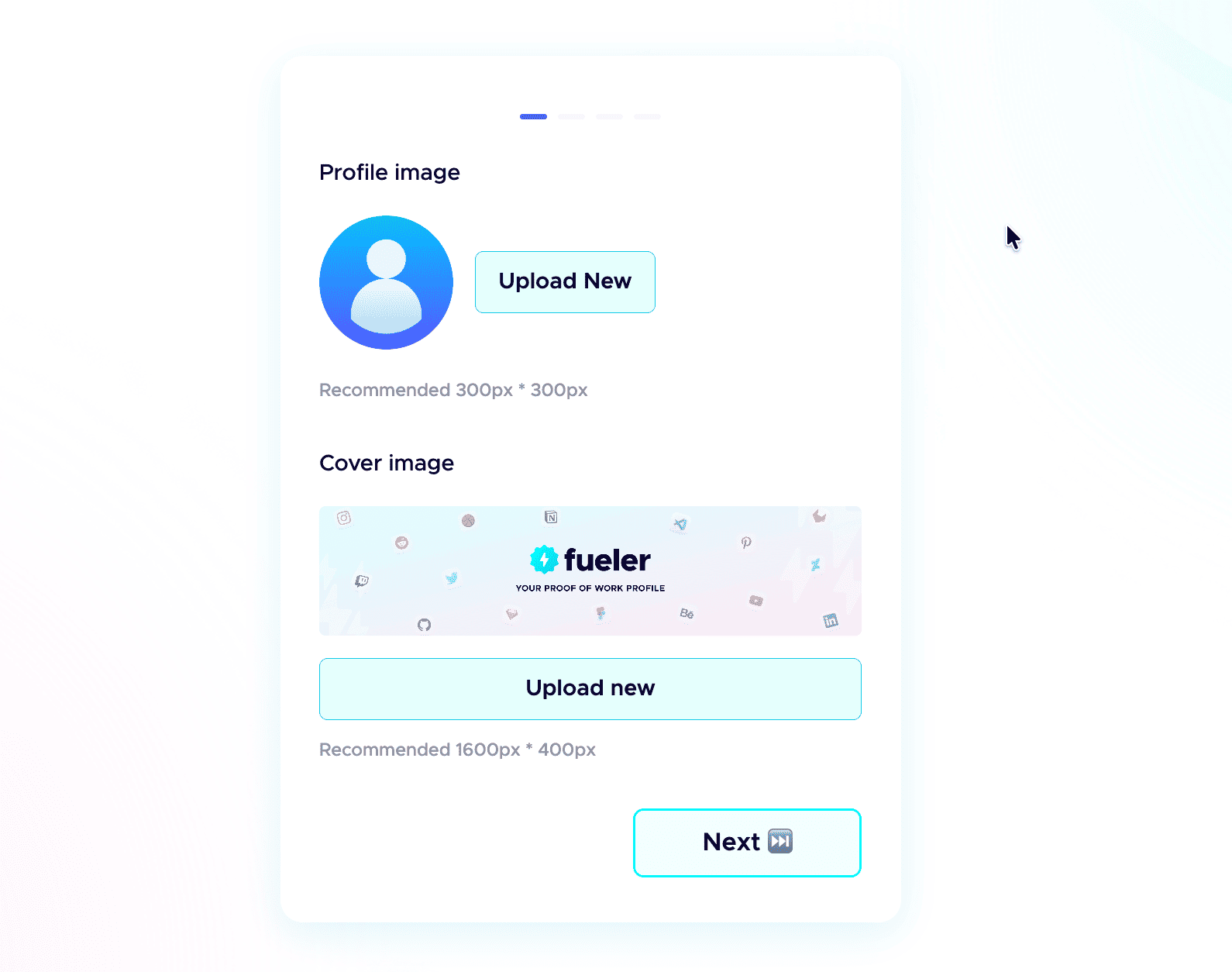
 Step 3: Add a professional profile picture.
Use the same kind of professional photo you would put on LinkedIn. Clear face, good lighting, and a simple background. People trust a real face more than an empty avatar.
Step 4: Write a strong header.
The header is the first thing anyone sees. In one or two short lines, say who you are, what you do, and the kind of work you have done. Make it specific, not vague.
Step 5: Add a short bio.
Tell people who you are and what you do in a few plain sentences. No buzzwords, just enough for a recruiter to get you in five seconds.
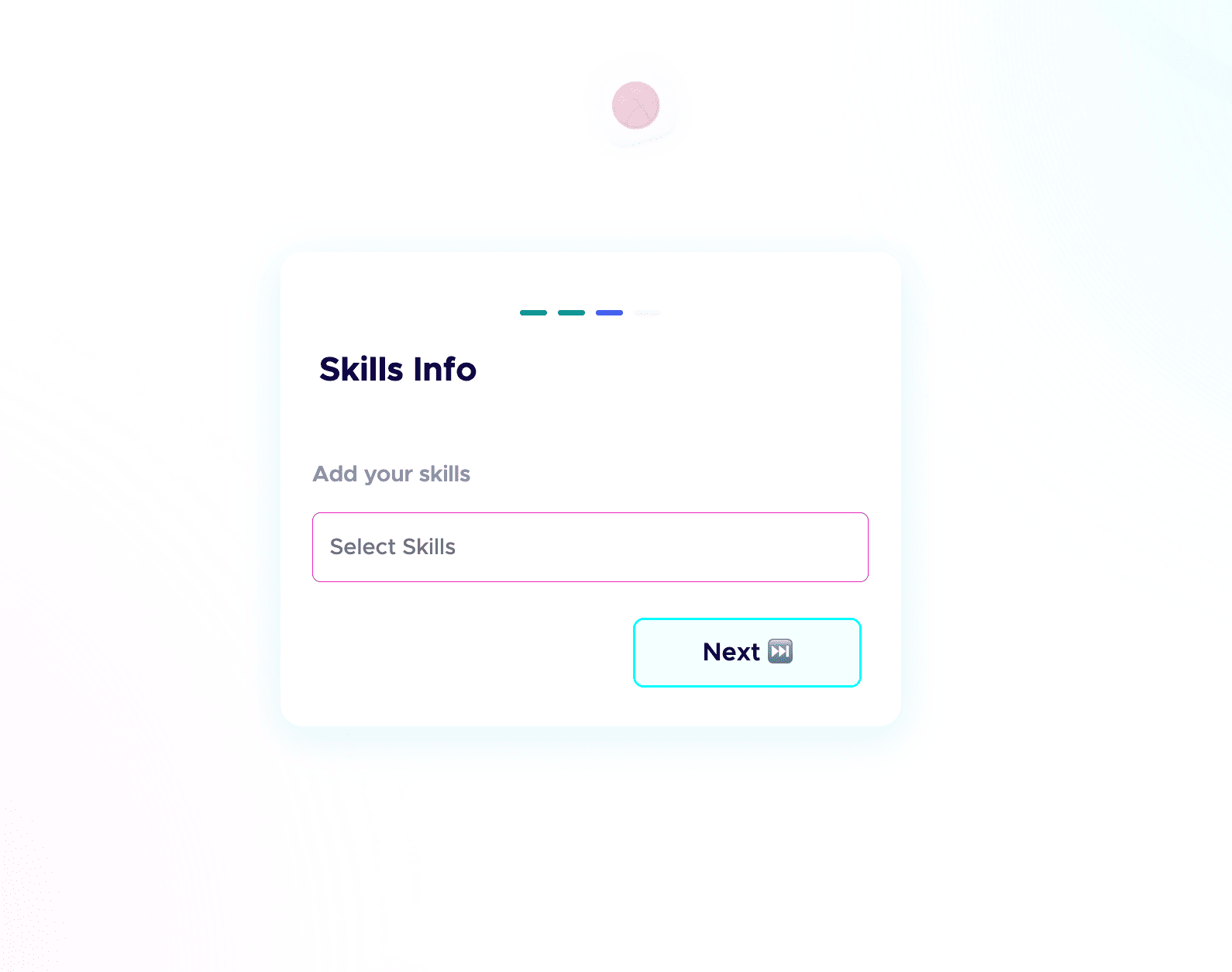
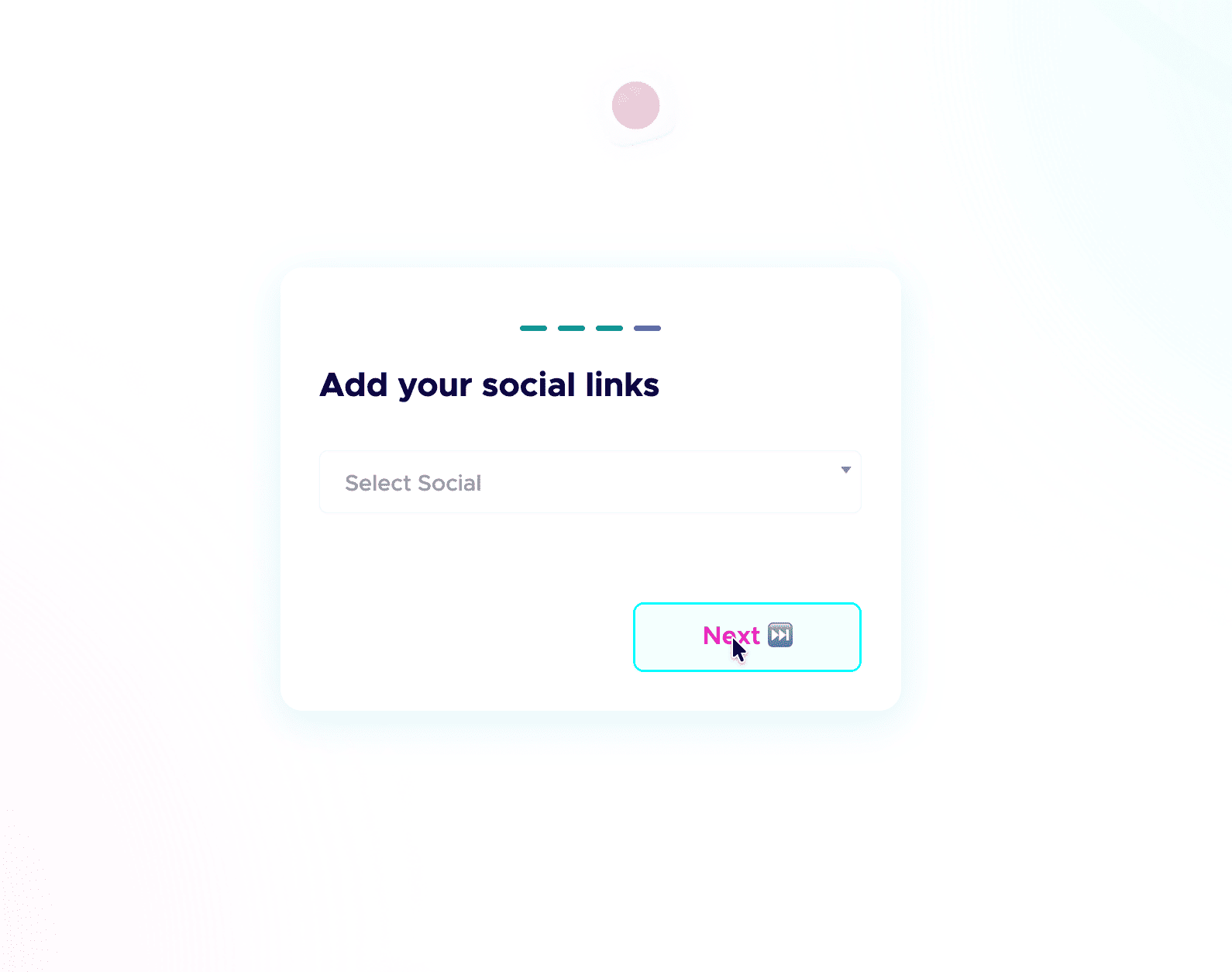
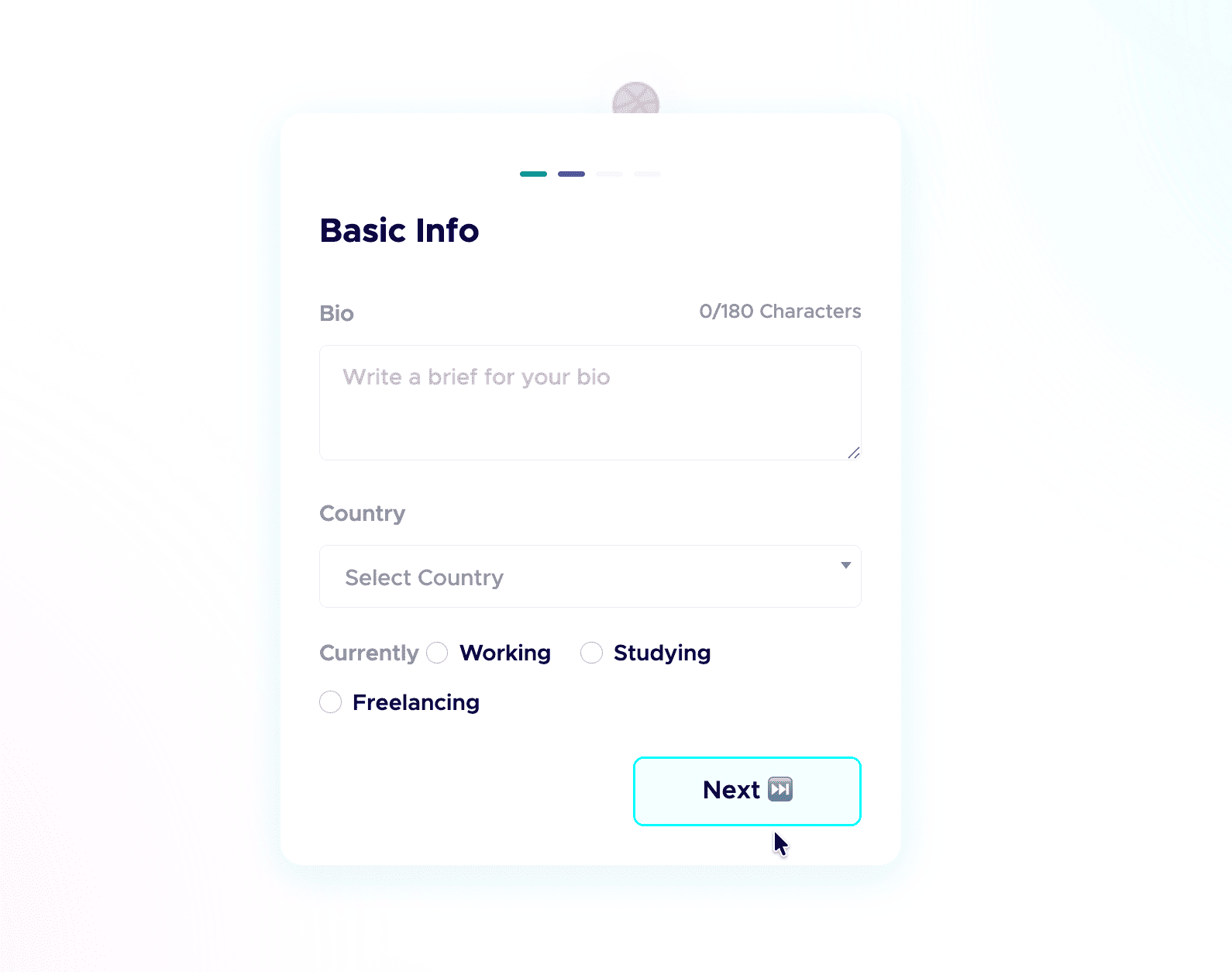 Step 6: Add your skills and social links.
List the skills you are good at and actually want to be hired for, and connect your socials. People do check your profiles, and active socials build credibility before the first call. Students starting from scratch can follow my student guide to their first portfolio.
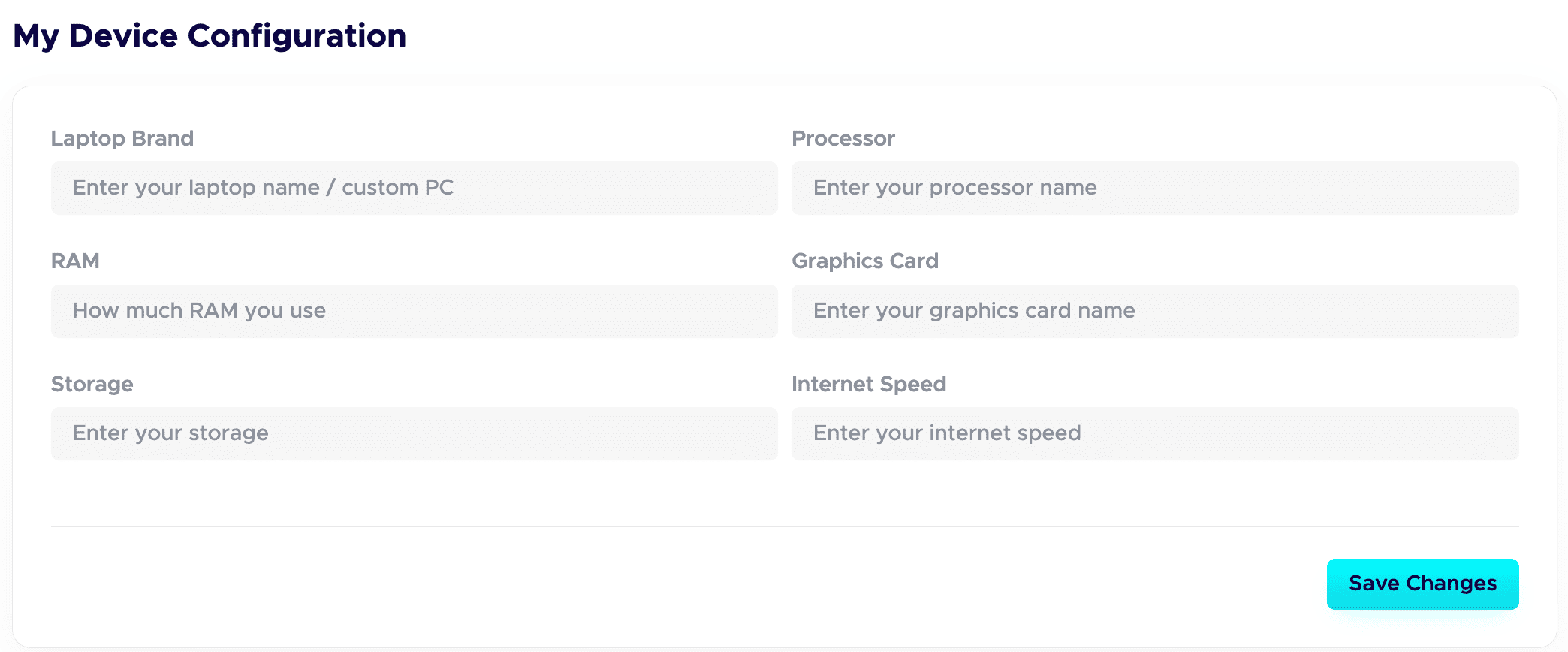
 Step 7: Fill in your Device Configuration.
In your dashboard, set up the Device Configuration section. Add the details about the device you are using. Remote-first companies want to know you have a solid setup to work from. A good setup quietly adds leverage and signals you are ready to deliver.
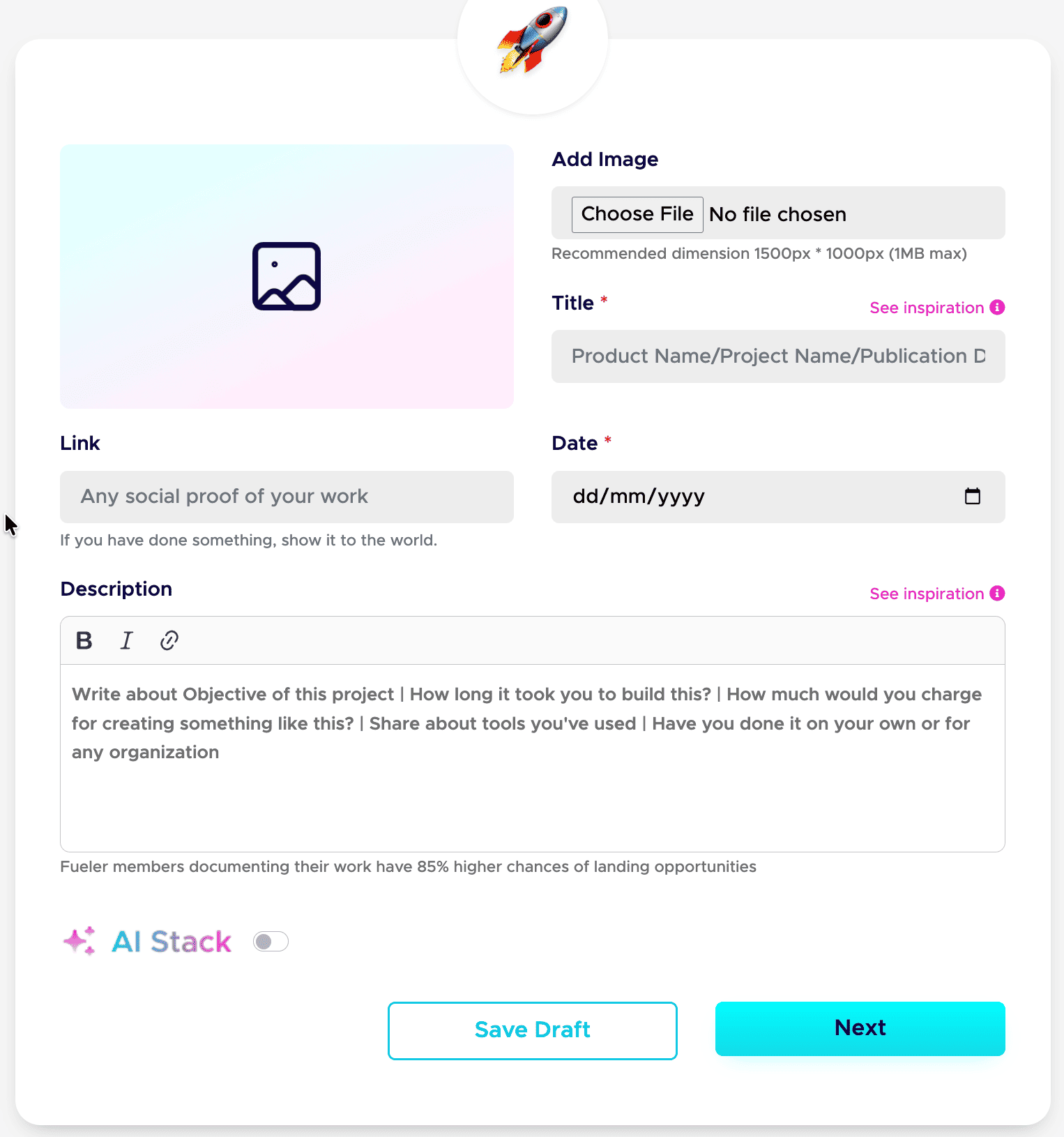
Step 8: Publish your projects with all the details.
This is a game-changer. Give each project a clear title and a detailed description. Walk through your process: your thinking, the tools you used, the choices you made, and the result. Companies care about how you work, not just the final image.
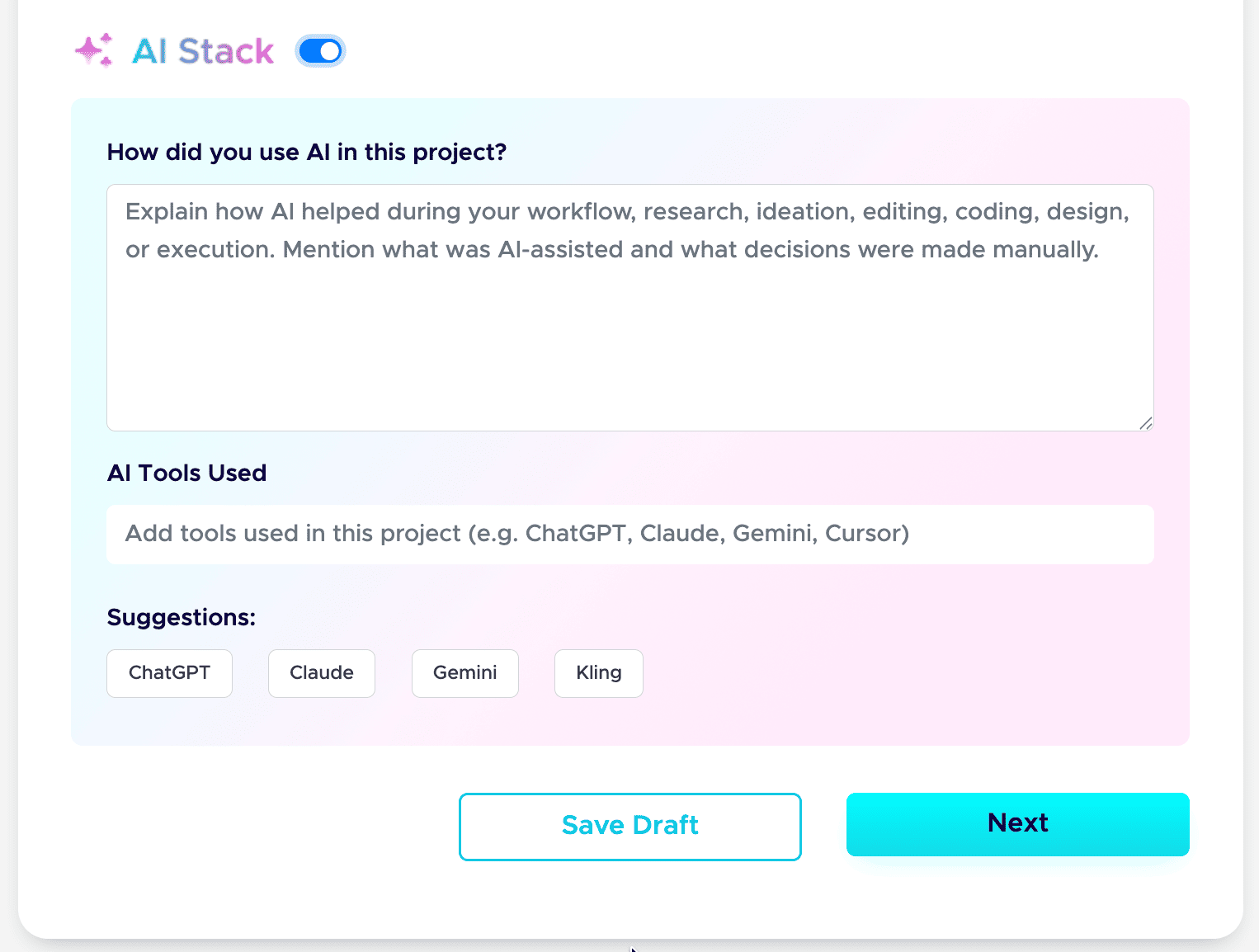
Step 9: Add your AI Stack to each project.
AI is part of real work now, so show it honestly. Use the AI Stack feature to explain how you used AI, which tools you used, and what you did manually. This builds trust instead of raising doubt. Here is the full guide: how to add AI Stack on Fueler.
That is the whole setup. Do these nine steps well, and your profile stops being a static page and starts working as a hiring asset. If you want a tighter version to follow next time, save my 6-step formula for a Fueler portfolio and my breakdown of a career portfolio that actually gets jobs.
Do this once, and you have a link you can drop into your resume, your email signature, and every job application.
6. How Simple Project Cards Outperform Complex Multi-Page Portfolios
When a startup founder is sorting through dozens of applications, they review portfolios with a distinct sense of operational urgency. They do not have the time or patience to read through long, narrative essays or navigate multi-level site menus. Clean, standardized project cards present your expertise in a highly scannable format that delivers answers instantly.
By condensing your professional experience into modular, high-impact summaries, you allow busy decision-makers to quickly evaluate your skill alignment.
- Presenting your core skills in standardized data fields allows hiring teams to cross-reference your past technical experience with their current opening requirements without hunting through paragraphs of text.
- Eliminating confusing multi-level navigation dropdown structures prevents prospective clients from getting lost on your site, keeping them focused purely on your highest-leverage case studies and active contact links.
- Enforcing a clean, minimalist layout design automatically ensures that your actual proof of work remains the absolute hero of the page, completely undisturbed by trendy or distracting visual styling.
- Enabling one-click sharing for individual project entries allows internal recruiters to easily drop your specific, relevant work proofs straight into company Slack channels for fast team review.
- Drastically reducing initial page load times across all devices guarantees that your work opens instantly during low-connectivity travel windows, capturing attention when other portfolio sites time out and fail.
Why It Matters
Speed and clarity always win the attention economy when competing for premium, fast-moving roles. Using a modular project card layout respects the reviewer's limited time while highlighting your operational transparency. It makes saying "yes" to an interview completely friction-free.
7. Overcoming the Procrastination of Endless Personal Site Redesigns
It is incredibly easy to fall into the trap of endlessly tweaking your portfolio site as a way to avoid pitching for new business. This hyper-focus on design details is often just fear of market rejection disguised as dedication to quality craftsmanship. True career traction comes from publishing your work consistently and letting the market interact with it.
Moving to an execution-first platform completely removes layout configuration choices from your plate, forcing you to focus entirely on your work.
- Setting an absolute cap on layout styling options completely breaks the destructive loop of endless font and spacing micro-adjustments, refocusing your creative energy entirely on clarifying your core metric data.
- Committing to a rapid, ten-minute documentation workflow ensures you log critical project takeaways immediately after launch, before key data points and internal metrics get lost in your daily routine.
- Publishing raw, unedited internal project briefs transparently highlights an authentic, highly practical working style that immediately resonates with pragmatic founders who value real execution over corporate fluff.
- Measuring your weekly professional progress by actual shipped logs provides a reliable, tangible metric of your workspace output rather than celebrating abstract design mockups that never go live.
- Normalizing the habit of building your portfolio in public removes the immense psychological pressure of a grand launch, turning career updates into a natural, low-stress extension of your daily workflow.
Why It Matters
The most brilliant case study in the world has zero commercial value if it stays locked inside an unreleased layout draft. Removing frontend design complexity protects your pipeline from self-induced operational delays. It ensures your digital profile evolves at the exact same speed as your actual career.
8. Leveraging Decentralized Social Validation for Instant Credibility
Self-reported claims on a standard resume or isolated personal website are naturally met with heavy skepticism by experienced hiring teams. Anyone can type out a bullet point claiming they managed a massive launch or scaled a social media channel single-handedly. The most definitive way to break through this skepticism is through decentralized peer validation attached directly to your work.
Co-authoring your project proofs with teammates, managers, and clients creates an immutable record of shared success that cannot be faked.
- Inviting verified platform co-creators onto your project logs provides immediate, institutional proof of your active project involvement, instantly removing any hiring doubts regarding your true execution capabilities.
- Displaying explicit, text-based client sign-offs next to your deliverables confirms to prospective leads that your past work successfully met real-world corporate expectations and professional standards.
- Cross-linking your individual project entries with live repositories allows technical reviewers to audit your actual code commits alongside your high-level business case summaries seamlessly.
- Securing hyper-focused, contextual recommendations for specific milestones provides highly relevant social proof exactly where it matters most, completely replacing the need for generic, vague reference letters.
- Exposing your authentic, everyday collaborative communication styles proves to prospective remote teams that you are an organized, transparent, and highly dependable asynchronous asset under real project conditions.
Why It Matters
In a competitive, fast-moving market, trust is the ultimate shortcut to closing premium business deals. Incorporating decentralized validation into your daily project logs completely eliminates the need for long, drawn-out reference checks later in the hiring loop. It turns your professional network into a quiet, continuous engine of career credibility.
How Does This Connect to Building a Strong Career or Portfolio?
Modern hiring prioritizes transparent execution over resume summaries. Documenting your projects builds instant trust with global teams by showing exactly how you solve problems. Using Fueler lets you easily organize your proof of work, connect with collaborators, and show your true business impact, helping you stand out in competitive spaces.
Final Thoughts
The era of treat-your-portfolio-like-a-fine-art-museum is officially coming to a close for modern operational talent. Founders do not have the bandwidth to decode over-engineered web layouts when they are trying to fix immediate business bottlenecks. True career security in 2026 requires a lean, fast, and indexable repository of your actual outcomes. Shift your focus away from wrestling with layout breakpoints and invest it into tracking your business metrics. The professionals who prioritize clear proof of work over superficial design finishes will always control the market.
FAQs
Why should I choose a data-first alternative over a visual site builder?
Data-first alternatives prioritize clean semantic code, incredibly fast loading speeds, and consistent layouts that AI search engines and busy recruiters can easily index. This approach ensures your real-world outcomes are instantly discoverable without design distractions.
How do visual portfolio designs negatively impact modern AI recruitment tools?
Visual-heavy builders often tuck text away inside non-standard layout blocks or unreadable script layers. This chaotic layout structure makes it incredibly difficult for automated scouting bots to accurately extract and index your core professional skills.
Is a simple project card repository enough to land high-paying roles?
Absolutely. High-paying companies hire based on risk mitigation and proven business outcomes rather than fancy animations. Presenting your case studies in a clean, highly scannable format allows founders to verify your value quickly and confidently.
How can I move my existing case studies over to a simpler platform?
You can easily migrate your work by breaking your long case studies down into modular project entries. Focus on capturing the core project challenge, your specific tool stack, the live links, and the direct business metrics achieved.
Does a simplified portfolio framework limit creative expression for designers?
Not at all. It actually keeps your creative work focused entirely on your project deliverables rather than wasting it on site infrastructure. A clean, minimalist frame makes your actual design files and case studies stand out much more effectively.
Why 100,000+ professionals use Fueler
Fueler helps professionals showcase proof of work through projects, assignments, case studies, and achievements.
- Thousands of professionals use Fueler to create their digital portfolio
- Thousands of projects are published on Fueler. Check here
- Startups and Companies hire through proof of work on Fueler
- Used by freelancers, creators, marketers, video editors, writers, designers, and product managers
Our mission is to help the next 100 million professionals build a verified professional identity through proof of work

What should you do next?
You've read the article. Now turn your skills into proof of work and unlock more opportunities.
Build your proof of work portfolio
Create a clean portfolio with projects, assignments, resumes, and AI stack details that companies actually want to see.
Create your Fueler portfolio →Apply through assignments, not resumes
Stand out by solving real tasks from companies hiring on Fueler.
Explore assignments →Get discovered by companies
Make your work public and let recruiters discover your skills through actual projects instead of keywords.
Get discovered →
