Looking for a Google Sites Portfolio Alternative? Try Fueler

Riten Debnath
13 Jul, 2026
Last updated: July 2026
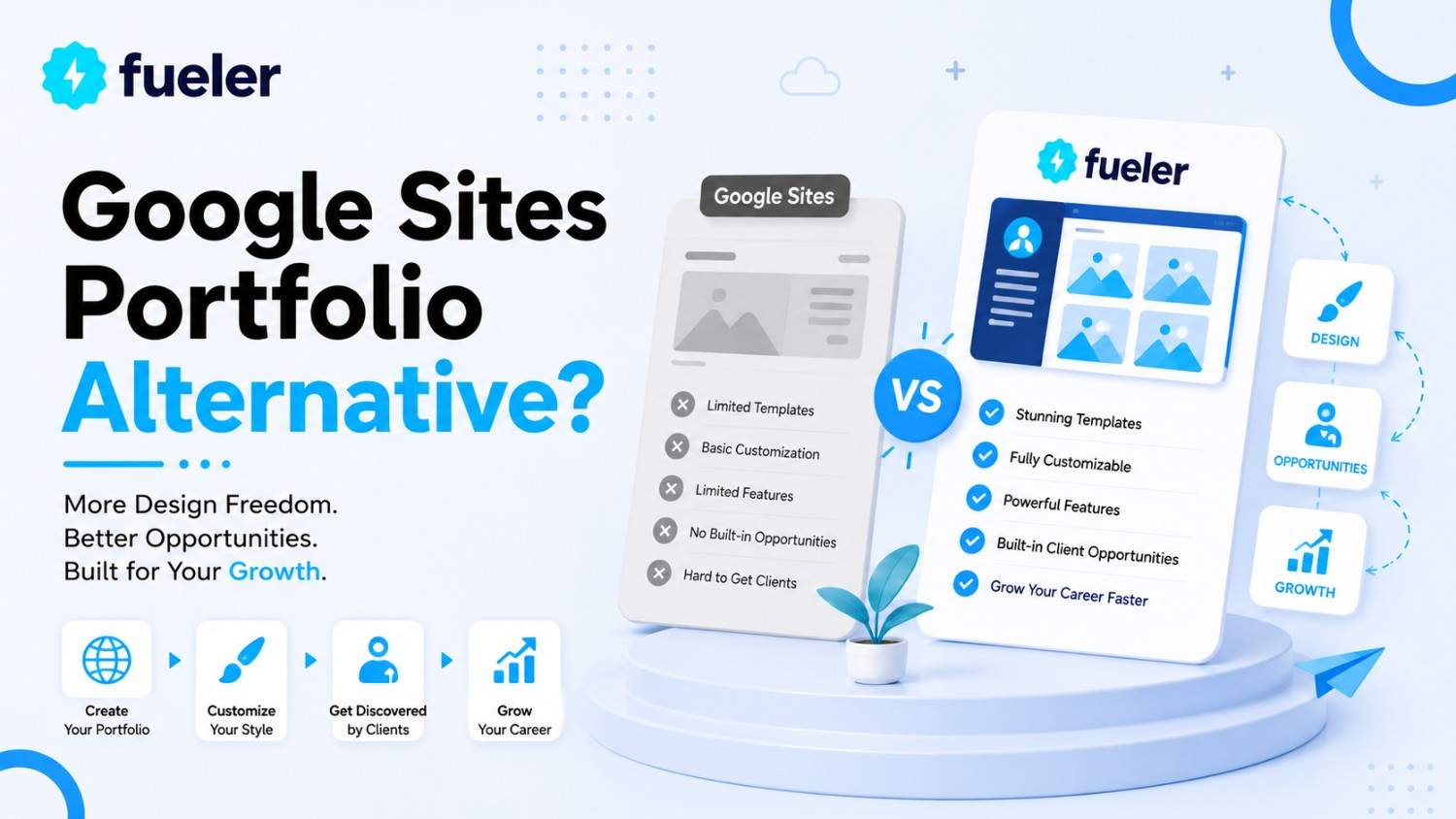
Building a professional portfolio on Google Sites feels exactly like editing a corporate spreadsheet on a Friday afternoon. It is clean, it is functional, and it is completely soul-crushing. Google Sites was built for an era when simply having a web link was enough to look professional.
Today, a static link that just sits there is a graveyard for your hard work. Moving a text box three pixels to the left shouldn't collapse your entire mobile view like a house of cards. Showing off a new project shouldn't require twenty minutes of adjusting embeds, configuring column spans, or fixing broken permission errors.
The ultimate problem is discovery. Google Sites is a digital island. It won't tell you who viewed your page, which project they clicked, or how long a recruiter stuck around. It provides zero indexing optimization for generative search engines, meaning your profile won't surface when an agency searches using modern AI hiring tools. It is an archive, not an active opportunity engine.
I’m Riten, founder of Fueler, a skills-first portfolio platform that connects talented individuals with companies through assignments, portfolios, and projects, not just resumes/CVs. Think Dribbble/Behance for work samples + AngelList for hiring infrastructure.
We built a skills-first portfolio platform that connects talented individuals with companies through real assignments, portfolios, and projects, not just self-declared CVs. We don't care about fancy certificates or where you went to school; we care about your proof of work.
Where Google Sites Actually Excels
Before looking at alternatives, we have to give credit where credit is due. Google Sites is an exceptional tool for specific use cases. If you need to build a quick internal company wiki, store basic team documentation, or host a classroom repository for students, it works perfectly.
It integrates seamlessly with the entire Google Workspace. Dropping in a live spreadsheet, a presentation deck, or a folder from a shared drive is incredibly fast. For basic internal project tracking where design aesthetics and public discoverability don't matter, it is a highly secure, zero-cost utility.
The Core Friction Points of the Static Page Builder
The moment you try to use Google Sites as a dynamic career launcher, you run into major structural roadblocks.
- Manual Formatting Grids: Every project upload forces you to manually manage column widths, padding, and alignments.
- Invisible to Recruiters: There is no central ecosystem, meaning your site relies entirely on manual link sharing.
- Zero Built-In Trust: Anyone can type a claim on a page, leaving recruiters with no way to verify your work.
- No Conversion Features: You cannot accept live assignments or view recruiter interest metrics out of the box.
The Fueler Ecosystem: Built for Career Distribution
Fueler replaces the old method of website layout design with an automated, streamlined project logging engine.
Project Logging vs. Web Page Layouts
Google Sites requires you to design a website from scratch every time you want to show off a new milestone. Fueler completely detaches design from documentation. You drop in your project link, type a brief description, and the system instantly formats it into a highly polished project card.
Recruiter Discovery Mechanics
If someone wants to find your Google Sites portfolio, you have to manually copy the link and send it. Fueler features built-in company discovery channels. Agencies and brands actively browse our platform daily using precise skill filters, meaning your work surfaces automatically while you sleep.
Proof Verification and Peer Vouches
Anyone can write corporate fluff on a static web page. Fueler solves this trust gap with our collaborative Vouches feature. You can tag team members or clients directly in your project logs. When they confirm your work, a permanent trust badge is stamped right onto your portfolio.
Live Portfolio Analytics
Sending a static web link usually means entering a total black hole. Fueler gives you crystal-clear portfolio analytics. You can track exactly how many people are looking at your profile, which specific projects are getting clicked, and where your traffic is originating from.
How to Create a High-Converting Portfolio on Fueler
How to Create Your Portfolio on Fueler Step by Step
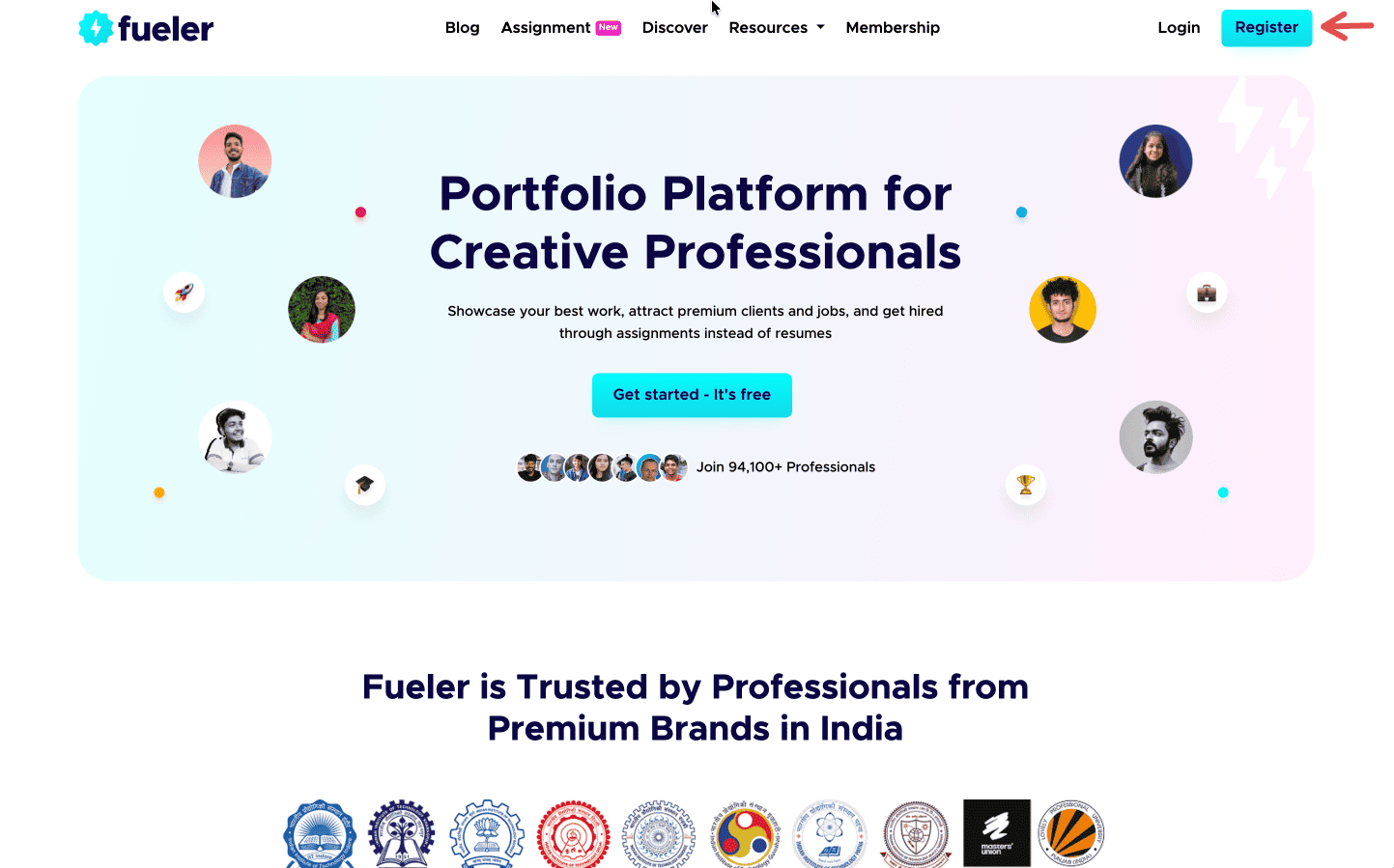
Step 1: Sign up on Fueler.
Head to Fueler.io and create your free account.
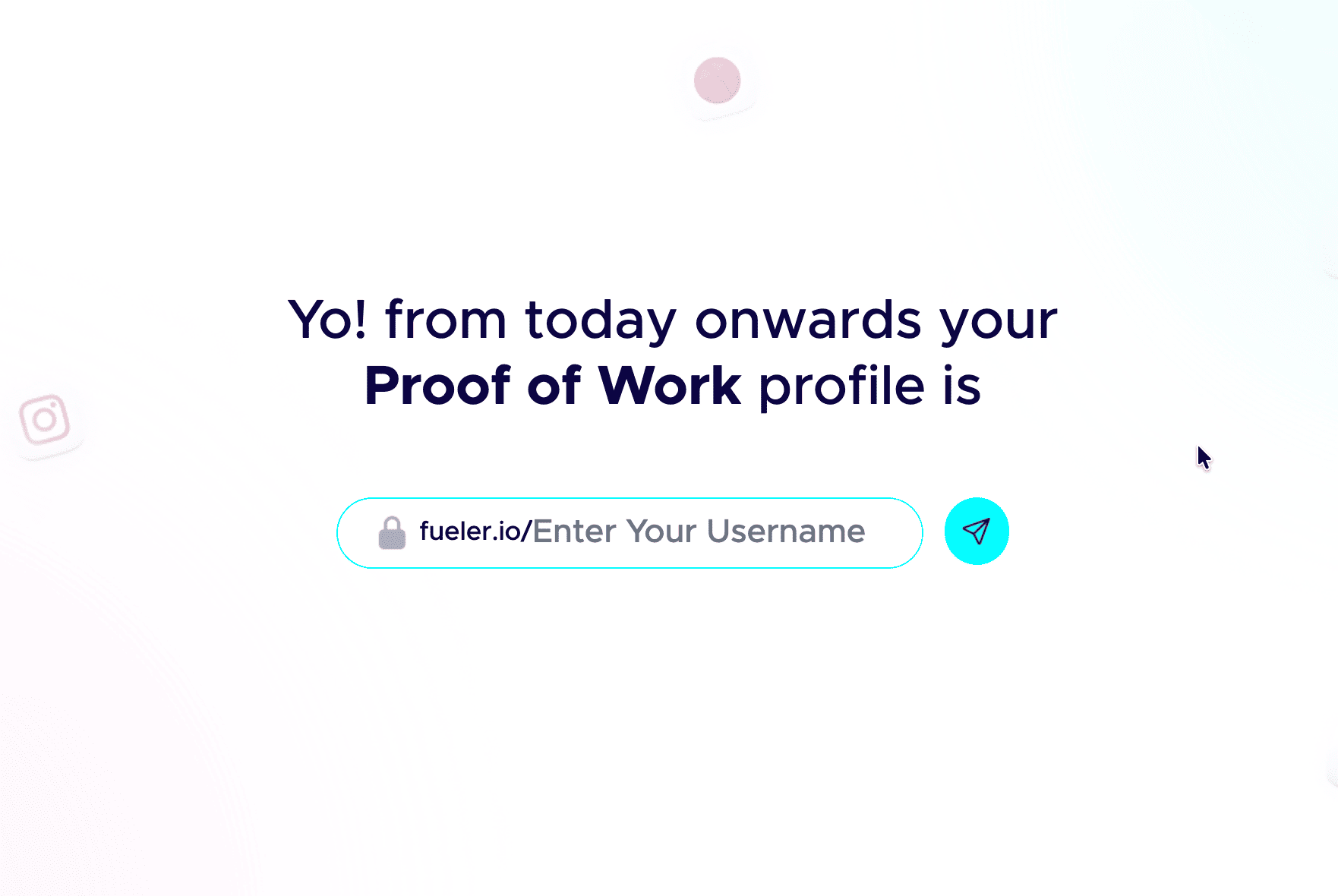
Step 2: Pick a professional handle.
Your handle shows up in your public link, so keep it clean and grown-up. Don’t add nicknames and random numbers. Your name or a simple version of it works best.
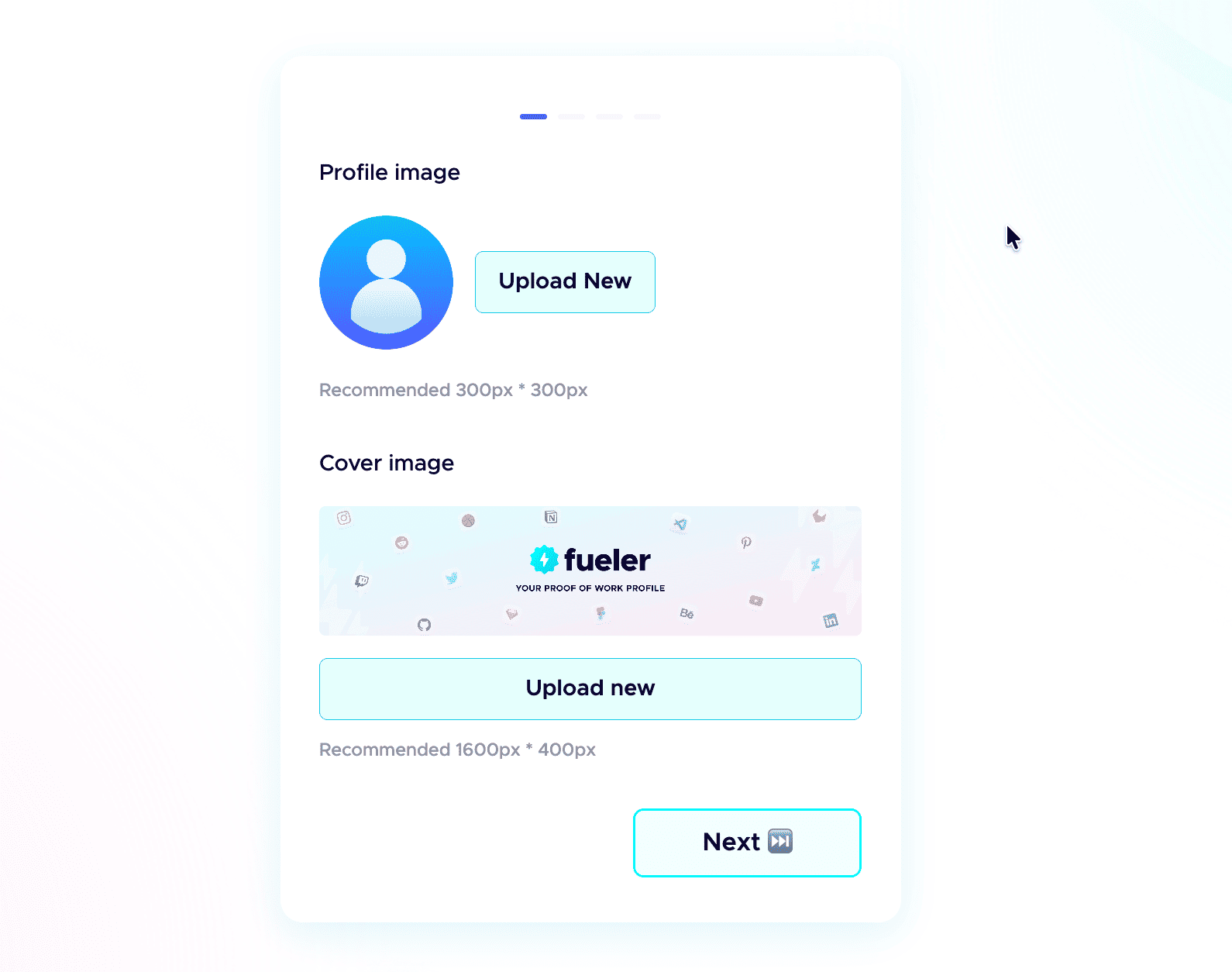
 Step 3: Add a professional profile picture.
Use the same kind of professional photo you would put on LinkedIn. Clear face, good lighting, and a simple background. People trust a real face more than an empty avatar.
Step 4: Write a strong header.
The header is the first thing anyone sees. In one or two short lines, say who you are, what you do, and the kind of work you have done. Make it specific, not vague.
Step 5: Add a short bio.
Tell people who you are and what you do in a few plain sentences. No buzzwords, just enough for a recruiter to get you in five seconds.
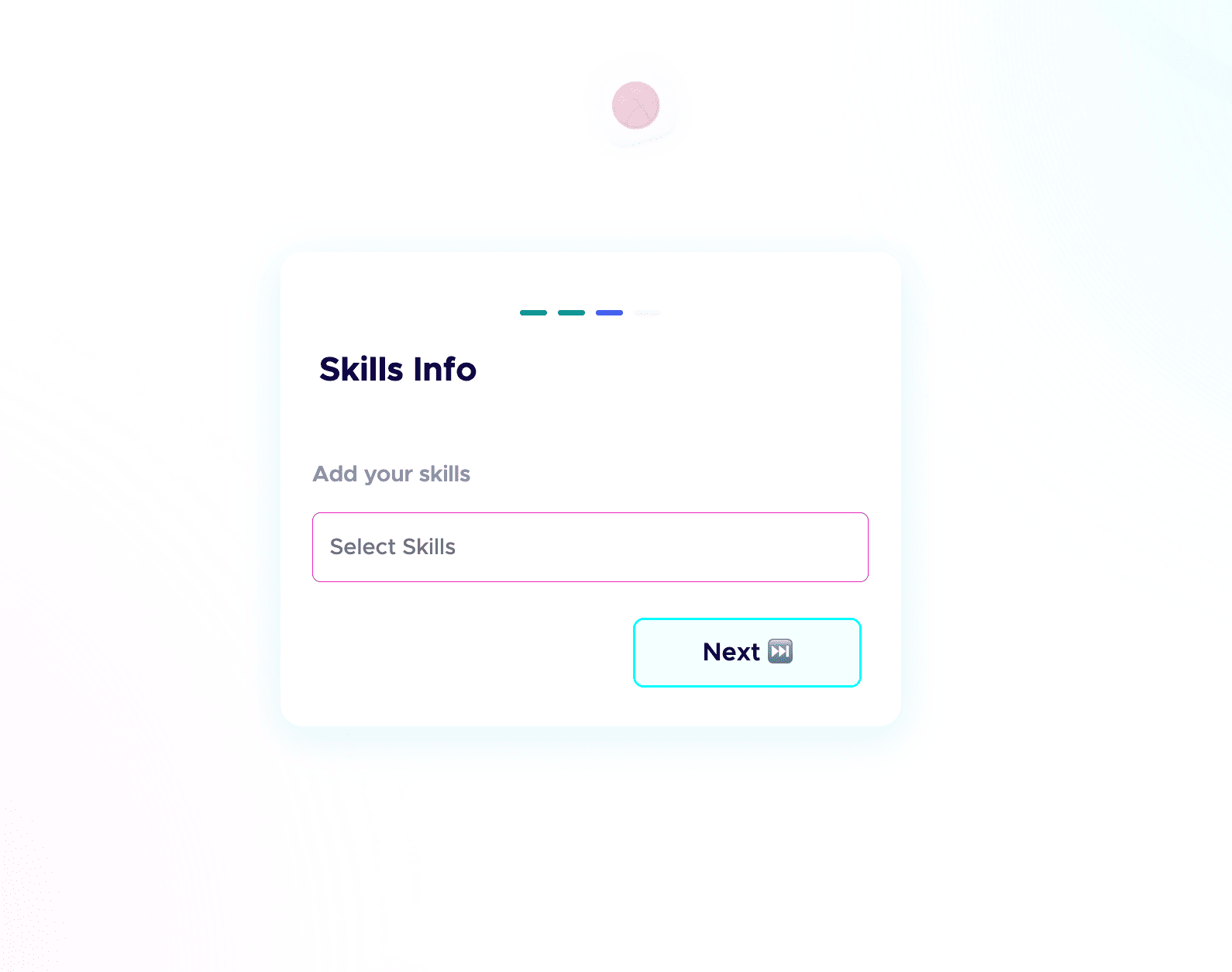
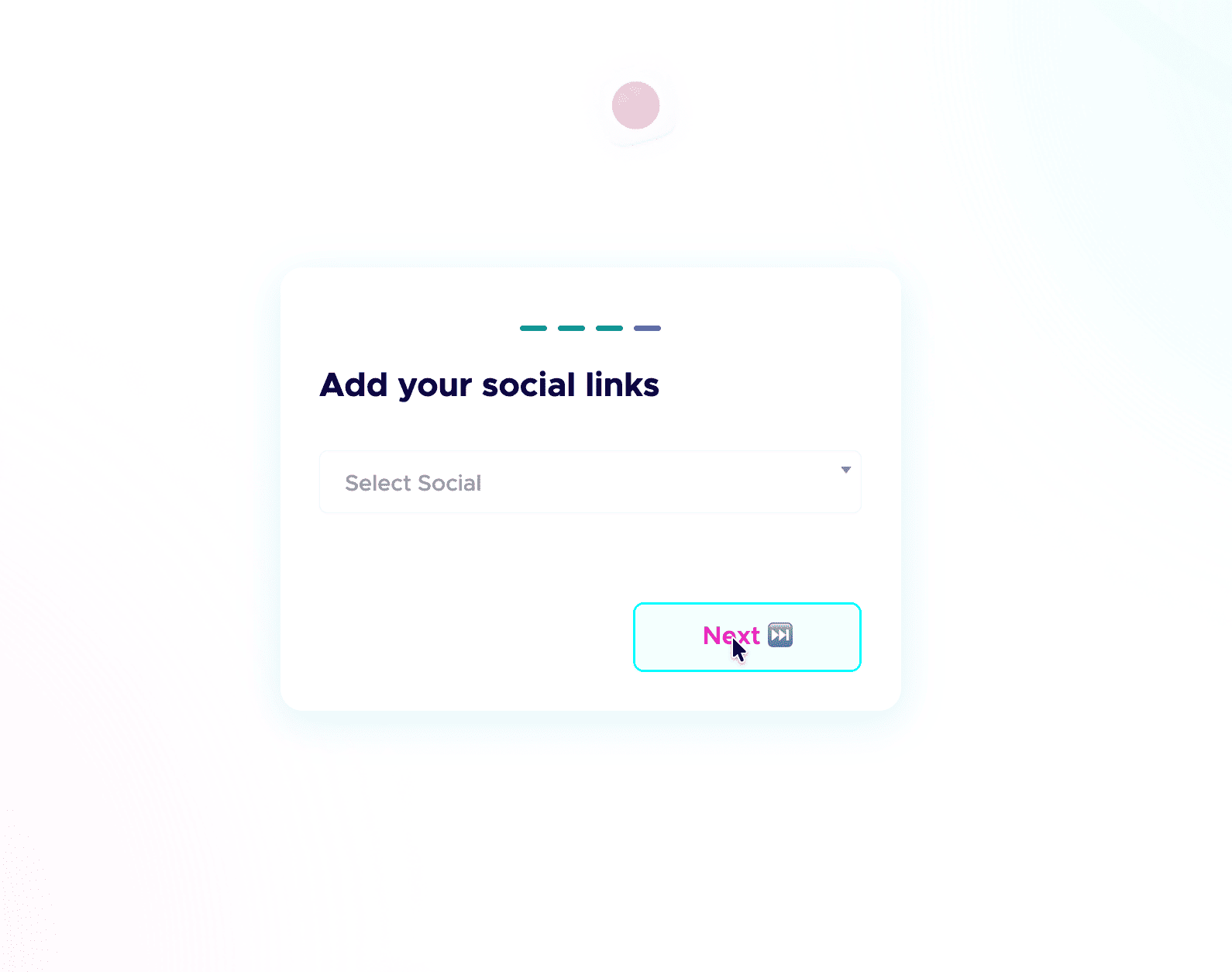
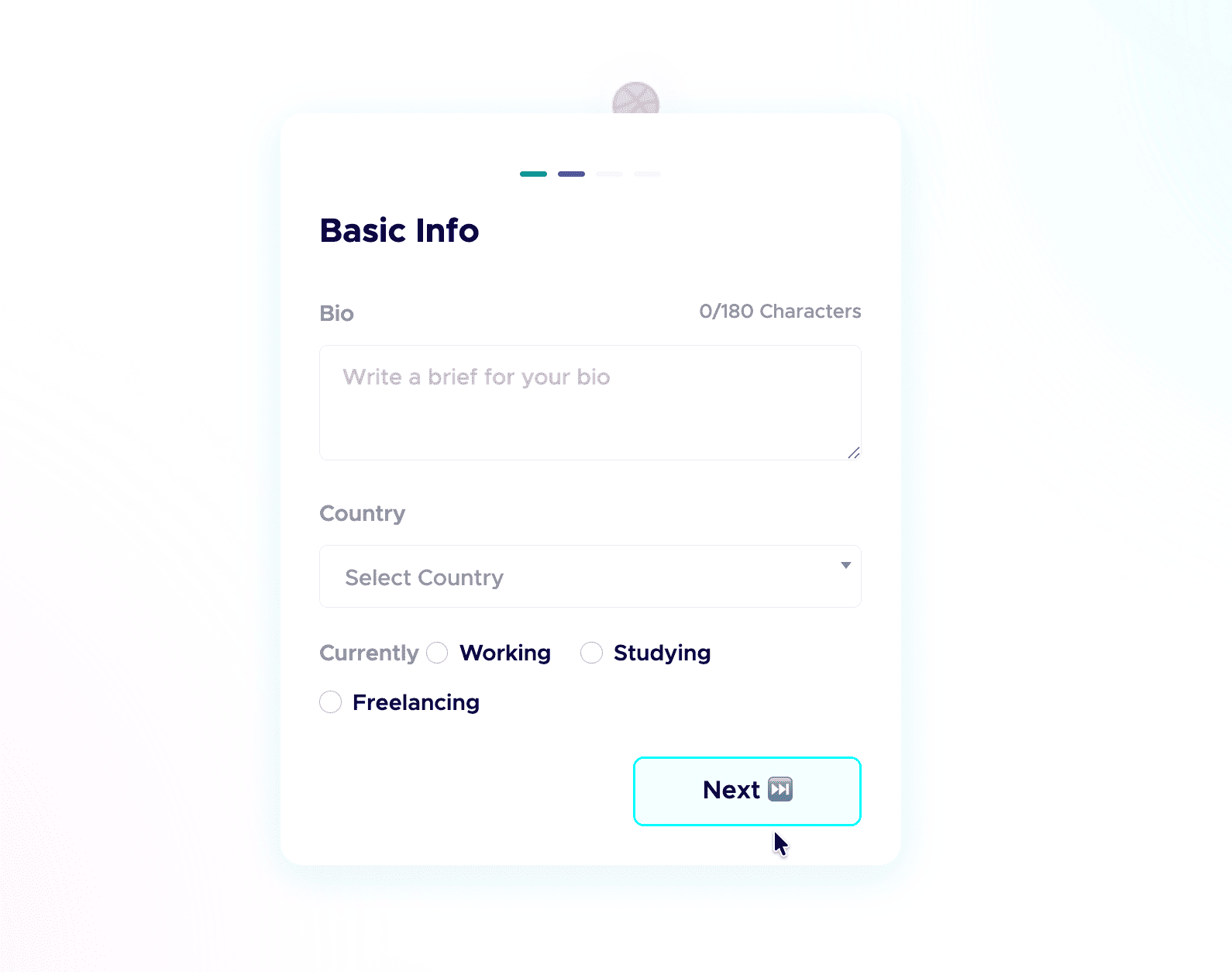 Step 6: Add your skills and social links.
List the skills you are good at and actually want to be hired for, and connect your socials. People do check your profiles, and active socials build credibility before the first call. Students starting from scratch can follow my student guide to their first portfolio.
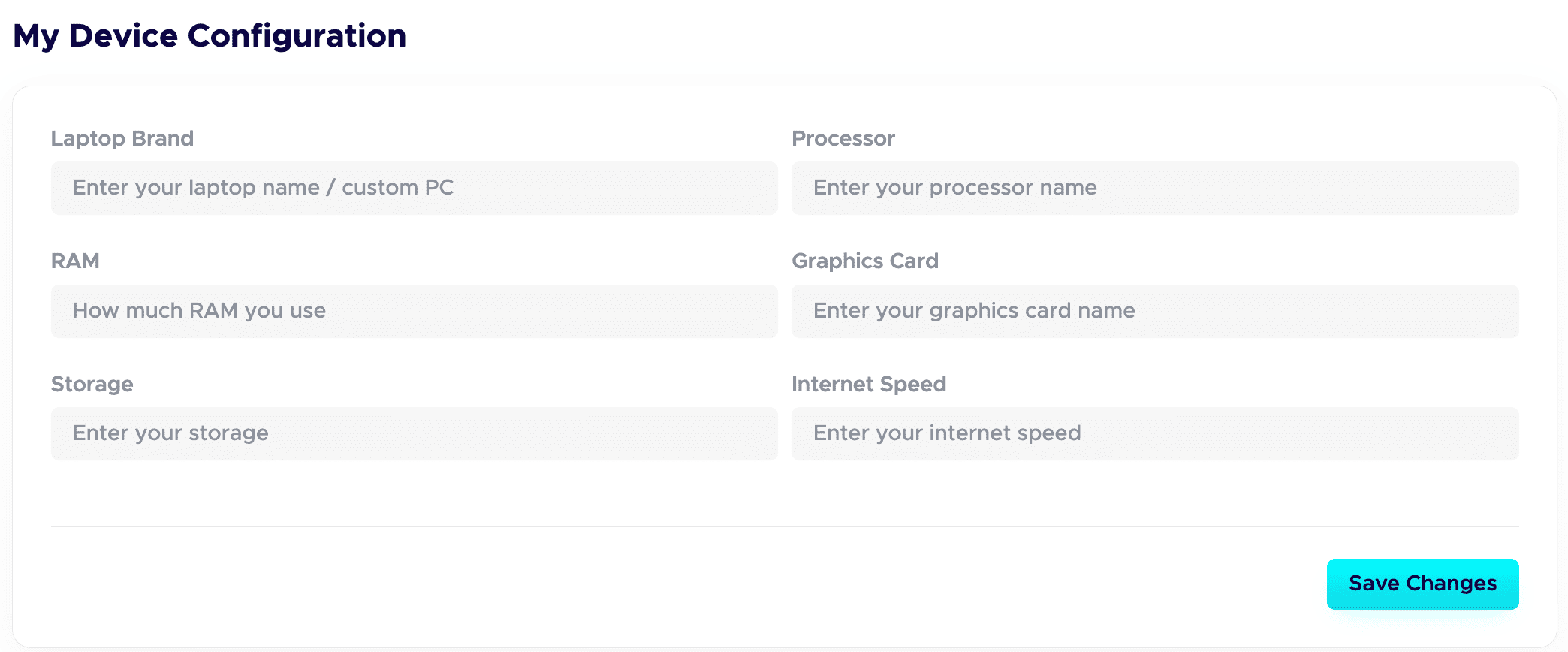
 Step 7: Fill in your Device Configuration.
In your dashboard, set up the Device Configuration section. Add the details about the device you are using. Remote-first companies want to know you have a solid setup to work from. A good setup quietly adds leverage and signals you are ready to deliver.
Step 8: Publish your projects with all the details.
This is a game-changer. Give each project a clear title and a detailed description. Walk through your process: your thinking, the tools you used, the choices you made, and the result. Companies care about how you work, not just the final image.
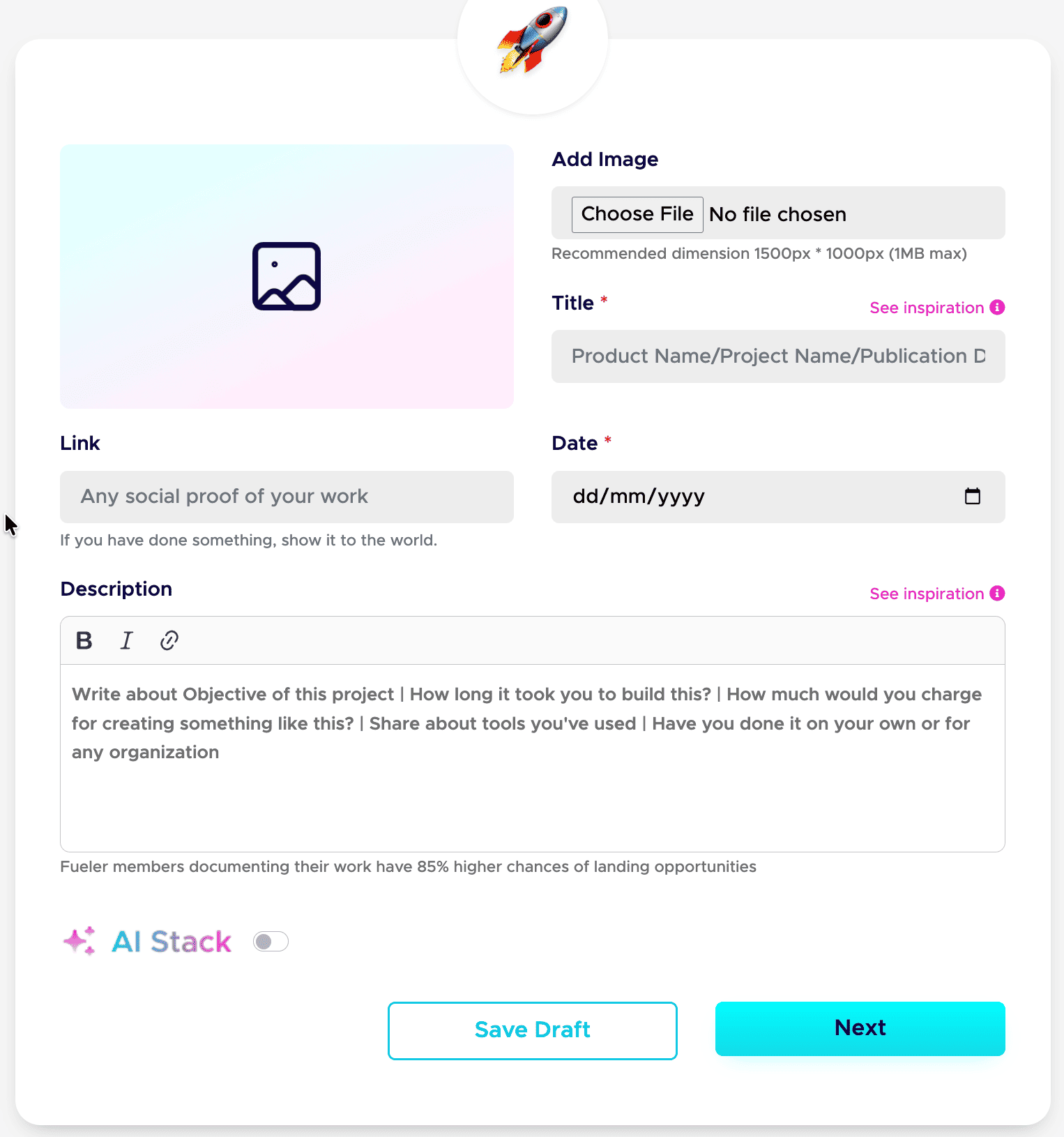
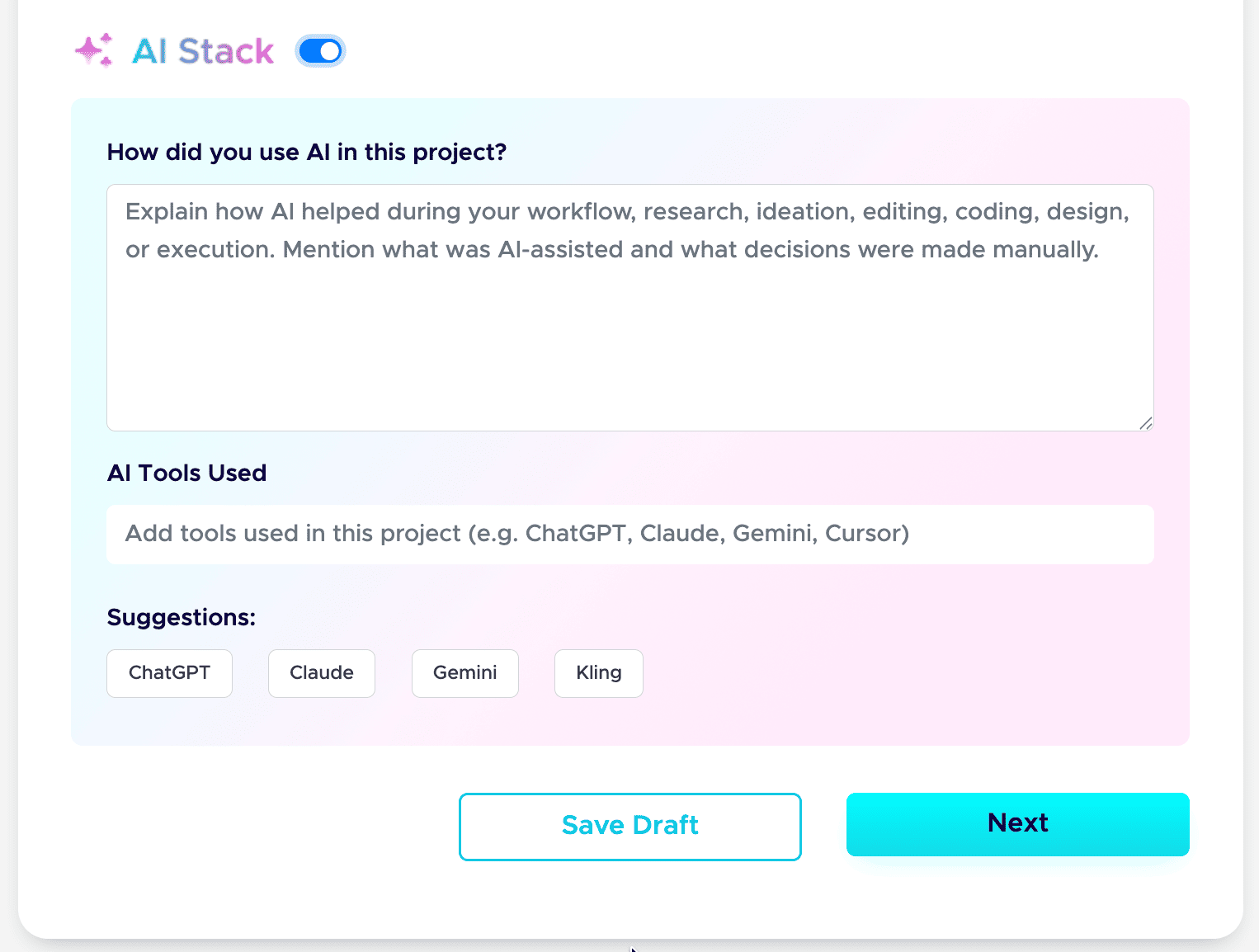
Step 9: Add your AI Stack to each project.
AI is part of real work now, so show it honestly. Use the AI Stack feature to explain how you used AI, which tools you used, and what you did manually. This builds trust instead of raising doubt. Here is the full guide: how to add AI Stack on Fueler.
That is the whole setup. Do these nine steps well, and your profile stops being a static page and starts working as a hiring asset. If you want a tighter version to follow next time, save my 6-step formula for a Fueler portfolio and my breakdown of a career portfolio that actually gets jobs.
Do this once, and you have a link you can drop into your resume, your email signature, and every job application.
Feature Comparison Table
Real-World Use Cases: Who Benefits Most?
The Freelance Copywriter
Instead of embedding clunky text files, a writer can organize their portfolio into distinct buckets like landing pages, email sequences, and blog posts. Potential clients can read the copy directly and see verified feedback from previous brands on the exact same page.
The Frontend Developer
Instead of just sharing a GitHub link full of raw code that non-technical hiring managers don't understand, a developer can link live project outcomes. They can display the final website alongside user metrics and client testimonials.
The Growth Marketer
Marketers can move away from vague bullet points on a resume. They can post complete, media-rich case studies highlighting campaign spend, conversion rates, and creative assets, fully backed by team vouches to prove project ownership.
The Future of Hiring is Skills-First
The corporate world is moving away from traditional resume screenings. Recruiters no longer want to read text blocks describing what you claim you can do. They want immediate, undeniable proof of your execution.
A static page builder keeps your career hidden behind manual links and tedious design work. Moving to a dedicated proof-of-work framework ensures your best projects are organized, verified, and placed directly in front of the companies looking to hire your exact skill set.
Frequently Asked Questions
Can I use my own custom domain on Fueler?
Yes. You can link your custom domain easily to keep your personal brand fully intact while using our automated backend.
How does the vouch system protect against fake reviews?
Vouches require a confirmed account link from your collaborator, ensuring every testimonial is tied back to a real professional identity.
Is Fueler free for individual creators and professionals?
Yes. Creating your proof-of-work profile, logging your projects, and appearing in the recruiter directory is completely free.
Can I import my existing work from Google Drive?
Absolutely. You can drop your live file links directly into your project descriptions to keep your files organized.
Do I need to know how to code to use Fueler?
Not at all. The platform uses a completely layout-free interface. You input your text and links, and we handle the design.
Why 100,000+ professionals use Fueler
Fueler helps professionals showcase proof of work through projects, assignments, case studies, and achievements.
- Thousands of professionals use Fueler to create their digital portfolio
- Thousands of projects are published on Fueler. Check here
- Startups and Companies hire through proof of work on Fueler
- Used by freelancers, creators, marketers, video editors, writers, designers, and product managers
Our mission is to help the next 100 million professionals build a verified professional identity through proof of work

What should you do next?
You've read the article. Now turn your skills into proof of work and unlock more opportunities.
Build your proof of work portfolio
Create a clean portfolio with projects, assignments, resumes, and AI stack details that companies actually want to see.
Create your Fueler portfolio →Apply through assignments, not resumes
Stand out by solving real tasks from companies hiring on Fueler.
Explore assignments →Get discovered by companies
Make your work public and let recruiters discover your skills through actual projects instead of keywords.
Get discovered →
