Looking for a Dribbble Alternative? Try Fueler

Riten Debnath
11 Jul, 2026
Last updated: July 2026
There was a time when a Dribbble profile was the ultimate designer flex. You’d drop a sleek, 800x600 pixel UI snapshot of a hypothetical space-travel app, watch the pink "L" buttons light up, gather a few "Nice work, bro!" comments from fellow designers, and feel like you were ready to conquer the design world.
It was a great era. Dribbble built an incredible community for aesthetic inspiration and peer validation.
But if you are reading this, you’ve likely noticed that the ground has shifted under your feet. It is 2026. The job market is brutal, application volumes are at an all-time high, and hiring managers are experiencing acute "speculative concept fatigue."
When an engineering lead or a startup founder is looking to hire, a pretty snapshot of a landing page hero section doesn’t cut it anymore. They want to know if your beautiful button actually made people click. They want to know how you handled the engineering constraints when the codebase broke. They want to see your actual messy, real-world execution.
If your Dribbble profile is getting thousands of views from other designers but zero high-intent inbox messages from people who actually have a budget to hire you, you don’t need more design feedback. You need a migration strategy.
I’m Riten, founder of Fueler, a skills-first portfolio platform that connects talented individuals with companies through assignments, portfolios, and projects, not just resumes/CVs. Think Dribbble/Behance for work samples + AngelList for hiring infrastructure.
Let’s break down exactly why the creative industry is moving toward proof of work, where Dribbble still shines, and how you can transition your portfolio into an opportunity magnet.
Quick Answer & Key Takeaways
If you are in a rush and need to make a decision right now, here is the short answer block to optimize your choice:
The Core Difference: Dribbble is designed for visual discovery and aesthetic inspiration within a peer network. Fueler is built for career proof of work and direct recruiter discoverability, allowing you to document full case studies, verify collaborative projects, and clear the neighborhood of speculative fluff.
- Aesthetic vs. Outcome: Dribbble displays what a project looks like; Fueler documents how the project worked, who verified it, and what business metrics it moved.
- Audience Split: Dribbble’s primary audience is other designers looking for ideas. Fueler’s primary audience consists of founders, product managers, and recruiters looking to hire.
- Format Freedom: Dribbble is strictly visual (images, video clips). Fueler allows multi-disciplinary talent to publish text, live links, code repositories, design files, and full rich-text case studies on a single no-code profile.
Where Dribbble Excels (An Honest Assessment)
Before we look at why professionals are diversifying their portfolios, let’s give credit where it is due. Dribbble wasn't built to be a robust, end-to-end case study platform. It was engineered as a digital show-and-tell for designers, and it does that phenomenally well.
1. Peer Feedback and Global Inspiration
If you are suffering from creative block at 2:00 AM, there is no better place on earth than Dribbble to see how someone in Tokyo handled a dark-mode micro-interaction or how a brand designer in Berlin paired geometric typefaces. It is a massive, beautiful repository of human creativity.
2. High-Fidelity Visual Punch
For graphic designers, illustrators, and 3D artists whose work can be judged instantly in a single glance, Dribbble provides an unbeatable visual stage. If your value proposition is 100% aesthetic impact, a highly curated Dribbble grid is a compelling calling card.
3. Micro-Asset Distribution
It remains a fantastic launchpad for sharing UI kits, icon packs, font freebies, and design systems with the broader community, driving massive top-of-funnel traffic to personal brand sites or agency storefronts.
The Core Limitations Driving the Shift to Proof of Work
The frustration with traditional design showcases stems from a fundamental disconnect between what looks good in a feed and what gets someone hired for a full-time role or a high-ticket freelance contract.
1. The "Speculative Redesign" Bubble
We have all seen it: a gorgeous, ultra-minimalist redesign of the Amazon checkout flow or the Spotify interface. It looks spectacular on Dribbble. But anyone who has worked in a product team knows that the actual Amazon checkout is complicated because it has to handle edge cases for hundreds of millions of international users, legacy databases, and complex business logic.
When you only show the shiny surface, sophisticated clients and product managers worry that you don't understand how to build a portfolio that actually solves messy, real-world problems.
2. The Peer-to-Recruiter Disconnect
Dribbble is filled with designers looking at other designers' work. While getting five hundred likes from your peers feels incredible, those likes rarely convert into utility bills being paid. Recruiters who are not design-literate often struggle to navigate traditional showcase platforms because they don't know how to translate a beautiful abstract shape into evidence of project management or cross-functional execution.
3. Rigid Format Constraints
If you are a multi-hyphenate creator, say, a UI designer who also writes conversion-focused copy, runs an SEO strategy, or writes clean front-end code, Dribbble forces you to fit into a strictly visual box. You cannot easily display your data-driven marketing results or your technical documentation alongside your visuals.
The Alternative: What is Fueler?
Fueler approaches the concept of a portfolio from the exact opposite direction. Instead of asking "How can we make this look pretty in a grid?", we asked: "How can we prove to a business leader that this person can execute the job from day one?"
Fueler is a no-code, public career portfolio platform designed entirely around the concept of Proof of Work. It allows you to document full projects, display rich-text case studies, gather official vouchers from people you've collaborated with, and stand out to companies utilizing assignment-based hiring methods.
Whether you are looking to master how to build a portfolio, or you are looking for specific, high-intent platforms to host your work samples, Fueler organizes your career output so it speaks the language of business outcomes, not just aesthetic trends.
Feature-by-Feature Breakdown: Dribbble vs. Fueler
Let’s put them side-by-side without any marketing fluff to see how their underlying infrastructure stacks up for working professionals.
The Workflow Transformation: Before and After
To understand why this shift matters, let’s look at how the entire professional workflow transforms when you transition from a platform focused on aesthetic vanity to one built for career utility.
The Dribbble Workflow (The Speculative Loop)
- You spend 15 hours designing a fictional dashboard that doesn't have to account for real users, data constraints, or business logic.
- You export a pristine thumbnail, spend another hour optimizing the tags, and upload it.
- You get 45 likes, three automated spam comments offering to "promote your work on Instagram," and zero client leads.
- You repeat the process, hoping a recruiter stumbles across your grid through sheer luck.
The Fueler Workflow (The Proof-of-Work Loop)
- You work on a real client project, an open-source contribution, or a highly detailed, realistic assignment.
- You create a new work entry on Fueler. You don't just drop an image; you write a short summary detailing the problem, your exact approach, and the tangible results.
- You add your live project links and tag your co-creators or clients, who click a single button to provide a verified vouch directly on that specific project page.
- You share your unified, clean profile link directly with inbound leads, or get discovered natively via Fueler’s talent directory by companies looking for validated execution skills.
Deep Dive: How to Create an Irresistible Portfolio on Fueler
Setting up your profile on Fueler is straightforward, but maximizing it for high-intent career opportunities requires strategy. Here is a clear, sequential breakdown to take your profile from zero to an active opportunities engine.
How to Create Your Portfolio on Fueler Step by Step
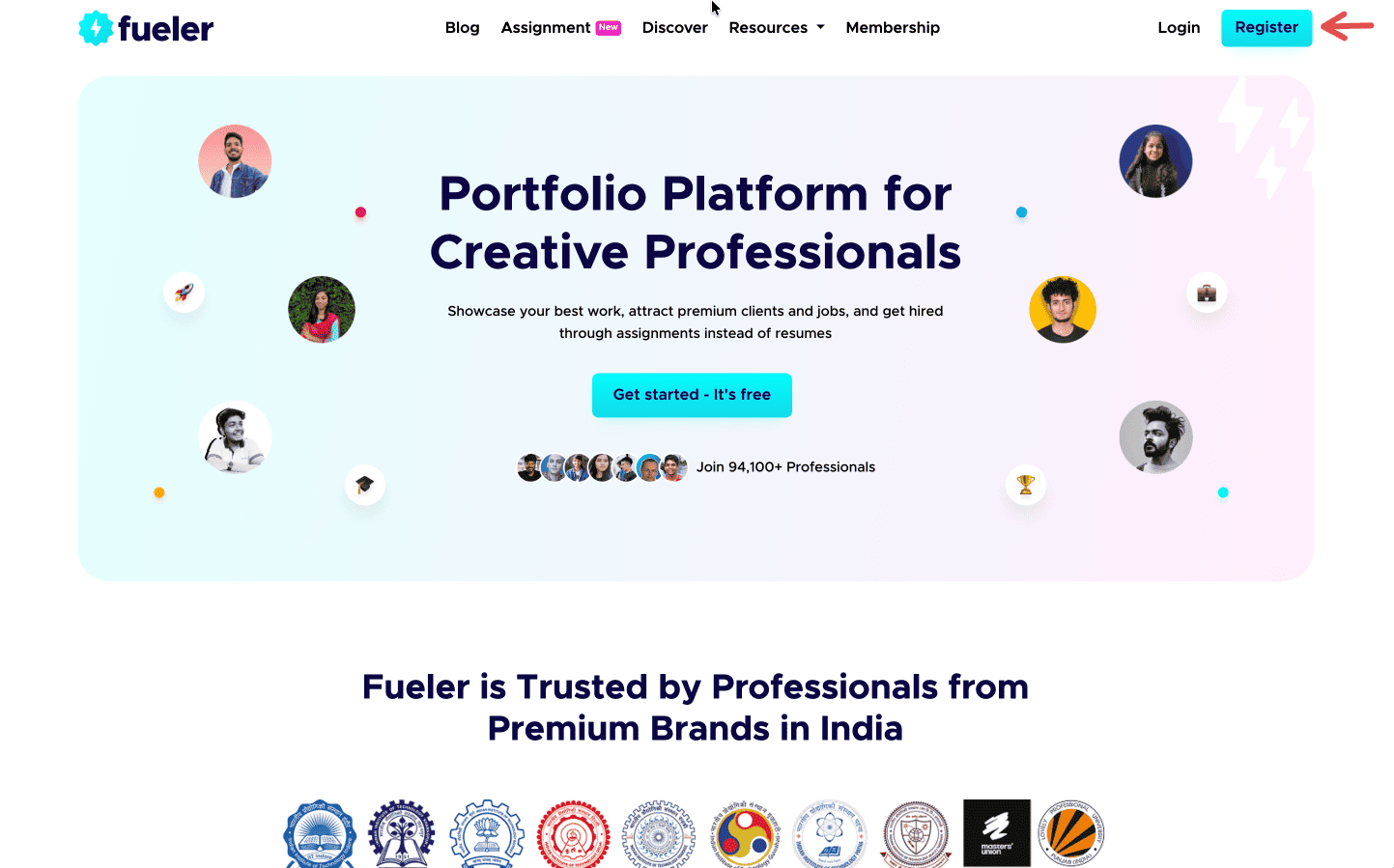
Step 1: Sign up on Fueler.
Head to Fueler.io and create your free account.
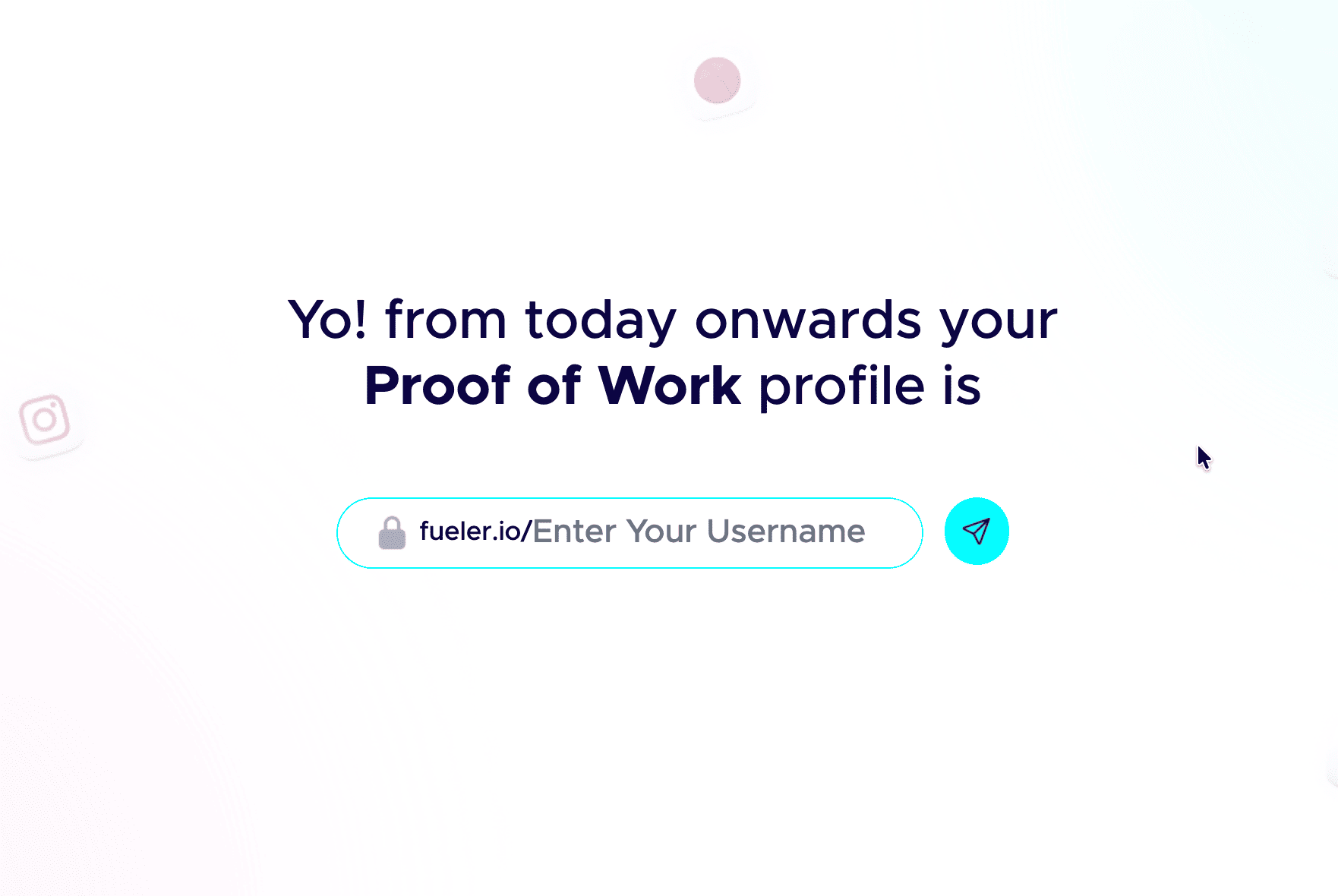
Step 2: Pick a professional handle.
Your handle shows up in your public link, so keep it clean and grown-up. Don’t add nicknames and random numbers. Your name or a simple version of it works best.
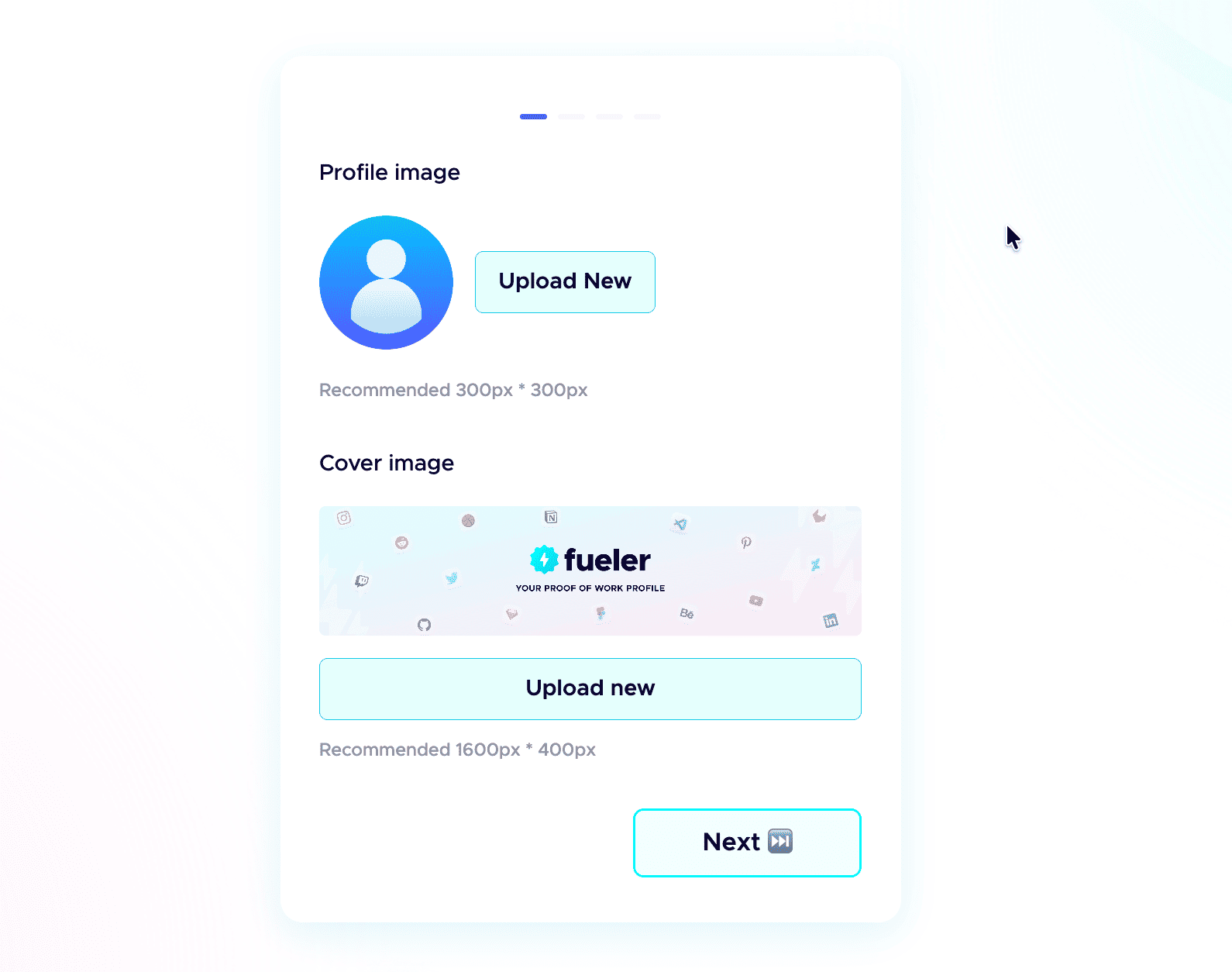
 Step 3: Add a professional profile picture.
Use the same kind of professional photo you would put on LinkedIn. Clear face, good lighting, and a simple background. People trust a real face more than an empty avatar.
Step 4: Write a strong header.
The header is the first thing anyone sees. In one or two short lines, say who you are, what you do, and the kind of work you have done. Make it specific, not vague.
Step 5: Add a short bio.
Tell people who you are and what you do in a few plain sentences. No buzzwords, just enough for a recruiter to get you in five seconds.
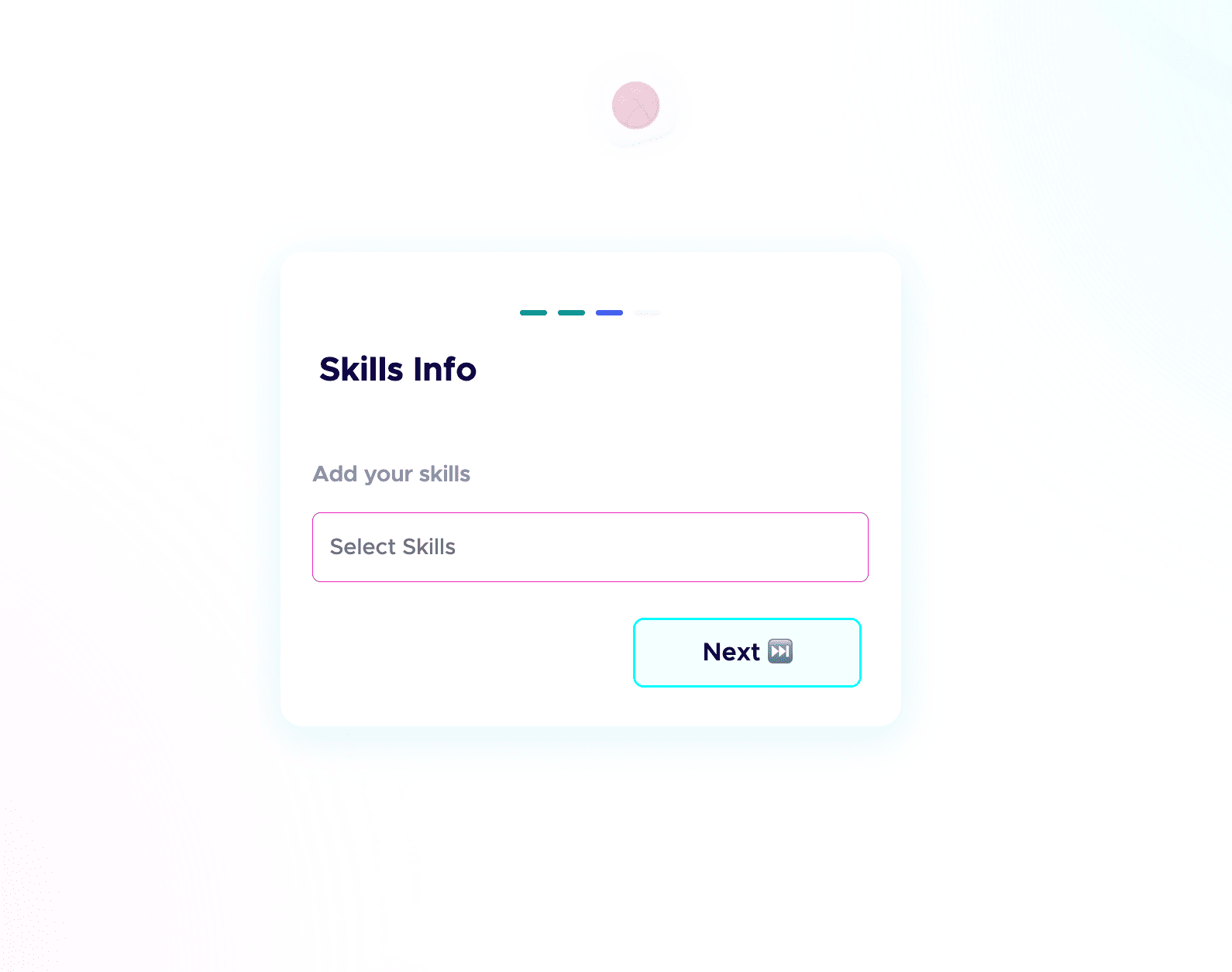
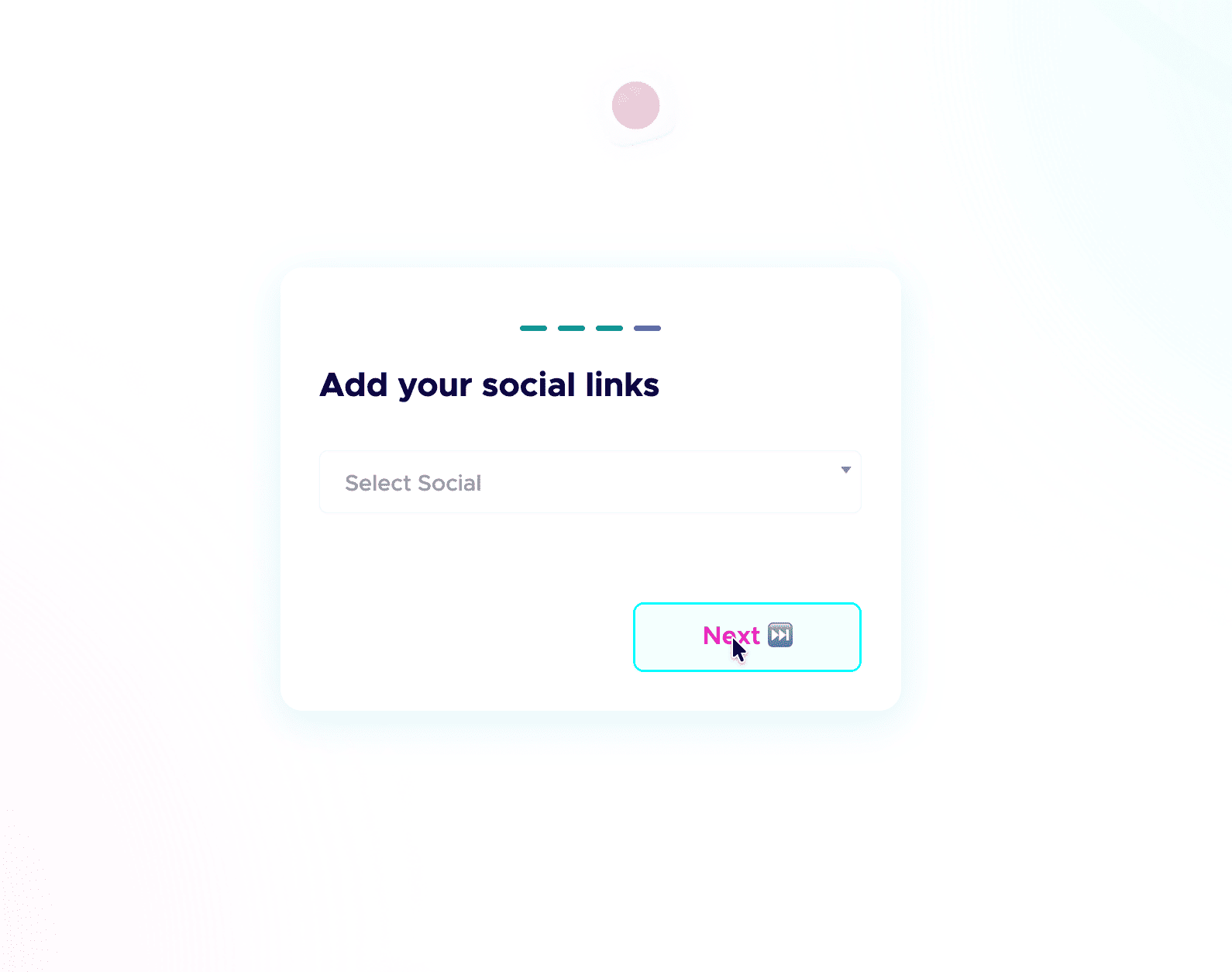
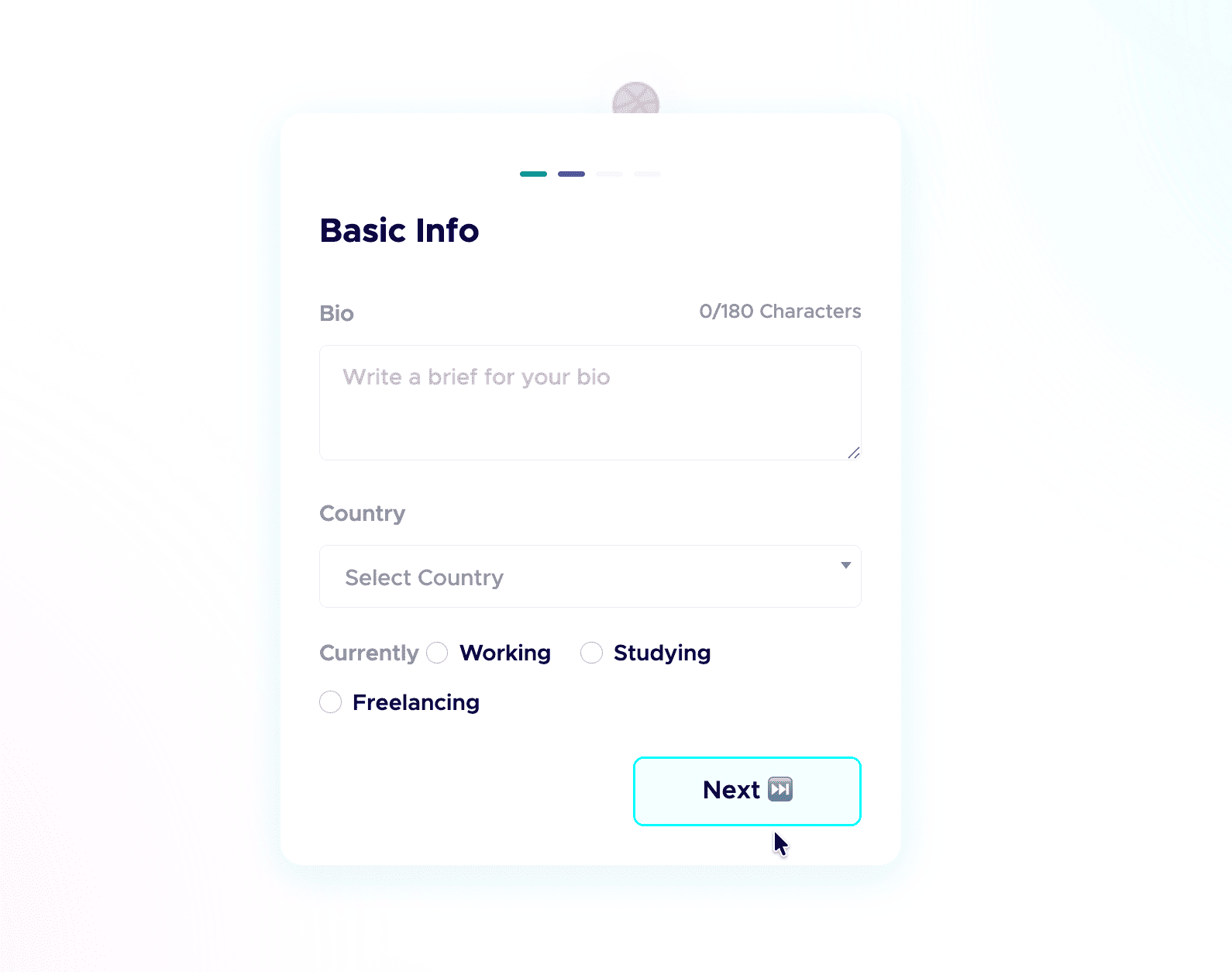 Step 6: Add your skills and social links.
List the skills you are good at and actually want to be hired for, and connect your socials. People do check your profiles, and active socials build credibility before the first call. Students starting from scratch can follow my student guide to their first portfolio.
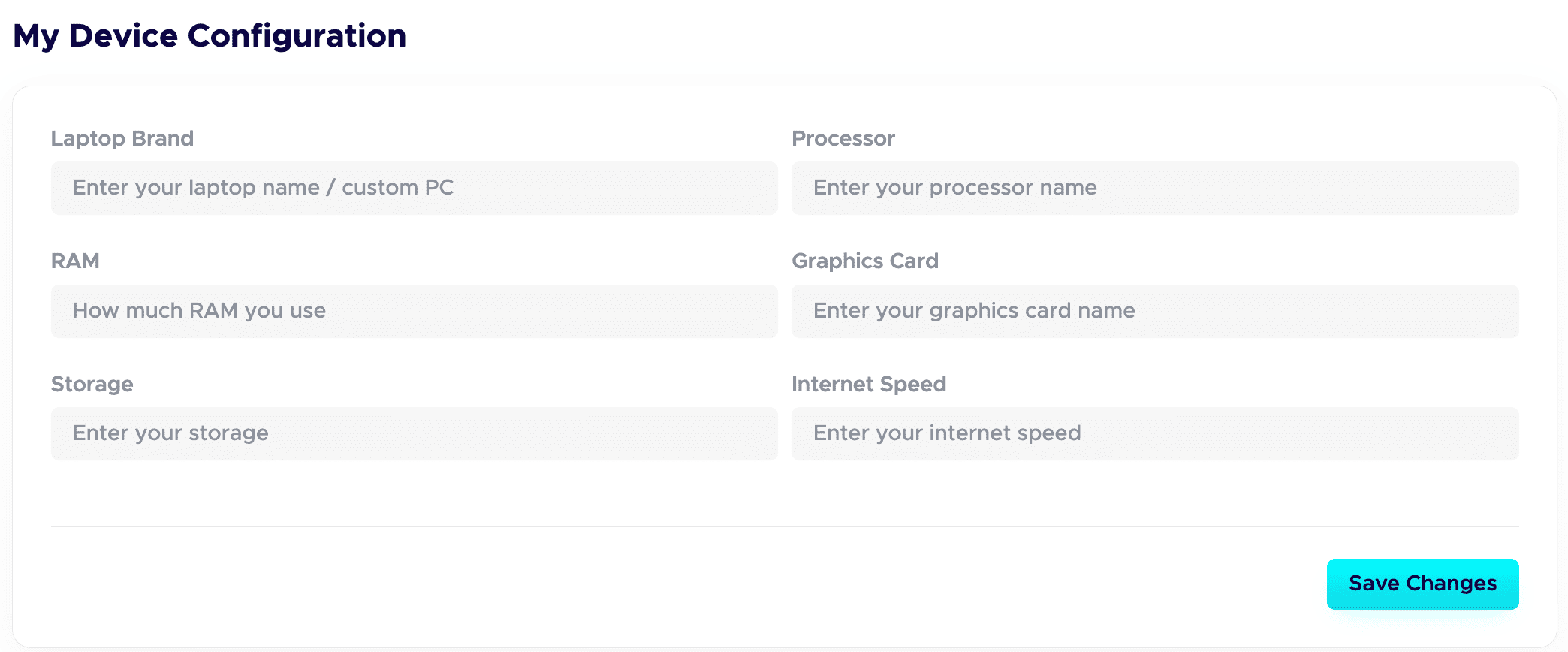
 Step 7: Fill in your Device Configuration.
In your dashboard, set up the Device Configuration section. Add the details about the device you are using. Remote-first companies want to know you have a solid setup to work from. A good setup quietly adds leverage and signals you are ready to deliver.
Step 8: Publish your projects with all the details.
This is a game-changer. Give each project a clear title and a detailed description. Walk through your process: your thinking, the tools you used, the choices you made, and the result. Companies care about how you work, not just the final image.
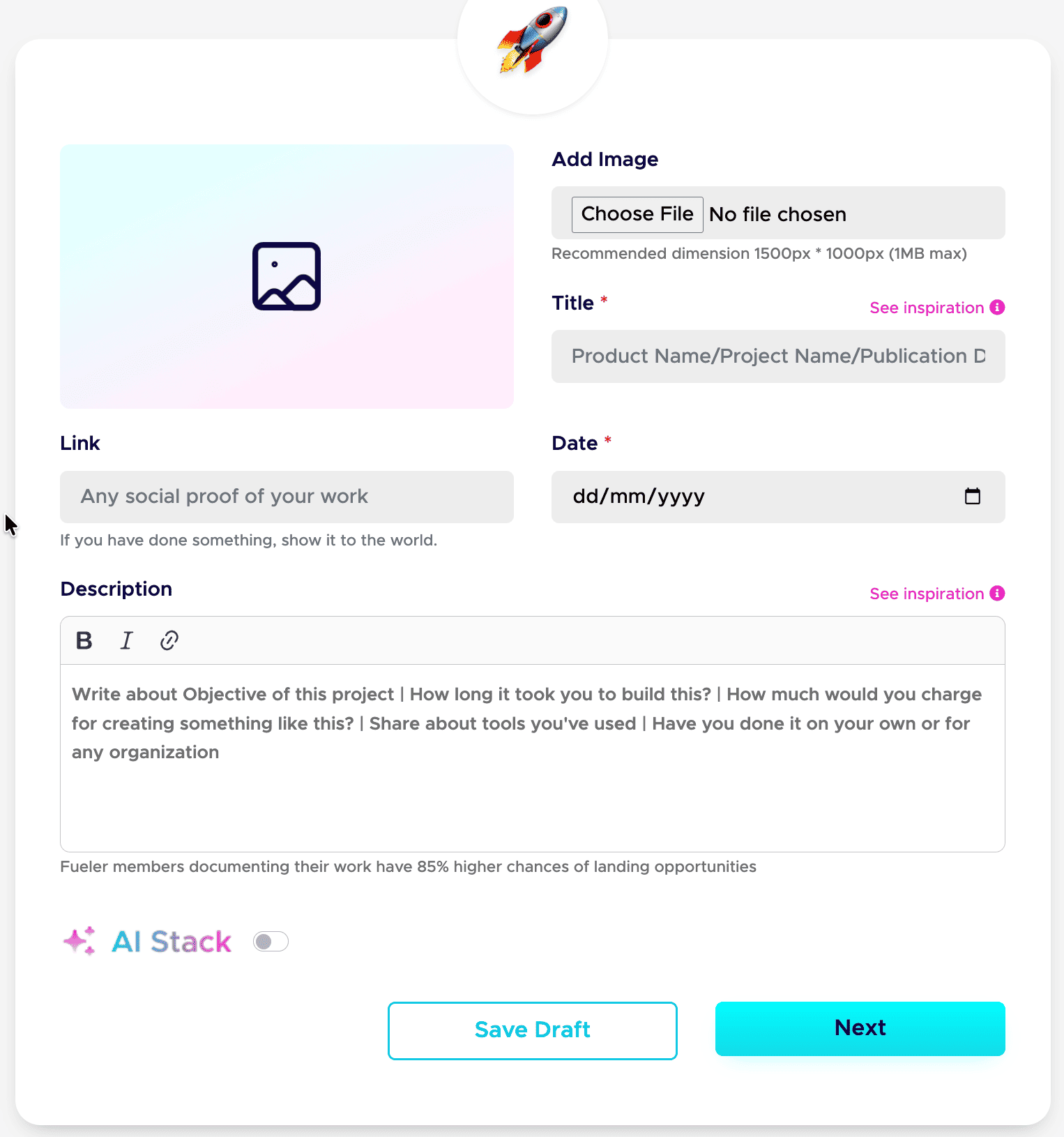
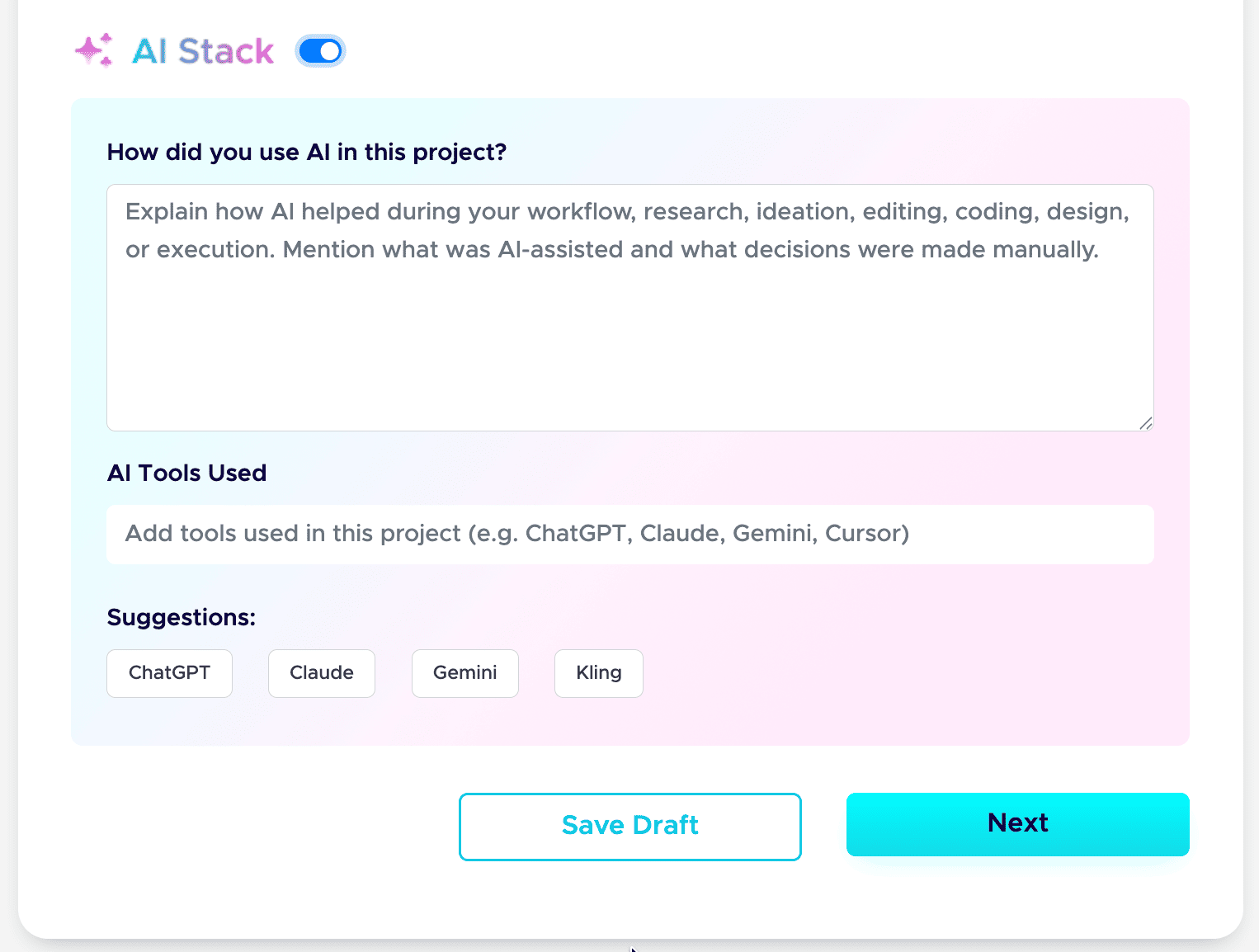
Step 9: Add your AI Stack to each project.
AI is part of real work now, so show it honestly. Use the AI Stack feature to explain how you used AI, which tools you used, and what you did manually. This builds trust instead of raising doubt. Here is the full guide: how to add AI Stack on Fueler.
That is the whole setup. Do these nine steps well, and your profile stops being a static page and starts working as a hiring asset. If you want a tighter version to follow next time, save my 6-step formula for a Fueler portfolio and my breakdown of a career portfolio that actually gets jobs.
Do this once, and you have a link you can drop into your resume, your email signature, and every job application.
Real-World Use Cases: Who Should Choose What?
Let's look at three specific, distinct personas to understand how this platform choice plays out in real career trajectories.
Persona A: The Aspiring Product Designer
- The Goal: Wants to transition from entry-level graphic design to landing a full-time UI/UX role at a fast-growing tech product company.
- The Verdict: Fueler. Product hiring managers care deeply about user flows, usability testing documentation, and dev handoff collaboration. A Dribbble shot doesn't show your wireframe logic or your user research data. Documenting 3 to 5 comprehensive proof-of-work case studies on Fueler provides the exact structural depth that a product team needs to see before extending an interview invitation.
Persona B: The Pure Visual Illustrator & 3D Artist
- The Goal: Wants to sell custom asset packs, build a massive social media following among other creatives, and land freelance mural or editorial illustration gigs.
- The Verdict: Dribbble. When your output is judged almost purely on your signature artistic style, a highly visual, aesthetic-first feed grid works perfectly. The community aspect of Dribbble will help drive immediate eyes, asset downloads, and design-centric appreciation.
Persona C: The Modern Full-Stack Creator
- The Goal: A multi-disciplinary builder who handles UI design, writes the core copywriting, and builds the front-end components using React or clean CSS.
- The Verdict: Fueler. Dribbble simply cannot handle this diverse mix of skill sets. On Fueler, this individual can display their design mockups alongside live links to GitHub repositories, performance marketing case studies, and written content strategies, presenting a unified, undeniable proof of multi-disciplinary execution.
Final Thoughts: The Future of Portfolios
The era of relying on a static, text-heavy resume or a purely aesthetic, unverified design feed to grow your career is rapidly coming to an end. As companies continue to move toward skills-first hiring practices, the professionals who thrive will be those who treat their portfolios as dynamic collections of verifiable proof of work.
Dribbble will always remain a beautiful, legendary cultural hub for visual inspiration and peer validation. But if your ultimate goal is changing your professional trajectory, clearing away the speculative noise, and making it effortless for recruiters to validate your skills, you need an architecture designed for opportunity.
Build your visual assets for inspiration, but build your career portfolio for outcomes.
Frequently Asked Questions
Can I use both Dribbble and Fueler together?
Yes. You can use Dribbble as your creative showcase to gather visual feedback from peers, and link your Fueler profile in your bio as your official career closer where clients view full, verified case studies.
Does Fueler support personal or conceptual projects?
Yes. You can publish any self-directed project. Instead of just showing a static picture, Fueler encourages you to document your execution steps and problem-solving process so it still proves your technical skills to a recruiter.
How do recruiters find talent on Fueler?
Instead of filtering by "likes" or trendy aesthetics, companies and founders search Fueler's directory based on specific skills, project categories, and verified proof of work, matching you directly with high-intent hiring pipelines.
Do I need to know how to code to build a Fueler profile?
Not at all. Fueler is a completely no-code portfolio platform. You get a clean, public landing page out of the box where you can embed rich text, live links, design files, and videos using a simple editor.
What makes a project "verified" on Fueler?
When you complete a project, you can tag your clients, team members, or managers. Once they approve it, their professional profile is linked as an official vouch, proving to future employers that it was a real, shipped collaboration.
Why 100,000+ professionals use Fueler
Fueler helps professionals showcase proof of work through projects, assignments, case studies, and achievements.
- Thousands of professionals use Fueler to create their digital portfolio
- Thousands of projects are published on Fueler. Check here
- Startups and Companies hire through proof of work on Fueler
- Used by freelancers, creators, marketers, video editors, writers, designers, and product managers
Our mission is to help the next 100 million professionals build a verified professional identity through proof of work

What should you do next?
You've read the article. Now turn your skills into proof of work and unlock more opportunities.
Build your proof of work portfolio
Create a clean portfolio with projects, assignments, resumes, and AI stack details that companies actually want to see.
Create your Fueler portfolio →Apply through assignments, not resumes
Stand out by solving real tasks from companies hiring on Fueler.
Explore assignments →Get discovered by companies
Make your work public and let recruiters discover your skills through actual projects instead of keywords.
Get discovered →
