How Do You Show Proof of Work With No Experience?

Riten Debnath
21 Jul, 2026
Last updated: July 2026
The traditional job application process is broken. For decades, the standard playbook was simple: write a resume, list your degrees, send it to hundreds of companies, and wait for a response. Today, this approach rarely works. Hiring managers are overwhelmed with hundreds of identical resumes for a single opening. When every applicant claims to possess the same skills, a bulleted list on a piece of PDF paper no longer builds trust. The market has shifted from valuing what you claim you can do to demanding evidence of what you have actually built.
This shift creates a difficult paradox for professionals entering a new field: you cannot get a job without experience, but you cannot get experience without a job. Relying on the old method of submitting cold applications leads to endless rejection loops.
I’m Riten, founder of Fueler, a skills-first portfolio platform building the career infrastructure for 100 million creative professionals. Fueler connects talented individuals with companies through assignments, portfolios, and projects, not just resumes or CVs. Think of it as Dribbble/Behance for work samples combined with AngelList for hiring infrastructure.
Most people already have the skills to build a great portfolio; they just don't know what projects to create. This article shows how Fueler's Resume to Proof of Work Ideas Generator solves that problem by turning your resume into a personalized list of proof-of-work ideas.
What Is Fueler's Resume to Proof of Work Ideas Generator?
The Resume to Proof of Work Ideas Generator is a free Fueler tool that creates portfolio project ideas using your resume. Instead of searching online for inspiration, you receive suggestions that are connected to your own experience.
It scans your resume to understand your work history, skills, and previous responsibilities. Then it recommends projects you can build to demonstrate those abilities.
Think of it this way: your resume tells employers about your experience, while proof of work lets them see your skills in action. The generator helps you move from one to the other.
- Every project idea is connected to the skills you already have, so your portfolio feels authentic.
- It helps you overcome the biggest challenge of portfolio building- deciding what project to create.
- You can upload a PDF or DOCX resume up to 5MB without making any changes to your existing file.
- The suggested projects are practical and designed to be completed, not just saved as ideas.
- After building them, you can publish the projects on your Fueler portfolio to showcase your work publicly.
Why It Matters: Instead of staring at a blank page, you get a personalized list of projects that helps you start building proof of work immediately.
Step-by-Step Guide: Publish Your Proof of Work on a Fueler Portfolio
The tool is built to be fast. Here is the exact process from start to finish. Follow it once, and you will understand the full loop. Check out the link here: https://fueler.io/resume-to-proof-of-work
Step 1: Head to the Resume to Proof of Work Ideas Generator on Fueler and get to the upload screen.
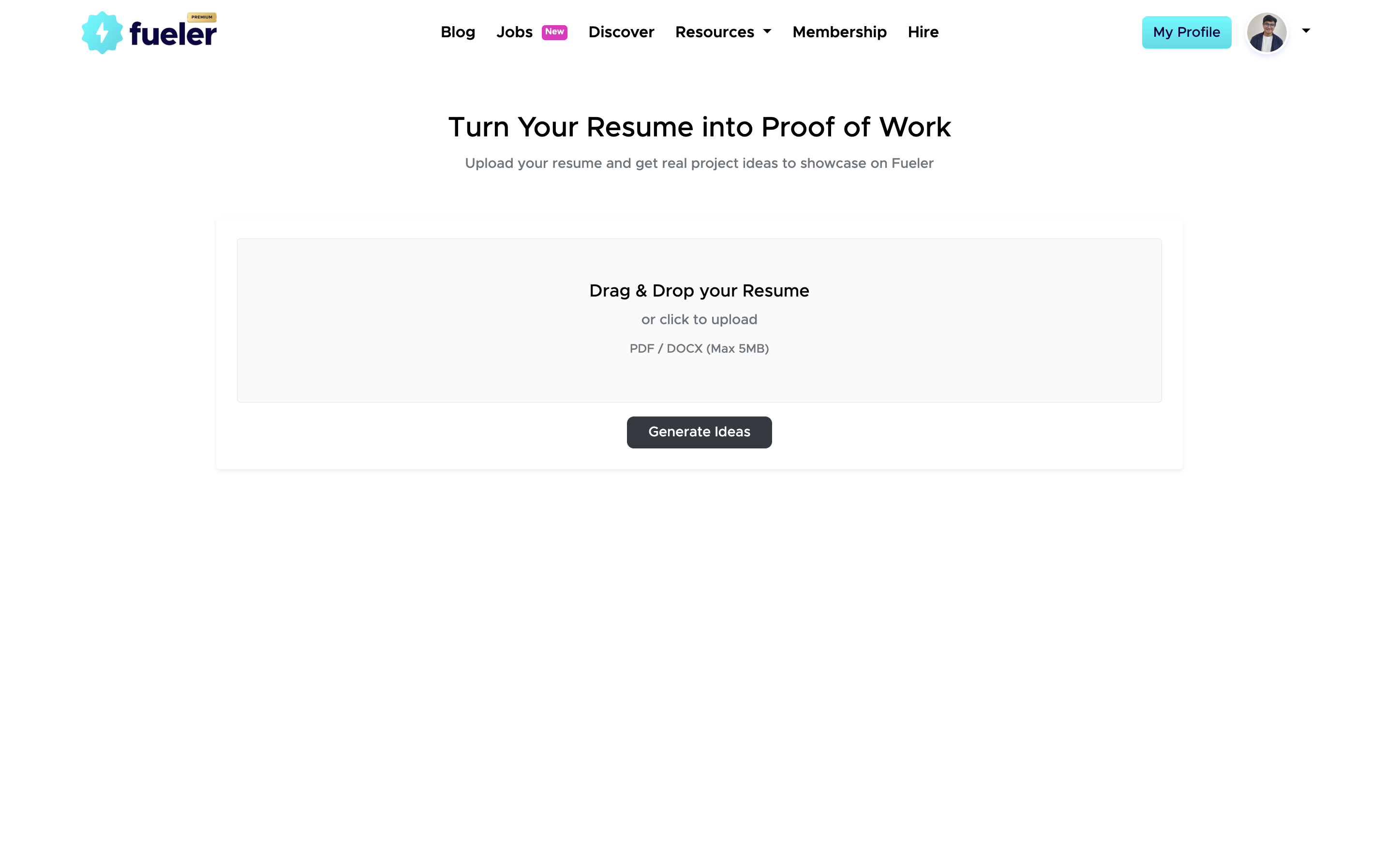
Step 2: Drag or upload your resume. Drop your file into the box, or click to upload. Then hit Generate Ideas.
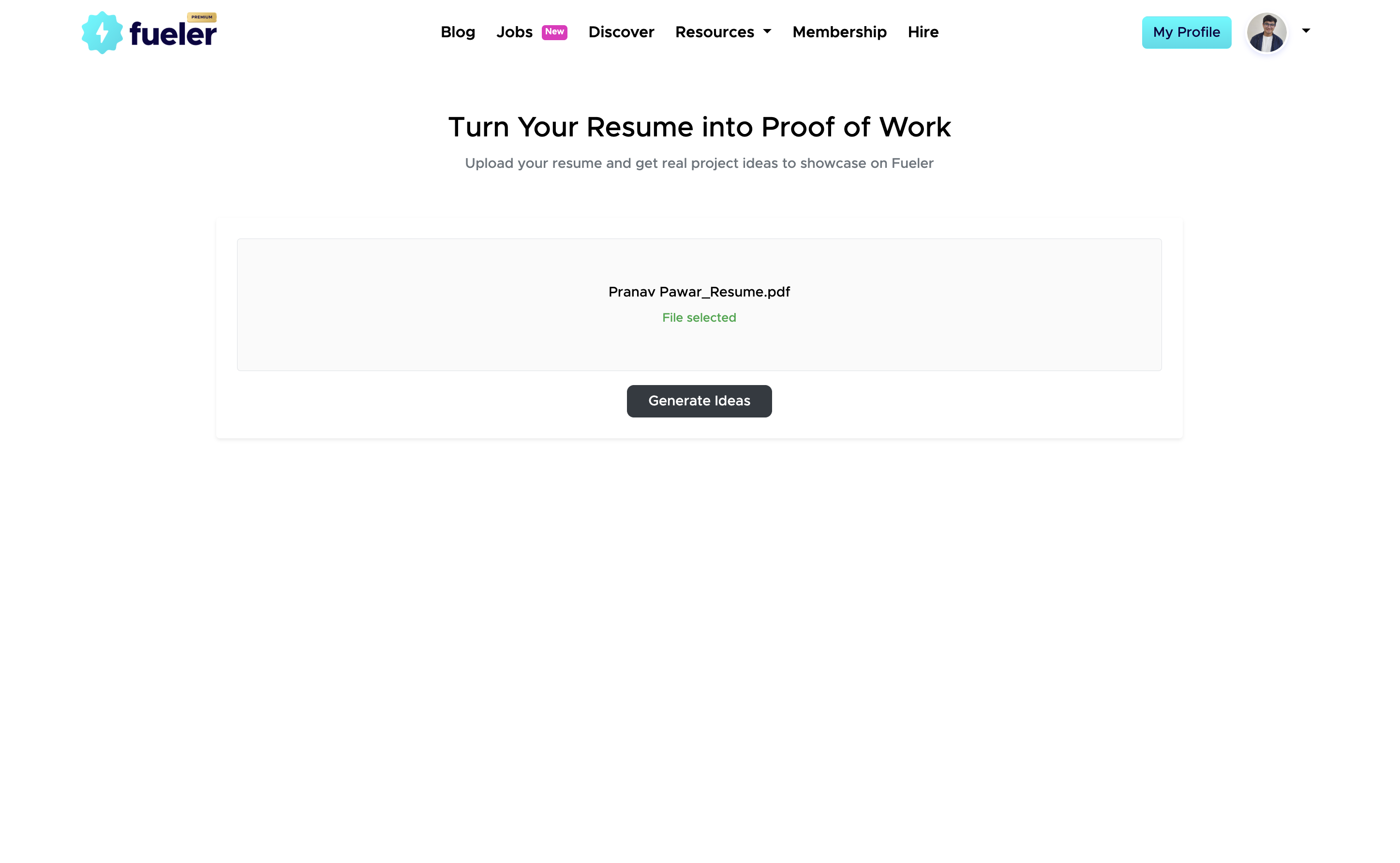
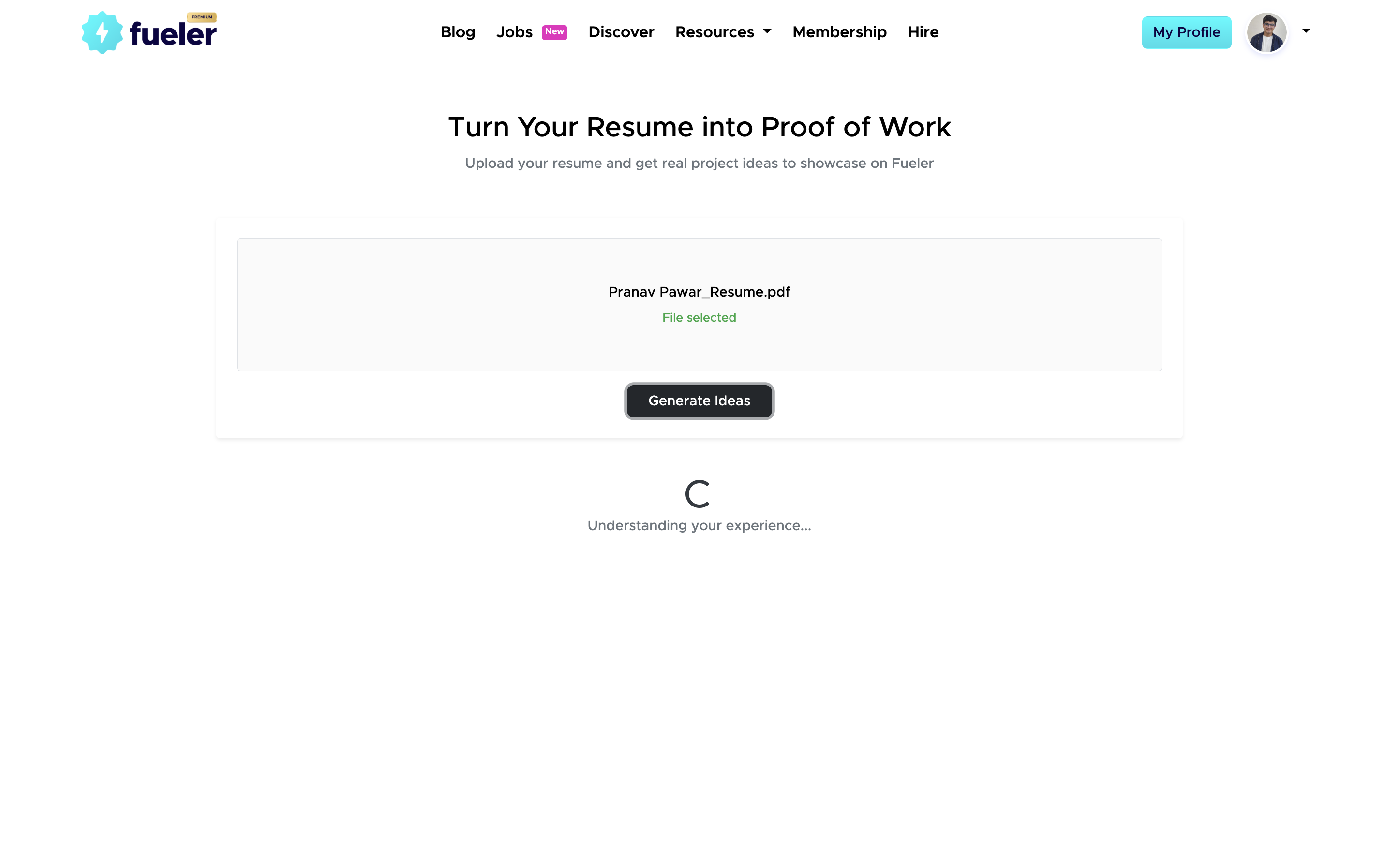
Step 3: Take the ideas and create proof of work. Read through the project ideas it gives you. Pick the ones that match the roles you want, then start building. This is where a suggestion becomes a real, finished piece of work.
- Uploading is friction-free, since you use the exact resume file you already have, which means you can go from opening the tool to holding a list of project ideas in under two minutes without any manual setup.
- The generated ideas are shaped by your actual skills, so a marketer gets marketing projects and a developer gets build ideas, keeping every suggestion relevant to the career path you are trying to grow into.
- You stay in control of what to build, choosing the ideas that map to your target roles rather than being forced down a fixed path, which keeps your portfolio focused on the jobs you actually want.
- Each idea is a starting point you can expand, so a simple suggestion like an audit or a redesign can grow into a full case study with your process, tools, and results documented for hiring managers to read.
- The output is portfolio-ready by design, meaning every project you finish is meant to be published and discovered, not saved in a folder where no company will ever find it.
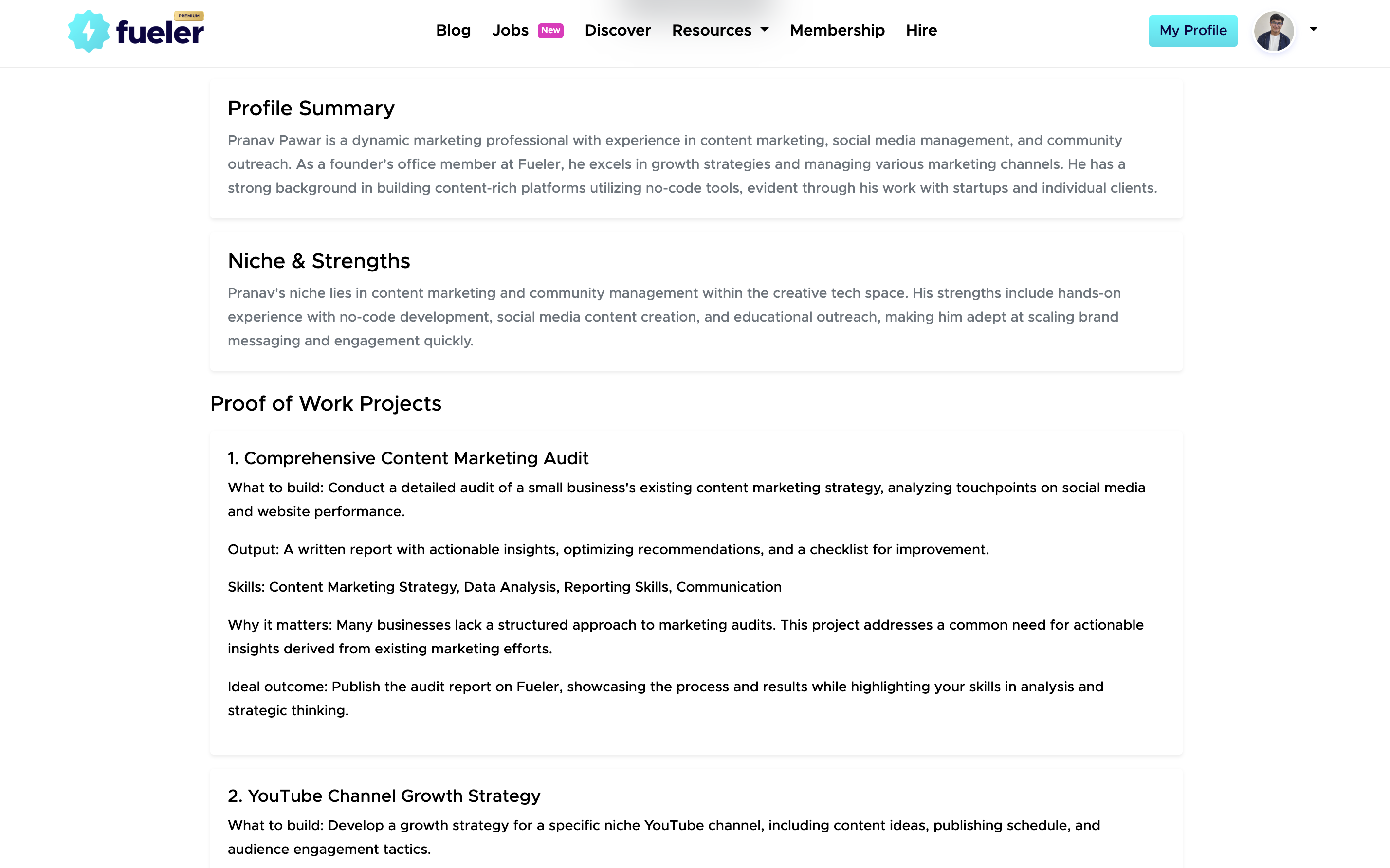
Why It Matters: The biggest reason people never build proof of work is that starting feels heavy. This tool makes starting light. Three steps take you from a static resume to a clear build list, which removes the excuse of not knowing where to begin. Momentum matters more than perfection, and this is the fastest way to create it.
The Shift From Resumes to Evidence-Based Hiring
The modern hiring landscape moves too fast for traditional vetting processes. Companies are tired of hiring individuals who look perfect on paper but struggle to deliver results when faced with real-world problems. As a result, forward-thinking founders and hiring managers are quietly discarding the resume stack and looking directly for evidence of execution. They want to see how you think, how you work, and what you can produce when no one is giving you explicit instructions.
When you lack traditional employment history, trying to compete purely on credentials is a losing strategy. Someone else will always have a higher GPA, a more recognizable university name, or a previous internship. Evidence-based hiring levels the playing field. It allows you to bypass traditional gatekeepers by proving your competence upfront, forcing companies to judge you on the quality of your output rather than the prestige of your background.
Understanding this shift changes how you spend your time. Instead of optimizing the font size on a one-page document, your primary goal becomes building a public repository of your capabilities.
- Verifiable Skill Validation: Showing a live dashboard, a written teardown, or a designed interface removes all doubt about your technical capabilities.
- Reduction of Hiring Risk: Employers fear making a bad hire because it costs time and money; showing completed work proves you can already do the job on day one.
- Demonstration of Initiative: Building projects without a manager proves you possess the self-motivation and drive required in fast-growing companies.
- Shift in Interview Dynamics: Conversations change from a stressful interrogation of your past to a collaborative discussion about the projects you built.
- Long-Term Discoverability: A public portfolio works for you around the clock, allowing founders to discover your talent while you sleep.
Why It Matters
When you stop playing the traditional application game, you eliminate the competition. Evidence-based hiring gives professionals without experience the leverage to prove their value objectively, making formal credentials completely secondary to actual execution.
Turn Your Resume Into Your Next Project
One of the biggest challenges when building a portfolio is figuring out what to build first. Most people don't lack skills; they simply don't know which projects will best showcase those skills. With so many possibilities, it's easy to spend more time thinking than actually building.
That's where Fueler's Resume to Proof of Work Ideas Generator helps. Instead of searching the internet for inspiration or copying random portfolio ideas, you can upload your resume and receive personalized project suggestions based on your skills, experience, and previous roles. Every recommendation is connected to what you already know, making it easier to build projects that feel relevant to your career goals.
The generator is especially useful if you're switching careers, starting your first portfolio, or returning to the job market after a break. Rather than guessing what recruiters want to see, you get practical ideas that can become real proof-of-work projects.
Why It Matters
Starting is often the hardest part of building a portfolio. The Resume to Proof of Work Ideas Generator removes that first obstacle by giving you personalized ideas based on your own experience. Instead of staring at a blank page, you can begin working on projects that strengthen your portfolio and clearly demonstrate your skills to recruiters.
Structuring Your Proof of Work for Maximum Impact
Building a project is only half the battle; how you present it to the world matters just as much as the work itself. Busy managers will not spend hours digging through messy, undocumented GitHub repositories or unorganized design folders. If your proof of work is difficult to navigate or interpret, it will be ignored. You must structure your projects so that an observer can understand the context, the challenge, your process, and the final outcome within 60 seconds.
Every piece of proof of work should follow a clear, predictable narrative structure. Think of it as an educational case study where you are the lead protagonist. You need to explain what you set out to do, the constraints you faced, the step-by-step actions you took, and the measurable results of your efforts. Packaging this neatly on a dedicated platform like Fueler ensures your work looks polished, authoritative, and easily shareable.
- Write a concise summary: Start each project with a two-sentence overview explaining exactly what the project is and why you built it.
- Detail your workflow tools: Explicitly list the software, languages, and frameworks you utilized, so managers instantly see your technical stack.
- Show your messy middle work: Include early sketches, wireframes, or code snippets to give insight into your actual problem-solving process.
- Focus heavily on outcomes: Explain the quantitative or qualitative results of your project, even if it was a simulated or mock exercise.
- Include a clear call to action: Conclude the project page by stating your availability for work and providing direct contact information.
Why It Matters
Structure transforms a raw file into a compelling professional story. Presenting your projects cleanly ensures that non-technical founders and technical leads alike can quickly appreciate your skills and execution speed.
Real-World Examples of Zero-Experience Proof of Work
To understand how this works in practice, let us look at how professionals across different industries can turn an empty resume into a compelling portfolio. These examples demonstrate how to shift from passive statements to proactive, high-value assets that command attention.
The Growth Marketer
- Before: A resume claiming "Deep understanding of SEO, content strategy, and digital marketing tools."
- After: A published breakdown where the candidate audited a SaaS startup's blog, identified their top five underperforming keywords, rewrote two articles using modern SEO practices, and mapped out a 30-day content calendar.
- Practical Outcome: The candidate sends the breakdown directly to the startup's head of marketing on LinkedIn, leading directly to a freelance contract.
The Product Designer
- Before: A resume stating "Proficient in Figma, UI/UX design, wireframing, and user research."
- After: A comprehensive mobile app redesign case study targeting a popular fintech app’s confusing onboarding flow, complete with user interviews, wireframes, and high-fidelity interactive prototypes.
- Practical Outcome: The designer displays the interactive prototypes on Fueler, attracting the attention of a product manager looking for a junior designer who understands user friction.
The Data Analyst
- Before: A resume listing "Knowledge of Python, SQL, Tableau, and statistical analysis."
- After: A public dashboard analyzing three years of local public transit data, highlighting specific route inefficiencies and predicting optimal schedules to reduce commuter wait times.
- Practical Outcome: The analyst shares the interactive dashboard on Twitter and LinkedIn, catching the eye of a logistics company founder who invites them to interview.
Why It Matters
Real examples prove that you do not need permission to do good work. By selecting a real business challenge and solving it transparently, you create an undeniable asset that functions as a proxy for years of traditional experience.
How to Publish Your Proof of Work on a Fueler Portfolio
Once you have built a project, it needs a home. A Fueler portfolio gives your proof of work a clean, professional link that companies actively browse. This is the bonus step that turns finished projects into real opportunities.
Setting it up takes minutes. Here is a simple step-by-step guide to create your portfolio on Fueler and publish what you build.
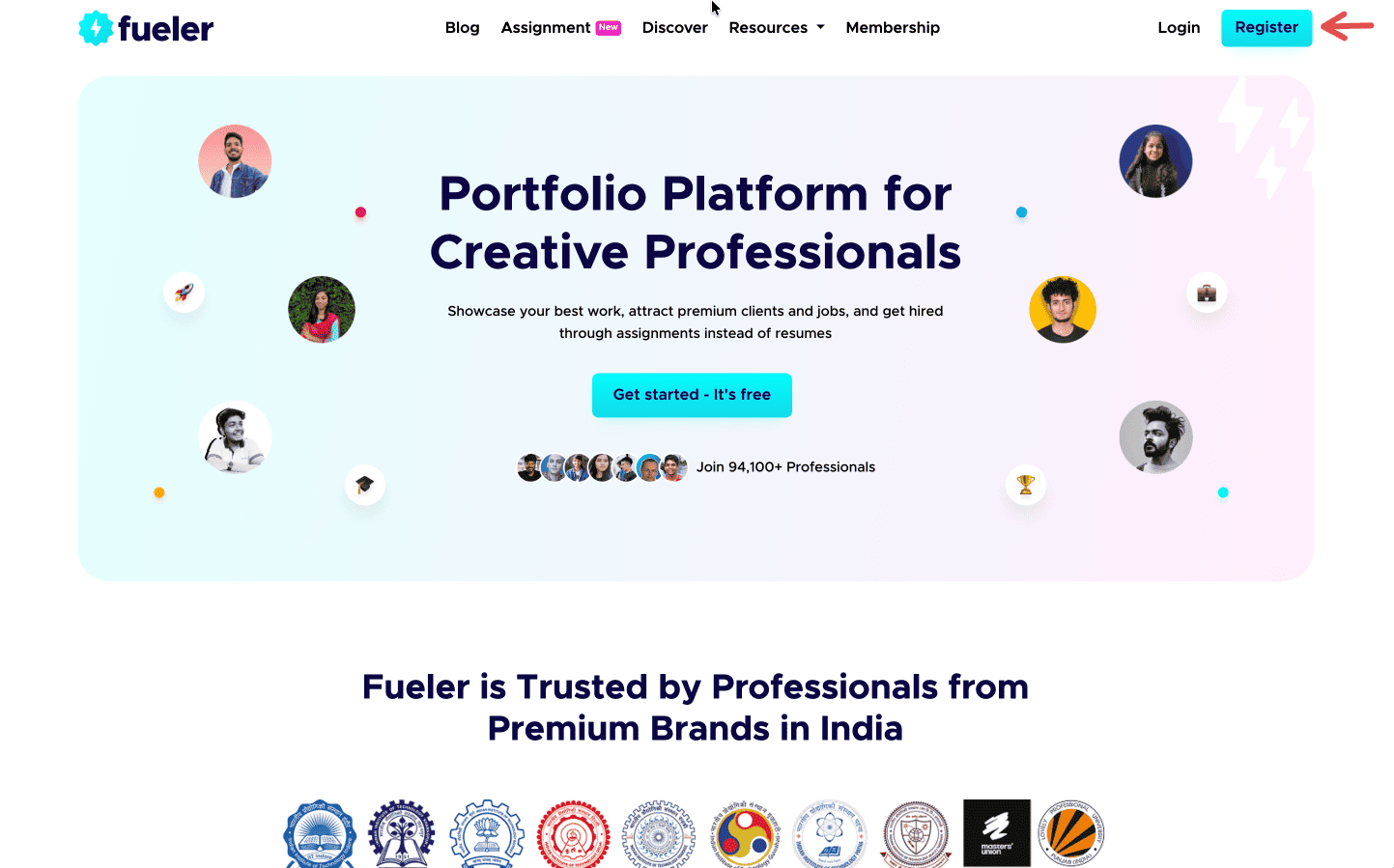
Step 1: Sign up on Fueler.
Head to Fueler.io and create your free account.
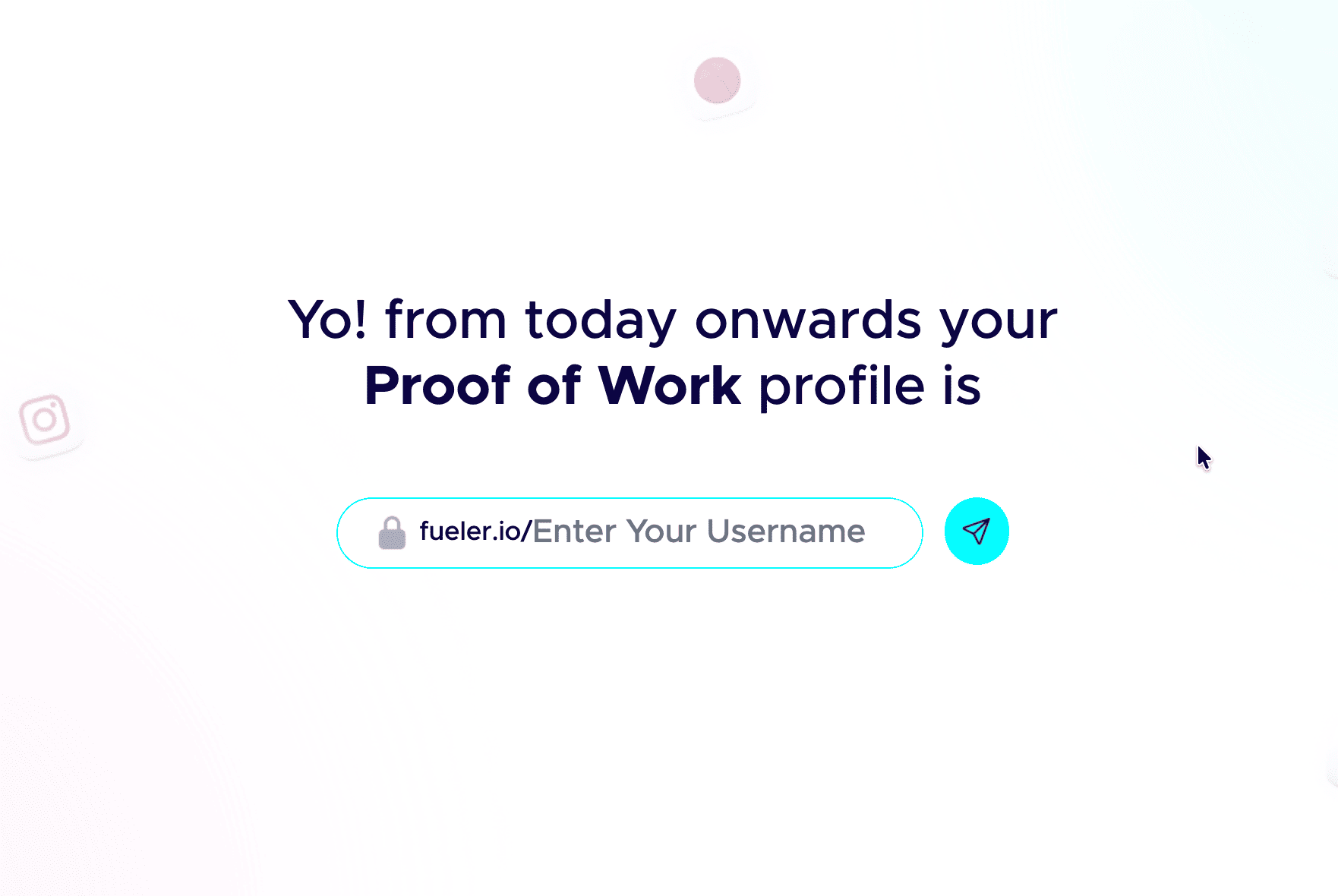
Step 2: Pick a professional handle.
Your handle shows up in your public link, so keep it clean and grown-up. Don’t add nicknames and random numbers. Your name or a simple version of it works best.
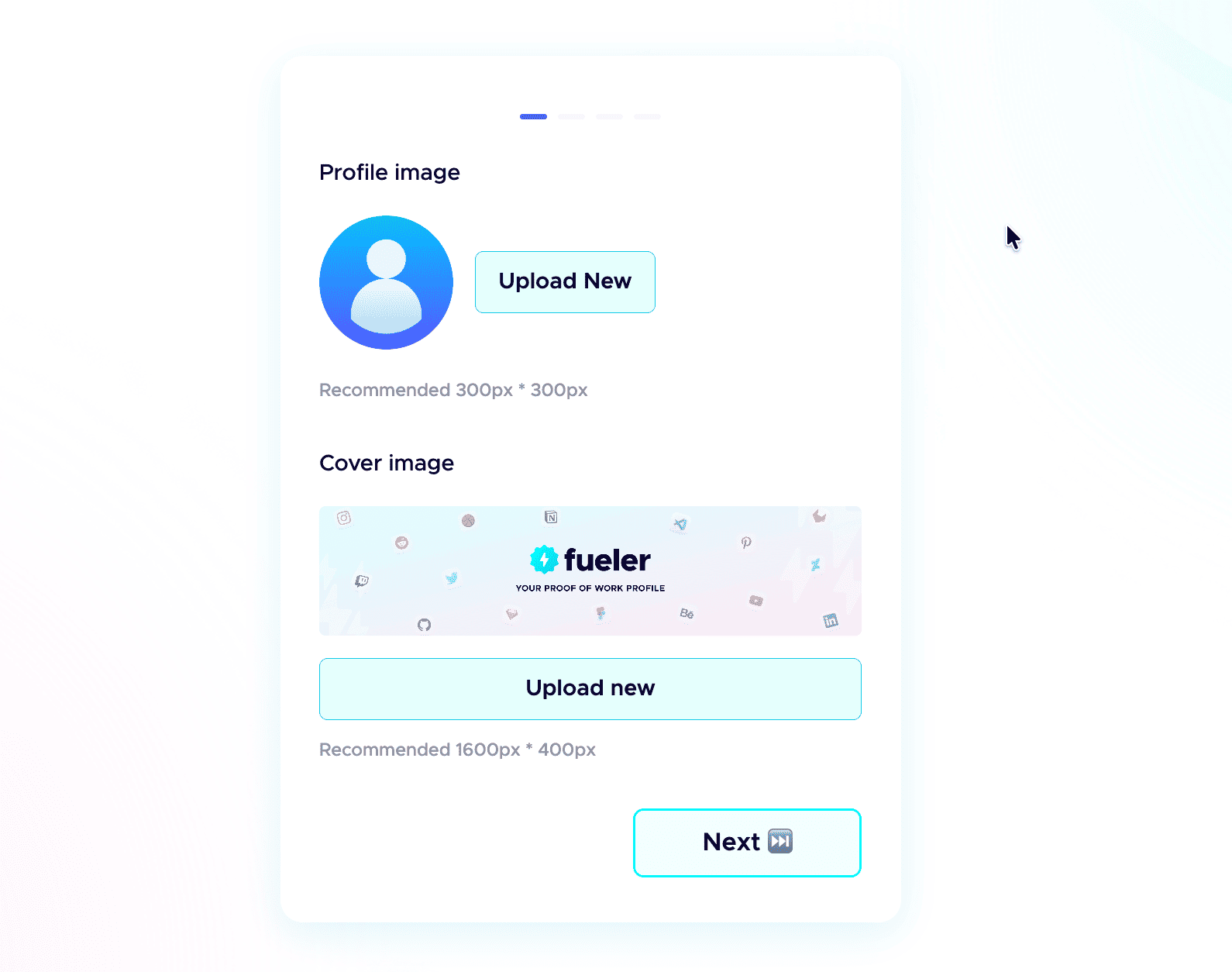
 Step 3: Add a professional profile picture.
Use the same kind of professional photo you would put on LinkedIn. Clear face, good lighting, and a simple background. People trust a real face more than an empty avatar.
Step 4: Write a strong header.
The header is the first thing anyone sees. In one or two short lines, say who you are, what you do, and the kind of work you have done. Make it specific, not vague.
Step 5: Add a short bio.
Tell people who you are and what you do in a few plain sentences. No buzzwords, just enough for a recruiter to get you in five seconds.
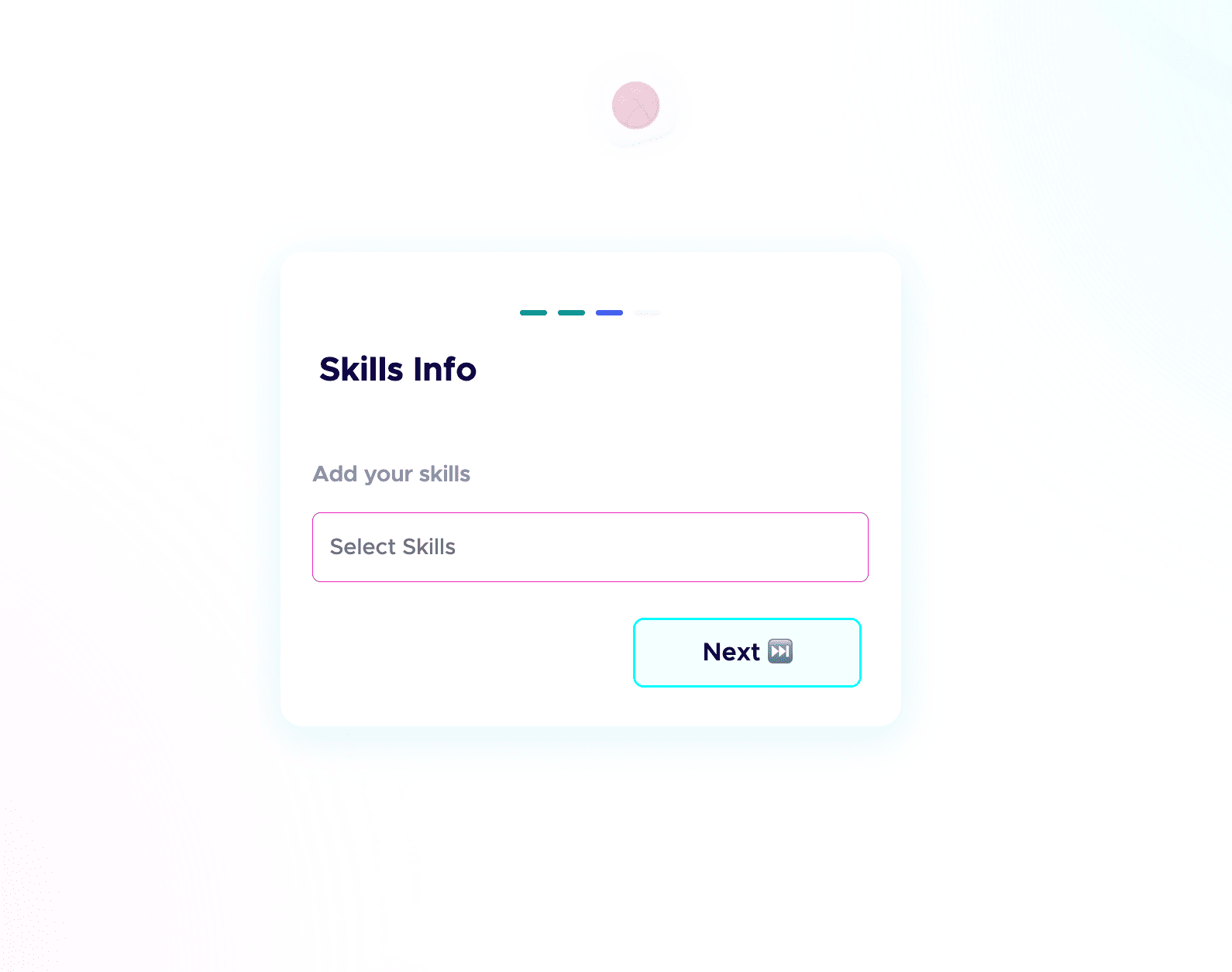
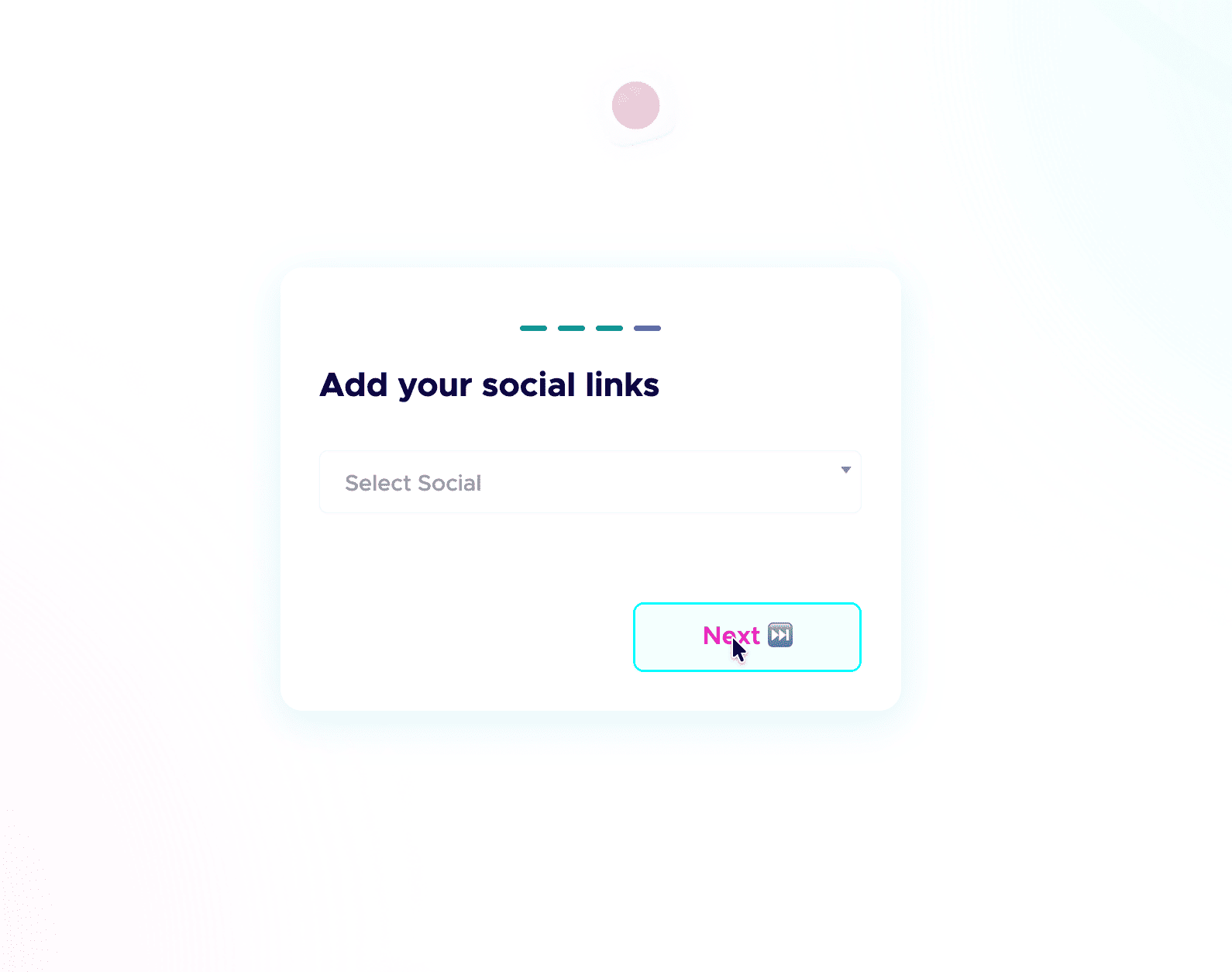
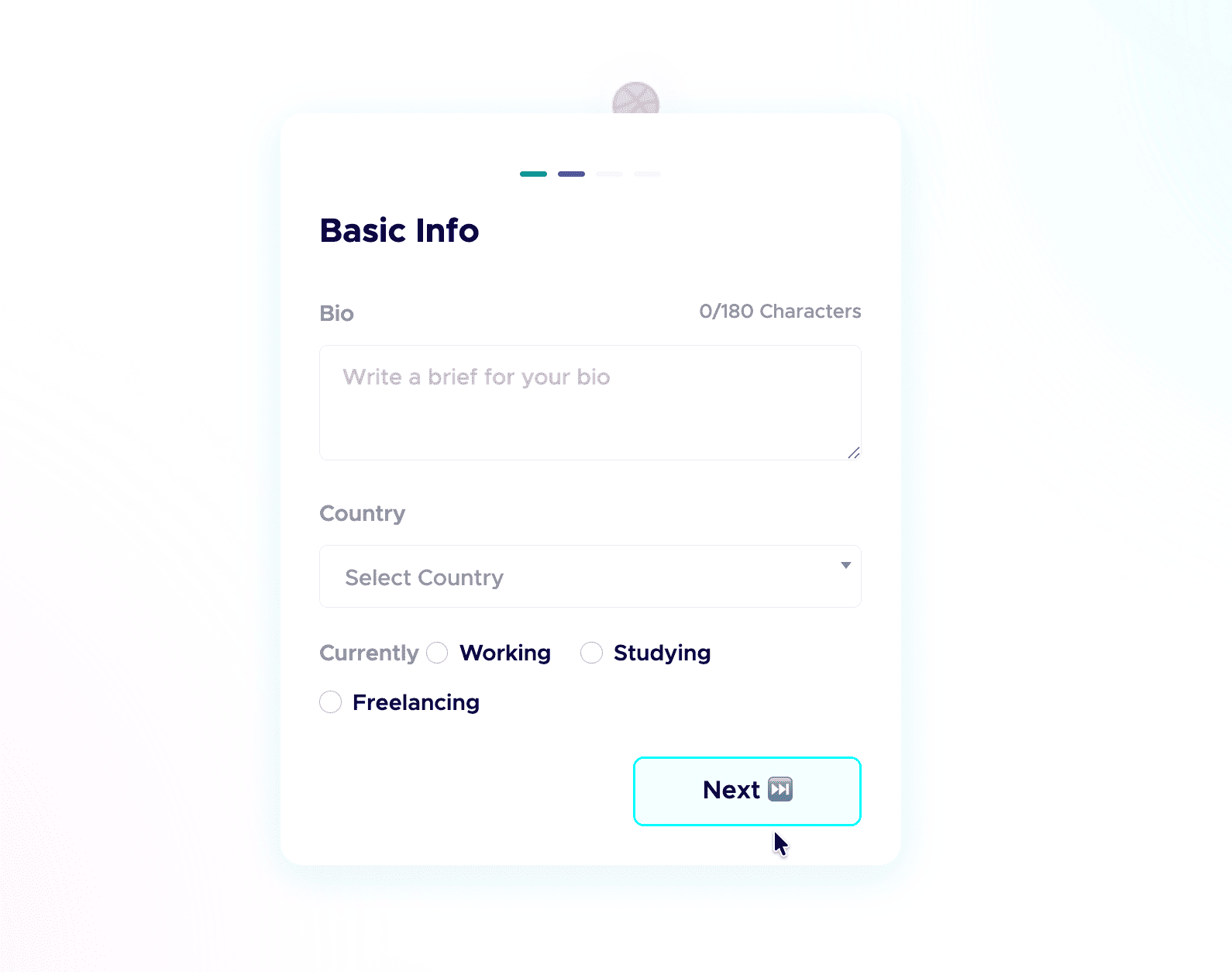 Step 6: Add your skills and social links.
List the skills you are good at and actually want to be hired for, and connect your socials. People do check your profiles, and active socials build credibility before the first call. Students starting from scratch can follow my student guide to their first portfolio.
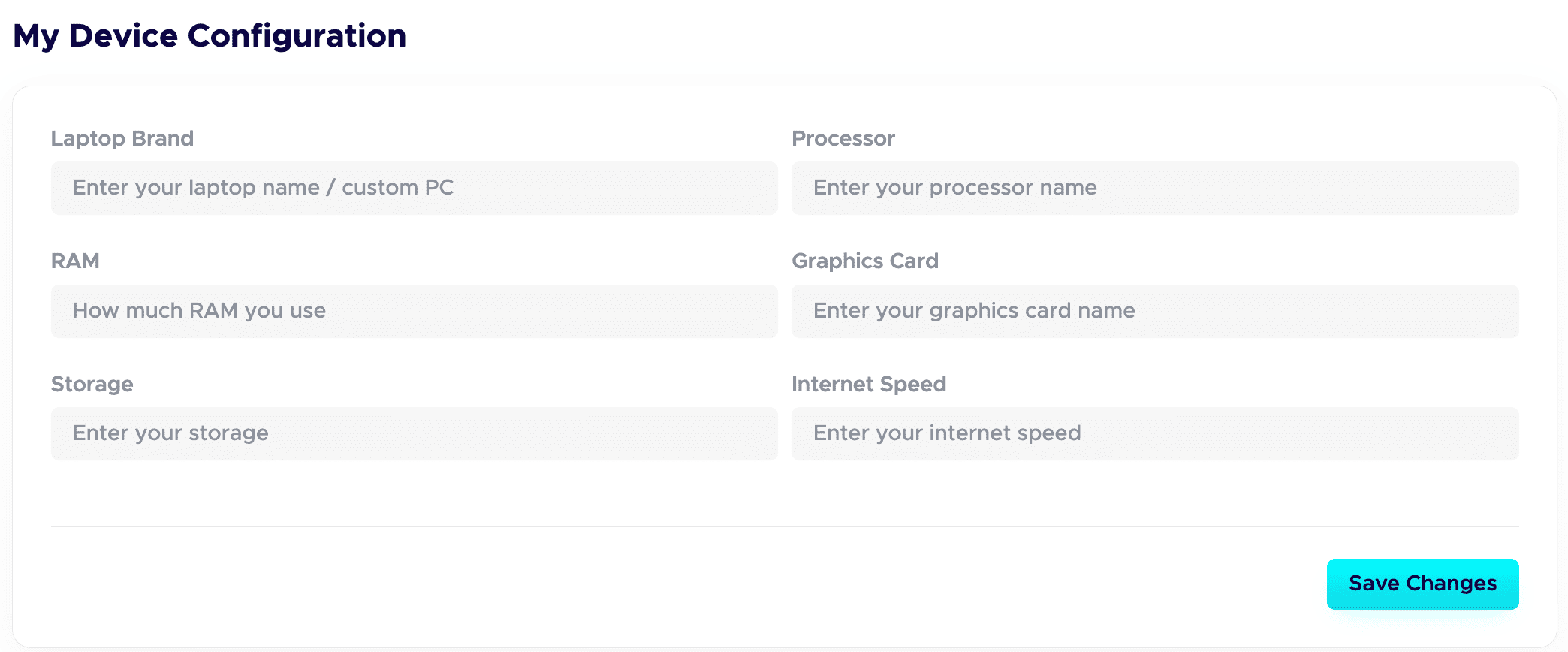
 Step 7: Fill in your Device Configuration.
In your dashboard, set up the Device Configuration section. Add the details about the device you are using. Remote-first companies want to know you have a solid setup to work from. A good setup quietly adds leverage and signals you are ready to deliver.
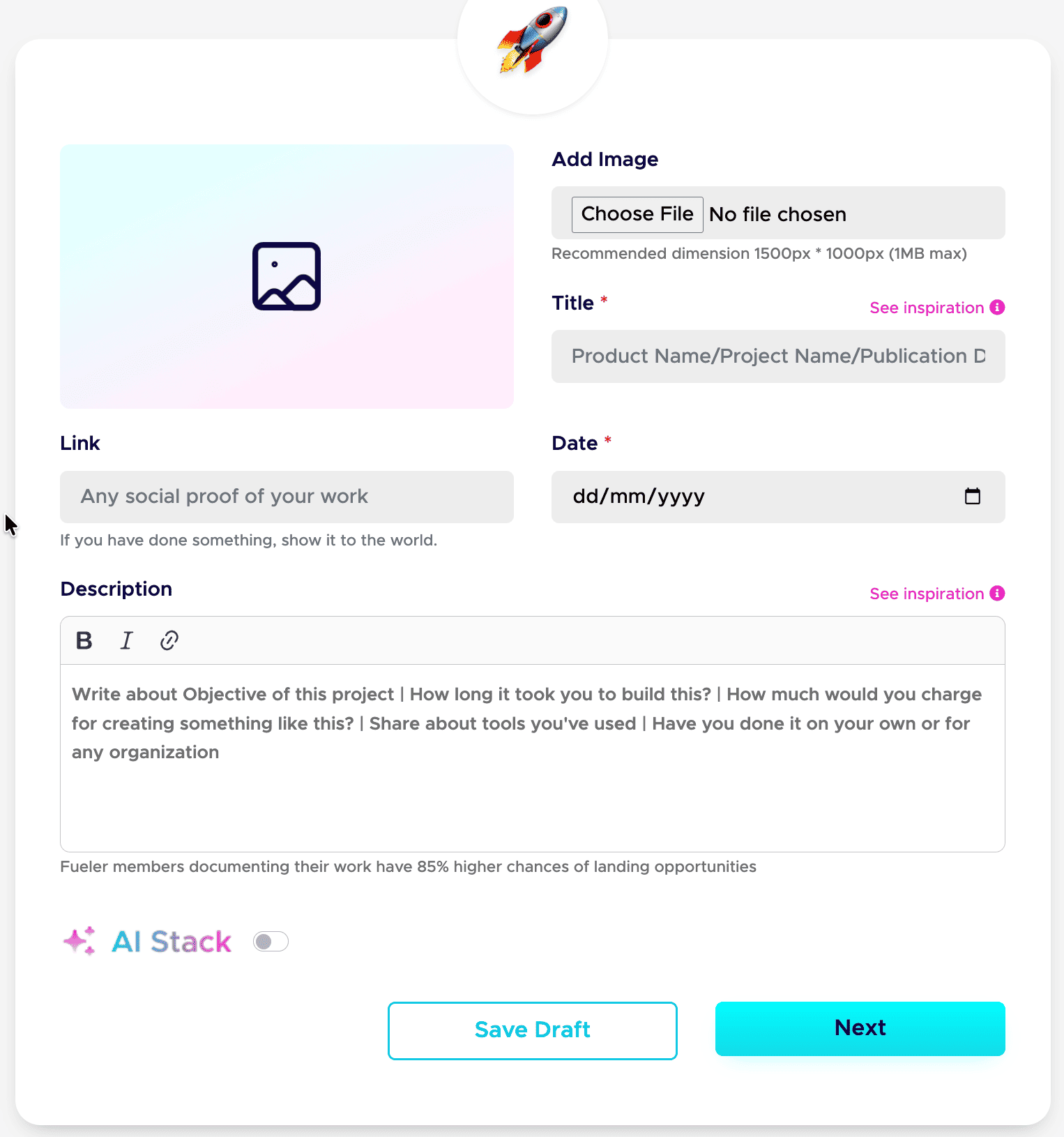
Step 8: Publish your projects with all the details.
This is a game-changer. Give each project a clear title and a detailed description. Walk through your process: your thinking, the tools you used, the choices you made, and the result. Companies care about how you work, not just the final image.
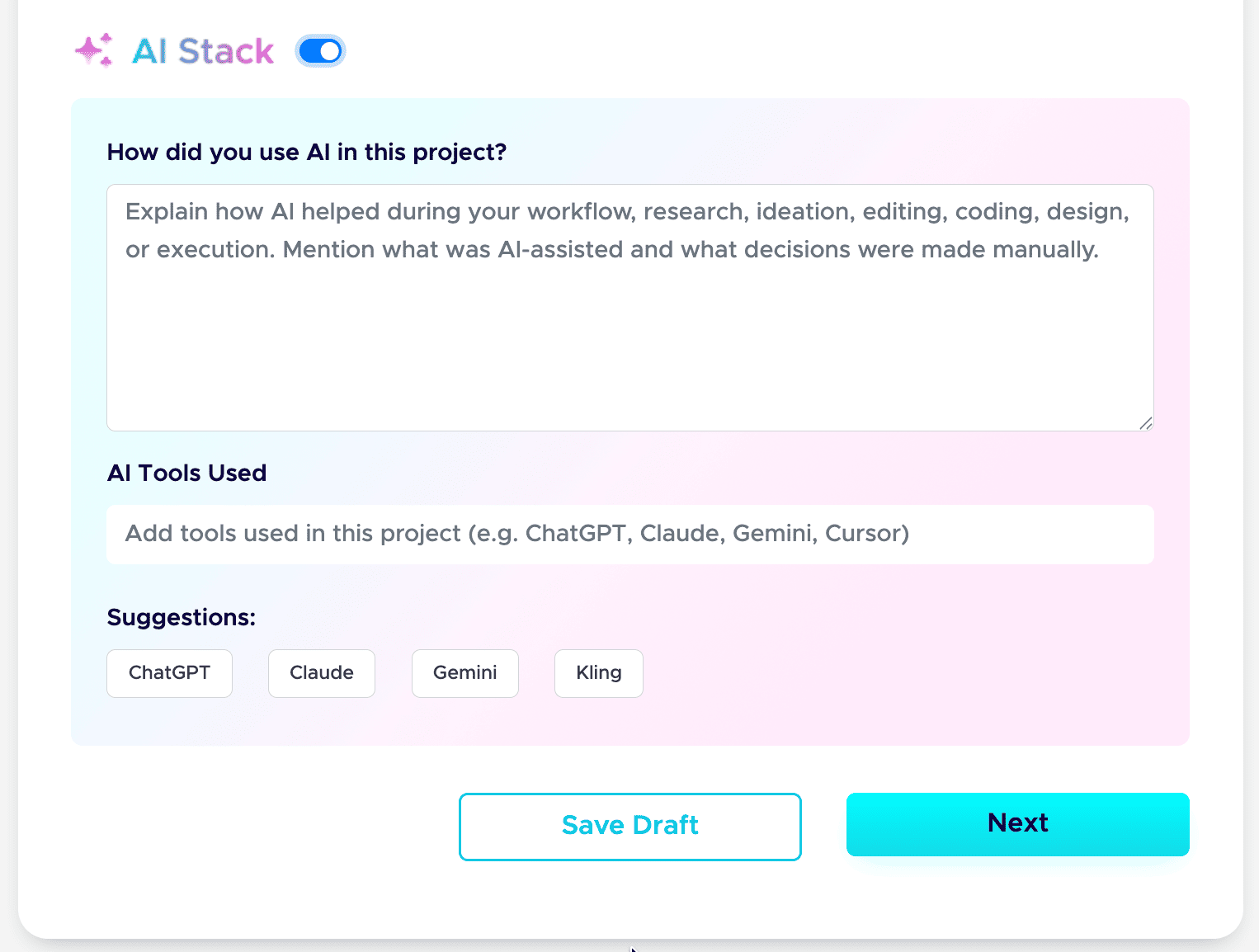
Step 9: Add your AI Stack to each project.
AI is part of real work now, so show it honestly. Use the AI Stack feature to explain how you used AI, which tools you used, and what you did manually. This builds trust instead of raising doubt. Here is the full guide: how to add AI Stack on Fueler.
That is the whole setup. Do these nine steps well, and your profile stops being a static page and starts working as a hiring asset. If you want a tighter version to follow next time, save my 6-step formula for a Fueler portfolio and my breakdown of a career portfolio that actually gets jobs.
Why It Matters: Building proof of work without publishing it is like writing a great pitch and never sending it. A portfolio is the delivery system. When your projects live on a Fueler link with full context, they stop being personal experiments and become public proof. That is the difference between hoping to get noticed and being discoverable to companies that hire on proof of work.
Final Thoughts
The lack of traditional job experience is no longer an insurmountable barrier to entry. While the old gatekeepers still look for years of employment history, the modern market rewards builders who take initiative. By shifting your focus from writing resumes to producing proof of work, you immediately separate yourself from the vast majority of job seekers. You stop asking for permission to display your talents and start creating your own opportunities.
The key to success is immediate, disciplined execution. Stop waiting for the perfect job offer to land in your inbox before you begin working. Choose a specific project today, use the tools at your disposal to build it out completely, and publish the results transparently. Once you have a collection of tangible, real-world assets showcasing your capabilities, your lack of experience ceases to be a liability. It becomes the proof of your drive. Your very next step is simple: pick one problem, open up your workflow tools, and start building.
FAQs
How long should a proof of work project take to build?
Most proof-of-work projects take one to two weeks to complete. Keep the project focused and manageable instead of trying to build something too big. A well-finished project is much more valuable than an unfinished ambitious one.
Can I use mock projects if I have zero real clients?
Yes. In fact, these are often called permissionless projects- projects you start on your own without waiting for a client or employer. Pick a real business, identify a problem they could improve, and create your own solution. What matters most to hiring managers is the quality of your work and how you solve problems, not whether someone paid you to do it.
How many projects do I need to show on my portfolio?
Aim for three to five high-quality, deep-dive projects. A few thoroughly documented, exceptional projects provide far more value than ten surface-level pieces. Quality always triumphs over quantity when you are trying to build trust with potential employers.
Should I include projects that didn't achieve perfect results?
Absolutely. Documenting a project that fell short of its initial goals shows incredible maturity. Explain what you learned from the data, what went wrong, and exactly how you would pivot the strategy next time. Founders highly value honest self-awareness.
Do I still need a traditional resume if I have proof of work?
Yes, keep a simple resume ready for standard HR systems. However, your resume should serve primarily as a map that points directly to your proof of work. Use the bullet points on your resume to link straight to your published portfolio projects.
Why 100,000+ professionals use Fueler
Fueler helps professionals showcase proof of work through projects, assignments, case studies, and achievements.
- Thousands of professionals use Fueler to create their digital portfolio
- Thousands of projects are published on Fueler. Check here
- Startups and Companies hire through proof of work on Fueler
- Used by freelancers, creators, marketers, video editors, writers, designers, and product managers
Our mission is to help the next 100 million professionals build a verified professional identity through proof of work

What should you do next?
You've read the article. Now turn your skills into proof of work and unlock more opportunities.
Build your proof of work portfolio
Create a clean portfolio with projects, assignments, resumes, and AI stack details that companies actually want to see.
Create your Fueler portfolio →Apply through assignments, not resumes
Stand out by solving real tasks from companies hiring on Fueler.
Explore assignments →Get discovered by companies
Make your work public and let recruiters discover your skills through actual projects instead of keywords.
Get discovered →
