Fueler vs Webflow Portfolio: Designed for Career Growth

Riten Debnath
14 Jul, 2026

Last updated: July 2026
The recruitment landscape has officially reached a structural breaking point. For over a decade, professionals treated their portfolio as a personal design project, a standalone digital monument whose primary objective was to look aesthetically breathtaking. If you could animate a section header, build a unique asymmetrical grid layout, or create custom scrolling wrappers, you wouldn't just win attention; you would win jobs.
But the hiring ecosystem of 2026 has completely mutated. Recruiters are no longer scanning portfolios for visual gymnastics. In an era dominated by automated application volume and deep generative AI noise, they are searching for verifiable proof of competence, execution velocity, and collaborative impact.
I’m Riten, founder of Fueler, a skills-first portfolio platform that connects talented individuals with companies through assignments, portfolios, and projects, not just resumes/CVs. Think Dribbble/Behance for work samples + AngelList for hiring infrastructure.
This guide provides an objective, side-by-side architectural breakdown between building a portfolio on Webflow versus publishing your proof of work on Fueler. We will analyze how each framework impacts your long-term career growth, structural discoverability, operational overhead, and absolute ability to land opportunities in a competitive talent market.
The Quick Summary for Decision Makers
If you are pressed for time and need a definitive strategic roadmap, here is the short answer:
- Choose Webflow if your portfolio is your core product. This applies specifically to high-end interactive designers, visual branding agencies, and front-end developers whose core value proposition is bespoke web execution and custom code control.
- Choose Fueler if your work inside the portfolio is your core product. This applies to content writers, growth marketers, product managers, software engineers, and digital generalists who need to prove output, speed, collaborative history, and functional metrics without writing a single line of layout code.
The Modern Career Dilemma: Visual Aesthetics vs. Proof of Utility
When evaluating where to house your professional achievements, you must first define the core metric of your portfolio's success. Is it visual expression, or is it operational utility?
The Website Builder Paradigm
Webflow operates entirely on a website builder paradigm. It provides a blank canvas, allowing you to manipulate every pixel, CSS grid property, and JavaScript scroll interaction. For a professional, this means total creative sovereignty. You can build a personal brand that looks exactly how you envision it in your mind.
However, a blank canvas requires you to become a full-time developer, an asset designer, an SEO manager, and an infrastructure engineer. The focus naturally shifts from what value you created to how the wrapper of that value looks.
The Proof-of-Work Paradigm
Fueler operates on a proof-of-work paradigm. It assumes that your work should speak for itself, eliminating design friction entirely. Instead of configuring breakpoints and margins for mobile screens, you document your actual contributions, link your collaborators, collect authentic vouches, and let the platform handle discovery by hiring managers.
For long-term career growth, the choice isn't merely about choosing software; it’s about choosing how you spend your professional capital. Are you maintaining code, or are you accumulating proof of value?
Decoding Webflow: The Visual Masterpiece Factory
To understand where Webflow fits into your career strategy, we must recognize what it was designed to do. Webflow is an enterprise-grade visual content management system and design tool. It translates complex CSS and HTML structures into a visual canvas.
Where Webflow Excels
- Infinite Customization: If you want a portfolio that breaks standard web conventions such as horizontal scrolling layouts, mouse-tracking micro-interactions, or immersive 3D canvas wrappers, Webflow is unmatched.
- Robust CMS Capabilities: Webflow’s dynamic collections allow you to structure content seamlessly. If you are an experienced designer, you can build custom filtering systems for your case studies.
- Aesthetic Distinction: A well-crafted Webflow site signals high technical skill in web design and development.
Where Webflow Generates Career Friction
While Webflow is an extraordinary technical asset, it introduces clear operational friction for long-term career maintenance:
- The Maintenance Trap: Webflow sites are not "set-and-forget." If a browser updates its layout engine, or if you want to add a quick project on a Tuesday evening, you have to log into a heavy design interface, verify that the styling classes don't break across five separate device breakpoints, and manually republish.
- Zero Built-In Distribution: A Webflow site is an isolated island in the ocean of the internet. Once you hit publish, you are entirely responsible for your own search engine optimization, link building, domain health, and organic traffic distribution. The platform itself does not have a native directory of recruiters actively looking for talent.
- The Procrastination Loop: Because you can change everything, you end up changing everything. Professionals routinely spend months tweaking their site design instead of actually executing new projects, shipping code, or writing copy.
Decoding Fueler: The Skills-First Opportunity Engine
Fueler was built as a direct response to the inefficiencies of traditional personal websites. It treats the portfolio not as a static brochure, but as an active proof-of-work ledger that reduces the time-to-trust between a professional and a hiring manager.
Where Fueler Excels
- Zero-Design Publishing: You do not design layouts. You input data. You upload the project file, paste the link, describe your specific role, note the outcomes, and publish. The platform auto-formats your entries into clean, modern, scannable case studies built for rapid recruiter evaluation.
- Collaboration and Multi-Author Tagging: Real work is rarely done in total isolation. Fueler allows you to tag your co-creators, engineers, or strategists directly on a project card. This mimics GitHub's contribution graphs or movie credit lists, proving to recruiters that you can operate effectively within an actual product team.
- Recruiter Discovery Infrastructure: Fueler is natively indexable and integrated with hiring pipelines. Companies don't just land on Fueler profiles via cold links; they use Fueler's central engine to search for specific proofs of work (e.g., searching for "Next.js landing pages" or "B2B SaaS Email Sequences") to find verified professionals.
Where Fueler Is Not the Right Fit
To keep our evaluation completely balanced, Fueler is explicitly not designed for:
- Bespoke Web Artists: If your primary professional identity relies on completely custom layout animations, unique typography experimentation, or proprietary CSS designs, Fueler’s uniform layout structure will feel intentionally restrictive.
- Standalone E-commerce/Product Landing Pages: Fueler is structurally optimized for individual career documentation, personal proof of work, and team project indexing. It is not built to act as a multi-page client business website or a digital drop-shipping storefront.
Strategic Comparison Matrix
The following structural matrix outlines how each framework handles specific career indicators, discoverability mechanics, and maintenance vectors.
Step-by-Step Guide: Building Your Proof-of-Work Portfolio on Fueler
Transitioning away from a complex design grid to a fast, conversion-focused proof-of-work layout takes less than ten minutes. Here is exactly how to construct an optimized profile that stands out to hiring managers:
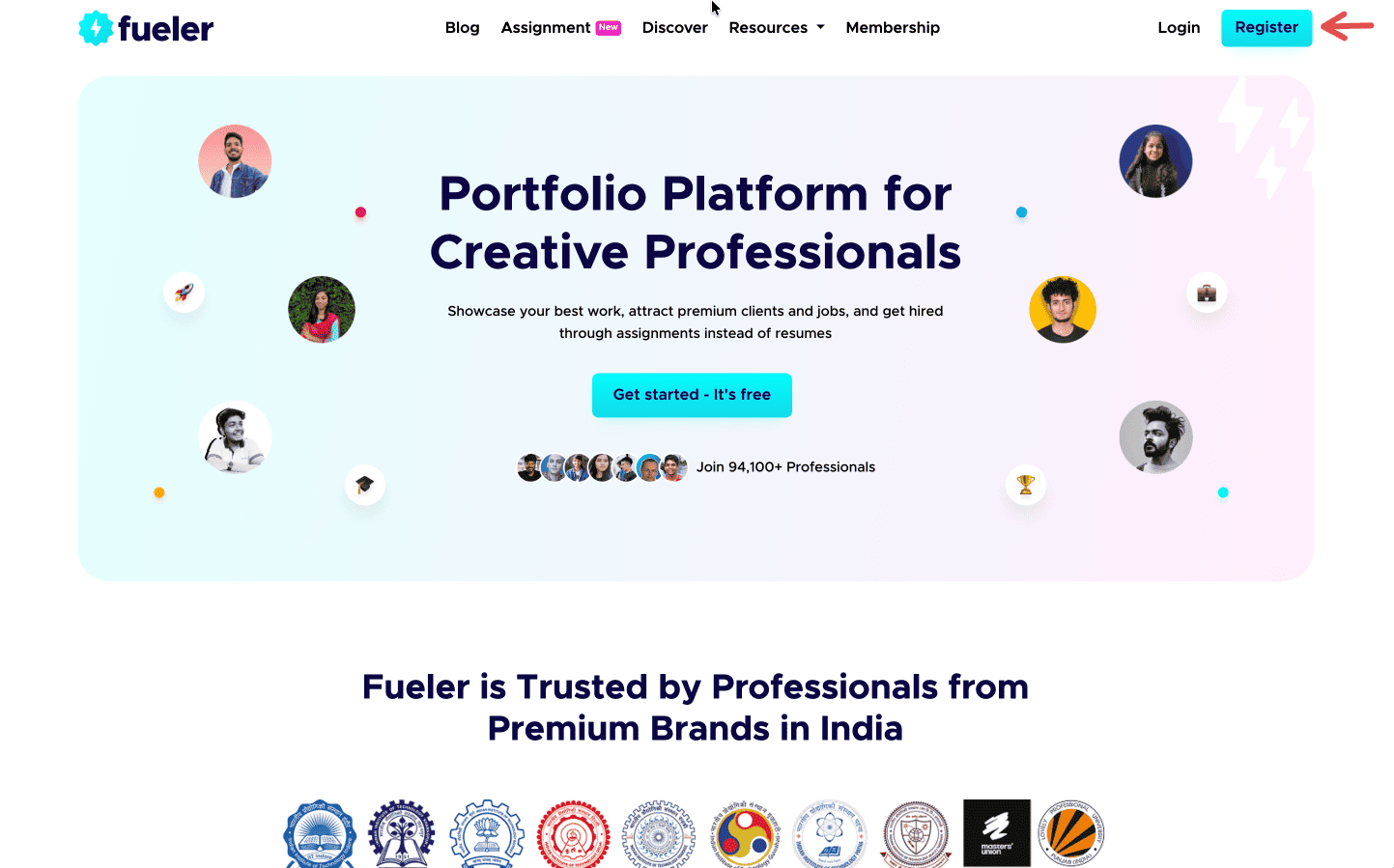
Step 1: Sign up on Fueler.
Head to Fueler.io and create your free account.
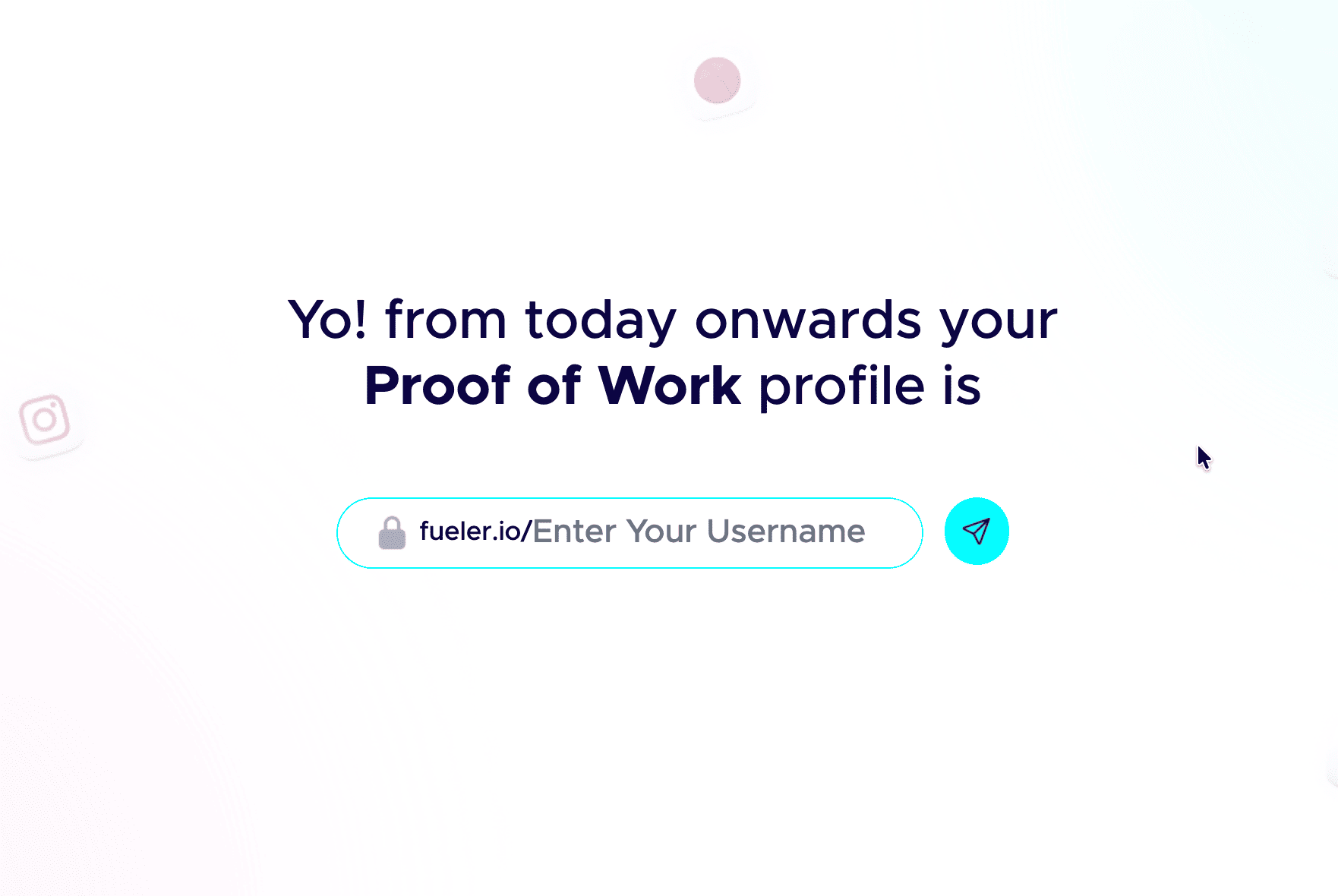
Step 2: Pick a professional handle.
Your handle shows up in your public link, so keep it clean and grown-up. Don’t add nicknames and random numbers. Your name or a simple version of it works best.
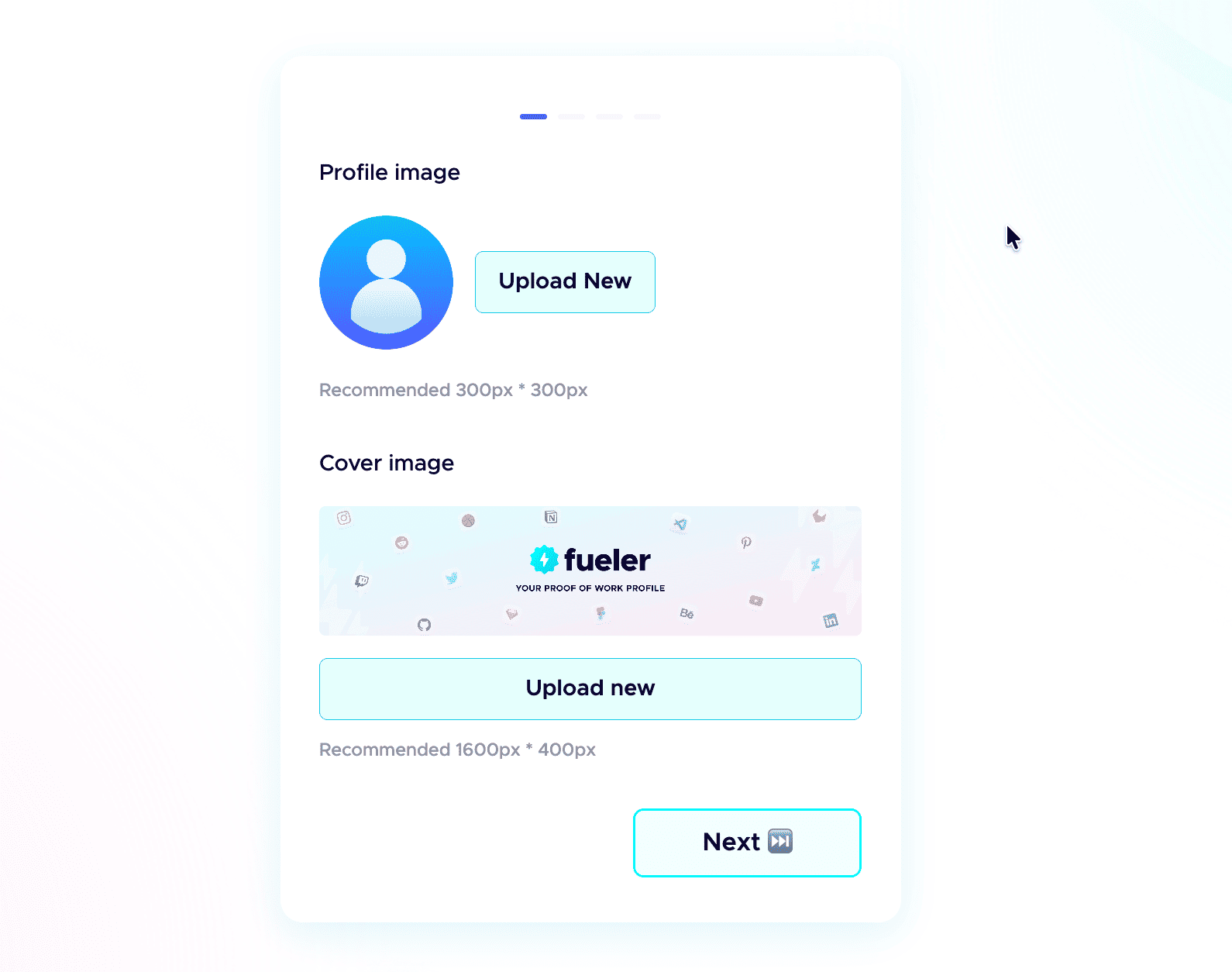
 Step 3: Add a professional profile picture.
Use the same kind of professional photo you would put on LinkedIn. Clear face, good lighting, and a simple background. People trust a real face more than an empty avatar.
Step 4: Write a strong header.
The header is the first thing anyone sees. In one or two short lines, say who you are, what you do, and the kind of work you have done. Make it specific, not vague.
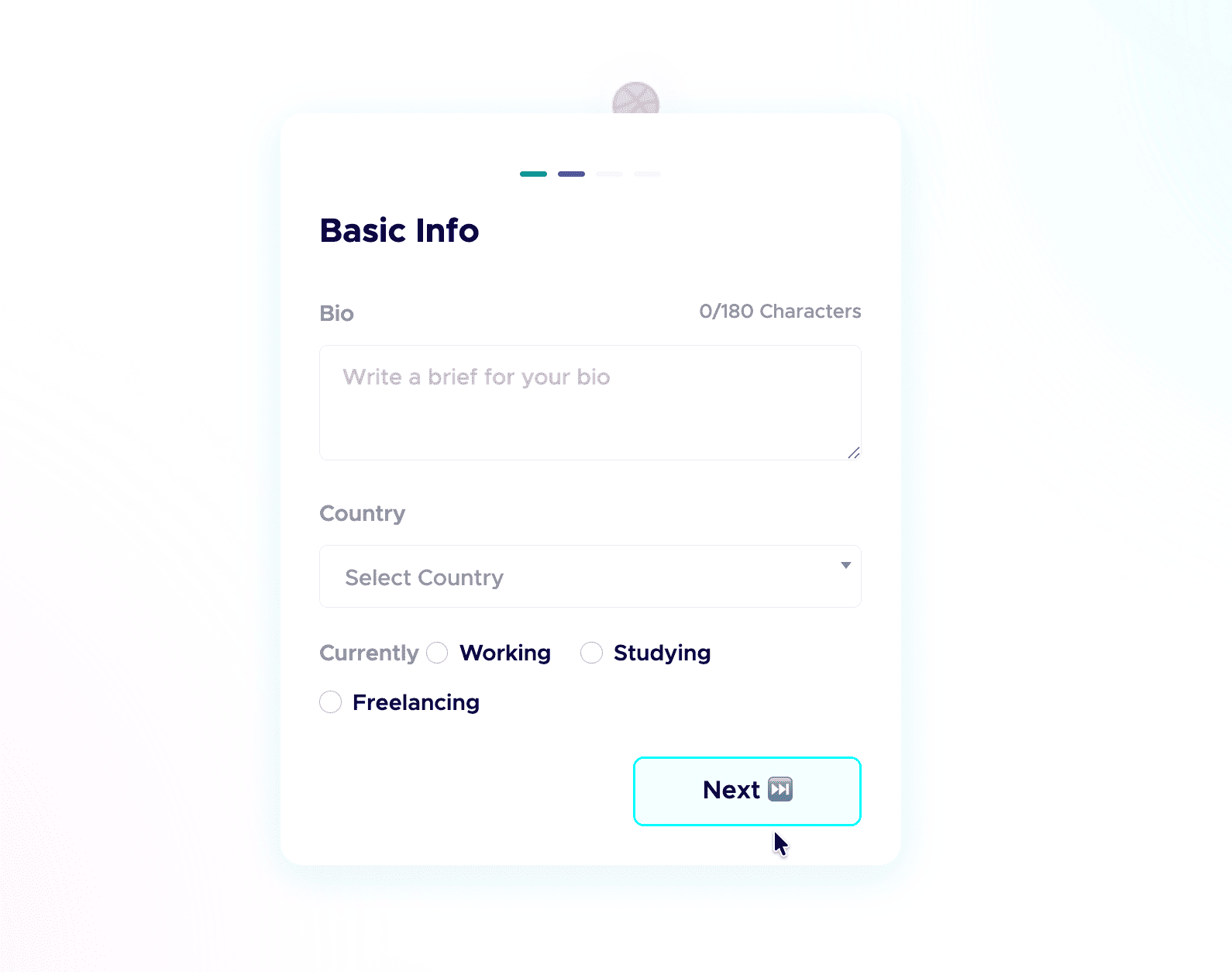
Step 5: Add a short bio.
Tell people who you are and what you do in a few plain sentences. No buzzwords, just enough for a recruiter to get you in five seconds.
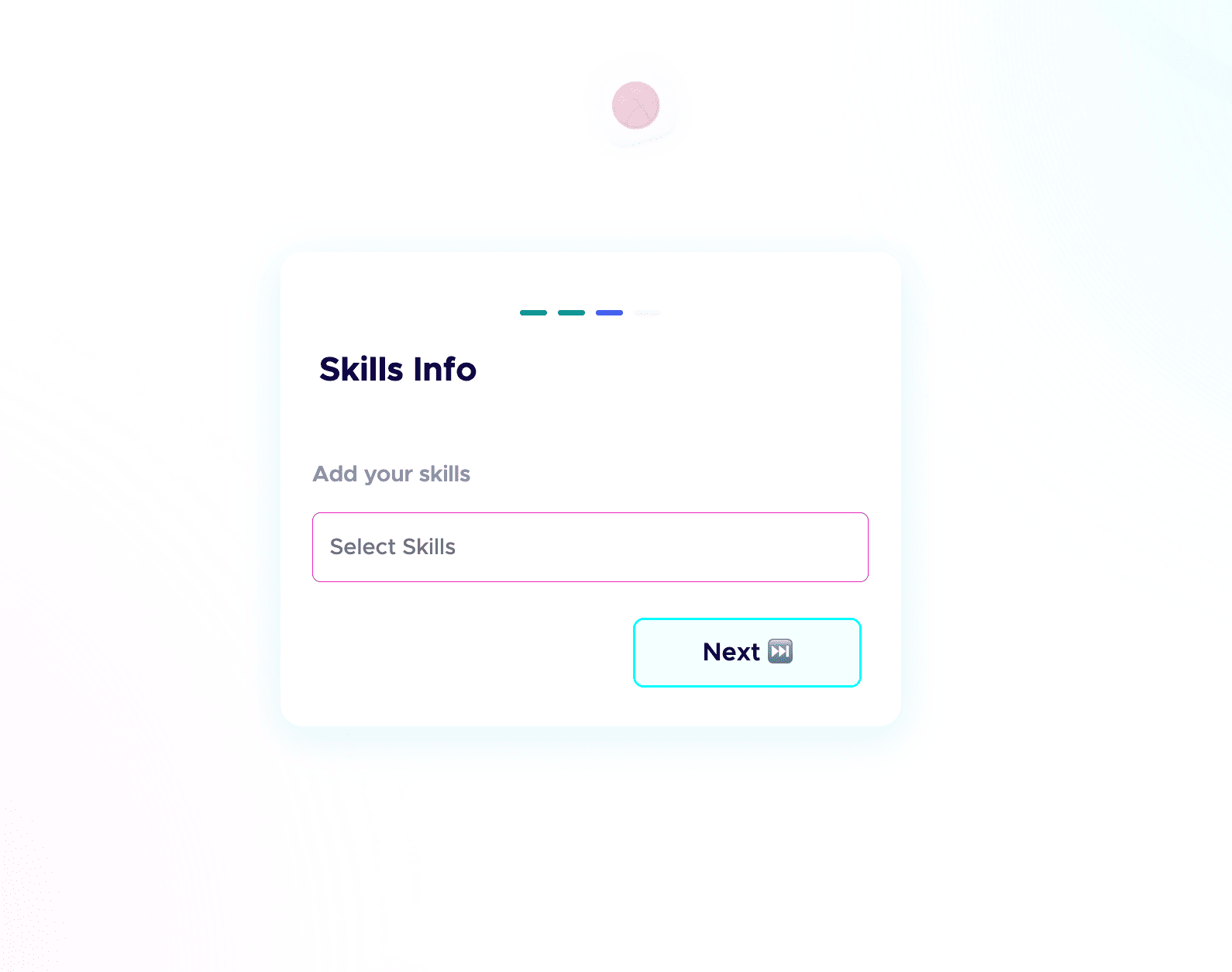
 Step 6: Add your skills and social links.
List the skills you are good at and actually want to be hired for, and connect your socials. People do check your profiles, and active socials build credibility before the first call. Students starting from scratch can follow my student guide to their first portfolio.
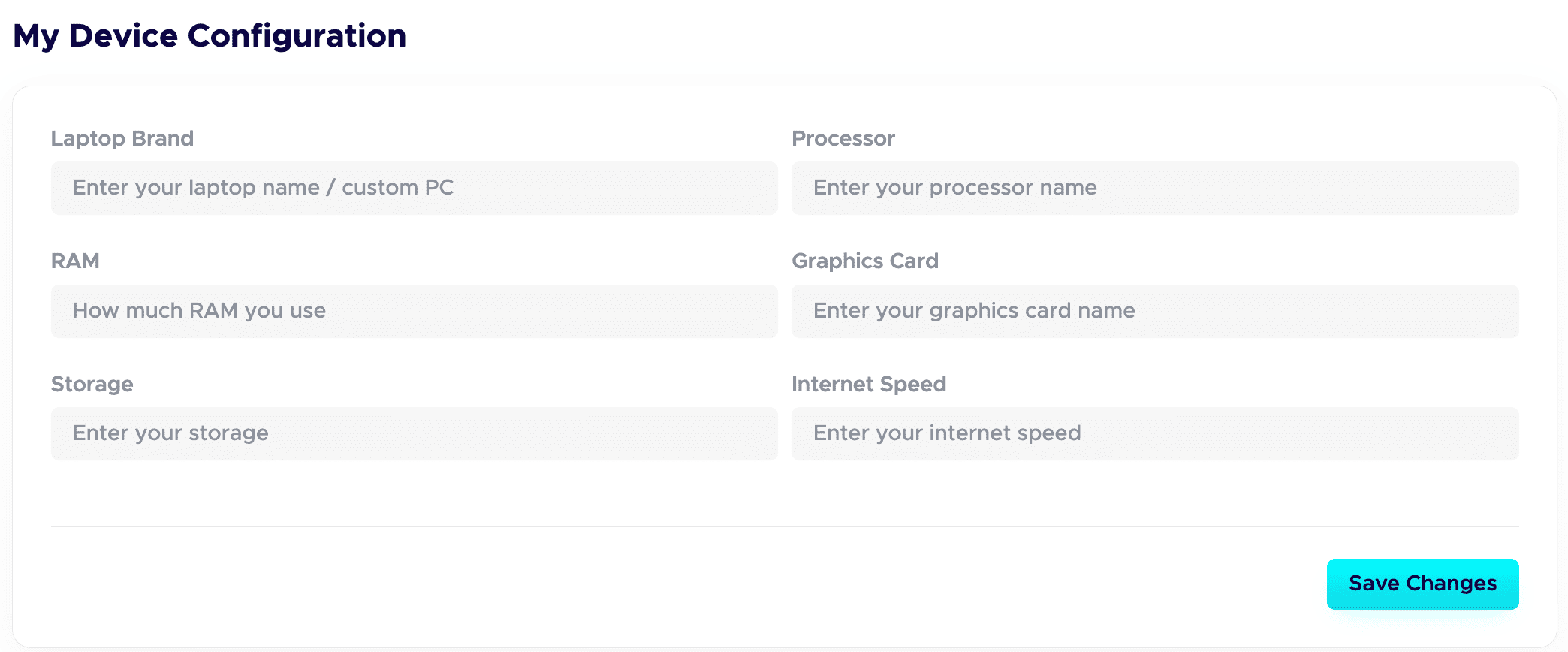
 Step 7: Fill in your Device Configuration.
In your dashboard, set up the Device Configuration section. Add the details about the device you are using. Remote-first companies want to know you have a solid setup to work from. A good setup quietly adds leverage and signals you are ready to deliver.
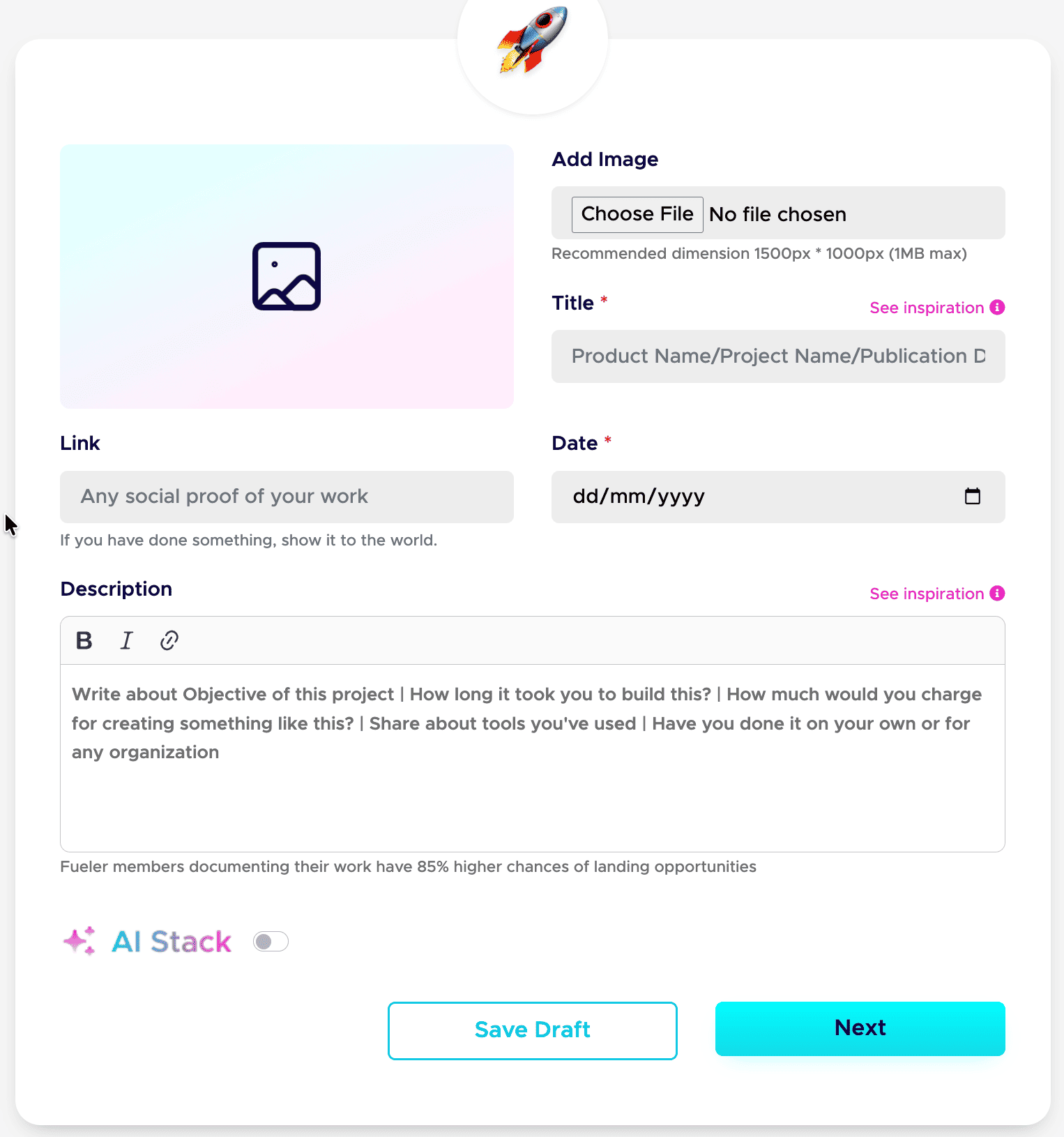
Step 8: Publish your projects with all the details.
This is a game-changer. Give each project a clear title and a detailed description. Walk through your process: your thinking, the tools you used, the choices you made, and the result. Companies care about how you work, not just the final image.
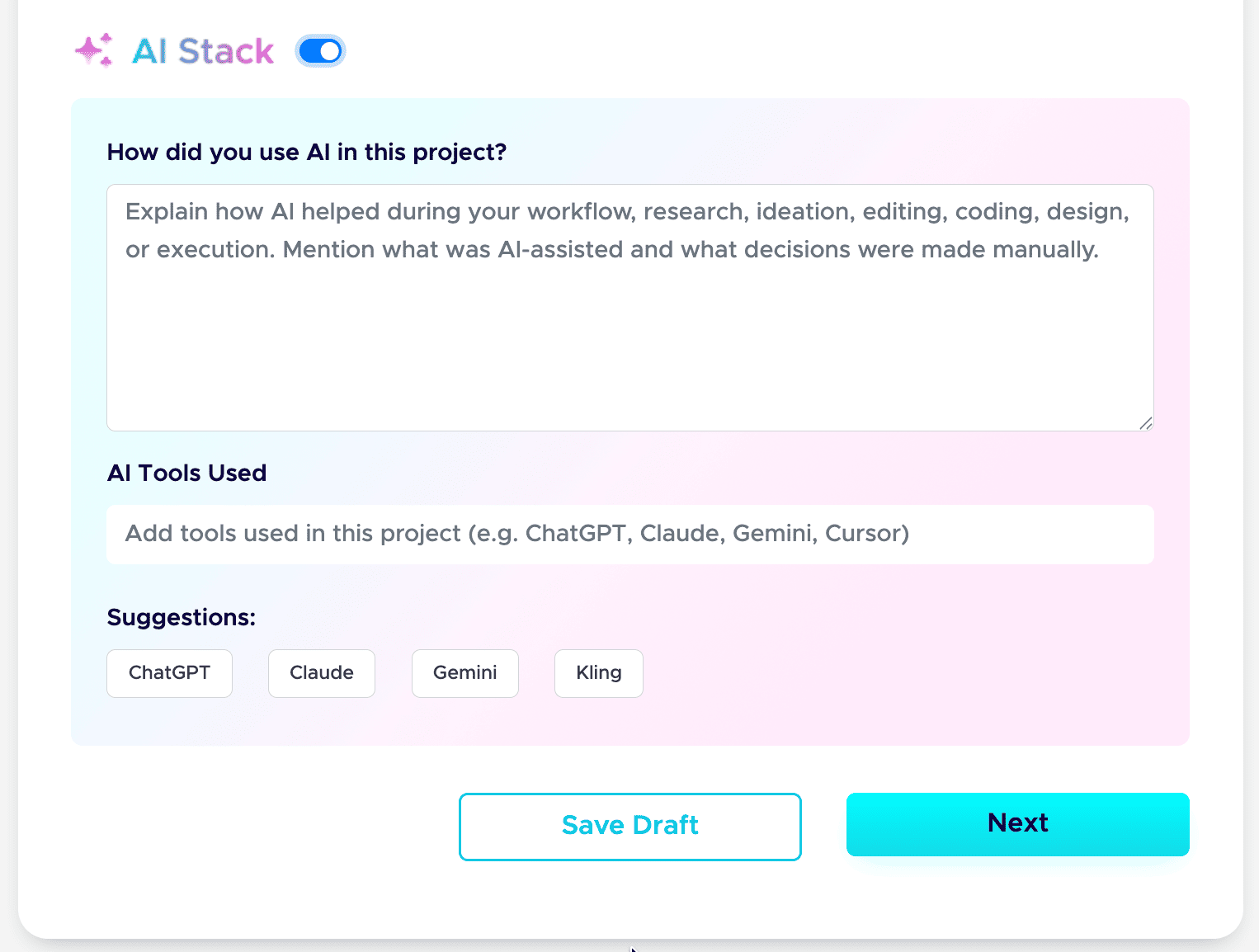
Step 9: Add your AI Stack to each project.
AI is part of real work now, so show it honestly. Use the AI Stack feature to explain how you used AI, which tools you used, and what you did manually. This builds trust instead of raising doubt. Here is the full guide: how to add AI Stack on Fueler.
That is the whole setup. Do these nine steps well, and your profile stops being a static page and starts working as a hiring asset. If you want a tighter version to follow next time, save my 6-step formula for a Fueler portfolio and my breakdown of a career portfolio that actually gets jobs.
Do this once, and you have a link you can drop into your resume, your email signature, and every job application.
Functional Archetypes: Who Wins Where?
To bring this comparison into the real world, let's examine how three distinct professional archetypes experience these two environments during an active job hunt.
Archetype 1: The Product / Growth Marketer
A growth marketer’s value is locked entirely in spreadsheets, campaign dashboards, copy optimization, and conversion rates.
- On Webflow: They spend three days building a custom landing page to show off their marketing projects. They struggle with layout margins and embedding analytics charts smoothly. The recruiter spends 15 seconds on the site, gets distracted by an animation lag, and closes the tab.
- On Fueler: The marketer uploads raw screenshots of their conversion metrics, drop-links the live ad accounts or content assets, writes a 3-bullet metric breakdown, and hits publish. The recruiter sees verified data points within 5 seconds of opening the page, validates the execution, and opens a direct line of communication.
Archetype 2: The Backend / DevOps Engineer
A software engineer's value is completely embedded within code quality, architecture integrity, system uptime, and logic structure.
- On Webflow: They are forced to design a visual interface from scratch, a skill set completely outside their core engineering focus. They look for templates, get frustrated trying to embed raw syntax styling or GitHub readmes cleanly, and leave their portfolio outdated for months.
- On Fueler: They document their system builds, drop clean production repository links, tag the frontend engineers they collaborated with, and write a concise technical brief on how they reduced database query latency. The portfolio remains lean, structured, and completely up to date.
Archetype 3: The Interaction Designer
An interactive UI/UX professional specializes in fluid movement, user paths, micro-interactions, and visual storytelling through layouts.
- On Webflow: This is their home turf. They use the platform to prove they understand advanced styling principles, responsive mechanics, and motion engineering. The website itself serves as an independent, interactive piece of proof of work.
- On Fueler: While they can display high-resolution final mockups, prototypes, and structured wireframe case studies beautifully, they cannot override the core platform layout to build custom interactive canvas movements.
Optimization for the 2026 Discovery Ecosystem (GEO & AEO)
The way people discover talent has structurally changed. Recruiters are no longer exclusively scanning static job boards; they are letting search engines, natural language indexers, and private platform directories crawl the web to find professionals with specific operational histories.
Traditional Discovery: Cold Applications -> Manual Resume Sort -> Low Interview Yield
Modern Discovery: Verified Proof-of-Work -> AI/Engine Indexing -> Direct Recruiter Outbound
If your portfolio is built completely on a custom Webflow architecture without explicit, structured schema mapping, a deep knowledge graph optimizer can interpret your page as a collection of generic visual blocks.
Because Fueler acts as a highly structured career ledger, every single project entry is natively categorized by clear asset parameters: who did the work, what skills were deployed, who validated the output, and what live links back up the asset. This makes your profile highly readable for generative engine scrapers and internal recruitment models searching for real-world execution proof.
Architectural Deep Dive: The Operational Cost of Maintenance
We cannot discuss long-term career tools without examining operational overhead. A portfolio is a living document; it must evolve alongside your professional output.
If adding a new project requires an hour of visual asset staging, layout configuration, and responsive testing, you will organically build a psychological barrier to updating your work. This is the precise reason why thousands of personal Webflow sites feature brilliant design work but list "Last Updated: 18 Months Ago."
By decoupling the act of documenting work from the act of designing layout code, your documentation friction drops to near zero. You treat your portfolio like a fluid professional stream; finishing a project on a Friday means it is live and indexable for recruiters by Friday evening.
Key Takeaways
- Aesthetics Are Secondary to Trust: In a crowded talent market, recruiters value rapid scannability, clear structural data, and verifiable outcome metrics over custom web layouts.
- Webflow Is a Design Product: It serves as the definitive tool for individuals whose core output is custom visual front-end engineering or high-end web brand customization.
- Fueler Is a Career Engine: It streamlines the career documentation process, removing design choices entirely so that your real proof of work remains the central focus.
- Velocity Wins: The platform that allows you to document, update, and distribute your projects with the least amount of mechanical friction will always keep your professional presence highly accurate and relevant.
Frequently Asked Questions
Can I use Fueler alongside my existing custom personal website?
Absolutely. Many professionals use their custom homepage for general personal branding while using Fueler as their live, organized project documentation engine. They simply link their Fueler profile directly from their main site menu as their active "Proof of Work" center.
Does Fueler charge a monthly fee to host my work samples?
No. Fueler provides a comprehensive, highly scalable core portfolio infrastructure completely free for individual creators, freelancers, and professionals looking to map out their proofs of work.
How do non-designers showcase text or code-heavy work on Fueler?
Fueler is optimized for all formats. You can link production URLs, attach live documentation, paste software repository paths, embed rich contextual text case studies, or pin media screenshots to cleanly summarize backend configurations, data models, or written strategy pieces.
Is a Fueler portfolio optimized for search engines out of the box?
Yes. Every single profile and project card published on Fueler is built on a clean, light, SEO-friendly framework. This ensures your name and specific proof-of-work entries are easily indexable by search engines and generative scrapers without any manual meta-tag adjustments.
Why 100,000+ professionals use Fueler
Fueler helps professionals showcase proof of work through projects, assignments, case studies, and achievements.
- Thousands of professionals use Fueler to create their digital portfolio
- Thousands of projects are published on Fueler. Check here
- Startups and Companies hire through proof of work on Fueler
- Used by freelancers, creators, marketers, video editors, writers, designers, and product managers
Our mission is to help the next 100 million professionals build a verified professional identity through proof of work

What should you do next?
You've read the article. Now turn your skills into proof of work and unlock more opportunities.
Build your proof of work portfolio
Create a clean portfolio with projects, assignments, resumes, and AI stack details that companies actually want to see.
Create your Fueler portfolio →Apply through assignments, not resumes
Stand out by solving real tasks from companies hiring on Fueler.
Explore assignments →Get discovered by companies
Make your work public and let recruiters discover your skills through actual projects instead of keywords.
Get discovered →
