Fueler vs Google Sites Portfolio: Built for Opportunities

Riten Debnath
13 Jul, 2026
Last updated: July 2026
If you are still trying to land clients using a dusty Google Sites page, you are basically throwing your best work into a black hole. Google Sites is great for a high school group project or an internal HR wiki, but using it to launch a modern career is a total nightmare. You spend half your night fighting manual grid layouts, adjusting mobile margins, and praying your Google Drive permission links aren't broken. Meanwhile, recruiters are completely ignoring you because static pages have zero visibility and zero built-in trust.
I’m Riten, founder of Fueler, a skills-first portfolio platform that connects talented individuals with companies through assignments, portfolios, and projects, not just resumes/CVs. Think Dribbble/Behance for work samples + AngelList for hiring infrastructure.
We built a specialized, skills-first portfolio network that connects talent with companies through real assignments, project logs, and verified case studies. We don't care about generic paper certificates; we care about what you can actually execute.
Where Google Sites Actually Serves a Purpose
To write an honest evaluation, we must look at where Google Sites genuinely excels. It was never designed to be a personal brand launcher or a talent marketplace. It was built as a zero-cost, lightweight layout tool for internal collaboration.
If your primary goal is to build an internal company wiki, organize a private resource hub for a local student group, or store chronological documentation for a cross-functional team, Google Sites is incredibly efficient.
Its native integration with the Google Workspace ecosystem makes embedding live spreadsheets, presentation decks, and shared folders seamless. For private, non-commercial tracking where visual aesthetics, personal distribution, and inbound recruiter traffic are irrelevant, it remains a secure and reliable utility.
Deconstructing the Structural Roadblocks
The structural gap between a generic page builder and a specialized career network shows up in your day-to-day workflow. When your landing page requires manual layout updates, updating your portfolio becomes a chore you constantly avoid.
- Layout Maintenance Overhead: Traditional web builders require manual grid tuning, alignment checks, and mobile scaling fixes for every single change.
- Complete Discovery Isolation: Static sites don't have a built-in audience feed, leaving you completely dependent on manual cold emails or active social media distribution.
- Unverified Claims: Plain text websites rely entirely on self-declared statements, providing zero built-in social proof to visiting clients.
- Passive Layout Design: Static pages lack matching frameworks, assignment workflows, or instant client analytics out of the box.
How to Set Up Your High-Converting Profile on Fueler
You don't need a single line of code or an afternoon spent debugging responsive padding. The layout engine formats everything automatically so you can focus entirely on your work.
How to Create Your Portfolio on Fueler Step by Step
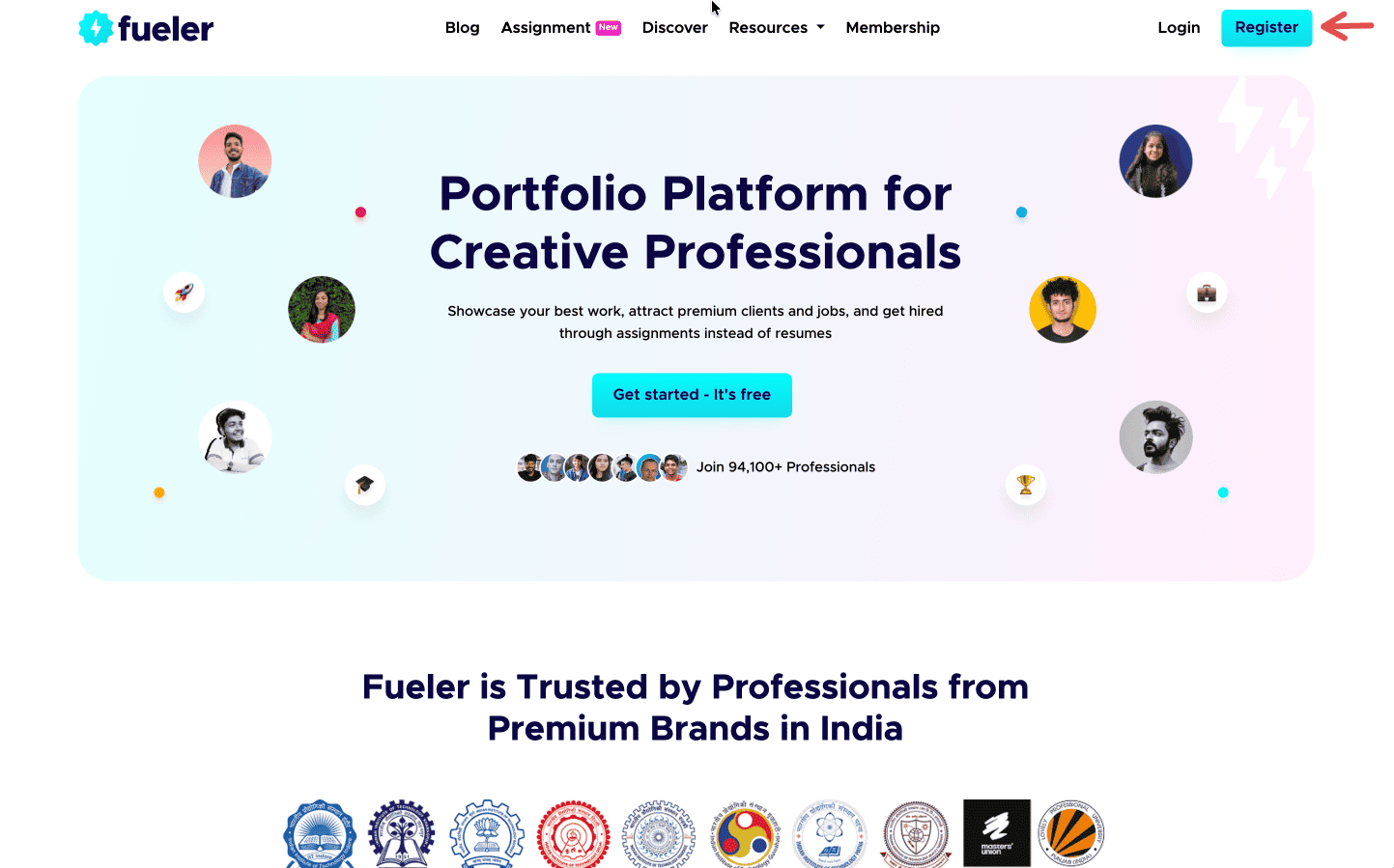
Step 1: Sign up on Fueler.
Head to Fueler.io and create your free account.
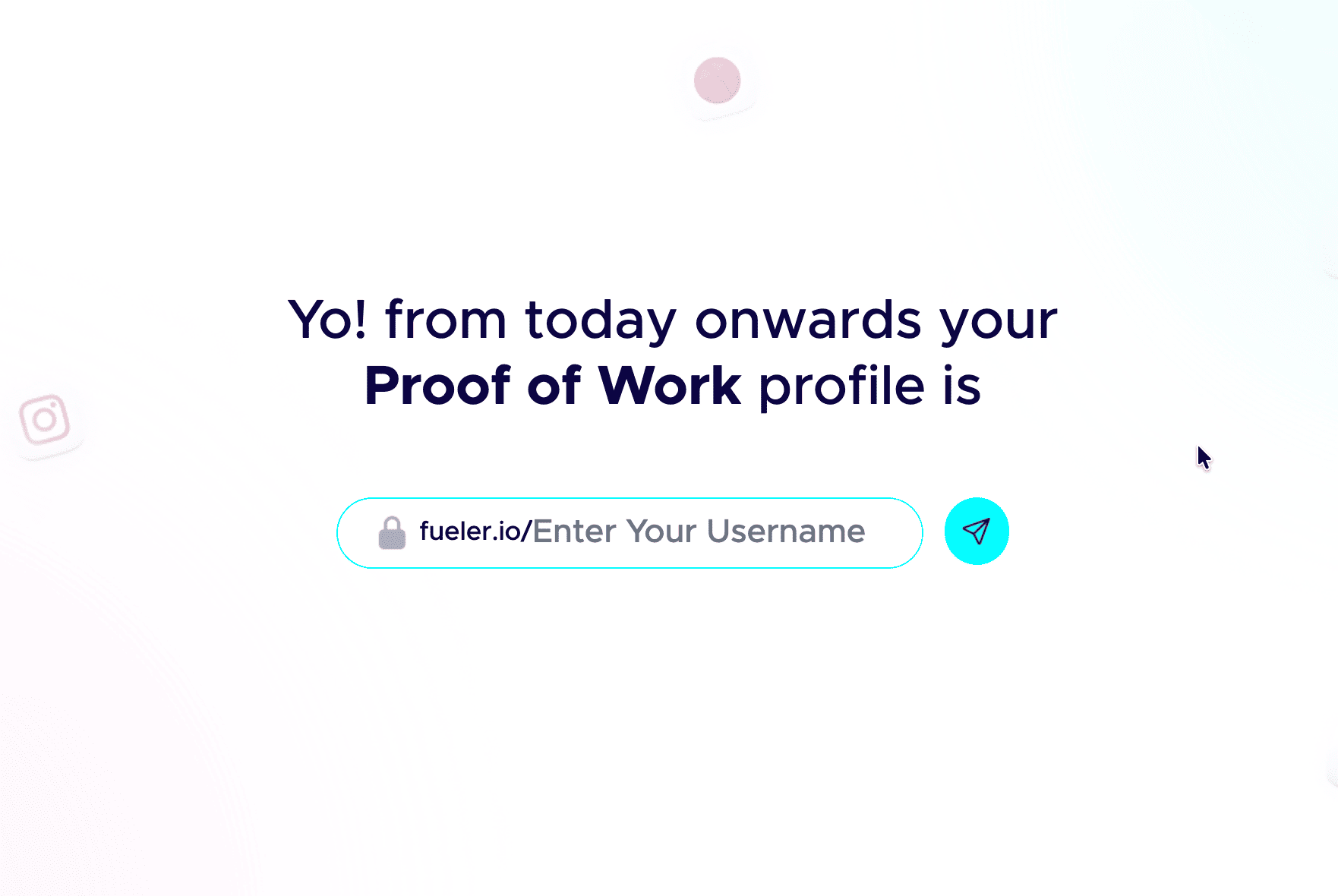
Step 2: Pick a professional handle.
Your handle shows up in your public link, so keep it clean and grown-up. Don’t add nicknames and random numbers. Your name or a simple version of it works best.
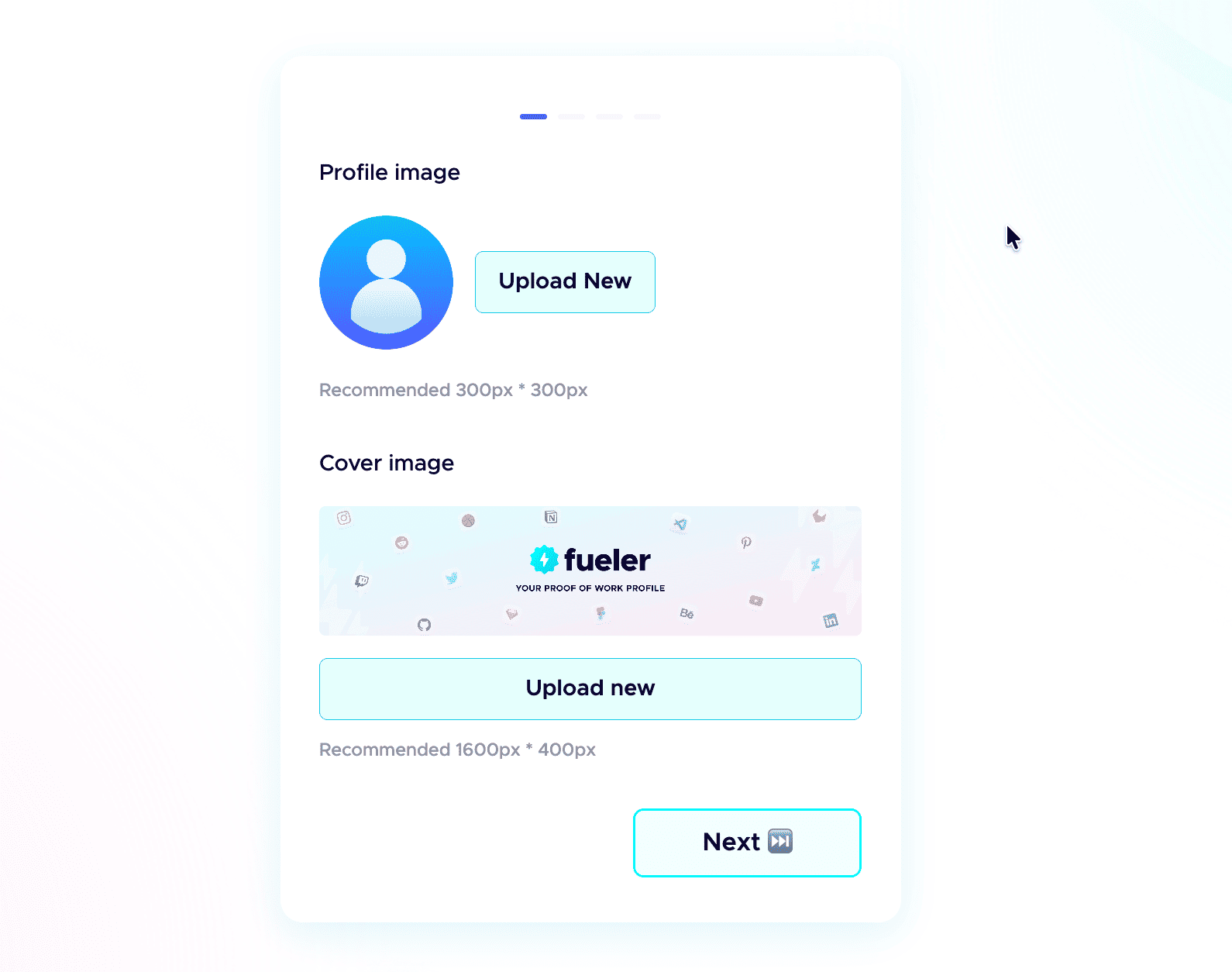
 Step 3: Add a professional profile picture.
Use the same kind of professional photo you would put on LinkedIn. Clear face, good lighting, and a simple background. People trust a real face more than an empty avatar.
Step 4: Write a strong header.
The header is the first thing anyone sees. In one or two short lines, say who you are, what you do, and the kind of work you have done. Make it specific, not vague.
Step 5: Add a short bio.
Tell people who you are and what you do in a few plain sentences. No buzzwords, just enough for a recruiter to get you in five seconds.
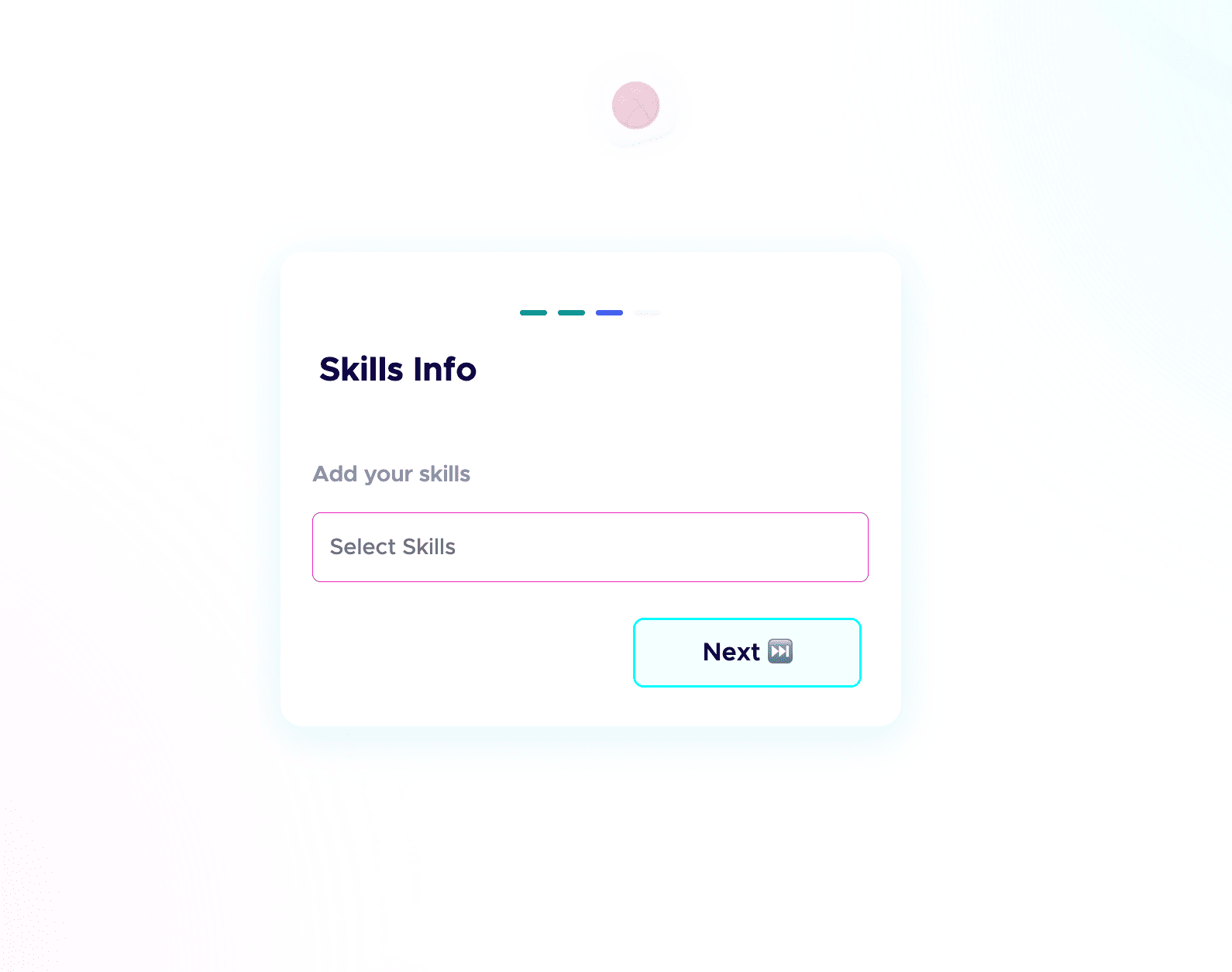
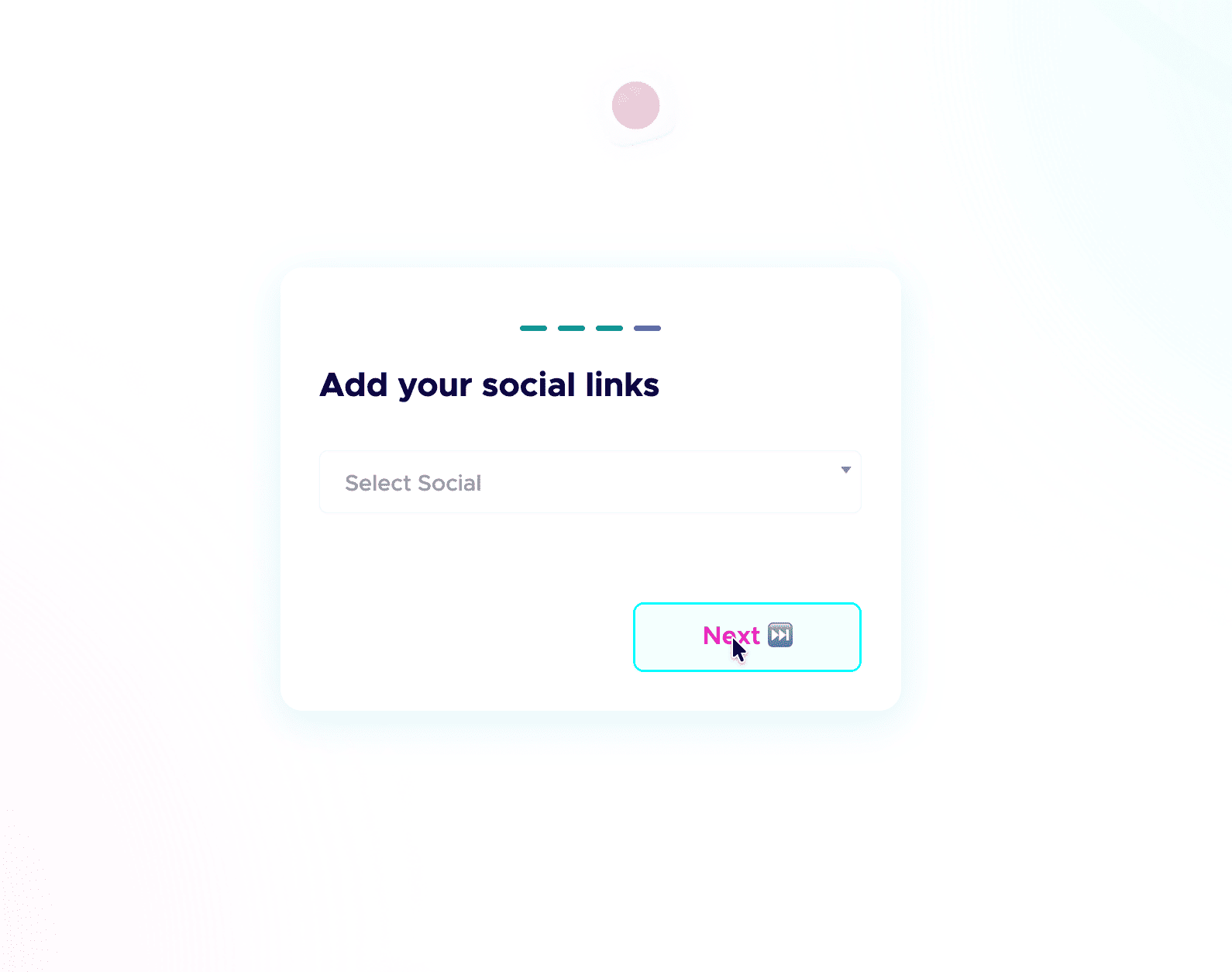
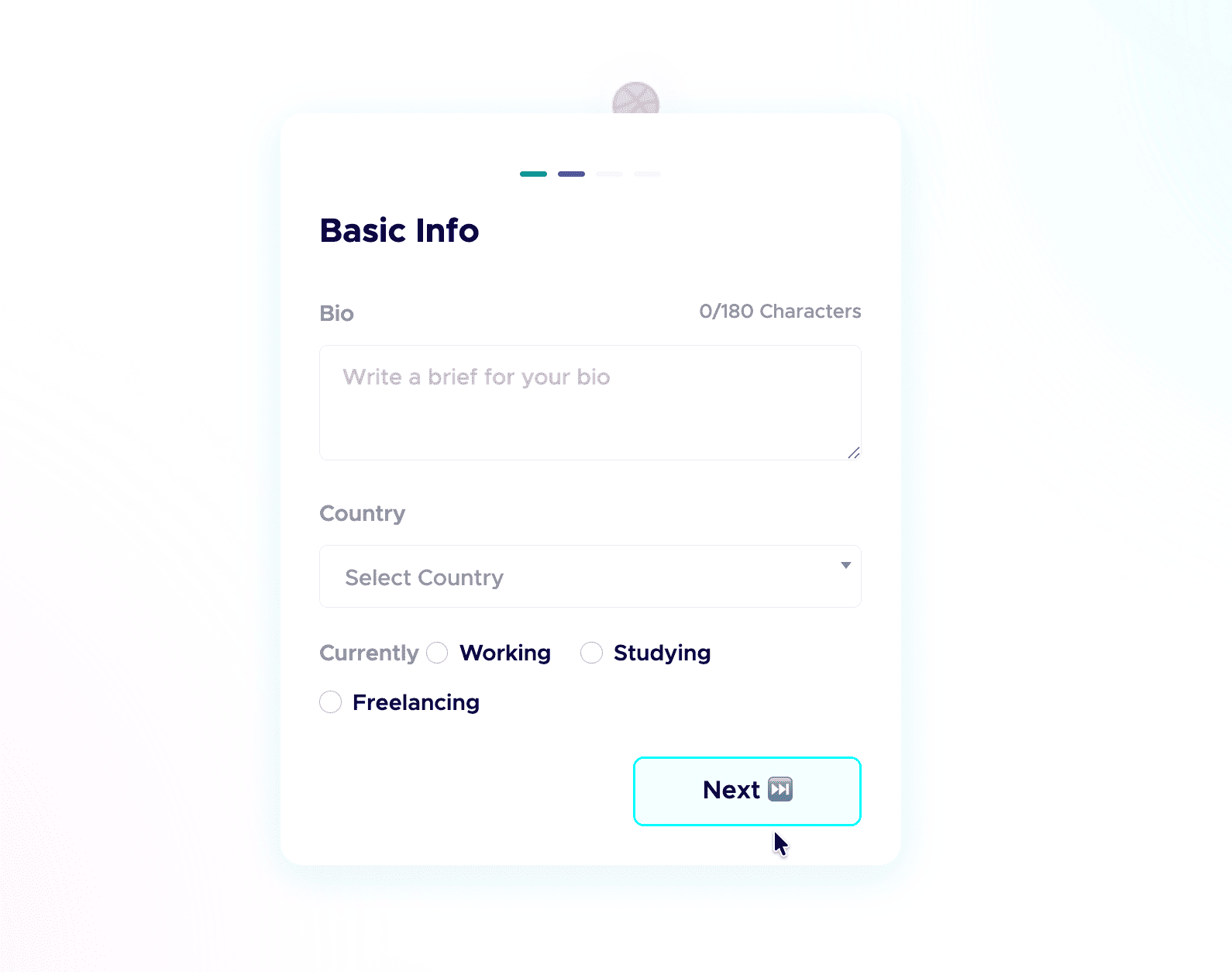 Step 6: Add your skills and social links.
List the skills you are good at and actually want to be hired for, and connect your socials. People do check your profiles, and active socials build credibility before the first call. Students starting from scratch can follow my student guide to their first portfolio.
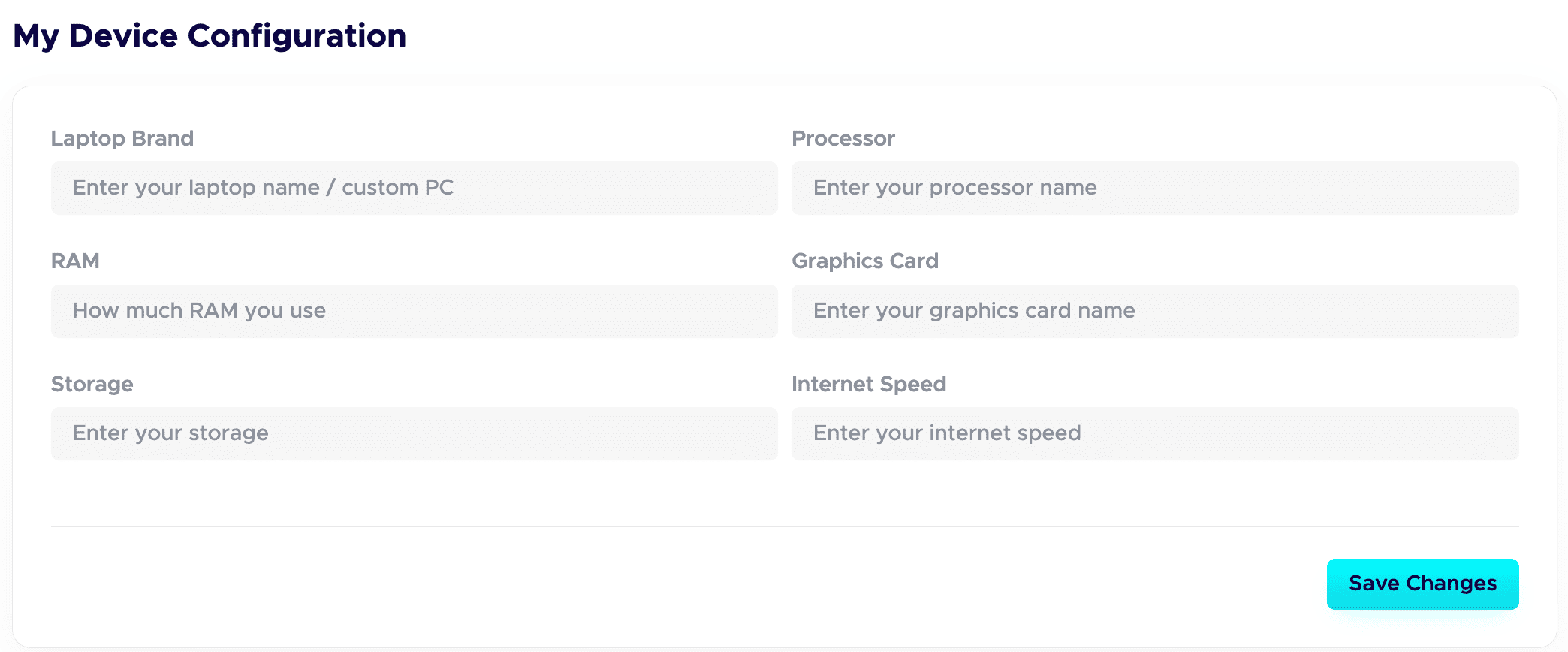
 Step 7: Fill in your Device Configuration.
In your dashboard, set up the Device Configuration section. Add the details about the device you are using. Remote-first companies want to know you have a solid setup to work from. A good setup quietly adds leverage and signals you are ready to deliver.
Step 8: Publish your projects with all the details.
This is a game-changer. Give each project a clear title and a detailed description. Walk through your process: your thinking, the tools you used, the choices you made, and the result. Companies care about how you work, not just the final image.
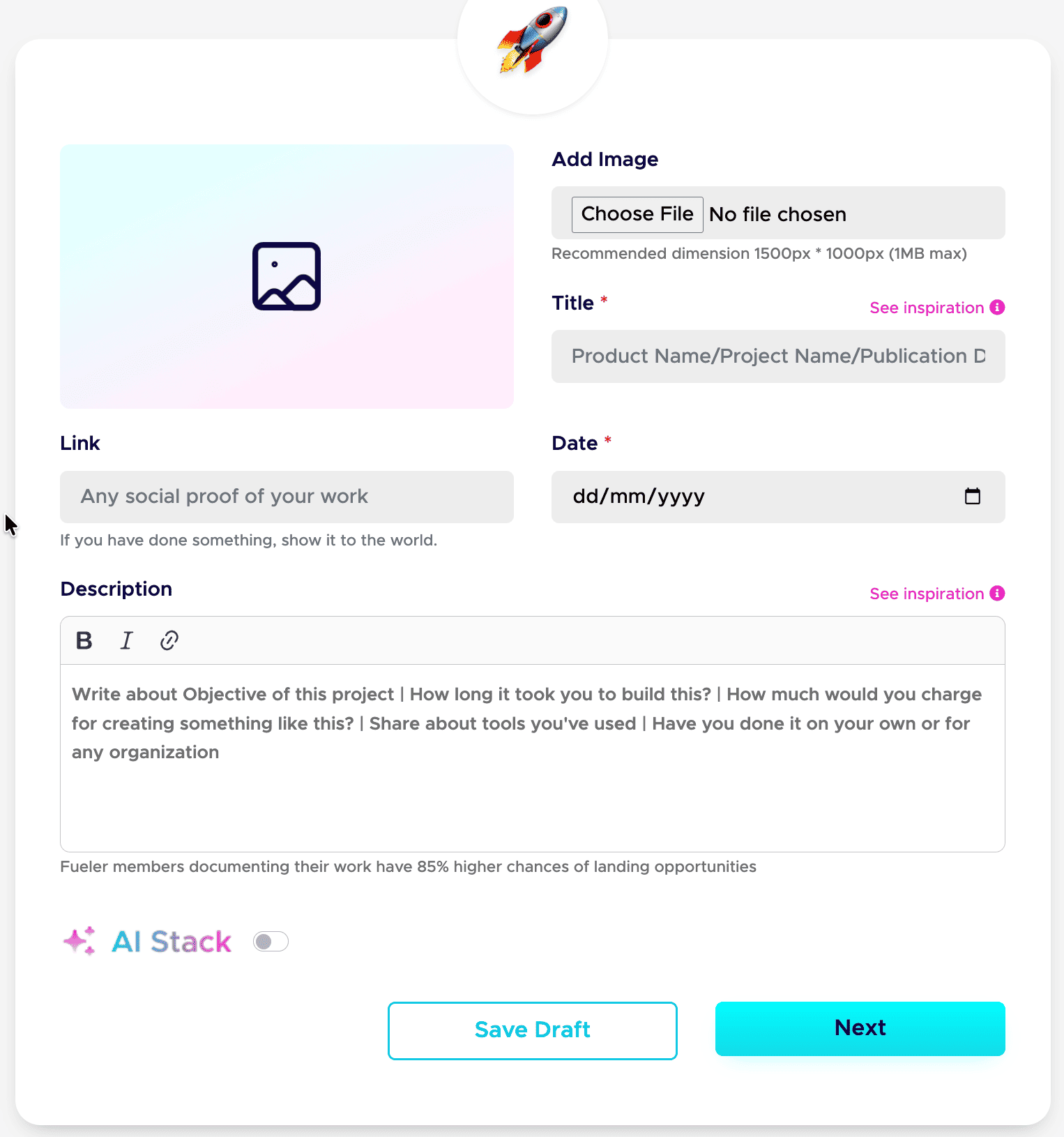
Step 9: Add your AI Stack to each project.
AI is part of real work now, so show it honestly. Use the AI Stack feature to explain how you used AI, which tools you used, and what you did manually. This builds trust instead of raising doubt. Here is the full guide: how to add AI Stack on Fueler.
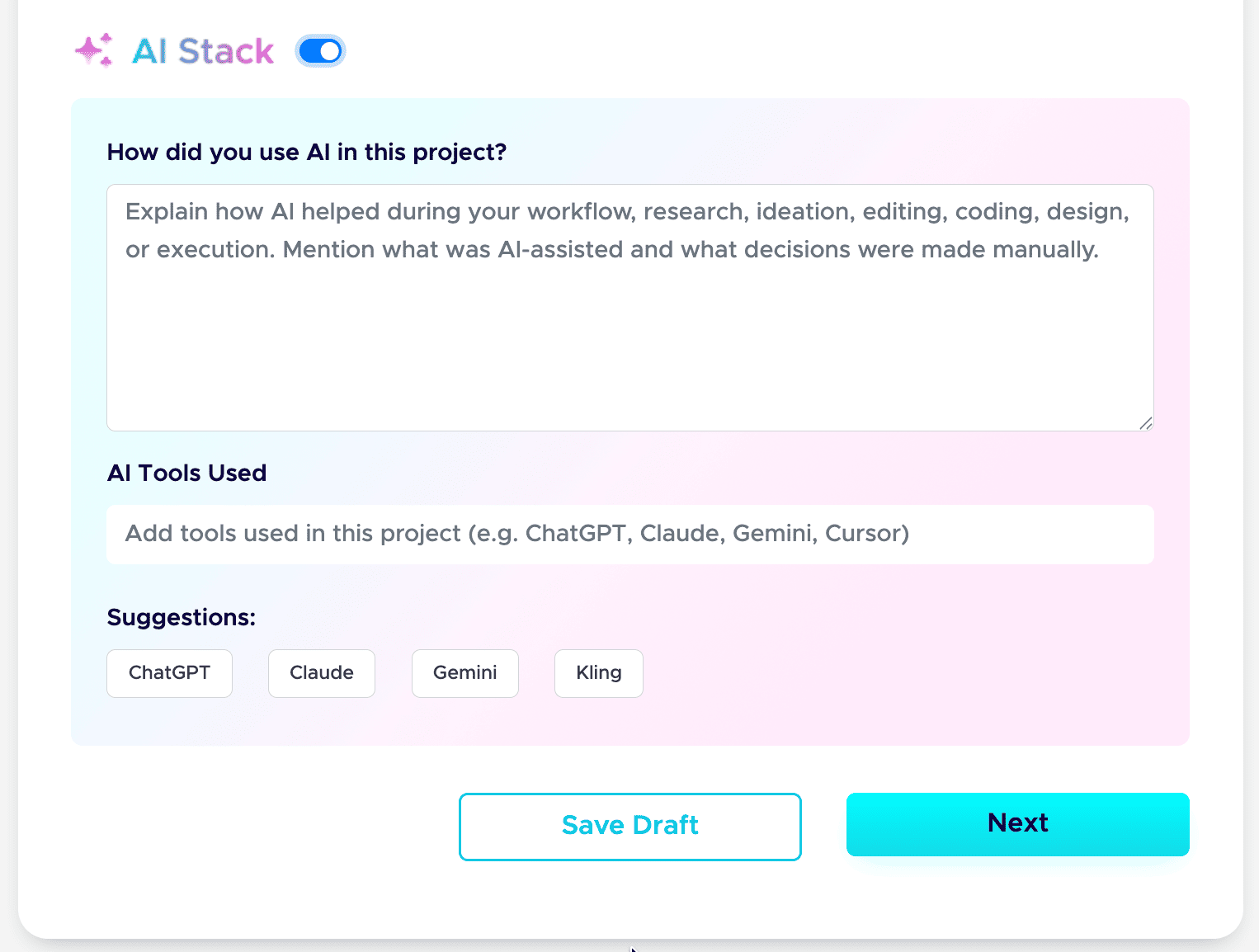
That is the whole setup. Do these nine steps well, and your profile stops being a static page and starts working as a hiring asset. If you want a tighter version to follow next time, save my 6-step formula for a Fueler portfolio and my breakdown of a career portfolio that actually gets jobs.
Do this once, and you have a link you can drop into your resume, your email signature, and every job application.
Inside the Career Distribution Framework
Fueler replaces complex design canvas workflows with a system focused entirely on project logging and talent distribution.
Automated Project Cards vs. Manual Canvas Design
Google Sites forces you to act like a web designer every time you complete a project. You have to select headers, manage asset spacing, and test screen responsiveness. Fueler separates content creation from design styling. You provide the raw project data, and our automated engine structures it instantly into a clean, modern card.
Built-In Recruiter Distribution
A standard website builder leaves your work completely cut off from the market until you paste the link into a message. Fueler functions as an active talent directory. Agencies, startup teams, and brands filter through our centralized talent index daily based on specific skills, surfacing your work directly during active hiring cycles.
Peer Verification Layer
Anyone can copy-paste a major brand logo onto a personal website and claim they ran the project. Fueler eliminates this trust problem with our collaborative Vouches feature. By tagging your managers or teammates directly inside a project log, you back your claims with verified digital sign-offs that recruiters trust.
Real-Time Project Analytics
Sharing a traditional portfolio link usually means sending your work into a total communications void. Fueler provides direct, clear profile insights. You can track exactly how many unique visitors are landing on your page, monitor click rates for individual case studies, and see where your profile views originate.
Feature Comparison Matrix
Real-World Use Cases: Streamlining Your Workflow
The Freelance Copywriter
Instead of cluttering a page with messy text boxes, a writer can group their work into distinct buckets like landing pages, email sequences, and blog posts. Potential clients can read the copy directly and see verified feedback from previous brands on the exact same page.
The Frontend Developer
Instead of just sharing a GitHub link full of raw code that non-technical hiring managers don't understand, a developer can link live project outcomes. They can display the final website alongside user metrics and client testimonials.
The Growth Marketer
Marketers can move away from vague bullet points on a resume. They can post complete, media-rich case studies highlighting campaign spend, conversion rates, and creative assets, fully backed by team vouches to prove project ownership.
The Future of Hiring is Skills-First
The corporate world is moving away from traditional resume screenings. Recruiters no longer want to read text blocks describing what you claim you can do. They want immediate, undeniable proof of your execution.
A static page builder keeps your career hidden behind manual links and tedious design work. Moving to a dedicated proof-of-work framework ensures your best projects are organized, verified, and placed directly in front of the companies looking to hire your exact skill set.
Frequently Asked Questions
Can I use my own custom domain on Fueler?
Yes. You can link your custom domain easily to keep your personal brand fully intact while using our automated backend.
How does the vouch system protect against fake reviews?
Vouches require a confirmed account link from your collaborator, ensuring every testimonial is tied back to a real professional identity.
Is Fueler free for individual creators and professionals?
Yes. Creating your proof-of-work profile, logging your projects, and appearing in the recruiter directory is completely free.
Can I import my existing work from Google Drive?
Absolutely. You can drop your live file links directly into your project descriptions to keep your files organized.
Do I need to know how to code to use Fueler?
Not at all. The platform uses a completely layout-free interface. You input your text and links, and we handle the design.
Why 100,000+ professionals use Fueler
Fueler helps professionals showcase proof of work through projects, assignments, case studies, and achievements.
- Thousands of professionals use Fueler to create their digital portfolio
- Thousands of projects are published on Fueler. Check here
- Startups and Companies hire through proof of work on Fueler
- Used by freelancers, creators, marketers, video editors, writers, designers, and product managers
Our mission is to help the next 100 million professionals build a verified professional identity through proof of work

What should you do next?
You've read the article. Now turn your skills into proof of work and unlock more opportunities.
Build your proof of work portfolio
Create a clean portfolio with projects, assignments, resumes, and AI stack details that companies actually want to see.
Create your Fueler portfolio →Apply through assignments, not resumes
Stand out by solving real tasks from companies hiring on Fueler.
Explore assignments →Get discovered by companies
Make your work public and let recruiters discover your skills through actual projects instead of keywords.
Get discovered →
