Framer Portfolio vs Fueler Portfolio: Which Platform Is Better?

Riten Debnath
14 Jul, 2026
Last updated: July 2026
Designers are currently facing a massive crisis of faith online. For years, dropping a shiny 400 X 300 pixel thumbnail of a mobile app UI on a popular network was enough to land a six-figure client or a cozy remote role at a top startup. Then came the algorithmic shift. Suddenly, your deep typographic hierarchy and conversion-focused UX layout started getting buried by conceptual 3D geometric shapes that serve absolutely zero business utility.
The industry is tired of pretty pictures that break the moment an engineer tries to write the CSS for them.
I’m Riten, founder of Fueler, a skills-first portfolio platform that connects talented individuals with companies through assignments, portfolios, and projects, not just resumes/CVs. Think Dribbble/Behance for work samples + AngelList for hiring infrastructure.
Let's look at exactly why the creative hiring pipeline is fundamentally broken, how the visual landscape evolved into an echo chamber, and how you can position your proof of work to stand out as a highly capable problem solver.
The Competitor’s Canvas: Where Framer Dominates
Let’s be entirely fair and baseline reality: Framer is an absolute engineering marvel. It isn't a simple drag-and-drop website builder like the tools of the last decade. It is essentially Figma brought to life with production-ready React code running natively underneath the hood.
If your core job profile depends entirely on absolute spatial control, micro-interactions, custom WebGL fluid simulations, and high-fidelity aesthetic storytelling, Framer is magnificent. Creative directors, interaction designers, and boutique branding agencies use it to build hyper-custom digital experiences that look like modern art pieces.
Framer excels when the core value proposition is the medium itself. When a luxury fashion brand or an elite design studio hires an agency, they are paying for a bespoke visual identity. In that world, standard structures feel restrictive, and Framer’s infinite canvas is the ultimate weapon.
The Reality Check: Where Canvas-First Tools Create Traps
However, the infinite canvas has a hidden tax. If you aren't an elite visual designer or an advanced developer who understands layout constraints, building a portfolio from scratch on Framer often feels like being handed a blank sheet of paper and a jet engine engine blueprint. You can spend three weeks setting up breakpoints, wrestling with dynamic stacks, fixing responsive layouts for older mobile viewports, and adjusting animation curves.
And what happens when you finally hit publish? You have a beautiful, isolated island on the internet.
A static portfolio link does not naturally attract recruiters. It does not actively plug you into an active project marketplace. It does not verify that your case studies represent real client projects rather than conceptual redesigns. It puts the entire burden of SEO discovery, traffic generation, and conversion architecture squarely on your shoulders.
For growth marketers, technical writers, back-end engineers, data analysts, and copywriters, this design overhead is an unnecessary distraction. Your value isn't measured by whether your buttons have a glassmorphism blur effect; it’s measured by whether your code scales, your copy converts, or your marketing campaigns lower user acquisition costs.
Why Fueler Takes a Different Philosophy
When we built Fueler, we looked at the traditional portfolio landscape and realized it was completely disconnected from how companies actually hire. Recruiters don’t open forty custom portfolios a day to admire custom scroll animations; they open them to find answers to three fast questions:
- Did this person actually do this work?
- What was their specific technical contribution?
- Can they solve the problem I have right now?
Fueler is engineered from the ground up as a live ledger of professional execution. It treats your work as independent, verifiable assets that can be organized, indexed, discovered, and cross-referenced across an active ecosystem. It strips away the complex design layer so you can focus entirely on your core leverage: your proof of work.
Instead of spending weekends debugging responsive navigation menus, you can publish a rich project card on Fueler in under ninety seconds. It gives you the structure of a clean landing page while automatically injecting your work into an infrastructure where companies are actively browsing for skill-verified talent.
Feature-by-Feature Comparison
Let’s look at how these platforms handle the actual mechanics of career distribution under real-world scrutiny.
1. Verification and Trust Metrics
In 2026, generative tools can fabricate a stunning case study in seconds. As a result, trust is the highest currency in recruitment.
On an unconstrained platform like Framer, a portfolio is entirely self-declared. There is no structural difference between a concept project built over a weekend and a multi-million dollar product launch for an enterprise client.
Fueler handles this by building trust directly into the architecture through Vouchers and Verified Projects. When you complete a collaboration or deliver a freelance project, your client or teammate can verify that specific project entry on your profile. This gives your portfolio an immutable stamp of authenticity that self-reported websites simply cannot replicate.
2. The Discovery Engine vs. The Isolated Link
If you build a portfolio on an independent layout tool, your discovery model is entirely outbound. You have to actively pitch the link via cold emails, attach it to job applications, or post it repeatedly on social platforms hoping for algorithmic favor.
Fueler functions as a dual-sided discovery ecosystem. Because the platform organizes talent by skills-first parameters, companies utilize our internal directory to search for verified project execution directly. Your project cards are indexed by technical tags, making your work discoverable to managers who are explicitly searching for problems you have already solved.
3. Hiring Infrastructure and Direct Work Access
Traditional portfolio tools stop at publication. They do not know what opportunities exist in the market, nor do they help you secure them.
Fueler features integrated Assignments and Projects where companies list active challenges and hiring bounties. Instead of sending a cold resume into an applicant tracking system, you complete a targeted task, attach your execution framework, and submit it directly through your profile. It’s an immediate loop from proof to contract.
Comparison Table
The following matrix breaks down how both environments operate when evaluated against actual career-building metrics.
How to Build an Impactful Fueler Portfolio Step-by-Step
Setting up your profile on Fueler is quick, but configuring it to convert casual views into inbound opportunities requires deliberate intent. Here is the optimal sequence to build out your profile for maximum conversion.
Step 1: Sign up on Fueler.
Head to Fueler.io and create your free account.
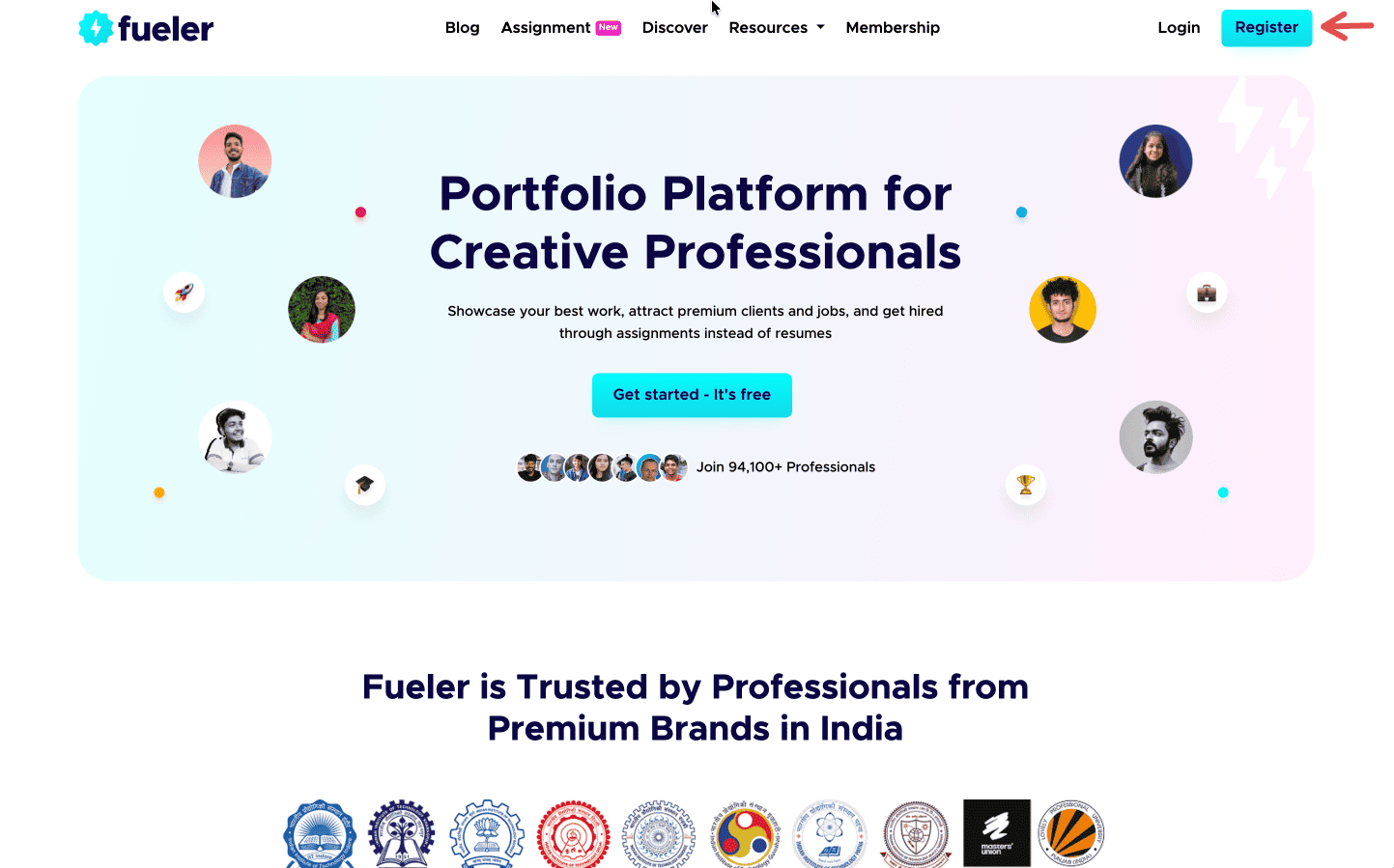
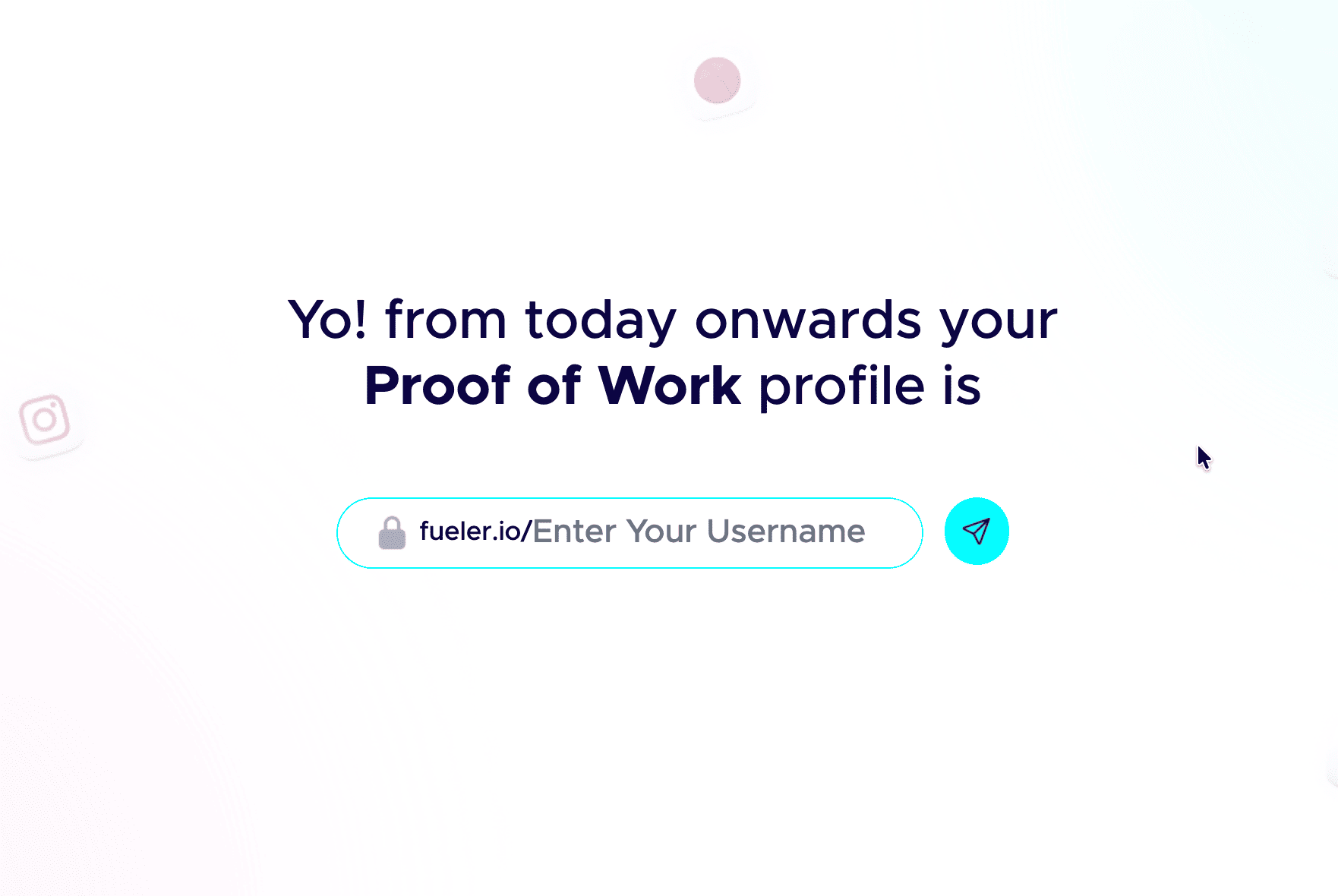
Step 2: Pick a professional handle.
Your handle shows up in your public link, so keep it clean and grown-up. Don’t add nicknames and random numbers. Your name or a simple version of it works best.
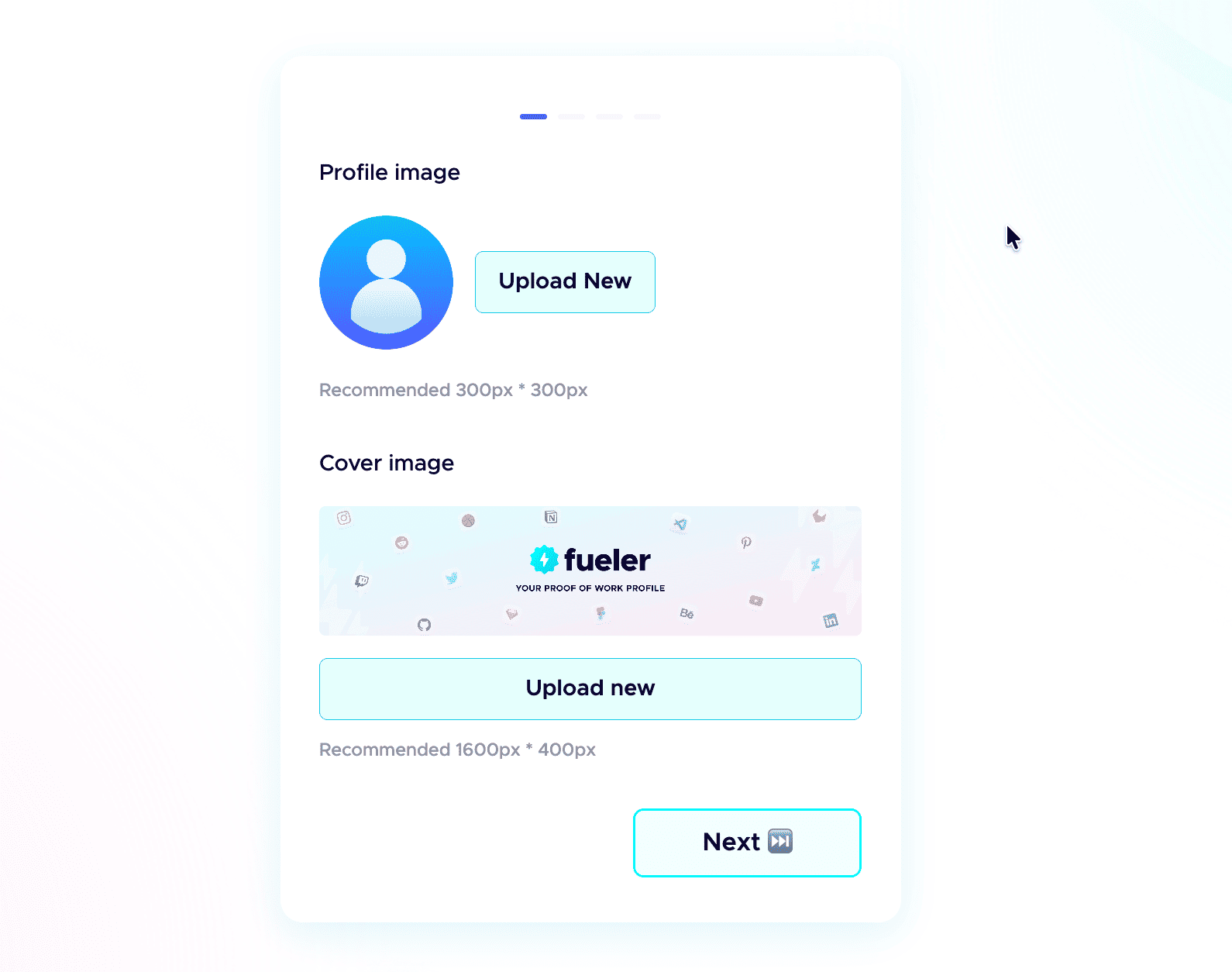
 Step 3: Add a professional profile picture.
Use the same kind of professional photo you would put on LinkedIn. Clear face, good lighting, and a simple background. People trust a real face more than an empty avatar.
Step 4: Write a strong header.
The header is the first thing anyone sees. In one or two short lines, say who you are, what you do, and the kind of work you have done. Make it specific, not vague.
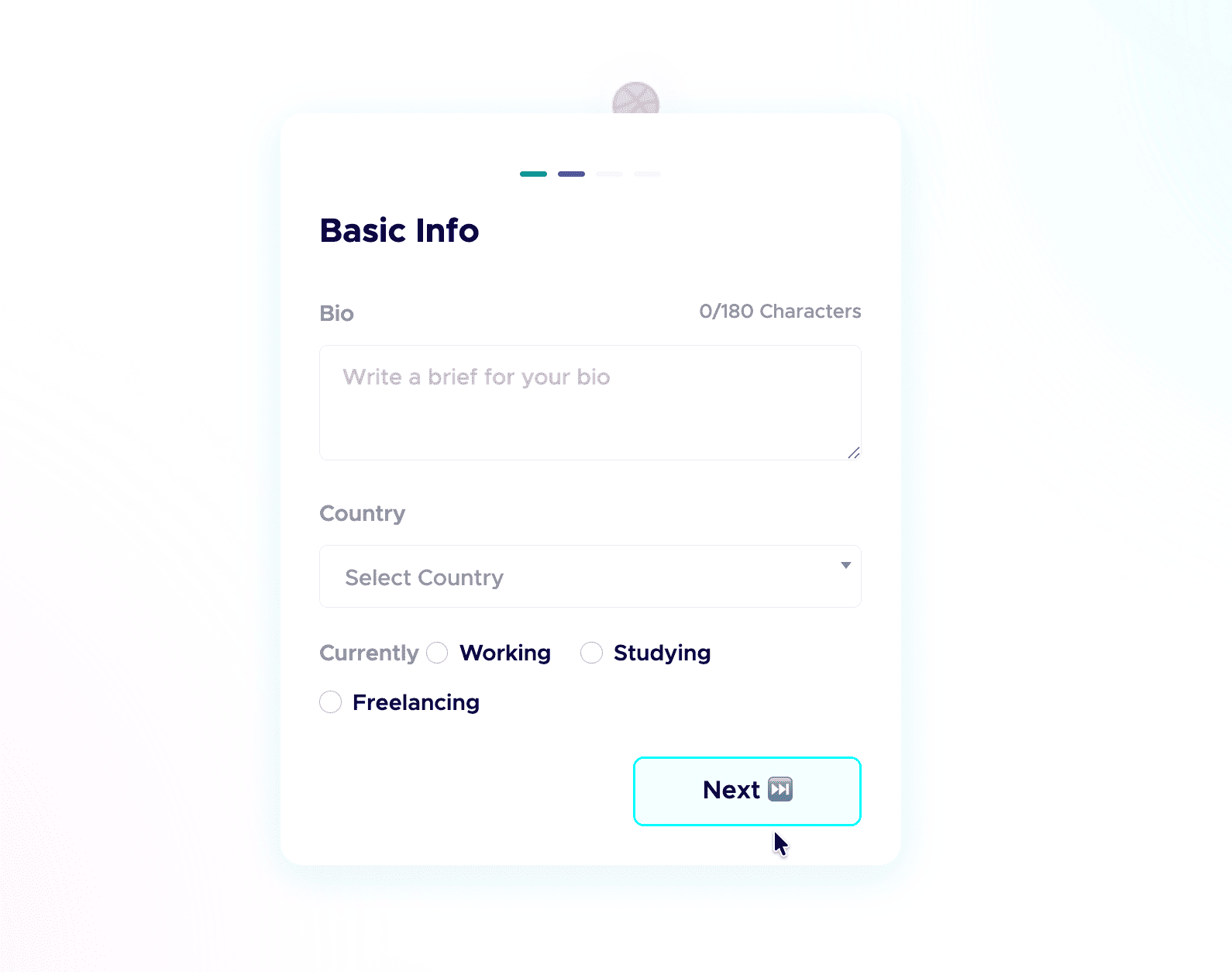
Step 5: Add a short bio.
Tell people who you are and what you do in a few plain sentences. No buzzwords, just enough for a recruiter to get you in five seconds.
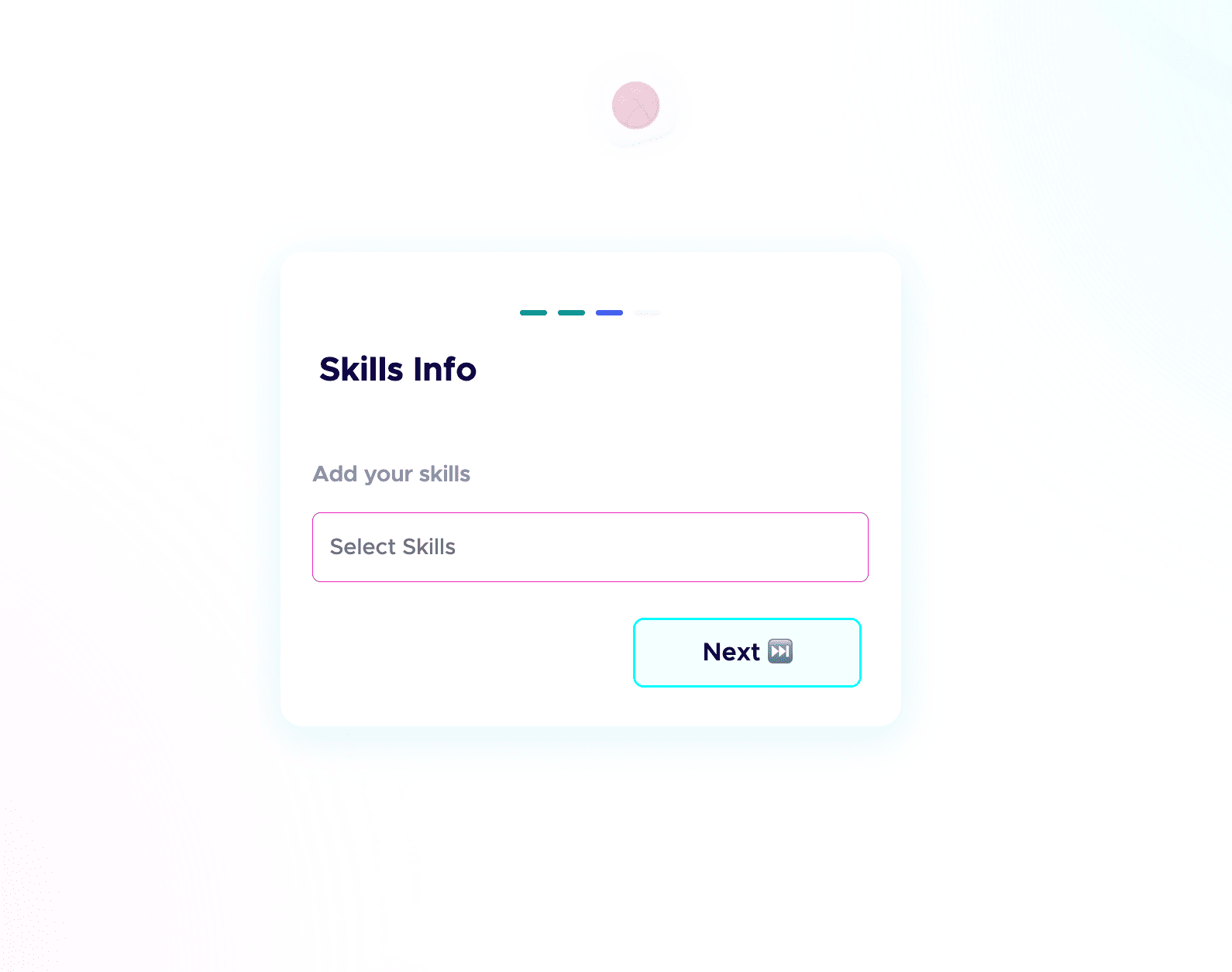
 Step 6: Add your skills and social links.
List the skills you are good at and actually want to be hired for, and connect your socials. People do check your profiles, and active socials build credibility before the first call. Students starting from scratch can follow my student guide to their first portfolio.
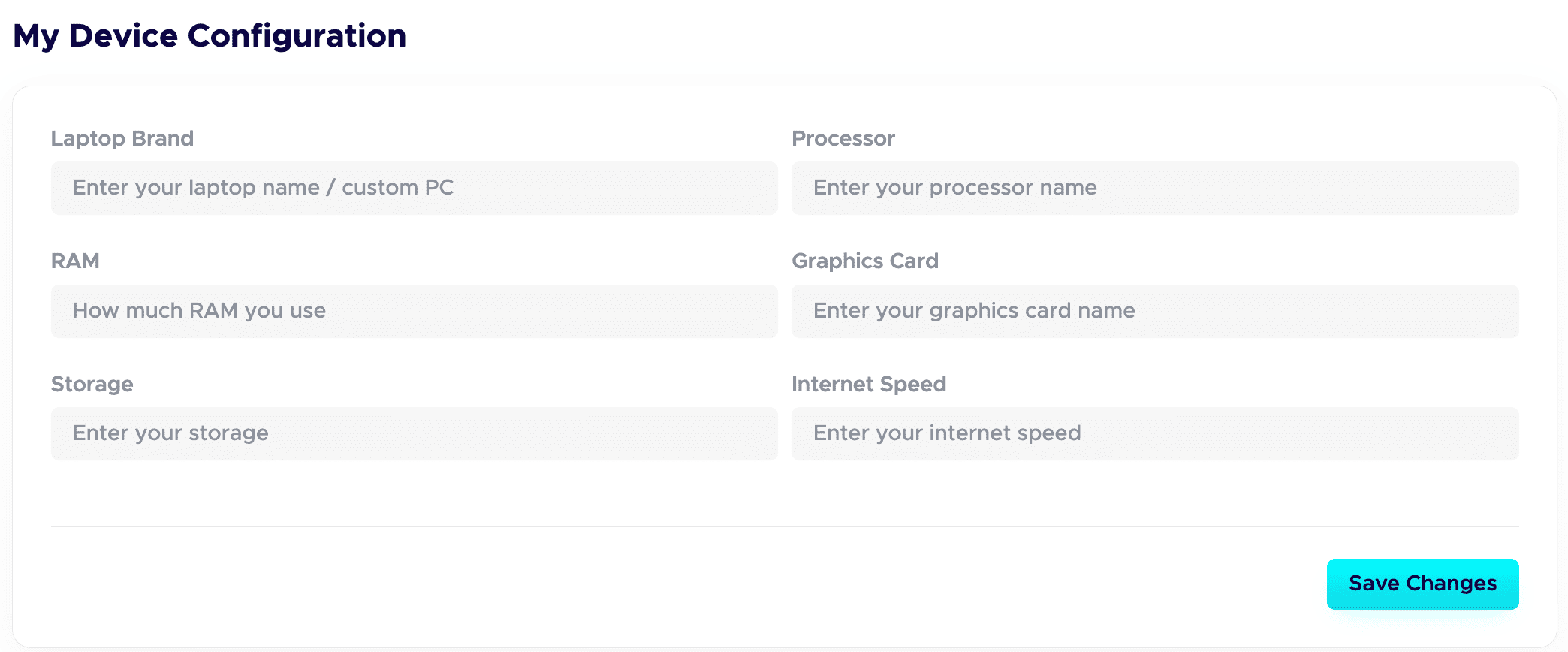
 Step 7: Fill in your Device Configuration.
In your dashboard, set up the Device Configuration section. Add the details about the device you are using. Remote-first companies want to know you have a solid setup to work from. A good setup quietly adds leverage and signals you are ready to deliver.
Step 8: Publish your projects with all the details.
This is a game-changer. Give each project a clear title and a detailed description. Walk through your process: your thinking, the tools you used, the choices you made, and the result. Companies care about how you work, not just the final image.
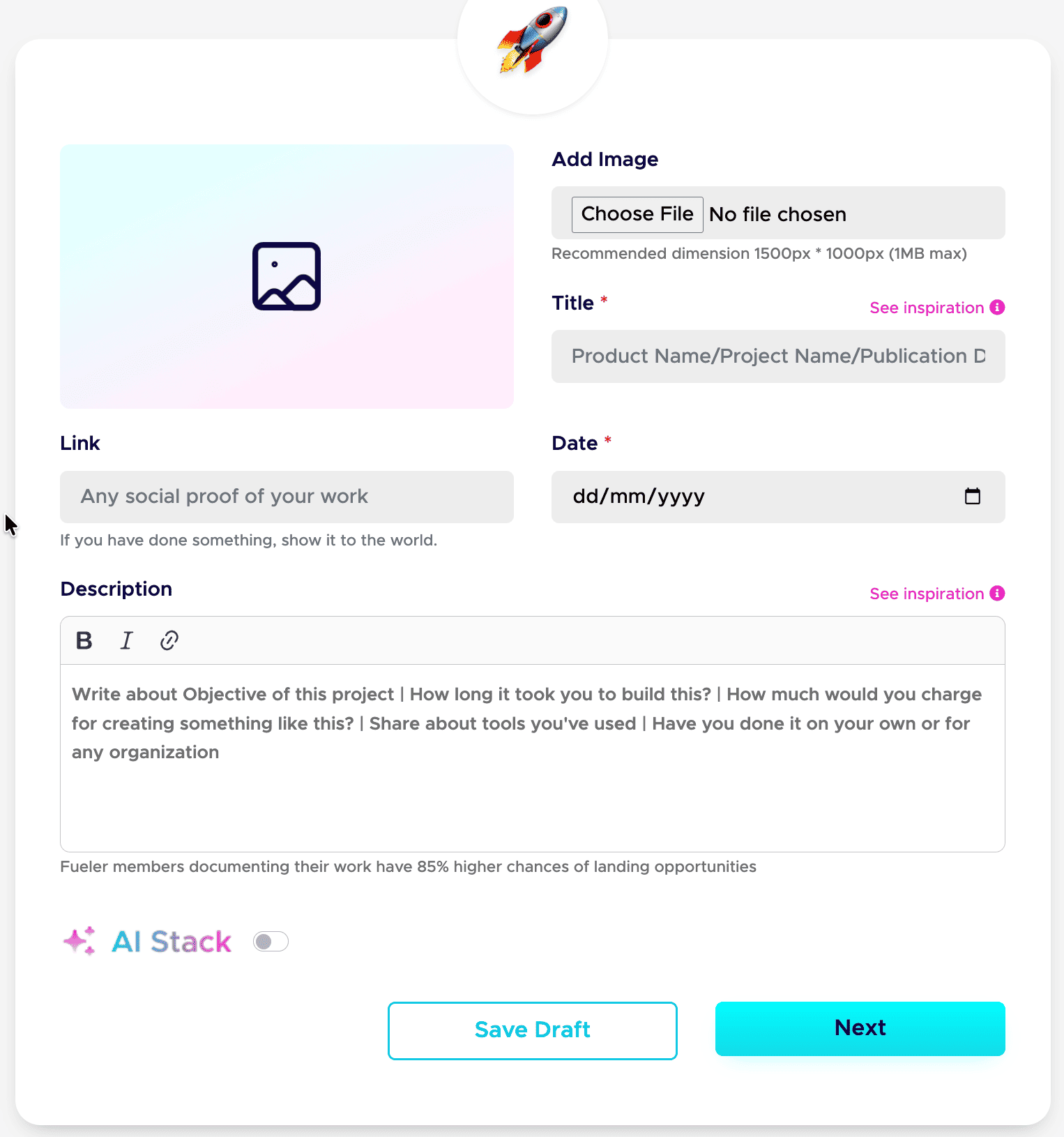
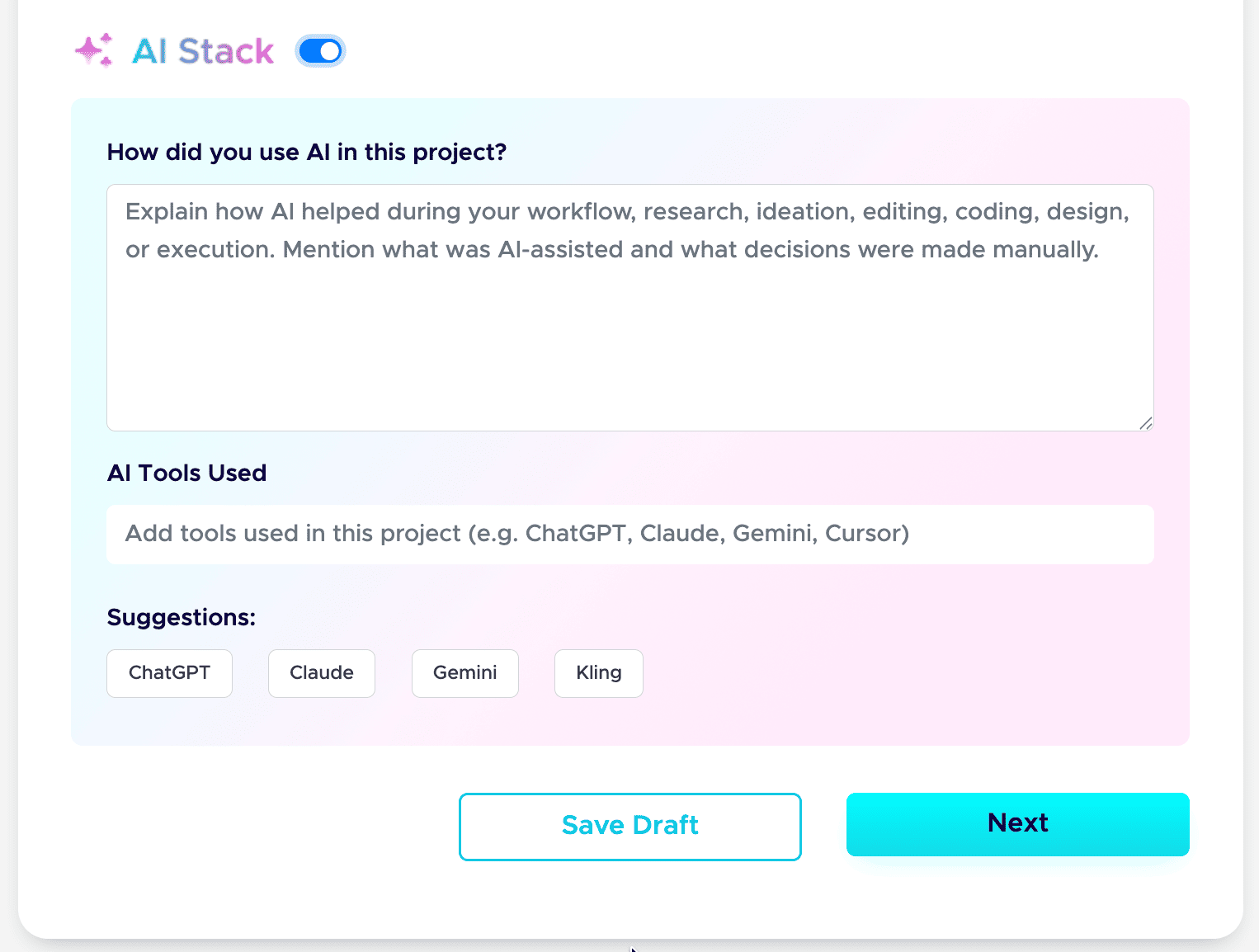
Step 9: Add your AI Stack to each project.
AI is part of real work now, so show it honestly. Use the AI Stack feature to explain how you used AI, which tools you used, and what you did manually. This builds trust instead of raising doubt. Here is the full guide: how to add AI Stack on Fueler.
That is the whole setup. Do these nine steps well, and your profile stops being a static page and starts working as a hiring asset. If you want a tighter version to follow next time, save my 6-step formula for a Fueler portfolio and my breakdown of a career portfolio that actually gets jobs.
Do this once, and you have a link you can drop into your resume, your email signature, and every job application.
Real-World Scenarios: Who Should Choose Which?
To make this completely practical, let's look at how this plays out for different professional roles.
Scenario A: The Interaction Designer and Brand Stylist
If your primary offer is creating custom visual worlds, your portfolio needs to show off that exact capability. If you are pitching your services to high-end design studios, they will judge you by how your site handles layout, motion, and visual weight. For this specific track, choose Framer. The time spent tuning layouts and customizing transitions is an investment in demonstrating your core craft.
Scenario B: The Modern Growth Operator
Imagine you are an SEO strategist or a growth marketer. A client isn't looking at your portfolio to see if your text fades in gracefully as they scroll down the screen. They want to see that you grew organic impressions by $240\%$ or managed an ad spend pipeline with a highly positive return.
If you spend two weeks coding a custom site, you are wasting time that could be spent building actual campaigns. For you, Fueler is the optimal choice. It gives you a clean framework to highlight data, link real reports, and secure verified outcomes without any layout frustration.
Scenario C: The Product Manager or Technical Architect
If you manage complex codebases or coordinate product roadmaps, your value is found within system architecture, product requirement documents, and execution velocity. A canvas-first website builder forces you to design a presentation layout that doesn't natively fit your work. Fueler allows you to organize your case studies as structured assets, linking live code repositories, interactive prototypes, and clear performance data seamlessly.
Strategic Value Realities
The traditional way of looking at personal websites often turned into a massive procrastination loop. Many professionals spend months tweaking shadows, changing hex codes, and rebuilding layouts, using design optimization as an excuse to avoid shipping real work.
A portfolio is ultimately a lead-generation funnel, not a permanent digital monument. Its sole objective is to reduce the friction of trust between your capability and an organization’s problem. If your platform choice adds hours of layout design maintenance every time you finish a new project, it becomes a structural bottleneck to your career distribution.
Key Takeaways
- Aesthetic Expression vs. Execution Focus: Framer provides complete creative freedom over visual layout and motion graphics, making it ideal for visual-first specialists. Fueler streamlines asset publication so you can showcase proof of work instantly.
- Built-in Network Integration: Independent portfolio sites operate as isolated properties on the web. Fueler features a centralized skills-first ecosystem where talent is indexed and exposed to matching opportunities.
- The Trust Deficit Solution: In an era of AI-generated content, self-declared portfolios face growing skepticism. Fueler fixes this by anchoring your work with peer verification and direct project vouches.
- Actionable Career Loops: Fueler bridges the gap between presenting your work and finding opportunities by letting you complete active company assignments to show capability in real-time.
FAQ
Can I use Fueler alongside my existing custom website?
Absolutely. Many professionals use an independent visual site for their high-level aesthetic brand while keeping a live Fueler profile as their clean ledger of proof of work, using it to track project metrics and easily submit assignments.
Do I need to know how to code to use Fueler?
No code is required. Fueler is built to eliminate technical layout overhead completely. You focus entirely on uploading your project details, outcomes, and assets while the platform handles the structural presentation automatically.
How do companies verify my projects on Fueler?
When you publish a project, you can send a verification request to a teammate or client. Once they approve it, a verified badge is permanently linked to that specific case study on your profile.
What kind of roles get the most traction on Fueler?
Fueler sees significant activity for growth marketers, product managers, software developers, copywriters, UI/UX designers, and content creators- roles where professional capability is proved through shipped outcomes rather than simple credentials.
Is Fueler free to use?
Yes, the core portfolio creation, project publishing, and discovery infrastructure are completely free to use. We believe every professional should have access to showcase their proof of work without paywalls standing in the way of opportunity.
Why 100,000+ professionals use Fueler
Fueler helps professionals showcase proof of work through projects, assignments, case studies, and achievements.
- Thousands of professionals use Fueler to create their digital portfolio
- Thousands of projects are published on Fueler. Check here
- Startups and Companies hire through proof of work on Fueler
- Used by freelancers, creators, marketers, video editors, writers, designers, and product managers
Our mission is to help the next 100 million professionals build a verified professional identity through proof of work

What should you do next?
You've read the article. Now turn your skills into proof of work and unlock more opportunities.
Build your proof of work portfolio
Create a clean portfolio with projects, assignments, resumes, and AI stack details that companies actually want to see.
Create your Fueler portfolio →Apply through assignments, not resumes
Stand out by solving real tasks from companies hiring on Fueler.
Explore assignments →Get discovered by companies
Make your work public and let recruiters discover your skills through actual projects instead of keywords.
Get discovered →
