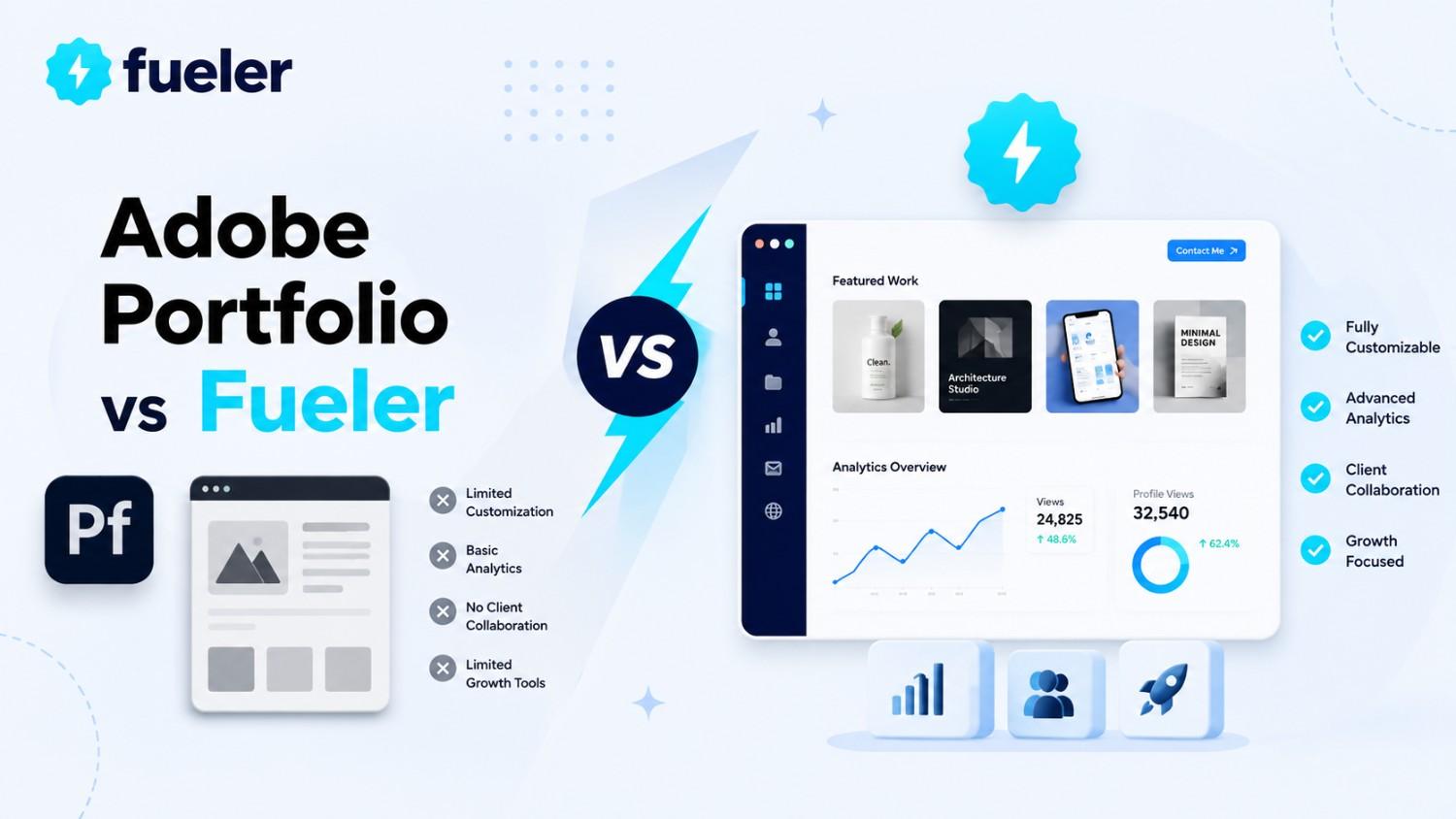
Adobe Portfolio vs Fueler: Which One Is Better?

Riten Debnath
12 Jul, 2026
Last updated: July 2026
For generations, professional portfolios have been treated like digital art museums quiet, isolated spaces where finished files sit on a grid, waiting for someone to drop by and look. This model works perfectly if you are an oil painter or an editorial fashion photographer. Your entire value proposition is contained within the immediate visual impact of the static frame.
But for the modern knowledge economy, that model is fundamentally broken.
If you are a copywriter, an SEO specialist, a backend developer, or a startup growth manager, your work cannot be fully captured by a flattened JPEG screenshot. When you try to force data-driven, operational, or deeply contextual work into a traditional design layout, the substance gets lost. A glossy thumbnail of a web app tells a hiring manager absolutely nothing about its load time, its conversion rate, or whether you actually wrote the code or just picked the font.
I’m Riten, founder of Fueler, a skills-first portfolio platform that connects talented individuals with companies through assignments, portfolios, and projects, not just resumes/CVs. Think Dribbble/Behance for work samples + AngelList for hiring infrastructure.
The market has outgrown self-proclaimed resume bullet points. In an era where anyone can optimize a CV using automated prompts, companies are actively looking for concrete proof of work. The debate between Adobe Portfolio and Fueler comes down to this core decision: Do you need an aesthetic container to host your visual files, or do you need a functional, authenticated engine that actively demonstrates your professional competence to recruiters?
Adobe Portfolio: The Creative Cloud’s Polished Gallery
Adobe Portfolio operates as a natural extension of the creative suite, designed to give visual artists an easy path to a clean web presence without writing code.
Where Adobe Portfolio Excels
- Automated Syncing with Behance: You can instantly import existing projects, drafts, and visual galleries from your Behance or Lightroom collections to go live in minutes.
- Included with Creative Cloud: The platform requires no extra hosting fees, domain connection charges, or storage costs if you already pay for an Adobe subscription.
- Premium Typography and Layouts: It offers access to the expansive Adobe Fonts library alongside minimalist, beautifully proportioned templates optimized for clean, full-screen image displays.
- Zero Technical Maintenance: The infrastructure handles all background responsive resizing, image optimization, and SSL security certificate deployments without manual configuration.
Where Adobe Portfolio Hits a Wall
- Unfriendly to Text and Data: It provides no native framework to cleanly display code repositories, technical documentation, structural spreadsheets, or complex marketing case studies.
- The "Isolated Island" Problem: Your completed website has zero network effects or built-in discovery channels, meaning it generates absolutely no passive traffic unless you manually paste the link into applications.
- No Collaboration Architecture: The system assumes every project has a single creator, offering no built-in method to divide credit among teammates or highlight multi-author contributions.
- Rigid Layout Constraints: While the grids are clean, trying to move outside the traditional image-block format to write exhaustive, step-by-step analytical case studies can feel incredibly clumsy and restrictive.
Fueler: The Live Proof-of-Work Ecosystem
Fueler is engineered to serve as a decentralized professional identity hub, built specifically to document, verify, and expose your real-world projects to an active marketplace.
Where Fueler Excels
- Verified Project Infrastructure: Every upload allows you to anchor your work with live source links, detailed metric fields, and authenticated peer acknowledgments to build immediate trust.
- Inbound Recruiter Discoverability: Your public profile integrates directly into a searchable talent directory where founders and hiring managers actively filter candidates by specific execution histories.
- Direct Assignment-Based Hiring: The platform acts as a bridge to real career opportunities by letting you solve live briefs and real-world trials posted directly by scaling companies.
- Collaborator Badging and Tags: You can tag your co-creators on any shared project, which instantly publishes the proof of work across all individual profiles while clearly defining specific roles.
Where Fueler Hits a Wall
- Structure Over Fluid Styling: The platform prioritizes high-scannability and structural consistency, meaning you cannot freely rearrange structural canvas layouts or build wildly experimental design styles.
- Not Tailored for Massive Image Dumps: It is optimized for contextual case studies, making it less suitable for fine artists who want to upload hundreds of high-resolution uncaptioned photo files.
- No Offline PDF Generative Exports: It is designed from the ground up as a live, interactive web experience, meaning it does not feature an automated tool to compile work into an offline PDF booklet.
- Requires Continuous Milestone Tracking: To get the most out of the system's discovery algorithm, you need to actively document your updates rather than leaving the profile static for years.
Detailed Comparison: Feature-by-Feature Breakdown
Step-by-Step: How to Build a High-Trust Portfolio on Fueler
Setting up a searchable, highly credible profile on Fueler takes less than ten minutes.
How to Create Your Portfolio on Fueler Step by Step
Step 1: Sign up on Fueler.
Head to Fueler.io and create your free account.

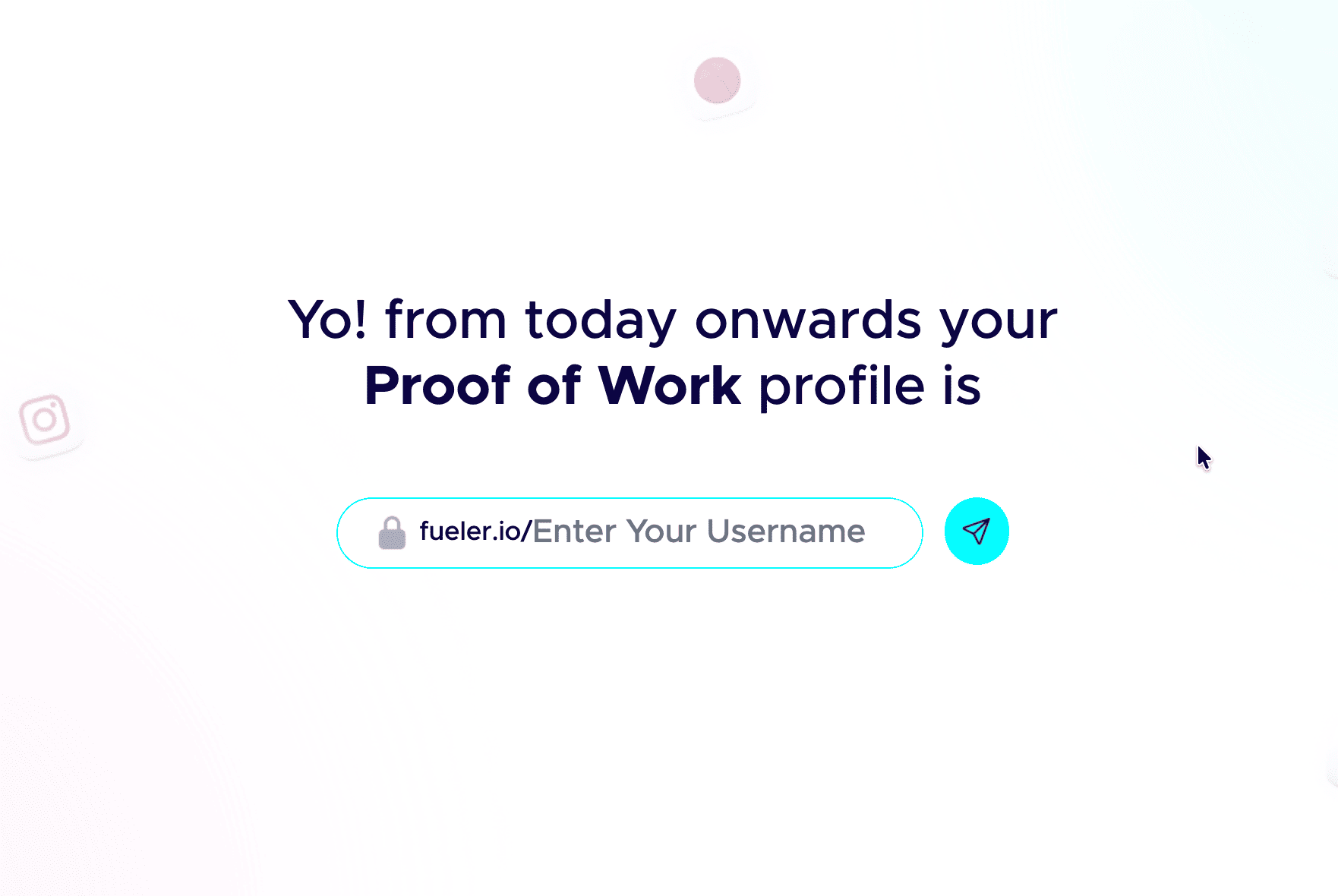
Step 2: Pick a professional handle.
Your handle shows up in your public link, so keep it clean and grown-up. Don’t add nicknames and random numbers. Your name or a simple version of it works best.
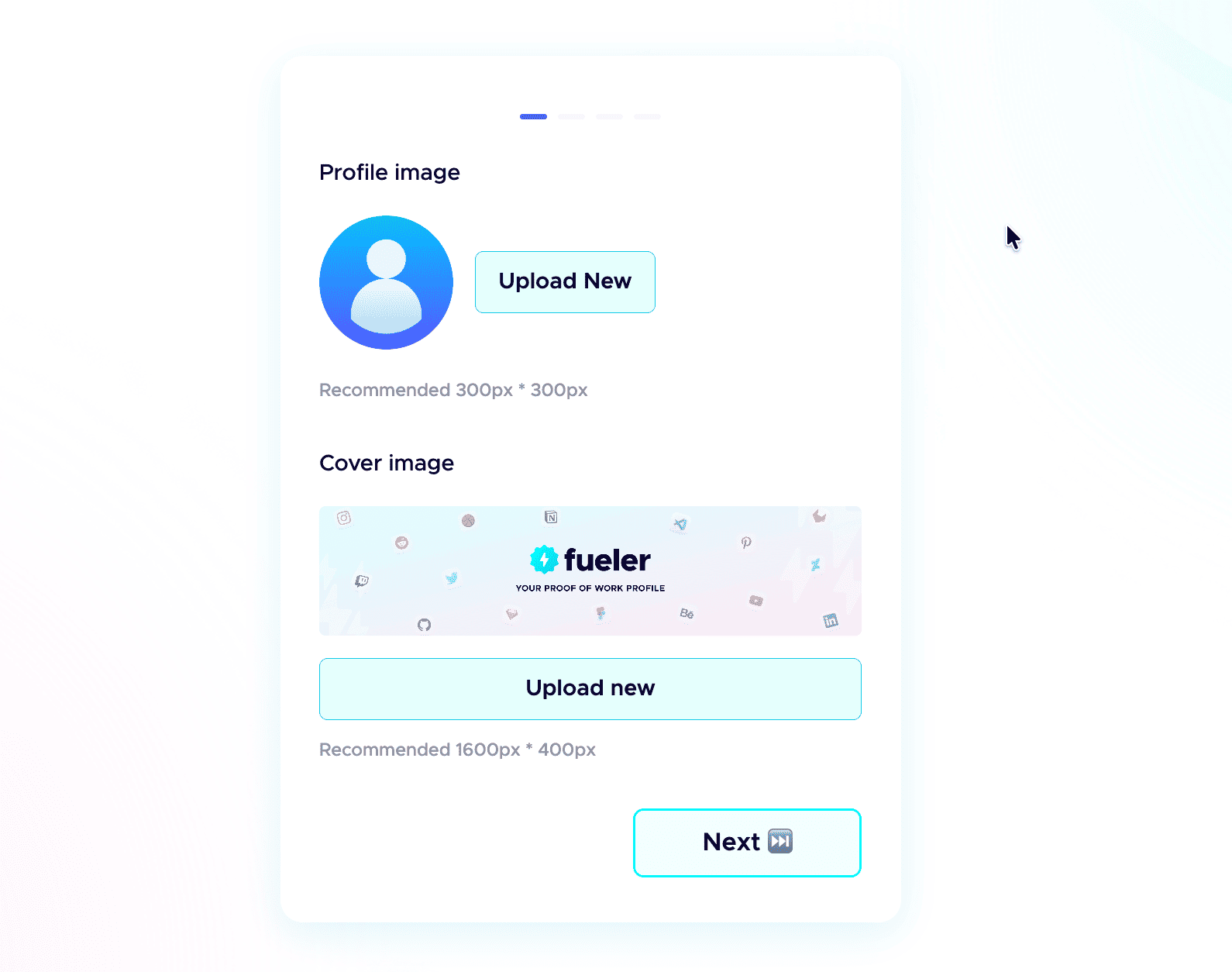
 Step 3: Add a professional profile picture.
Use the same kind of professional photo you would put on LinkedIn. Clear face, good lighting, and a simple background. People trust a real face more than an empty avatar.
Step 4: Write a strong header.
The header is the first thing anyone sees. In one or two short lines, say who you are, what you do, and the kind of work you have done. Make it specific, not vague.
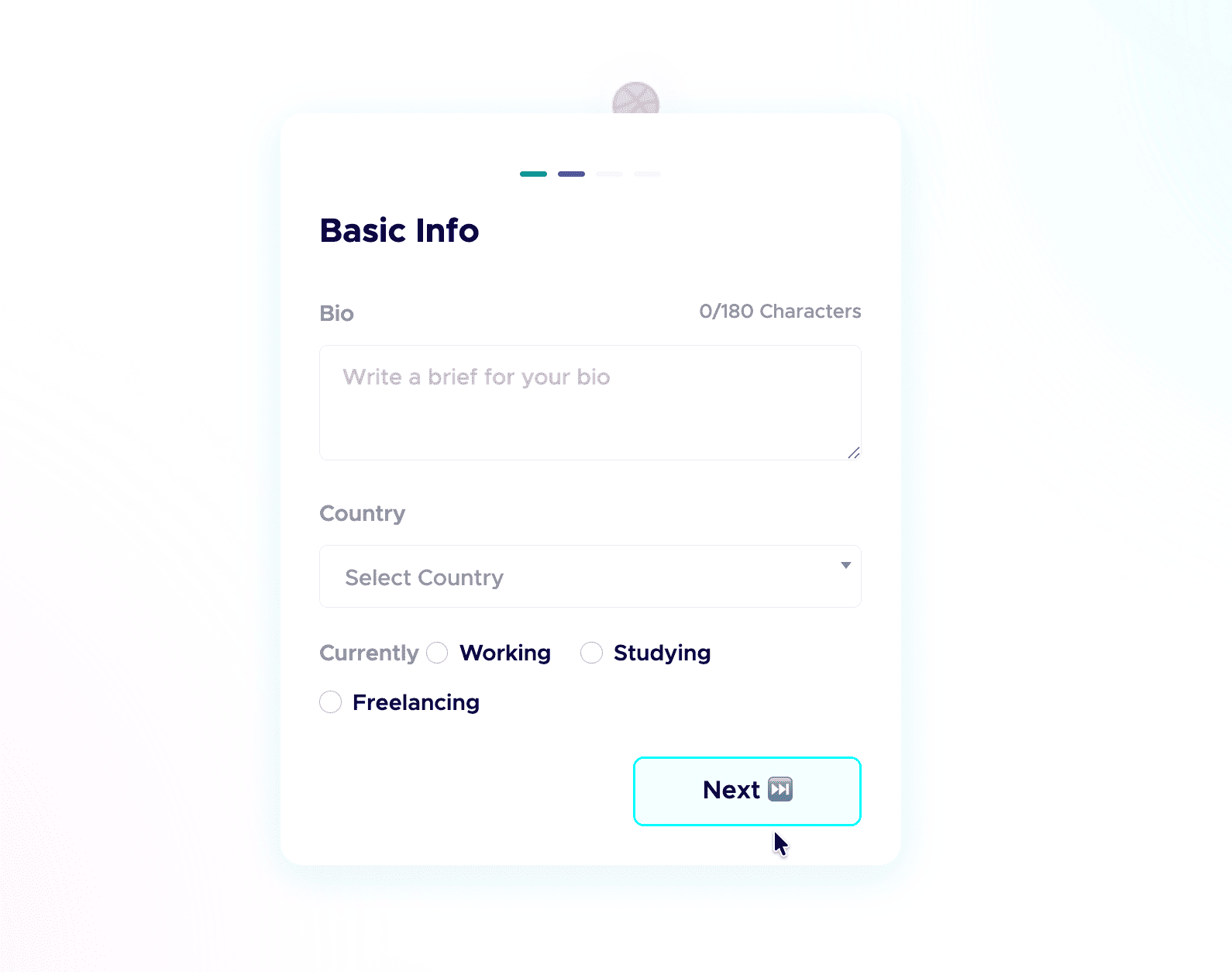
Step 5: Add a short bio.
Tell people who you are and what you do in a few plain sentences. No buzzwords, just enough for a recruiter to get you in five seconds.
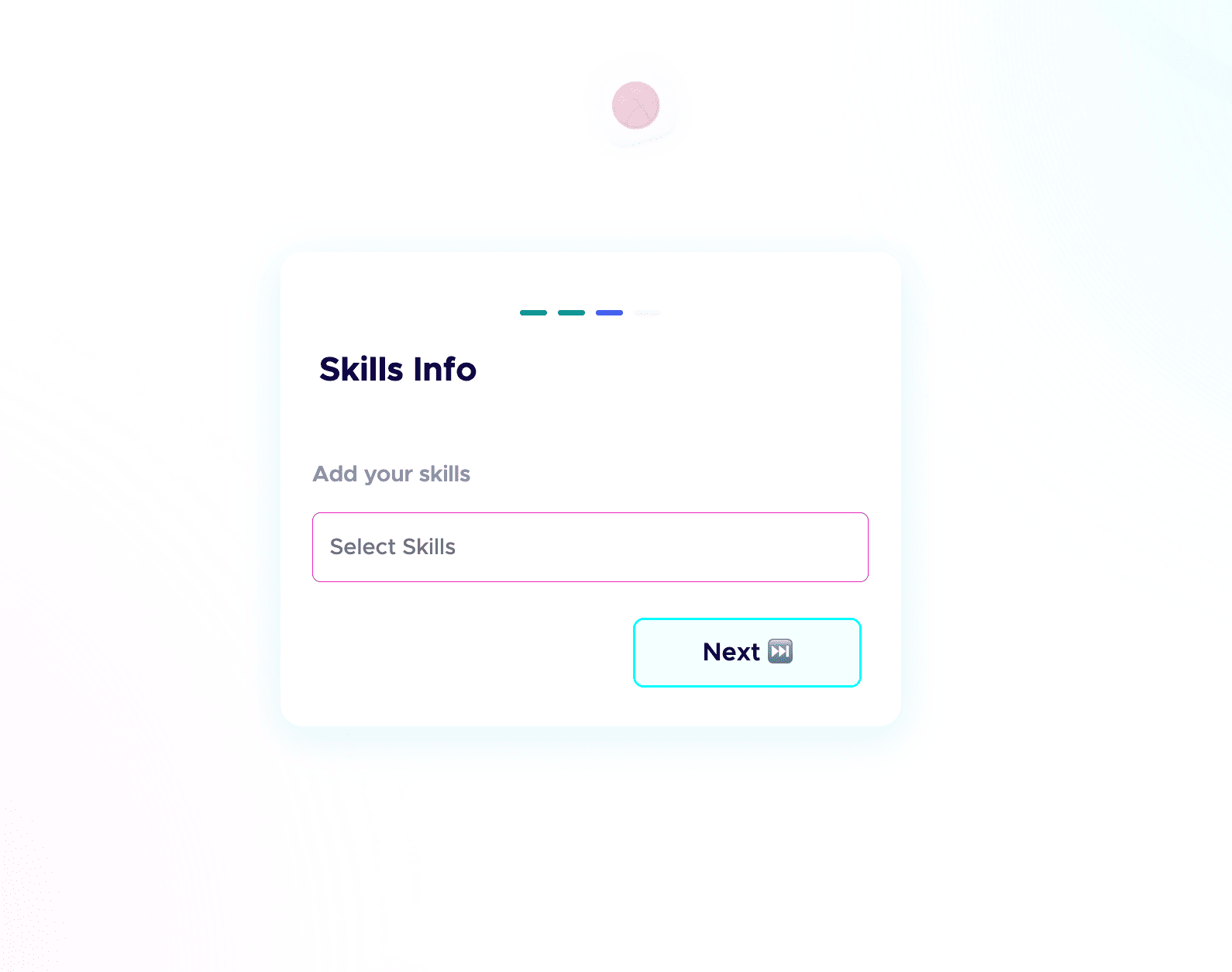
 Step 6: Add your skills and social links.
List the skills you are good at and actually want to be hired for, and connect your socials. People do check your profiles, and active socials build credibility before the first call. Students starting from scratch can follow my student guide to their first portfolio.
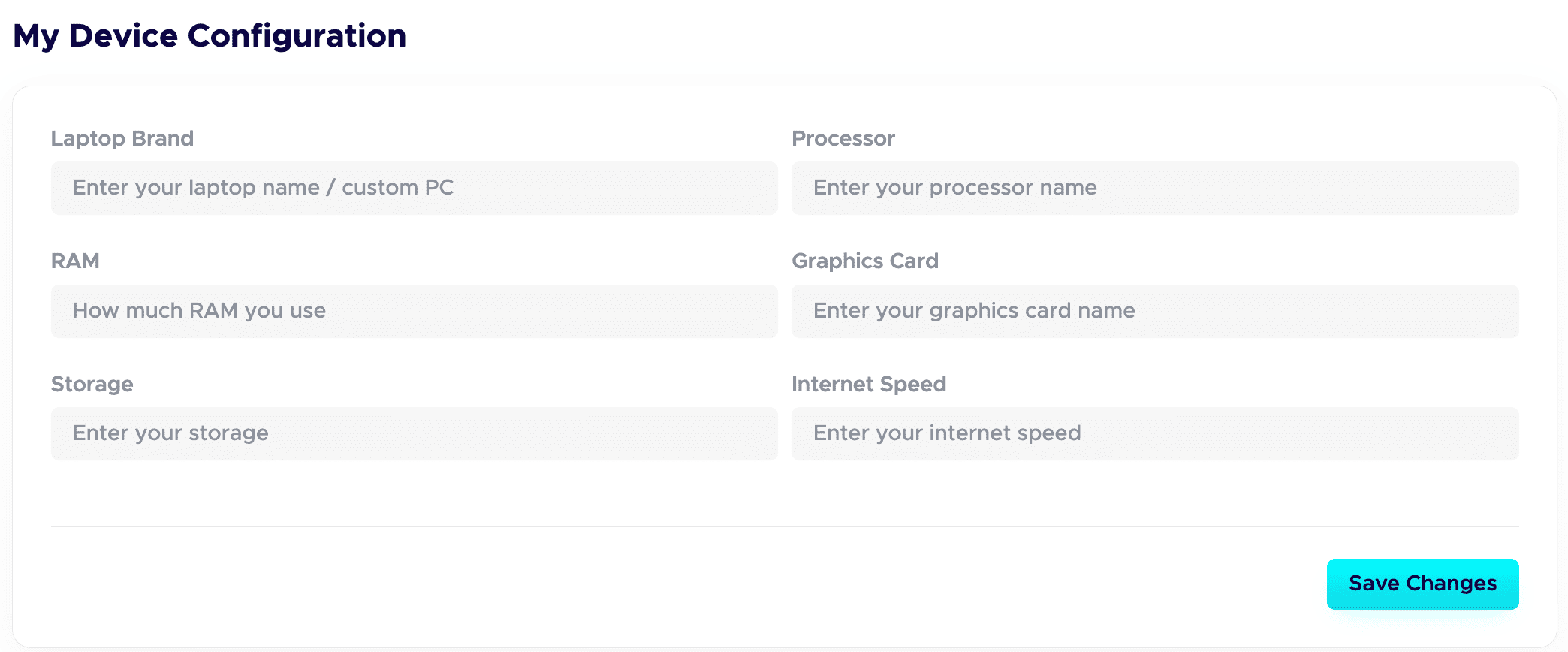
 Step 7: Fill in your Device Configuration.
In your dashboard, set up the Device Configuration section. Add the details about the device you are using. Remote-first companies want to know you have a solid setup to work from. A good setup quietly adds leverage and signals you are ready to deliver.
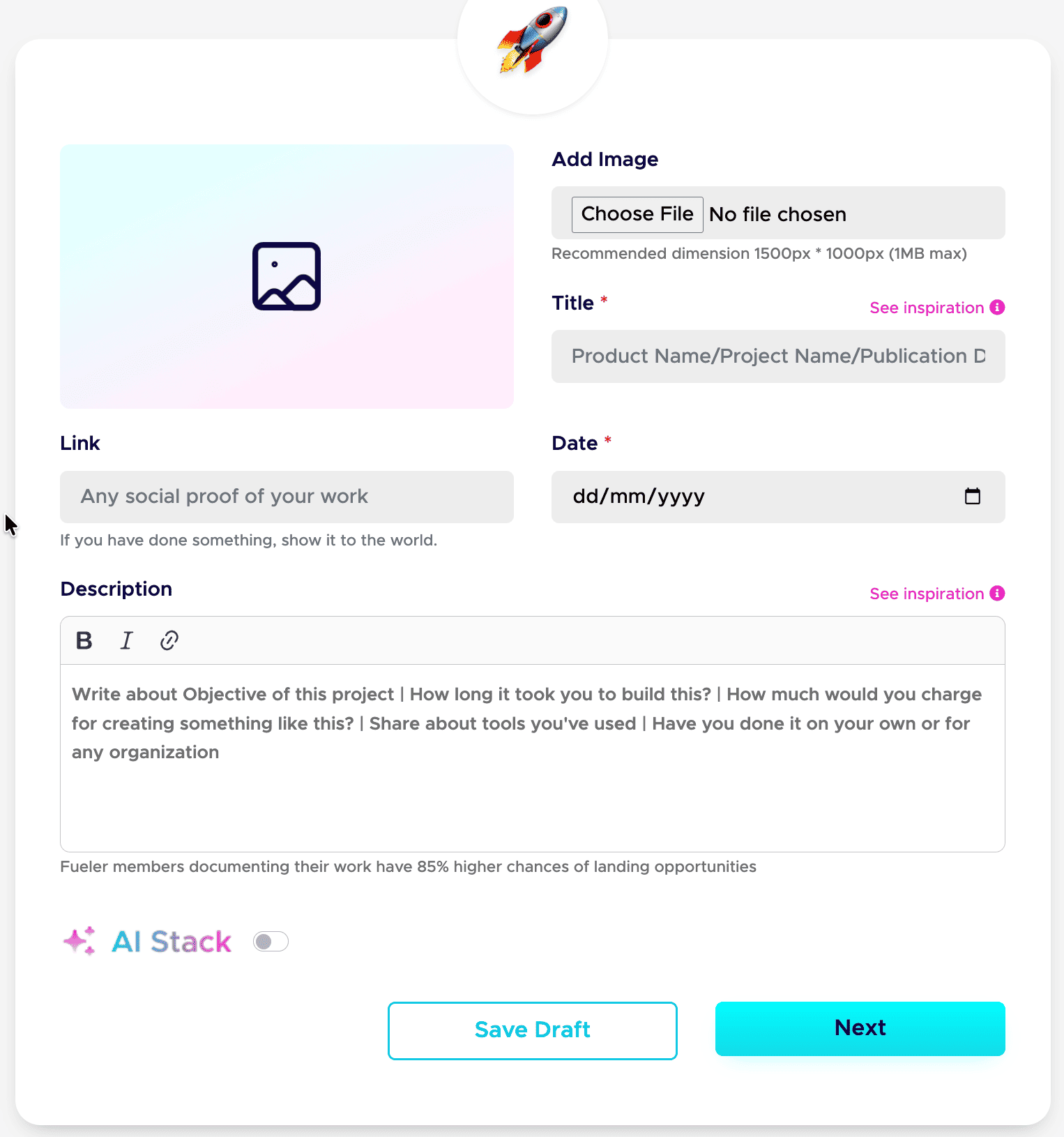
Step 8: Publish your projects with all the details.
This is a game-changer. Give each project a clear title and a detailed description. Walk through your process: your thinking, the tools you used, the choices you made, and the result. Companies care about how you work, not just the final image.
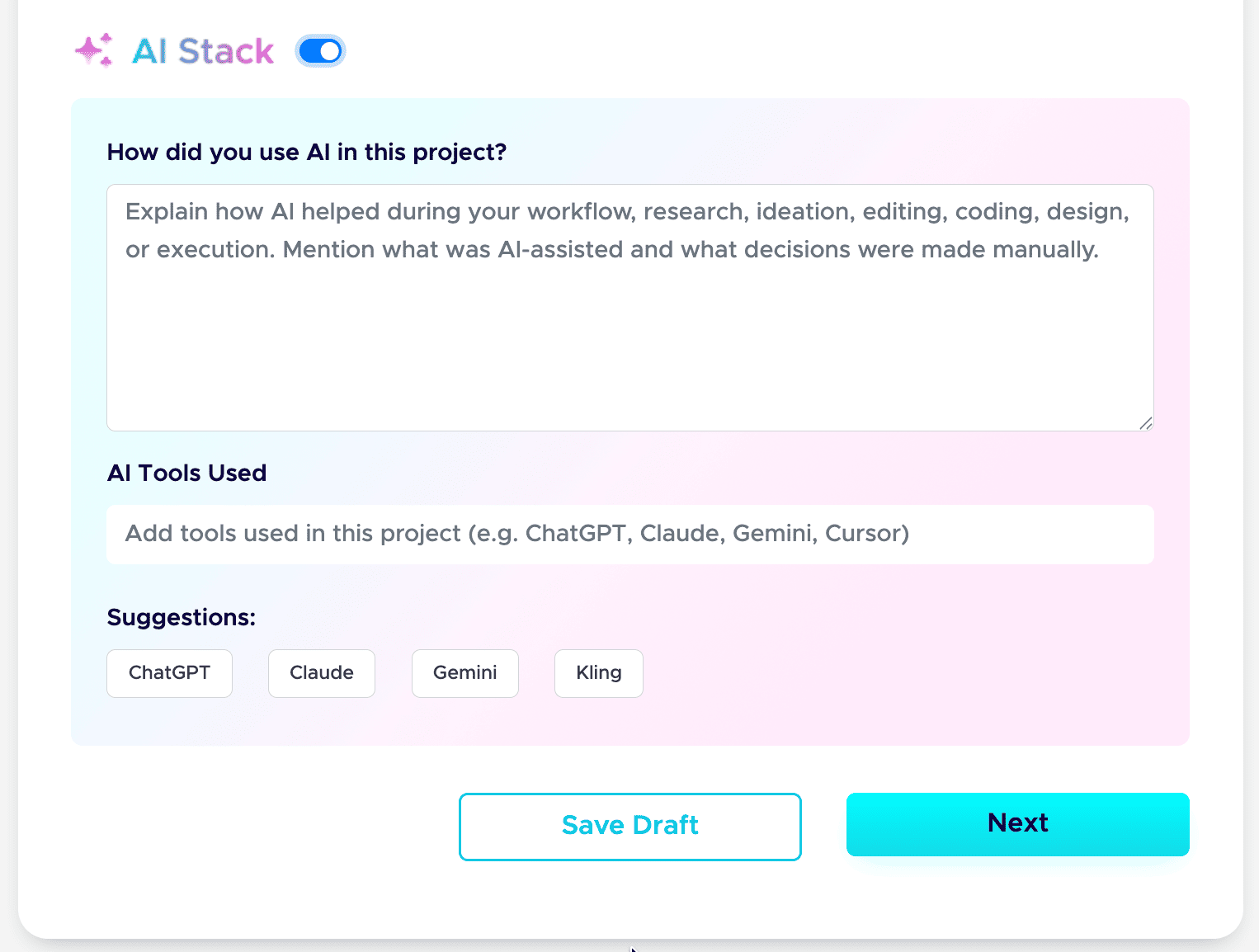
Step 9: Add your AI Stack to each project.
AI is part of real work now, so show it honestly. Use the AI Stack feature to explain how you used AI, which tools you used, and what you did manually. This builds trust instead of raising doubt. Here is the full guide: how to add AI Stack on Fueler.
That is the whole setup. Do these nine steps well, and your profile stops being a static page and starts working as a hiring asset. If you want a tighter version to follow next time, save my 6-step formula for a Fueler portfolio and my breakdown of a career portfolio that actually gets jobs.
Do this once, and you have a link you can drop into your resume, your email signature, and every job application.
Real-World Use Cases: Aligning the Tool to Your Career
The Case for Adobe Portfolio
Imagine you are an editorial fashion photographer based out of Paris. Your clients select you entirely based on your visual tone, color grading, and framing. You don't need to explain your project's conversion rate or your task management methodology. You need a fast, zero-maintenance, gorgeous custom website that syncs with your Lightroom library so you can text a clean link to art directors. Adobe Portfolio is built precisely for this workflow.
The Case for Fueler
Now imagine you are a freelance content strategist or a React developer. A client won't hire you because your portfolio has nice margins; they hire you because your writing drives organic traffic or your code architecture lowers site latency. You need to show that you grew a newsletter from zero to four thousand readers, or that your open-source contributions were merged into a major repository. Fueler gives you the specific structural space to explain the problem, link the live results, show verified peer testimonials, and get discovered by teams looking for real execution.
The Growth of Skills-First Talent Acquisition
The corporate world is hitting a point of fatigue with traditional credentials. A stellar university name or a polished corporate title on a resume is no longer an accurate indicator of whether a candidate can walk into a fast-paced environment and ship results on day one.
When your personal showcase functions solely as a static visual catalog, you place the entire burden of proof on the hiring manager to figure out what you are actually good at. Shifting your online identity to an active, community-validated proof-of-work dashboard fundamentally changes the dynamic. It transforms your portfolio from a passive design project into an active career asset that establishes trust, validates your skills, and builds an open inbound pipeline for global opportunities.
Key Takeaways
- Aesthetic vs. Execution: Adobe Portfolio handles high-end image layouts; Fueler records, validates, and highlights functional business execution.
- Built-in Sourcing Channels: Adobe sites require manual self-promotion, whereas Fueler includes a direct search ecosystem used by active recruiters.
- Accountability Metrics: Fueler emphasizes live project links, performance data points, and community vouches over uncaptioned visual snapshots.
- Practical Discovery: Fueler integrates actionable corporate challenge briefs and assignment pipelines right into your personal workspace dashboard.
FAQ
Can I effectively use Fueler if my work doesn't rely on visual assets?
Yes, Fueler is built specifically for text-heavy, code-centric, and data-driven professionals. The system is designed to emphasize real performance metrics, project context, and live production links rather than generic image blocks.
Do I need technical coding experience to use Fueler?
No technical development knowledge is needed. Fueler provides an intuitive, streamlined dashboard that allows you to easily drop links, write case studies, categorize skills, and invite team collaborators without touching a single line of code.
Does Adobe Portfolio offer a completely free standalone plan?
No, Adobe Portfolio does not feature a permanently free standalone option. Access to the platform requires a paid subscription to an Adobe Creative Cloud plan, making it best suited for people who already use the software suite daily.
How do company scouts discover your profile on Fueler?
Recruiters use Fueler’s global talent directory to search for candidates based on proven skills, verified project histories, and completed trial assignments. This connects your profile directly to teams looking for specific execution capabilities.
Can I attach a personalized custom domain to Fueler?
Yes, you can easily map your own custom domain directly to your public Fueler profile page. This ensures your verified work history and proof of work are presented under a completely clean, professional personal brand link.
Why 100,000+ professionals use Fueler
Fueler helps professionals showcase proof of work through projects, assignments, case studies, and achievements.
- Thousands of professionals use Fueler to create their digital portfolio
- Thousands of projects are published on Fueler. Check here
- Startups and Companies hire through proof of work on Fueler
- Used by freelancers, creators, marketers, video editors, writers, designers, and product managers
Our mission is to help the next 100 million professionals build a verified professional identity through proof of work

What should you do next?
You've read the article. Now turn your skills into proof of work and unlock more opportunities.
Build your proof of work portfolio
Create a clean portfolio with projects, assignments, resumes, and AI stack details that companies actually want to see.
Create your Fueler portfolio →Apply through assignments, not resumes
Stand out by solving real tasks from companies hiring on Fueler.
Explore assignments →Get discovered by companies
Make your work public and let recruiters discover your skills through actual projects instead of keywords.
Get discovered →
