Why Are Most Cold Emails Failing in 2026?

Riten Debnath
20 May, 2026
Last updated: May 2026
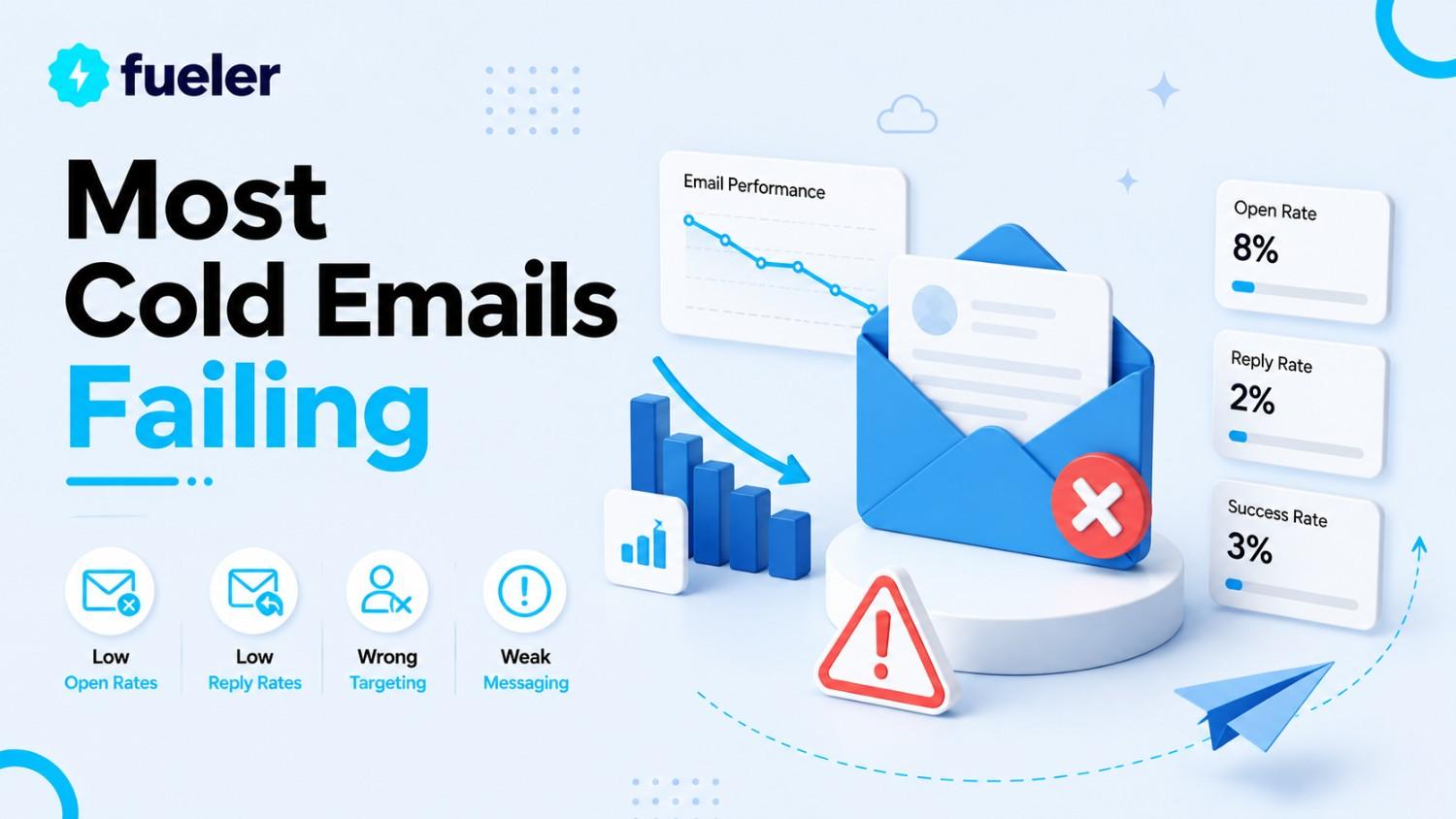
The data points are clear, and they tell an uncomfortable story. Across major sales platforms, platform-wide response rates have slipped to an average of just 3.43%. If you are running outbound campaigns right now and watching your positive replies crater, you are not alone.
I’m Riten, founder of Fueler, a skills-first portfolio platform that connects talented individuals with companies through assignments, portfolios, and projects, not just resumes/CVs. Think Dribbble/Behance for work samples + AngelList for hiring infrastructure.
The cold outreach playbook that worked perfectly a couple of years ago is completely broken. Inboxes are more crowded, email providers are more ruthless, and buyers have developed a hyper-sharp radar for automated garbage. This comprehensive breakdown explores the eight proven reasons why most cold emails are failing completely and exactly what you need to change to survive.
1. Automated Template Saturation and Buyer Pattern Recognition
Prospects do not audit the technical components of your email first; they run a sub-conscious pattern scan. Human attention systems are naturally built to filter out repeated formats instantly, and your buyers are entirely exhausted by familiar messaging frameworks.
- Ditch predictable email framework layouts: Stop opening your sequences with identical, soft conversational fluff that mirrors thousands of competitive pitches. Leading your text with interchangeable pleasantries signals automated delivery within fractions of a second.
- Vary your structural sentence rhythms: Mix short, punchy statements with descriptive observations to break the standard mechanical rhythm of generic scripts. Modifying your layout format prevents your copy from triggering instant mental blocks.
- Avoid formulaic soft closing calls: Eliminate identical, overused closing lines like "worth a brief chat next Tuesday?" from your sequences. Replacing canned questions with direct, low-friction alignment asks keeps your communication fresh.
- Move core insights up earlier: Place your primary value proposition inside your very first sentence instead of burying it down low. Leading with direct context proves immediately that your message deserves reading time.
- Eliminate generic placeholder token styles: Restrict your reliance on basic dynamic text inserts like job title or company name tags. Surface-level customization no longer fools modern decision-makers who recognize template frameworks instantly.
Why It Matters
When your message looks exactly like every other pitch in a buyer's crowded inbox, it gets archived without a second thought. Breaking through pattern recognition requires structural originality, forcing you to write messages that feel genuinely assembled by a human operator.
2. Rigid Large Language Model Tone and AI Phrasing Clichés
The explosion of accessible AI writing tools has flooded corporate inboxes with highly polished, deeply generic outreach. Modern email filters and human recipients can easily spot AI-generated copy by its predictable transitions and empty, corporate buzzwords.
- Strip out predictable transition words: Ban robotic, structured connecting phrases like "furthermore," "moreover," or "in addition" from your templates. These artificial linguistic bridges scream that your text was spit out by a prompt machine.
- Remove empty corporate hype phrases: Eliminate overused, low-value descriptors like "game changer," "revolutionary," or "streamlined operations" from your dictionary. Replacing generic hyperbole with simple, plain human language builds immediate professional credibility.
- Adopt calm founder level thinking: Speak directly to your prospects like an experienced peer rather than a desperate salesperson pushing features. Maintaining an authentic, grounded tone signals deep domain authority and command.
- Inject specific real world observations: Share concrete, lived-in context about market shifts or operational problems that a machine cannot invent. Including unique human perspectives separates your copy from programmatic content noise.
- Write short conversational body sentences: Keep your syntax loose, direct, and easily readable for a professional scanning messages on a phone. Clean, accessible sentence design makes your core concepts simple to absorb.
Why It Matters
AI-written filler text dilutes your core value proposition and destroys reader trust before you even state your offer. Crafting your messages with an authentic, direct, and human voice ensures your outreach stands out from machine-generated noise.
3. Mandatory Domain Authentication Enforcement and Technical Filter Drops
Major mailbox providers like Google, Microsoft, and Yahoo have completely transformed their security guidelines from basic suggestions into strict, automated gatekeepers. Senders who ignore advanced technical setups are seeing their domains blacklisted before a single email reaches a human.
- Configure the core authentication trio: Ensure your domain name servers explicitly align your SPF, DKIM, and DMARC security records correctly. Lacking this foundational cryptographic verification causes major servers to reject your mail streams permanently.
- Maintain near zero complaint metrics: Keep your active spam complaint percentages strictly below a firm 0.1% threshold across all lists. Crossing into a minor 0.2% mark triggers immediate, automated throttling across enterprise networks.
- Deploy custom secure tracking domains: Replace the generic tracking links provided by your outreach software with a dedicated, branded HTTPS path. Using secure, unique tracking loops prevents corporate filters from flagging your content setup.
- Embed single click unsubscribe headers: Include easily accessible, automated opt-out mechanisms that process user removals within forty-eight hours. Providing transparent, smooth exit paths protects your domain reputation from angry manual spam reports.
- Isolate primary business email channels: Conduct all outbound campaign activities exclusively through separate, dedicated secondary domains. Distributing your outbound volume across alternative mailboxes shields your main operational workspace from technical damage.
Why It Matters
You cannot out-write a broken delivery infrastructure, and a brilliant pitch is completely worthless if it rots inside a hidden spam folder. Prioritizing technical email hygiene ensures your messages securely clear automated security firewalls every time.
4. Over-Reliance on Outdated, Shared SMTP Server Infrastructures
For years, outbound teams scaled their volume using cheap, shared SMTP inboxes to cut down on monthly software expenses. In the current filtering landscape, sharing IP space with unverified senders is an absolute recipe for domain destruction.
- Migrate to premium workspace platforms: Build your outbound mailboxes inside established ecosystems like Google Workspace or Microsoft 365. Native enterprise infrastructure carries built-in reputation advantages that basic third-party servers cannot match.
- Audit your IP neighborhood health: Monitor the reputation scores of your hosting blocks to ensure you aren't grouped alongside malicious actors. Staying clear of compromised hosting environments protects your delivery rates from collective penalties.
- Distribute sending volumes across accounts: Spread your daily outreach campaigns smoothly across multiple distinct, dedicated sender profiles. Capping individual mailbox loads prevents security systems from flagging your account for suspicious activity.
- Utilize randomized human sending intervals: Avoid blast delivery methods by pacing out your messages with random pauses between three to eight minutes. Matching real human typing patterns prevents automated rate-limiting flags.
- Avoid heavy non text elements: Keep your cold email layouts completely stripped of heavy images, tracking attachments, or complex scripts. Light, text-first messages parse cleanly through security scanners without triggering defensive filters.
Why It Matters
Your email deliverability is directly tied to the historical behavior of the other senders sharing your technical neighborhood. Moving to dedicated enterprise mailboxes gives your startup a clean, trusted baseline that maximizes inbox placement.
5. Aggressive Scale and Lack of Dedicated Domain Warming Protocols
Launching high-volume campaigns from brand-new, unverified domains is one of the fastest ways to destroy your sender score. Modern network algorithms analyze historical volume patterns, and sudden spikes in outbound activity look incredibly suspicious. This is one area where a cold email lead generation agency adds immediate value, as they operate pre-warmed domains with established sender reputations, letting new campaigns launch on infrastructure that has already earned algorithmic trust.
- Implement a structured warming plan: Gradually ramp up your daily email counts over a disciplined four to six-week protocol. Slowly building up your communication history establishes a highly reliable track record with major networks.
- Prioritize early engagement reply loops: Direct your initial outreach messages toward warm contacts who are highly likely to respond positively. Earning early, natural replies signals to email networks that you are a legitimate, trusted communicator.
- Keep daily mailbox limits conservative: Limit your final scaled output to fewer than fifty messages per active mailbox each business day. Staying well beneath structural capacity thresholds prevents your domain from hitting rate-limiting filters.
- Maintain uniform daily message volume: Avoid erratic campaign spikes by scheduling your communications evenly across the working week. Consistent, predictable message delivery patterns look authentic and earn long-term algorithm trust.
- Track your real time health: Monitor your domain standing continuously using free diagnostic setups like Google Postmaster Tools. Watching these performance lines helps you catch delivery issues before they ruin your campaigns.
Why It Matters
Domain reputation takes months to build but can be completely ruined by a single weekend of reckless, high-volume blasting. A disciplined, patient approach to inbox scaling protects your infrastructure investment and ensures sustainable delivery.
6. Lazily Scraped Lead Profiles and Weak Core Data Hygiene
Relying on massive, unverified database lists purchased from questionable data brokers is destroying outbound efficiency. Outdated contact data causes high bounce rates that signal to email networks that your team is running an uncoordinated spam operation.
- Verify lists using multi-pass cleaning: Run every single target address through advanced verification software immediately before launching a campaign. Scrubbing invalid contacts keeps your overall hard bounce metrics safely below a strict two percent limit.
- Build precise buyer persona segments: Divide your target prospects into tightly focused groups based on specific, shared operational challenges. Micro-segmentation allows you to craft highly relevant copy that speaks directly to a real problem.
- Clean out inactive non opening targets: Remove prospects who show zero interaction signals after three to four consecutive touches. Purging cold contacts prevents dead weight from slowly dragging down your domain's placement scores.
- Cross check real LinkedIn data: Validate current employment statuses, exact job titles, and company changes manually before hitting send. Confirming accuracy prevents embarrassing mistakes that cause users to hit the spam button.
- Audit list entry data points: Strip out weird formatting, corporate suffixes, and random capitalizations from your data sheets. Cleaning your contact fields ensures your dynamic inputs blend into sentences naturally.
Why It Matters
High-quality cold outreach depends entirely on the precision of your underlying data foundations. Investing time into list cleaning protects your sender score and prevents you from wasting market opportunities on dead mailboxes.
7. Product-Centric Feature Dumping Over Problem-First Resonance
Most failing cold emails read like an aggressive sales brochure, listing product features, technical specifications, and company achievements. Busy executives do not care about your platform; they care about their own immediate workplace headaches.
- Lead with a clear challenge: Frame your initial opening sentence around a specific, painful bottleneck your prospect faces weekly. Starting with their friction instantly earns attention because it demonstrates deep empathy.
- Keep copy brief and focused: Limit your entire first-touch message to fewer than eighty words to respect your reader's time. Short copy forces you to trim filler, making your core message easy to digest.
- Limit links to one action: Avoid cluttering your body text with multiple links, calendar assets, and corporate video attachments. A single, focused call-to-action reduces decision friction and improves positive reply percentages.
- Sell the conversation not the software: Focus your initial message on booking a brief, exploratory exchange rather than closing a deal. Lowering the initial commitment makes it simple for prospects to say yes.
- Tailor social proof directly: Share a brief execution result from a similar company within their exact niche space. Providing highly relevant contextual proof makes your solution feel like a natural choice.
Why It Matters
Outbound outreach fails when the sender prioritizes their own sales targets over the actual needs of the recipient. Shifting your messaging frame to a problem-first approach transforms your cold email from an annoying interruption into a valuable business insight.
8. Missing Intent Triggers and Random Outreach Timing
Sending cold messages simply because a contact exists in a directory feels completely random to the person receiving it. Without a clear contextual trigger, your email lacks urgency and easily gets pushed down the inbox food chain.
- Track real hiring signal changes: Launch targeted sequences right when an account opens new job listings for specific technical roles. Expanding teams face clear operational challenges, giving your solution immediate relevance.
- Monitor corporate funding event loops: Connect with key decision-makers shortly after their business closes a fresh financing round. Funding injections create clear mandates for growth, making teams highly receptive to software solutions.
- Identify active competitor software drops: Focus your outreach on accounts that are currently offboarding or complaining about legacy alternatives. Catching buyers during system transitions drastically improves your conversion speed.
- Leverage direct website intent data: Trigger outbound messages to target accounts that are actively browsing your product comparison pages. Reaching out during an active research window captures intent when it is highest.
- Coordinate omnichannel touchpoints smoothly: Connect with your target prospects on professional social spaces like LinkedIn before sending your first email. For industries where physical communication remains highly effective, integrating channels such as PostGrid Patient Communication Direct Mail can reinforce your outreach strategy and improve engagement beyond crowded inboxes. Building early familiarity breaks the ice and improves your open rates.
Why It Matters
Contextual relevance beats generic personalization every single day of the week. Tying your outbound campaigns to real-world business milestones gives your message natural urgency, making it easy for a buyer to justify starting a conversation.
How does this connect to Building a Strong Career or Portfolio?
In the modern business landscape, simply claiming you understand digital growth or search mechanics is no longer enough to land high-value opportunities. Founders, investors, and forward-thinking teams are exhausted by generic resumes filled with empty buzzwords; they want to see verified proof of execution. Documenting your growth strategies, technical frameworks, and actual organic traffic outcomes builds a compelling narrative that proves you can execute.
When you publicly showcase your strategic thinking, keyword research models, and technical optimization projects, you transform abstract knowledge into a visible asset. Building this level of visibility allows you to stand out clearly in a crowded market where traditional applications are routinely ignored. Platforms like Fueler give you a dedicated space to manage, showcase, and share your complete proof of work portfolio with the world. By treating your professional achievements as a living project portfolio, you establish deep authority that opens doors to advisory roles, startup co-founder opportunities, and premium consulting contracts.
Final Thoughts
Cold email isn’t dying; it is simply undergoing a massive, technical consolidation that favors disciplined operators. The old playbook of scraping mega-lists and blasting generic templates is completely finished, and continuing down that path will only result in burned domains. Success today requires a perfect mix of technical precision, clean data hygiene, and deeply human copy that respects a buyer's time. Shift your focus away from raw volume metrics and start building a sustainable, intent-driven system. Prioritize your infrastructure, write problem-first copy that delivers real value, and let your execution quality become your team's unfair competitive advantage.
FAQ
What are the best AI workflow systems for startup cold email in 2026?
The most effective outbound setup in 2026 uses specialized AI systems for deep data enrichment and buying signal discovery rather than automated copywriting. High-performing teams deploy tools like Clay or Autobound to automatically aggregate hiring changes, tech stack updates, and funding data across dozens of public platforms. For delivery infrastructure, setups like Instantly or Smartleads are standard for managing multi-domain inbox rotation and automated warming. The winning framework uses machine learning to pinpoint the exact right moment to reach out, while leaving the actual message writing to an experienced human operator to ensure authenticity.
How do modern email filters identify and block AI-written templates?
Modern email filters run advanced natural language processing models that evaluate the structural signature and predictability of incoming text. AI-generated text typically displays highly uniform sentence lengths, repetitive grammatical layouts, and a predictable density of common corporate buzzwords. When a server receives hundreds of incoming messages that share the exact same structural footprint, it flags the entire pattern as automated outreach. To bypass these linguistic filters, your copy must contain varied sentence rhythms, unique phrasing shifts, and direct, conversational language that mirrors an authentic human exchange.
Is domain warming still effective under the latest Google and Yahoo guidelines?
Yes, domain warming remains an absolute requirement for establishing new outbound infrastructure, but the process must look completely natural. Email networks have grown incredibly sophisticated at detecting fake, robotic warming networks that simply loop emails back and forth to each other without real reading time. True domain warming requires gradually increasing your daily output while earning high engagement markers, such as long reading durations, consistent replies, and manual removals from spam folders. Combining automated warming utilities with a slow, disciplined manual ramp-up is the safest way to build sustainable sender authority.
What is a realistic positive reply rate for B2B cold email campaigns right now?
Across major outbound platforms, the current industry-wide average reply rate hovers right around 3.43%. However, this aggregate metric mixes together low-effort automated blasts with elite, highly targeted campaigns. Top-performing sales teams that utilize hyper-personalized, intent-based outreach consistently see positive response rates climb above 10%. The dividing line between average and elite performance is no longer about changing minor words in a subject line; it depends entirely on targeting precision, data accuracy, and delivering real value before asking for a meeting.
Should we stop using open tracking pixels to protect our deliverability?
Yes, turning off traditional open-tracking pixels is highly recommended for protecting your domain's delivery reputation. Major email systems, particularly Apple Mail with its advanced privacy features, regularly block or falsify tracking pixel requests, making open metrics highly unreliable. More importantly, security filters view invisible tracking pixels as a common signature of mass marketing software, which increases your risk of landing in spam. Shifting your campaign focus entirely to clear conversion metrics, like positive reply rates and booked meetings, keeps your code light and clean.
What is Fueler Portfolio?
Fueler is a career portfolio platform that helps companies find the best talent for their organization based on their proof of work. You can create your portfolio on Fueler. Thousands of freelancers around the world use Fueler to create their professional-looking portfolios and become financially independent. Discover inspiration for your portfolio
Sign up for free on Fueler or get in touch to learn more.

What should you do next?
You've read the article. Now turn your skills into proof of work and unlock more opportunities.
Build your proof of work portfolio
Create a clean portfolio with projects, assignments, resumes, and AI stack details that companies actually want to see.
Create your Fueler portfolio →Apply through assignments, not resumes
Stand out by solving real tasks from companies hiring on Fueler.
Explore assignments →Get discovered by companies
Make your work public and let recruiters discover your skills through actual projects instead of keywords.
Get discovered →
