The Governance Model Behind Tripura's AVGC-XR Policy: A Blueprint for Emerging Indian States?

Riten Debnath
23 May, 2026
Most people read a new government policy and jump straight to the money. How much subsidy, how many grants, how big the numbers. I do that too. But after years of building Fueler, I have learned that the most important part of any plan is usually the boring part. How it will actually be run.
I am Riten, founder of Fueler, a platform that helps people get hired through their work. When I attended the stakeholder consultation for the draft Tripura AVGC-XR Policy in Agartala, I paid close attention to one slide that most people skip. The governance model. Because a great policy with weak governance fails, while a simple policy with strong governance can change a state.
AVGC-XR stands for Animation, Visual Effects, Gaming, Comics, and Extended Reality. It is the creative and immersive digital economy. In this article, I want to look at how Tripura plans to govern and execute this policy, and whether its approach could become a blueprint for other emerging Indian states.
A Public-Private Collaboration Model
The thing that stood out to me right away was that Tripura did not write this policy alone in a closed room. It invited the people who would actually have to live with it.
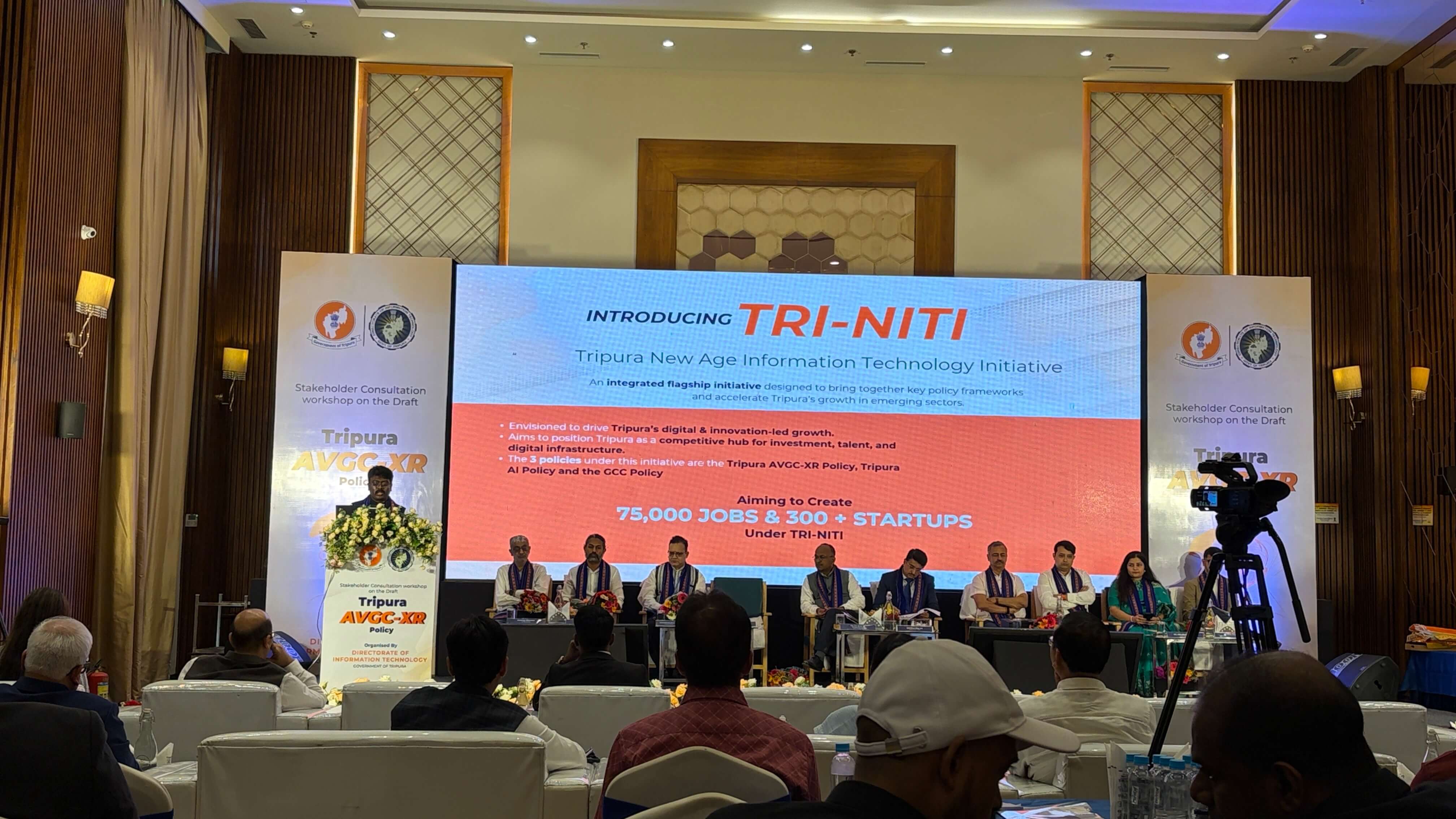
The consultation brought together senior government officials, industry leaders, academic experts, founders, and stakeholders from the AVGC-XR ecosystem. There were technical sessions led by experts from respected institutions like the National Institute of Design. There were founders sharing their real entrepreneurial journeys. And there was an open forum where stakeholders gave direct suggestions to the people drafting the policy.
This is public-private collaboration done the right way. The government brings the funding and the framework. The industry brings the real-world knowledge of what creators actually need. Academia brings the talent pipeline. When these three work together from the start, the final policy is far more likely to match reality.
I have seen the opposite too often. Policies written by people who have never built a company, full of rules that look good on paper but make no sense on the ground. Tripura's approach of gathering feedback before finalising the policy is a quiet but important strength. It is the difference between a plan that serves the government and a plan that serves the people.
A strong ecosystem is like a three-legged stool. Remove any leg and it falls. Tripura's model gives each leg a clear job.
The government's role is to set the framework, provide incentives, and build shared infrastructure. The policy names the Directorate of Information Technology as the nodal department, which means there is one clear owner responsible for execution. This matters more than people think. When everyone is responsible, no one is. A single nodal department removes that confusion.
Academia's role is to build the talent pipeline. The policy plans AVGC-XR training under an initiative called NAVCHETNA, aimed at promoting technology-driven education across more than 4,000 government schools. It also includes NSQF-aligned certification courses, faculty development, and scholarships for tribal youth, women, and rural talent. Starting skill-building in schools is a long-term bet, and long-term bets are exactly what build lasting ecosystems.
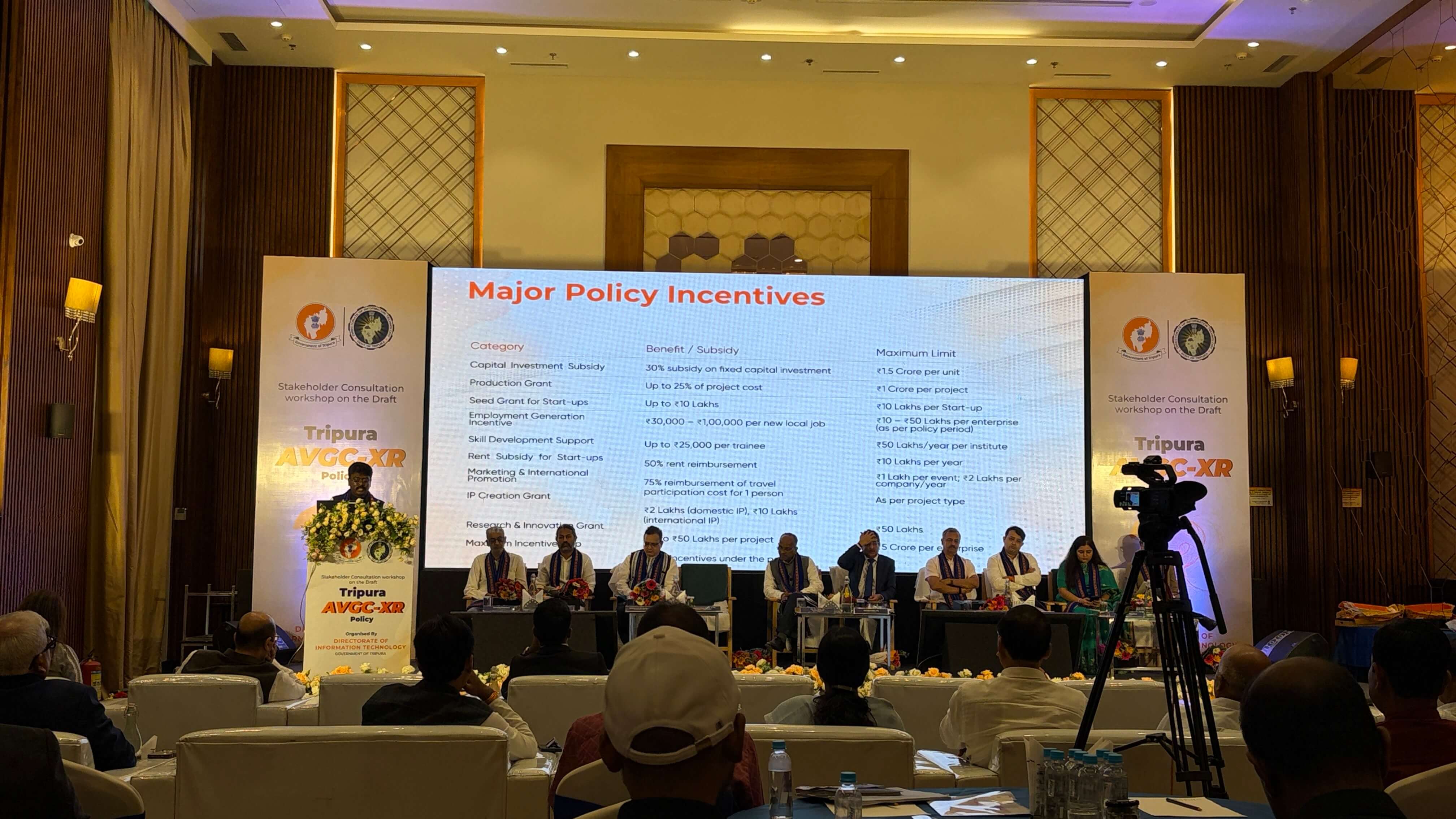
The role of startups and industry is to create the actual companies, jobs, and content. The policy supports them with seed grants, capital subsidies, rent subsidies, and incubation spaces. Industry also helps by mentoring, hiring, and giving real project work to local talent.
When government, academia, and startups each play their part, the ecosystem becomes self-sustaining. Schools produce skilled talent, startups hire that talent, and the government keeps the environment healthy. That loop is the real engine.
Institutional Frameworks and Implementation Committees
Good intentions need structure. This is where Tripura's plan shows some maturity.
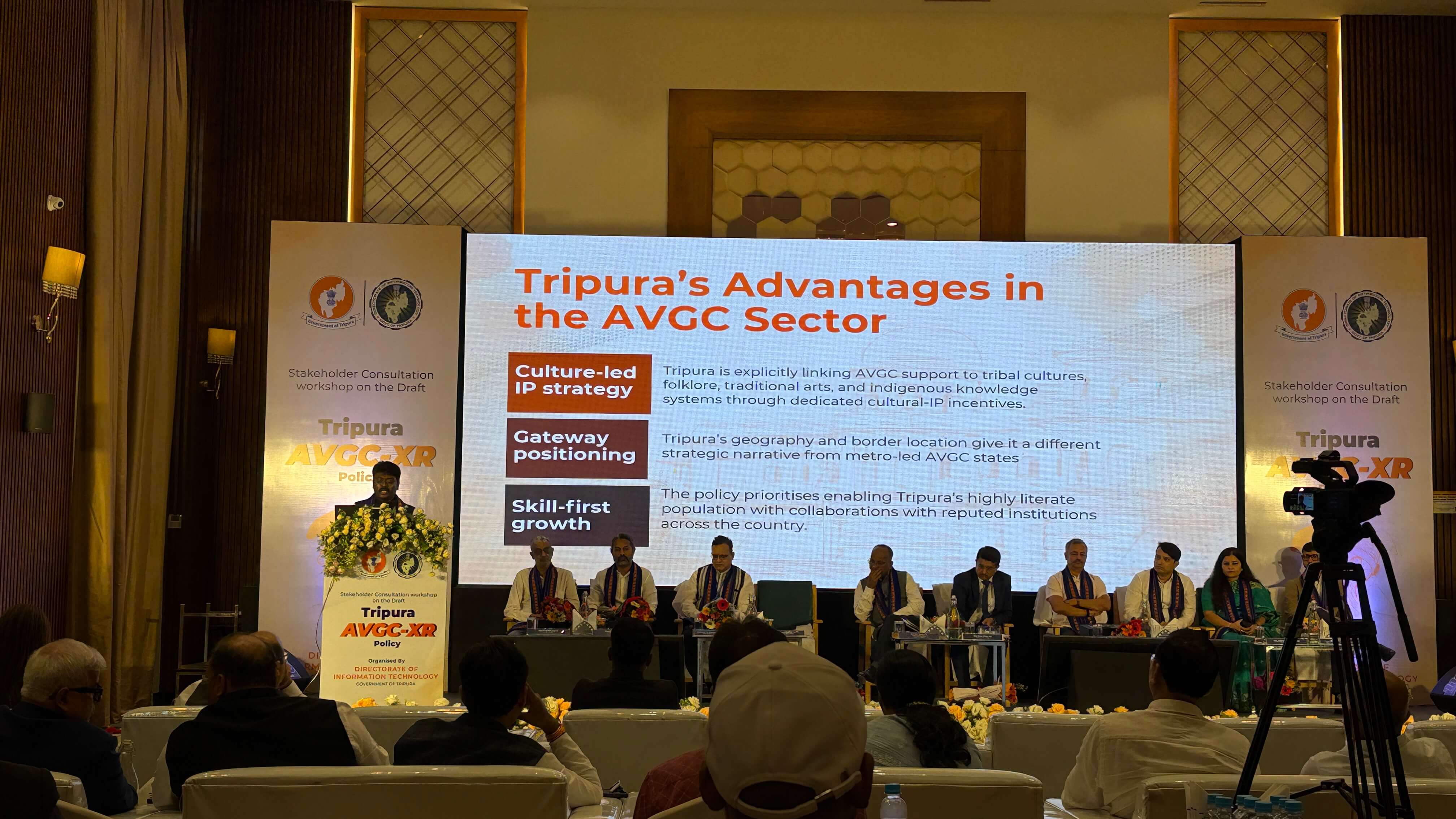
Beyond naming the Directorate of Information Technology as the nodal department, the policy proposes a Policy Implementation Committee with representation from government, industry, and academia. This is important because it builds accountability into the system. A committee with industry and academic voices is harder to ignore than a committee made only of officials.
The policy also lays out a five-year strategic execution framework, broken down year by year. Year one focuses on institutional setup and talent development. Year two on infrastructure building. Year three on startup scaling. Year four on global promotion. Year five on review and consolidation.
I like that the roadmap starts with people and skill in year one, not with constructing fancy buildings. Too many government plans begin by building a shiny centre that then sits empty because there is no talent or demand to fill it. Building the talent first, then the infrastructure, then scaling startups, is the correct order. It shows someone actually thought about sequence, not just spending.
The expected outcomes are also grouped clearly. A strong creative digital ecosystem. Employment and investment growth. Cultural content and IP creation. And an integrated, collaborative growth model that connects central and state schemes with academia and industry. Clear outcomes make it easier to measure whether the policy is working or not.
Why Execution Matters More Than Announcements
Here is the honest truth I keep coming back to. The slides were impressive. The numbers were exciting. But announcements are easy. Execution is hard.
Many Indian states have launched AVGC-XR policies. Maharashtra has a massive financial plan. Tamil Nadu, Telangana, and Kerala all have their own schemes. The states that will actually win are not the ones with the best presentations. They are the ones who build the centres, run the courses, and get grants into founders' hands on time.
Tripura's policy itself names the challenges honestly. Talent might leave for bigger cities. Industry partnerships must be real and not just signed on paper. Infrastructure must actually be built and maintained. Mentors are harder to find in a smaller state. Internet quality must stay consistent across the whole state. These are real risks, and a governance model is only as good as its ability to handle them.
What gives me some hope is the structure. A single nodal department, an implementation committee with multiple voices, a year-by-year roadmap, and clear outcomes. This is a governance model designed for follow-through, not just for a launch event.
If Tripura executes this well, I genuinely believe it could become a blueprint for other emerging Indian states, especially smaller ones that cannot outspend the big states. The lesson would be simple. You do not need the biggest budget. You need the clearest structure, real collaboration, and the discipline to execute year after year.
There is one more thing I would add as a founder. Governance is not only about committees and departments. It is about feedback loops. The best companies I admire review what is working and what is not every few months, then adjust fast. I hope Tripura builds the same habit into this policy. The year-five review is good, but waiting five years to learn is too slow in a sector that changes every year. If the implementation committee meets often, listens to creators and founders on the ground, and fixes problems quickly, this policy has a real chance. Slow feedback kills good plans. Fast feedback saves them.
As a founder, that is the same truth I live by. Vision gets you attention. Execution gets you results. I will be watching Tripura closely, because if a small state can turn a smart policy into real outcomes, it gives every underdog region in India a playbook to follow.
Frequently Asked Questions (FAQ)
What is the governance model of the Tripura AVGC-XR Policy?
The Tripura AVGC-XR Policy is governed by the Directorate of Information Technology as the nodal department, supported by a Policy Implementation Committee with government, industry, and academic representation. It follows a five-year strategic execution framework with clear yearly goals and measurable outcomes.
How does the Tripura AVGC-XR Policy involve the private sector?
The policy was shaped through a stakeholder consultation that included industry leaders, founders, and experts alongside government and academia. It supports private startups with grants, subsidies, and incubation, and plans ongoing public-private collaboration to keep the policy aligned with real industry needs.
Why is policy execution more important than the announcement?
Many states announce ambitious policies, but results depend on actually building infrastructure, running skill programs, and delivering grants on time. Execution turns plans into jobs and startups. A clear governance structure with accountability, like a nodal department and implementation committee, improves the chances of successful execution.
Can Tripura's AVGC-XR governance model work for other Indian states?
Yes, it could serve as a blueprint, especially for smaller or emerging states. Its strengths are a single accountable department, collaboration between government, academia, and startups, a step-by-step roadmap, and clear outcomes. These elements help states succeed without needing the largest budgets.
Which department is responsible for the Tripura AVGC-XR Policy?
The Directorate of Information Technology, Government of Tripura, is the nodal department responsible for the AVGC-XR Policy. It works with a Policy Implementation Committee that includes representatives from government, industry, and academia to oversee execution.
What is Fueler Portfolio?
Fueler is a career portfolio platform that helps companies find the best talent for their organization based on their proof of work. You can create your portfolio on Fueler. Thousands of freelancers around the world use Fueler to create their professional-looking portfolios and become financially independent. Discover inspiration for your portfolio
Sign up for free on Fueler or get in touch to learn more.

What should you do next?
You've read the article. Now turn your skills into proof of work and unlock more opportunities.
Build your proof of work portfolio
Create a clean portfolio with projects, assignments, resumes, and AI stack details that companies actually want to see.
Create your Fueler portfolio →Apply through assignments, not resumes
Stand out by solving real tasks from companies hiring on Fueler.
Explore assignments →Get discovered by companies
Make your work public and let recruiters discover your skills through actual projects instead of keywords.
Get discovered →
