Inside Tripura's AVGC-XR Policy: 75,000 Jobs, 300+ Startups, and Real Grant Money

Riten Debnath
23 May, 2026
Every few weeks, some Indian state announces a big new policy with huge numbers. Most of the time, the numbers sound exciting and then nothing happens. So when I saw Tripura promise 75,000 jobs and 300 plus startups, my first instinct was to look closer, not to clap.
I am Riten, founder of Fueler, a platform that helps people get hired through their work. I went to the stakeholder consultation for the draft Tripura AVGC-XR Policy in Agartala and studied every slide. In this article, I will take you inside the policy. What the big numbers really mean, where the grant money is, and whether this is hype or a real opportunity.
AVGC-XR stands for Animation, Visual Effects, Gaming, Comics, and Extended Reality. It is the creative and immersive digital economy. Let us go inside.
The 75,000 Jobs Number: What It Really Means
First, let me clear up the headline number, because it is often misunderstood.
The 75,000 jobs and 300 plus startups goal does not belong to the AVGC-XR Policy alone. It belongs to a bigger umbrella initiative called TRI-NITI, which stands for Tripura New Age Information Technology Initiative. TRI-NITI brings together three policies: the AVGC-XR Policy, an AI Policy, and a GCC Policy. The 75,000 jobs are the combined target of all three.
The AVGC-XR Policy on its own is more grounded. It projects creating 5,000 to 7,500 direct and indirect jobs over five to seven years, plus 2,000 plus freelance micro-enterprises. It also aims to skill 15,000 to 20,000 youth over the first five years.
I actually respect this structure. A lot of policies would have slapped the biggest number on every slide to grab attention. Tripura separated the umbrella goal from the specific policy goal. That honesty tells me the people behind it are thinking seriously, not just chasing headlines. As a founder, honest planning is a green flag. It usually means honest execution too.
So when you read 75,000 jobs, think of it as the full TRI-NITI vision across AVGC, AI, and global capability centres combined. The AVGC-XR slice is in the thousands, with freelance and indirect work on top.
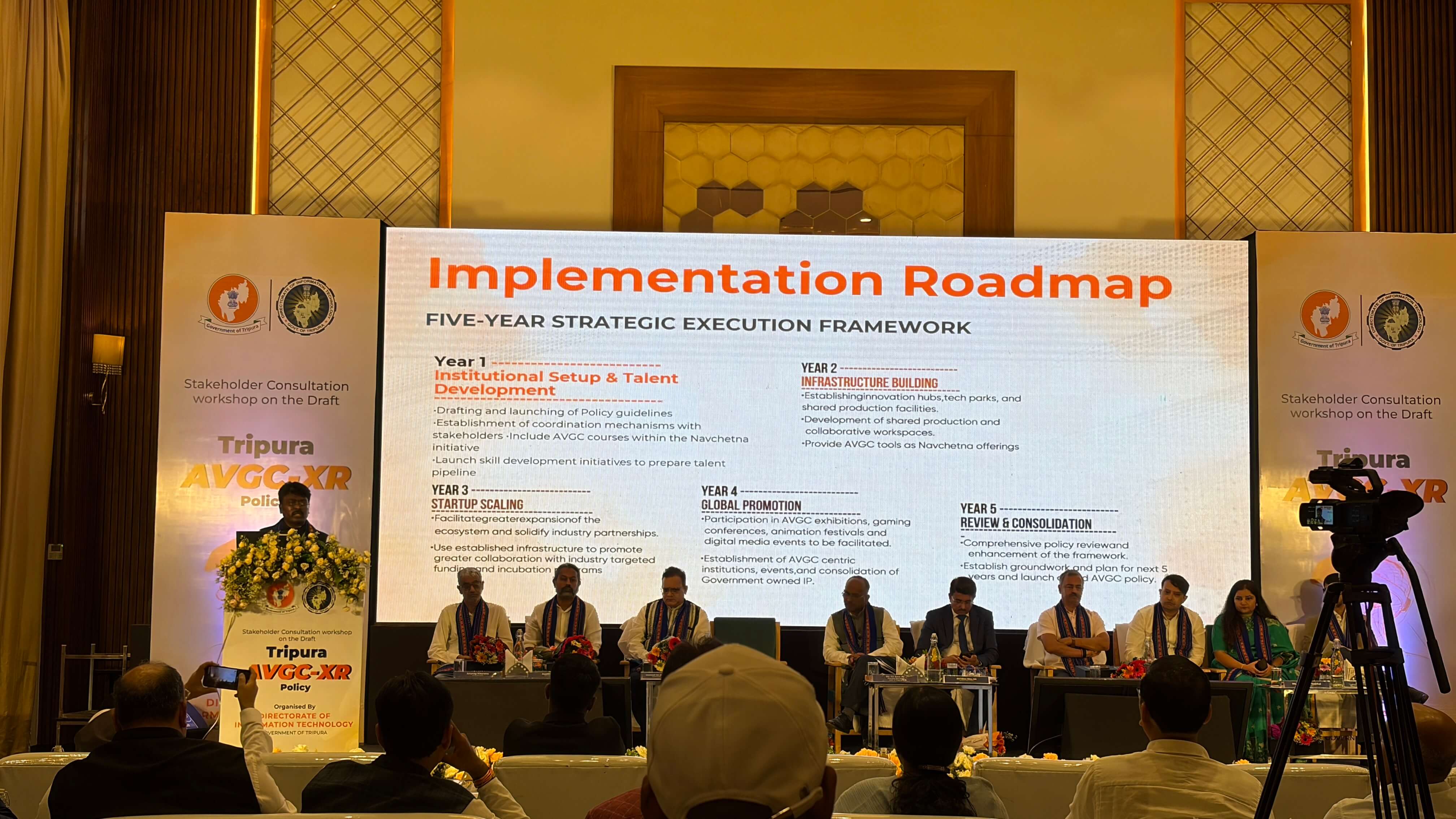
The 300+ Startups Goal: How It Could Happen
A startup ecosystem does not appear because a policy wishes for it. It appears when the cost and risk of starting up drop low enough that more people try. This is where the policy puts in real work.
To enable 300 plus startups, the policy lowers the cost of building in several ways:
- Seed grants up to 10 lakh rupees for early-stage startups
- A 50 percent rent subsidy for incubated startups
- A 30 percent capital investment subsidy
- Research and innovation grants up to 50 lakh per project
- Shared production labs, motion capture and XR studios, cloud infrastructure, and co-working spaces
The idea is simple. When rent is cheaper, when there is seed money, and when expensive equipment is shared instead of bought, more young people can afford to take the leap. More attempts means more chances that a few breakout startups succeed and inspire the next wave.
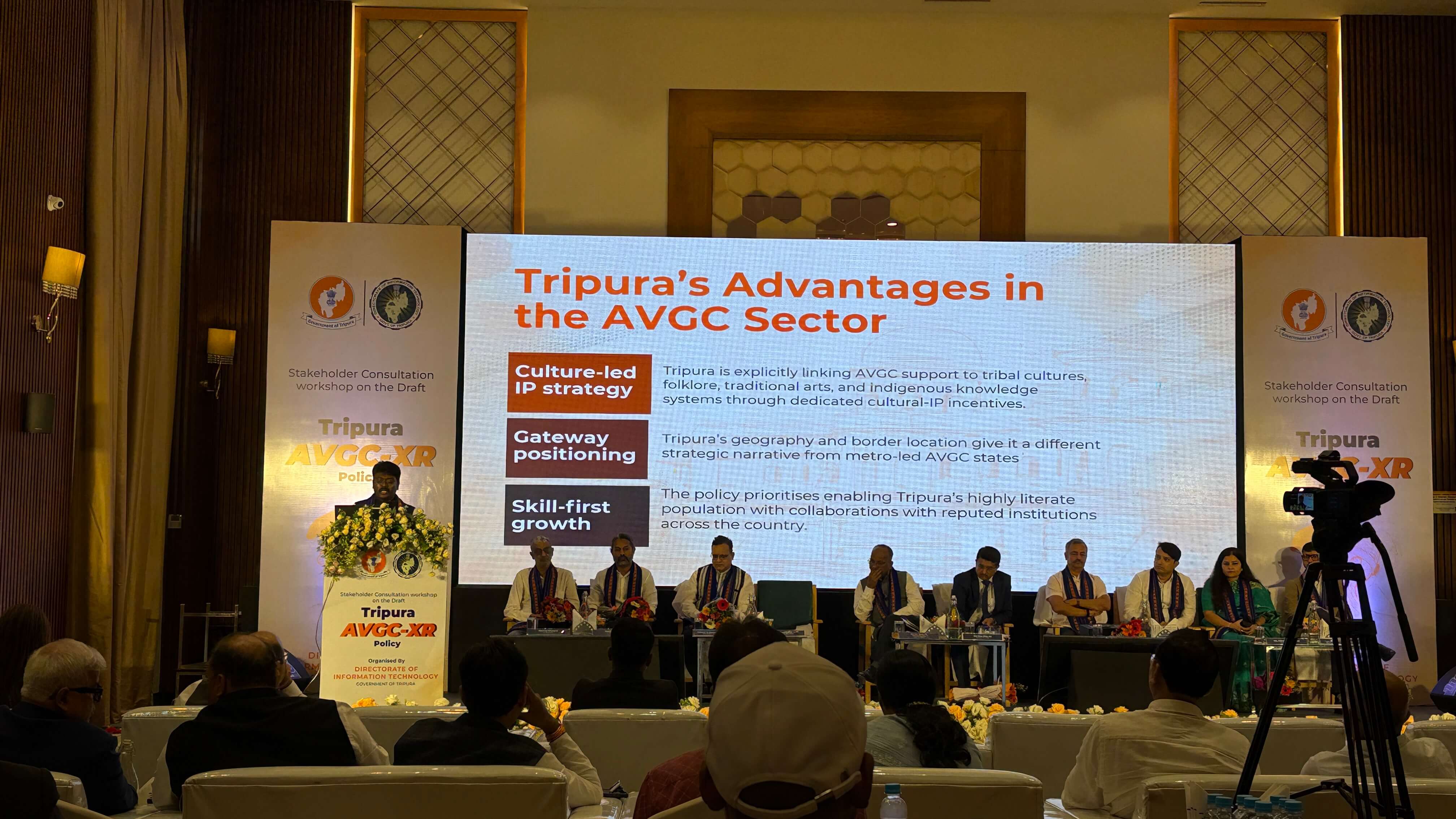
The policy also targets a special niche. Cultural IP. It offers grants rooted in Tripura folklore and a Culture Heritage IP Bonus of up to 5 lakh rupees. This pushes founders to build original content based on local stories, which is something metro studios cannot copy. For a region full of untapped tribal folklore, this could be the most valuable startup opportunity of all.
The Real Grant Money: A Clear Breakdown
Let us talk about the actual money, because this is what separates a real policy from an empty announcement. Based on the official incentive table, here is the breakdown.
There is also an overall cap of around 5 crore per enterprise across all incentives.
This is genuinely real grant money, not token amounts. A small studio could get serious capital support. A startup could cut its rent in half. A creator could get help registering and owning their IP. One honest note though. This is still a draft policy, so always confirm the final numbers in the official notified document before applying.
Hype or Real Opportunity? My Honest Take
So here is the question. Is this hype or a real opportunity? My answer is both, and it depends entirely on execution.
The opportunity is real. The grant money is substantial. The cultural-IP angle is smart and unique. The job projections are honest. The structure under TRI-NITI shows joined-up thinking. On paper, this is one of the more thoughtful policies I have seen from a smaller state.
But the policy itself admits the hard challenges. Talent might leave for bigger cities. Industry partnerships must be real, not just signed for show. Infrastructure must actually be built and kept running. Internet quality must be consistent across the whole state. Mentors are harder to find in a smaller region. These are not small problems, and the big numbers only become real if these are solved.
The states that win in this sector are not the ones with the best slides. They are the ones that build the centres, run the courses, and get grants into founders' hands on time. Tripura has shown a good plan. Now it has to show follow-through.
For you, the reader, here is what matters most. Do not wait for the 75,000 jobs or the 300 startups to magically appear. Whether you are a student, a freelancer, or a founder, start building your skill and your proof of work today. In creative industries, your work gets you hired, not your certificate. The people who prepare now will be the ones who grab these opportunities first when the policy comes alive. That is the mindset I live by, and it is the one I would bet on.
Frequently Asked Questions (FAQ)
Does the Tripura AVGC-XR Policy really create 75,000 jobs?
The 75,000 jobs target belongs to the wider TRI-NITI initiative, which combines the AVGC-XR Policy, an AI Policy, and a GCC Policy. The AVGC-XR Policy on its own projects 5,000 to 7,500 jobs over five to seven years, plus 2,000 plus freelance micro-enterprises.
How many startups will the Tripura AVGC-XR Policy support?
The policy aims to enable 300 plus startups in the AVGC-XR space. It supports them with seed grants up to 10 lakh, a 50 percent rent subsidy, a 30 percent capital subsidy, research grants, and shared infrastructure like production labs and incubation spaces.
What grant money is available under the Tripura AVGC-XR Policy?
Available grants include a 30 percent capital subsidy (up to 1.5 crore), production grants up to 25 percent of project cost (up to 1 crore), seed grants up to 10 lakh, rent subsidies, skill support, IP creation grants, and research grants up to 50 lakh, with an overall cap around 5 crore per enterprise.
What is TRI-NITI in the Tripura AVGC-XR Policy?
TRI-NITI stands for Tripura New Age Information Technology Initiative. It is an umbrella initiative combining three policies: the AVGC-XR Policy, the AI Policy, and the GCC Policy. Together they target 75,000 jobs and 300 plus startups in Tripura.
Is the Tripura AVGC-XR Policy a real opportunity or just hype?
The opportunity is real, with substantial grant money, a smart cultural-IP focus, and honest job projections. However, success depends on execution, including building infrastructure, retaining talent, and forming real industry partnerships. The big numbers will only become real if these challenges are solved.
What is Fueler Portfolio?
Fueler is a career portfolio platform that helps companies find the best talent for their organization based on their proof of work. You can create your portfolio on Fueler. Thousands of freelancers around the world use Fueler to create their professional-looking portfolios and become financially independent. Discover inspiration for your portfolio
Sign up for free on Fueler or get in touch to learn more.

What should you do next?
You've read the article. Now turn your skills into proof of work and unlock more opportunities.
Build your proof of work portfolio
Create a clean portfolio with projects, assignments, resumes, and AI stack details that companies actually want to see.
Create your Fueler portfolio →Apply through assignments, not resumes
Stand out by solving real tasks from companies hiring on Fueler.
Explore assignments →Get discovered by companies
Make your work public and let recruiters discover your skills through actual projects instead of keywords.
Get discovered →
