How to Get Freelance Clients Through LinkedIn in the US Market?

Riten Debnath
30 May, 2026
Last updated: May 2026
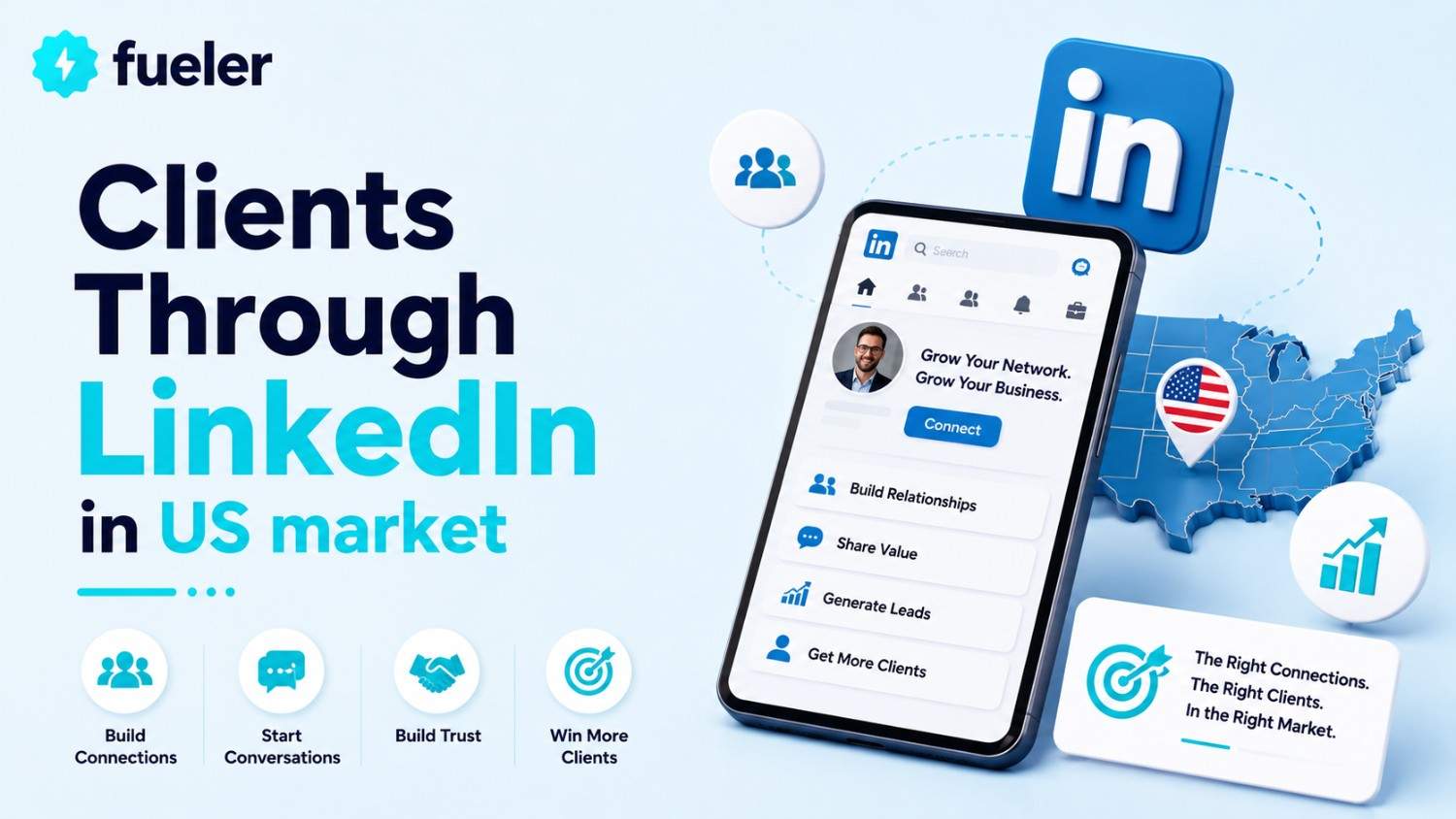
US companies have developed an intense filter against automated outreach. Inboxes are flooded with generic templates, and decision-makers now actively ignore anyone who sounds like an agency bot. Securing high-ticket retainers in the American market requires shifting away from the traditional applicant mindset toward a framework of visible competence and localized intent.
I’m Riten, founder of Fueler, a skills-first portfolio platform that connects talented individuals with companies through assignments, portfolios, and projects, not just resumes/CVs. Think Dribbble/Behance for work samples + AngelList for hiring infrastructure.
Winning contracts in this competitive landscape means optimizing your digital presence for the way US operators actually source talent. American marketing directors, engineering leads, and startup founders do not care about your certifications; they care about risk mitigation and immediate operational execution. This guide breaks down the exact systems needed to transform your LinkedIn profile into an inbound asset and build a reliable pipeline of high-paying US clients.
1. Transforming Profiles Into Problem-Centric Inbound Assets
US resource managers use highly specific search parameters when looking for external contractors on LinkedIn. If your profile reads like a passive chronological CV, you automatically miss out on localized talent filters. Your profile must function as a high-converting landing page that communicates exactly what business problem you solve, how you solve it, and the measurable impact of your past work.
- Value-Driven Headline Architecture: Replace vague descriptions like "Freelance Marketer" with precise business solutions such as "B2B SaaS Content Strategist helping growth teams scale organic pipeline through search intent mapping." This framing ensures your primary capability registers instantly during rapid executive screening processes.
- Problem-First Summary Frameworks: Structure your About section to address the immediate operational friction your target audience experiences daily. Instead of summarizing your career history, lead with the exact inefficiencies your clients face, followed by your proprietary methodology for fixing them.
- Strategic Featured Section Layouts: Treat your featured area as a visual validation center by pin-pointing high-impact case studies and live project links. Avoid cluttering this space with generic certificates; instead, feature deep-dive breakdowns of complex projects that prove your actual execution capabilities.
- Contextual Skill Tagging for Algorithms: Align your listed skills with the exact technical software and strategic methodologies used by modern US corporations. This systematic tagging directly influences your ranking inside the LinkedIn Recruiter dashboard when operations managers look for specialized freelance support.
- Social Proof Through Narrative Recommendations: Request recommendations from past clients that focus heavily on your communication, reliability, and business outcomes rather than generic praise. Having US-based peers vouch for your ability to manage independent timelines heavily reduces the perceived risk of hiring remote contractors.
Why It Matters
In 2026, US buyers prioritize speed to value over everything else. A profile structured around business outcomes immediately signals that you operate like a strategic partner rather than an administrative line item, drastically reducing your sales cycle length.
2. Setting Up Real-Time Intent Tracking and Executive Monitoring
Waiting for public job postings to appear means competing with thousands of applicants in an oversaturated market. High-value freelance opportunities exist in the unadvertised market, triggered by corporate changes, leadership shifts, and funding rounds. By tracking these behavioral signals early, you can pitch your services precisely when a company experiences growing pains.
- Monitoring Executive Leadership Transitions: Track whenever a new Director or VP of Marketing takes over at a target mid-market company. New executives almost always audit existing vendor contracts and look to bring in trusted independent specialists to execute their fresh strategic vision quickly.
- Analyzing Corporate Growth and Funding Clues: Monitor corporate announcements regarding Series A or B funding rounds and sudden team expansion indicators. When startups scale their core teams, internal management bottlenecks form, forcing them to offload immediate specialized tasks to dependable external freelancers.
- Tracking Active Platform Content Footprints: Follow individual decision-makers and turn on their profile bell notifications to study the exact operational issues they complain about publicly. Engaging meaningfully with their posts before pitching builds organic familiarity and ensures your name stands out when you eventually drop into their inbox.
- Utilizing Advanced Sales Navigator Filters: Build highly specific lead lists categorized by geography, headcount growth, and past department changes. Filtering companies that show positive department growth but flat overall headcount reveals an organizational strategy that heavily relies on flexible contract talent.
- Evaluating Specific Technology Stack Changes: Watch for shifts in a target company's software choices, such as implementing enterprise marketing suites or advanced data infrastructure. These technical changes create short-term skill gaps within their existing in-house teams that skilled contractors can fill immediately.
Why It Matters
Pitching based on organizational intent completely removes the friction of cold outreach. When you reach out to a founder precisely as they hit an internal execution bottleneck, your service ceases to feel like an annoying sales pitch and starts looking like an essential operational solution.
3. Engineering a Native Content Strategy Focused on Native Case Studies
Generic educational content fails to attract high-paying clients because it targets your peers rather than your buyers. To capture the attention of busy US operators, your content must analyze real execution, break down complex workflows, and present contrarian industry insights. Showing the messy realities of solving a problem builds immense professional credibility.
- Deconstructing Real Operational Workflows: Write comprehensive breakdowns showing exactly how you took a project from initial chaos to an organized, completed system. Detailing your specific step-by-step process proves to prospective buyers that you possess a repeatable framework for delivering predictable results.
- Publishing Micro Case Study Snapshots: Share concise updates that highlight a specific client win, the exact obstacle faced, and the precise metric influenced. Framing your daily work as mini-case studies keeps your network constantly aware of your professional capabilities without sounding overly promotional.
- Offering Unfiltered Strategic Critiques: Safely analyze public assets or public strategies within your niche and offer concrete, actionable improvements. Providing high-level, objective analysis publicly establishes your position as an authoritative industry expert who understands nuance better than the average agency.
- Sharing Transparent Framework Failures: Discuss a project strategy that did not go as planned, what you learned from the data, and how you adapted your approach. Showing this level of intellectual honesty proves to American founders that you are a mature operator who values transparency over perfection.
- Translating Complex Technical Concepts: Take complicated industry updates, platform changes, or algorithmic shifts and explain their direct bottom-line impact in plain language. Helping executives understand how technical changes affect their revenue builds instant trust and positions you as a necessary advisor.
Why It Matters
Consistent, high-signal content turns your LinkedIn feed into an educational asset for prospective clients. It allows buyers to quietly evaluate your critical thinking and operational style over time, leading to highly qualified inbound inquiries that skip the typical negotiation friction.
4. Deploying Relationship-First Social Commentary in Executive Feeds
The comment sections of prominent industry leaders are high-value networking environments if approached with tactical intent. Leaving generic remarks like "Great post!" offers zero value and gets ignored by everyone. Writing deeply insightful, analytical comments under a target buyer’s post allows you to catch their eye completely organically.
- Adding Evaluative Insights to Discussions: Contribute to executive threads by introducing relevant data, secondary perspectives, or missing operational variables. Your goal is to expand the original post's value, causing both the author and other readers to click through to your profile.
- Answering Community Questions Directly: Scan the comment sections of popular industry posts for founders asking specific, unresolved tactical questions. Providing a comprehensive, unselfish solution right there in the replies establishes your authority and frequently catches the eye of lurking buyers facing the same issue.
- Moderating Respectful Strategic Disagreements: Offer alternative viewpoints on industry trends backed by factual observations and logical reasoning. Handling professional disagreements calmly and intelligently shows that you possess the confidence and critical thinking skills required to advise high-growth companies.
- Tagging Non-Competing Specialists Cohesively: Bring other talented freelancers into relevant conversations to build collaborative goodwill and expand the reach of the thread. This approach deepens your relationships within the freelance community, frequently leading to profitable client referrals when those peers reach maximum capacity.
- Documenting Contextual Network Insights: Synthesize the core takeaways of a long, complex executive discussion into an easy-to-read checklist for the community. Simplifying dense information provides immediate utility, driving high volumes of targeted profile visits from senior leadership figures.
Why It Matters
Positioning yourself strategically within high-level conversations bypasses gatekeepers entirely. It allows you to demonstrate your expertise right in front of target clients, proving your professional value long before any formal sales conversation takes place.
5. Structuring Frictionless, Non-Salesy Inbound Nurturing Direct Messages
Once a US lead interacts with your content or views your profile, your initial outreach must avoid aggressive sales scripts. The objective of your first direct message is to spark an easy, low-pressure conversation about their current operational environment. Treat the interaction like an open peer-to-peer discussion rather than a rigid sales pitch.
- Personalizing Contextual Conversation Starters: Reference a specific point from a comment they made or an article they recently published to establish genuine context. Showing that you actually read and processed their ideas immediately separates you from automated bulk messaging.
- Offering Zero-Cost Friction Audits: Point out a minor, easily fixable error in their public digital assets and provide the exact solution with no strings attached. Delivering immediate value upfront demonstrates your proactive work ethic and makes responding to your message completely frictionless.
- Asking Targeted Diagnostic Questions: Inquire about how their team is navigating a specific, widely known industry shift or logistical hurdle. Asking smart, open-ended operational questions encourages founders to discuss their current internal challenges without feeling like they are being pitched.
- Removing High-Pressure Call CTA Pitfalls: Avoid demanding a 30-minute discovery call right out of the gate, which creates instant mental friction for busy professionals. Instead, keep the conversation inside the chat by asking if they are open to exchanging a few brief text ideas first.
- Sharing Tailored Resource Packages: Send over a highly relevant framework, template, or guide you built that solves a problem they mentioned in passing. Providing practical resources keeps the conversation helpful, consultative, and completely focused on solving problems.
Why It Matters
US business leaders protect their time fiercely and pull away from aggressive sales tactics. Transitioning your messaging into a supportive, consultative dialogue builds a comfortable environment where clients feel safe disclosing their actual budget and project needs.
6. Developing Value-First Async Video Pitching Strategies
When a conversation progresses to a defined business problem, using short, asynchronous video recordings can dramatically improve your close rates. A personalized video analysis removes all abstract guesswork, showing the client exactly what is broken and how you intend to fix it. This approach proves your capability before any contract is signed.
- Constructing Clean Visual Audits: Share your screen and walk through the client’s public digital assets, highlighting specific areas where they are losing efficiency or revenue. Visualizing their hidden problems makes the need for a solution feel far more urgent.
- Outlining Custom Strategic Roadmaps: Present a high-level, three-step action plan designed specifically to address their unique organizational bottlenecks. Breaking your complex solution down into clear, manageable phases reassures the client that your workflow is organized and manageable.
- Controlling Video Recording Length Dynamics: Keep your asynchronous video pitches between three and five minutes to ensure they get watched fully. Respecting their busy schedules by delivering a concise, high-impact breakdown drastically increases the likelihood of a positive response.
- Using Accessible, Non-Jargon Language: Explain your technical solutions using straightforward business terms that connect directly back to revenue, time savings, or team performance. Avoiding dense, confusing jargon ensures your pitch remains clear to both technical and non-technical decision-makers.
- Ending with Clear, Low-Friction Next Steps: Close your video by giving them an easy, low-pressure way to move forward, such as replying with a simple text confirmation if the plan aligns with their goals. This frictionless closing style allows executives to make decisions quickly without feeling cornered.
Why It Matters
Asynchronous video pitches show a level of commitment and initiative that generic written pitches simply cannot match. It lets US founders experience your communication style, professionalism, and expertise directly, making formal contract approvals much faster.
7. Building Localized Referral Coalitions With Non-Competing Peers
Some of your best clients will come through peer recommendations rather than direct outreach. Building an active network of independent professionals who serve the same target market but offer different skills creates a highly profitable referral circle. This collaborative ecosystem ensures you keep a steady stream of vetted client introductions coming in.
- Partnering With Complementary Specialists: Strategic Alignment: Connect with independent professionals whose skills naturally bookend yours, such as an engineer partnering with a designer. These alliances allow both parties to refer client work back and forth whenever an enterprise project requires multi-disciplinary execution.
- Setting Up Explicit Referral Exchanges: Establish clear, mutual agreements regarding referral commissions or equivalent project trade-offs to keep the partnership sustainable. Clear structural expectations prevent misunderstandings and keep everyone motivated to source opportunities for the group.
- Creating Mastermind Slack Spaces: Build small, private channels with trusted freelancers to share market intel, discuss red-flag clients, and pass along over-capacity leads. Having a private space to talk shop keeps you closely connected to real-time freelance market realities.
- Executing Co-Authored Value Content: Collaborate with your network peers to create comprehensive industry guides or host joint LinkedIn Audio sessions. Pooling your collective expertise expands your reach across each other's audiences, introducing you to entirely new pools of buyers.
- Providing Smooth, Professional Client Handouts: Ensure that when you introduce a client to a peer, the transition is polished, clear, and well-vouched for. Delivering a seamless, professional handoff reflects beautifully on your business and encourages peers to return the favor.
Why It Matters
US operations managers strongly prefer hiring pre-vetted talent recommended by trusted partners over taking chances on cold applicants. Operating within a reliable referral network allows you to step right past traditional trust barriers, commanding premium rates from day one.
8. Creating Niche Digital Proof Ecosystems Over Traditional Proposals
Sending a long, text-heavy proposal document often creates a reading chore for busy US decision-makers. Instead, shift toward using interactive, digital proof systems that dynamically showcase your past solutions, live project assets, and strategic thinking. Presenting clear, irrefutable evidence of your work cuts through skepticism and speeds up hiring approvals.
- Assembling Live Case Study Hubs: Ditch static PDF resumes for clean digital spaces that house your absolute best work, detailed project context, and measurable outcomes. Presenting your career assets through a dynamic web link makes reviewing your professional history simple for clients.
- Publishing Real Client Review Interactives: Embed verified video testimonials, Slack screenshots of client praise, and real performance data directly into your case studies. Solid, undeniable proof of happy clients eliminates skepticism and builds fast trust with cautious enterprise buyers.
- Sharing Open-Source Framework Templates: Give prospective clients view-access to your actual project tracking templates, operational checklists, or strategy frameworks. Letting buyers see your structured organization up close proves you can step in and manage complex projects smoothly.
- Structuring Modular Project Breakdowns: Organize your digital portfolios by specific business problems rather than generic skill buckets, allowing clients to jump straight to their exact issue. This problem-focused layout makes finding your relevant experience effortless for busy managers.
- Updating Live Project Feeds Constantly: Keep your public work hubs fresh by adding your latest project wins, current learning experiments, and live strategy updates regularly. Maintaining an active, up-to-date record of your work shows clients you are a highly active operator currently producing real-world results.
Why It Matters
Traditional resumes and text proposals only make claims about your skills; digital proof ecosystems actually prove them. Showcasing your execution transparently eliminates the risk of hiring you, turning your sales process into an straightforward evaluation of your work.
How Does This Connect to Building a Strong Career or Portfolio?
Winning high-value freelance clients in a highly competitive market requires a fundamental shift in how you display your professional value. US buyers no longer trust unverified bullet points on a static document. They seek out observable execution, transparent working frameworks, and verifiable proof of outcomes.
When you document your projects, publish deep-dive workflow breakdowns, and maintain an accessible digital footprint, you completely remove the guesswork from the hiring process. This transparent way of showcasing your abilities shows companies exactly how you think, plan, and execute under real-world conditions.
Using a dedicated system like Fueler to manage your proof of work ensures your career assets remain organized, highly professional, and ready for rigorous executive review. Ultimately, building a career around visible proof establishes long-term professional credibility that easily survives shifting market trends and changing algorithms.
Final Thoughts
The US freelance market is moving away from generic outreach and double-downing on deep, verifiable specialization. Success on LinkedIn requires moving past basic networking and treating the platform like a clear, proof-driven B2B distribution channel. When you focus your profile on solving client problems, track genuine company intent, and lead with visible proof of your work, you build an inbound engine that works around the clock. Treat your freelance business like an enterprise operation, and the market will respond by paying you premium enterprise rates.
FAQ Section
How do I bypass HR gatekeepers on LinkedIn to reach US founders directly?
Bypass human resource filters by interacting directly with the content posted by operational heads, such as engineering leads or marketing directors. Leave insightful, high-value comments on their threads and pitch your services as direct solutions to their specific department bottlenecks rather than applying through formal job boards.
What is the most effective time to send LinkedIn messages to US-based clients?
Send your direct messages during their specific local business hours, ideally between 9:30 AM and 11:30 AM in their respective US time zone (EST, CST, or PST). Avoid reaching out on Monday mornings or late Friday afternoons when executives are dealing with internal team meetings or wrapping up their week.
How much proof of work do I need to show before US clients trust me?
You do not need dozens of pages; focus instead on 3 to 5 highly detailed, deeply relevant case studies that match their specific business problem. US buyers value deeply analyzed, problem-specific execution breakdowns far more than a long list of shallow, unrelated project links.
Should I list my freelance rates publicly on my LinkedIn profile?
Avoid publishing fixed pricing rates directly on your profile, as high-value US contracts usually require custom discovery based on project scope. Instead, use your profile headline and summary to focus entirely on value, saving specific pricing conversations for after you have diagnosed their exact operational needs.
How do I handle client objections regarding working across different time zones?
Overcome time zone concerns by clearly explaining your asynchronous communication systems and guaranteeing a specific daily crossover window. Detail how you use clear project dashboards and recorded video updates to keep work moving smoothly without needing constant, real-time meetings.
What is Fueler Portfolio?
Fueler is a career portfolio platform that helps companies find the best talent for their organization based on their proof of work. You can create your portfolio on Fueler. Thousands of freelancers around the world use Fueler to create their professional-looking portfolios and become financially independent. Discover inspiration for your portfolio
Sign up for free on Fueler or get in touch to learn more.

What should you do next?
You've read the article. Now turn your skills into proof of work and unlock more opportunities.
Build your proof of work portfolio
Create a clean portfolio with projects, assignments, resumes, and AI stack details that companies actually want to see.
Create your Fueler portfolio →Apply through assignments, not resumes
Stand out by solving real tasks from companies hiring on Fueler.
Explore assignments →Get discovered by companies
Make your work public and let recruiters discover your skills through actual projects instead of keywords.
Get discovered →
