How to Find Freelance Graphic Design Clients in Mumbai in 2026

Riten Debnath
02 Sep, 2026
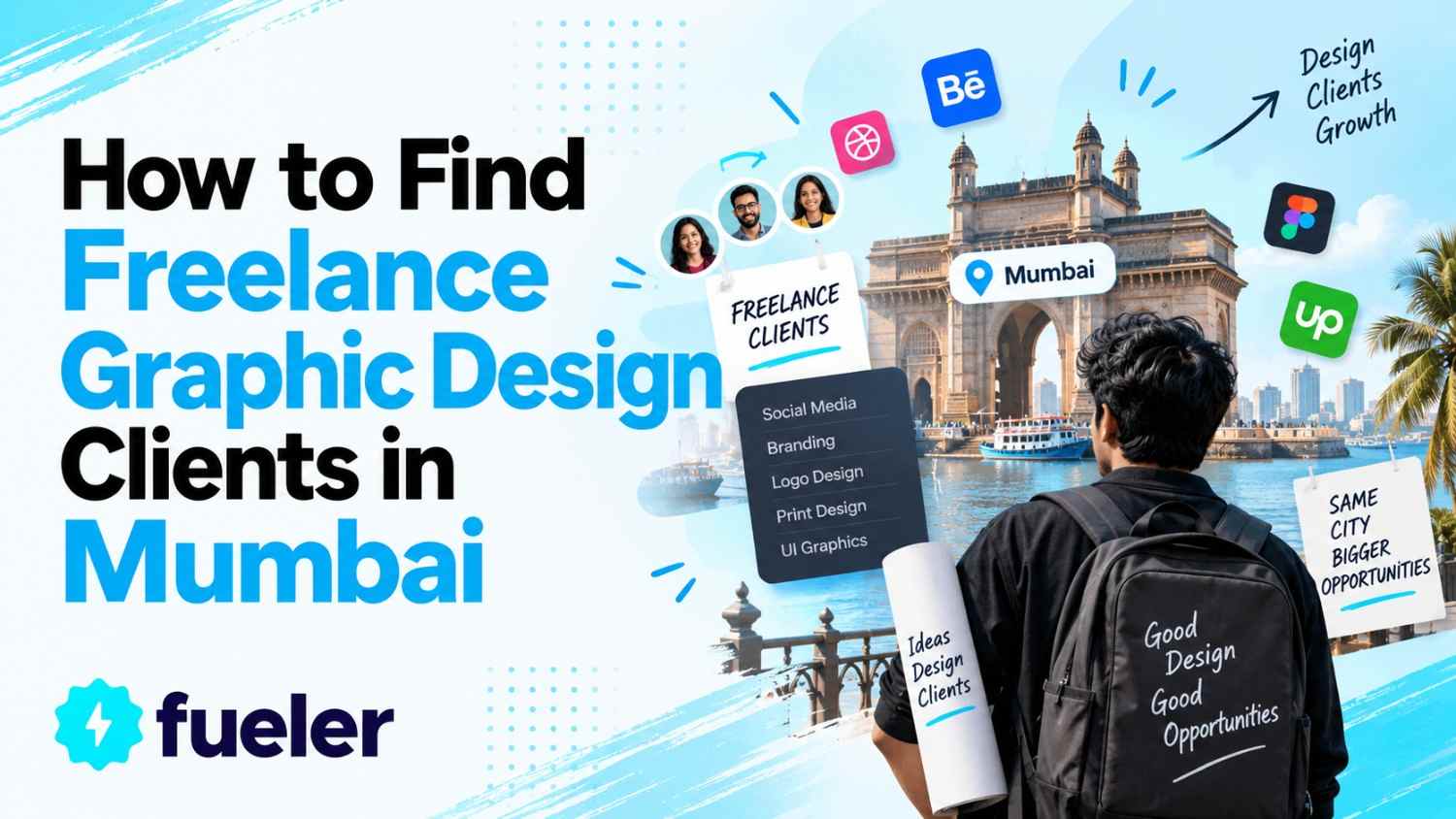
Mumbai is one of India's biggest business and creative markets. It brings together startups, advertising agencies, D2C brands, media companies, creators, restaurants, fashion businesses, entertainment companies and established brands. Almost every one of these businesses needs design in some form.
That makes Mumbai a strong market for a freelance graphic designer in Mumbai, but finding clients is not simply about being good at Photoshop, Illustrator or Figma. Businesses want designers who can understand their brand, solve a visual problem and deliver work reliably.
I’m Riten, founder of Fueler, a skills-first portfolio platform building the career infrastructure for 100 million creative professionals. Fueler connects talented individuals with companies through assignments, portfolios, and projects, not just resumes or CVs. Think of it as Dribbble/Behance for work samples combined with AngelList for hiring infrastructure.
In this guide, I’ll explain how to find freelance graphic design clients in Mumbai, which industries to target, what to put in your portfolio, how to approach companies and how to turn one-time projects into recurring freelance work.
Why Mumbai Is a Strong Market for Freelance Graphic Designers
Mumbai has a large concentration of businesses across technology, finance, entertainment, fashion, advertising, media, consumer products and services. These businesses regularly need visual communication for social media, advertising, websites, presentations, packaging, campaigns and branding.
You can therefore target different client groups instead of depending only on traditional graphic design jobs.
For example, a startup may need pitch deck design and social media creatives. A D2C brand may need packaging and advertising creatives. A creator may need YouTube thumbnails and Instagram graphics. An agency may need a freelance designer who can support several client accounts.
The opportunity is there, but your positioning matters.
A portfolio that tries to show everything can make it difficult for a client to understand what you are best at. A focused portfolio can make your value much clearer.
Our guide on graphic design freelancing and building a client base explains why your portfolio and client acquisition process should work together rather than being treated as separate activities.
Which Clients Should a Graphic Designer Target in Mumbai?
You can target clients based on both industry and the type of design work they need.
You do not need to target every category. Pick one or two that match your interests and existing work.
Startups Can Be Good Clients for Freelance Designers
Startups often need a wide range of creative work. A small team may need social media posts, website graphics, pitch decks, presentation templates, hiring creatives and campaign assets.
This can be useful for freelance designers because you may get the opportunity to work across several design formats.
However, do not approach every startup with the same portfolio. A fintech startup may care about a very different visual style from a consumer brand.
Research the company before you contact them. Look at their website, social media, advertisements and existing brand identity. Then show work that feels relevant.
Work With Mumbai Creative and Advertising Agencies
Agencies are another important source of freelance graphic design work.
An agency may have several clients and may need additional designers when projects increase. You could work on social media campaigns, presentation design, brand identity, advertisements or other creative assignments.
The advantage of agency work is that one relationship can potentially expose you to multiple projects.
The challenge is that agencies can move quickly. They may expect you to understand briefs, accept feedback and deliver within deadlines.
Your portfolio should therefore show not only attractive designs but also your ability to solve different communication problems.
Find D2C Brands That Need Regular Design
D2C businesses depend heavily on visual content.
They may need product advertisements, Instagram creatives, website banners, email graphics, packaging, marketplace images and campaign assets. This can create recurring design work rather than a single project.
Instead of pitching yourself as someone who can "make Instagram posts," position yourself around the business problem.
For example, you could offer creative support for product launches, paid advertising or ongoing social media campaigns.
A portfolio showing several connected creatives from one campaign can be more convincing than ten unrelated graphics.
Creators Are Also Potential Graphic Design Clients
Creators are increasingly running businesses around their content. They may publish on YouTube, Instagram, LinkedIn, newsletters or podcasts and may also sell courses, products or services.
This creates several design needs.
A creator might need YouTube thumbnails, social media carousels, personal branding, presentation templates, podcast graphics or digital product design.
Look for creators who publish consistently but have a clear opportunity to improve their visual communication.
Then show them relevant work.
Do not send a huge portfolio without context. One strong example that directly matches their content can be more useful.
Build a Portfolio That Helps You Get Clients
Your portfolio is your most important sales asset as a freelance graphic designer.
A client should be able to understand three things quickly:
What do you design?
Who do you design for?
Can you solve the type of problem they have?
Our guide on how to build a graphic design portfolio covers the importance of showing your work, process and outcomes instead of treating your portfolio as only a gallery.
For your strongest projects, explain the brief, your role, your design approach and the final result. If it was a real client project, mention relevant outcomes only when you can support them.
For example, instead of writing "Social media design for a brand," explain what the campaign was trying to achieve, what assets you created and how the visual system was developed.
That gives the client evidence of your thinking.
What Should a Freelance Graphic Design Portfolio Include?
You do not need 50 projects.
Start with around five to ten strong projects that match the clients you want to attract. This can include paid projects, internships, college projects, personal projects, assignments and clearly labelled speculative work.
Your portfolio could include:
- Brand identity projects
- Social media campaigns
- Advertisement creatives
- Packaging design
- Presentation and pitch deck design
- YouTube thumbnails
- Website graphics
- Editorial design
- Creator branding
- Illustration or motion design
The quality and relevance of the projects matter more than simply increasing the number.
Our guide on building a freelance portfolio that attracts high-paying clients explains why a strong freelance portfolio should create confidence that you can solve the client's problem reliably.
Show Your Design Process, Not Just the Final Image
One of the easiest ways to make a design portfolio stronger is to show how you reached the final result.
For a branding project, you could show the initial problem, references, logo exploration, typography, colours and final applications.
For a social media campaign, show how the visual system works across several posts.
For packaging, show the design on realistic product mockups.
This gives potential clients a better understanding of your thinking.
I strongly believe in Proof of Work because a portfolio can demonstrate ability before a client decides to take a call with you. That is also the principle behind Fueler, where professionals can showcase assignments and projects as evidence of what they can actually do.
You can also read our guide on building a Proof of Work portfolio to understand how to structure projects around skills, process and evidence.
Where to Find Freelance Graphic Design Clients in Mumbai
There is no single platform that will provide all your clients. Use several channels together.
LinkedIn is useful for finding founders, marketing managers, creative directors and agency owners. Search for Mumbai-based companies and look for people responsible for marketing or creative work.
Instagram is particularly useful for finding D2C brands, creators, restaurants, fashion businesses and other visually focused companies. Study their content before approaching them.
Job platforms can help you identify companies already looking for designers. Search for terms such as "freelance graphic designer Mumbai," "graphic designer Mumbai," "freelance designer Mumbai" and "remote graphic designer India."
Agencies can provide recurring freelance work when they need additional creative capacity.
Direct outreach can work well when it is personalised. Identify a real business, understand its content and send a relevant portfolio example.
How to Pitch a Graphic Design Client
Your pitch should be about the client's needs rather than your entire career history.
A simple structure works well:
Start by mentioning something specific about their brand or content. Then explain the design opportunity you noticed. Finally, share one or two relevant portfolio projects.
For example, if a D2C brand is running several product advertisements, you could show an advertising campaign you created and explain how your design approach could help them produce a more consistent creative system.
This is more useful than sending a message that simply says, "Hi, I am a graphic designer. Do you have any work?"
The goal is to make the client understand why you contacted them.
How Much Should a Freelance Graphic Designer Charge in Mumbai?
There is no single freelance graphic design rate that applies to every project in Mumbai.
Pricing depends on your experience, project complexity, number of deliverables, revisions, deadline, client requirements and the value of the work.
Instead of charging only based on hours, consider the actual scope.
Before giving a quote, clarify exactly what the client expects. Ask about the number of deliverables, deadline, formats, revisions, source files and whether the work requires original concepts or adaptation of existing brand assets.
How to Turn One Client Into Recurring Work
Getting a client once is useful. Building a relationship that produces work every month is much more valuable for a freelancer.
After completing a project successfully, look for other design needs the client may have.
A D2C brand that hired you for an advertisement may need social media creatives next. A creator who hired you for thumbnails may need presentation graphics. A startup that hired you for a pitch deck may need website and campaign assets later.
Do not force additional services on the client. Instead, understand their content calendar and offer help where there is a genuine need.
Over time, you can move from individual projects to monthly design support.
How to Get Freelance Graphic Design Clients Without Experience
You do not need years of paid experience to begin building a portfolio.
Create realistic projects around the industries you want to target.
For example, if you want to work with Mumbai D2C brands, create a complete sample campaign for a fictional product. Include the social media posts, advertisement creatives and product visuals.
If you want to work with creators, design a sample thumbnail system and social media identity.
If you want to work with startups, create a sample pitch deck or brand identity.
Our guide on building a freelance portfolio with no experience explains how self-initiated and other real work can help break the experience loop.
Be honest about what is client work and what is self-initiated work. You do not need to pretend a sample project was paid work to make it valuable.
A Simple 30-Day Plan to Find Graphic Design Clients in Mumbai
During week one, choose your target niche. Decide whether you want to focus on startups, D2C brands, agencies, creators or another specific market.
During week two, create or organise five to ten strong portfolio projects. Remove weak or unrelated work and make your strongest projects easy to find.
During week three, research potential Mumbai clients. Build a list of companies, creators and agencies whose existing work matches your skills and whose design needs you understand.
During week four, begin personalised outreach. Send relevant portfolio examples and explain why you believe your skills could help them.
Track who you contact, who responds and which type of work gets the most interest. This will help you improve your positioning over time.
Looking to Hire a Graphic Designer in Mumbai? Explore These Fueler Portfolios
If you are a founder, recruiter, marketing manager or agency looking for a freelance graphic designer in Mumbai, you can use portfolios to evaluate candidates before starting the interview process. On Fueler, professionals showcase their actual projects, assignments and Proof of Work, making it easier to understand what they can create rather than relying only on a resume.
Here are some real Fueler portfolios that recruiters can explore based on the type of design work they need.
Final Thoughts
Finding freelance graphic design clients in Mumbai is not about sending your portfolio to as many people as possible.
It is about finding the right clients, understanding their problems and showing relevant Proof of Work.
Mumbai gives graphic designers many markets to explore, including startups, advertising agencies, D2C brands, creators, fashion businesses, media companies and hospitality businesses. Your job is to decide where your skills fit best.
Build a focused portfolio. Show your thinking. Approach businesses with relevant examples. Deliver reliably. Then turn successful projects into long-term relationships.
At Fueler, I believe the strongest career signal is often the work itself.
Your portfolio should not just show that you are a designer. It should show why someone should hire you.
Frequently Asked Questions
1. How can I find freelance graphic design clients in Mumbai?
You can find freelance graphic design clients in Mumbai through LinkedIn, Instagram, job platforms, creative agencies, networking and direct outreach. Target startups, D2C brands, creators, advertising agencies, fashion businesses and other companies that regularly need visual content.
2. How do I become a freelance graphic designer in Mumbai?
Start by developing strong design skills, choosing a niche and building a portfolio with relevant projects. You can include freelance work, internships, personal projects, assignments and clearly labelled sample projects. Then start approaching potential clients through LinkedIn, Instagram, agencies and direct outreach.
3. What should I include in a freelance graphic design portfolio?
Include five to ten strong projects that match the type of clients you want to attract. Show branding, social media, advertising, packaging, presentation or other relevant work depending on your niche. Explain the project objective, your role, your process and the final outcome where possible.
4. How much should a freelance graphic designer charge in Mumbai?
There is no fixed freelance graphic design rate in Mumbai. Pricing depends on experience, project complexity, number of deliverables, revisions, deadline and client requirements. Designers can charge per project, per creative, per package or through a monthly retainer depending on the work.
5. How can I get high-paying graphic design clients in Mumbai?
Build a specialised portfolio, target businesses that have a genuine need for your skills and show relevant Proof of Work. Instead of competing only on low prices, demonstrate that you understand branding, marketing and the business purpose behind the design. Strong work, clear communication and reliable delivery can help you build better long-term client relationships.
Why 100,000+ professionals use Fueler
Fueler helps professionals showcase proof of work through projects, assignments, case studies, and achievements.
- Thousands of professionals use Fueler to create their digital portfolio
- Thousands of projects are published on Fueler. Check here
- Startups and Companies hire through proof of work on Fueler
- Used by freelancers, creators, marketers, video editors, writers, designers, and product managers
Our mission is to help the next 100 million professionals build a verified professional identity through proof of work

What should you do next?
You've read the article. Now turn your skills into proof of work and unlock more opportunities.
Build your proof of work portfolio
Create a clean portfolio with projects, assignments, resumes, and AI stack details that companies actually want to see.
Create your Fueler portfolio →Apply through assignments, not resumes
Stand out by solving real tasks from companies hiring on Fueler.
Explore assignments →Get discovered by companies
Make your work public and let recruiters discover your skills through actual projects instead of keywords.
Get discovered →
