Digital Transformation in Manufacturing: From Smart Factories to Predictive Maintenance

Riten Debnath
06 Jun, 2026
Last updated: June 2026
The manufacturing sector is facing a silent crisis: aging infrastructure meeting unpredictable supply chains. Legacy factories lose billions annually to unexpected equipment downtime and inefficient floor operations. In 2026, survival requires shifting from reactive repairs to data-driven, autonomous production environments that self-correct before errors happen.
I’m Riten, founder of Fueler, a skills-first portfolio platform that connects talented individuals with companies through assignments, portfolios, and projects, not just resumes/CVs. Think Dribbble/Behance for work samples + AngelList for hiring infrastructure.
Navigating industrial modernization requires a clear blueprint rather than abstract tech concepts. This guide breaks down how modern plants integrate connected machinery, cloud analytics, and automated maintenance workflows. You will discover practical strategies to update legacy production lines, reduce operational overhead, and build a highly responsive supply ecosystem.
1. The Core Pillars of Modern Smart Factories
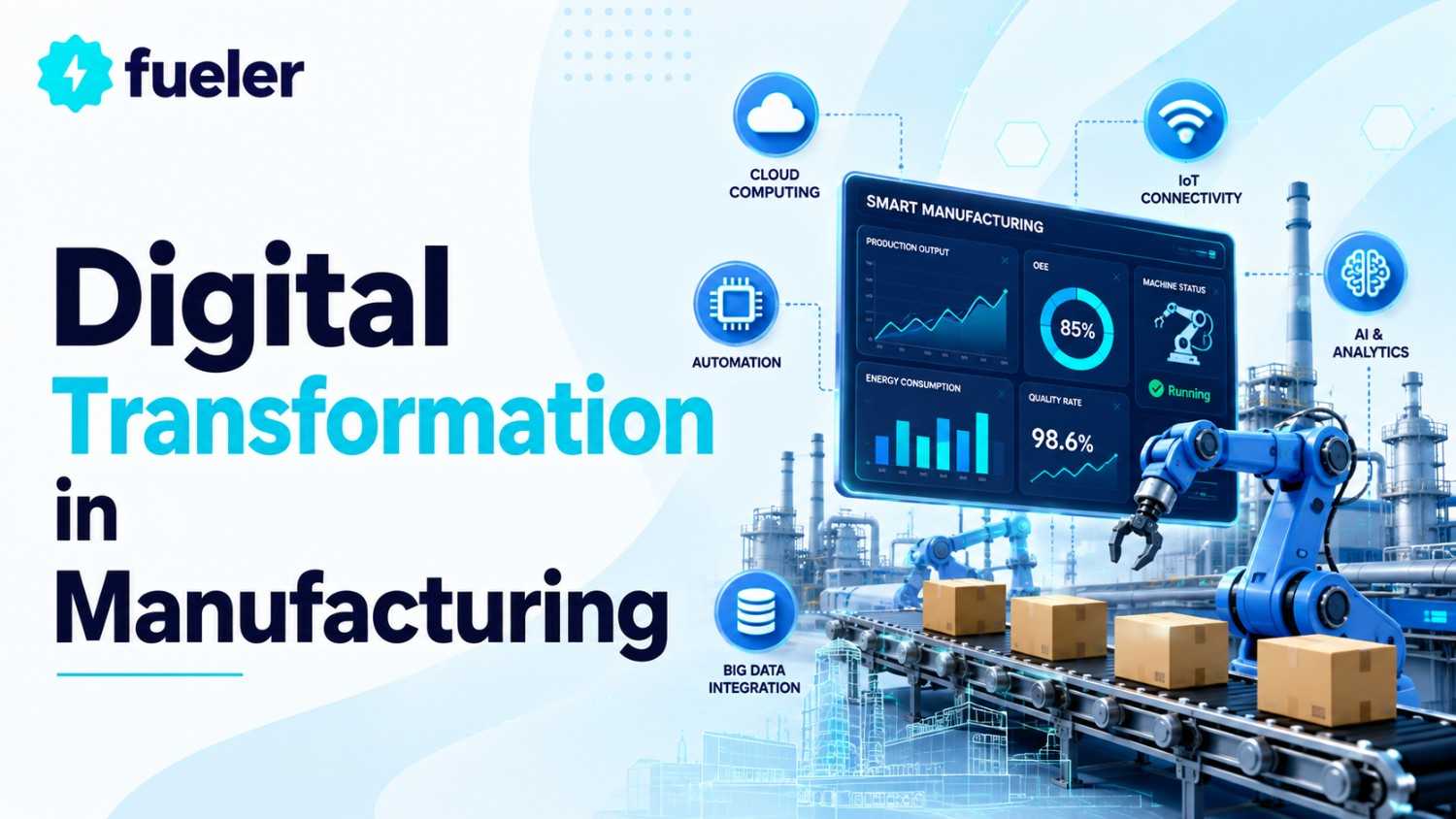
Smart factories replace isolated assembly lines with interconnected, data-driven production ecosystems. By embedding industrial Internet of Things (IIoT) sensors into legacy machinery, plants capture real-time performance metrics. This continuous data stream allows operations managers to monitor production velocity, identify bottlenecks instantly, and balance workloads across multiple facilities.
Centralized cloud platforms process this incoming telemetry to create live digital twins of the physical production floor. This visibility removes guesswork from capacity planning and allows teams to adjust output based on immediate market demands. Consequently, manufacturing facilities operate with higher precision, minimal material waste, and significantly lower energy consumption overheads.
- Connected IIoT Sensor Networks: Deploying vibration, temperature, and acoustic sensors across factory assets captures real-time machine diagnostics. This constant data collection forms the foundation for tracking overall equipment effectiveness (OEE) and identifying micro-stoppages.
- Edge Computing Infrastructure: Processing critical telemetry data locally on the factory floor reduces latency and ensures immediate automated responses. This framework prevents data pipelines from clogging cloud bandwidth while maintaining continuous operational uptime during network disruptions.
- Digital Twin Visualization: Creating dynamic virtual replicas of physical assembly lines simulates production changes before actual physical deployment. Engineers use these models to test stress limits, optimize floor layouts, and predict bottlenecks accurately.
- Unified Factory Floor Visibility: Integrating enterprise resource planning systems with manufacturing execution software creates a single source of operational truth. This connectivity allows real-time scheduling adjustments, automated inventory restocking, and seamless cross-department communication.
- Autonomous Mobile Robots (AMRs): Utilizing self-navigating vehicles to transport raw materials and finished goods streamlines internal factory logistics. These robots adapt to changing floor layouts dynamically, reducing manual labor risks and speeding up material handling.
Why It Matters
Transitioning to a smart factory framework directly impacts bottom-line profitability by eliminating blind spots in asset utilization. Operational leaders get the exact data needed to optimize shift scheduling, prevent material waste, and meet strict production deadlines. Ultimately, this structural shift turns a traditional, reactive cost center into a highly agile competitive advantage.
2. Predictive Maintenance Strategies for Industrial Equipment
Predictive maintenance shifts the industrial service paradigm from rigid calendar schedules to actual machine condition monitoring. Advanced algorithms analyze historical failure patterns alongside real-time thermal and vibration data to forecast precise component degradation windows. This allows engineering teams to service machinery exactly when needed, avoiding premature parts replacement.
By addressing mechanical wear before a catastrophic failure occurs, plants completely eliminate catastrophic secondary damage to surrounding components. Maintenance crews receive automated work orders complete with diagnostic logs and required parts lists, optimizing their time on the floor. This systematic approach stabilizes production schedules and extends the operational lifespan of expensive capital assets.
- Vibration and Acoustic Analysis: Monitoring structural frequencies detects early internal bearing wear and misalignment before visible damage occurs. Technicians catch subtle deviations from baseline operations, allowing them to schedule minor adjustments during planned weekend shutdowns.
- Thermal Imaging Automation: Fixed infrared cameras continuously scan electrical panels and high-friction components to pinpoint localized overheating anomalies. Identifying these hot spots early prevents electrical fires and sudden motor burnouts without stopping production lines.
- Oil and Fluid Analysis: Automated fluid breakdown tracking evaluates the presence of microscopic metal particles and chemical contaminants in lubricants. This telemetry alerts teams to internal component friction, ensuring timely fluid changes before mechanical breakdown.
- Prescriptive Workorder Systems: Advanced maintenance software automatically cross-references machine telemetry with inventory records to trigger specific parts ordering. Technicians arrive at the machine with precise documentation, reducing mean time to repair (MTTR).
- Historical Failure Modeling: Combining historical performance baselines with machine learning allows systems to identify multi-variable failure signatures accurately. This forecasting capability transforms maintenance teams from reactive emergency responders into strategic operational asset managers.
Why It Matters
Unplanned downtime remains the single largest driver of operational losses in heavy industry. Embracing predictive maintenance protects expensive equipment investments, stabilizes delivery timelines, and improves workforce safety by preventing sudden machinery explosions. Running operations based on actual equipment health ensures consistent production quality and predictable output volumes.
3. Overcoming the Legacy Infrastructure Integration Bottleneck
Many manufacturing environments rely on heavy machinery that was built decades before internet connectivity became standard. The true challenge of digital transformation lies in building reliable communication bridges between ancient hardware and modern software layers. Successful operators avoid complete equipment overhauls by employing non-invasive retrofitting strategies that respect historical infrastructure investments.
Using specialized hardware gateways, factories translate fragmented, proprietary protocol data into standardized cloud-compatible languages. This synthesis allows ancient stamping presses and CNC machines to participate in the broader smart factory ecosystem. Bridging this data divide unlocks hidden capacity from existing assets, saving millions in capital expenditure budgets.
- Protocol Translation Gateways: Deploying industrial hardware adapters converts legacy fieldbus protocols into modern unified communication architectures smoothly. This step enables centralized analytical systems to ingest data from old and new machines simultaneously.
- Non-Invasive Sensor Retrofitting: Attaching external clip-on sensors allows legacy assets to transmit vital performance data without altering internal mechanics. This method bypasses expensive regulatory recertifications while gathering crucial temperature, vibration, and energy metrics.
- Hybrid Cloud Deployments: Combining secure on-premise servers with scalable cloud infrastructure respects legacy data security constraints while utilizing advanced analytics. This architecture keeps sensitive operational logic local while leveraging cloud power for heavy computational modeling.
- Phased Modular Architecture: Implementing digital upgrades in isolated production modules prevents full-scale facility disruptions during tech rollouts. Teams validate data pipelines on a single production line before scaling software frameworks across the entire enterprise.
- Standardized Data Lakes: Consolidating fragmented operational telemetry into structured, unified data repositories removes isolated operational data silos. Engineers can easily access historical machine performance context to build more accurate production forecasting algorithms.
Why It Matters
Tearing down and replacing every legacy asset on a factory floor is financially impossible for most industrial enterprises. Mastering the art of retrofitting allows companies to extract maximum financial return from their existing machinery while gaining modern analytics. This balanced approach protects capital reserves while keeping the organization competitive against native digital facilities.
4. The Role of Cloud Analytics in Scaling Production Efficiency
Data collected on the factory floor holds little value if it remains trapped in isolated databases. Cloud analytics platforms aggregate multi-facility telemetry to uncover deep operational inefficiencies that human managers easily miss. By processing millions of data points simultaneously, these systems identify subtle systemic correlations that impact product quality and yield.
Furthermore, cloud infrastructure enables global visibility, allowing executives to compare performance benchmarks across continents in real time. This centralized intelligence optimizes macro-level supply chain decisions, raw material distribution, and global maintenance scheduling. Factories transition from localized execution hubs into a synchronized, globally optimized production engine.
- Multi-Plant Benchmarking Platforms: Aggregating operational data across separate facilities allows managers to identify and copy high-performing workflows globally. This comparative visibility uncovers hidden inefficiencies in underperforming plants, standardizing best practices across the enterprise.
- Automated Quality Defect Detection: Analyzing high-speed production line telemetry isolates the precise variable combinations causing manufacturing defects. Correcting these anomalies in real time drastically reduces scrap rates and eliminates expensive post-production manual inspections.
- Dynamic Capacity Balancing: Cloud analytics systems automatically redistribute production volumes across alternative facilities when localized disruptions occur. This automated balancing minimizes supply chain bottlenecks, protecting critical enterprise delivery commitments to global clients.
- Real-Time Energy Optimization: Tracking machine power draw alongside utility price spikes allows automated scheduling of energy-intensive processes during off-peak hours. This strategic scheduling reduces industrial utility bills without lowering total weekly manufacturing volume.
- Predictive Supply Chain Integration: Connecting real-time factory floor consumption data directly with raw material suppliers automates procurement cycles. Suppliers ship components exactly when needed, reducing warehouse footprint costs and inventory holding overheads.
Why It Matters
Scaling production manually introduces human error, scheduling delays, and fragmented operational visibility across different regions. Cloud analytics provides industrial organizations with the mathematical clarity needed to scale operations predictably and sustainably. Removing administrative guesswork from factory management ensures highly consistent output quality and better profit margins.
5. Security Challenges in Cyber-Physical Manufacturing Environments
Connecting physical industrial machinery to digital networks expands the potential attack surface for malicious cyber threats. Traditional factories relied on physical isolation, but modern smart facilities must actively defend against complex digital intrusions. A single security breach can compromise proprietary manufacturing recipes or, worse, weaponize heavy machinery against floor workers.
Building a modern defense-in-depth framework requires treating physical machines as critical network endpoints that require constant monitoring. Implementing strict access controls, network segmentation, and automated anomaly detection keeps industrial control systems insulated from corporate network vulnerabilities. Prioritizing cybersecurity safeguards the physical well-being of the workforce while protecting invaluable corporate intellectual property.
- Industrial Network Segmentation: Dividing operational technology networks from standard corporate office systems prevents lateral malware propagation. If a corporate laptop gets compromised, critical assembly line controls remain isolated and fully protected.
- Zero Trust Endpoint Policies: Enforcing strict cryptographic verification for every connected device ensures unauthorized hardware cannot access machine controls. This framework blocks rogue field units from transmitting malicious commands to critical programmable logic controllers.
- Anomalous Telemetry Monitoring: Deploying specialized security software flags unusual machine behavior, such as unexpected late-night configuration rewrites. Detecting these deviations early allows security teams to isolate targeted machinery before operational damage occurs.
- Encrypted Firmware Verification: Cryptographically signing all industrial software updates guarantees that machine logic remains safe from unauthorized tampering. This validation block prevents malicious actors from injecting compromised code into heavy production equipment.
- Air-Gapped Safety Systems: Keeping emergency physical shutdown systems completely isolated from digital networks ensures worker safety remains absolute. No matter how deeply a network is breached, physical kill-switches retain uncompromised control over dangerous machinery.
Why It Matters
In the digital era, a cyberattack on a manufacturing facility is no longer just an IT headache—it is a physical safety hazard. Protecting cyber-physical infrastructure ensures operational continuity, prevents costly litigation, and guarantees employee safety on the floor. Maintaining a secure network environment protects market reputation and builds trust with enterprise supply chain partners.
6. Sustainable Manufacturing through Resource and Energy Automation
Modern industrial operations face mounting pressure to reduce environmental impact while maintaining aggressive production goals. Digital transformation provides the exact tracking tools required to monitor resource consumption and identify systemic operational waste. Automated systems optimize resource distribution, ensuring power, water, and raw materials are used with surgical precision.
By aligning sustainability initiatives with real-time operational efficiency data, companies prove that eco-friendly policies drive profitability. Smart systems track the carbon footprint of individual production batches, providing verified data for regulatory compliance. Consequently, green manufacturing transitions from a burdensome regulatory obligation into an optimized operational reality.
- Localized Consumption Tracking: Attaching digital sub-meters to specific high-energy machinery exposes the precise environmental cost of individual components. This granular visibility allows operations teams to redesign inefficient manufacturing steps to conserve expensive power resources.
- Closed-Loop Waste Minimization: Integrating automated scrap sorting systems captures reusable raw materials directly from the main production line. This recovery loop minimizes raw material expenses while lowering the factory's total external disposal footprint.
- Intelligent HVAC Automation: Linking environmental climate controls directly to live production schedules prevents cooling empty factory floors. Systems automatically power down ambient cooling zones when specific assembly lines are scheduled for weekend closures.
- Water Reclamation Analytics: Monitoring water purity levels within industrial cooling loops maximizes the recycling lifespan of process water. This continuous recycling reduces fresh water draws, saving money and preserving critical local community natural resources.
- Carbon Accounting Automation: Automatically logging energy consumption metrics simplifies compliance reporting for strict international environmental mandates. This real-time documentation eliminates manual auditing expenses and shields the enterprise from heavy environmental fines.
Why It Matters
Resource scarcity and evolving environmental regulations directly threaten unoptimized manufacturing operations in 2026. Automating resource tracking removes waste from the production cycle, instantly lowering utility overheads and raw material expenditures. Building a sustainable factory floor ensures long-term operational viability while appealing to environmentally conscious enterprise clients.
7. Elevating Workforce Capabilities on the Digital Factory Floor
The evolution toward smart manufacturing does not replace human workers; instead, it fundamentally shifts their daily responsibilities. Operators transition from performing manual, repetitive tasks to managing complex digital workflows and overseeing automated systems. This evolution requires continuous training programs to ensure the workforce feels comfortable interacting with advanced diagnostic software.
Modern plants deploy intuitive user interfaces that present complex data insights as simple, actionable operational tasks. Providing teams with clear digital toolsets reduces onboarding timelines and lowers human error rates during complex changeover procedures. Empowering factory workers with real-time insights maximizes human ingenuity alongside machine execution speed. Many facilities also implement manufacturing digital signage to display live production metrics, equipment status, safety alerts, and shift updates directly on the factory floor. Providing real-time operational visibility through strategically placed digital displays improves team coordination and enables faster decision-making without interrupting production workflows.
- Augmented Maintenance Instructions: Equipping floor technicians with mobile diagnostic interfaces projects real-time step-by-step repair overlays onto physical machinery. This visual assistance speeds up complex repairs and prevents costly installation errors by junior technicians.
- Low-Code Automation Dashboards: Providing operators with intuitive visual development tools allows them to customize machine monitoring views easily. Workers optimize their own digital workspaces without waiting for centralized IT department development cycles.
- Centralized Skill Repositories: Documenting complex machinery troubleshooting procedures inside digital knowledge hubs preserves critical institutional operational experience. This digital archive prevents operational knowledge loss when veteran senior engineers retire from the workforce.
- Collaborative Robotics Integration: Training workers to program alongside flexible collaborative robots improves personal ergonomics and assembly speed. Humans focus on high-dexterity quality checks while robots handle heavy lifting and repetitive placement.
- Data-Driven Performance Feedback: Providing shifts with transparent, real-time productivity metrics encourages collaborative problem-solving on the plant floor. Teams quickly identify which workflow adjustments yield the highest output during their active hours.
Why It Matters
A digital transformation initiative lives or dies based on the daily adoption rates of the floor workforce. Investing in intuitive, human-centric software tools prevents operational resistance and boosts morale across production teams. Elevating worker capabilities ensures the business capitalizes fully on its expensive technology investments through seamless human-machine collaboration.
8. Navigating the Financial Roadmap of Industrial Automation
Implementing large-scale digital initiatives requires clear financial engineering to avoid draining corporate capital reserves. Savvy operators avoid massive, unproven all-at-once software deployments that threaten immediate cash flow stability. Instead, they structure technology adoptions around clear return-on-investment thresholds that fund the next phase of modernization.
By treating digital transformation as an incremental journey, companies maintain operational agility while proving financial viability early. Clear financial tracking connects every sensor deployment to measurable reductions in scrap rates or maintenance hours. This fiscal discipline keeps stakeholders aligned, ensuring continuous funding for long-term industrial optimization projects.
- Incremental ROI Validation: Testing automation software on a single high-value machine proves financial viability before scaling expenditures. This localized success provides concrete data to justify broader technology budgets to conservative corporate boards.
- Total Cost of Ownership Modeling: Factoring in long-term cloud storage, network maintenance, and software updates prevents unexpected budgetary overruns. Teams build realistic financial frameworks that account for the true lifetime costs of smart systems.
- OpEx-Driven Technology Sourcing: Utilizing software-as-a-service models for industrial analytics shifts heavy capital investments into predictable operational expenses. This financial flexibility protects cash reserves while granting immediate access to advanced diagnostic tools.
- Value Stream Mapping Alignment: Directing automation budgets exclusively toward known production bottlenecks avoids wasting capital on efficient lines. Every technology dollar spent explicitly aims to unlock total plant capacity and increase output.
- Vendor-Agnostic Software Selection: Prioritizing open-source communication standards prevents expensive software vendor lock-in fees down the road. This flexibility allows enterprises to swap out modular analytics packages as business requirements evolve.
Why It Matters
Without structured fiscal guardrails, digital transformation projects risk becoming endless, expensive science experiments that drain company profits. Aligning tech deployments with immediate financial milestones ensures the factory remains profitable throughout its modernization journey. Strategic financial planning transforms tech adoption from a speculative risk into a predictable engine for margin expansion.
How Does This Connect to Building a Strong Career or Portfolio?
Modern manufacturing relies heavily on visible data, and your career should operate the same way. Companies no longer trust vague resumes; they demand verified proof of work that highlights real problem-solving capabilities. Documenting how you solved specific operational bottlenecks, built data systems, or handled complex workflows builds immense professional credibility. Sharing your projects openly proves you understand modern execution realities. Using platforms like Fueler allows you to showcase these technical achievements dynamically, making your practical expertise immediately obvious to modern enterprise employers who hire based on actual outcomes.
Final Thoughts
Modernizing industrial operations is no longer an optional future project; it is an immediate requirement for operational survival. True digital transformation requires a commitment to breaking down data silos, retrofitting legacy infrastructure, and empowering teams with real-time cloud insights. Success belongs to operators who treat technology as a continuous workflow optimization tool rather than a quick fix. Focus on scaling your data architecture incrementally, protecting your networks diligently, and letting verified proof of work guide your investments.
FAQ
What are the best AI workflow systems in 2026?
Modern manufacturing facilities rely heavily on integrated industrial analytics engines like Siemens MindSphere and PTC ThingWorx. These comprehensive platforms connect factory floor IoT telemetry directly with cloud-based machine learning systems to track overall equipment effectiveness, automate complex maintenance workflows, and optimize resource consumption across global facilities.
How do teams use AI for task management?
Industrial teams utilize automated maintenance software to translate real-time machine alerts into structured, actionable work orders. The system automatically assigns specific tasks to available technicians based on their location, skill level, and tool availability, eliminating manual dispatching delays on the floor.
Can AI replace manual project coordination?
Systems handle complex data tracking, inventory ordering, and maintenance scheduling automatically, but human oversight remains absolutely essential. Operators use these analytical insights to make strategic choices, handle unique floor issues, and manage collaborative human-robot teams effectively across production lines.
How do AI systems improve operational efficiency?
Efficiency increases when enterprises deploy advanced predictive analytics packages that integrate manufacturing execution systems with corporate ERP software. This linkage allows automated production scheduling, real-time scrap reduction, and precise energy consumption balancing based on shifting utility pricing patterns.
How do startups automate daily execution?
Agile industrial startups use non-invasive IoT sensor retrofits combined with cloud analytics to bypass legacy connectivity limitations. This architecture allows them to track machine health, automate quality assurance checks, and optimize resource logistics without investing in expensive, heavy custom infrastructure.
What is Fueler Portfolio?
Fueler is a career portfolio platform that helps companies find the best talent for their organization based on their proof of work. You can create your portfolio on Fueler. Thousands of freelancers around the world use Fueler to create their professional-looking portfolios and become financially independent. Discover inspiration for your portfolio
Sign up for free on Fueler or get in touch to learn more.

What should you do next?
You've read the article. Now turn your skills into proof of work and unlock more opportunities.
Build your proof of work portfolio
Create a clean portfolio with projects, assignments, resumes, and AI stack details that companies actually want to see.
Create your Fueler portfolio →Apply through assignments, not resumes
Stand out by solving real tasks from companies hiring on Fueler.
Explore assignments →Get discovered by companies
Make your work public and let recruiters discover your skills through actual projects instead of keywords.
Get discovered →
