Compound Growth Explained for Modern Professionals

Team Fueler
09 May, 2026
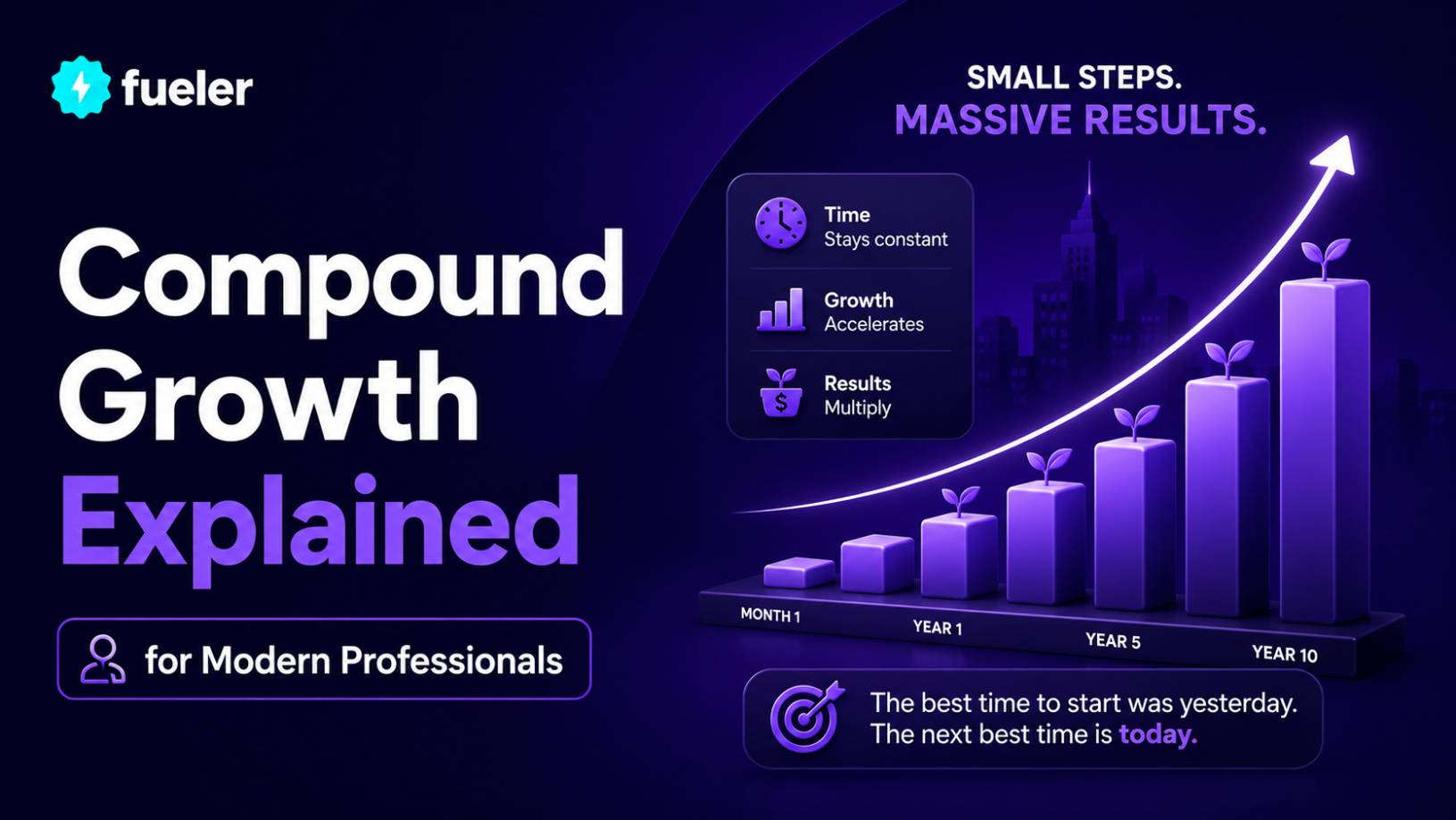
When it comes to investing, it’s unlikely that you’ll ever have a more important plan in place than your retirement strategy. With this in mind, unlocking the potential of compound growth is one of the most important considerations you can make.
Data suggests that the UK is full of individuals experiencing anxiety over their pension. According to a recent survey, 23% of people are not currently saving for their retirement at all, and 39% aren’t saving nearly as much as they need to for later in life.
The findings show that exactly one quarter of adults aren’t confident of managing their savings for retirement because they’re unsure of how pensions work, and 26% haven’t given any thought to the kind of retirement they want.
Worryingly, almost one in five (19%) don’t know how they’ll fund their retirement, regardless of how they intend to spend their time later in life.
While pension investing can be difficult to keep on top of, the long-term nature of building your investment with the future in mind opens the door to the benefits of compounding.
Compound growth is one of the most effective ways to build substantial portfolios over time and can hold plenty of potential if you get started early.
With this in mind, let’s explore the power of compound growth in retirement planning and why it should be a central part of your pension strategy:
Read: How to Build a Global Career Portfolio for Remote Jobs
How Compounding Works
Compound growth is extremely powerful when practiced over a long enough timeframe and allows pensions to grow significantly in the years up to your retirement.
It’s also relatively easy to unlock compound growth in your pensions, with any investments capable of growing allowing you to see higher returns that can then be converted into more yielding investments.
Compounding is a form of the snowball effect and allows you to reinvest the returns you generate. This then allows you to generate even more returns, meaning that even a modest contribution can grow substantially over time. Similar compounding also happens in careers when you consistently build your proof of work online.
To quantify the effects of compounding, let’s imagine you invest £7,000 and receive a dividend payment of 3%, which is then reinvested into your portfolio. This alone would contribute £210, and your investment plan would be worth £7,210.
If you receive a 3% dividend on your £7,210 investment, your profit would be £216, causing your total pot to rise to £7,426.
By following this process for 15 years, our original £7,000 investment could be worth £10,906, even without any further contributions.
To further clarify how effective compounding is, if you invest £10,000 into your pension at an annual growth rate of 5%, your investment would reach £16,290 after 10 years.
Now imagine that you’re contributing more money to your pension every month. Your total earnings can accelerate at a significant rate while returning more money on a regular basis.
The Benefits of Compounding
The great thing about compounding is that the key is to simply get started as early as possible. Don’t worry if you still haven’t begun contributing to your pension, though. There’s no time like the present to begin building your earnings over time.
Starting early amplifies the benefits of pension-compounded earnings. Over a longer timeframe, your money has more opportunities to grow, leading to a larger impact even with small, consistent contributions.
Another benefit of compounding is that you can grow your investments without the need for constant oversight, opening the door to a more passive strategy ahead of your retirement.
It also lowers the pressure on you to save large amounts as you approach retirement age, which can be extremely difficult if you’re working less in your later years.
Compounding is also a natural hedge against the impact of inflation, with returns generally beating the rising cost of living.
Benefiting from Tax Relief
Because UK pensions qualify for tax relief, with basic rate taxpayers qualifying for a 20% bonus in investments and higher rate taxpayers able to receive relief of up to 45%, there’s more room for your pension to work for you, thanks to having more money to boost your long-term returns.
However, given that these funds can’t be accessed until you turn 55, or 57 starting in 2028, it’s important to remember that your contributions can’t help if you begin to struggle financially before you retire.
With this in mind, always invest what you can afford to spare with your retirement in mind. Remember to have enough accessible money to form an emergency fund should things go wrong in the here and now.
Making Your Pension Work for You
Compounding is an excellent way to grow your pension funds over time, even if you begin with smaller contributions.
It’s important to have a diversified portfolio that’s more resilient against economic shocks, but by including growth stocks and dividend stocks within your portfolio, you have a better chance of growing your pension sustainably.
Retirement planning is one of the most important considerations we can take, and creating a strategy that suits your needs can be key in helping you have a comfortable retirement later on.
What is Fueler Portfolio?
Fueler is a career portfolio platform that helps companies find the best talent for their organization based on their proof of work. You can create your portfolio on Fueler. Thousands of freelancers around the world use Fueler to create their professional-looking portfolios and become financially independent. Discover inspiration for your portfolio
Sign up for free on Fueler or get in touch to learn more.

What should you do next?
You've read the article. Now turn your skills into proof of work and unlock more opportunities.
Build your proof of work portfolio
Create a clean portfolio with projects, assignments, resumes, and AI stack details that companies actually want to see.
Create your Fueler portfolio →Apply through assignments, not resumes
Stand out by solving real tasks from companies hiring on Fueler.
Explore assignments →Get discovered by companies
Make your work public and let recruiters discover your skills through actual projects instead of keywords.
Get discovered →
