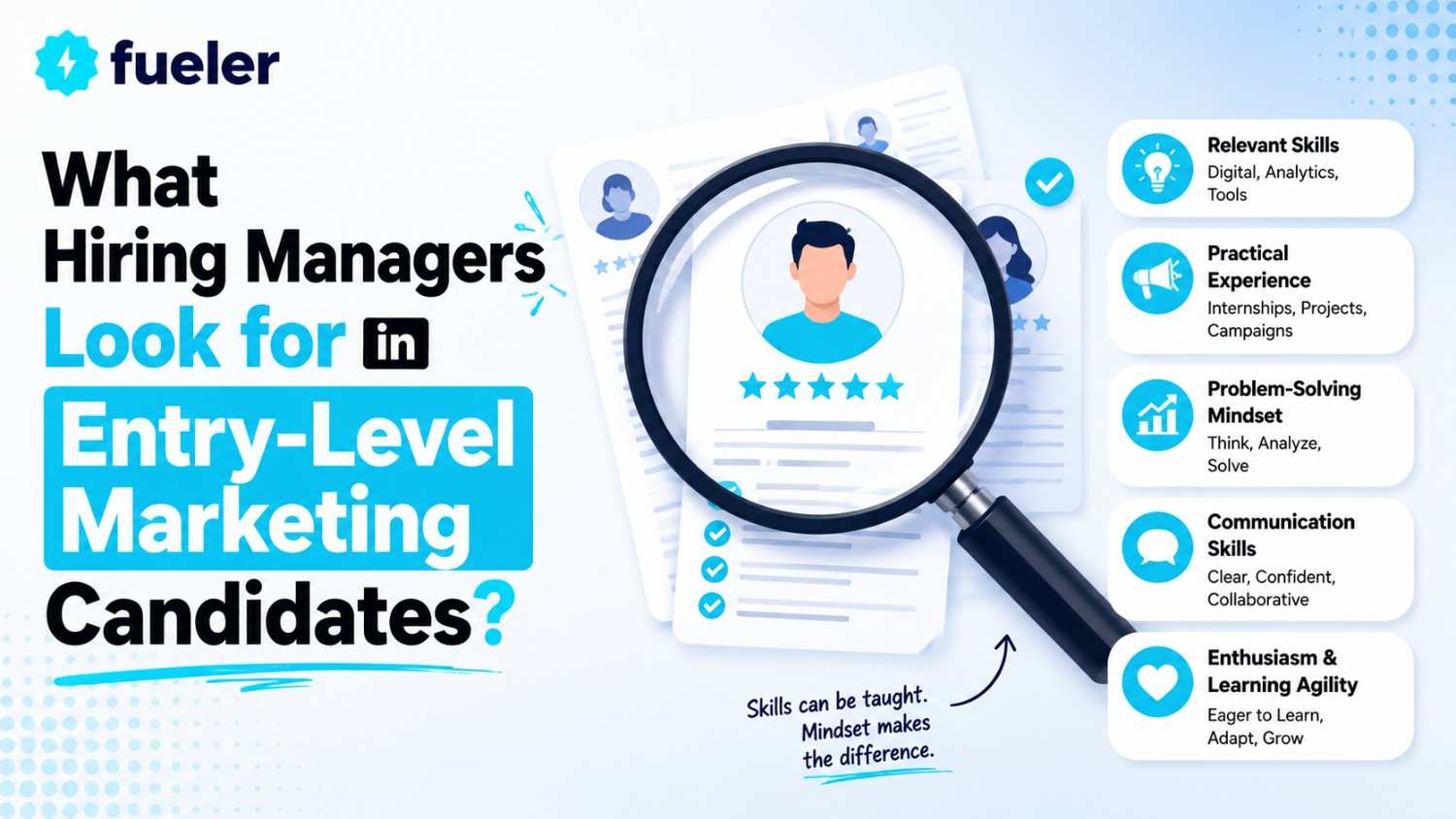
What Hiring Managers Look for in Entry-Level Marketing Candidates?

Riten Debnath
29 Jul, 2026
Last updated: July 2026
The entry-level job market has shifted dramatically, and traditional resumes are no longer enough to land a job. If you cannot show real proof of work, clear problem-solving skills, and a practical understanding of digital channels, your application will get lost in a sea of identical candidate profiles.
I’m Riten, founder of Fueler, a skills-first portfolio platform building the career infrastructure for 100 million creative professionals. Fueler connects talented individuals with companies through assignments, portfolios, and projects, not just resumes or CVs. Think of it as Dribbble/Behance for work samples combined with AngelList for hiring infrastructure.
Hiring managers want to see what you can build and execute today, not just what you studied in a classroom. In this article, you will learn the exact skills and traits teams look for so you can stand out and get hired faster.

Tangible Proof of Work and Functional Portfolios
Hiring managers spend very little time scanning traditional resumes because text bullet points rarely prove actual marketing ability. A practical portfolio that showcases real projects, mock campaigns, and writing samples instantly sets an entry-level applicant apart from hundreds of generic resumes.
Showing completed assignments proves that you understand campaign execution rather than just theoretical concepts. Employers want to review your thought process, campaign structure, and messaging strategies to confirm you can start contributing to the team immediately.
- Live Campaign Examples and Case Studies: Including clear summaries of personal projects, client work, or student assignments gives employers visible evidence of your capability to write copy, structure campaigns, and design user journeys.
- Documented Decision-Making Processes: Explaining why you chose specific target audiences, headlines, or distribution platforms demonstrates strategic thinking rather than random execution, showing hiring leads that you make deliberate choices.
- Raw Content Assets and Mock Campaigns: Displaying sample email newsletters, social media graphics, and landing page designs proves you possess actual creation skills and can produce publish-ready marketing materials without constant hand-holding.
- Clear Metric Tracking and Outcomes: Highlighting even small data points like click rates, subscriber growth, or organic view counts shows you measure output and care deeply about achieving real business results.
- Clean Visual Project Organization: Structuring your online portfolio logically with clean navigation helps hiring managers quickly review your best work samples within seconds without digging through messy file folders.
Why It Matters
A well-structured portfolio bridges the gap between having no formal work history and proving you have genuine practical ability. Presenting verifiable projects lowers the hiring risk for managers and accelerates your path to landing job offers.
Basic Data Fluency and Analytics Literacy
Marketing decisions today are powered by performance data rather than purely creative guessing. Employers look for entry-level candidates who know how to read basic website analytics, track user traffic, and interpret campaign numbers correctly.
You do not need an advanced statistics degree to impress a hiring team. Showing that you can extract actionable insights from data tables and connect traffic trends to sales outcomes makes you an asset to any growth-focused team.
- Google Analytics 4 Navigation Basics: Knowing how to track user sessions, traffic channels, and event conversions inside GA4 helps you prove that you can measure campaign effectiveness across digital channels.
- Understanding Conversion Rates and Drop-offs: Identifying where potential customers leave a landing page or sign-up form enables you to propose practical fixes that improve overall conversion outcomes.
- Spreadsheet Fluency for Campaign Tracking: Using basic formulas, pivot tables, and data filters in Google Sheets or Excel allows you to organize campaign results and calculate simple metrics like cost per click.
- Basic A/B Testing Principles: Demonstrating how to run simple split tests on email subject lines or ad copy shows you rely on experimental evidence to improve performance over time.
- Differentiating Vanity vs Actionable Metrics: Recognizing the difference between superficial social likes and high-intent actions like lead sign-ups proves you focus on metrics that support real business growth.
Why It Matters
Data literacy ensures that your creative ideas are backed by performance facts. Candidates who understand analytics build stronger campaigns, optimize ad spend, and report results clearly to leadership.
Modern Content Creation and Storytelling Ability
Creating engaging content remains a foundational requirement for almost every entry-level digital marketing role. Employers want candidates who can write clear copy, tell compelling stories, and adapt brand messaging across different social channels.
Effective storytelling is about communicating how a product solves a specific human problem. Candidates who write simple, persuasive copy without corporate jargon help brands build trust and drive higher audience engagement.
- Audience-Centric Copywriting: Writing clear headlines and product descriptions focused on customer benefits rather than technical features ensures your messaging connects emotionally with prospective buyers.
- Platform-Specific Content Formatting: Adapting a single core message into short-form video scripts, LinkedIn posts, or email newsletters demonstrates an understanding of how distinct platform audiences consume content.
- Basic Graphic and Video Editing: Using simple tools like Canva or CapCut to create clean social graphics and short video clips allows you to execute content ideas independently without waiting on design teams.
- Hooks and Attention Retention: Crafting strong introductory lines for blog posts and social updates keeps users engaged longer, boosting content reach across algorithmic feeds.
- Brand Voice Consistency: Aligning your writing tone with a company's unique style guide ensures all published content maintains a cohesive, professional image across digital touchpoints.
Why It Matters
Strong writing and content creation skills are immediately transferable across every marketing discipline. Communicating value clearly helps brands attract leads organically and turn casual viewers into loyal buyers.
Practical Familiarity with AI and Automation Tools
Marketing workflows move faster than ever, and hiring managers favor candidates who use AI tools to increase daily output. Demonstrating familiarity with AI research assistants, copy generators, and automation tools shows you are productive and forward-thinking.
Employers do not want robotic output; they want smart marketers who use AI to handle routine task execution and speed up research. Knowing how to refine AI outputs with human judgment keeps campaign quality high while saving time.
- Effective Prompt Engineering for Research: Writing structured prompts to summarize industry trends, analyze competitors, and brainstorm campaign angles speeds up top-of-funnel strategy development significantly.
- Editing and Humanizing AI Drafting: Polishing AI-generated text to remove generic phrasing, verify facts, and align tone ensures final deliverables remain engaging, accurate, and completely authentic.
- Basic Email and CRM Automations: Understanding how triggered email sequences and automated lead tagging work helps you set up basic drip campaigns that nurture leads automatically.
- AI-Assisted Visual and Asset Generation: Leveraging AI tools to generate image variations or basic layout ideas helps teams visualize campaign concepts quickly during initial brainstorming phases.
- Workflow Efficiency and Time Management: Using automation tools to handle repetitive scheduling, data entry, and basic monitoring frees up hours to focus on high-value creative execution.
Why It Matters
Familiarity with modern AI tools helps entry-level hires accomplish tasks that previously required larger teams. Embracing automation proves to managers that you execute work efficiently and stay updated on industry technology shifts.
Core Search Engine Optimization and Distribution Knowledge
Creating great content is useless if no one ever sees it. Hiring managers actively look for entry-level candidates who understand the basics of Search Engine Optimization (SEO) and organic distribution channels.
Knowing how search algorithms evaluate content freshness, user intent, and domain authority helps you write articles that rank on search engines. Modern marketing requires every team member to consider distribution from the moment a project begins.
- Keyword and Search Intent Research: Finding high-intent search terms using simple SEO tools helps you create content that directly answers real user questions and captures organic traffic.
- On-Page SEO Optimization Basics: Structuring articles with clear headings, optimized meta tags, descriptive image text, and clean URLs improves search visibility and user readability.
- Content Distribution and Repurposing: Planning how to share a single blog post across social media channels, community forums, and email newsletters maximizes organic reach without doubling creation efforts.
- Basic Link Building Principles: Understanding how digital PR, partner mentions, and high-quality references build domain authority helps you support long-term organic growth strategies.
- User Experience and On-Page Engagement: Formatting content with clean spacing, bullet points, and scannable sections keeps readers on the page longer, signaling strong quality to search engines.
Why It Matters
SEO and distribution skills ensure your marketing assets generate compound traffic over time rather than dying after initial publication. Organic search mastery saves companies money on paid ads while driving steady inbound leads.
Business Curiosity and Customer Empathy
Marketing does not operate in a vacuum separate from the rest of the business. Hiring managers value entry-level candidates who ask thoughtful questions about company revenue models, target customer profiles, and competitive landscapes.
Exhibiting customer empathy means putting yourself in the user's shoes to understand their true needs, motivations, and purchasing hesitations. Marketers who grasp the buyer's perspective write far more persuasive campaigns that drive real sales.
- Target Audience Persona Research: Analyzing customer reviews, online forums, and support tickets helps you uncover genuine customer pain points and mirror their natural language in campaigns.
- Understanding Core Monetization Models: Learning how a business actually makes money whether through subscriptions, e-commerce sales, or service retainers ensures your marketing efforts align with profit goals.
- Competitor Positioning Analysis: Studying competing brands helps you identify messaging gaps in the market, allowing your business to position its products as superior alternatives.
- Empathy-Driven Value Messaging: Focusing marketing messages on solving customer frustrations rather than boasting about company features builds fast trust and boosts conversion rates.
- Feedback Loop Integration: Gathering insights from sales teams and customer support channels helps you continually update marketing copy to address common buying objections.
Why It Matters
Business curiosity elevates entry-level hires from simple task executors into strategic thinkers. Understanding customer psychology ensures your campaigns drive actual commercial revenue rather than unhelpful noise.
Project Management and Organizational Ownership
Executing a marketing campaign requires keeping multiple moving parts on schedule. Employers love entry-level candidates who demonstrate strong organizational skills, manage deadlines reliably, and take ownership of their assigned tasks.
When you track your own work and communicate progress clearly, managers spend less time micromanaging you. Reliability and clear task tracking are often the fastest ways for junior team members to earn trust and responsibility.
- Task Tracking Tool Proficiency: Using project management platforms like Asana, Trello, or Notion keeps campaigns organized and ensures no task slips through the cracks.
- Meeting Deadlines and Managing Timelines: Setting realistic time estimates for asset delivery and completing work on schedule builds instant professional credibility across cross-functional teams.
- Proactive Status Updates: Giving managers concise updates on project progress before they have to ask proves you take full ownership of your daily responsibilities.
- Resource and File Management: Organizing asset folders, image libraries, and document versions neatly ensures team members can locate campaign materials instantly without confusion.
- Problem-Solving and Escalation: Identifying project roadblocks early and proposing practical solutions to your team lead keeps campaigns moving forward without costly delays.
Why It Matters
Project management discipline prevents campaign launches from turning into chaotic, expensive rushes. Reliable organizational habits make you an invaluable team player who managers can trust with bigger projects.
Adaptability and Rapid Learning Mindset
The digital marketing ecosystem evolves constantly, with new social platforms, search algorithm updates, and software tools appearing continuously. Hiring managers actively look for entry-level candidates who adapt quickly and learn new skills independently.
Showing a strong desire to upskill signals to employers that you will grow alongside the company. Candidates who take the initiative to learn new software or test emerging channels bring fresh, competitive energy to a team.
- Self-Directed Skill Acquisition: Taking online certifications, attending webinars, or testing new marketing tools on personal projects demonstrates an active drive to keep upskilling.
- Receptiveness to Constructive Feedback: Viewing campaign edits and performance critiques as learning opportunities helps you improve output quality rapidly without getting defensive.
- Pivoting Strategy Based on Data: Willingness to abandon an underperforming creative direction and test new angles proves you prioritize overall business results over personal ego.
- Staying Updated on Industry Trends: Following marketing newsletters, case studies, and channel updates ensures your strategies rely on modern best practices rather than outdated tactics.
- Experimentation Culture: Running low-risk tests on new content formats or ad platforms helps your team uncover new growth channels before competitors catch on.
Why It Matters
Adaptability is the ultimate meta-skill in modern marketing because technical tools change every year. Candidates who embrace rapid learning stay relevant, solve new challenges, and advance into leadership roles faster.
How Does This Connect to Building a Strong Career or Portfolio?
Landing an entry-level marketing role requires proving your execution ability to employers who view unproven resumes with skepticism. Presenting clear proof of work through mock campaigns, writing samples, and analytics reports gives hiring teams concrete evidence of your value. Documenting your process shows strategic thinking, project management skills, and business awareness. Platforms like Fueler allow you to showcase these real-world projects and assignments cleanly, helping you stand out and secure marketing roles without relying solely on traditional work experience.
Final Thoughts
Standing out as an entry-level marketing candidate requires moving beyond generic resume claims and showcasing actual project execution. By mastering data fundamentals, content creation, AI tools, and portfolio building, you prove to hiring managers that you can drive immediate business value. Focus on building real proof of work, taking ownership of your learning, and communicating your strategic decisions clearly. The entry-level candidates who demonstrate practical capability today are the ones who secure the best career opportunities tomorrow.

Frequently Asked Questions
What do hiring managers value most in entry-level marketers?
Hiring managers value tangible proof of work, clear communication skills, basic data literacy, and an eager learning mindset above generic resume claims or degrees.
Do I need a marketing degree to get hired?
No, most hiring teams care far more about your practical portfolio, problem-solving ability, and real project samples than your specific college major.
How do I build a marketing portfolio with no experience?
You can build a portfolio by creating mock campaigns for real brands, managing social accounts for local groups, or documenting personal project results.
What analytics tools should entry-level marketers learn first?
Start by learning Google Analytics 4 basics, spreadsheet data analysis in Google Sheets, and native analytics dashboards on major social media platforms.
How can I show business understanding in an entry-level interview?
Explain how your sample campaigns connect to customer acquisition costs, conversion rates, and revenue goals rather than discussing vanity engagement metrics alone.
Why 100,000+ professionals use Fueler
Fueler helps professionals showcase proof of work through projects, assignments, case studies, and achievements.
- Thousands of professionals use Fueler to create their digital portfolio
- Thousands of projects are published on Fueler. Check here
- Startups and Companies hire through proof of work on Fueler
- Used by freelancers, creators, marketers, video editors, writers, designers, and product managers
Our mission is to help the next 100 million professionals build a verified professional identity through proof of work

What should you do next?
You've read the article. Now turn your skills into proof of work and unlock more opportunities.
Build your proof of work portfolio
Create a clean portfolio with projects, assignments, resumes, and AI stack details that companies actually want to see.
Create your Fueler portfolio →Apply through assignments, not resumes
Stand out by solving real tasks from companies hiring on Fueler.
Explore assignments →Get discovered by companies
Make your work public and let recruiters discover your skills through actual projects instead of keywords.
Get discovered →
