What Employers Expect From Graduates in the AI Era?

Riten Debnath
23 Jul, 2026
Last updated: July 2026
Landing a job right out of college used to mean showing off a clean GPA, a polished resume, and a degree from a solid university. Today, entry-level hiring has shifted dramatically as companies restructure how work gets done. Entry-level roles now demand operational readiness on day one.
I’m Riten, founder of Fueler, a skills-first portfolio platform building the career infrastructure for 100 million creative professionals. Fueler connects talented individuals with companies through assignments, portfolios, and projects, not just resumes or CVs. Think of it as Dribbble/Behance for work samples combined with AngelList for hiring infrastructure.
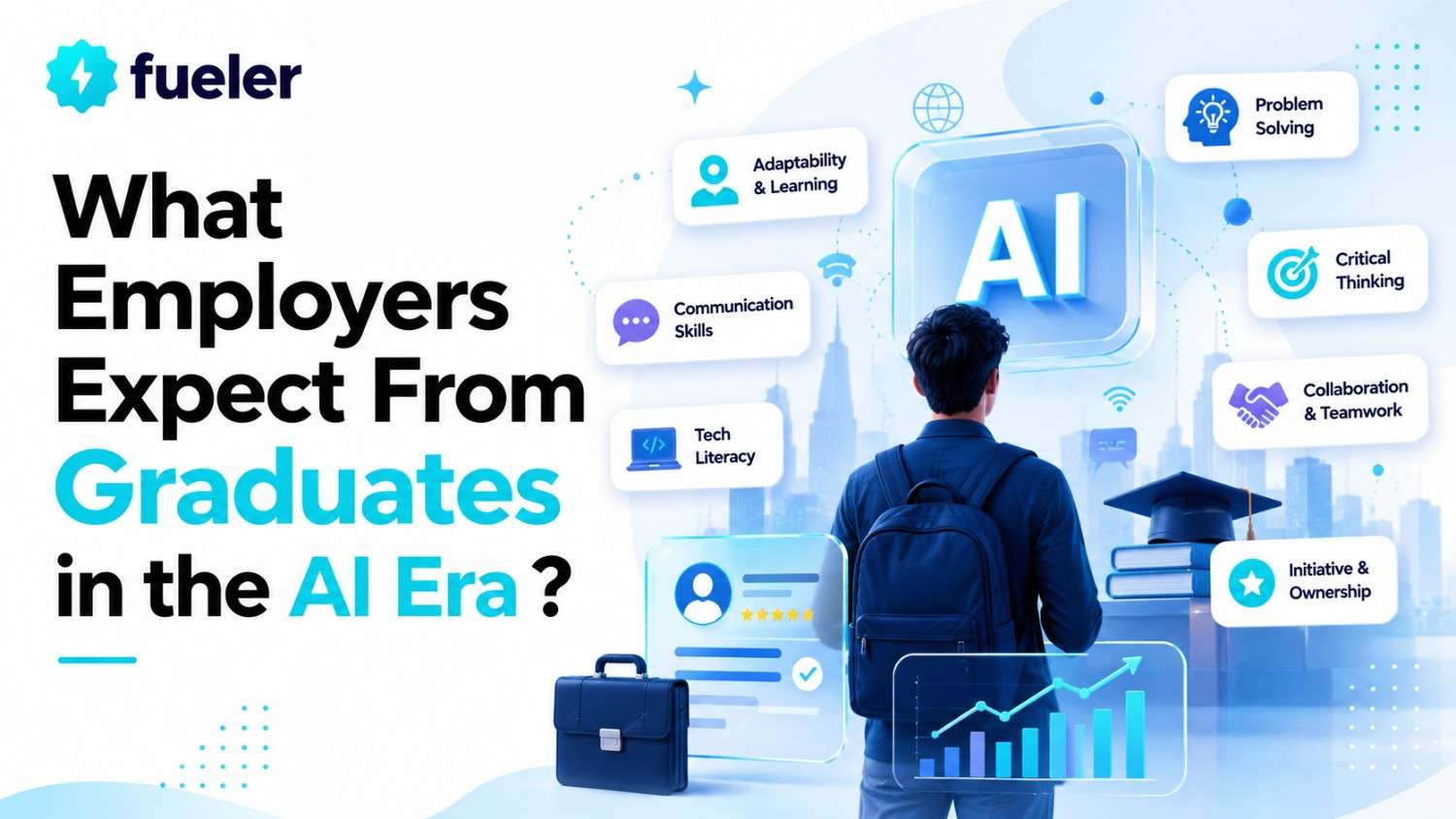
Recent workforce data shows that more than one-third of entry-level job postings now explicitly require artificial intelligence competency. Employers are moving away from passive credentials and toward candidates who bring execution-ready skills into the building. Understanding these 8 practical expectations will help you transition seamlessly from campus to a meaningful career.

1. Practical AI Literacy and Tool Competency
Employers no longer view basic artificial intelligence familiarity as an optional bonus on a resume. They expect incoming graduates to understand how to apply modern software tools directly to daily business tasks. This means knowing how to prompt systems accurately, streamline routine workflows, and select the right tool for a specific task without needing hand-holding.
Companies are looking for practical execution rather than theoretical knowledge. If you can use automated tools to draft initial research, organize raw inputs, or speed up operational tasks, you instantly save your manager valuable time. Early-career talent who actively integrate modern software into their daily workflow move through onboarding much faster.
- Candidates must know how to construct precise prompts that generate structured, highly relevant text and data outputs on the first attempt.
- Early-career workers who understand tool limitations avoid costly errors by reviewing automated drafts with a critical eye before hitting send.
- Knowing how to pair software tools with spreadsheets and document systems turns basic tasks into fast, automated processes.
- Hiring managers look for graduates who actively test new workflow tools to improve their own personal output without waiting for instructions.
- Demonstrating fluency across multiple operating tools proves that you can adapt as company software stacks evolve over time.
Why It Matters
Integrating tool competency into your everyday work transforms you from a trainee into an immediate contributor. Businesses operate on tight schedules and lower budgets, making efficiency a core hiring priority. Showing that you can perform daily tasks faster while keeping quality high makes you a low-risk, high-return candidate.
2. Strong Critical Thinking and Verification Abilities
Automated tools generate answers in seconds, but those answers are not always accurate or contextually correct. Employers urgently need graduates who can analyze automated outputs, spot inaccuracies, and apply sound human logic before sending work up the chain. Blindly trusting computer-generated output is one of the fastest ways to lose trust in a professional setting.
Critical thinking involves asking tough questions about data sources, checking facts against primary records, and adjusting tone to fit real business needs. Managers do not have time to double-check every line of your work. Demonstrating rigorous quality control proves that your final deliverables are reliable and ready for business use.
- Evaluating synthesized summaries against original source documents ensures business reports remain factually accurate and fully dependable.
- Identifying logical inconsistencies in raw data patterns helps teams avoid making business decisions based on flawed assumptions.
- Knowing when to step away from automated tools and rely on primary human research protects companies from publishing incorrect figures.
- Breaking down complex problems into manageable logical steps allows graduates to solve unexpected workplace challenges smoothly.
- Applying sound judgment to ambiguous instructions keeps projects moving forward without requiring continuous managerial oversight.
Why It Matters
Information is everywhere, but accurate insight remains rare. Companies face real brand risks when unverified or incorrect information slips into client presentations or public reports. Possessing strong verification skills marks you as a mature professional who takes true responsibility for the quality of their work.
3. Workflow Automation and Operational Efficiency
Modern organizations thrive on lean teams that accomplish more work in less time. Managers expect fresh graduates to identify repetitive administrative tasks and find ways to simplify them. This includes streamlining communication channels, setting up simple task-tracking systems, and eliminating manual data entry.
Instead of simply following outdated processes, high-performing graduates look for ways to optimize daily operations. When you automate a routine reporting mechanism or build a simple team template, you free up hours of collective work for your team. Operational efficiency shows a level of business maturity that sets you apart from traditional entry-level applicants.
- Connecting different communication tools and spreadsheets cuts out hours of tedious, manual copy-paste work every week.
- Standardizing document templates across projects keeps team deliverables uniform and cuts preparation times in half.
- Setting up automated reminder systems for project milestones keeps cross-functional teams aligned on upcoming deadlines.
- Mapping out daily operational workflows highlights unnecessary steps and speeds up overall task execution times.
- Organizing shared digital workspaces allows team members to locate critical files instantly without interrupting coworkers.
Why It Matters
Time is the most valuable resource inside any growing company. Candidates who understand how to build efficient, repeatable systems help entire departments run smoother and lower operating costs. Proving that you value efficiency tells employers that you think like an operational owner from day one.
4. Practical Data Literacy and Analytical Reasoning
Data drives nearly every decision in modern companies, from marketing spend to product development. Employers do not expect every graduate to be a specialized data scientist, but they do require basic data literacy. You must be comfortable pulling insights from spreadsheets, spotting key metrics, and presenting facts clearly.
Analytical reasoning means looking beyond raw numbers to understand what those numbers mean for the business. Being able to summarize a performance report, highlight trends, and suggest practical next steps gives leadership immediate value. Graduates who speak the language of numbers communicate far more persuasively than those who rely strictly on opinions.
- Cleaning up unstructured datasets using modern digital tools makes raw business information easier to interpret accurately.
- Translating complex spreadsheet metrics into simple narrative summaries helps non-technical team members make better choices.
- Tracking core performance indicators over time reveals subtle operational trends before they turn into major problems.
- Verifying source data integrity ensures that financial models and operational plans rest on solid foundations.
- Presenting data through clean visual summaries helps executives grasp essential facts quickly during busy meetings.
Why It Matters
Opinions vary, but verifiable data drives sound business investments. When you back up your ideas with clean, organized metrics, stakeholders take your recommendations seriously regardless of your age. Developing strong data literacy accelerates your professional growth and expands your career opportunities.
5. Clear Communication and Interpersonal Intelligence
While digital software handles routine data tasks, real human connection remains essential for business success. Employers place a high premium on graduates who write clean emails, present ideas concisely, and collaborate well across diverse teams. Strong communication prevents costly misunderstandings and keeps projects running smoothly.
Interpersonal intelligence involves active listening, reading emotional cues, and building genuine workplace relationships. As remote and hybrid office models grow, articulating your progress clearly in written updates becomes vital. Candidates who combine digital technical skills with strong human warmth consistently stand out during job interviews.
- Drafting concise, action-oriented messages saves coworkers time and leads to faster decision-making across departments.
- Active listening during client calls helps graduates capture key details that others miss, building stronger client relationships.
- Presenting project updates calmly and clearly builds personal authority and reassures leadership that work is on schedule.
- Navigating constructive feedback with a positive attitude allows you to improve your skills without taking critique personally.
- Translating technical details into easy-to-understand language bridges the communication gap between specialized product teams and business leaders.
Why It Matters
Software can summarize information, but it cannot build human trust, resolve personal conflicts, or motivate a team. Excellent communicators lower team friction and make working together enjoyable. Mastering clear human communication protects your career path against long-term operational changes.
6. Self-Directed Problem Solving and Resourcefulness
Hiring managers are busier than ever, making direct hand-holding a major burden on team managers. Employers look specifically for self-directed graduates who attempt to solve problems independently before asking for help. Resourceful candidates use search engines, internal documentation, and digital tools to find answers on their own.
Being resourceful does not mean hiding when you are stuck; it means coming to your manager with proposed solutions rather than open-ended questions. When you present a problem along with two plausible options you have researched, you save your manager significant mental energy. That proactive attitude builds rapid trust in early-career roles.
- Researching operational challenges independently uncovers practical solutions before minor issues delay team timelines.
- Experimenting with practical software features allows candidates to troubleshoot technical roadblocks without calling IT support.
- Formulating two potential action plans before approaching leadership shows maturity and respects your manager's time.
- Documenting new solutions in shared company folders helps future teammates resolve similar issues faster.
- Adapting quickly when initial strategies fail keeps projects on track during unpredictable market changes.
Why It Matters
Proactive problem solvers stand out immediately because they lighten their team's workload. Managers love working with employees who take ownership of outcomes rather than just waiting for step-by-step instructions. Demonstrating self-direction early on opens doors to project leadership opportunities much faster.
7. Ethical Judgment, Data Privacy, and Risk Awareness
As companies adopt powerful software tools, managing data privacy, security, and ethical considerations becomes critical. Employers require entry-level workers to understand the risks of pasting proprietary company code or sensitive customer data into public digital portals. One reckless upload can trigger severe legal or compliance problems for an entire organization.
Ethical judgment also involves evaluating outputs for subtle bias, fair representation, and intellectual property compliance. Candidates who prioritize security, respect copyright rules, and maintain data confidentiality protect their employers from legal liability. Showing risk awareness builds long-term institutional trust.
- Protecting proprietary customer records by scrubbing sensitive details before processing files keeps companies fully compliant with privacy laws.
- Verifying intellectual property rights for external content avoids costly copyright infringement claims for marketing campaigns.
- Identifying hidden algorithmic bias in datasets prevents companies from making unfair hiring or customer service decisions.
- Adhering strictly to internal corporate security protocols safeguards sensitive business communications against digital leaks.
- Speaking up when operational processes violate ethical standards protects organizational reputation and long-term brand equity.
Why It Matters
A single security slip or ethical error can destroy a company's brand reputation overnight. Employers need total confidence that entry-level hires respect data privacy rules and act responsibly. Proving that you understand legal compliance and ethics makes you a safe guardian of corporate assets.
8. Continuous Adaptability and Speed of Learning
The tools, software packages, and operational models used by businesses change rapidly. Employers care less about what you learned in a textbook three years ago and much more about how fast you can learn new systems today. Candidates who embrace change and pick up new tools independently stay ahead in modern industries.
Adaptability means letting go of outdated practices without frustration when a more efficient tool or method emerges. Up-skilling through online courses, hands-on projects, and self-guided learning keeps your abilities relevant over time. Graduates who treat learning as a lifelong habit stay valuable regardless of industry shifts.
- Master new software applications within days by exploring tutorials, documentation, and practical sandboxes independently.
- Pivoting project directions quickly when business strategies shift keeps team momentum going without unnecessary friction.
- Seeking out online certifications and workshops helps graduates keep their professional skill set fully updated.
- Embracing new team workflows eagerly reduces onboarding friction during company-wide software transitions.
- Sharing freshly discovered industry tools with team members elevates overall department productivity and sparks innovation.
Why It Matters
Technical requirements change rapidly, but a strong capacity to learn remains valuable forever. Employers favor adaptable candidates because they adjust easily to market disruptions and new software releases. Staying curious and flexible ensures long-term career growth in an evolving economy.
How Does This Connect to Building a Strong Career or Portfolio?
Understanding what employers expect is only half the battle; you must also make your skills visible. Traditional resumes list responsibilities, but modern hiring managers demand clear, verifiable proof of work. Documenting real projects, workflow automations, and sample case studies builds instant credibility. When you showcase practical outcomes on a public portfolio like Fueler, you show employers what you can execute before they even schedule an interview. Highlighting your real-world work turns abstract skills into tangible career opportunities.
Final Thoughts
The job market has evolved, making practical execution far more compelling than static credentials. Graduates who focus on tool literacy, problem-solving, and clear human communication will thrive in modern workplaces. Building a career today requires continuously testing ideas, creating visible work, and adapting to new systems. By taking control of your skill growth and showing real output, you secure your place in tomorrow's workforce.

Frequently Asked Questions
What do employers expect from fresh graduates in the AI era?
Employers expect graduates to possess practical tool literacy, critical thinking, and data analysis skills. They value candidates who solve problems independently, communicate clearly, and demonstrate verifiable proof of work over theoretical knowledge.
Why is proof of work more important than a resume today?
Resumes list claimed credentials, whereas proof of work showcases actual completed projects and execution ability. Employers favor tangible work samples because they lower hiring risks and show immediate job readiness without long training periods.
Do non-technical graduates need to learn AI skills?
Yes, basic tool fluency is required across marketing, business ops, HR, and finance roles. Non-technical graduates who use automation software to streamline routine tasks stand out quickly during the hiring process.
How can graduates prove critical thinking skills during interviews?
Graduates can demonstrate critical thinking by explaining how they verify automated data outputs and resolve unexpected project errors. Walking interviewers through real problem-solving examples proves that you exercise sound logical judgment.
What soft skills are most valuable to hiring managers right now?
Clear written communication, active listening, adaptability, and ethical awareness are top soft skills. Combining technical software proficiency with strong human warmth creates a highly sought-after professional profile.
Why 100,000+ professionals use Fueler
Fueler helps professionals showcase proof of work through projects, assignments, case studies, and achievements.
- Thousands of professionals use Fueler to create their digital portfolio
- Thousands of projects are published on Fueler. Check here
- Startups and Companies hire through proof of work on Fueler
- Used by freelancers, creators, marketers, video editors, writers, designers, and product managers
Our mission is to help the next 100 million professionals build a verified professional identity through proof of work

What should you do next?
You've read the article. Now turn your skills into proof of work and unlock more opportunities.
Build your proof of work portfolio
Create a clean portfolio with projects, assignments, resumes, and AI stack details that companies actually want to see.
Create your Fueler portfolio →Apply through assignments, not resumes
Stand out by solving real tasks from companies hiring on Fueler.
Explore assignments →Get discovered by companies
Make your work public and let recruiters discover your skills through actual projects instead of keywords.
Get discovered →
