Virtual Fitness Coaching: Training Clients from Anywhere

Riten Debnath
30 May, 2025
Last updated: July 2026
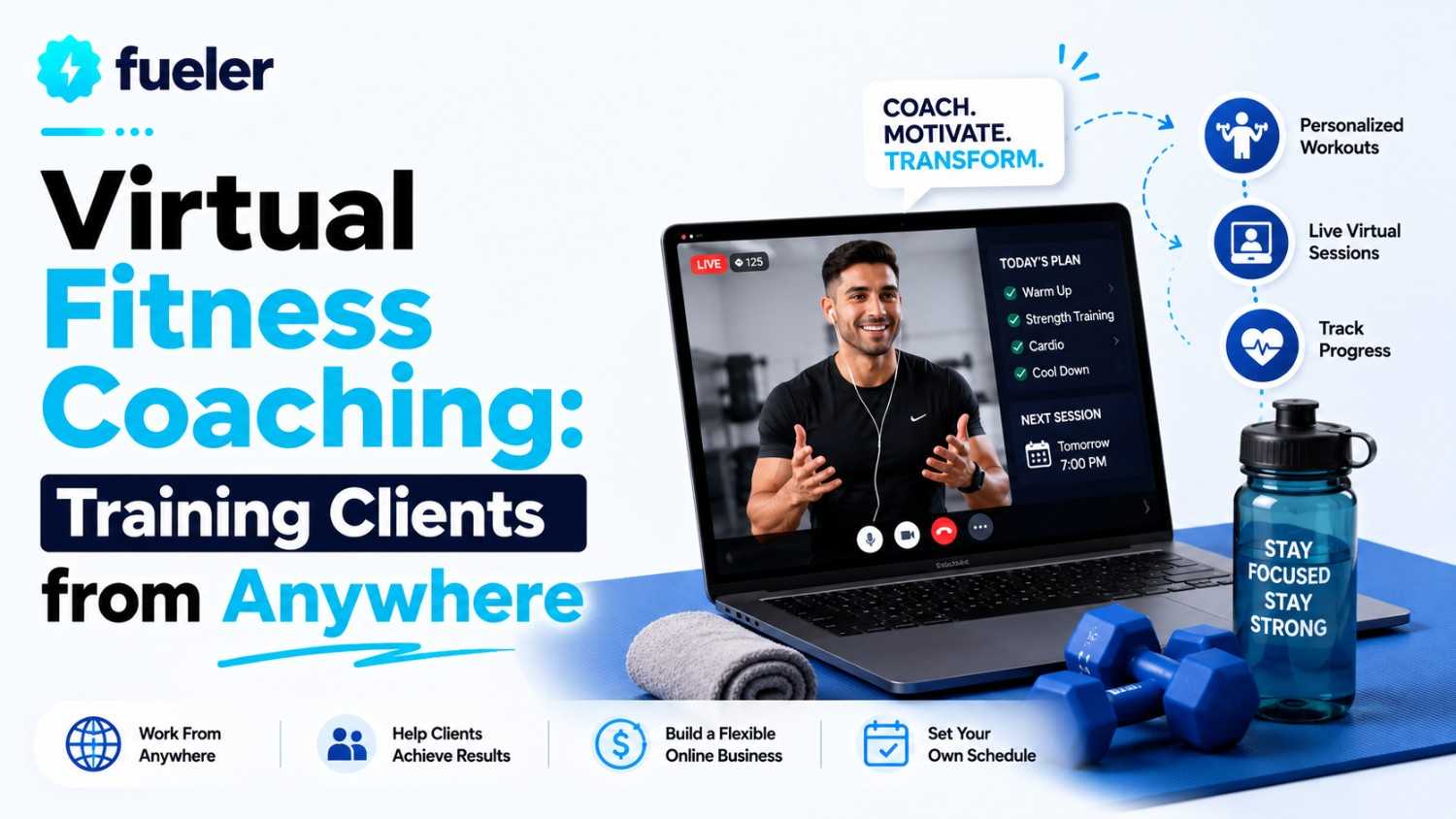
In today’s world, fitness coaching is no longer confined to gyms or physical studios. Imagine being able to help people get fit and healthy anywhere, whether you’re at home, traveling, or even living in a different country. Virtual fitness coaching lets trainers and clients connect online, breaking free from geographic limits. This shift is growing fast in 2026, creating exciting opportunities for fitness professionals to build flexible careers with a global reach. If you want to thrive in this field, understanding how to train virtually and present yourself professionally is essential.
I’m Riten, founder of Fueler, a skills-first portfolio platform building the career infrastructure for 100 million creative professionals. Fueler connects talented individuals with companies through assignments, portfolios, and projects, not just resumes or CVs. Think of it as Dribbble/Behance for work samples combined with AngelList for hiring infrastructure.
1. Choose Your Fitness Niche and Understand Your Target Clients
One of the first steps to success as a virtual fitness coach is defining your specialty. The fitness market is huge, but clients often look for trainers who can meet their specific needs. This could be anything from weight loss and strength training to yoga, rehabilitation, or sports-specific coaching.
- Specializing helps you develop deeper expertise and tailored programs.
- Knowing your target client’s age, lifestyle, and goals allows you to create more effective plans.
- For example, if you focus on seniors, you’ll design low-impact workouts suited to their abilities.
- Clearly defining your niche improves your marketing efforts and helps attract motivated clients ready to pay for your services.
- When you position yourself as an expert, you also justify charging higher rates.
2. Set Up a High-Quality Virtual Coaching Space and Technology
The quality of your virtual coaching sessions depends on your setup. Since you won’t meet clients in person, your technology and environment become the main tools for communication and instruction.
- Invest in a good HD webcam and a clear microphone to ensure clients see and hear you well.
- Choose user-friendly and reliable video platforms like Zoom, Google Meet, or specialized fitness apps.
- Check your internet speed regularly to avoid lag or disconnection during sessions; aim for at least 10 Mbps upload/download.
- Select a quiet, well-lit, clutter-free space that looks professional on camera.
- Test your setup before sessions to troubleshoot any issues.
- Remember, a professional environment builds client confidence and reduces distractions.
3. Create Personalized Training Programs and Use Progress Tracking Tools
Virtual coaching requires more than just live sessions. Personalized workout plans that clients can follow independently between sessions are critical. Tracking progress keeps clients motivated and accountable.
- Start with a detailed assessment to learn about client fitness level, health conditions, and goals.
- Use video tutorials, PDFs, or apps to send workouts that clients can do on their own time.
- Include warm-ups, exercises with proper form cues, rest periods, and cool-downs tailored to individual needs.
- Track progress using apps or spreadsheets to record weight, reps, measurements, and other key data. A step-by-step guide creator can also help structure workout routines clearly, making it easier for clients to follow instructions and stay consistent between sessions.
- Regularly review progress with clients during sessions and adjust plans accordingly.
- Celebrate milestones to keep motivation high.
- This systematic approach improves client results and satisfaction.
4. Build a Strong Online Brand and Marketing Strategy
To attract clients globally, a strong digital presence is essential. Your online brand should reflect your coaching style, professionalism, and success stories.
- Develop a professional website showcasing certifications, services, client testimonials, and pricing.
- Use social media platforms like Instagram, TikTok, and YouTube to share workout tips, transformation videos, and live Q&A sessions.
- Post consistently and engage with followers by replying to comments and DMs.
- Join fitness groups and online forums to network and get referrals.
- Consider running targeted ads on social media to reach your ideal clients faster.
- Use email marketing to nurture leads and keep clients updated with news and offers.
- A well-rounded online marketing strategy builds trust and drives bookings.
5. Offer Multiple Coaching Formats to Increase Income and Reach
Virtual coaching is flexible; expand your income by offering diverse options beyond just one-on-one sessions.
- Host live group classes or fitness challenges where multiple clients join at once, reducing your time per client but increasing reach.
- Create downloadable workout programs and nutrition plans that clients can buy and follow independently.
- Launch subscription services with weekly video content, tips, and support for ongoing revenue.
- Partner with brands to promote fitness products or apps, earning affiliate commissions.
- Conduct workshops or webinars on specialized topics like mobility, injury prevention, or mental fitness.
- Offering variety attracts different client types and builds multiple income streams, stabilizing your business.
6. Keep Learning and Stay Updated with Fitness Trends and Technology
Fitness and technology evolve fast, so continuous learning is essential to stay relevant and offer the best coaching.
- Take new certifications regularly in trending areas like functional training, nutrition, or mental wellness.
- Follow scientific research on exercise, recovery, and health to update your methods.
- Learn to use new fitness apps, wearable devices, and online coaching tools to enhance client experience.
- Seek feedback from clients and adjust your coaching style and content accordingly.
- Attend online conferences and workshops to network and learn from peers.
- Staying current improves your coaching quality and attracts clients looking for modern, effective training.
7. Use Fueler to Showcase Your Virtual Coaching Portfolio and Win Clients
Presenting your coaching skills and client successes visually and professionally can be the difference between landing or losing clients. Fueler is a platform designed to help you do just that.
- Upload your best work samples, including workout videos, client testimonials, and transformation photos.
- Organize your portfolio to highlight different training styles and client achievements.
- Potential clients and companies can view your verified portfolio, helping build trust quickly.
- Fueler also helps you find new projects and freelance opportunities tailored to your expertise.
- By linking your portfolio in marketing channels, you make it easier for prospects to see proof of your skills.
This smart presentation shortens client hesitation and speeds up hiring decisions.
Final Thought
Virtual fitness coaching offers a powerful way to build a rewarding career with freedom and flexibility. Success comes from mastering your fitness skills, presenting your work professionally, and building meaningful client relationships. Platforms like Fueler can help you showcase your coaching portfolio, attract clients, and grow your freelance business faster. Embrace this digital fitness wave by combining expertise, smart marketing, and authentic results.
FAQs
1. What equipment do I need to start virtual fitness coaching?
A good webcam, microphone, stable internet, and video conferencing software are essential to deliver professional sessions.
2. How can I find clients for virtual fitness coaching?
Build a strong online presence via social media, websites, and networks, and use portfolio platforms like Fueler to show your skills.
3. Can I coach multiple clients at once virtually?
Yes, group classes and challenges are popular formats that increase your income and reach.
4. How do I track client progress online?
Use fitness tracking apps, spreadsheets, or photos and measurements shared by clients regularly.
5. How important is a portfolio for a fitness coach?
A portfolio is critical. It shows your expertise, past client results, and builds trust, speeding up client decisions.
Why 100,000+ professionals use Fueler
Fueler helps professionals showcase proof of work through projects, assignments, case studies, and achievements.
- Thousands of professionals use Fueler to create their digital portfolio
- Thousands of projects are published on Fueler. Check here
- Startups and Companies hire through proof of work on Fueler
- Used by freelancers, creators, marketers, video editors, writers, designers, and product managers
Our mission is to help the next 100 million professionals build a verified professional identity through proof of work

What should you do next?
You've read the article. Now turn your skills into proof of work and unlock more opportunities.
Build your proof of work portfolio
Create a clean portfolio with projects, assignments, resumes, and AI stack details that companies actually want to see.
Create your Fueler portfolio →Apply through assignments, not resumes
Stand out by solving real tasks from companies hiring on Fueler.
Explore assignments →Get discovered by companies
Make your work public and let recruiters discover your skills through actual projects instead of keywords.
Get discovered →
