Video Editing Career Roadmap: Skills, Jobs & Salary in India

Riten Debnath
09 Aug, 2026
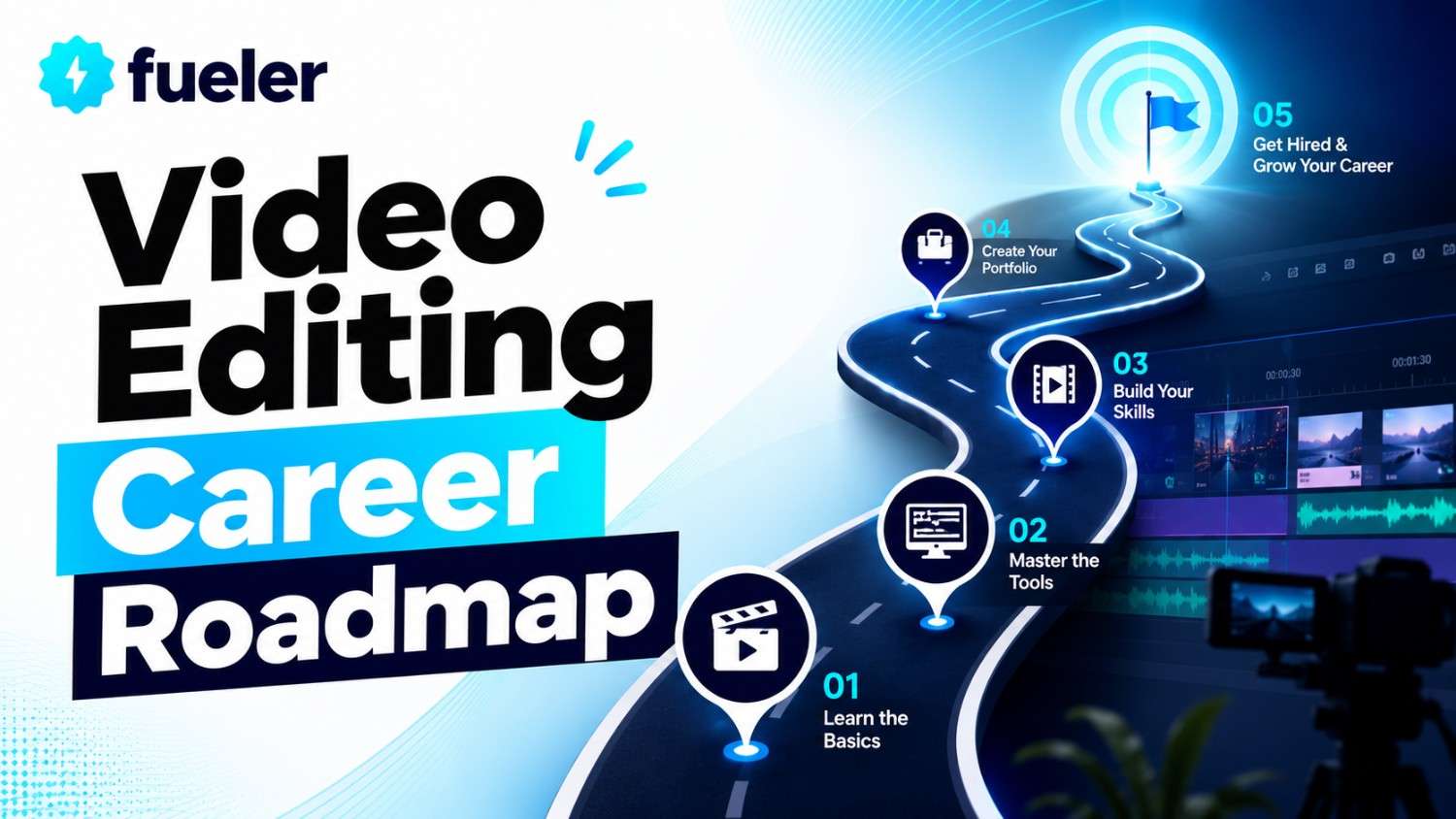
Last updated: August 2026
While thousands of engineering graduates compete for entry-level desk jobs, skilled editors in India earn lakhs working remotely for global creators, agencies, and tech startups. The traditional Indian obsession with degrees is fading because modern brands hire based on raw execution, quick turnaround times, and retention-focused storytelling.
I’m Riten, founder of Fueler, a skills-first portfolio platform building the career infrastructure for 100 million creative professionals. Fueler connects talented individuals with companies through assignments, portfolios, and projects, not just resumes or CVs. Think of it as Dribbble/Behance for work samples combined with AngelList for hiring infrastructure.
Building a video editing career in India is straightforward when you follow a structured skill roadmap, target high-demand niches, and showcase real project workflows. This comprehensive guide covers essential technical skills, career roles, real salary data, and execution steps to become a highly paid editor from scratch.
Master Foundational Storytelling and Pacing Before Software
Technical editing software is easy to learn, but visual storytelling requires understanding audience retention and narrative flow. Raw camera clips come alive when edited with clear pacing, psychological hooks, and seamless sound design.
Focusing on why a cut happens is more critical than memorizing software shortcuts. Master narrative pacing, emotional cues, and viewer attention control before diving into advanced motion graphics.
- Understanding Visual Pacing: Pacing controls how fast or slow scenes transition to manage audience attention. Short, rapid cuts create energy for social reels, while longer holds let emotional moments land naturally in documentaries. Master this balance to keep Indian and global audiences hooked.
- Mastering Audio Design and Mix: Sound drives over 50% of a viewer's emotional connection. Clean up dialogue, layer ambient background tracks, and add punchy sound effects to make simple cuts feel cinematic. Exceptional audio separation instantly distinguishes beginner edits from agency-level production.
- Using J-Cuts and L-Cuts for Flow: Audio transitions eliminate jarring visual jumps between scenes. A J-cut introduces audio from the incoming clip before the video changes, while an L-cut lets audio continue past the visual cut. These fundamental cuts create professional narrative continuity.
- Studying Digital Retention Cues: Modern platforms reward content that holds audience attention through the first three seconds. Study visual hooks, pattern interrupts, kinetic text, and subtle zooms to prevent audience drop-off. Brands hire editors specifically to lift watch time metrics.
- Trimming Dead Air and Filler Words: Removing hesitation pauses, stutters, and unnecessary repetition keeps video momentum high. Precise trimming keeps the narrative moving fast without making speaker delivery sound robotic. Pacing discipline ensures viewers stay engaged throughout the video.
Why It Matters
Mastering story mechanics over raw software features gives you an immediate competitive edge in the Indian creator economy. Clients care about view duration, click-through rates, and audience engagement. Strong narrative pacing directly increases client retention and drives sustainable career growth.

Learn Primary Industry Standard Editing Applications Deeply
Attempting to learn multiple video software programs simultaneously creates confusion and slows progress. Select one professional non-linear editor and master its timeline navigation, color correction wheels, and audio mixing panel.
Deep technical mastery of one tool beats surface-level knowledge across four applications. Speed, keyboard shortcut fluency, and structured project management develop naturally through daily timeline execution.
- Selecting Software Aligned with Your Goal: Choose software based on your specific career target. Indian ad agencies and corporate teams heavily use NLEs like Premiere Pro, while post-production studios favor DaVinci Resolve for color grading. Dedicate initial learning cycles to one primary timeline setup.
- Memorizing Hotkeys for Maximum Operational Speed: Fast editors secure more high-paying clients because they handle revisions rapidly. Replace manual mouse clicks with keyboard shortcuts for rippling, razor cuts, trimming, and playback speed adjustment. Operational speed reduces editing fatigue significantly.
- Organizing Bins and Folder Structures: Professional editors establish strict file structures before trimming footage. Label bins, color-code timeline tracks, build organized asset folders, and store raw media systematically. Clean project management prevents missing media errors and streamlines client handoffs.
- Mastering Essential Color Correction Rules: Fixing exposure, correcting white balance, and matching skin tones makes budget camera footage look premium. Basic color adjustments resolve lighting mismatches across different camera angles. Understanding color wheels ensures clean, consistent visual outputs on every display.
- Understanding Render Presets and Codecs: Exporting videos with incorrect bitrates or frame rates ruins hours of detailed editing. Master standard export presets, resolution scaling, and aspect ratios required for YouTube, Instagram Reels, and web streaming. Clean export files prevent heavy platform compression artifacts.
Why It Matters
Software fluency turns creative ideas into rapid, efficient execution. When timeline navigation becomes second nature, you spend less time fighting software bugs and more time refining visual storytelling. Fast turnarounds build trust and help secure long-term client retainer contracts.
Re-Edit Existing Public Media to Build Hands-On Capability
You do not need an expensive camera setup or high-end studio footage to practice your editing craft. Millions of gigabytes of public domain media, open-source footage, and Creative Commons videos exist online.
Downloading raw video assets lets you practice trimming, pacing, sound placement, and color grading without waiting for paid clients. Re-editing real media builds confidence in handling complex visual scenarios.
- Sourcing High-Quality Open Stock Footage: Practice assembling cohesive video sequences from free stock platforms. Practice blending wide establishing shots, medium interactions, and tight close-ups into smooth thematic narratives. Working with diverse lighting conditions teaches adaptable editing habits.
- Repurposing Long Podcasts into Viral Shorts: Take public podcast episodes or keynote speeches and convert them into punchy 60-second vertical videos. Add dynamic captions, sound effects, and B-roll overlays to make key insights pop. Short-form content repurposing is one of India's highest-demanded editing services.
- Cutting Cinematic Trailers from Raw Gameplay: Edit long gaming streams or open-source footage into fast-paced cinematic trailers. Match visual cuts directly to audio risers, beat drops, and dramatic impact sound effects. Trailer editing sharpens timing precision and narrative tension.
- Designing Animated Text Overlays: Modern digital platforms rely on dynamic text overlays to hold muted viewers. Practice designing clean kinetic typography, lower thirds, and callout graphics that match overall brand aesthetics. Clear graphic elements improve readability across mobile screens.
- Reworking Weak Social Media Commercials: Locate low-performing brand ads on social platforms and re-edit them to maximize visual engagement. Rework the opening hook, re-sequence product demos, and apply higher-energy background audio. Re-editing commercial marketing assets builds direct-response advertising awareness.
Why It Matters
Hands-on practice bridges the gap between watching online tutorials and executing real client work. Re-editing raw media exposes you to real-world challenges like audio noise, shaky camera angles, and awkward pacing cuts. Practical execution muscle memory ensures you meet tight agency deadlines effortlessly.

Complete Practice Assignments and Spec Marketing Campaigns
Waiting for someone to hire you before building real projects delays career growth. Create hypothetical client briefs and execute them with the same discipline as a high-budget commercial contract.
Speculative edits grant creative freedom while proving your ability to solve specific business problems. Mock campaigns demonstrate to employers that you understand visual branding, platform requirements, and direct-response marketing principles.
- Writing Detailed Mock Client Briefs: Create realistic project scenarios, such as a D2C fashion brand launching a summer campaign or a tech startup showcasing a software update. Define target demographics, aspect ratio needs, video length caps, and call-to-action goals. Constrained project goals build practical problem-solving skills.
- Editing Multi-Camera Interview Formats: Practice switching between multiple camera angles cleanly based on active dialogue and subtle speaker reactions. Transition smoothly without distracting viewers or leaving awkward pauses between dialogue turns. Multi-camera switching is crucial for podcasts, talk shows, and corporate panels.
- Crafting High-Converting Video Ads: Build short, high-energy promotional videos designed to generate sales and website clicks. Combine fast visual hooks, problem-agitation text, social proof clips, and clear end-screen offers within 30 seconds. Direct-response video ad editing commands high pricing in India.
- Building Explainer and Educational Videos: Turn dense concepts into clean, visual explainer videos using screen captures, animated graphics, and diagram overlays. Structure information logically so viewers digest facts effortlessly. Educational video editing is heavily hired by edtech firms and SaaS companies.
- Enforcing 24-Hour Production Turnarounds: Challenge yourself to complete mock edits within tight 24 to 48-hour windows. Working under clock pressure teaches you to prioritize narrative cuts over unnecessary micro-tweaks. Fast turnarounds prepare you for fast-paced agency culture and creator schedules.
Why It Matters
Spec assignments let you build a professional workflow without financial or reputational risk. They give you complete control over creative direction while proving your ability to deliver commercial-grade edits. Executing mock projects turns theoretical software knowledge into marketable career assets.
Explore High-Demand Video Editing Roles in India
The Indian media ecosystem offers diverse career tracks across digital marketing agencies, film studios, creator teams, and corporate enterprises. Understanding these roles helps you position your skill set for maximum earning potential.
- Social Media & Short-Form Editor: Focuses on Instagram Reels, YouTube Shorts, and viral video formats. Requires extreme speed, knowledge of trending audio, fast captioning, and hook optimization. This is India's most rapidly expanding entry-level role.
- YouTube Channel Specialist: Handles 10 to 30-minute long-form videos, podcasts, and documentaries. Demands narrative pacing, sound design, multi-cam editing, and retention graph analysis. Creators pay premium retainers for editors who consistently grow watch time.
- Motion Graphics & Visual Effects Artist: Combines traditional editing with 2D animation, kinetic typography, and visual effects. Requires deep proficiency in After Effects to build custom graphical assets. Commands higher base salaries due to specialized technical demands.
- Corporate & SaaS Video Specialist: Produces brand films, customer case studies, product walkthroughs, and event recaps. Values crisp audio, clean color grading, brand-aligned graphics, and polished interviews. Offers stable corporate hours and structured salary packages.
- Commercial & Direct-Response Ad Editor: Crafts high-converting performance ads for e-commerce, D2C brands, and digital marketing campaigns. Focuses on visual hooks, problem-solution angles, social proof clips, and strong CTA overlays. Directly impacts ad spend performance and generates performance bonuses.
Why It Matters
Understanding specific job roles prevents you from remaining a generic editor. Specializing in a clear niche allows you to charge premium rates, target high-budget clients, and build relevant project portfolios. Niche focus accelerates career trajectory in the competitive Indian job market.
Realistic Video Editor Salary Expectations in India

Video editing compensation in India varies based on experience, specialized skills, software mastery, and geographic location. Metro cities like Mumbai, Bengaluru, Delhi NCR, and Hyderabad command higher pay scales.
- Entry-Level Salary Benchmarks: Freshers starting in entry-level roles or boutique agencies typically earn ₹20,000 to ₹35,000 monthly (₹2.5 to ₹4.5 LPA). Salary growth scales rapidly once you prove the ability to deliver commercial-grade edits independently.
- Mid-Level Earning Scale: Editors with 2 to 4 years of experience mastering motion graphics, color grading, or high-retention YouTube editing earn ₹5 LPA to ₹9.5 LPA. Those handling overseas clients as freelancers easily exceed ₹80,000 per month.
- Senior and Lead Editor Compensation: Senior editors, post-production supervisors, and lead motion designers in major metros earn ₹10 LPA to ₹20+ LPA. Professionals managing creative teams or editing high-budget ad campaigns earn top-tier corporate packages.
- Freelance Earning Potential: Independent Indian editors working with international creators or remote US/UK agencies often earn in USD. A freelance editor with 3 to 4 steady global monthly retainers can generate ₹1.5 Lakhs to ₹3 Lakhs monthly from home.
- Factors Driving Higher Pay: Mastering specialized skills like advanced DaVinci Resolve color grading, 3D motion graphics in After Effects, and retention strategy significantly inflates market value. Clear communication and fast project turnaround times command premium pricing.
Why It Matters
Knowing real industry salary benchmarks prevents you from underpricing your skills during job interviews or client pitch calls. Transparent financial expectations help you set clear income goals, evaluate full-time job offers, and scale your freelance editing business.
Land Initial Client Contracts Through Proactive Value Delivery
Sending cold resumes to dozens of job portals rarely yields results when you lack formal agency experience. Instead, deliver unconditional value by analyzing a prospective client's existing videos and showing tangible fixes.
Unsolicited video audits prove technical skill while establishing direct contact with decision-makers. Highlighting fixable editing mistakes builds immediate credibility without sounding pushy or aggressive.
- Fixing Slow Hooks in Published Reels: Review target creators or local businesses to identify videos with slow, boring openings. Show how dropping dead air, adding dynamic captions, or cutting intro fluff keeps audiences engaged longer. Actionable feedback proves your retention editing expertise instantly.
- Resolving Poor Audio Mixes on Creator Videos: Locate online videos with background hiss, low dialogue volume, or loud background music. Clean up and re-balance a 15-second audio clip to demonstrate crystal-clear dialogue. Audio improvements deliver an immediate quality leap that clients notice.
- Editing a Complimentary 20-Second Sample Reel: Download long-form video content from a prospective brand, edit it into a snappy vertical reel, and send it over. Include dynamic captions, smooth zooms, and balanced audio overlays without requesting upfront payment. Sending completed, polished video assets makes hiring effortless.
- Modernizing Graphic and Font Choices: Critique outdated typography, hard-to-read text layouts, and weak visual contrast in active social ads. Offer modern font pairing ideas and clean lower-third animations aligned with their brand aesthetic. Upgraded graphics immediately elevate visual production value.
- Sending Short Personal Video Audits: Record a brief, friendly screen walkthrough explaining your creative ideas and suggested timeline edits clearly. Keep the tone professional, helpful, and focused entirely on improving their content performance. Personalized video messages cut through generic email inbox clutter.
Why It Matters
Proactive value delivery breaks through client noise and builds instant goodwill. Demonstrating real improvements on a prospect's own media completely removes their hiring risk. Value-first outreach converts cold leads into high-paying monthly editing retainer contracts.

Optimize Your Workflow and Client Hand-Off Systems
Getting hired as a video editor is just the beginning; retaining clients requires consistent project execution and smooth operational communication. Build reusable templates, asset libraries, and structured feedback systems to manage projects effortlessly.
Streamlining backend processes saves hours of manual effort on every project you deliver. Efficient systems allow you to handle multiple client retainers simultaneously while maintaining consistent visual quality across deliverables.
- Building Centralized Asset and Preset Libraries: Organize frequently used motion graphic templates, sound effects, text presets, and color LUTs in master folders. Importing pre-made asset folders speeds up project setups and removes redundant design tasks. Preset management ensures visual brand consistency across campaigns.
- Establishing Streamlined Video Review Loops: Use dedicated review platforms that let clients leave frame-accurate comments and timestamped notes. Frame-specific feedback eliminates messy text threads, vague email edits, and frustrating revision cycles. Streamlined communication speeds up project approvals and final payouts.
- Enforcing Strict File Naming Protocols: Establish clear naming conventions for raw media files, project files, draft renders, and final deliverables. Structured folder management prevents missing asset errors and accidental deletion of critical project files. Professional file management builds client trust during collaborative handoffs.
- Tracking Operational Editing Speed: Measure time spent on raw cutting, color grading, sound mixing, and client revisions per video edit. Tracking project hours identifies editing bottlenecks and helps set profitable project pricing for future pitches. Understanding production speed prevents undercharging for complex edits.
- Implementing Redundant Cloud Archiving Systems: Maintain automated cloud backups and external drive archives for all active and completed client assets. Safeguarding raw footage against hard drive failures or file corruption ensures total project safety. Secure archiving habits protect your professional reputation against technical emergencies.
Why It Matters
Operational efficiency determines your earning capacity as a professional freelance video editor. Disorganized editors waste time managing chaotic revision cycles, while systematic editors handle multiple monthly retainers effortlessly. Smooth delivery systems build client retention, referral networks, and predictable monthly revenue.
How Does This Connect to Building a Strong Career or Portfolio?
Execution visibility matters far more than traditional credentials when building a modern video editing career. Clients hire based on tangible proof of work, quick communication, and proven problem-solving capability rather than formal degrees. Documenting your editing workflows, spec assignments, and before-and-after project comparisons creates undeniable evidence of your technical skill. Showing how you organize asset bins and solve complex storytelling challenges builds instant professional credibility. Utilizing platform tools like Fueler helps you organize these proof-of-work projects logically, making it effortless for prospective clients to evaluate your capabilities and hire you confidently.

Final Thoughts
Building a video editing career in India requires focusing on deliberate execution rather than endless tutorial viewing. Master storytelling fundamentals, build tangible proof of work through mock assignments, and deliver proactive value to prospective clients. Speed, technical reliability, and process documentation will always separate you from casual editors. Start editing raw footage today, share your progress publicly, and let completed project work secure your first client retainer.
Frequently Asked Questions
What is the average starting salary for a video editor in India?
Entry-level video editors in India earn between ₹2.5 LPA and ₹4.5 LPA (₹20,000 to ₹35,000 per month). Earnings grow rapidly as you gain hands-on experience, master motion graphics, and build a strong portfolio.
Do I need a degree to become a video editor in India?
No, formal degrees are not required to build a video editing career. Clients and agencies hire based on visual proof of work, narrative pacing skills, and portfolio quality rather than academic qualifications.
Which software should beginners learn first for video editing?
Beginners should focus on mastering Adobe Premiere Pro or DaVinci Resolve deeply before exploring secondary software. These industry-standard tools handle professional timeline cutting, audio editing, and color correction efficiently.
Can Indian video editors work remotely for international clients?
Yes, video editing is a highly remote-friendly career path. Indian editors frequently work with US, UK, and global creators or agencies, earning in foreign currencies through monthly retainer contracts.
How long does it take to become job-ready in video editing?
With focused daily practice, you can build job-ready editing skills within 3 to 6 months. Focus on mastering timeline cuts, basic motion graphics, audio mixing, and building a project portfolio.
Why 100,000+ professionals use Fueler
Fueler helps professionals showcase proof of work through projects, assignments, case studies, and achievements.
- Thousands of professionals use Fueler to create their digital portfolio
- Thousands of projects are published on Fueler. Check here
- Startups and Companies hire through proof of work on Fueler
- Used by freelancers, creators, marketers, video editors, writers, designers, and product managers
Our mission is to help the next 100 million professionals build a verified professional identity through proof of work

What should you do next?
You've read the article. Now turn your skills into proof of work and unlock more opportunities.
Build your proof of work portfolio
Create a clean portfolio with projects, assignments, resumes, and AI stack details that companies actually want to see.
Create your Fueler portfolio →Apply through assignments, not resumes
Stand out by solving real tasks from companies hiring on Fueler.
Explore assignments →Get discovered by companies
Make your work public and let recruiters discover your skills through actual projects instead of keywords.
Get discovered →
