UGC Creator vs Influencer: What Pays More in 2026?

Riten Debnath
05 Apr, 2026
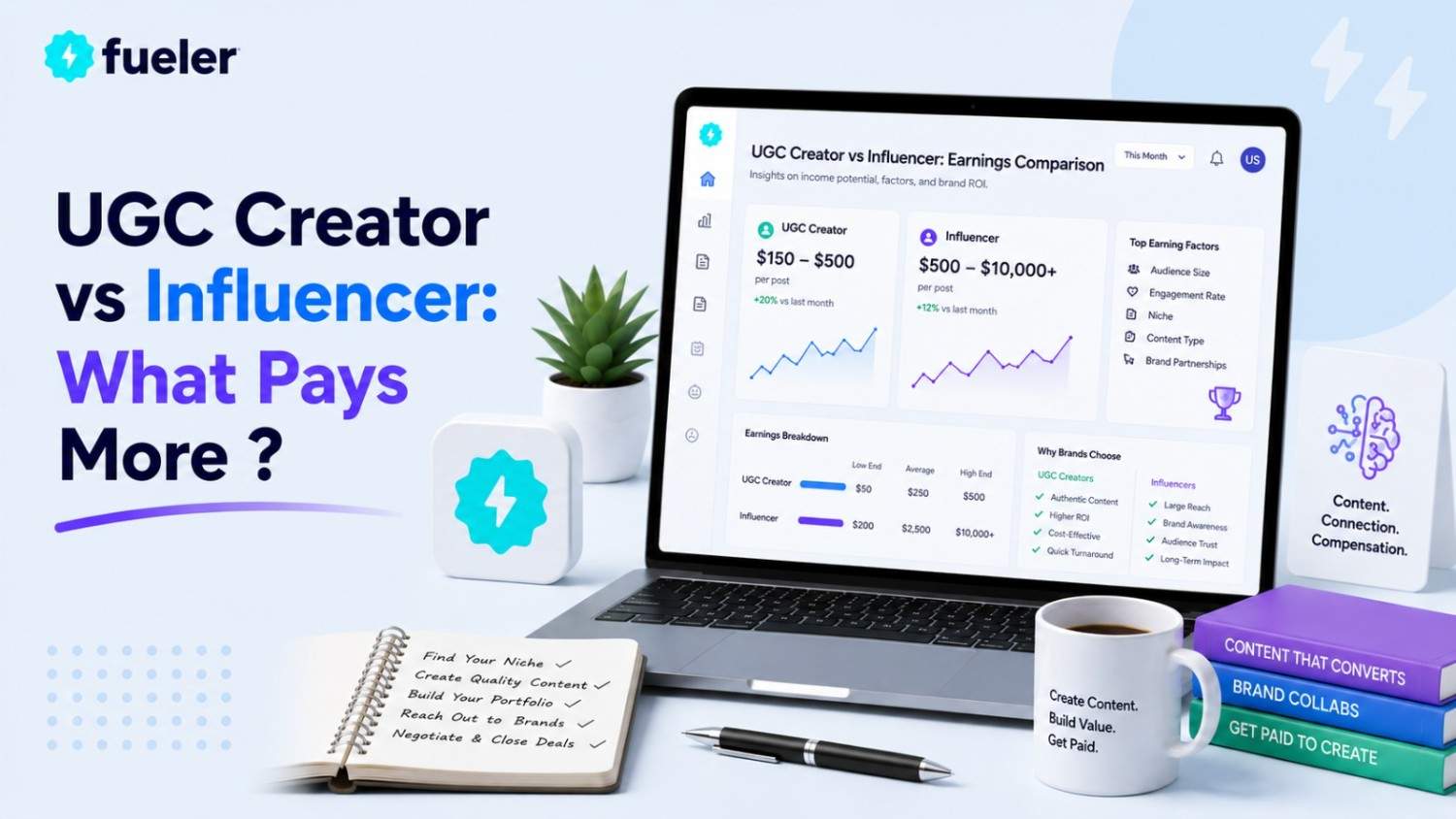
The digital gold rush in India has taken a sharp turn. If you walked into a marketing agency two years ago, they would only talk about follower counts and blue ticks. But as we sit in 2026, the conversation has shifted from fame to functionality. I’m seeing a massive surge in people who don’t want to be famous; they just want to get paid to create. This has led to a fascinating split in the market: the Influencer, who sells their personality, and the UGC (User Generated Content) Creator, who sells their skill. One path offers the allure of stardom, while the other offers a high-speed lane to a six-figure monthly income without the stress of public life.
I’m Riten, founder of Fueler, a skills-first portfolio platform that connects talented individuals with companies through assignments, portfolios, and projects, not just resumes/CVs. Think Dribbble/Behance for work samples + AngelList for hiring infrastructure.
1. Defining the UGC Creator in the 2026 Economy
In 2026, a UGC creator is essentially a freelance creative director, actor, and editor rolled into one. Unlike an influencer, a UGC creator does not post the content on their own social media page. Instead, they film high-quality, relatable videos, like unboxings, testimonials, or tutorials, and sell the raw or edited files directly to the brand. The brand then uses these videos in their own paid advertisements on Instagram, YouTube, or Facebook. You are getting paid for the asset you create, not for the audience you have. This means you can start earning from day one, even with zero followers.
- Skill-Based Payout Structure: Your income is strictly determined by the technical quality of your video, your storytelling ability, and how well you can follow a specific creative brief provided by the brand.
- Zero Audience Entry Barrier: You do not need to spend years grinding for followers or fighting the algorithm to make your first Rupee, as brands are buying your production talent rather than your social reach.
- Direct Asset Ownership Sales: Once you deliver the final video files, the brand takes full ownership to use them in their marketing funnels, email campaigns, and paid social media advertisements across various platforms.
- Scalable High Work Volume: Since you aren't posting these ads on your own personal feed, you can work with 20 or 30 different brands in a single month without ever worrying about annoying your personal audience.
Why it matters:
This matters because it provides a predictable and stable income stream. If you can produce 10 professional videos a month and charge 8,000 Rupees per video, you have a solid 80,000 Rupee income without ever having to worry about shadowbans or a sudden drop in your personal engagement rates.
2. The Influencer Business Model: Selling Trust and Reach
Being an influencer in 2026 is about Affinity Marketing. You have spent years building a community that trusts your taste, your lifestyle, and your advice. When a brand hires an influencer, they aren't just buying a video; they are buying access to a warm audience. The price you charge is directly tied to how many people you can reach and how much they trust you. While the barrier to entry is much higher, the rewards for those who reach the top are massive, including long-term brand ambassadorships and even equity in companies.
- Audience-Based Pricing Metrics: Your rates are primarily determined by your total reach, your daily engagement rate, and the specific demographic quality of the followers you have spent years cultivating.
- Long-Term Personal Brand Equity: You are the permanent face of your content, and your personal reputation is your most valuable business asset, which can be leveraged for high-value deals over several years.
- Strictly Limited Ad Frequency: You are restricted in how many ads you can post because sharing too many sponsored posts will eventually alienate your followers and lower the trust that makes you valuable.
- Diverse Platform Monetization Streams: In addition to direct brand collaborations, you can earn significant passive income through platform-specific ad revenue, such as YouTube AdSense or Instagram subscription models.
Why it matters:
This path is for those who want to build a lasting legacy and a public profile. While a UGC creator earns for their specific labor, an influencer earns for their identity. In 2026, influencers are the new celebrities, and their earning potential per single post can be significantly higher than a UGC video once they reach a loyal niche following.
3. Comparing the Barrier to Entry and Speed of Income
If you need to generate money by the end of this month, the UGC path is the undisputed winner in the current market. To become a successful influencer, you usually need at least 6 to 12 months of consistent daily posting to reach a monetizable audience of 10,000 followers. As a UGC creator, you only need to spend about two weeks practicing your filming and basic editing. You can then create a portfolio and start pitching to brands immediately. The speed to income is the primary reason why many Indian professionals are switching to UGC as a career.
- Rapid UGC Startup Timeline: It typically takes only 1 to 2 weeks to learn the basic filming techniques and create 3 to 5 sample videos to show potential clients your capabilities.
- Long-Term Influencer Growth Path: It often takes 6 to 18 months of unpaid work to build a community that is large and engaged enough for brands to consider paying for a shoutout.
- Equipment and Production Needs: While both require a good smartphone, influencers often need to invest more in high-end lifestyle production, trendy outfits, and travel to keep their content looking aspirational.
- Immediate Feedback and Payment: UGC creators receive immediate feedback from brand managers and get paid upon delivery, whereas influencers often wait for the algorithm to bless their posts with views.
Why it matters:
In a country like India, where the cost of living is rising, the ability to generate income quickly is a massive advantage. UGC allows you to monetize your creativity instantly while you potentially build a long-term influencer brand on the side without the financial stress of waiting for followers.
4. Pay Per Deliverable: The 2026 Numbers in India
Let’s talk about the hard cash. If you're trying to understand the bigger picture, UGC creator salary is a better measure of earning potential than looking at the price of a single brand deal. In 2026, a mid-tier UGC creator in India typically charges between 5,000 and 12,000 Rupees per video. If they specialize in a high-value niche like SaaS tutorials or premium skincare, that can easily go up to 20,000 Rupees. On the other hand, an influencer's pay is highly volatile. A Nano-Influencer might only get 2,000 to 5,000 Rupees per post, while a Macro-Influencer can charge 1.5 Lakhs to 3 Lakhs per post. However, the sheer volume of work available is much higher for the UGC creator.
- Higher UGC Project Volume: It is very easy to handle 15 to 20 different clients in a single month because you aren't managing the complex daily engagement and comments of a personal audience.
- Influencer Posting Frequency Caps: Most professional influencers are restricted to only 2 to 4 high-quality brand collaborations per month to maintain their feed quality and keep their audience from getting annoyed.
- Passive Usage Rights Earnings: UGC creators often earn an extra 20% to 50% on top of their base fee for usage rights if the brand decides to run their video as a long-term paid advertisement.
- Whitelisting Revenue Opportunities: Both roles can earn extra by whitelisting, where a brand pays a fee to run targeted ads through the creator's social media handle to make the ad look more organic.
Why it matters:
The total monthly income for a consistent UGC creator often surpasses that of a mid-tier influencer. While the influencer might get one or two bigger checks, the UGC creator enjoys a steady and high-volume flow of smaller payments that add up to a more reliable and predictable monthly salary.
5. Scalability and Long-Term Career Growth
How do you grow in these roles over the next few years? A UGC creator scales by becoming a UGC Agency owner or a Creative Strategist. They eventually hire other creators and just handle the high-level strategy and brand relationships. An influencer scales by becoming a Founder. They launch their own brands, such as a makeup line or a clothing brand, because they already have a massive customer base ready to buy anything they recommend. Both paths lead to entrepreneurship, but the journey is very different.
- UGC Agency Scaling Model: You can move from being a solo service provider to running a content agency that manages dozens of creators and hundreds of brand deals simultaneously.
- Influencer Brand Launching Model: You can transition from promoting other people's products to owning your own physical or digital brands, which provides a much higher long-term profit margin and exit potential.
- Strategic Skill Set Transfer: UGC work teaches you the hard skills of direct-response marketing and sales, while influencer marketing teaches you the art of community building and public relations.
- Industry Longevity and Stability: The demand for UGC is less dependent on temporary social media trends or personal relevance than the influencer path, making it a more stable long-term career choice.
Why it matters:
Your choice depends entirely on your end goal. If you want to run a backend business and stay out of the spotlight, the UGC agency model is the scalable choice. If you enjoy the limelight and want to be a public figure, the influencer path offers a more traditional route to massive fame and wealth.
6. The Burnout Factor: Mental Health and Work-Life Balance
This is a point rarely discussed in 2026 but very real for those in the industry. Influencers are on a constant content treadmill. If they stop posting for even a week, their engagement drops, and their value to brands decreases immediately. This often leads to massive mental burnout. UGC creators, however, have a work-on-demand model. If they want to take a two-week vacation, they simply don't take on any new client projects. Their income is tied to their specific output, not their constant presence.
- Constant Influencer Performance Pressure: There is a heavy psychological need to be "on" and active 24/7, often requiring you to share deeply personal life details just to keep your engagement high.
- Flexible UGC Work Schedules: You have the ability to film all your monthly client work in a single 4 to 5-day sprint and then have the rest of the month off for personal projects.
- Privacy and Personal Security: UGC creators maintain total personal privacy; while their face might appear in an ad, their private life and family details are never for sale to the public.
- Freedom from Platform Algorithms: Influencers are at the mercy of sudden platform updates and shadowbans, whereas UGC creators are only limited by their own technical skills and their ability to find clients.
Why it matters:
Mental health is a critical part of a sustainable, long-term career. If you value your privacy and don't want the intense pressure of performing every single day for an audience of strangers, the UGC model provides a much healthier and more balanced lifestyle.
7. Operational Costs: Investing in Your Creator Business
Both roles require some level of investment, but the nature of that investment differs wildly. An influencer spends a lot of money on lifestyle maintenance, such as travel, expensive outfits, and aesthetic locations to keep their feed looking aspirational. A UGC creator spends their money on production tools, such as better microphones, professional ring lights, different colored backdrops, and advanced video editing software. In 2026, the ROI is often much clearer for UGC because every piece of equipment directly improves the product you sell.
- Ongoing Influencer Lifestyle Costs: There is a constant financial need for new looks, travel to trending locations, and community management tools to keep your audience engaged and growing.
- One-Time UGC Production Investments: Most of your expenses are one-time purchases for high-quality lights, microphones, and creative props like fake plants or professional desk setups that last for years.
- Software and Subscription Fees: While both roles use editing apps, UGC creators often invest more in professional project management and file-sharing tools to handle high volumes of client work efficiently.
- Valuable Time Investment Costs: Influencers spend hours every day replying to comments and engaging with followers, while UGC creators spend those same hours filming and earning more money from new clients.
Why it matters:
UGC generally has higher profit margins because its expenses are mostly one-time equipment costs. Influencers often have very high recurring overhead costs to maintain the specific public image that earns them the high-paying brand deals in the first place.
8. Creative Control: Who Decides What You Make?
As an influencer, you usually have a high level of creative control. Brands hire you specifically for your unique style, so you usually get to decide exactly how to present the product to your audience. However, as a UGC creator, you are working to a specific brief. The brand tells you exactly what hook to use, what features to mention, and what the final call to action should be. You are a professional executor of someone else's marketing vision.
- Total Influencer Creative Freedom: You have the power to tell the story your own way to ensure it resonates with your unique audience and maintains your personal brand voice.
- High-Precision UGC Execution: You are required to follow a detailed script designed by the brand’s marketing team to ensure the video achieves the highest possible conversion and sales rates.
- Professional Revision Cycles: UGC creators often face one or two rounds of specific edits from the brand's creative director to ensure the content perfectly matches the brand's visual identity.
- Different Types of Satisfaction: Influencers get satisfaction from artistic expression and community feedback, while UGC creators get it from technical mastery and seeing their videos generate massive sales.
Why it matters:
If you are someone who hates being told exactly what to do, you will find the UGC model very frustrating. If you love the technical challenge of hitting a specific marketing target and making a video that actually converts viewers into buyers, you will find the UGC path very rewarding.
9. The Role of AI in Both Professions by 2026
AI has changed the game for both, but it hasn't replaced the need for human creators. In 2026, influencers use AI to manage their thousands of DMs and edit their photos to look perfect. UGC creators use AI to write high-converting scripts and generate high-quality voiceovers for their b-roll footage. The key difference is that brands pay UGC creators specifically because AI cannot yet perfectly replicate a real person testing a product in a real kitchen with genuine emotions.
- AI-Powered Scripting Efficiency: UGC creators use AI to analyze thousands of top-performing ads and write similar high-energy hooks and scripts in a matter of seconds.
- Automated AI Engagement Tools: Influencers use sophisticated AI bots to keep their community active and answer common questions while they are sleeping or traveling.
- Massive Production Speed Gains: Modern AI tools allow a single UGC creator to finish 5 professional videos in the same amount of time it used to take to finish just one.
- The Human Authenticity Premium: As AI-generated content floods the internet, brands are becoming more willing to pay a premium for human-made content that feels real and trustworthy to consumers.
Why it matters:
The human premium is more real than ever. By 2026, being a real person with real emotions and a real, relatable voice is your biggest competitive advantage against the waves of cheap, generic AI-generated content appearing online.
10. How to Choose Your Path: A Direct Comparison
So, which one truly pays more? In 2026, a successful person in either role can easily make 2 Lakhs to 5 Lakhs a month in India. The difference is the nature of the work you do every day. If you are an influencer, you are building a long-term asset, which is your audience. If you are a UGC creator, you are running a high-efficiency service, which is content production. Many people today start as UGC creators to build their skills and fund their lives, while slowly building an influencer brand on the side.
- Predictable Income Stability: UGC is far more stable month-to-month and doesn't rely on the luck of a post going viral to earn a paycheck.
- Maximum Potential Income Ceiling: Influencers have a much higher peak income if they manage to become mega-famous and launch their own multi-million dollar brands.
- Daily Work-Life Balance: UGC is generally much better for your mental health, your personal privacy, and having a fixed schedule that doesn't require you to be on camera 24/7.
- Long-Term Business Value: The influencer path builds an audience that you can sell to forever, whereas the UGC path builds a portfolio of skills that you can sell to any brand in the world.
Why it matters:
You don't necessarily have to choose just one, but you must focus on one to start your career. If you want to pay off your bills and build a professional career quickly, focus on the UGC path. If you have a unique story to tell and the extreme patience to wait for results, go the influencer route.
Showing Your Proof of Work on Fueler
No matter which path you choose to follow, you need a way to prove to brands that you can actually do the job. In 2026, nobody is reading boring text-based CVs to hire creative talent. Brands want to see your actual Proof of Work. This is exactly why we built Fueler. Whether you are a UGC creator showing off your latest ad concepts or an influencer documenting your most successful brand collaborations, Fueler acts as your professional digital home. It allows you to organize your best video samples and project results into a sleek, professional portfolio that you can send to any brand manager with total confidence. Having a centralized and professional Proof of Work is the fastest way to bridge the gap between looking for work and actually getting paid.
Final Thoughts
The debate between being a UGC Creator and an Influencer isn't about which one is better, but about which specific business model you want to run for the next few years. In 2026, the middle class of creators is thriving more than ever before. You no longer need millions of followers to earn a great living in India. You just need a smartphone, a solid professional portfolio, and the ability to solve a brand's specific problems through high-quality video content. Both paths are incredibly profitable, but UGC offers the fastest and most stable route to a six-figure income.
The Verdict: What Pays More?
If we look at the average monthly earnings for a professional in their very first year in the Indian market:
- UGC Creator (Year 1): Typically earns between ₹60,000 to ₹1,20,000 per month. This is because they can take on multiple clients immediately and get paid per video produced, regardless of their personal follower count.
- Influencer (Year 1): Typically earns between ₹5,000 to ₹30,000 per month. Most of the first year is spent building the audience for free, with only small, occasional brand deals or gifted collaborations.
The Final Verdict:
For 90% of people entering the market, UGC Creator pays significantly more in the short to mid-term. It is a predictable and scalable business model that rewards technical skill over social popularity. However, for the top 1% who can successfully build a massive and loyal community, the Influencer path pays significantly more in the long-term due to platform ad revenue, high-ticket brand ambassadorships, and the ability to launch their own successful products.
FAQs
Can I realistically be both a UGC creator and an influencer in 2026?
Yes, many professional creators use their high-paying UGC work to pay their bills while they slowly grow their personal influencer brand on the side without the pressure of needing immediate money from it.
Do I need a special university degree to become a successful UGC creator?
No, brands only care about your Proof of Work. If your digital portfolio shows that you can create high-converting videos that look professional, that is the only degree you will ever need.
Is the Indian market too saturated for new creators to start in 2026?
Not at all. While there are many creators, there is a massive and growing shortage of professional creators who deliver work on time, follow briefs correctly, and truly understand digital marketing principles.
How many followers do I actually need to start working as a UGC creator?
You need literally zero followers. Brands are buying the video file from you to post on their own official page or use in their targeted ads, so your own personal follower count is completely irrelevant.
What is the single most important skill for a UGC creator to earn more money?
The most important skill is Hook Writing. If you can stop a stranger from scrolling in the first 2 seconds of a video, brands will pay you a massive premium for your creative work.
What is Fueler Portfolio?
Fueler is a career portfolio platform that helps companies find the best talent for their organization based on their proof of work. You can create your portfolio on Fueler. Thousands of freelancers around the world use Fueler to create their professional-looking portfolios and become financially independent. Discover inspiration for your portfolio
Sign up for free on Fueler or get in touch to learn more.

What should you do next?
You've read the article. Now turn your skills into proof of work and unlock more opportunities.
Build your proof of work portfolio
Create a clean portfolio with projects, assignments, resumes, and AI stack details that companies actually want to see.
Create your Fueler portfolio →Apply through assignments, not resumes
Stand out by solving real tasks from companies hiring on Fueler.
Explore assignments →Get discovered by companies
Make your work public and let recruiters discover your skills through actual projects instead of keywords.
Get discovered →
