UGC Creator Rates in the US: Pricing Guide (2026)

Riten Debnath
06 Apr, 2026
Last updated: April 2026
Are you tired of guessing what to charge for your content and leaving money on the table? In 2026, the demand for User-Generated Content (UGC) has reached record highs, with North America leading over 38% of the global market revenue. However, simply "making videos" isn't enough to secure top-tier pay anymore. As brands move toward data-backed creative testing, creators who understand market benchmarks are the ones winning high-ticket retainers. This guide provides the most accurate, fact-based pricing data for the US market right now.
I’m Riten, founder of Fueler, a skills-first portfolio platform that connects talented individuals with companies through assignments, portfolios, and projects, not just resumes/CVs. Think Dribbble/Behance for work samples + AngelList for hiring infrastructure.
1. Short-Form Video Benchmarks (TikTok and Reels)
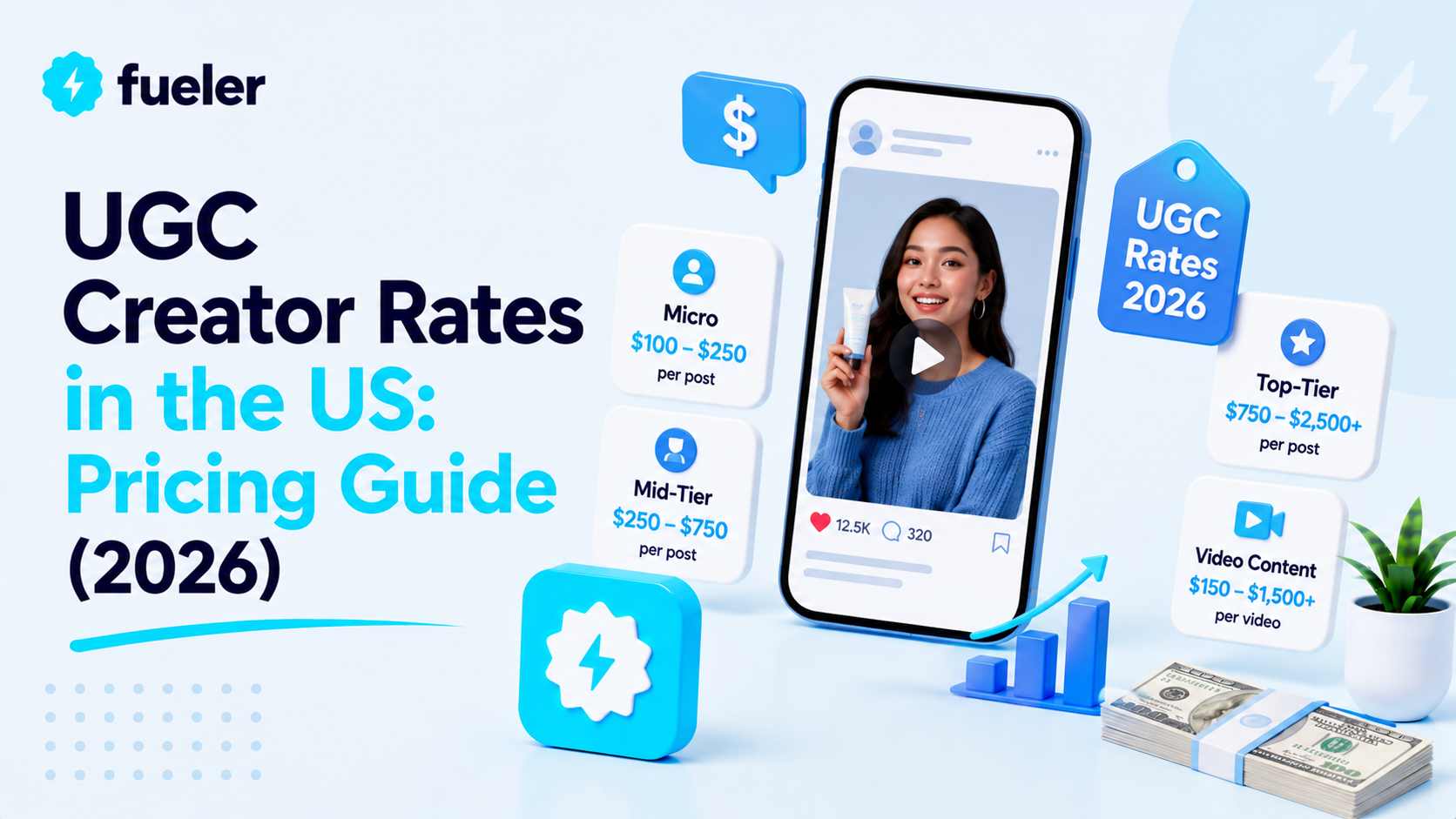
Short-form video is the primary driver for UGC revenue in 2026, as brands prioritize vertical content for TikTok, Instagram Reels, and YouTube Shorts. Market data shows a significant shift where "authenticity" is valued over high-production gloss, but the "hook" must be scientifically designed to stop the scroll. For a standard 15 to 60 second deliverable, rates in the US have stabilized into clear tiers based on the creator's track record and technical execution.
- Beginner Rates (0-1 Year): New creators typically charge between $150 and $300 per single video deliverable, which usually covers the basic script, filming, and one round of simple editing for organic social media use.
- Mid-Tier Rates (1-3 Years): Established creators with a proven portfolio of successful brand collaborations often command $400 to $800 per single video, reflecting their improved storytelling skills and higher conversion metrics.
- Established Professional Rates (3+ Years): High-level creators who act as creative directors for brands charge $1,000 to $3,000+ per video, often including advanced editing, specialized lighting, and professional-grade audio setups.
- Performance Bonuses and Incentives: A growing trend in 2026 involves creators negotiating "views bonuses," such as an extra $250 for every 10,000 organic views achieved, aligning the creator's pay with the brand's actual marketing success.
- Platform Specific Premiums: Due to the longer shelf life and searchability of the platform, YouTube Shorts often command a 20% premium over TikTok or Reels because the content continues to drive traffic for much longer.
Why it matters: Setting your base rate correctly for short-form video is the foundation of your business. These figures reflect the current US market average where brands are willing to pay for content that feels organic but carries the strategic weight of a high-converting advertisement.
2. Static Content and Professional Product Photography
While video dominates, static imagery remains essential for Pinterest, Amazon Product Detail Pages (PDPs), and Instagram carousels. Brands in 2026 use these assets to build trust on their websites and email newsletters. High-quality lifestyle photography that shows the product "in the wild" is often more effective than traditional studio shots. Static content typically requires less editing time than video, which is reflected in a lower but consistent price point.
- Single Lifestyle Photo Deliverables: Professional creators charge $100 to $250 per image, which includes high-resolution editing and color grading to ensure the photo matches the brand's specific aesthetic and color palette.
- High-Value Instagram Carousels: A package of 5 to 10 slides designed to tell a cohesive brand story or provide an educational "how-to" guide typically costs between $200 and $600 based on the depth of the storytelling.
- Amazon Ready Product Photography: Clean, high-resolution shots tailored specifically for Amazon PDP compliance, focusing on details and texture, are priced at $150 per image to reflect the technical precision required for e-commerce.
- Pinterest Optimized Static Pins: Since Pinterest requires a specific vertical ratio and text-overlay strategy, these specialized assets are sold for $75 to $200 per pin, frequently bundled into sets of five to ten for campaign consistency.
- Graphic Design and Editing Add-ons: For creators who provide custom graphic overlays, hand-drawn elements, or text animations on static shots, an additional "creative fee" of $50 to $150 is standard to cover the extra design labor.
Why it matters: Static content is a high-margin upsell that requires less labor than video but provides immense value to brands for their omnichannel marketing. Including these in your rate card allows you to capture budget from departments focused on web conversion and email marketing. If you're building out this side of your service offering, our guide on Top Tools for Visual Content Creation in 2026 covers the equipment and software worth investing in to keep your static content sharp and efficient.
3. Usage Rights and Content Licensing Fees
In 2026, the industry has strictly separated "Creation Fees" from "Usage Rights." If a brand wants to use your content for paid advertising (Spark Ads or Meta Ads), they must pay a licensing fee. Public data suggests that 90% of consumers prioritize authenticity, making your "likeness" highly valuable for paid media. Creators who fail to charge for usage rights are essentially letting brands profit from their face for free.
- Standard Organic Usage Rights: This is almost always included in the base creation price and allows the brand to post the content only on their own organic social media feeds without putting paid ad spend behind it.
- Paid Ad Usage (30-90 Days): For the right to use your content in "dark posts" or paid advertising campaigns, creators charge an additional 30% to 50% of the base creation fee for every month or quarter the ad runs.
- Whitelisting and Dark Posting Fees: If a brand wants to run ads directly through your personal social media handle to make the ad look more authentic, the monthly fee is usually between $200 and $500 per platform used.
- Raw Footage and Asset Access: Many creators now charge 40% of the total base rate to hand over unedited files, as this allows the brand's internal team to create infinite variations without paying the creator for new videos.
- Perpetual and Exclusive Rights: For a brand to own the content forever and prevent you from working with competitors, the price is significantly higher, often ranging from 200% to 500% of the original creation fee.
Why it matters: Licensing fees represent passive income. By structuring your contracts with clear usage durations, you ensure that you are fairly compensated as the brand continues to generate revenue from your creative work over several months.
4. Bulk Package Pricing and Retainer Models
Brands in 2026 are moving away from one-off projects and toward "content engines" that require 5 to 20 videos per month. Among the pricing strategies creators use to meet this demand, bulk packaging is the standard way to offer a discount while securing a higher total contract value. For creators, this provides income stability, and for brands, it reduces the cost per deliverable. Market data indicates that bundled pricing typically offers a 15% to 20% discount compared to individual rates.
- 3-Video Starter Package Deals: Aimed at testing a brand's new product, these packages range from $1,000 to $2,000 and provide three different "hooks" to see which one resonates best with the target audience on social media.
- 5-Video Brand Growth Packages: The most popular option for mid-sized US brands, priced between $1,500 and $3,500, which usually includes a 15% discount compared to buying five videos separately over several months.
- Monthly Content Retainer Models: For a commitment of 4 to 8 videos per month, creators secure stable income between $4,000 and $8,000, ensuring the brand has a consistent stream of fresh content for their marketing calendar.
- Multi-Asset Hybrid Bundles: A comprehensive package including 5 high-quality videos and 10 lifestyle photos often ranges from $2,000 to $4,500, offering a complete library of assets for the brand’s website and social pages.
- Long-Term Subscription Discounts: Some professional creators offer a lower "per video" rate if the brand signs a 3-month or 6-month contract, providing the creator with financial security while lowering the brand's overall investment.
Why it matters: Retainers are the "holy grail" of UGC because they eliminate the need for constant pitching. Offering bulk discounts makes it easier for brands to say yes to a larger investment, which ultimately saves you time on administration and onboarding.
5. Niche-Specific Rate Premiums
Not all niches are created equal in 2026. Industries with high customer acquisition costs, such as FinTech and B2B SaaS, are willing to pay a "specialist premium" for creators who understand their complex products. Conversely, highly saturated niches like Beauty or Fashion may see more competitive (lower) pricing unless the creator has a proven track record of driving actual sales.
- B2B SaaS and Professional Tech: Projects in this space command $1,000 to $2,500 because the creator must understand software workflows and communicate high-level business value to a professional, skeptical audience.
- FinTech and Personal Finance: Because these videos require high trust and often need to follow strict legal compliance rules, assets are priced between $800 and $2,000 per video to reflect the specialized knowledge required.
- Health, Wellness, and Biohacking: Creators in this niche charge $600 to $1,500 per video, focusing on ingredient breakdowns, scientific benefits, and lifestyle transformations that require a high degree of credibility and research.
- Beauty, Skincare, and Fashion: While highly competitive, top-tier creators in this space still earn $250 to $1,200 per video, with the higher end reserved for those who can demonstrate a high "aesthetic" production value.
- Luxury Travel and High-End Real Estate: Due to the travel time, specialized equipment like drones, and aspirational editing styles required, these projects often start at $1,500 and can go much higher for resort features.
Why it matters: Understanding niche dynamics allows you to position yourself as an expert. If you are working in a high-paying niche, you can justify rates that are 2x to 3x higher than the market average because your content directly impacts high-value purchase decisions.
6. Raw Footage and Edit-Only Services
A growing trend in 2026 is brands asking for "Raw Footage" so their in-house editors can create multiple variations. Alternatively, brands may provide their own footage and ask the UGC creator to "edit-only" into a viral format. These services are priced differently because they separate the "filming" labor from the "creative strategy" and "editing" labor.
- Raw Footage Surcharge Fees: Creators typically charge an additional 30% to 50% on top of their base rate to hand over the unedited clips, as this represents a loss of future editing work from that specific brand.
- Edit-Only Production Services: If a brand provides all the raw clips and only needs the creator's editing expertise, the market rate is between $150 and $400 per video depending on the complexity of transitions and captions.
- Multiple Hook Variation Add-ons: Creators charge $50 to $100 for each additional 3-second "hook" filmed for a single video, allowing the brand to test different ways to capture the viewer's attention at the start of an ad.
- Call-to-Action (CTA) Variations: Providing two or three different endings, such as "Link in bio" versus "Shop the sale now," usually costs an extra $50 per variation to help the brand optimize for different campaign goals.
- Scriptwriting and Creative Strategy: For creators who only handle the research, hook development, and scriptwriting without doing the filming, the professional fee ranges from $150 to $400 per high-converting script.
Why it matters: Offering variations (different hooks or CTAs) is the easiest way to increase a project's value. It allows brands to A/B test their ads, which is a major priority for US marketing teams in 2026, making you a more valuable partner.
7. Additional Fees: Revisions and Rush Deliveries
To protect your time and profit margins, your rate card must include "protection fees." In 2026, standard contracts include 1 to 2 rounds of minor revisions. Anything beyond that, or any request for a "24-hour turnaround," should incur a significant fee. This ensures that the brand respects your workflow and compensates you for the additional stress of tight deadlines.
- Post-Production Revision Fees: While the first two rounds of minor edits are usually free, professional creators charge $50 to $200 for each additional round of changes to protect their schedule from "scope creep."
- Rush Delivery and Quick Turnaround: If a brand needs the final assets in under 48 hours, it is standard to charge a "rush fee" of 25% to 50% of the total project cost to compensate for the prioritized workload.
- Product Handling and Return Fees: If a brand requires their product to be mailed back after filming, creators charge a $25 to $50 "handling fee" in addition to the actual shipping costs to cover the time spent on logistics.
- Custom Set and Prop Procurement: If a video requires a specific background or unique props, the creator is reimbursed for the costs plus a 15% sourcing fee to cover the time spent shopping for the items.
- Voice-Over Only Production: For projects where only the creator's voice is needed for an existing animation or video, the professional rate in the US market is $100 to $500 per finished minute of audio.
Why it matters: These "hidden" costs can quickly eat into your profits if not addressed upfront. Having a professional policy for revisions and rush jobs sets clear boundaries and establishes you as a serious business owner rather than a casual freelancer. If you want to get ahead of these issues entirely, check out how to map out client projects for better results, proper project scoping from day one prevents most revision and rush-fee disputes before they happen.
Before you finalize your rate card, remember that high rates require high-quality proof. This is where Fueler comes in. Instead of sending brands a generic list of links, you can use Fueler to build a professional, skills-based portfolio that showcases your best UGC samples and past assignments. By showing brands exactly what you are capable of through a structured portfolio, you can justify your 2026 rates and close deals with more confidence.
Final Thoughts
Navigating UGC rates in the US during 2026 requires a balance of market awareness and self-valuation. While average prices for basic deliverables have become more accessible for brands, the value of specialized expertise and usage rights has never been higher. By using this guide to structure your pricing, you move away from "guessing" and toward a professional business model that respects your time and your talent. Stay consistent, keep your portfolio updated, and don't be afraid to charge what you are worth.
FAQs
What is the most common UGC video rate in 2026?
The average rate for a single 30 to 60-second UGC video in the US is approximately $212, though experienced creators often start their pricing at $500 to $800 per deliverable.
How much should I charge for 12 months of ad usage rights?
In 2026, charging 50% to 100% of the base creation fee for a full year of digital ad usage is standard. This compensates you for the brand using your likeness to generate profit over an extended period.
Do UGC creators charge more for YouTube than TikTok?
Yes, YouTube UGC often commands a higher fee (typically $350 to $1,000+) because the content is usually longer-form and requires more detailed scripting and high-resolution editing compared to TikTok.
Is it okay to offer discounts for bulk UGC orders?
Yes, offering a 15% to 20% discount for packages of 5 or more videos is a standard industry practice that helps creators secure higher total contract values and build long-term brand relationships.
What are the best high-paying niches for UGC in 2026?
The highest-paying niches right now are B2B SaaS, FinTech, and Health/Wellness Tech. These sectors have larger marketing budgets and value the technical expertise required to explain their products clearly.
What is Fueler Portfolio?
Fueler is a career portfolio platform that helps companies find the best talent for their organization based on their proof of work. You can create your portfolio on Fueler. Thousands of freelancers around the world use Fueler to create their professional-looking portfolios and become financially independent. Discover inspiration for your portfolio
Sign up for free on Fueler or get in touch to learn more.

What should you do next?
You've read the article. Now turn your skills into proof of work and unlock more opportunities.
Build your proof of work portfolio
Create a clean portfolio with projects, assignments, resumes, and AI stack details that companies actually want to see.
Create your Fueler portfolio →Apply through assignments, not resumes
Stand out by solving real tasks from companies hiring on Fueler.
Explore assignments →Get discovered by companies
Make your work public and let recruiters discover your skills through actual projects instead of keywords.
Get discovered →
