UGC Creator Rates in Europe (Pricing Guide 2026)

Riten Debnath
11 Apr, 2026
Last updated: April 2026
The "Wild West" era of UGC is over. In 2026, brands aren't just looking for someone with a ring light; they are looking for performance. If you are a creator in Europe, the market has shifted. While average rates saw a slight dip in 2025 due to an influx of new creators, the demand for high-converting, professional-grade content has actually pushed premium rates higher. This guide is built on actual 2026 market data to help you stop guessing and start getting paid what you are worth.
I’m Riten, founder of Fueler, a skills-first portfolio platform that connects talented individuals with companies through assignments, portfolios, and projects, not just resumes/CVs. Think Dribbble/Behance for work samples + AngelList for hiring infrastructure.
1. Baseline Video Rates for the European Market 2026
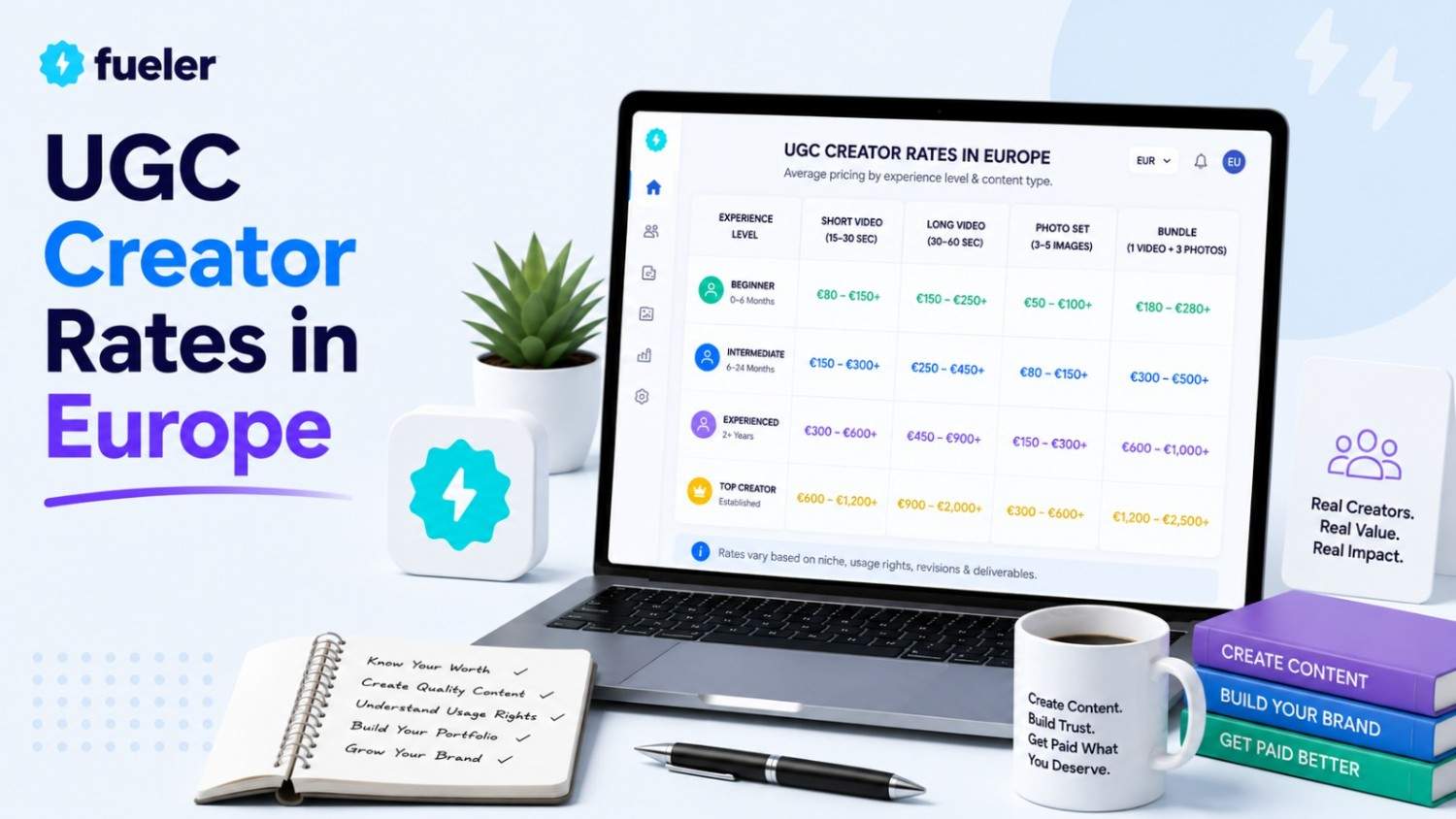
The price of a single UGC video in Europe today is determined more by your "Proof of Work" than your follower count. In 2026, the average cost for a 15, 60-second vertical video sits around €212, but there is a massive range based on your tier. Western European markets like Germany and the UK typically command a 15% premium over Southern or Eastern European rates due to higher operational costs and brand budgets.
Entry-Level Creators (0-3 months): For those just starting out in 2026, the standard rate ranges between €50 and €150 per video. This price point usually includes a single high-quality edited video with one revision. At this stage, your focus should be on building a solid collection of work samples to prove your creative ability to future high-paying European clients.
Intermediate Professionals (3-12 months): Once you have a portfolio of 10 or more successful projects, your rates should move into the €150 to €500 bracket. Brands at this level expect more than just a pretty video; they want strategic storytelling, better lighting, and content that is specifically designed to fit the latest 2026 social media algorithm trends.
Experienced UGC Experts (1+ years): Creators with over a year of consistent delivery and a deep understanding of marketing psychology can easily command €500 to €1,500 per video. This rate is justified by the creator's ability to handle everything from advanced scriptwriting to professional-grade color grading and audio engineering, ensuring the final product is ready for massive ad spend.
Specialist Performance Creators: If you can prove that your videos consistently generate a high Return on Ad Spend (ROAS) for brands, you move into the premium specialist category. These creators often charge €1,000+ per video because they act as creative strategists who understand exactly how to convert a viewer into a paying customer for the brand.
Professional Photo Sets (5-10 images): High-quality static imagery for social media remains a strong revenue stream, with sets typically priced between €150 and €300. These are not just basic selfies; they are high-resolution, aesthetically pleasing lifestyle shots that brands use for their website galleries, email marketing campaigns, and organic social media feeds throughout the year.
Why it matters
Having a clear baseline keeps you from being exploited by "low-ball" offers that undervalue your time. Brands often use marketplaces to find cheap content, but they come to individual creators for quality and reliability. If you know these numbers, you can anchor your negotiations in market reality rather than just picking a number out of thin air.
2. High-Intent Niche Premiums
Not all niches pay the same. In 2026, tech and finance brands in Europe are paying significantly more because the "cost of failure" for their ads is higher. They need creators who understand data privacy, banking regulations, or complex software interfaces. If you are filming a simple water bottle unboxing, your rate will naturally be lower than a deep-dive demo of a new FinTech app.
Tech and SaaS Platforms: This is currently the highest-paying niche in Europe, averaging €450 per video because it requires a high level of technical literacy. Creators must be able to explain complex software features or app interfaces in a way that feels simple, engaging, and trustworthy to a 10th-grade-level audience.
Clean Beauty and Skincare: With an average rate of €400 per video, this niche demands extreme attention to visual fidelity and lighting. Brands in 2026 are moving away from heavy filters and toward "raw" but high-definition skin textures, requiring creators to have excellent camera gear and a deep understanding of natural lighting techniques.
FinTech and Neo-Banking: Financial brands are paying an average of €380 per video because they value trust and clarity above all else. Creators in this space need to be professional and articulate, as they are often handling sensitive topics like investment apps, digital wallets, or insurance products that require strict adherence to local European regulations.
Health and Fitness Technology: This niche averages around €320 per video and focuses heavily on performance-based storytelling. Brands looking for UGC in this category want creators who can authentically demonstrate wearable tech, supplements, or workout equipment while showing real-life integration and health benefits that resonate with a fitness-conscious European demographic.
Home and Sustainable Lifestyle: While the volume in this niche is high, the per-unit cost is often lower, ranging from €150 to €250 per video. The focus here is on aesthetic "vlog-style" content that feels organic and cozy, making it a great entry point for creators who want to build a high volume of work samples quickly.
Why it matters
Specializing in a high-paying niche allows you to work less and earn more by positioning yourself as an expert. When you understand the specific language of a "High-Intent" niche like Finance or SaaS, you aren't just a content creator, you are a strategic partner. Brands will always pay more for that specialized knowledge and peace of mind.
3. The Hidden Revenue: Usage Rights and Licensing
This is where 90% of creators leave money on the table. In 2026, your "base rate" only covers the creation of the content and organic use. If a brand wants to use your video as a Facebook Ad or a TikTok Spark Ad, they are essentially "renting" your likeness to make money. Usage rights are now standardly calculated as a percentage of your base fee.
30-Day Paid Usage Rights: It is standard to charge an additional 30% of your base fee for the first month of paid advertising. This allows the brand to put money behind your video on platforms like Meta or TikTok to reach a wider audience beyond their own followers, essentially leveraging your face to drive their sales.
90-Day Paid Usage Rights: For a three-month campaign, creators typically charge a premium of 50% to 75% on top of their base rate. This is the most common duration for European seasonal campaigns, providing the brand enough time to optimize the ad while ensuring you are fairly compensated for the extended use of your identity.
Perpetual and Unlimited Use: While some brands ask for "forever" rights, it is rarely recommended for creators. If you do agree, the industry standard in 2026 is to charge a massive premium of 100% to 150% of the total project fee. This compensates you for the fact that the brand could use your image for years to come.
Category and Brand Exclusivity: If a brand asks you not to work with any of their competitors for a set period, you should charge an extra 50% to 100%. This is vital because exclusivity prevents you from taking other high-paying jobs in the same niche, meaning the brand must pay for that "lost" potential income.
Social Media Whitelisting: This involves granting the brand permission to run ads directly through your personal social media handle rather than their own. In 2026, this is a premium service that usually carries a flat monthly fee or an additional 25% to 50% surcharge because it puts your personal reputation directly behind the product.
Why it matters
Usage rights turn a one-time payment into a scalable business model that respects your intellectual property. If a brand wants to use your video to make thousands of Euros in profit through targeted ads, you deserve a share of that commercial value. Never include "unlimited usage" in your base price.
4. Hook Variations and A/B Testing Add-ons
In 2026, performance marketers are obsessed with A/B testing. Instead of buying five different videos, brands often prefer one video with three different "hooks" (the first 3 seconds). This allows them to see which version stops the scroll most effectively. Offering these variations is a high-value service that takes you very little extra time but adds massive value to the brand.
Additional Hook Variations: Charging between €50 and €100 for each extra hook is a great way to increase your revenue. A hook is simply the first few seconds of a video designed to grab attention. Providing multiple versions allows a brand to test different psychological triggers to see which one performs best in their ads.
CTA (Call to Action) Variations: Offering different endings for a video, such as "Download Now" versus "Shop the Sale," usually costs between €40 and €75 per variation. These small changes help brands tailor the video to different stages of the customer journey, making your content much more versatile and useful for their marketing team.
Raw and Unedited Footage: Brands often want the "raw" clips to edit themselves into different formats, and you should charge 30% to 50% of your base rate for this. Selling raw footage means you are giving up creative control, so the price must reflect the convenience and flexibility the brand is gaining from your work.
Green Screen and Specialized Backgrounds: If a project requires you to use green screen technology or specific digital backgrounds, a 20% premium is usually added to the total. This covers the additional setup time and the more technical editing process required to ensure the digital elements look professional and seamless in the final vertical video format.
Advanced AI Captions and Subtitles: While basic captions are often expected in 2026, offering "premium" styled captions with custom fonts and animations can be a paid add-on. Brands value this because high-quality subtitles are essential for viewers who watch videos on mute, which accounts for a huge portion of social media users today.
Why it matters
Selling variations is the easiest way to increase your "Average Order Value" (AOV) without starting from scratch. It is much easier to sell an existing client three hooks for an extra €150 than it is to find a completely new brand to work with. It proves you understand the goal: finding the winning ad.
5. The Power of Bundles and Retainers
Brands in Europe are moving away from one-off "test" videos and toward long-term partnerships. In 2026, "UGC Retainers" are the gold standard for income stability. Offering a discount for volume is a win-win: the brand gets a lower cost-per-video, and you get guaranteed income and less time spent pitching.
Three-Video Content Bundles: Offering a 5% to 10% discount on a package of three videos is a classic strategy to encourage brands to buy more than one. This ensures the brand has enough content for a full month of posting while giving you a larger upfront payment and more creative variety to showcase in your portfolio.
Five-Video Growth Packages: A bundle of five videos usually attracts a 15% to 20% discount. This is the "sweet spot" for brands launching a new product line in Europe, as it provides enough diverse content to test different styles, backgrounds, and creators' outfits to see what resonates most with their specific target audience.
Starter Monthly Retainers: A monthly retainer of €1,000 to €3,000 typically covers 4 to 8 videos and provides much-needed financial stability. For the brand, it means they have a reliable creator who understands their voice, while for you, it means you can plan your monthly budget without the stress of constant pitching.
Growth-Focused Retainer Tiers: For larger companies, retainers of €4,000 to €8,000 per month are common for 10 to 15 videos plus creative strategy. At this level, you aren't just a creator, you are helping the brand decide what content to make, providing them with a full-service creative department for their social media presence.
Expedited Rush Delivery Fees: If a brand needs a video delivered within 48 hours, it is standard to charge a 25% to 50% "rush fee." This compensates you for moving other projects around and working extra hours to meet their tight deadline, which is a common occurrence in fast-moving industries like fashion.
Why it matters
Retainers allow you to stop the "freelance feast and famine" cycle that many creators face. When you have a few brands on a steady monthly retainer, you have a guaranteed income base. This security allows you to be more selective with other projects and focus on the quality of your craft rather than just chasing the next paycheck.
6. Strategic Production and Editing Fees
While basic editing is often expected, advanced "high-retention" editing is a premium skill in 2026. European brands are looking for content that looks "native" to the platform but still maintains high production values. If you are handling complex transitions, color grading, or multi-location shoots, your rate should reflect that extra labor.
Multi-Location Shoots: If you have to travel to different spots, like a park, a gym, and a kitchen, for one video, you should add a 30% premium. This covers the extra travel time, equipment teardown, and setup required to capture a variety of backgrounds, which makes the final video look much more professional and high-budget.
On-Screen Text and Motion Graphics: Adding custom motion graphics or specific on-screen text elements usually costs an extra €50 per video. This is more than just standard captions, it includes things like pop-up icons, animated arrows, or price tags that help guide the viewer's eye and drive home the brand's key selling points.
Advanced Color Grading and LUTs: For brands that have a very specific "aesthetic" or color palette, professional color grading is a must and can be billed as a €30 add-on. This ensures that your video fits perfectly with the brand's existing professional photography and marketing materials, providing a cohesive look across all its digital platforms.
Voiceover-Only Content: If a brand only needs your voice to lay over their own product shots, the rate is usually around 60% of your standard video fee. This is a great "low-effort" way to earn money, but it still requires high-quality microphone equipment and a professional, engaging delivery to be effective for the brand.
Professional Scriptwriting Services: If a brand comes to you without a plan, you can charge €50 to €100 to write the script yourself. This is a valuable service because you know what works on social media better than most corporate marketing teams, and it ensures the final video is optimized for maximum engagement and conversion.
Why it matters
Detailing these fees in your rate card prevents "scope creep," where a brand slowly asks for more work without offering more money. If a brand knows your prices upfront, it keeps the relationship professional and fair. It ensures you are being paid for every minute of specialized work you put into a project.
7. Showcasing Proof of Work with Fueler
The biggest mistake I see creators make is sending a messy Google Drive folder or a generic link-in-bio as their portfolio. In 2026, decision-makers at European agencies are busy and have no time to waste. They want to see your best work, organized by niche, with clear results and a professional presentation. They don't want to dig through your personal Instagram to find your work samples.
This is exactly why we built Fueler. It allows you to create a high-impact, professional portfolio where your UGC videos are the star of the show. You can categorize your projects, show off your "proof of work" for specific niches like Tech or Beauty, and give brands a seamless experience that builds instant trust. When you send a Fueler portfolio link, you aren't just a "content creator," you are a professional business partner who is ready to deliver high-quality results.
Final Thoughts
Pricing your UGC work in 2026 is about more than just a random number; it is about understanding the professional value you provide to a brand's bottom line. The European market is sophisticated and rewards creators who treat their work like a real business. Start with your base rate, never ignore the value of your usage rights, and always lean into your high-performing niches to maximize your income. As long as you keep proving your work and delivering quality, your rates will continue to climb as you grow.
FAQs
What is the average UGC video rate in the UK for 2026?
The average rate in the UK currently sits between £180 and £350 for an intermediate creator with a solid portfolio. Because London is a global hub for marketing agencies, the UK market often offers some of the highest budgets in Europe for creators who can prove their work through high-quality samples.
How do I charge for UGC usage rights in Europe?
The most accurate 2026 practice is to charge a percentage of your base fee depending on the length of the campaign. For example, a standard 90-day paid ad usage right usually adds 50% to your initial cost. Always ensure these terms are written clearly in your contract before you begin any filming.
Can I be a UGC creator without a large following?
Yes, in 2026, 90% of brands hire UGC creators specifically for the high-quality content they produce rather than the audience they have. Your portfolio and your ability to create "scroll-stopping" videos that look and feel authentic are far more important than your follower count on any social media platform.
What is a "Whitelisting" fee in creator contracts?
Whitelisting is a service where a brand pays you to run their ads directly through your personal social media handle rather than their own brand account. In 2026, this typically commands a premium of 25% to 50% over your base rate because it uses your personal credibility to sell their product.
How often should I increase my UGC rates as a professional?
A good rule of thumb is to evaluate your rates every 5 to 10 completed projects to reflect your growing experience. If you find that you are consistently booked or that your videos are achieving a high return for your clients, it is a clear signal that it is time to raise your prices.
Why 100,000+ professionals use Fueler
Fueler helps professionals showcase proof of work through projects, assignments, case studies, and achievements.
Thousands of professionals use Fueler to create their digital portfolio
Thousands of projects are published on Fueler. Check here
Startups and Companies hire through proof of work on Fueler
Used by freelancers, creators, marketers, video editors, writers, designers, and product managers
Our mission is to help the next 100 million professionals build a verified professional identity through proof of work


What should you do next?
You've read the article. Now turn your skills into proof of work and unlock more opportunities.
Build your proof of work portfolio
Create a clean portfolio with projects, assignments, resumes, and AI stack details that companies actually want to see.
Create your Fueler portfolio →Apply through assignments, not resumes
Stand out by solving real tasks from companies hiring on Fueler.
Explore assignments →Get discovered by companies
Make your work public and let recruiters discover your skills through actual projects instead of keywords.
Get discovered →
