50 UGC Content Ideas That Brands Will Pay You For

Riten Debnath
05 Apr, 2026
Last updated: April 2026
The digital landscape has shifted, and today, your smartphone is more than just a communication device; it is a full-scale production studio that brands are desperate to hire. Authentic storytelling has officially replaced the glossy, fake advertisements of the past. People no longer trust actors in suits; they trust real humans who show how a product actually works in a messy kitchen or a busy office. If you can capture the "realness" of a product, you are holding the keys to a very profitable career in content creation.
I’m Riten, founder of Fueler, a skills-first portfolio platform that connects talented individuals with companies through assignments, portfolios, and projects, not just resumes/CVs. Think Dribbble/Behance for work samples + AngelList for hiring infrastructure.
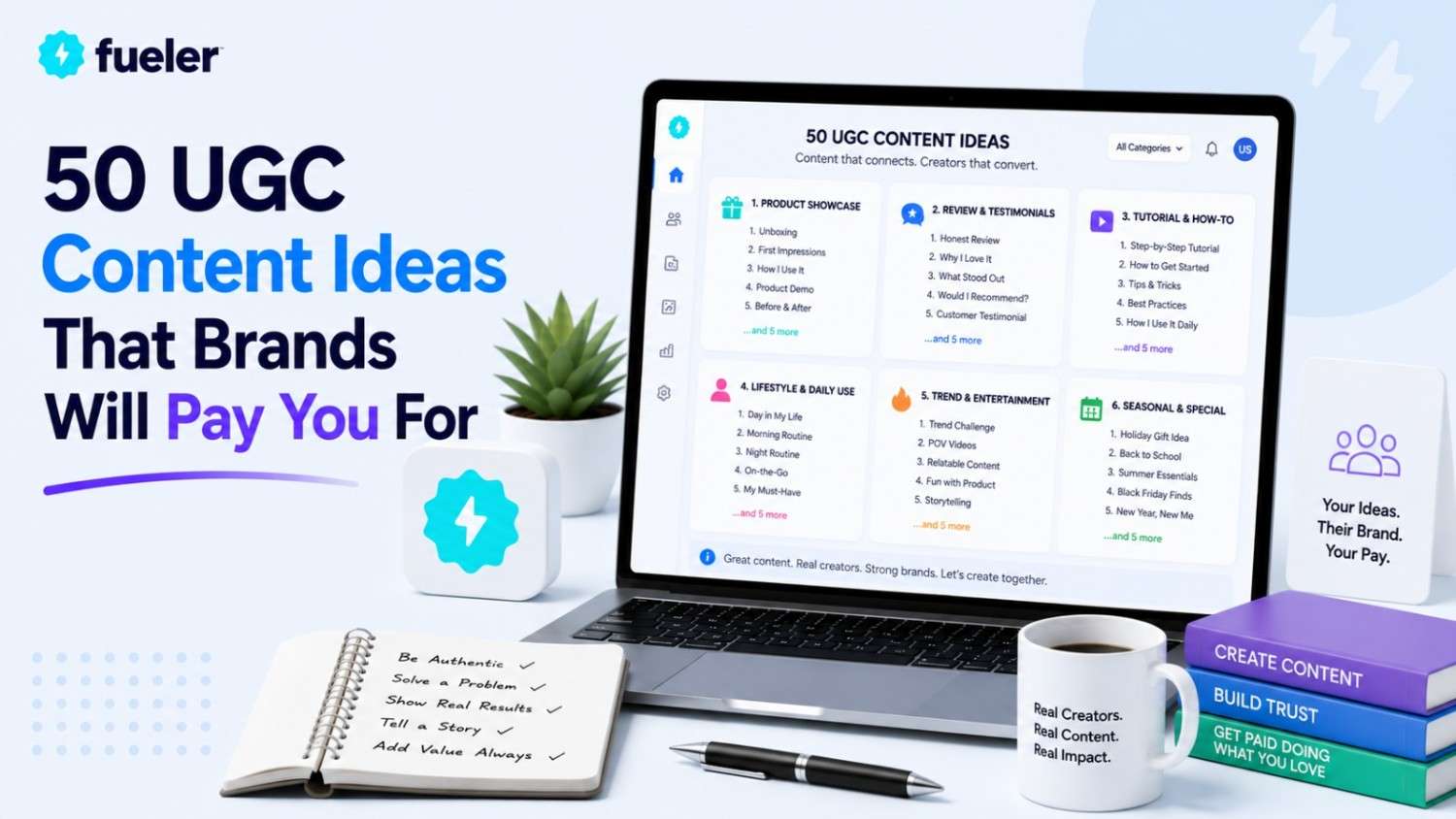
The Ultimate List of 50 UGC Content Ideas
1. The Raw First Impression Unboxing
When you receive a package, the most valuable moment is the first ten seconds after you break the seal. Brands love this because it captures genuine excitement and shows the actual packaging quality. You should focus on the sound of the box opening and your immediate, unfiltered reaction to seeing the product for the first time. It builds massive anticipation for the viewer.
2. The Problem Versus Solution Transformation
Start your video by showing a specific frustration, like messy hair or a cluttered desk, and then introduce the product as the hero. This narrative arc is incredibly effective because it targets a specific pain point the audience feels. By the end of the clip, the viewer should feel a sense of relief seeing how easily the product solved that exact everyday struggle.
3. The 7 Day Habit Tracker
Documenting how a product fits into your life over an entire week provides the "social proof" that skeptics need before buying. You can show small snippets from Monday through Sunday, highlighting the subtle improvements in your skin, productivity, or energy levels. This longer-term perspective proves the product isn't just a one-hit wonder but a valuable addition to a daily routine.
4. The Educational Mini Tutorial
Many people skip buying products because they are afraid they won't know how to use them. You can bridge this gap by creating a simple, step-by-step guide that explains a specific feature. Focus on the most "confusing" part of the product and make it look easy. When you empower the customer with knowledge, they are much more likely to click the buy button.
5. The Aesthetic Product Placement Vlog
Sometimes the best way to sell a product is not to "sell" it at all, but rather to show it existing beautifully in your life. Whether it is a coffee machine on a sunlit counter or a laptop in a cozy cafe, this "lifestyle" content helps the brand define its vibe. It allows the customer to imagine that product sitting in their own home, creating a desire for that specific aesthetic.
6. The Comparison Side by Side
Take a generic, lower-quality item and place it next to the brand's product to highlight the superior build or performance. You don't need to be mean to the competitor; just focus on the visible differences in texture, speed, or durability. This logical approach appeals to the "rational" shopper who wants the best value for their money and needs a clear reason to choose one brand.
7. The Honest Q and A Session
Address the most common comments or "doubts" people have about a product in a face-to-camera format. By being honest about who the product is for and who it might not be for, you build an incredible amount of trust. Brands pay for this because it qualifies their leads, ensuring that the people who eventually buy the product are actually going to be happy with it.
8. The ASMR Sensory Experience
Focus entirely on the sounds of the product, such as the click of a lid, the sizzle of a pan, or the tapping on a glass bottle. This type of content is highly "binge-able" and keeps viewers watching until the very end. It emphasizes the physical quality of the materials and provides a satisfying experience that makes the brand feel premium and high-end to the viewer.
9. Behind the Scenes Setup
Show the "messy" reality of how you actually use a product when the cameras aren't usually rolling. Whether it is how you store your supplements in a kitchen cabinet or how you pack a travel bag, this transparency is refreshing. It makes the brand feel like a part of a real human life rather than a staged commercial, which is exactly what modern consumers are looking for.
10. The Holiday or Seasonal Special
Position the product as the perfect gift or the essential item for a specific time of year, like summer or Christmas. Show how it fits into a holiday tradition or solves a seasonal problem, like staying hydrated in the heat. By giving the product a timely context, you create a "sense of urgency" that encourages the viewer to purchase the item before the season is over.
11. The Comparison with Industry Leaders
Take a well-known, expensive brand and compare it to a newer, more affordable brand to show that the quality is just as good. This "dupe" culture is massive on social media because everyone loves saving money without sacrificing quality. If you can prove that the smaller brand performs just as well as the giant, you provide a massive service to your audience.
12. The "What is in my bag" Reveal
This classic content format remains popular because it feels like a personal recommendation from a friend. By pulling a specific product out of your daily bag, you are showing that it is an essential part of your "everyday carry." It proves the product's portability and practical value in a way that feels natural and unforced, making it a staple for UGC creators.
13. The Five Ways to Use It
Maximize the perceived value of a product by showing five different ways it can be used that aren't immediately obvious. For example, a silk scarf could be a headwrap, a bag accessory, or a top. This versatility makes the purchase feel like a "steal" for the customer. Brands love this because it expands their target audience to people who might use the product differently.
14. The "I Tried it So You Don't Have To" Hook
Position yourself as the brave tester who is investigating a viral or "too good to be true" product. This framing creates immediate curiosity and high retention rates because people want to see if the product actually works. Even if the review is mostly positive, starting with a skeptical tone makes the eventual praise feel much more earned and authentic to the viewer.
15. The Professional Office Tour
Incorporate tech gadgets, ergonomic chairs, or stationery into a "workspace tour" video. This targets the professional demographic that is always looking for ways to improve their productivity or office decor. By showing how a product fits into a high-functioning work environment, you lend it an air of professional credibility that appeals to high-intent buyers looking to upgrade their career setup.
16. The "Stop Doing This" Educational Hook
Start your video by calling out a common mistake your audience makes, like using the wrong skin brush or storing coffee incorrectly. Introduce the brand’s product as the "correct" way to do things. This positions you as an expert and the product as an essential tool for improvement. Brands love this because it creates a high-authority recommendation that feels helpful rather than salesy.
17. The Visual Texture 4K Close-Up
Focus purely on the sensory details of a product, like the way a cream spreads or the sound of a mechanical keyboard. These "oddly satisfying" clips are great for high-end brands that want to emphasize quality materials. By showing the product in extreme detail, you remove the mystery of what it actually feels like, which is a major barrier for online shoppers.
18. The "Three Reasons Why" Listicle
Structure your video around three specific, fast-paced benefits that solve a problem for the viewer. This format is perfect for short-form platforms because it is easy to digest and keeps retention high. Use on-screen text to highlight each point as you speak. Brands pay for this because it works incredibly well as a "top of funnel" ad to grab quick attention.
19. The Sustainable Swap Comparison
Show a common plastic or wasteful item and swap it out for the brand’s eco-friendly alternative. Explain exactly how much money or waste the viewer saves by making the switch. This appeals to the growing demographic of conscious consumers who want to make better choices. It frames the product not just as a purchase, but as a contribution to a better lifestyle.
20. The Travel Essentials Pack-With-Me
Show how a product fits perfectly into a carry-on bag or a backpack for a weekend trip. This demonstrates the product's size, weight, and portability in a real-world context. Travel brands specifically look for creators who can make their gear look indispensable for a smooth journey. It targets the "vacation mindset" where people are more willing to spend on convenience.
21. The "Day 1 vs Day 30" Results
Film yourself on the first day of using a supplement or fitness app, then cut to a month later showing the progress. Use the same lighting and outfit to ensure the comparison feels honest and scientifically sound. This long-term commitment shows that the product actually delivers on its promises. Brands value this content because it provides the ultimate level of social proof.
22. The Busy Parent Life Hack
Demonstrate how a product saves five minutes during a chaotic morning routine with kids. Whether it’s a quick-clean vacuum or a healthy snack, focus on the "sanity-saving" aspect of the item. This resonates deeply with parents who are looking for any way to simplify their lives. It sells a "feeling" of peace and organization rather than just the physical item itself.
23. The "Does It Actually Work?" Stress Test
Put a product through a tough situation, like dropping a "shatterproof" bottle or testing a waterproof jacket in heavy rain. This builds massive credibility because it shows the product performing under pressure. Viewers love seeing "real-world" tests that aren't staged in a lab. If the product survives, the brand has a powerful piece of content to use in its marketing.
24. The Gift Unboxing for a Loved One
Record the reaction of a friend or family member receiving the product as a gift. Their genuine surprise and joy provide an emotional hook that most traditional ads lack. It positions the brand as the "perfect gift" for birthdays or holidays. Emotional resonance is a huge driver for sharing, giving the brand organic reach beyond its paid advertising budget.
25. The "I Can't Live Without This" Office Essential
Highlight one specific item on your desk that actually improved your focus or reduced your back pain. Speak directly to the camera about the specific "before" pain you felt. This peer-to-peer recommendation feels like a secret being shared between coworkers. It is highly effective for B2B brands or tech companies looking to reach professional audiences who value efficiency.
26. The Budget-Friendly Room Refresh
Show how a few small, affordable decor items from a brand can completely change the vibe of a bedroom or office. Focus on the "before" and "after" visuals to show the impact of the design. This appeals to people who want a change but don't have the budget for a full renovation. It makes the brand feel accessible and high-value for the average consumer.
27. The Post-Workout Recovery Routine
Incorporate massage guns, protein shakes, or stretching gear into your cool-down period at the gym. This targets the fitness community by showing how the product helps with the "painful" part of exercise. By highlighting the relief the product provides, you create a strong emotional connection. Brands pay well for this because it enters the viewer's existing habit loop.
28. The "Secret Ingredient" Recipe Reveal
Create a meal where the brand’s product is the star that makes the dish "restaurant quality." Show the cooking process in fast, engaging cuts and finish with a close-up taste test. This works for everything from specialized oils to high-end pans. It gives the audience a "result" they can achieve themselves, making the product a must-buy for their next grocery run.
29. The Morning Coffee Aesthetic Reel
Focus on the slow, calming process of making a morning drink using a brand’s milk, beans, or mug. Use high-quality audio for the pouring and stirring sounds to create a relaxing "vibe." This type of content is highly "savable" and often gets reposted by lifestyle accounts. It helps the brand associate its products with a sense of daily luxury and self-care.
30. The "Everything I Bought" Haul
Show a collection of items you purchased from a single brand and give a quick 5-second review of each. This variety shows the brand's range and often leads to viewers finding something they didn't know they needed. Hauls are inherently high-energy and exciting, which keeps people watching to see what the next item is. It is a great way to drive high-volume traffic.
31. The "If You Hate X, Try Y" Problem Solver
Identify a universal annoyance, like tangled headphones or leaky water bottles, and introduce the product as the ultimate fix. This works because it addresses a specific negative emotion and provides immediate relief. Brands love this format for targeted ads because it speaks directly to a niche audience's pain points.
32. The "Everything I Bought This Month" Recap
Gather all your recent brand purchases and give a rapid-fire review of each. This "mini-haul" format keeps energy high and shows that you are a consistent consumer of quality goods. It provides a sense of variety and allows viewers to discover multiple products in one short, engaging sitting.
33. The Silent "Product in Action" Cinematic
Sometimes, words aren't needed. Create a visually stunning, high-definition clip of the product being used in a beautiful setting with trending music. This focuses entirely on the "vibe" and aesthetic appeal of the item. It is perfect for luxury or lifestyle brands that want to build an aspirational image.
34. The "This vs. That" Feature Comparison
Compare the brand’s product against a generic version, focusing on one specific feature like durability or speed. Be objective and show the physical difference on camera so the viewer can see the value for themselves. This logical breakdown helps hesitant buyers justify the price of a premium product.
35. The "I Can't Believe This Cost Only $X" Reveal
Highlight a high-quality product that looks expensive but is actually affordable. This "budget luxury" angle is incredibly viral because everyone loves finding a great deal. It positions the brand as a "hidden gem" and encourages immediate clicks from viewers looking to upgrade their lifestyle without breaking the bank.
36. The "POV: You Finally Found It" Relief
Use a "Point of View" text overlay to show the moment of satisfaction when a product finally solves a long-standing issue. Whether it's the perfect pair of jeans or a skincare product that actually works, the emotional payoff is huge. It creates a "me too" moment for the viewer that builds instant brand affinity.
37. The "Behind the Scenes" Brand Story
Share a quick fact about how the product is made or the brand’s mission, like their use of recycled materials. This adds a layer of depth and ethics to the purchase, making the consumer feel good about where their money is going. Values-based marketing is a massive driver for Gen Z and Millennial shoppers in 2026.
38. The "Morning vs. Night" Routine Switch
Show how a product plays a different but equally important role at the start and end of your day. For example, a versatile bag that works for the gym and the office. This demonstrates multi-functionality and gives the brand more "use-case" scenarios to show off in their marketing campaigns.
39. The "I Tried the Viral Trend" Investigation
Take a popular social media trend and see if the brand’s product actually lives up to the hype. This positions you as an objective journalist for your audience. Even if you are being paid, a balanced "test" feels more authentic and believable than a scripted ad, leading to higher trust and sales.
40. The "Common Myth" Debunking Session
Identify a common misconception about a product category and use the brand's item to prove it wrong. For instance, "People think vegan leather isn't durable, but look at this." This educational approach removes "buying barriers" and helps the brand overcome common objections before the customer even reaches the website.
41. The "Gift Ideas for the Person Who Has Everything"
Position the product as a unique, thoughtful solution for a difficult-to-buy-for friend or relative. This targets the "gift-giving" search intent, which peaks during holidays and graduation seasons. It makes the brand the "easy choice" for a stressed-out shopper looking for something impressive and different.
42. The "30-Second Life Hack" Integration
Show a clever way to use the product that isn't mentioned on the box, like using a specific container to organize a different part of the house. This "extra value" makes the product feel like a smarter purchase. Brands love it when creators find new, creative ways to market their existing inventory.
43. The "Unfiltered Skin/Hair" Journey
For beauty brands, showing real texture, pores, and flyaways is a huge trust signal. Use a "no filter" approach to show how the product looks in natural light. This honesty is refreshing in an age of AI-editing and makes the results feel achievable for the average person watching at home.
44. The "Office Refresh" Desk Setup
Incorporate tech accessories or stationery into a clean, minimalist "desk tour" video. This appeals to the massive "Productivity YouTube" and "Work From Home" communities. By showing the product in a professional, high-achieving environment, you lend it a sense of status and utility that drives high-intent clicks.
45. The "What I Wish I Knew Sooner" Advice
Frame the product as a life-changing discovery that you regret not finding years ago. This creates a "fear of missing out" (FOMO) for the viewer. It is a powerful psychological hook that suggests the viewer is currently struggling unnecessarily by not owning the item.
46. The "Pet-Tested, Pet-Approved" Review
If the product is pet-friendly or for pets, let the animals do the talking. A dog's excitement or a cat's comfort is impossible to fake and provides instant "cute factor" engagement. This niche has some of the highest engagement rates on social media and leads to very loyal customer bases.
47. The "Travel Vlog" Destination Integration
Show the product being used during a trip, whether it's a portable charger at an airport or a sunscreen on a beach. This provides a "lifestyle" context and proves the product's durability in transit. It associates the brand with the positive emotions of vacation and adventure.
48. The "Cleaning Motivation" Satisfying Edit
Use the product to clean a very dirty surface and film the process in a fast-paced, "satisfying" edit with crisp audio. This taps into the "CleanTok" community’s love for visual transformations. The instant gratification of seeing a mess disappear is a major selling point for any home or hardware brand.
49. The "One Month Empty Bottle" Review
Show a product you have completely finished and explain why you are going to buy it again. This "re-purchase" proof is the ultimate compliment for a brand. It shows that the product isn't just good for a one-time video, but has earned a permanent spot in your life.
50. The "Direct Comment Reply" Video
Take a question from your comments section and film a video response using the product to explain the answer. This creates a "feedback loop" that makes your audience feel heard and involved. Brands value this because it shows you are actively engaged with a community and can handle real customer inquiries.
Showcase Your Skills Effectively
When you are reaching out to brands, the most important thing you can have is "proof of work." Sending a link to a professional page is much better than sending a messy Google Drive folder. Fueler is specifically designed to help you showcase these UGC samples as a portfolio. By organizing your videos by niche, like Beauty, Tech, or Fitness, you show brand managers that you are a serious professional who understands how to deliver high-quality assignments.
Final Thoughts
The world of UGC is wide open for anyone willing to put in the effort to tell a good story. You don't need a million followers; you just need the ability to make a product look useful and relatable. By using these 50 ideas as a foundation, you can start building a body of work that proves your value to any brand. Start small, stay consistent, and always keep the viewer's needs at the center of your content.
Frequently Asked Questions
How do I get my first UGC brand deal in 2026?
The best way is to create "spec" content for products you already own and love. Post these to your portfolio and then reach out to similar brands, showing them exactly what you can produce for them before they even ask.
Do I need a professional camera for UGC?
No, most modern smartphones have cameras that are more than capable of producing high-definition content. In fact, many brands prefer the slightly "less perfect" look of a phone camera because it feels more authentic to the average social media user.
What is the best way to price my UGC videos?
Start by researching the market rate for beginners, which is usually between $150 and $250 per video. As you gain more experience and can show that your videos actually drive sales, you can increase your rates significantly based on the value you provide.
How can I make my UGC videos look more professional?
Focus on two things: natural lighting and clear audio. Stand facing a window during the day to get the best light on your face, and ensure there is no background noise so your voice sounds crisp and easy to understand for the viewer.
How do I find brands that are looking for UGC?
You can look at the "Ad Library" on platforms like Meta to see which brands are currently running video ads. These companies are already spending money on content and are the most likely to be open to hiring a new UGC creator for their next campaign.
What is Fueler Portfolio?
Fueler is a career portfolio platform that helps companies find the best talent for their organization based on their proof of work. You can create your portfolio on Fueler. Thousands of freelancers around the world use Fueler to create their professional-looking portfolios and become financially independent. Discover inspiration for your portfolio
Sign up for free on Fueler or get in touch to learn more.

What should you do next?
You've read the article. Now turn your skills into proof of work and unlock more opportunities.
Build your proof of work portfolio
Create a clean portfolio with projects, assignments, resumes, and AI stack details that companies actually want to see.
Create your Fueler portfolio →Apply through assignments, not resumes
Stand out by solving real tasks from companies hiring on Fueler.
Explore assignments →Get discovered by companies
Make your work public and let recruiters discover your skills through actual projects instead of keywords.
Get discovered →
