Top 12 Digital Health Solutions Popular in the USA in 2026

Riten Debnath
15 Jan, 2026
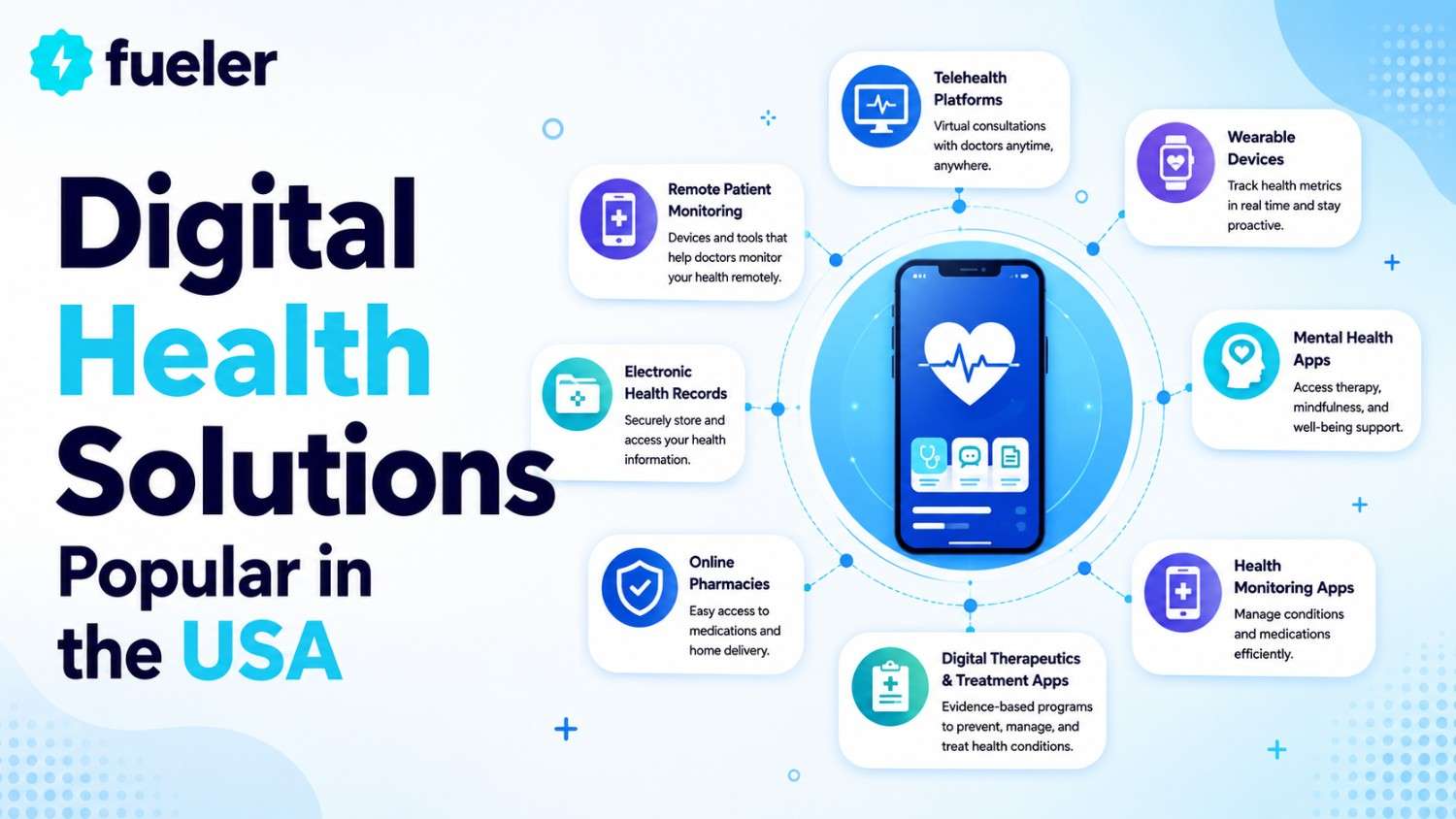
The healthcare landscape in the United States is moving faster than ever before, transitioning from paper-heavy clinics to high-speed digital ecosystems. We are living in an era where your smartphone is essentially a pocket clinic, and data-driven insights are helping doctors save lives before a patient even enters the emergency room. For anyone looking to understand where the industry is headed, keeping an eye on these digital health solutions is no longer optional, it is a necessity for staying relevant and healthy in 2026.
I’m Riten, the founder of Fueler - a skills-first portfolio platform that connects talented individuals with companies through assignments, portfolios, and projects, not just resumes/CVs. Think Dribbble/Behance for work samples + AngelList for hiring infrastructure.
1. Doxy.me (Simple Telemedicine)
Telehealth has moved from being a luxury to a standard expectation for patients across the USA who value convenience and speed. Doxy.me has established itself as a leader in this space by focusing on extreme simplicity, ensuring that neither the doctor nor the patient has to struggle with complex software downloads or account setups. It operates entirely within a web browser, making it incredibly accessible for older populations or those who aren't tech-savvy, while maintaining the strict security standards required by federal law.
- The platform offers a completely free tier that is HIPAA-compliant, which is perfect for solo practitioners who want to start offering virtual visits without any financial risk or heavy investment.
- Patients can join a virtual waiting room that feels like a real clinic experience, allowing doctors to manage their daily schedule and see who is next in line without any awkward technical gaps.
- It includes high-quality encrypted video and audio streams that work even on lower-speed internet connections, ensuring that the quality of care remains high regardless of where the patient is located.
- The professional versions allow for custom branding, meaning a small clinic can make the virtual room look like their physical office, complete with logos and personalized check-in messages for patients.
- You can easily integrate features like screen sharing for reviewing lab results together or a simple chat function for sharing quick notes and links during the medical consultation.
Pricing: * Free Version: $0 (Basic HIPAA-compliant calling).
- Professional Plan: Approximately $35 per month per provider.
- Clinic Plan: Custom pricing for larger groups.
Why it matters: In the context of modern US healthcare, reducing the "friction of entry" is the biggest hurdle for virtual care. This tool matters because it allows doctors to reach patients in rural areas or busy urban centers without the need for expensive hardware, effectively democratizing access to professional medical advice.
2. Dexcom Clarity (Remote Glucose Monitoring)
Managing chronic conditions like diabetes used to require constant finger pricks and manual logbooks that were often inaccurate or forgotten. Dexcom Clarity has revolutionized this by acting as a bridge between wearable hardware and smart software, providing a real-time window into a patient’s glucose levels. Automating data collection, it removes the "human error" factor and gives healthcare teams a much more honest and detailed picture of how a patient is reacting to food, exercise, and medication throughout the day.
- The software automatically syncs with wearable sensors to create "Trend Reports" that highlight patterns of high or low blood sugar, helping patients make better lifestyle choices in real-time.
- It features a "Share" function that allows patients to invite up to ten different followers, such as family members or doctors, to see their live data and receive alerts during emergencies.
- Healthcare providers can access a dedicated dashboard that organizes their entire patient list, flagging those who are most at risk or struggling to stay within their healthy glucose targets.
- The system generates clinical-grade reports that can be directly uploaded into electronic health records, saving time during office visits and making consultations much more productive and data-driven.
- Predictive alerts use smart algorithms to warn a user if their blood sugar is expected to drop too low within the next twenty minutes, giving them a vital window to take action.
Pricing: * The software is generally free for users of Dexcom hardware.
- Hardware kits (sensors/transmitters) vary by insurance but often cost $200 to $500 out-of-pocket per month without coverage.
Why it matters: This digital solution is popular because it shifts the focus from "reactive" medicine to "proactive" management. For a healthcare system burdened by chronic disease, tools like this prevent expensive hospitalizations and empower patients to take full control of their own biology through their smartphones.
3. Talkspace (Mobile Mental Health)
Mental health support in the USA has historically been difficult to access due to high costs and long waiting lists for in-person appointments. Talkspace solved this by bringing licensed therapy to the digital world, allowing users to communicate with professionals through text, voice, and video messages. It’s designed for the modern lifestyle, where someone might need to reach out to their therapist during a stressful work day rather than waiting for an appointment three weeks away.
- Users are matched with a licensed therapist based on their specific needs and goals through an initial assessment that uses smart matching algorithms to ensure a good fit.
- The platform supports "Asynchronous Messaging," which means you can send a message to your therapist whenever you have a thought, and they will respond during their dedicated daily work hours.
- It is fully integrated with many major US insurance providers and Employer Assistance Programs (EAPs), making professional therapy much more affordable for the average working American.
- Beyond individual therapy, the app offers specialized tracks for couples, teenagers, and even psychiatry services for those who may need medication management from a qualified doctor.
- The Talkspace Go feature provides a library of self-guided resources and therapist-led workshops for users who want to work on their mental wellness between their regular sessions.
Pricing: * Messaging Plans: Start around $69 per week (billed monthly).
- Live Video Sessions: Often included in premium plans or available as add-ons.
- Psychiatry: $299 for initial evaluation, $179 for follow-ups.
Why it matters: With the rising mental health crisis, this solution provides a scalable way to deliver care to millions. It matters because it breaks down the stigma and the physical barriers of traditional therapy, making it a standard part of the digital health toolkit for the modern US workforce.
4. Epic MyChart (Patient Portals)
If you have ever visited a major hospital in the US, there is a very high chance you have used MyChart without even realizing it. Owned by Epic Systems, this portal is the gold standard for patient engagement, acting as a single hub where you can see your test results, message your doctor, and pay your bills. It solves the massive problem of "siloed data" by allowing different doctors within the same network to see exactly what has been done, preventing duplicate tests and medical errors.
- Patients can view their laboratory and imaging results the moment they are released by the lab, often seeing the data at the same time as their doctor for full transparency.
- The "Bedside" feature allows hospitalized patients to see their daily schedule, learn about their care team, and even order their meals directly from a tablet in their room.
- It provides a centralized location for managing prescriptions, allowing users to request refills from their pharmacy with a single click instead of calling the doctor’s office.
- A robust "Interoperability" engine allows you to link health records from different hospital systems, so if you get treated while on vacation, your home doctor can see the records.
- The platform allows for easy scheduling of both in-person and video visits, including the ability to check in virtually and fill out boring paperwork before you even arrive.
Pricing: * Free for patients (the cost is covered by the hospital or healthcare system).
- Hospital systems pay millions for the underlying Epic infrastructure.
Why it matters: This is the "operating system" for modern American hospitals. It matters because it puts the patient at the center of the care team, giving them the same information as the professionals and ensuring that no piece of medical history is lost when moving between specialists.
5. Aidoc (AI Medical Imaging)
Radiologists are often overwhelmed by the sheer volume of scans they have to review daily, which can lead to delays in spotting critical issues like strokes or internal bleeding. Aidoc is an AI-powered software that "looks" at medical images in the background the moment they are taken, flagging urgent cases for immediate review. It doesn't replace the doctor, but it acts like a super-powered assistant that makes sure the most dangerous cases are moved to the top of the pile.
- The AI is specifically trained to detect time-sensitive conditions such as brain hemorrhages, pulmonary embolisms, and rib fractures with incredibly high accuracy and speed.
- It integrates directly into the existing imaging software used by hospitals, so doctors don't have to open a new app or change their workflow to see the AI's suggestions.
- When a critical finding is detected, the software sends an instant alert to the specialist’s computer or phone, potentially saving hours of waiting time in emergency situations.
- The platform tracks "turnaround times" for critical cases, helping hospital administrators see where they can improve their efficiency to provide faster care to patients.
- It uses deep learning to constantly improve its detection capabilities, learning from millions of scans to become better at spotting subtle abnormalities that might be missed.
Pricing: * Enterprise Pricing: Usually starts at $50,000+ per year depending on hospital size and the number of AI modules activated.
Why it matters: In emergency medicine, every minute counts. Aidoc matters because it leverages artificial intelligence to solve the "human bottleneck" in radiology, ensuring that life-saving interventions happen as quickly as possible in hospitals across the USA.
6. Medtronic Care Management Services
For patients recovering from surgery or managing complex heart conditions, the time between doctor visits is often the most dangerous period. Medtronic provides a suite of remote monitoring tools that include smart scales, blood pressure cuffs, and tablets that send health data directly to a monitoring center. This "hospital at home" model allows doctors to keep a 24/7 eye on a patient's recovery without requiring them to stay in a costly hospital bed for weeks at a time.
- Patients receive a customized kit of Bluetooth-enabled devices that are pre-configured to work together right out of the box with no complex setup required.
- The system includes daily "health checks" where the patient answers simple questions on a tablet about how they are feeling, which helps identify issues before they become emergencies.
- Nurses at a central monitoring hub review the data daily and can call the patient immediately if they notice a sudden weight gain or a spike in blood pressure.
- The platform uses predictive analytics to identify which patients are at the highest risk of being readmitted to the hospital, allowing the care team to intervene early.
- It provides educational videos and content tailored to the patient’s specific condition, helping them learn how to manage their diet and exercise to improve their long-term health.
Pricing: * Usually covered by Medicare or private insurance as part of "Remote Patient Monitoring" (RPM) programs.
- Hospitals pay per-patient monthly fees, typically ranging from $50 to $150.
Why it matters: This solution is popular because it addresses the high cost of hospital readmissions in the US. It matters because it provides a safety net for vulnerable patients, allowing them to recover in the comfort of their own homes while still receiving world-class medical supervision.
7. GoodRx (Digital Pharmacy Savings)
The cost of prescription drugs is one of the biggest challenges in the US healthcare system, with many people unable to afford the medicine they need. GoodRx is a digital platform that allows users to compare prices at different pharmacies and access coupons that can often be cheaper than their insurance co-pay. It has brought much-needed transparency to the pharmacy industry, forcing competition and helping millions of Americans save money on every refill.
- The mobile app and website provide a searchable database of almost every FDA-approved medication, showing the exact price at nearby pharmacies like CVS, Walgreens, and Walmart.
- Users can download free "discount cards" or digital coupons that are scanned at the pharmacy counter to instantly lower the price of their prescription by up to 80%.
- GoodRx Gold is a subscription-based service that offers even deeper discounts and free home delivery for many common medications, making it a great option for families.
- The platform now includes a telehealth feature called GoodRx Care, where users can see a doctor online for a low flat fee to get a new prescription or a refill.
- It provides detailed information on "Patient Assistance Programs" offered by drug manufacturers, helping people with limited income find ways to get their medicine for free.
Pricing: * Standard App: Free to use for everyone.
- GoodRx Gold: Approximately $9.99 per month for individuals or $19.99 for families.
Why it matters: Affordability is a form of access. This tool matters because it directly tackles the financial barriers to health, ensuring that a digital solution can help a patient actually get the medicine that their doctor prescribed.
8. Hims & Hers (Direct-to-Consumer Health)
Hims & Hers has changed the way Americans approach "embarrassing" or lifestyle-related health concerns like hair loss, skin care, and sexual health. By offering a sleek, direct-to-consumer digital platform, they allow patients to consult with a doctor and get prescriptions delivered to their door in discreet packaging. It’s a prime example of how digital health is becoming a lifestyle brand that prioritizes the user experience and removes the awkwardness of the traditional waiting room.
- The platform offers a fully digital intake process where patients fill out a detailed health questionnaire that is reviewed by a licensed physician within 24 hours.
- Prescriptions are filled by their own partner pharmacies and shipped directly to the patient's home, often on a convenient monthly subscription basis so you never run out.
- They provide a wide range of over-the-counter products alongside prescription meds, creating a "one-stop shop" for wellness and personal care needs for both men and women.
- The app includes a messaging feature where patients can ask follow-up questions to their medical team at any time, ensuring they feel supported throughout their treatment.
- Their branding and interface are designed to look like a modern tech company rather than a clinical hospital, which helps younger generations engage more with their health.
Pricing: * Consultation fees are often included in the price of the products.
- Product subscriptions vary, typically ranging from $20 to $60 per month depending on the treatment.
Why it matters: This solution matters because it expands the "front door" of healthcare. By making it easy and less intimidating to seek help for personal issues, it brings more people into the medical system who might otherwise have ignored their symptoms.
9. Viz.ai (Stroke Coordination)
Stroke care is a race against the clock where "time is brain," meaning every second of delay leads to more permanent damage. Viz.ai uses artificial intelligence to scan CT images and instantly alert a whole team of specialists if a large vessel blockage is detected. Instead of the traditional "phone tree" where one doctor calls another, this digital solution puts everyone the surgeon, the neurologist, and the nurses on the same page in seconds.
- The AI detects signs of a stroke on medical scans within minutes and automatically pushes a high-priority alert to the mobile devices of the entire neurovascular team.
- It includes a secure, HIPAA-compliant messaging and video calling system that allows specialists to look at the scans on their phones and decide on a surgery plan instantly.
- The software coordinates the transfer of patients between smaller community hospitals and larger "Comprehensive Stroke Centers" to ensure they get to the right operating room.
- It provides a real-time "status board" that shows exactly where the patient is in the care process, from the initial scan to the start of the life-saving procedure.
- By reducing the time it takes to get a patient into surgery, the platform has been proven to significantly improve the chances of a full recovery after a major stroke.
Pricing: * Enterprise Hospital Pricing: Typically a yearly subscription based on the volume of patients, often ranging from $25,000 to $100,000+.
Why it matters: This is a high-stakes digital solution that literally saves lives by optimizing communication. It matters because it proves that AI’s best use in healthcare is not replacing doctors, but making the human team work together at the speed of light.
10. Omada Health (Digital Care Programs)
Chronic conditions like obesity and hypertension are the biggest drivers of healthcare costs in the USA, and traditional "once-a-year" doctor visits aren't enough to change long-term habits. Omada Health is a digital "intensive behavioral change" program that combines professional coaching with connected hardware like smart scales. It’s designed to be a constant companion that helps users make tiny, sustainable changes to their daily lives that add up to massive health improvements over time.
- Participants are placed in small, anonymous peer groups where they can share their progress and challenges, providing a level of social support that is often missing in medicine.
- Every user is assigned a personal professional health coach who monitors their data and provides personalized feedback and encouragement through the app.
- The program includes a smart, cellular-connected scale that automatically sends the user's weight to the app, so they don't have to manually track anything themselves.
- It features a series of interactive lessons and challenges focused on nutrition, stress management, and physical activity, all based on the latest behavioral science.
- Employers and insurance companies receive detailed "impact reports" showing how the program is reducing the risk of heart disease and diabetes across their population.
Pricing: * Usually free for employees through their company’s health insurance.
- Employers pay a monthly fee per active participant, often around $40 to $80.
Why it matters: This tool is popular because it focuses on "the other 364 days" of the year when a patient isn't in the doctor’s office. It matters because it uses digital connectivity to turn healthy living into a manageable, data-supported habit rather than a chore.
11. Zocdoc (Doctor Discovery & Booking)
Finding a new doctor in a big city can be an absolute nightmare, often involving dozens of phone calls just to find someone who accepts your insurance and has an opening. Zocdoc is the "OpenTable" of healthcare, allowing you to search for specialists, read verified patient reviews, and book an appointment online in seconds. It brings the convenience of the modern internet to the often-frustrating world of medical scheduling, making it much easier for people to get the care they need.
- The search engine allows you to filter doctors by their specialty, their physical location, the languages they speak, and most importantly, the specific insurance plan they accept.
- You can see a real-time calendar of available appointment slots, including last-minute cancellations that would otherwise go to waste, helping you see a doctor much faster.
- All patient reviews on the platform are verified, meaning only people who actually attended an appointment with that doctor can leave feedback about their experience.
- The app sends you automated reminders about your upcoming visits and allows you to fill out your medical history forms digitally before you even step into the office.
- It keeps a history of all the doctors you have visited, making it easy to re-book a follow-up or share your doctor's contact info with a friend or family member.
Pricing: * Free for patients.
- Doctors pay a subscription fee plus a "per-booking" fee for new patients, often totaling several thousand dollars per year.
Why it matters: This digital solution is essential for improving "patient flow" in the US. It matters because it reduces the administrative burden on both the patient and the clinic, ensuring that medical offices stay full and patients aren't left waiting weeks for urgent care.
12. Calm Health (Enterprise Mindfulness)
As workplace stress reaches an all-time high in the USA, companies are looking for digital solutions to support the mental wellness of their employees before they burn out. Calm Health is the clinical-grade version of the famous meditation app, specifically designed to integrate with a person’s medical care plan. It’s no longer just about "relaxing," but about using evidence-based mindfulness tools to help manage serious conditions like anxiety, depression, and chronic pain.
- The platform offers a library of thousands of guided meditations, sleep stories, and breathing exercises that are tailored to the user's current mood and stress levels.
- It includes specialized "Care Pages" for specific conditions, providing curated content that has been clinically validated to help with things like pre-surgery anxiety.
- Companies can offer the app as a "digital benefit," allowing employees to access premium mental health resources for free as part of their employment package.
- The app integrates with wearable devices like the Apple Watch to track heart rate and stress markers, suggesting a breathing exercise if it detects a spike in tension.
- It provides a secure way for users to share their "wellness progress" with their therapist or primary care doctor, bridging the gap between self-care and professional care.
Pricing: * Individual: $69.99 per year.
- Enterprise: Custom pricing based on the number of employees, usually a few dollars per person per month.
Why it matters: Mental wellness is a critical part of overall health. This solution matters because it provides a low-cost, high-impact way for millions of Americans to manage their stress daily, preventing the long-term physical health problems that high cortisol levels can cause.
Showcase Your Tech Skills with Fueler
If you are a developer, a healthcare analyst, or a designer working on the next big digital health tool, you know that a simple resume isn't enough to show what you can do. Fueler helps you build a skills-first portfolio where you can showcase the actual code you've written, the HIPAA-compliant apps you've designed, or the data research you've conducted. Instead of just telling a hiring manager you know about digital health, you can show them a collection of your actual projects and assignments, making you the obvious choice for any high-growth tech company.
Final Thoughts
The digital health revolution in the USA is not just about making things "faster," but about making them more human and accessible. From AI that catches strokes in minutes to apps that make therapy affordable for the average person, these tools are closing the gaps in a complex system. As we move through 2026, the boundary between "health" and "digital" will continue to disappear, creating a future where high-quality care is available to everyone, regardless of where they live. Embracing these tools today is the best way to ensure a healthier and more efficient tomorrow for all of us.
FAQs
What are the most popular telehealth platforms in the USA for 2026?
The most popular platforms include Doxy.me for its simplicity and browser-based access, Teladoc for its massive network of specialists, and Amwell for its deep integration into hospital systems. These tools are preferred because they offer secure, HIPAA-compliant video calls that make seeing a doctor as easy as making a FaceTime call.
How much does a digital health app like Talkspace cost?
Talkspace typically costs between $69 and $109 per week, depending on the plan you choose, and it is often billed on a monthly subscription basis. Many users find that their cost is significantly reduced or even covered entirely through their employer’s insurance or health benefit programs.
Are digital health tools like GoodRx safe to use with my prescriptions?
Yes, GoodRx is safe and widely accepted at over 70,000 pharmacies across the United States, including major chains like CVS and Walgreens. It simply provides a way to access pre-negotiated discounts and does not change the medication or the professional advice provided by your pharmacist.
How does AI help in US healthcare imaging for 2026?
AI tools like Aidoc and Viz.ai analyze medical scans (like CTs or X-rays) in real-time to identify life-threatening issues such as strokes or blood clots. These tools "triage" the scans, flagging the most urgent cases for the doctor so they can provide treatment immediately rather than waiting for the scan to be read in the normal order.
Can I get a prescription for chronic conditions through a digital health app?
Yes, platforms like Hims & Hers and GoodRx Care allow you to have a virtual consultation with a licensed healthcare provider who can write or refill prescriptions for many chronic conditions. This is especially popular for lifestyle medications, mental health, and routine primary care needs where a physical exam might not be necessary.
What is Fueler Portfolio?
Fueler is a career portfolio platform that helps companies find the best talent for their organization based on their proof of work. You can create your portfolio on Fueler. Thousands of freelancers around the world use Fueler to create their professional-looking portfolios and become financially independent. Discover inspiration for your portfolio
Sign up for free on Fueler or get in touch to learn more.

What should you do next?
You've read the article. Now turn your skills into proof of work and unlock more opportunities.
Build your proof of work portfolio
Create a clean portfolio with projects, assignments, resumes, and AI stack details that companies actually want to see.
Create your Fueler portfolio →Apply through assignments, not resumes
Stand out by solving real tasks from companies hiring on Fueler.
Explore assignments →Get discovered by companies
Make your work public and let recruiters discover your skills through actual projects instead of keywords.
Get discovered →
