The Ultimate Guide to Personal Branding in 2026

Riten Debnath
09 May, 2026
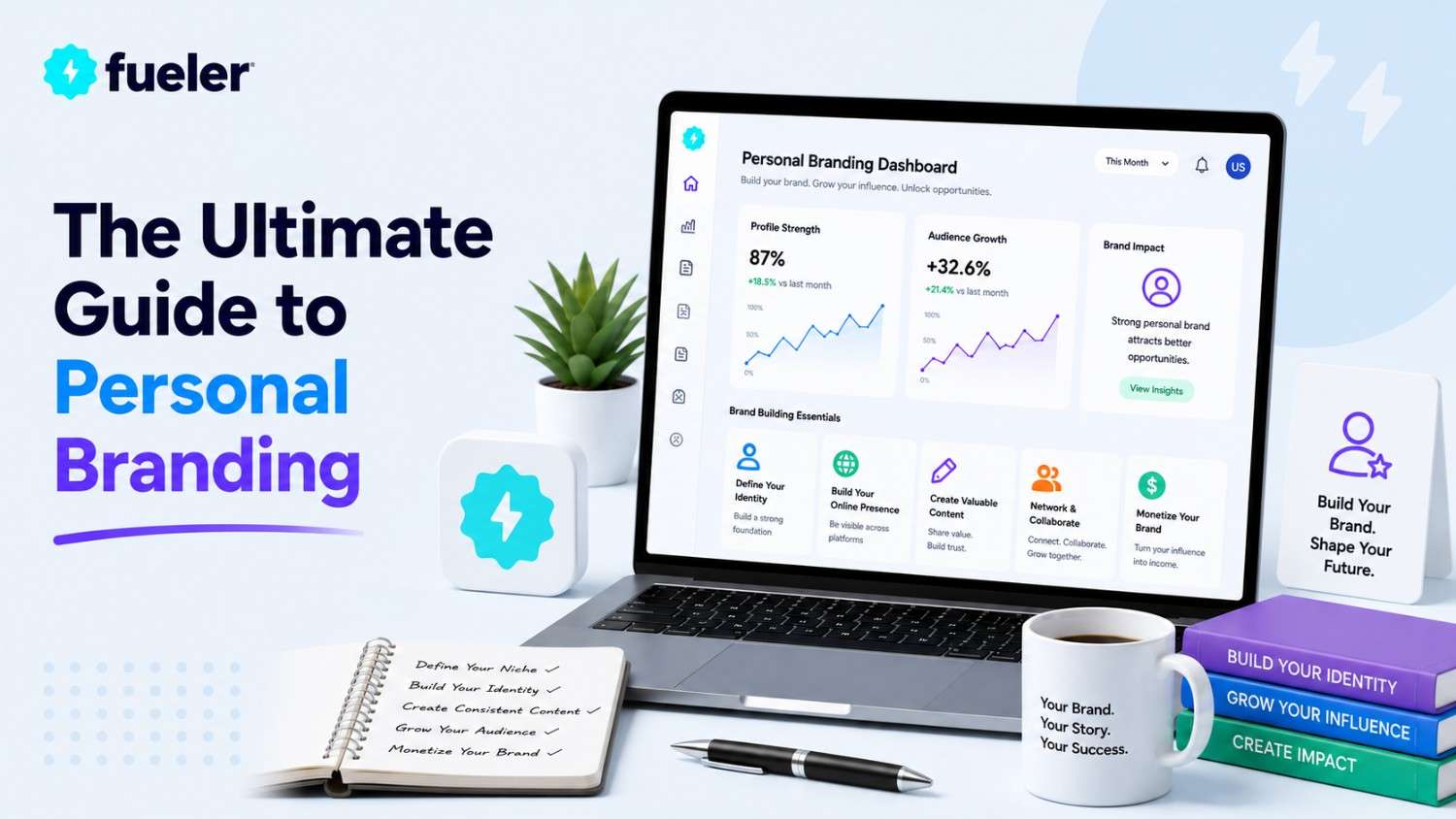
The game of building a reputation has completely changed over the last few years. In the past, you could hide behind a fancy job title or a degree from a big university, but in 2026, people don't care about what you say you can do; they care about what you have actually done. If you are not visible online in a way that feels real and honest, you are essentially invisible to the best opportunities in the world. This guide is your roadmap to standing out in a digital space that is louder than ever.
I’m Riten, founder of Fueler, a skills-first portfolio platform that connects talented individuals with companies through assignments, portfolios, and projects, not just resumes/CVs. Think Dribbble/Behance for work samples + AngelList for hiring infrastructure.
Personal branding isn't about being a "celebrity" or having millions of followers on social media. It is about becoming the person that people think of first when a specific problem needs to be solved. In 2026, your brand is the sum of your digital footprint, your consistency, and most importantly, your proof of work. Let’s break down the eight pillars you need to master to build a brand that actually moves the needle for your career.
1. Defining Your Unique Value Proposition (UVP)
Before you start posting online, you need to know exactly what you bring to the table that nobody else does. Your UVP is not just a list of your skills; it is the specific way you combine your talents, your personality, and your unique experiences to provide a result. In a world full of people who all look the same on paper, your UVP is the "hook" that makes a recruiter or a client stop scrolling and take notice of you.
- Auditing Your Natural Superpowers: Take a deep look at the tasks that feel like play to you but look like hard work to others, as these are the areas where you have a natural competitive advantage over everyone else.
- Combining Unlikely Skill Sets: Some of the strongest brands in 2026 come from "skill stacking," like being a developer who also understands deep psychology or a designer who is an expert in supply chain logistics and operations.
- Identifying Your Target Audience: You cannot be everything to everyone, so you must decide exactly whose problems you are solving and focus your entire brand message on helping that specific group of people succeed.
- Articulating Your Personal Mission: People don't just buy what you do; they buy why you do it, so be very clear about the change you want to see in your industry and how your work contributes to that goal.
- Testing Your Message with Peers: Ask three people who know your work well to describe your biggest strength in one sentence, then compare their answers to see if the brand you think you have matches reality.
Why it matters
Having a clear UVP is the foundation of SEO for your personal brand. When you are specific about what you do, search engines and AI agents can easily categorize you, making it much more likely that you will appear in search results when someone is looking for an expert in your niche.
2. Building a Living Portfolio of Proof of Work
In 2026, the traditional resume is a secondary document. The primary way companies verify your skills is through a living portfolio that shows the actual projects you have completed. This "Proof of Work" approach removes the guesswork for employers and allows them to see your thinking process, your technical abilities, and your consistency over time. A portfolio is not just a gallery; it is evidence of your professional competence.
- Documenting Your Process, Not Just Results: Share the "behind-the-scenes" of how you solved a difficult problem, including the mistakes you made and how you pivoted, which proves you have the resilience and critical thinking skills companies crave.
- Curating Your Best Assignments: Instead of showing everything you have ever done, pick five projects that perfectly represent the type of work you want to be hired for in the future and explain your specific role in them.
- Using Multi-Media Proof Points: Incorporate videos of you explaining a concept, screenshots of your code, or links to live websites to give a three-dimensional view of your skills that a flat document simply cannot provide to a viewer.
- Collecting Verified Testimonials: Reach out to past collaborators or managers and ask them for a short note about what it was like to work with you, then display these prominently to build immediate social proof and trust.
- Updating Your Work Regularly: A portfolio that hasn't been touched in a year looks like a career that has stalled, so make it a habit to add a new project or a fresh insight at least once every quarter.
Why it matters
Proof of work is the ultimate trust builder. In an era where anyone can claim to be an expert, having a visual record of your achievements sets you apart as someone who actually delivers results, which is the highest-intent signal a hiring manager looks for.
3. Mastering Generative Search Optimization (GSO)
The way people find you is changing. In 2026, recruiters aren't just typing names into Google; they are asking AI assistants to "find me a marketing expert who knows about sustainable fashion." Mastering GSO means making your online content easy for these AI models to read, summarize, and recommend. You want to be the person the AI cites as the authority when someone asks a question related to your specific field.
- Writing in Clear and Direct Language: Use simple sentence structures and avoid overly poetic descriptions so that AI crawlers can accurately extract your skills and experiences without getting confused by metaphors or industry-specific jargon that lacks context.
- Structuring Content with Proper Headings: Use H2 and H3 tags on your personal website or blog to organize your information, which helps both human readers and search algorithms quickly understand the hierarchy and main points of your professional story.
- Creating High-Value Long-Form Guides: Writing detailed articles about your niche shows that you have deep topical authority, which signals to search engines that you are a reliable source of information that should be ranked near the top.
- Participating in Industry Discussions: When your name appears on high-authority websites, podcasts, or forums, it creates "digital citations" that tell AI models you are a recognized figure who is trusted by other experts in your community.
- Optimizing Your Professional Bios: Every bio you writefrom LinkedIn to Twitter should include the specific keywords that people in your industry use to find talent, ensuring you show up in both traditional and AI-powered searches.
Why it matters
If the AI doesn't know you exist, you are losing out on the "hidden" job market. GSO ensures that your name is the one that gets suggested in the private chats and research sessions of decision-makers who are looking for their next big hire.
4. Developing an Authentic Content Engine
Consistency is the hardest part of personal branding, but it is also the most rewarding. In 2026, you don't need to post every day, but you do need to show up regularly with a voice that is unmistakably yours. An "authentic content engine" is a system where you share what you are learning, what you are building, and what you believe, which keeps you at the top of your audience's mind.
- Sharing Lived Experiences and Lessons: Move away from generic advice and instead tell stories about specific challenges you faced this week, as these personal insights are what build a real emotional connection with your followers and peers.
- Repurposing One Big Idea: Take a single deep insight and turn it into a short video, a series of social media posts, and a newsletter entry to ensure your best thinking reaches people in whatever format they prefer to consume.
- Engaging in Public Learning: Don't wait until you are an expert to start talking; share your journey as you master a new skill, which makes you more relatable and shows that you have a growth-oriented and curious mindset.
- Prioritizing Quality Over Frequency: One deeply helpful post per week that solves a real problem for someone is much more valuable for your brand than seven days of "fluff" content that people immediately forget after reading it.
- Maintaining a Consistent Visual Style: Use the same profile picture and a similar tone across all platforms so that your brand becomes a recognizable "anchor" in the fast-moving feeds of your professional network and potential clients.
Why it matters
Content is the "sales team" for your personal brand that works while you sleep. By sharing your thoughts publicly, you are constantly educating your network on what you know, which significantly reduces the amount of "convincing" you have to do during an interview.
5. Nurturing Niche Micro-Communities
The era of trying to go "viral" for everyone is over. In 2026, the real power lies in micro-communities, small groups of people who are deeply interested in the same niche as you. Being a "big fish in a small pond" is much more profitable and fulfilling than being an anonymous face in a massive audience. These communities are where the best referrals, collaborations, and insider information are found.
- Joining Private Professional Circles: Look for high-quality Slack groups, Discord servers, or gated forums where experts in your field gather to share real-world advice and job leads that never make it to public boards.
- Hosting Small-Scale Virtual Events: Organize a monthly "coffee chat" or a tiny webinar for twenty people to discuss a specific industry trend, which positions you as a leader and a facilitator within your professional community.
- Giving More Than You Take: Focus on being the most helpful person in the room by answering questions and connecting people to resources without expecting anything in return, which builds a massive amount of "social capital" over time.
- Building Direct Lines of Communication: Use a personal newsletter to keep in touch with your core supporters, giving you a way to reach them directly without being at the mercy of social media algorithms that change daily.
- Collaborating with Fellow Creators: Partner with people who have a similar audience size to yours for joint projects, which allows both of you to share your expertise with a new group of highly relevant and engaged people.
Why it matters
Niche communities are built on trust. When you are a respected member of a small group, your reputation travels fast. Most high-level jobs in 2026 are filled through these "trusted networks" before they are ever advertised to the general public.
6. Curating a Consistent Digital Footprint
Every time you comment on a post, write an article, or update a profile, you are adding to your digital footprint. In 2026, recruiters use sophisticated tools to look at your entire history to see if you are consistent. If your LinkedIn says you are a professional leader but your public comments are negative or unprofessional, it creates "brand friction" that can cost you a high-level opportunity.
- Performing Regular Digital Audits: Search for your name once a month to see what a stranger sees, and take the time to delete or archive old content that no longer reflects the professional you have become today.
- Aligning Across All Platforms: Ensure that your bio, your current projects, and your contact information are the same on every site, which makes you look organized and easy to do business with for potential partners.
- Focusing on Professional Sentiment: While it is okay to have opinions, ensure that your public interactions are constructive and respectful, as your ability to communicate well in public is a direct reflection of your leadership potential.
- Claiming Your Name Everywhere: Even if you don't use every social platform, sign up for your "name" as a handle to prevent others from using it and to ensure that you own your digital identity across the entire web.
- Highlighting Your Best Achievements: Use the "featured" sections on your profiles to pin your most impressive work or your most popular articles, guiding new visitors toward the things you are most proud of in your career.
Why it matters
A clean and consistent digital footprint is the "background check" of the future. When your online presence is cohesive, it signals that you are a reliable and high-integrity professional, which is the most important trait a company looks for when hiring someone for a long-term role.
7. Leveraging Social Proof and Third-Party Validation
You can tell people how great you are all day, but it will never be as powerful as someone else saying it for you. In 2026, third-party validation like awards, certifications, or even just public shout-outs from respected peers is the social "currency" that confirms your brand is legitimate. You need to actively look for opportunities to get your work validated by the experts and institutions that your audience already trusts.
- Winning Niche Industry Awards: Don't ignore small or local awards, as being "The Best Designer in Your City" or "Top Innovator in Your Niche" provides a badge of honor that adds instant credibility to your website.
- Guesting on Relevant Podcasts: Appearing as an expert guest on a podcast allows you to share your story with a pre-built audience and gives you a high-authority link that boosts your personal SEO for years to come.
- Publishing in Recognized Media: Writing a guest post for an industry blog or being quoted in a news article acts as a "seal of approval" that tells the world your insights are valuable enough to be published.
- Showcasing Client and Peer Wins: When someone you helped succeeds, share their story (with permission), as their success is the best possible proof that your methods and your expertise actually work in the real world.
- Earning Advanced Certifications: Keep your skills sharp by earning the latest certifications in your field, which proves you are committed to continuous learning and that you are up-to-date with the most modern tools and strategies.
Why it matters
Social proof removes the "risk" of hiring you. When a potential client sees that other respected people trust you, they feel much more comfortable making the decision to work with you, which speeds up your sales or hiring process significantly.
8. Prioritizing Human Connection in a Tech-Driven World
With so much content being generated by machines in 2026, the most valuable thing you can offer is your "human-ness." People are craving real connection, vulnerability, and personality. Your brand should not be a polished robot; it should be a real person who has hobbies, quirks, and a unique perspective. The more you lean into the things that make you human, the more "un-copyable" your personal brand becomes.
- Sharing Your Personal Hobbies: Don't be afraid to mention that you love gardening or that you are a marathon runner, as these small details make you more memorable and give people a non-work reason to start a conversation.
- Admitting When You Don't Know: Transparency is a superpower, so when you are asked a question you can't answer, saying "I don't know, but let me find out" builds more trust than making up a generic or fake response.
- Injecting Humor Into Your Work: A well-placed joke or a lighthearted comment shows that you are someone people would actually enjoy spending eight hours a day with, which is a major factor in hiring decisions for team-based roles.
- Building Real Relationships Offline: Use your online brand to get you into the room, but then focus on building deep, face-to-face connections at conferences or local meetups where the most meaningful professional bonds are usually formed.
- Responding to Your Audience Personally: Take the time to write a thoughtful reply to comments or messages instead of using generic templates, showing your followers that you value their time and that there is a real person behind the screen.
Why it matters
Technology can replicate your skills, but it can never replicate your personality. In a world full of AI, being a high-character, likable human being is the ultimate competitive advantage that will keep you relevant for the rest of your professional life.
How Personal Branding Connects to Your Career and Portfolio?
In 2026, your personal brand is the "wrapper" for your career, and your portfolio is the "gift" inside. You can have the most incredible skills in the world, but if nobody knows who you are or what you stand for, those skills will never reach their full potential. A strong brand gets you noticed, but a strong portfolio gets you hired. They work together to create a career that is both profitable and resilient to the changes in the global economy.
Think of your personal brand as your "Why" and your portfolio as your "How." When you combine a clear message with a visual record of your achievements, you remove all the friction from the hiring process. Companies in 2026 are tired of guessing which candidate is actually good; they want the person who has a reputation for excellence and the work samples to prove it.
This is exactly why we built Fueler. It is designed to be the home for your professional brand, where you can showcase your "Proof of Work" in a way that feels modern and credible. By organizing your assignments, projects, and testimonials into a skills-first portfolio, you are giving potential employers exactly what they need to make a fast and confident decision. Your brand brings them to your door, and your Fueler portfolio closes the deal.
Final Thoughts
Building a personal brand in 2026 is a marathon, not a sprint. It’s about making a series of small, consistent deposits into your professional reputation every single week. You don't need to be perfect; you just need to be helpful and honest. If you focus on providing value to your niche and documenting your work as you go, you will naturally build a brand that attracts the kind of opportunities you used to have to chase.
FAQs
What is the best way to start a personal brand with zero followers?
Focus on building a "Proof of Work" portfolio first on a platform like Fueler, then share the specific insights you learned from those projects with small, niche communities where people already care about your topic.
Do I need a personal website to have a strong brand in 2026?
While a website is great, having a centralized, professional portfolio like Fueler is more important because it focuses on your actual output and skills, which is what recruiters are primarily looking for in today's market.
How do I balance being professional and being "human" online?
The best rule is to be "selectively vulnerable." Share the stories and hobbies that highlight your character and work ethic, but always keep your main focus on the professional value and results you provide to your audience.
What are the high-intent keywords for personal branding in 2026?
Focus on keywords that describe specific problems you solve, such as "SaaS Growth Strategist," "UI/UX Designer for Fintech," or "AI Implementation Consultant," rather than generic titles that don't tell a recruiter what you actually do.
How does AI affect my personal brand in 2026?
AI acts as both a filter and a megaphone. If you have clear, high-quality content, AI will help more people find you; but if your brand is generic and lacks "proof of work," you will likely be ignored by modern search systems.
What is Fueler Portfolio?
Fueler is a career portfolio platform that helps companies find the best talent for their organization based on their proof of work. You can create your portfolio on Fueler. Thousands of freelancers around the world use Fueler to create their professional-looking portfolios and become financially independent. Discover inspiration for your portfolio
Sign up for free on Fueler or get in touch to learn more.

What should you do next?
You've read the article. Now turn your skills into proof of work and unlock more opportunities.
Build your proof of work portfolio
Create a clean portfolio with projects, assignments, resumes, and AI stack details that companies actually want to see.
Create your Fueler portfolio →Apply through assignments, not resumes
Stand out by solving real tasks from companies hiring on Fueler.
Explore assignments →Get discovered by companies
Make your work public and let recruiters discover your skills through actual projects instead of keywords.
Get discovered →
