The Ultimate Checklist to Registering a Business in the US (2026)

Riten Debnath
22 Sep, 2025
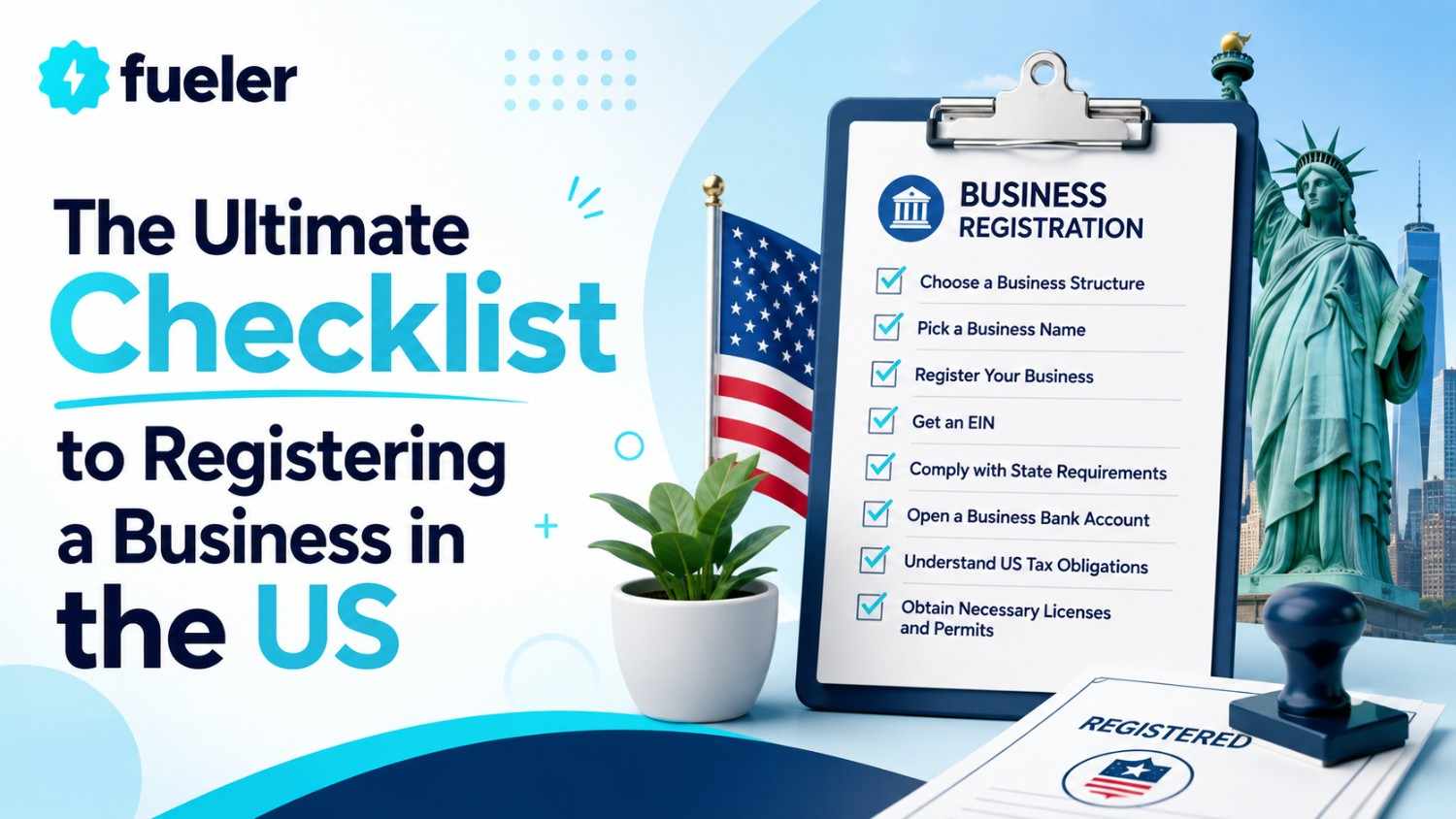
Starting a business is one of the most exciting steps in turning your ideas into reality. But before you start selling products, offering services, or hiring employees, it’s important to officially register your business. This ensures your business is legal, recognized by the government, and ready to operate without risks or penalties.
I’m Riten, founder of Fueler, a platform that helps freelancers and professionals get hired through their work samples. In this article, I’ll walk you through the ultimate checklist for registering your business in the US in 2026. Registering your business properly is not just a formality, it’s the first building block of your credibility. A solid registration process protects you legally, builds customer trust, and sets you up for long-term success.
Step 1: Choose Your Business Structure
Before anything else, you need to decide what type of business entity your company will be. This decision is important because it affects how you pay taxes, how much personal risk you carry, and how you can raise money later.
Common business structures in the US:
- Sole Proprietorship – Easiest to set up, but you and your business are legally the same. If your business has debts or lawsuits, your personal assets (like your home) are also at risk.
- Limited Liability Company (LLC) – Protects your personal assets if the business runs into legal trouble. Many small businesses prefer this for its flexibility in taxes and fewer rules than corporations.
- C Corporation – Separate legal entity, ideal for large businesses or startups looking for investment. Comes with more paperwork and requirements, but offers unlimited growth potential.
- S Corporation – Passes company income directly to shareholders (avoiding double taxation) but has limits on shareholders.
- Partnership – Perfect when starting with a co-founder. However, each partner is usually personally responsible for business debts.
Why it matters: Your business structure is like the foundation of a building. Get it wrong, and you may face tax issues, higher legal risks, or limits on growth. Choosing the right structure ensures financial stability and the ability to expand.
Step 2: Choose Your Business Name
Your business name is your identity. It’s the first impression customers will have, so it needs to be clear, memorable, and unique. But beyond creativity, you must ensure no one else is using that name to avoid legal trouble.
Key tips:
- Brainstorm names that reflect your services or values.
- Check the USPTO Trademark Database to make sure your name isn’t already registered.
- Search your state’s business directory to see if the name is available locally.
- Secure a domain name (website URL) for your business as soon as possible.
Why it matters: Your name will appear on all your legal documents, marketing materials, and online platforms. If it’s too similar to existing businesses, you might face lawsuits, lose customers, or have to rebrand which can be costly.
Step 3: Register Your Business with the State
Once your business structure and name are confirmed, the next step is registering with your state government. This makes your business legally recognized. The process can be different from state to state, but generally it involves filling out forms and paying a registration fee.
What to do:
- Visit your state’s Secretary of State website for specific instructions.
- File your Articles of Organization (for LLCs) or Articles of Incorporation (for corporations).
- Pay the filing fee, which typically ranges from $50 to $500 depending on the state.
- Keep a copy of your Certificate of Formation for your records.
Why it matters: Without official registration, your business is not legally allowed to operate. Skipping this step can lead to heavy fines, lawsuits, and even a forced shutdown.
Step 4: Get an Employer Identification Number (EIN)
An EIN is like a Social Security Number for your business. It’s used by the IRS to track your business for tax purposes and is required to hire employees, open a business bank account, or apply for certain licenses.
Steps to get your EIN:
- Apply for free through the official IRS website.
- Provide basic details about your business structure, owners, and location.
- Receive your EIN immediately (if applying online).
Why it matters: Even if you’re a one-person business now, having an EIN makes you look more professional, protects your personal information, and keeps business and personal finances separate.
Step 5: Apply for Necessary Business Licenses & Permits
Different industries require different types of licenses or permits to operate legally. For example, selling food requires a health permit, while a construction company needs specific contractor licenses.
How to find out what you need:
- Check your state and local government websites.
- Industries like healthcare, food service, childcare, finance, and construction usually have special licensing needs.
- Don’t forget about zoning permits if you’re running a business from home.
Why it matters: Operating without the right licenses can result in large fines and even force you to stop operations until you’re compliant. This can damage your reputation and cost you customers.
Step 6: Open a Business Bank Account
Keeping your personal and business finances separate is key to maintaining accurate records and avoiding tax problems. A business bank account also makes you look more professional to clients and investors.
Benefits of a business account:
- Easier bookkeeping and tax filing.
- Professional payment methods for customers (like business credit cards, direct payments).
- Access to business loans and lines of credit in the future.
Why it matters: Mixing personal and business finances can get messy and might even result in legal risks if your business is sued. A separate account keeps everything clean and professional.
Step 7: Build Your Professional Presence
This is where Fueler plays a big role. Once your business is registered, it’s time to show the world your work. Whether you’re a consultant, designer, developer, or freelancer, a portfolio gives proof of what you can do.
How Fueler helps:
- Create a clean, professional portfolio in minutes.
- Upload work samples, case studies, and client testimonials.
- Share your portfolio link in proposals, LinkedIn profiles, or job applications to stand out.
Why it matters: Having a registered business is step one. Showing what you can actually deliver is what builds client trust and gets you hired faster.
Final Thoughts
Registering your business in the US may seem like a lot of steps, but each one sets you up for long-term success. By following this checklist, you’ll avoid legal issues, protect your personal assets, and present yourself as a credible business professional. Remember, registration is just the beginning how you present and grow your business afterward will define your success.
FAQs
1. How much does it cost to register a business in the US in 2026?
Registration fees vary by state but usually range from $50 to $500, depending on your business structure.
2. Can I register a business online in the US?
Yes, most states allow online registration through their Secretary of State websites. You can also get your EIN online through the IRS.
3. Do I need a business license to operate from home?
Yes, many businesses, even home-based ones, require local permits or zoning approvals.
4. Can I change my business structure later?
Yes, but it requires re-filing paperwork and possibly paying extra fees. It’s best to choose the right structure from the start.
5. How do I protect my business name?
Register it with your state and consider applying for a federal trademark through the USPTO for maximum protection.
What is Fueler Portfolio?
Fueler is a career portfolio platform that helps companies find the best talents for their organization based on their proof of work. You can create your portfolio on Fueler, thousands of freelancers around the world use Fueler to create their professional-looking portfolios and become financially independent. Discover inspiration for your portfolio
Sign up for free on Fueler or get in touch to learn more.

What should you do next?
You've read the article. Now turn your skills into proof of work and unlock more opportunities.
Build your proof of work portfolio
Create a clean portfolio with projects, assignments, resumes, and AI stack details that companies actually want to see.
Create your Fueler portfolio →Apply through assignments, not resumes
Stand out by solving real tasks from companies hiring on Fueler.
Explore assignments →Get discovered by companies
Make your work public and let recruiters discover your skills through actual projects instead of keywords.
Get discovered →
