The Tech Stack Behind Global Teams: Tools Powering Remote Workforce in 2026

Team Fueler
20 Jun, 2026
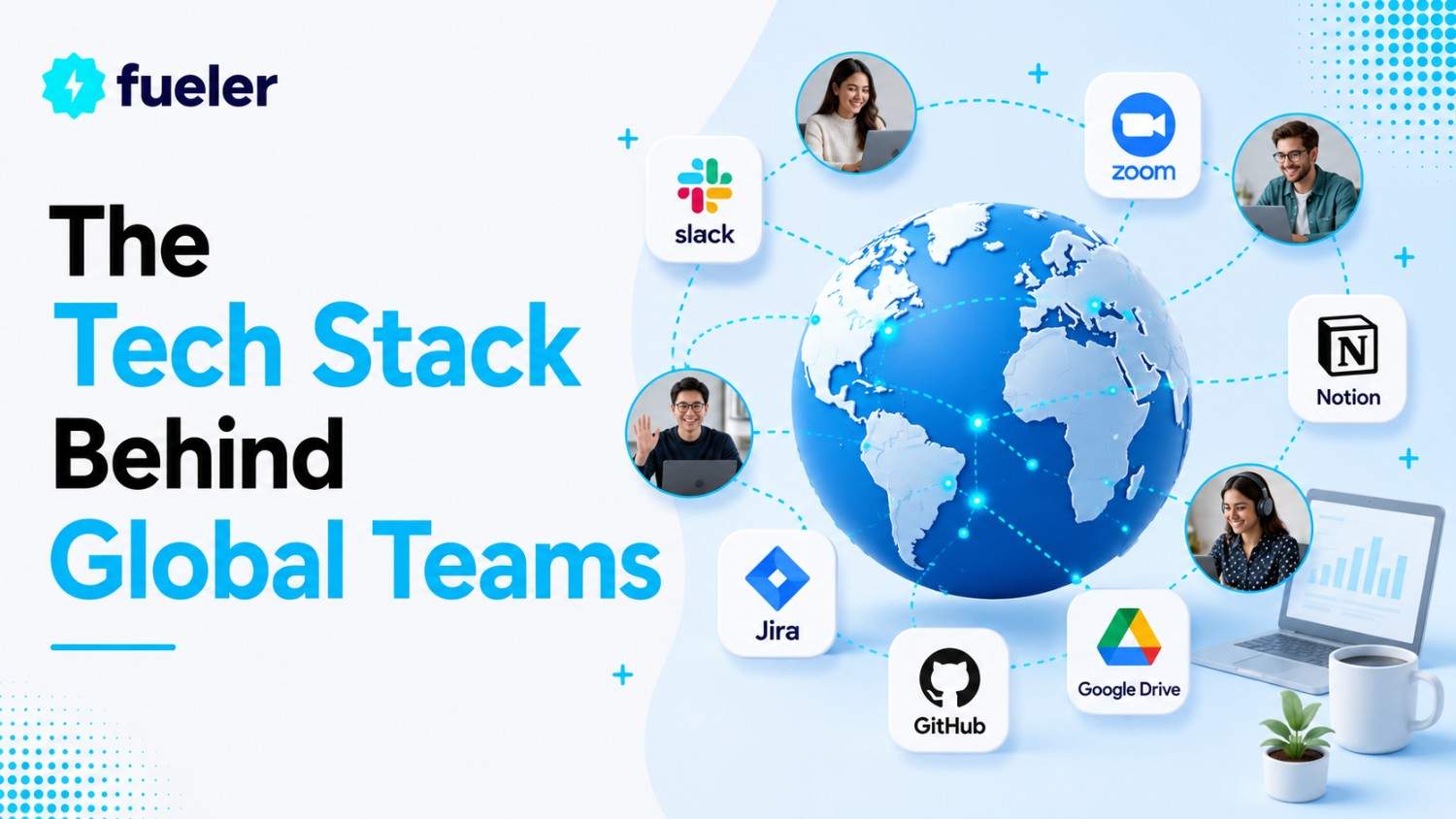
It has become the norm in 2026 to build a global company. We’ve seen a massive rise in global, remote-first companies that don’t care where you live as long as you can do the work.
Today, teams are distributed across countries and time zones, which sounds great on paper but is a nightmare to manage without the right setup.
Managing global teams requires more than just communication tools; it needs a complete tech stack that can handle the heavy lifting.
You can’t just "wing it" with a few spreadsheets and hope for the best. Let’s take a peek at how to keep the modern office running with key tools and systems that power global workforce management.
What Is a Global Workforce Tech Stack?
Think of a global workforce tech stack as the digital skeleton of your company.
It’s a combination of tools used to manage remote, distributed teams from the moment they apply for a job until their final paycheck.
This stack covers everything from hiring to payroll to collaboration.
The mistake many companies make is using isolated tools that don’t talk to each other.
In 2026, the importance of having an integrated system instead of isolated tools is everything.
If your hiring software doesn't "speak" to your payroll software, you're going to spend half your week doing manual data entry, and that’s where mistakes happen.
Core Components of a Global Team Tech Stack
A stack usually comes down to four main areas:
- HR & hiring platforms for finding and onboarding talent.
- Collaboration tools that let people actually talk and work together.
- Payroll & compliance systems to make sure everyone is paid legally.
- Productivity and tracking tools to keep projects on the rails.
The experience is seamless when these components work together.
After a new hire signs his contract, he is automatically added to Slack, their local tax forms are filed, and his laptop is ordered.
HR Tech and Hiring Platforms
The tools used for recruiting and onboarding global talent have evolved significantly.
We’ve moved past basic job boards to advanced Applicant Tracking Systems (ATS) and HR management platforms that can handle multiple languages and regions.
Automation plays a huge role in hiring workflows now, but traditional HR tools have serious limitations when hiring internationally.
They often don’t understand the specific labor laws in, say, Brazil or Thailand.
That’s why many teams now introduce EOR as part of the hiring stack.
It essentially enables companies to hire without setting up entities in every single country, saving a fortune in legal fees and administrative headaches.
Collaboration and Communication Tools
This year, the heavy hitters in tools are Microsoft, Zoom, and Slack, which is exactly what you need if you start the day while half your team is still in dreamland.
Key features like messaging, video conferencing, and file sharing are the basics.
But the real importance of distributed teams across time zones lies in how these tools handle "async" work.
Being able to leave a video clip or a detailed thread means the project keeps moving even when you aren't online.
Payroll, Compliance, and EOR Platforms
These are most probably the most critical when it comes to the stack.
If you mess up payroll, you lose your team; if you mess up compliance, you lose your business.
The challenges are real: paying employees across countries, managing taxes and compliance, and handling local labor laws that change constantly.
This is where Employer of Record services save the day. They handle:
- Legal employment in the worker’s home country.
- Payroll management in local currency.
- Benefits administration (like health insurance or pensions).
If you’re currently looking for a provider, it’s a good idea to best deel alternatives to find a partner that fits your specific budget and region.
You might also want to explore alternatives to velocity global eor to see which interface works best for your HR team.
Productivity and Performance Tools
It is possible to ensure all the work gets done without being overcontrolling or hovering.
Productivity and performance tools like task trackers and reporting suites provide the answer.
These tools offer features like task tracking and productivity insights without being invasive.
They help managers maintain visibility across remote teams, making it easier to see who’s overloaded and who’s hitting their targets.
Integration Challenges in Global Tech Stacks
There is always a possibility that things can go wrong, even if you have the best possible software available.
Common issues include tools not syncing properly or creating "data silos" where information gets trapped in one department.
Nobody wants to spend their Friday doing manual data entry because the HR tool won’t talk to the finance tool.
This is why the importance of integrations and APIs cannot be overstated.
A business requires the full picture for all involved when looking at their centralized dashboards.
Building a Scalable Global Team with the Right Stack
If you want to grow, you need a stack that grows with you. Here are a few quick tips:
- Choose tools that integrate well from day one.
- Prioritize scalability so you don’t have to switch platforms every six months.
- Balance automation with human support. Software is great, but your employees still need a human to talk to when things get complicated.
The flexibility of your tech stack is what allows you to hire the best person for the job, no matter in which country he happens to be.
Conclusion
It is crucial to have a well-structured tech stack to manage global teams.
A solid combination of HR tools, collaboration platforms, and EOR solutions is key to staying sane while growing a business.
The right tools improve efficiency, compliance, and growth, allowing you to focus on the work instead of the paperwork.
Ultimately, the best results for your global team are to optimize your stack.
What is Fueler Portfolio?
Fueler is a career portfolio platform that helps companies find the best talent for their organization based on their proof of work. You can create your portfolio on Fueler. Thousands of freelancers around the world use Fueler to create their professional-looking portfolios and become financially independent. Discover inspiration for your portfolio
Sign up for free on Fueler or get in touch to learn more.

What should you do next?
You've read the article. Now turn your skills into proof of work and unlock more opportunities.
Build your proof of work portfolio
Create a clean portfolio with projects, assignments, resumes, and AI stack details that companies actually want to see.
Create your Fueler portfolio →Apply through assignments, not resumes
Stand out by solving real tasks from companies hiring on Fueler.
Explore assignments →Get discovered by companies
Make your work public and let recruiters discover your skills through actual projects instead of keywords.
Get discovered →
