The OYO Mafia: How Ex-OYO Employees Built India's Next Wave of Startups

Riten Debnath
06 Jul, 2026
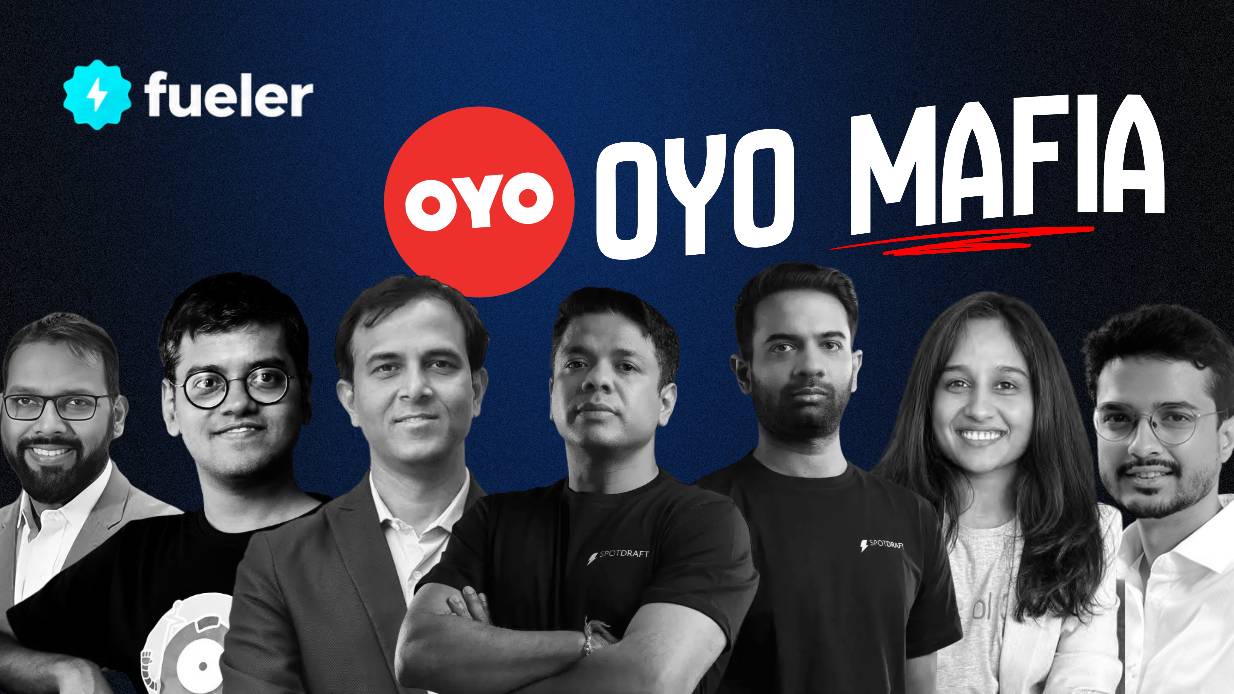
Every few years, one company stops being just a company and turns into a training ground for founders. In the United States it was PayPal. In India, one of the loudest examples is OYO. People joined to build a hotel-tech giant, learned how to run operations at brutal speed, and then walked out to start their own companies. Today that group has a name: the OYO Mafia.
If you are a founder, operator, or someone trying to break into startups, this matters. It shows that where you work early can shape what you build later. The skills, scars, and networks you pick up become raw material for your own venture.
I'm Riten, founder of Fueler, a portfolio platform that helps professionals get hired through assignments, proof of work, and projects instead of just resumes.
In this article, you will learn who the key ex-OYO founders are, what companies they built, how much they have raised, and why OYO produced so many of them. You will also get a full roster of OYO alumni startups across fintech, edtech, travel, agritech, health, AI, and more, so you can see just how deep this network runs.
Let's get into it.
What Is the OYO Mafia and Why It Matters in 2026
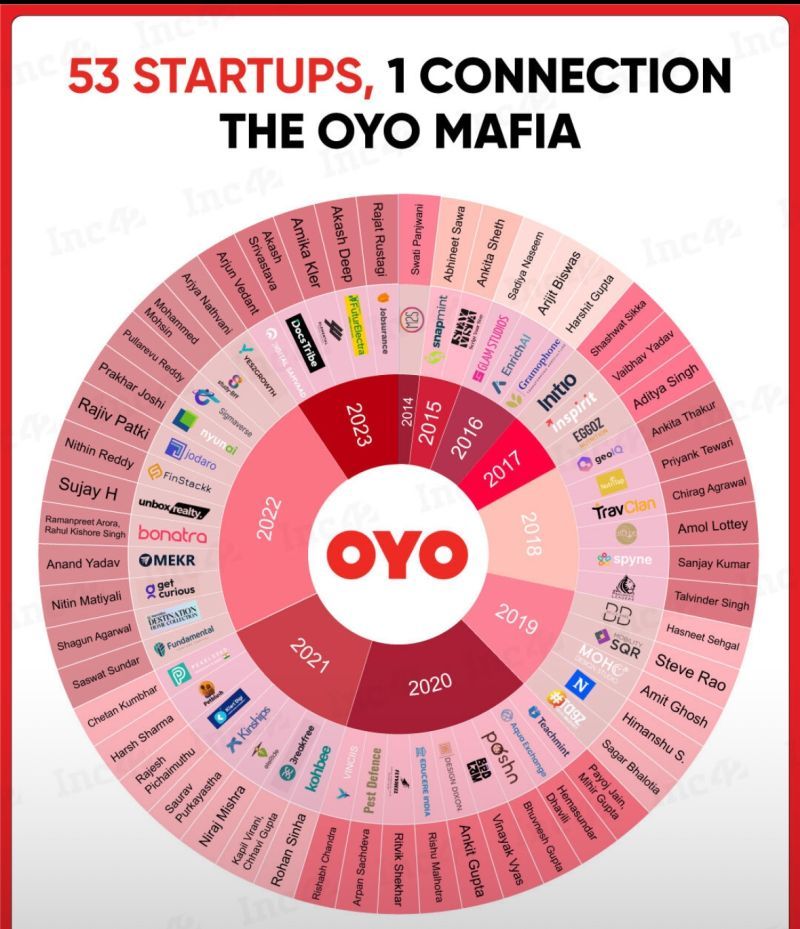
OYO Mafia
The "OYO Mafia" is the growing network of former OYO employees who left to start their own companies or take senior roles at other big firms. The word "mafia" here is a compliment. It borrows from the "PayPal Mafia," the group of early PayPal staff who later built Tesla, LinkedIn, YouTube, and more.
This is not a fringe idea. Startup data platform Dealroom now tracks founder "mafias" as a category, and OYO has its own tracked alumni network. That tells you the trend is real and measurable, not just startup folklore.
- The OYO Mafia refers to ex-OYO employees who became startup founders or senior leaders, spanning fintech, edtech, travel, agritech, legal tech, and consumer brands across India and beyond.
- These founders share a common school of thought: run lean, expand fast, obsess over unit economics, and fix broken supply chains, lessons that came directly from OYO's hyper-growth years.
- The network spans many roles, from VPs and business heads to data scientists, project managers, and even interns, proving that title mattered less than exposure to real operating problems.
- Many of these startups solve problems adjacent to what OYO tackled, like fragmented supply, offline demand, and trust gaps, but apply the playbook to fresh markets.
- Tracking the OYO founder network matters because it signals where talent, capital, and ideas are flowing next in the Indian startup ecosystem, useful for job seekers, investors, and operators.
Why It Matters: The OYO Mafia is a live case study in how one company can seed an entire generation of startups. For anyone building a career in tech, it reframes a job as a training ground, not just a paycheck. The right operating role can teach you more than an MBA, and it can hand you the network and confidence to build. That is the real story behind this list.
Why OYO Became a Startup Factory for Indian Founders
OYO grew at a pace few Indian startups ever have. It expanded across cities and countries fast, which meant employees had to solve messy, real-world problems with limited time and resources. That pressure is exactly what turns operators into founders.
People who survived that environment came out with rare skills. They knew how to launch in new markets, manage supply, handle demand, and build systems from scratch. Those are the same muscles you need to start a company.
- OYO handed young employees ownership early, so a manager could end up running launches for entire regions, giving them founder-level responsibility years before they started up.
- The company operated across hospitality, real estate, and technology at once, exposing staff to supply chains, sales, product, and operations under a single roof.
- Rapid international expansion into markets like Nepal and Malaysia trained employees to build and adapt in unfamiliar conditions, a skill that maps directly to launching startups.
- The intensity filtered for high-agency people who could act without perfect information, the exact temperament venture investors look for when they back first-time founders.
- OYO's own scale and stumbles taught employees hard lessons about cash burn, unit economics, and profitability, which many carried into their own ventures as core operating principles.
Why It Matters: Understanding why OYO produced founders helps you choose where to work with intent. If you want to start up one day, a fast-scaling company with real operating problems can teach you more than a comfortable, slow-moving one. The OYO Mafia shows that the discomfort of hyper-growth often becomes the foundation of a strong founder story. Pick roles for the lessons, not just the logo.
Snapmint: The Ex-OYO Founder Building BNPL for the Next 500 Million Indians
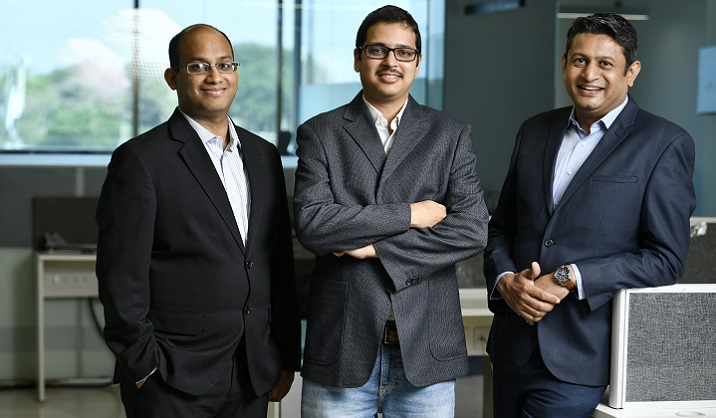
Supermint Founders
Snapmint is one of the biggest names in the OYO Mafia. Abhineet Sawa, who was a VP at OYO leading marketing and later revenue management, co-founded the company with Nalin Agrawal and Anil Gelra. The startup lets people buy products on no-cost EMIs without needing a credit card, which opens up credit for millions of Indians banks ignore.
The scale is serious. Snapmint has raised around $181 million in total funding, including a $125 million Series B led by General Atlantic in October 2025. It reported roughly 158 crore rupees in FY25 revenue and turned a profit, which is rare for a fintech at this stage. The company serves millions of monthly active users across thousands of pincodes.
- Snapmint targets the roughly 500 million Indians without easy access to credit cards, offering EMIs on smaller purchases like gadgets, fashion, and electronics that legacy lenders often ignore.
- The company reached profitability by FY25 with about 158 crore rupees in revenue, showing that BNPL can work in India when unit economics are respected, a very OYO-style lesson.
- Its Series B round of $125 million was led by General Atlantic in October 2025, with a mix of primary and secondary capital, signaling strong investor conviction in the model.
- Snapmint's platform helps merchants convert more shoppers by embedding affordable installment options, turning abandoned carts into completed sales across a wide product range.
- Abhineet Sawa's OYO experience in revenue management and marketing shaped Snapmint's sharp focus on conversion, retention, and scalable growth in a crowded fintech market.
Why It Matters: Snapmint proves that ex-OYO operators can build durable, profitable businesses, not just fast-growing ones. For founders, the takeaway is that solving a large, ignored problem with clean unit economics beats chasing vanity metrics. Sawa carried OYO's revenue discipline into fintech and built one of India's better BNPL stories. It is a strong signal of how operating depth turns into founder success.
Teachmint: Ex-OYO Founders Building Education Infrastructure at Scale
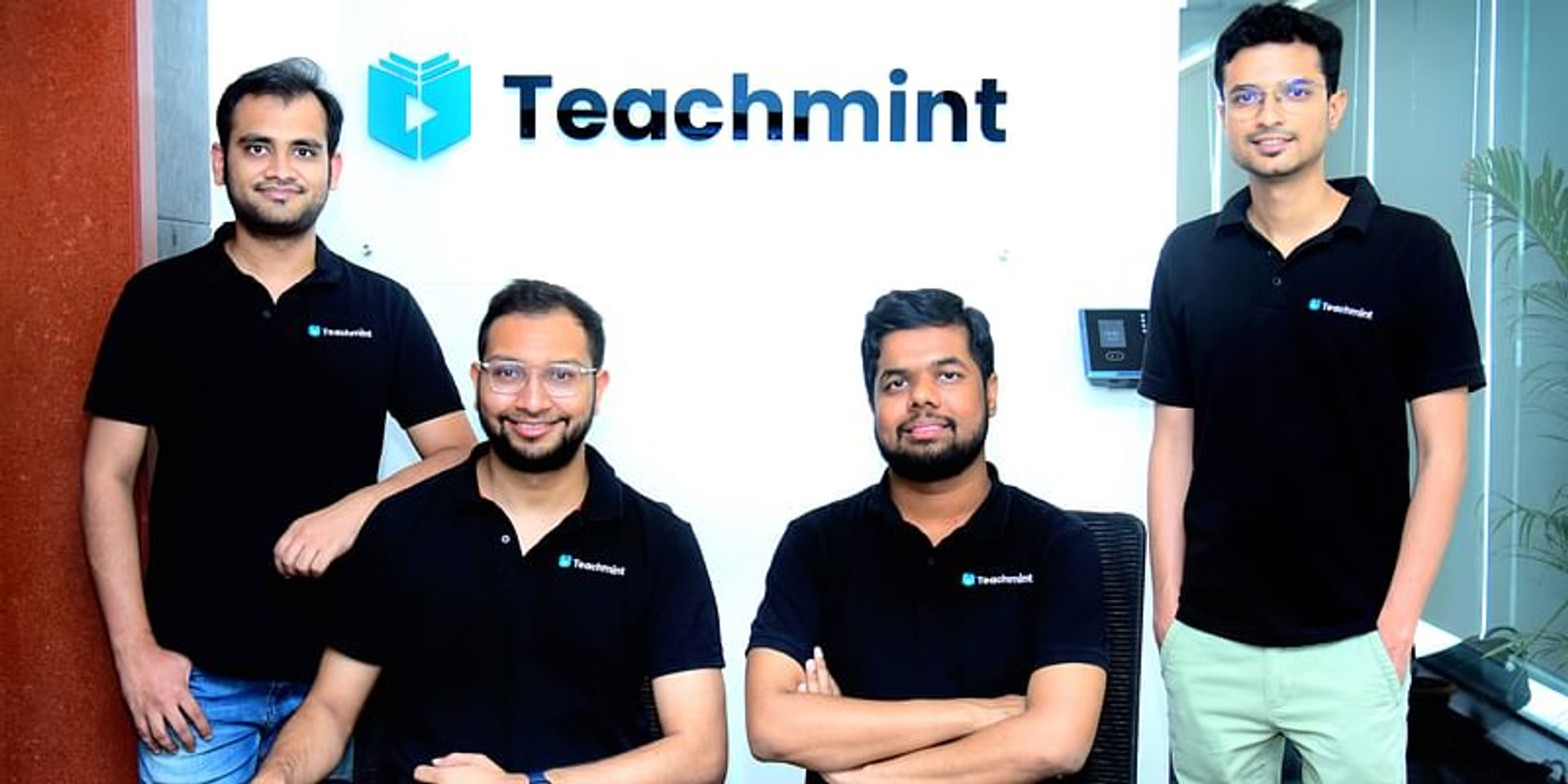
Teachmint Founders
Teachmint is a flagship OYO Mafia story because two of its founders came from OYO. Mihir Gupta, its CEO, was Head of Revenue for OYO Rooms Malaysia, and Payoj Jain, its Chief Product Officer, also worked at OYO. They co-founded Teachmint in May 2020 with Divyansh Bordia and Anshuman Kumar, alumni of IIT Bombay and IIT Delhi.
Teachmint started as a mobile-first, video-first platform that helped teachers digitize their classrooms during the pandemic. It has since grown into education infrastructure for schools, tutors, and institutes. The company has raised about $118 million from investors like Lightspeed and Learn Capital, making it one of the best-funded edtech startups in its category.
- Teachmint launched during the 2020 lockdown and scaled fast by solving a real problem: helping offline teachers move online without technical skills or expensive tools.
- The founding team blended OYO operating experience with IIT and McKinsey backgrounds, giving Teachmint both execution speed and product depth from day one.
- It raised roughly $118 million across rounds, with a $16.5 million Series A led by global edtech investor Learn Capital, marking its first major lead investment in India.
- Teachmint expanded from live tutoring into full school infrastructure, including attendance, fee management, and AI-assisted teaching tools for institutes across many cities.
- Mihir Gupta's OYO revenue role in Malaysia trained him to build and monetize in new markets, a skill that shaped Teachmint's push into education infrastructure.
Why It Matters: Teachmint shows how OYO's international operating lessons translate into a completely different sector. Building revenue systems in Malaysia is not far from building scalable systems for teachers. For founders, the lesson is that operating skills are portable. You can carry them from hospitality into education and still win. Teachmint remains one of the clearest examples of OYO talent building lasting infrastructure.
StayVista: An OYO Alumna Rewriting Luxury Villa Rentals
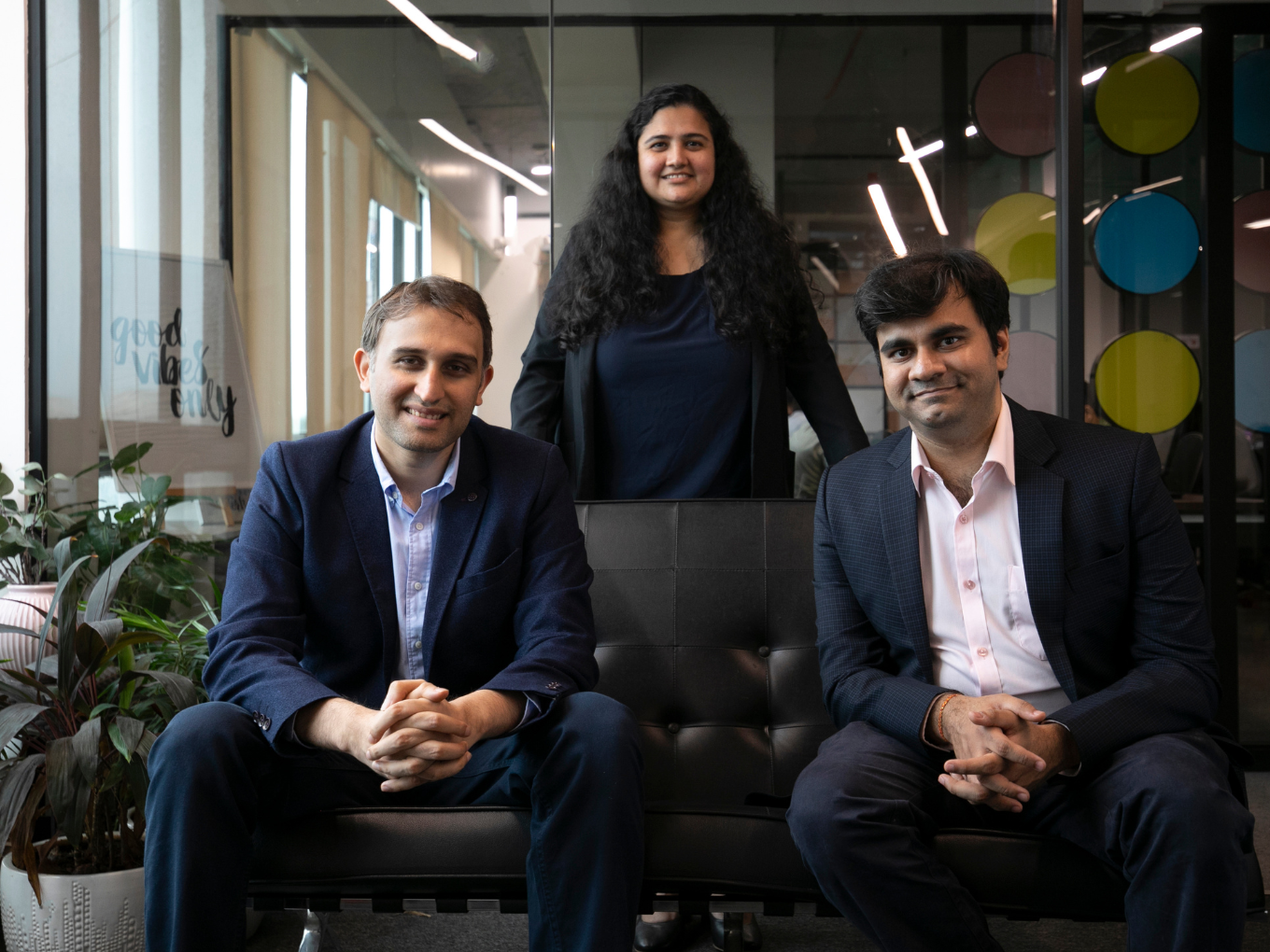
StayVista Founders
StayVista, formerly known as Vista Rooms, is led in part by Ankita Sheth, who was Head of Acquisitions at OYO before co-founding the company in 2015 with Amit Damani and Pranav Maheshwari. The startup rents out luxury private villas across India, a category that sits next to, but distinct from, OYO's budget hotel model.
The company manages around 1,000 properties and has raised close to $12.9 million over several rounds. StayVista has publicly shared plans to go public through an IPO by 2028, aiming to more than double its villa portfolio. It has hosted high-profile guests and built partnerships with brands like Marriott Bonvoy.
- StayVista focuses on curated luxury villas rather than budget rooms, carving a premium niche in India's fast-growing vacation rental and short-stay market.
- Ankita Sheth's OYO background in acquisitions gave her deep knowledge of onboarding and managing property supply, the exact skill a villa rental business lives or dies by.
- The company operates on a revenue-share model with property owners, keeping it asset-light while still controlling quality across hundreds of homes.
- StayVista has signaled an IPO target of 2028 with plans to expand its portfolio toward 2,500 villas, showing serious long-term ambition.
- It built brand credibility through celebrity guests and hospitality partnerships, positioning itself as a trusted premium alternative to unmanaged listings.
Why It Matters: StayVista shows that ex-OYO founders can take a hard skill, in this case supply acquisition, and rebuild it for a premium market. Sheth did not copy OYO. She used what she learned about managing property owners to win a different customer. For founders, this is a lesson in specialization. Take one strength from your job and build a sharper business around it.
Spyne: An Ex-OYO Product Leader Building AI for Auto Retail
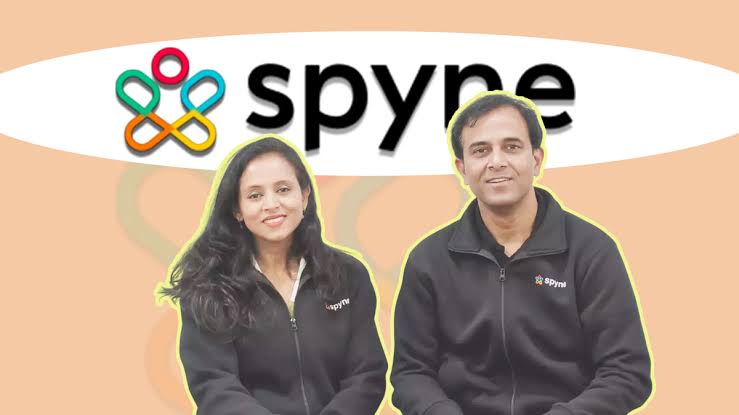
Spyne Founders
Spyne was co-founded by Sanjay Kumar Varnwal, an IIT Kharagpur graduate who held tech and product leadership roles at OYO before starting the company in 2018 with Deepti Prasad. Spyne uses AI and computer vision to turn simple smartphone photos into studio-quality product images, and it now focuses heavily on automotive retail.
The company has raised about $25.4 million, including a $16 million Series A in 2025 with backing from investors like Accel, Storm Ventures, and Vertex Ventures. Spyne helps car dealerships and marketplaces create high-quality visuals and manage the full vehicle sales journey, from sourcing to listing.
- Spyne applies AI to a boring but expensive problem: creating consistent, high-quality product images at scale without a physical studio or professional crew.
- The startup pivoted from general photography toward automotive retail, a sharper and larger market, showing founder discipline in narrowing focus over time.
- It raised roughly $25.4 million across rounds, with strong global SaaS investors backing its vision to become core software for car dealerships.
- Spyne's tools cover the full vehicle lifecycle, including 360-degree spins, background editing, and listing automation, making it more than just an image editor.
- Sanjay's OYO product and technology leadership prepared him to build and scale a deep-tech SaaS product for global markets, especially the United States.
Why It Matters: Spyne is proof that OYO's product and tech leaders can build serious deep-tech companies, not just operations-heavy ones. Sanjay's move from photography into automotive shows how founders sharpen their focus as they learn the market. For anyone building in AI or SaaS, the lesson is clear. Start broad if you must, but narrow toward the market that pays best and needs you most.
TravClan: Ex-OYO Founders Powering B2B Travel Agents
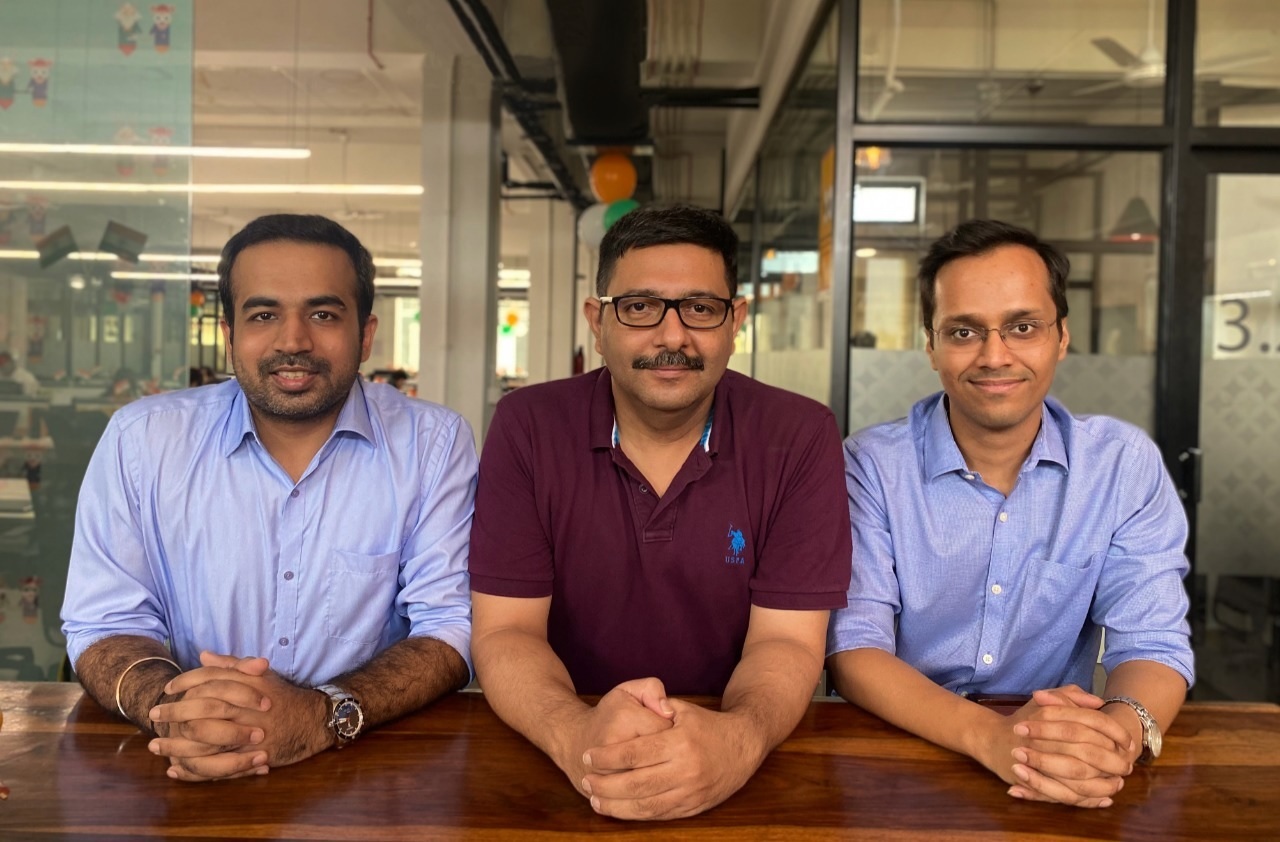
TravClan Founders
TravClan was co-founded by Chirag Agrawal, who held a business head role at OYO before starting the company in 2018 with Arun Bagaria and Ashish Thapliyal. The team previously worked together across OYO, Travel Triangle, and Cars24. TravClan is a B2B platform that helps travel agents book flights, hotels, and holiday packages at competitive prices.
The startup grew rapidly by digitizing the workflows of small and medium travel agents. It has raised around $5.7 million from investors like Leo Capital and Hashed Emergent, and it enables agents to set up websites, manage bookings, and access global suppliers. TravClan has stated ambitions to enable billions in annual travel GMV.
- TravClan serves the large, fragmented base of offline travel agents in India, giving them digital tools to compete with big online travel platforms.
- The founders' shared history at OYO, Travel Triangle, and Cars24 gave them deep knowledge of travel supply chains and agent behavior before day one.
- It helps agents build websites in seconds, source bookings at B2B prices, and market on social media, solving several pain points in one platform.
- The company grew several times over during the pandemic years by betting on travel's recovery while others retreated, a high-conviction operator move.
- TravClan's model focuses on empowering travel entrepreneurs rather than replacing them, tapping into a global market of hundreds of thousands of agents.
Why It Matters: TravClan shows the power of a founding team that already worked together in the trenches. The trust and shared operating language they built at OYO and other startups let them move fast. For founders, the lesson is about co-founder fit. Building with people who have already survived pressure with you lowers your risk and speeds up execution.
Eggoz Nutrition: From OYO Operations to One of India's Biggest Egg Brands
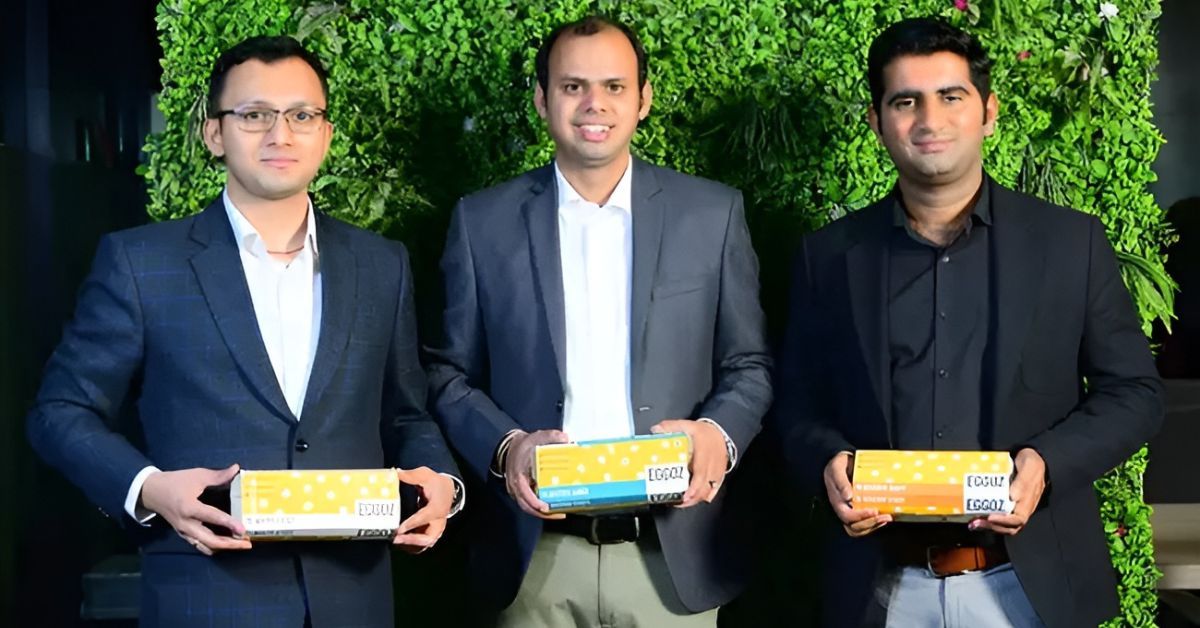
Eggoz is a standout consumer brand in the OYO Mafia. Aditya Singh, who worked at OYO in a launch and expansion role, is a co-founder and Chief Business Officer. He built the company with Abhishek Negi, Uttam Kumar, and Pankaj Pandey, all IIT Kharagpur alumni, starting in 2017. Eggoz sells fresh, antibiotic-free eggs through an asset-light, farmer-integrated model.
The company wants to build the "Amul for eggs" by fixing a messy, unorganized supply chain. Eggoz has raised about $38.3 million, including a Series C led by Gaja Capital in 2025. Its products are available on quick-commerce platforms like Zepto, Blinkit, and Swiggy Instamart, plus its own subscription service.
- Eggoz tackles a huge, unbranded market by delivering standardized, fresh eggs with clear quality checks, bringing trust to a category most people buy loose.
- Its asset-light model partners with rural farmers instead of owning farms, echoing the kind of supply-side thinking OYO used with hotel owners.
- The company raised about $38.3 million across rounds, reaching Series C, which signals investor belief in branded, tech-enabled food supply chains.
- Eggoz distributes through quick commerce and subscriptions, meeting modern consumers where they already shop while keeping delivery fresh within a day.
- Aditya Singh's OYO expansion role trained him to launch and scale operations across regions, a skill that maps directly to building a national food brand.
Why It Matters: Eggoz is a reminder that OYO's supply-chain playbook works far beyond hotels. Managing farmers is not so different from managing property owners. Both need trust, standards, and reliable payments. For founders, the lesson is that a strong operating model can be transplanted into a new industry. Aditya took what he learned about expansion and applied it to one of India's most basic products.
More Notable Ex-OYO Founders and Their Startups
The six companies above are the headliners, but the OYO Mafia goes much deeper. Below are nine more ventures built by ex-OYO operators that have raised real capital, seen acquisitions, or built strong niches. Together they show how wide this founder network really is.
Each of these founders carried an OYO operating lesson into a new sector. Some fix agri and aqua supply chains. Some build software. Some created consumer brands strong enough to get acquired.
- Poshn (Bhuvnesh Gupta, ex-OYO Business Head): A B2B agritech platform that digitizes wholesale trade of commodities like rice, flour, and edible oils, with embedded finance. It has raised around $8 million from Prime Venture Partners and Zephyr Peacock and runs an inventory-light model.
- Gramophone (Harshit Gupta, ex-OYO): An Indore-based agritech platform giving farmers crop advisory and agri inputs with doorstep delivery. It raised about $27.5 million from investors like Info Edge and was acquired by agritech firm Unnati in 2026.
- Aqua Exchange (Hemasundar Dhavili, ex-OYO): An aquaculture technology startup that automates shrimp farms with IoT devices, AI, and embedded finance. It has raised roughly $19 million and closed an $8 million Series B in 2026, targeting strong revenue growth.
- TagZ Foods (Sagar Bhalotia, ex-OYO General Manager): A Gen Z snack brand known for popped potato chips with less fat. It raised about $3 million, appeared on Shark Tank India, and was acquired by Reliance Consumer Products in 2024.
- Provakil (Shashwat Sikka, ex-OYO): A legal operations software suite that helps enterprises and law firms manage litigation, contracts, and compliance, pulling automatic updates from thousands of courts. It bootstrapped its way to serving 100+ companies and many law firms.
- GeoIQ (Ankita Thakur, ex-OYO Data Scientist): A location intelligence startup that builds detailed geospatial grids to help brands pick store sites. Its clients included Swiggy and HUL, and it was acquired by Lenskart in 2025.
- getCurious (Nitin Matiyali, ex-OYO): A UX research SaaS platform, formerly UserStudy, that helps product teams run user studies with AI-powered analysis. It was acquired by US insights firm Fuel Cycle in 2025.
- Bonatra (Rahul Kishore Singh and Ramanpreet Arora, both ex-OYO): A health-tech company building smart rings, glucose monitors, and doctor-led programs to manage and reverse chronic conditions. It raised pre-seed capital and acquired femtech startup MyAva.
- NutriTap (Priyank Tewari, ex-OYO Business Head): A retail-tech startup running IoT-enabled smart vending kiosks that let brands sell directly to customers in offices, airports, and hospitals. It has raised about $2.74 million.
Why It Matters: This second tier proves the OYO Mafia is not a fluke built on one or two hits. It is a broad, cross-sector network with real funding, real acquisitions, and real staying power. For operators, it is a map of where OYO alumni are winning. For investors, an OYO pedigree often signals the operating discipline that makes early bets safer.
The Complete OYO Mafia Company List
To give you the full picture, here is a wider directory of companies started or co-founded by former OYO team members, grouped by sector. Some are well funded, some are early stage, but all trace back to the same alma mater. Where a company appears above, it is included here too so the roster stays complete.
This list is built from a founder-tracking dataset of the OYO alumni network. Roles listed are the founder's former position at OYO.
Fintech and financial services
- Snapmint: Abhineet Sawa, former VP. BNPL and no-cost EMI platform.
- FinStackk: Nithin Reddy, former Business Development Manager. Fintech venture.
- Fundamental Venture Capital: Saswat Sundar, former core team member on Flagship and Townhouse. Early-stage investing.
Travel, hospitality, and stays
- StayVista: Ankita Sheth, former Head of Acquisitions. Luxury villa rentals.
- TravClan: Chirag Agrawal, former Business Head. B2B travel platform.
- Destination Home Collection: Shagun Agarwal. Stays and hospitality.
- Jiodaro: Rajiv Patki, worked on acquisition and integration of the @Leisure Group.
Edtech and learning
- Teachmint: Mihir Gupta (former Head of Revenue, OYO Malaysia) and Payoj Jain. Education infrastructure.
- Kohbee: Rohan Sinha, former Business Analyst. Tools for educators and creators.
- Studybff: Mohammed Mohsin, former Sales Excellence Manager. Student-focused venture.
- Educere India: Rishu Malhotra. Education services.
- Pragmatic Leaders and ZopDev: Talvinder Singh, former Product Head. Upskilling and developer tooling.
Agritech, food, and D2C
- Eggoz Nutrition: Aditya Singh, former launch and expansion manager. Branded fresh eggs.
- Poshn: Bhuvnesh Gupta, former Business Head. B2B agri commodity trade.
- Gramophone: Harshit Gupta. Farmer advisory and agri inputs, acquired by Unnati.
- TagZ Foods: Sagar Bhalotia, former General Manager. Gen Z snacks, acquired by Reliance.
- Aqua Exchange: Hemasundar Dhavili. Aquaculture technology for shrimp farmers.
- NutriTap: Priyank Tewari, former Business Head. Smart vending and automated retail.
AI, SaaS, and deep tech
- Spyne: Sanjay Kumar Varnwal, former product and technology leader. AI for auto retail.
- GeoIQ: Ankita Thakur, former Data Scientist. Location intelligence, acquired by Lenskart.
- getCurious: Nitin Matiyali. UX research SaaS, acquired by Fuel Cycle.
- Nyun AI: Prakhar Joshi, former Head of ORM, International. AI venture.
- DocsTribe AI: Akash Srivastava, former program management, revenue and strategy. Healthcare AI.
- Emritch AI and VOGIC AI: Arijit Biswas, former Senior Manager, Travel Alliances. AI ventures.
Legal, compliance, and career
- Provakil (and Intlio): Shashwat Sikka, former OYO leadership. Legal operations software.
- Upsolv (formerly Jobsurance): Rajat Rustagi, former Head of Franchisee Supply, West and South.
Health, wellness, beauty, and pets
- Bonatra: Rahul Kishore Singh (former Region Head, West India) and Ramanpreet Arora (former Chief of Staff and Head, Consumer Insights). Health-tech and wearables.
- Glam Studios: Sadiya Naseem, former AVP setting up new processes. Beauty and salon services.
- Bella Babe by SK: Hasneet Sehgal, former Area Sales Manager. Consumer and beauty brand.
- Petblush: Harsh Sharma, former Project Manager, NCR. Pet care.
Mobility and EV
- Mobility SQR: Steve Rao, former Global Head of Mobility and Travel.
- Eleride: Niraj Mishra, former Director. Electric mobility.
- FuturElectra: Akash Deep, former Product Manager. Electric and energy venture.
Marketing, design, and creative services
- Design Dixon: Ankit Gupta, former Project Lead. Design studio.
- Elemental Design Company: Amika Kler, former HR Business Partner. Design venture.
- Digital Samvaad: Arjun Vedant, former Marketing and Sales Manager. Digital marketing.
- Breakfree Marketing Solutions LLP: Kapil Virani (former operations consultant intern) and Chhavi Gupta (former data science intern). Marketing services.
- Klart Digi: Rajesh Pichaimuthu, former live project intern. Digital agency.
Real estate and other ventures
- Unbox Realty: Sujay H, former Business Development Manager. Real estate.
- Pest Defence India: Arpan Sachdeva, former Hotel Manager. Pest control services.
- M2S: Swati Panjwani, former Senior Demand Manager.
- Inspirit: Vaibhav Yadav, former Demand Manager.
- AeroOptimus Innovations: Amol Lottey, former Head of Operations, OYO Cloud Kitchens.
- Bedlam: Vinayak Vyas, former Transformations Lead.
- Flywheel: Ritvik Shekhar, former Category Head.
- Vinciis: Rishabh Chandra.
- Kinships: Saurav Purkayastha, former National Head, Transformation Operations and Vendor Management.
- MEKR: Anand Yadav, former Business Analyst.
- Pexels360: Chetan Kumbhar, former Head of Operations, Goa.
Why It Matters: A roster this long, across this many sectors, is what separates a true founder mafia from a lucky streak. It shows OYO did not just produce one breakout founder. It seeded dozens of them, from fintech and agritech to AI, mobility, and consumer brands. For anyone tracking Indian startups, this directory is a live signal of where OYO-trained operators are placing their next bets.
What the OYO Mafia Teaches About Career Growth and Proof of Work
The most useful lesson from the OYO Mafia is not about OYO at all. It is about how careers actually compound. None of these founders got funded because of a fancy degree alone. They got backed because they had visibly done hard things: launched cities, managed supply, built revenue systems, and shipped real products under pressure.
That is proof of work. Investors, hiring managers, and co-founders bet on people who can show what they have executed, not just what they claim on a resume. The OYO Mafia is full of operators whose track record spoke louder than any job title.
- Execution visibility beats credentials, because people trust what you have shipped far more than where you studied or which brand you worked for.
- Documenting your real projects, decisions, and outcomes builds credibility that follows you into your next role, raise, or startup.
- Modern hiring increasingly values outcomes over resumes, which is why proof of work is becoming the strongest career asset a professional can build.
- The founders in this list turned operating scars into funding pitches, showing that a clear record of solving problems is your best long-term leverage.
- Building in public and keeping a living record of your work makes you discoverable to investors, recruiters, and collaborators who are actively looking.
This is the exact gap Fueler was built to close, giving professionals a place to showcase assignments, projects, and proof of work so their execution speaks for them.
Why It Matters: The OYO Mafia works because these people had receipts. Their careers grew on the back of visible, verifiable work. If you want the same optionality, whether to start up or get hired, start documenting what you build now. Proof of work is what turns a good operator into a fundable founder, and it is the clearest lesson this network offers to the rest of us.
Final Thoughts
The OYO Mafia is a reminder that a job is never just a job. The right company at the right time can hand you skills, scars, and a network that outlast your paycheck. The founders in this list did not wait for perfect conditions. They learned in the fire, then went and built. As India's startup ecosystem matures, expect more of these alumni networks to form, and expect the people who kept proof of their work to move fastest when their moment comes.
FAQ
What is the OYO Mafia?
The OYO Mafia is the network of former OYO employees who left to start their own companies or take senior roles at major firms. Inspired by the "PayPal Mafia," it spans fintech, edtech, travel, agritech, legal tech, health, AI, and consumer brands. Notable examples include Snapmint, Teachmint, StayVista, Spyne, TravClan, Eggoz, Gramophone, TagZ Foods, and Aqua Exchange. These founders share a common operating style: run lean, expand fast, and fix fragmented markets. The term reflects how OYO's hyper-growth years trained a generation of operators who became founders.
Which big startups were founded by ex-OYO employees?
Several well-funded startups were founded or co-founded by ex-OYO employees. Snapmint, a BNPL platform, has raised around $181 million. Teachmint, an edtech company, has raised about $118 million. Eggoz has raised roughly $38.3 million, Gramophone about $27.5 million, Spyne about $25.4 million, and Aqua Exchange around $19 million. Others include StayVista in villa rentals, TravClan in B2B travel, Poshn in agritech, Provakil in legal tech, and GeoIQ in location AI. TagZ Foods, Gramophone, GeoIQ, and getCurious have all been acquired.
Why did OYO produce so many founders?
OYO grew at extreme speed across cities and countries, forcing employees to solve real, messy problems with limited time and resources. That environment handed young operators founder-level ownership early, exposing them to supply chains, sales, product, and operations at once. It also filtered for high-agency people who could act without perfect information. Many carried OYO's hard lessons about cash burn and unit economics into their own companies. This mix of ownership, exposure, and discipline is why OYO became a startup factory for Indian founders.
Is joining a fast-scaling startup like OYO good for my career?
It can be, if you choose the role for the lessons and not just the brand. Fast-scaling companies give you real operating problems, early ownership, and a strong network, which are exactly the ingredients that turn operators into founders. The OYO Mafia shows that people in mid-level roles, not just executives, went on to build funded startups. The key is to document your work and outcomes as you go, so your track record becomes visible proof you can carry into your next role or venture.
What can founders learn from the OYO Mafia?
The biggest lesson is that proof of work beats credentials. These founders got backed because they had visibly launched cities, managed supply, and shipped products under pressure, not because of a resume line. Other lessons include picking co-founders you have survived pressure with, respecting unit economics from day one, and hunting for big opportunities in boring or fragmented markets. Above all, keep a clear record of what you build. A visible track record of solving real problems is what turns a strong operator into a fundable founder.
Why 100,000+ professionals use Fueler
Fueler helps professionals showcase proof of work through projects, assignments, case studies, and achievements.
- Thousands of professionals use Fueler to create their digital portfolio
- Thousands of projects are published on Fueler. Check here
- Startups and Companies hire through proof of work on Fueler
- Used by freelancers, creators, marketers, video editors, writers, designers, and product managers
Our mission is to help the next 100 million professionals build a verified professional identity through proof of work
What should you do next?
You've read the article. Now turn your skills into proof of work and unlock more opportunities.
Build your proof of work portfolio
Create a clean portfolio with projects, assignments, resumes, and AI stack details that companies actually want to see.
Create your Fueler portfolio →Apply through assignments, not resumes
Stand out by solving real tasks from companies hiring on Fueler.
Explore assignments →Get discovered by companies
Make your work public and let recruiters discover your skills through actual projects instead of keywords.
Get discovered →
