The No-Audience Growth Strategy Freelancers Use to Land Their First Client

Riten Debnath
30 May, 2026
Last updated: May 2026
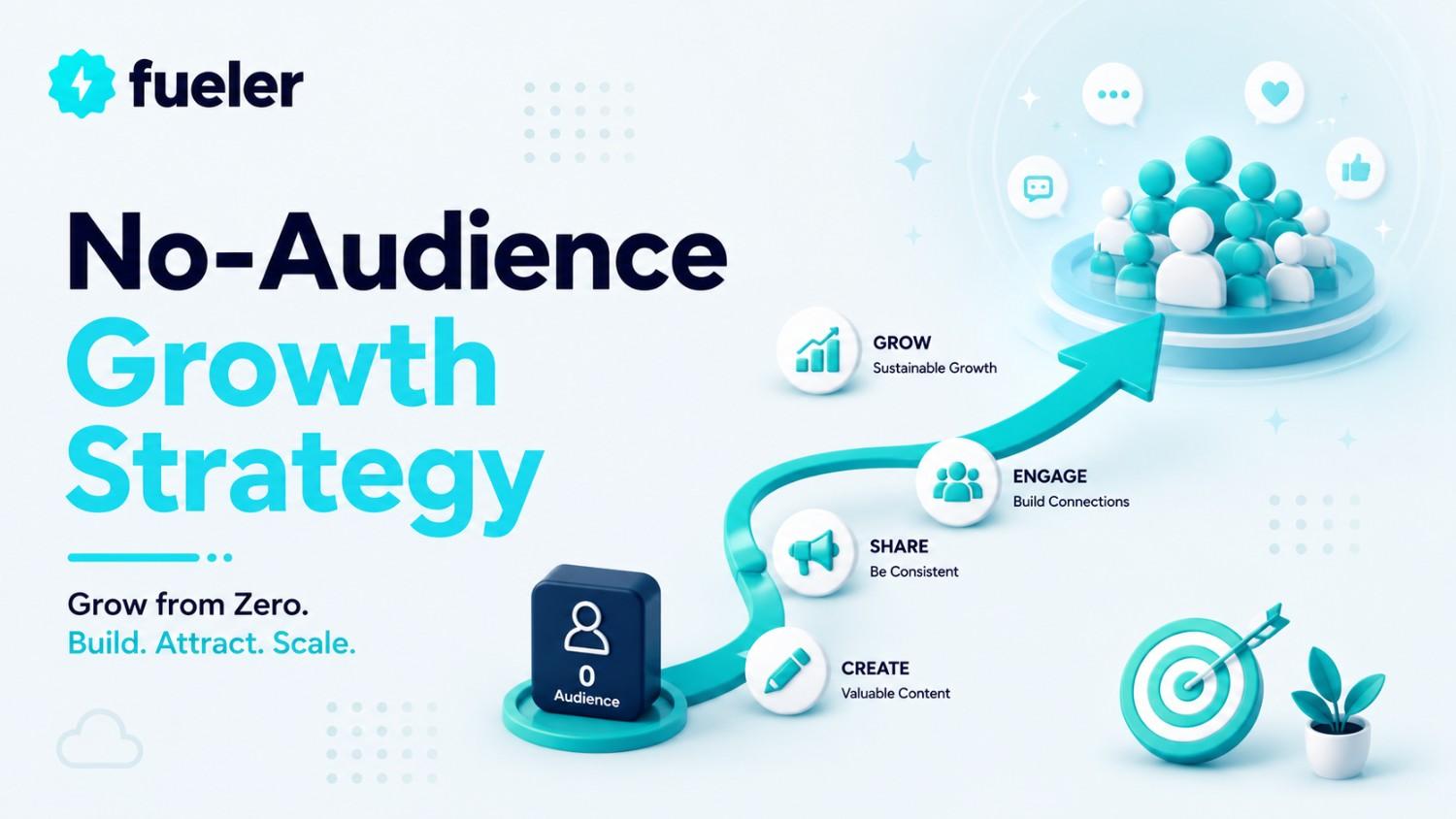
Landing your first freelance client without a massive social media following feels like trying to speak in a room where everyone else is shouting. Traditional advice tells you to post content daily, build a personal brand, and wait months for inbound leads to arrive, but this is a luxury most independent professionals cannot afford. In 2026, algorithmic shifts and AI-driven content noise have made organic visibility harder to achieve for newcomers. The secret to breaking through is a direct, proof-first system that bypasses audience metrics entirely and focuses solely on solving a business’s immediate problem.
I’m Riten, founder of Fueler, a skills-first portfolio platform that connects talented individuals with companies through assignments, portfolios, and projects, not just resumes/CVs. Think Dribbble/Behance for work samples + AngelList for hiring infrastructure.
Instead of waiting to be discovered, successful freelancers utilize highly targeted, non-public distribution channels to capture the attention of decision-makers. Here are the 8 real, existing strategies you can use today to secure your first client without an audience.
1. The Value-First Overhaul Method
This strategy relies on identifying a visible flaw in a target company's public assets and delivering a ready-to-use solution before they even hop on a call with you. Instead of pitching your capabilities, you ship a completed piece of work that addresses a real, live bottleneck in their operational setup.
By redesigning a broken landing page section, rewriting a poorly converting email flow, or fixing a slow database query, you eliminate the friction of long sales cycles. Business owners do not need to guess your competence because you have already proved it using their own company as a case study.
- Audit your prospect's public customer touchpoints, such as their primary landing page or onboarding sequence, to locate a clear friction point that is hurting their conversion rates or user retention metrics.
- Rebuild or rewrite that specific asset entirely on your own time, ensuring your version directly improves upon the clarity, speed, or visual hierarchy of the original piece of work.
- Package your solution into a clean, easily accessible link, accompanied by a brief explanation of the exact design or structural choices you made to improve their specific business metrics.
- Record a short, personalized video walkthrough under two minutes that highlights the original problem, walks through your asset, and explains the measurable upside they will see by implementing it.
- Deliver this high-value asset directly to the specific decision-maker via email, framing it as a no-strings-attached contribution to their project while offering to implement the rest of the system if they like the results.
Why It Matters
This method works because it completely reverses the risk for the buyer. In a market flooded with unverified talent, delivering immediate, customized value separates you from the noise and proves you understand their product.
2. The Unsolicited Project Prototype
This approach involves building an entirely new feature concept or marketing asset for a company that aligns perfectly with their stated public roadmap. Instead of fixing what is broken, you build an adjacent extension that helps them achieve their next expansion goal faster.
Founders frequently talk about what they plan to build next on podcasts, in newsletters, or across public forums. By taking those public statements and building a functional prototype, you position yourself as an agile partner who can execute tasks without requiring heavy internal management.
- Monitor the public interviews, changelogs, and product update requests of mid-sized startups to discover exactly what features or campaigns their leadership team plans to prioritize over the coming quarter.
- Create a lightweight, functional prototype or a detailed content strategy blueprint that brings their stated vision to life without needing access to their internal source code.
- Document your entire development or creative methodology clearly, proving that you possess the deep technical skills required to integrate smoothly into their existing product engineering workflows.
- Structure the project presentation so the executive team can easily share it internally with their product managers, demonstrating how your asset accelerates their core production timelines.
- Present the prototype with a clear, fixed-price implementation plan, showing them exactly how much time and money they save by bringing you in to finish the job you started.
Why It Matters
Startups operate under tight deadlines and constantly look for ways to accelerate execution. Showing up with a half-built feature that matches their roadmap proves you have business empathy, making you an incredibly easy hire.
3. The Job Board Reverse-Engineering System
This framework looks at active, full-time job openings as immediate, funded freelance opportunities where companies are struggling to find long-term talent. Instead of applying through the traditional applicant tracking system, you approach the hiring manager with a specialized project proposal.
When a company posts a job listing, they are openly admitting they have a painful operational gap and a dedicated budget to fix it. Because full-time hiring takes weeks or months, offering to handle the core responsibilities immediately on a contract basis solves their short-term pain.
- Scan premium job portals like remoteok.com or specialized niche boards to compile a list of companies that have been searching for a specific full-time employee for more than three weeks.
- Deconstruct the original job description to identify the top two core daily problems the company expects this new hire to solve immediately upon joining the team.
- Reach out directly to the department head via email, bypassing the automated HR portal completely, and propose to take over those exact responsibilities on a flexible freelance retainer.
- Highlight how your contract arrangement saves them thousands of dollars in onboarding costs, healthcare benefits, and immediate software overhead while keeping their projects moving forward smoothly.
- Position your service as an efficient interim solution that bridges the operational gap while they continue their exhaustive search for the perfect full-time employee.
Why It Matters
Hiring velocity is a major operational bottleneck for growing businesses. By positioning your freelance services as a bridge solution, you help teams maintain momentum while saving them from making a rushed, expensive full-time hiring mistake.
4. The Micro-Consulting Teaser Strategy
This framework uses hyper-specific, short-duration strategy sessions to uncover deep operational problems within a business, which you then convert into a comprehensive implementation contract. You enter the room as an advisor and leave with a clear execution mandate.
Many companies cannot afford a massive agency retainer but will gladly pay a small fee to solve a distinct, isolated problem. By offering a tightly scoped, high-impact diagnostic session, you gain access to their internal workflows and earn the trust needed to pitch larger execution projects.
- Design a single, highly specialized diagnostic product, such as a 45-minute architectural review or an automated performance audit, priced at a very accessible entry-point fee.
- Reach out to target operations managers with a direct offer to analyze their specific pipeline bottlenecks, guaranteeing a clear list of actionable insights by the end of the session.
- Use the diagnostic call to ask deep, open-ended questions about their wider team struggles, technical debt, and upcoming quarterly goals rather than pitching your services.
- Deliver a highly polished post-session summary document that maps out the exact steps required to execute the solutions you discussed during your brief consulting call.
- Attach an engineering or creative proposal to the end of that summary document, outlining how you can personally execute the entire strategy for them over the next month.
Why It Matters
It is far easier to sell execution services to someone who has already paid you for your advice. This strategy transforms a cold sales pitch into a collaborative working relationship, removing the typical skepticism associated with hiring new freelancers.
5. The Ecosystem Integration Play
This strategy involves partnering with established SaaS platforms or service agencies that serve your ideal clients but do not offer your specific skill set. You position yourself as the specialized partner they can safely recommend when their customers ask for custom help.
Every modern software ecosystem contains thousands of businesses that need custom implementation help. By becoming an expert in a specific tool's marketplace or partnering with agencies that lack your capabilities, you tap into a massive stream of pre-qualified client leads.
- Select a rapidly growing B2B software tool or an established boutique agency that operates immediately adjacent to your service niche but does not directly compete with you.
- Reach out to their partnership or account management teams, providing verified proof of your deep technical expertise with their platform or your complementary creative skill set.
- Offer to handle custom client implementations or overflow project work that their core internal team doesn't have the time or specialized bandwidth to manage themselves.
- Provide a clean, white-label service option that allows partner agencies to upsell your specific deliverables to their existing clients under their own brand name.
- Keep your partner updated with clear progress reports, ensuring their reputation remains completely intact and giving them an incentive to send you consistent, high-value client referrals.
Why It Matters
Ecosystem plays eliminate the need to hunt for individual leads from scratch. Partnering with trusted agencies or software platforms lets you inherit their built-in credibility, allowing you to land premium clients without an audience.
6. The Local Business Digitalization Campaign
This strategy focuses on helping offline or traditional businesses in your local area upgrade their digital operations, customer acquisition flows, or modern technical infrastructure. You look for businesses with great real-world reputations but poor digital execution.
Traditional businesses like regional logistics companies, medical practices, and local manufacturers often have healthy budgets but lack internal tech talent. Because they value face-to-face trust over internet fame, you can win their business through clear communication and simple execution.
- Identify established local companies that maintain strong physical operations but suffer from outdated websites, missing mobile optimizations, or broken online booking systems.
- Schedule brief, in-person meetings with the owner or general manager, bringing a clear, jargon-free breakdown of exactly how their outdated digital infrastructure costs them revenue.
- Propose a tightly scoped migration or redesign project that directly addresses their main business concern, whether that means generating web leads or automating manual scheduling.
- Offer flexible, milestone-based payment terms that align perfectly with their monthly cash flow cycles, reducing their financial anxiety around investing in new digital tools.
- Provide ongoing, simple technical support post-launch, ensuring they feel completely taken care of as they adapt to their newly upgraded digital operational systems.
Why It Matters
Local businesses care about reliable execution and personal trust far more than your social media follower count. Tapping into this underserved market allows you to secure steady, highly profitable contracts while building up a track record.
7. The Fractured Agency Subcontract System
This method targets fast-growing digital agencies that are actively signing more clients than their internal production teams can handle. You position yourself as the reliable, on-demand infrastructure that steps in to execute their excess work.
Agencies frequently run into sudden capacity bottlenecks when multiple projects kick off simultaneously. By showing up exactly when their internal team is overstretched, you can secure steady, high-volume subcontracting work without ever needing to run your own marketing campaigns.
- Curate a list of 20 mid-sized, rapidly growing creative or technical agencies that routinely produce work matching your precise professional standards and capabilities.
- Contact their operations directors with a precise, no-fluff message stating your immediate availability to handle overflow production work, design assets, or code sprints.
- Share a highly organized, modular repository of your past work samples that clearly demonstrates you can step in and match their internal production style seamlessly.
- Agree to operate under their strict internal project guidelines, project management systems, and client communication protocols without causing friction for their account managers.
- Deliver your initial asset batches ahead of schedule, cementing your position as their top choice whenever their internal team faces an unexpected resource crunch.
Why It Matters
Agencies have already done the hard work of client acquisition and contract management. Subcontracting for them lets you focus entirely on your core craft, ensuring a predictable stream of revenue while you establish your independent business.
8. The Public Community Audit Framework
This strategy involves monitoring active professional communities, forums, and slacks where founders discuss their daily technical and marketing roadblocks. Instead of pitching, you drop deep, unprompted technical solutions directly into their active discussion threads.
When a founder posts a problem inside a private community or on an open forum, they want a fast, reliable answer. By providing an immediate, authoritative solution with clear steps, you turn that specific thread into a public display of your technical competence.
- Join high-intent professional Slack networks, Discord servers, and founder communities where your target audience regularly discusses their daily technical and marketing challenges.
- Set up automated keyword alerts for terms closely related to your core skillset, allowing you to respond instantly whenever a community member experiences a bottleneck.
- Write out highly comprehensive, step-by-step solutions directly in the comment thread, ensuring the advice is immediately actionable without requiring a sales call.
- Include clear screenshots, code snippets, or Loom video walk-throughs that make it incredibly easy for the community member to solve their problem right away.
- Transition the public conversation into a private message only when the founder asks for help implementing the deeper, more complex parts of the system you outlined.
Why It Matters
Providing high-value, unprompted assistance inside communities instantly positions you as an expert in front of an entire group of potential buyers. The client comes to you because you proved your skills in public.
How Does This Connect to Building a Strong Career or Portfolio?
In 2026, the traditional resume has lost its ability to cut through the noise because anyone can list skills on a piece of paper. Modern companies and fast-moving startups value visible execution and verified proof of work over self-proclaimed expertise. When you build a career based on shipping actual projects, you change the dynamic of hiring from an evaluation of potential to an assessment of facts.
Documenting your workflows, design decisions, and code repositories creates a permanent record of your ability to deliver actual business value. Utilizing a platform like Fueler allows independent professionals to showcase their individual assignments and projects in an organized, searchable space. This strategic visibility ensures that when you pitch a prospective client, your past execution speaks louder than any marketing copy ever could.
Final Thoughts
Landing your first client without an audience requires shifting from broad marketing to hyper-targeted, value-first execution. The landscape rewards professionals who identify specific organizational pain points and build distinct, high-impact solutions before asking for a contract. By treating every pitch as an opportunity to deliver immediate value, you make your lack of a social media following completely irrelevant. Focus on solving real business problems, document your work meticulously, and let your outcomes handle the selling for you.
FAQs
How do I price my first freelance project without a portfolio?
Price your first project based on the specific value you deliver to the business, not your years of experience. Offer a reasonable, fixed-price introductory rate that minimizes their financial risk while ensuring your core execution costs are fully covered.
What is the most effective way to find a decision-maker's direct email?
Use verified professional data intelligence tools like Apollo.io, Hunter.io, or LinkedIn Sales Navigator to find the exact corporate email address of department heads. Always verify the email address before sending to protect your domain reputation.
How do I handle clients who ask for past client references?
If you lack past client references, point them directly to your standalone prototypes or deep value-first audits. Show them the exact quality of the work you built for their business, proving your competence is completely independent of past contracts.
Should I offer to work for free to land my first client?
Do not work for free without structure. Instead, offer a tightly scoped, value-first audit or a small prototype as a complimentary upfront piece of value, but ensure any ongoing execution work is tied directly to a paid contract.
How many cold outreach emails should I send every week?
Focus on quality over volume by sending 25 to 30 highly personalized, deeply researched outreach emails per week. This targeted approach yields significantly higher response rates than blasting hundreds of generic, automated messages to unverified lists.
What is Fueler Portfolio?
Fueler is a career portfolio platform that helps companies find the best talent for their organization based on their proof of work. You can create your portfolio on Fueler. Thousands of freelancers around the world use Fueler to create their professional-looking portfolios and become financially independent. Discover inspiration for your portfolio
Sign up for free on Fueler or get in touch to learn more.

What should you do next?
You've read the article. Now turn your skills into proof of work and unlock more opportunities.
Build your proof of work portfolio
Create a clean portfolio with projects, assignments, resumes, and AI stack details that companies actually want to see.
Create your Fueler portfolio →Apply through assignments, not resumes
Stand out by solving real tasks from companies hiring on Fueler.
Explore assignments →Get discovered by companies
Make your work public and let recruiters discover your skills through actual projects instead of keywords.
Get discovered →
